R. E. McDowell
Visiting Professor, Department of Animal Science, North Carolina State University, Raleigh, NC 27695-7621, USA
Introduction
Crop-livestock systems
Use of crop residues
Farmer decision-making
Future
References
Discussion
In the tropics (latitudes 30°N to 30°S), 40 to 80% of the livestock are associated with mixed crop-livestock farming systems, e.g. Africa 60% (Brumby, 1987, World Bank, 1987). Because of this close relationship between crop and livestock production, animal scientists are highly concerned by plant breeders' efforts to change the distribution of plant nutrients to the point that the nutritive value of the crop residues becomes too low for animals to obtain even their maintenance requirements. This reduction in feeding value of grain crop residues has often resulted in low adoption of new varieties by smallholders.
Agronomists and livestock scientists both aim at improving the welfare of farmers. However, efforts to improve farm productivity of crops and livestock have often been less successful than anticipated. Even so, African countries in which crop production has increased considerably during the last decade had a corresponding increase in livestock numbers (Brumby, 1987). When projecting farm output the interdependence of crops and livestock must be taken into consideration. On almost all small farms there is a strong interaction between cropping systems and livestock, and this results in poor adoption by farmers of either agronomic or livestock interventions developed in isolation (Hart and McDowell, 1985). This presentation focuses on crop-livestock interactions, which are important to both agronomists and animal scientists.
There have been a number of efforts to identify and describe farming systems in warm-climate regions based largely on geography (political and physical), climate, cropping pattern and animal output. Seldom has there been focus on crop-livestock relations.
Emphasising crop-livestock relations, McDowell and Hildebrand (1980) identified prevailing systems on small, mixed farms in Africa, Asia and Latin America. Ten major systems were identified in Asia: with the exception of swidden (slash-and-burn) farming, crop residues and byproducts from human food processing provided 30 to 90% of livestock feed. Africa has 10 major systems with 22 subsystems: dependence of livestock on crop residues was high in all 22 subsystems. In Latin America, four major systems were identified: in all except one, (commercial cattle ranching) crop residues provided 30 to 90% of livestock feed. Nearly all systems on the three continents also depended on grazing from fallowed crop lands.
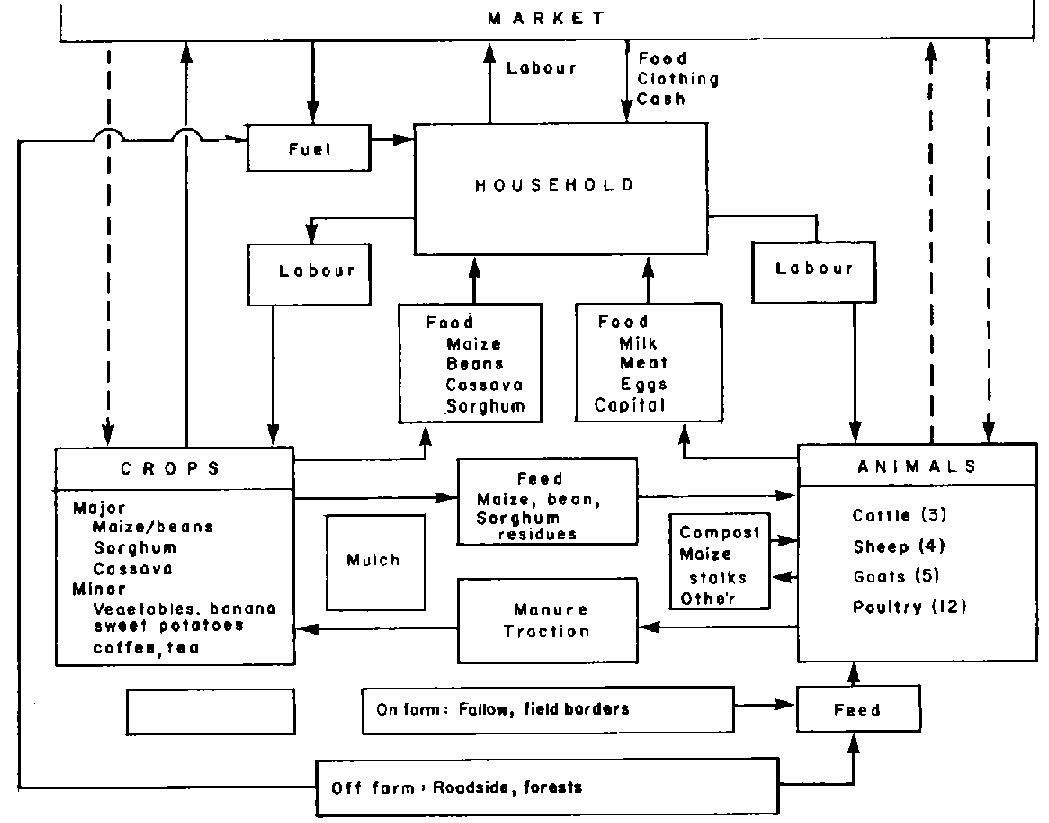
The close interdependence of crops and livestock in smallholder systems in the highlands of Kenya is shown in Figure 1. Average farm size is approximately 1 ha and more than 85% of farms have livestock, usually two or more species. The interdependence of crops and livestock is primarily through dependence of animals on crop residues for feed. Farmers manage individual cropping patterns (intercropped maize and beans, double cropped maize and cassava) to provide food and feed. Each crop contributes feed during various months (histogram, Figure 1). Neither crop nor livestock productivity can be increased without due consideration of the interaction between crops and livestock.
Source: Hart and McDowell (1985)
Farms depicted in Figure 1 may on occasion hire animal traction for land preparation, but most cropping is by hand. Farmers keep, on average, one cow, two sheep and several poultry using farm and external feed sources, such as grazing or material cut from roadsides and forest. Maize stover is the most important feed. Farmers in this area have made little use of improved maize varieties because their stover yield is low unless fertilizer is applied and the indigestible neutral detergent fibre fraction (INDF) in their stover is higher whether with or without fertilizer.
Although crop and animal production can be strongly interdependent, the factors that can influence farmers' decision-making are often more complex (Figure 2). Sands (1983) made an in-depth study of the contributions of animals on 80 farms in two districts of western Kenya (mean size 1.03 ha). Using a two-dimensional model (household-market and household-farm), as proposed by McDowell and Hildebrand (1980), two major subsystems requiring labour and capital were characterised. The solid lines from the crop subsystem to the animal subsystem show high dependence of animals on crop residues and strong dependence of cropping on animals for power in land preparation and fertilizer from manure dropped on fallow land while grazing or manure collected from night holding areas for composting with inedible crop residues.
Source: McDowell (1985)
The solid line between crops and the market indicates the importance of crop sales: grain sales provide over 20% of household income. The broken line from market to crops shows low dependence on the market for inputs of seed, fertilizer or pesticides. Although annual income from sale of animals or their products equals or exceeds income from crops, the animal subsystem has an unpredictable relation to the market, i.e., sales of milk or animals are erratic. As with crops, purchases of inputs, e.g. animals, feeds or veterinary services, are sporadic. This implies that animals are kept largely for services to cropping, storage of capital, some household food and income and to provide for emergency needs: nevertheless, they are essential to the total farm operation.
For systems portrayed in Figure 2, interventions in either the crop or livestock subsystem would need to be approached cautiously for farmer acceptance and to avoid an unacceptable imbalance, such as less fodder or need of more feed for a crossbred cow. The solid arrow from household to market shows significant off-farm employment, hence availability of labour could be a constraint to adoption of new practices in either subsystem. Obviously, cash flow to the farms is low; therefore, inputs requiring capital will have low acceptance for either subsystem.
It is clear that agronomists and animal scientists must work together to increase production from these small mixed farms and that the extent of interactions between crops and livestock must be determined before interventions can be developed.
In developed countries crop residues are largely returned to the soil or, in some instances, may be used for maintenance of beef cattle during the winter (Anderson, 1978; Klopfenstein et al, 1987; Males, 1987). Where only the grain is used, the overall efficiency of utilization of total energy from a crop such as maize is low. One hectare of maize may yield approximately 30 240 Mcal of metabolisable energy (ME) and 620 kg of protein in the grain and stalk (Table 1). When only the grain is used for human consumption or for livestock feed about 39% of the energy and 20% of the protein are utilized. When the bran and stover are also used as animal feed, total ME utilisation may be increased to over 56% and protein utilisation to 28% (Table 1).
Table 1. Production and utilization of maize.
|
Production ha-1 |
Mcal ME1 |
Protein (kg) |
|
|
|
|
||
|
|
Grain |
19 040 |
360 |
|
|
Plant |
11 200 |
260 |
|
|
Total |
30 240 |
620 |
|
Human or animal feed U.S. |
|||
|
|
Grain |
11 735 |
123 |
|
|
% total |
38.8 |
20.0 |
|
Subsistence farms Grain |
|||
|
|
Human consumption |
11 735 |
123 |
|
|
Bran, animal feed |
2 810 |
22 |
|
Stover, animal feed |
|||
|
|
Milk |
2 580 |
31 |
|
|
% total |
56.7 |
28.4 |
1. Megacalories of metabolisable energy.
Table 2 shows the high seasonal dependence of small farmers (1.3 ha) in southern India on crop residues (dry fodder). In this region milk sales are important, hence some purchased concentrates plus brans are used as supplements to maximize intake of the coarse feeds. Dry fodder provides 13% of feed dry matter from August to October, but 52% from January to April.
Table 2. Feed sources on mixed farms used for feeding buffaloes and cattle by season in southern India (kg animal-1 day-1).
|
|
Jan-Apr |
May-July |
Aug-Oct |
Nov-Dec |
|
Green fodder1 |
2.22 |
2.20 |
9.06 |
6.19 |
|
Dry fodder2 |
5.87 |
4.02 |
1.15 |
4.55 |
|
Purchased concentrates |
0.89 |
0.19 |
0.40 |
0.44 |
|
House concentrates3 |
1.51 |
0.65 |
0.40 |
0.16 |
|
Other4 |
0.08 |
0.34 |
2.31 |
3.27 |
|
Pasture (h d-1) |
3.31 |
3.40 |
3.23 |
3.46 |
1. Largely weeds removed from crops or regrowth of rice.
2. Maize or sorghum stover, wheat and rice straws.
3. Brans from preparation of human food.
4. Grasses harvested by women from footpaths, and neighbouring fields.
5. Communal grazing with realised intake of < 1 to 3 kg of dry matter per day.
African pastoralists are highly dependent on crop residues from their own small plantings or from crop farms to supplement grazing during the dry season. The deficiencies of grazing in northern Nigeria, a central district in Botswana and the Machakos District in Kenya are shown in Table 3. Estimates of intake from grazing by 250-300 kg cattle are expressed in relation to animal needs for body maintenance (1.0). In northern Nigeria, grazing normally provides sufficient energy from June to October for a cow to gain up to 1.0 kg per day (July to September) but grazing cannot meet the animal's energy needs from December through May, resulting in serious weight losses. Fluctuations in feed quality and quantity lead to low net weight gains of about 70 kg a year. In Botswana the feed is deficient for only about 4 months but grazing and browsing in Botswana requires greater energy expenditure than in Nigeria. Even so, animal gain could reach 90 kg per year. If sufficient grazing is available, there is less need for supplementary feeding in Kenya than in Botswana or Nigeria (Table 3). Expected animal gains would exceed 110 kg per year (Nsibandze, 1982).
Average rainfall in the three areas is approximately the same. Its distribution has a marked effect on the grass species and their nutritive value, which is highest in Kenya, somewhat lower in Botswana and least in Nigeria. In Kenya and Botswana browse adds significantly to feed quality and quantity. In Nigeria, heavy rains over a short period lead to rapid growth and maturity of grasses followed by marked decline in quality. As pointed out by Wilson (1982) and others, supplementary feeding is essential in much of the subhumid and semi-arid areas of West Africa. The need for manure on cropped areas and the pastoralists' need for feed leads to strong interdependence between crop farms and pastoralists (Wilson, 1982).
Table 3. Estimates of monthly energy intake by 250-300 kg cattle on rangeland grazing in three areas in relation to maintenance needs1.
|
Month |
Northern Nigeria2 |
Central District Botswana3 |
Machakos District Kenya4 |
|
January |
0.8 |
2.1 |
1.4 |
|
February |
0.7 |
2.0 |
1.2 |
|
March |
0.6 |
1.7 |
1.5 |
|
April |
0.6 |
1.4 |
1.9 |
|
May |
0.5 |
1.2 |
2.0 |
|
June |
1.5 |
1.0 |
1.6 |
|
July |
2.3 |
0.8 |
0.9 |
|
August |
2.2 |
0.7 |
0.8 |
|
September |
2.0 |
0.6 |
1.0 |
|
October |
1.5 |
0.6 |
1.5 |
|
November |
1.2 |
1.6 |
2.0 |
|
December |
0.9 |
2.1 |
1.6 |
|
Mean |
1.23 |
1.29 |
1.45 |
|
Average daily weight gain (kg) |
0.20 |
0.24 |
0.30 |
Source: Adapted from McDowell (1985).1. Example: January, northern Nigeria 250-300 kg cow has intake 80% of energy needs for body maintenance thereby losing weight but in
July intake is 230% of maintenance needs when weight gain or milk yield can be high.
2. Rainfall 450-500 mm; 97% from late May to mid September.
3. Rainfall 400-500 mm; 95% from late November to mid-May.
4. Rainfall 500-550 mm; long season March-June and short rains October-December.
An average pastoral unit requires about 10 breeding cows, a breeding male and associated stock for subsistence needs (Brumby, 1987). These animals may use about 100 ha of rangeland providing approximately 10 500 kg of total digestible nutrients (TDN) per annum, which is far below needs. In northern Mali average rangelands in normal years will provide about 50% of livestock needs, hence crop residues must be used to avoid large weight losses in the dry season.
Data have not as yet been collected to determine whether the interrelationships between crop farmers and pastoralists in West Africa have influenced the adoption of new varieties of grain crops due to possible changes in yield and quality of crop residues, but ILCA researchers reported low acceptance of high-yielding varieties of cow-peas in northern Mali because of low forage yield. Concerns have been expressed in northern Nigeria and other areas over the rapid expansion of maize production, because maize matures earlier than sorghum or millet, while grazing is still reasonably good. As a result, the quantity and feeding value of maize stover is markedly lowered by weathering before it is needed for feed.
1. Choice of crop
Subsistence farms attempt to sustain about 4.5 people per household, each needing about 200 kg of grain per year. The farm must thus produce a total of 900 to 1000 kg of grain a year. Farm size is 1.5 ha, with 1.0 ha planted to maize and beans, 0.3 ha to wheat and 0.2 ha to sorghum. Using local varieties and low inputs, maize yields 600 kg of grain, beans 150 kg, wheat 200 kg and sorghum 150 kg, giving a total yield of 1100 kg, about basic human food needs. There are two cows, one bullock, one calf, two sheep and three goats. Yield of wheat straw is about 200 kg (1:1 ratio with grain) (Anderson, 1978) and maize plus sorghum stover 3450 kg (1:5 or 6 ratio to grain yield, in local varieties). Thus, the total crop residue yield is about 3650 kg, which provides approximately 150 days of feed. This, supplemented with off-farm grazing, could maintain the livestock.
Cash flow is low so the farmers want to reduce the maize land to 0.5 ha and add 0.5 ha of cotton as a cash crop. A new variety of maize is used and fertilizer applied, giving a yield of 1000 kg of grain. Of this, 200 to 300 kg is sold to pay for purchased inputs. The ratio of maize stover to grain yield is reduced from 1:5 or 6 to 1:1.5 or 2, hence maize stover yield is reduced to 2000 kg. The cotton provides no feed except weeds, hence total crop residue for dry season feeding is reduced to around 2500 kg, resulting in only 100 days of feed. The cattle fare less well because the digestibility of the maize stover declined from 52-56% (sufficient energy available for maintenance needs plus some for production) to 42-45% digestibility (sub-maintenance needs in energy) (Sands, 1979). The farmer must choose between reducing stock numbers, which is unattractive due to loss of prestige and savings, purchasing feed for livestock, relying more on off-farm grazing or returning to the traditional system. Other farmers have followed a similar procedure thereby placing greater pressure on communal grazing. In the second year nearly 50% of the farmers withdraw from the maize-cotton programme, to the consternation of extension agents.
2. Change crop residue management
Crop residues are low in protein and phosphorus, marginal in calcium and high in fibre and lignin. As a result, digestion is slow, rate of passage is low and voluntary intake is limited, e.g. ad libitum intake of sorghum stover is 43% less than that of hay. Intake may be increased about 20% by chopping the residue (Anderson, 1978).
Maize or sorghum may be cut and stacked or shocked to reduce leaf loss from leaching or wind damage. Research has shown that stripping the lower leaves (below the ear on maize or the lower half of sorghum) increases feeding value. Topping maize after the grain has nearly matured also helps to preserve forage quality. Although these procedures improve feed quality, farmer acceptance has been low because of low visibility of return to the extra labour required. Assembling or storing crop residues may be a necessity where cropland is highly fragmented, such as often occurs in India; where the household is dependent on manure for fuel-India and Ethiopian highlands-; or where marauding animals have access to crop residues during the off-crop season. When these elements are not pressing, farmers prefer to graze the residues to reduce labour for storage or transport of manure to the fields.
Preservation of crop residues is, however, attractive where high-protein concentrates, such as cottonseed cake or grain brans, are available at modest prices. With supplement, intake of residues may increase 20 to 30% (Conner and Richardson, 1987; McDowell, 1985). Farmers generally accept supplementation as an initial move to increase milk output or to fatten cattle or sheep (World Bank, 1987).
3. Chemical treatment
Other papers at this workshop deal with this issue. In farmer decision-making, suffice it to say that, although research results show promise, acceptance on resource-poor farms is slow due to costs (labour and capital) and risks.
Chemical treatment could be more attractive if it were complemented with modifications in the farming system. Forage crops have not received much attention in cropping systems research (Gibbs and Carlson, 1986). From the example given in section 1 above, production systems and crops need to be developed that will best meet the dual-purpose needs of smallholders. Including forage legumes in the crop rotation can increase the yield of the subsequent crop and sustain soil fertility, and such rotations need investigation. Indirectly, forage legumes would increase returns from crop residues through higher intake and more efficient digestion. Availability of good quality forages for supplement may, however, lessen the attractiveness of chemical treatment.
4. Change the animal
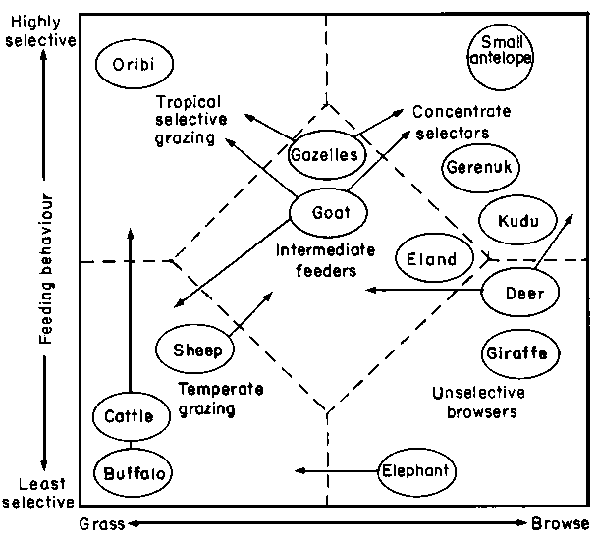
In recent years a frequent recommendation is for smallholders to concentrate on goats and sheep instead of cattle or buffalo. The advantages of low investment, early maturity and better breeding efficiency are most often cited. This recommendation makes the assumption that all four species are equally adept in the utilisation of crop residues, but this is not the case (Demment and Van Soest, 1983; Hart and McDowell, 1985; McDowell, 1987a; 1987b; McDowell, 1986; McDowell and Woodward, 1982). Feeding strategy is an important feature in assessing suitability of animal species. The comparative digestive strategies of goats, sheep and cattle are given in Table 4. Figure 3 portrays how selective feeding behaviour influences whether a given animal species is widely dispersed or clustered in certain areas because of prevailing feed resources.
The two major types of Bubalus bubalis (swamp and riverine buffalo) are probably the best users of crop residues among domestic livestock. Buffalo are grazers with low selectivity (Figure 3); they have a wide muzzle, large gut capacity and a greater extent of fermentation in the rumen than cattle. The last two features result in slow passage of food through the digestive system. The buffalo is therefore an effective user of high fibre feeds. Their major habitat, the paddy rice area of Asia, verifies their ability to use rice straw. Their best niche appears to be as users of crop residues or to provide some returns from grazing marsh areas. Their efficiency on high-quality forage is lower than that of cattle.
Cattle are classed as grazers with relatively low selectivity but are slightly more selective than buffalo. Their metabolic rate is lower than that of goats or sheep and their rumen retention time is longer, resulting in greater ability to digest fibre. The vast bacterial population in the rumen of cattle is a significant source of protein. Thus cattle can survive on a diet of poorer quality grazing than can goats or sheep. Cattle can browse to a limited extent but their broad muzzle and slow bite rate does not make them effective browsers. Their absolute intake requirements are so great that there is generally insufficient high quality feed in tropical environments to sustain high levels of performance. There are morphological traits in the two species of cattle, Bos indicus (zebu or humped types) and Bos taurus (European or non-humped types) that can be significant in utilisation of crop residues. Bos indicus types have a longer, narrower head and smaller muzzle. They have nearly 25% less digestive capacity per unit of body size than Bos taurus types, which forces them to be slower and more selective feeders. On rangelands with shrubs for browse, Bos indicus will select a higher quality diet but will utilise less of the total forage dry matter. For example, zebu heifers grazing at the rate of 2.5 head per ha on improved grass pastures in Puerto Rico utilised 18.7% of the total DM while Holstein heifers of similar age and at the same stocking rate used 31.2% of the DM. A conclusion is that the feeding behaviour of zebu cattle is more responsible than other adaptation features for its high numbers in the tropics (Hart and McDowell, 1985). This feature is most important for grazing but is a limitation for zebu in use of crop residues. In India, Pakistan and other parts of southeast Asia, a buffalo cow fed ad libitum rice straw will maintain body weight and produce 1.0-1.8 litres of milk per day while local cattle will lose weight.
Table 4. Comparative digestive strategies of goats, sheep and cattle.
|
Characteristics |
Advantage |
Limitation |
|
Goat |
||
|
Browser |
Plant differentiation (morphological and seasonal) |
Low utilisation of total biomass |
|
Rapid passage |
Higher intake possible, rapid passage of low- quality feed |
More time required for eating |
|
Low Mia |
Allows greater allot selection requirements |
High energy cost, increased maintenance |
|
Sheep |
||
|
Grazer |
Less travel energy needs, better use of total biomass fully utilized |
Diet limited to graze plants, plant differentiation not |
|
Intermediate rate |
Better fibre digestion of passage |
Forced to waste effort on low-quality feeds |
|
Intermediate Mi |
Permits higher cellulose fermentation |
Decreased apparent digestibility |
|
Small body size |
Small absolute intake |
High MR/GC2 |
|
Cattle |
||
|
Grazer |
High use of plant biomass |
Diet limited to graze plants, plant differentiation limited |
|
Slow passage |
High fibre digestion |
Forced to waste effort on low-quality feed |
|
High Mi |
High cellulose fermentation |
Decreases apparent digestibility |
|
Large body size |
Low MR/GC, long legs, move rapidly |
Mouth too large for plant differentiation |
1. Mi value is that part of the faeces endogenously produced by the animal besides the undigested feed residue.2. MR/GC - ratio of basal metabolic rate to gut capacity.
Source: McDowell and Woodward (1982).
Figure 3. Free-roving animals will congregate in areas where feed is available and suits their needs. In tropical areas, animal size plays an important role in feeding behaviour. Small animals must be highly selective in choosing grasses and browse. This figure shows where familiar and exotic animals are found based on their feeding behaviour and preferred feed resources Arrows indicate crossover may occur.
Source: Adapted from Demment and Van Soest (1983).
Goats are among the most selective of the intermediate feeders (Figure 3) and can use a wide range of plants. Their Mi (endogenous and microbial fraction of the faeces) values are lower than those of cattle and sheep (Table 4) because they generate less cellulytic bacteria in the rumen, which lessens cellulose digestion. The feeding strategy of goats is to select grasses when protein content and digestibility are high but to shift to browsing when leaves, bark and fruits have better nutritive value. Their small mouth and prehensile lips enable them to gather small leaves and flowers. Performance of goats may be low and mortality high on an exclusive diet of dry-season grasses in the subhumid zone but they will thrive in the same zone where there is a mix of browse, while cattle may be hard pressed to survive. Overall, goats are not good users of straws and stovers unless they are given an opportunity for high selection and receive some supplementary protein as bran or browse. Goats may die on an all maize stover diet or when penned on dry, mature tropical grass. Thus, goats have unique feeding strategies which can be employed to complement sheep or cattle for fullest use of certain ecosystems, but where crop residues are the main feed source goats are at a disadvantage.
Sheep tend to be mainly grazers but, as for goats, their body size requires they feed selectively. They are able to digest fibre effectively but on a diet mainly of crop residues, such as straw, they have the disadvantage of being forced to ruminate in order to clear their rumen; therefore, straw or stover gives low nutritional benefit for the energy expended. It is more difficult to relate feeding behaviour to area of concentration for sheep than buffalo, cattle or goats because they have high utility for meat and fibre as well as importance as a feature of the Moslem religion. They usually complement other species in maximising use of ecosystems.
McDowell and Hildebrand (1980) showed that even though the number of small ruminants per farm was low, most had cattle, goats, sheep and, in Asia, buffaloes. This indicates that: a) farmers are aware of the limitations of each animal species; b) they know the complementarily of species in utilisation of available resources; and c) they recognise that each species has a well defined function in the farm enterprise. It appears that for much of Africa cattle will tend to dominate as the best overall user of feed resources but in planning agronomic or livestock research strategies, small ruminants should be considered as part of almost all farm systems.
It is hoped that plant breeders will recognize a desire on the part of animal scientists to consider modifications in plant selection to maintain as high an animal utility as possible; that it will be agreed that further research on chemical treatment of crop residues may be warranted; and that the animal nutritionists will agree to move forward as rapidly as they can on standardisation of methodology for assessment of animal utility of crop residues and forages.
Hopefully the workshop will also explore the broader issues of production systems. We must appreciate that improvements in the feeding value of crop residues, whether by plant breeding, chemical treatment or both, will provide relatively low returns for smallholders, possibly 10-20%, in increased returns from animals. Predicted acceptance at this level of change will at best be modest because there are still problems of malnutrition among the animals. Improvements in straw quality could increase energy availability significantly but will do little to increase the availability of protein and phosphorous, which are in short supply in smallholder systems.
For ruminants such as cattle to express their full genetic potential for performance, the apparent digestibility (AD) value or the TDN content of the entire ration should exceed 70% on a dry weight basis. When AD is 60% performance will be intermediate and at 55% AD, production will be approximately 10 kg of milk per day or 0.5 kg weight gain per day. The minimum range in AD to assure body maintenance needs is 42-45%. At lower AD levels, animals lose weight. In the average feed supplies on mixed crop/livestock farms depending on crop residues for more than 100 days of feeding, around 10% of the total has AD 55% or more, 50% has an AD of 45-50% and 40% has an AD of less than 40%. Increasing the mid-range (50-55% AD) by 10 units will increase animal output by 20-40% provided total animal biomass remains constant.
If the workshop participants accept ILCA's long-range strategy on "thrusts" in research on milk and meat from cattle and small ruminants, animal traction and animal feed resources (ILCA, 1987), a needed focus in this exchange is much closer collaboration with the plant sciences including soils and agroforestry. Participants should be planning for research of ILCA and NARS on identification and development of varieties and commensurate production systems of leguminous and dual-purpose crops which can produce high-quality food and fodders.
ILCA's main thesis for shifts in strategy is the observation that:
In many cases livestock and livestock products are the most important source of the cash income of subsistence farmers. Small improvements in live stock productivity quickly result in important income changes and in the availability of funds to improve the subsistence cropping patterns that characterize smallholder agriculture. (Brumby, 1987).
ILCA's strategy strongly suggests that research on production systems to meet the dual-purpose needs for smallholders will mean greater flexibility for all production systems, with or without livestock. Demonstration by ILCA researchers that rotation of forage legumes with food crops enhances yield of the subsequent crop and sustains soil fertility is most encouraging. Research on Vertisols in Ethiopia further shows ILCA's commitment to increasing total farm output.
Anderson D C. 1978. Use of cereal residues in beef cattle production systems. Journal of Animal Science 46:849-861.
Brumby P J. 1987. Livestock: A sector policy paper. World Bank, Washington DC, USA.
Conner M C and Richardson C R. 1987. Utilization of cotton plant residues by ruminants. Journal of Animal Science 65:1131-1138.
Demment M W and Van Soest P J. 1983. Body size, digestive capacity and feeding strategies of herbivores. Winrock International, Morrilton, Arkansas, USA.
Gibbs M and Carlson C (eds). 1986. Research imperatives revisited, an international conference held at Boyne Highlands Inn, 13-18 October, 1985, and Airlie House, 11-13 December, 1985.
Hart R and McDowell R E. 1985. Crop/livestock interactions as determinants of crop and livestock production. Cornell International Agriculture Mimeo 107, Cornell University, Ithaca, NY.
ILCA (International Livestock Centre for Africa). 1987. ILCA's Strategy and Long-Term Plan. ILCA, Addis Ababa, Ethiopia.
Klopfenstein T. Roth L, Rivera S F and Lewis M. 1987. Corn residues in beef production systems. Journal of Animal Science 65:1139-1148.
Males J R. 1987. Optimizing the utilization of cereal crop residues for beef cattle. Journal of Animal Science 65:1124-1130.
McDowell R E. 1985. Case studies on livestock in warm climates. Instructional Materials, CAWFI, Department of Animal Science, Cornell University, Ithaca, NY, USA.
McDowell R E. 1986. An animal science perspective on crop breeding and selection programs for warm climates. Cornell International Agriculture Mimeo 110. Cornell University, Ithaca, NY, USA.
McDowell R E. 1987a. Ethical aspects of food aid policies for third world countries. In: Ethical aspects of food, agriculture and natural resource policy. Proceedings of a workshop held at the University of Kentucky, Lexington, June 1987. University of Kentucky, Lexington, Kentucky, USA.
McDowell R E. 1987b. Matching the animal to the environment: Cattle. In: J E Moore, K H Quesenberry and M W Michaud (eds), Forage-livestock research needs for Caribbean Basin. Caribbean Basin Advisory Group, University of Florida, Gainesville, Florida, USA. pp. 109-118.
McDowell R E and Hildebrand P E. 1980. Integrated crop and animal production: Making the most of resources available to small farms in developing countries. Working papers: The Rockefeller Foundation, New York, NY, USA.
McDowell R E and Woodward A. 1982. Concepts in animal adaptation: Comparative suitability of goats, sheep and cattle to tropical environments. Proceedings of the 3rd International Conference on Goat Production and Disease. Dairy Goat Journal. Scottsdale, AZ, USA. pp. 387-394.
Nsibandze E P. 1982. The economies of cattle ranching in Machakos District Kenya. M.S. thesis, Cornell University, Ithaca, NY, USA.
Sands M W. 1979. Variation in the nutritive value of overripe maize stover. M.S. thesis, Cornell University, Ithaca, NY, USA.
Sands M W. 1983. Role of livestock on smallholder farms in western Kenya: Prospects for a dual purpose goat. Ph.D. thesis, Cornell University, Ithaca, NY, USA.
Wilson R T (ed). 1982. Livestock production in Mali. ILCA Bulletin 15. ILCA, Addis Ababa, Ethiopia.
World Bank. 1987. West Africa agricultural research review. World Bank Western Africa Projects Department, Washington DC, USA.
Ørskov: You suggested that zebu cattle are unlikely to survive on rice straw, yet in Bangladesh zebus are kept on this material.
McDowell: I doubt that they are kept exclusively on rice straw. Zebu cattle retain feed in the digestive tract for less time than do buffaloes. As a consequence their digestive capacity is 25% less. This means that they have to be more selective feeders and receive a more constant feed supply.
Little: There is generally no clear relation ship between digestibility and intake for most feeds in the tropics, and therefore no direct relationship between increases in roughage digestibility and livestock performance. Nevertheless we generally consider that a digestibility of 50% leads to an intake of around 50 g kg-1 W0.75 day-1.
McDowell: I have no counter to your statements.