Abstract
Résumé
Introduction
Materials and methods
Results
Discussion
References
Tekelye Bekele and O.B. Kasali
International Livestock Centre for Africa (ILCA)
P O Box 5689
Addis Ababa, Ethiopia
During 1988 and 1989 the effect of endoparasites on the productivity of Ethiopian high/and sheep was studied using eggs per gram (EPG) counts, worm counts and packed cell volume (PCV) at Debre Berhan, Dejen, Deneba, Tulu Meko and Wereilu. Nematode and trematode EPG counts were low except at Tulu Meko with significant (P<0.05) differences in age, season and year effects in most sites. Mean monthly mature worm counts in necropsied sheep were also low to moderate and ranged from 0-4 375 and 0-1 825 in the abomasum and intestines, respectively. The predominant worms in the counts were mainly Trichostrongylus colubriformis with a few Haemonchus contortus and others, irrespective of season. This was attributed to possible resistance and/or "self cure" to haemonchosis and/or environmental factors. Mean PCV values were almost similar for all the locations and were significantly (P<0.05) affected by the degree of nematode and trematode infections in all sites.
Low PCV and high EPG levels were significantly (P<0.05) associated with poor body-condition scores and low bodyweights. Monthly repeatabilities of PCV, bodyweight and body-condition score were 0.44 ± 0. 01, 0.71 ± 0.01 and 0.35 ± 0.01, respectively, while the values for nematode (0.09 ± 0.01) and trematode EPG (0.20 ± 0.20) were much lower. The higher repeatability for PCV in contrast to EPG would indicate that it was less affected by the variable factors influencing egg output. It is, therefore, suggested that it should be used in conjunction with nematode and trematode EPG levels in endoparasite monitoring.
L'effet des endoparasites sur la productivité du mouton des hauts plateaux éthiopiens a été étudié en 1988 et 1989 à Debre Berhan, Dejen, Deneba, Tulu Meko et Wereilu. Les paramètres considérés étaient le nombre d'oeufs de parasites par gramme de fécès, le nombre de vers dans diverses parties du tube digestif et l'hématocrite. Exception faite de la localité Tulu Meko, le nombre d'oeufs de nématodes et de trématodes par gramme de fécès était faible et, dans la plupart des régions variait significativement (P<0,05) en fonction de l'âge des animaux, de la saison et de /'année. Le nombre de vers adultes chez les moutons autopsiés était faible ou moyennement élevé, variant de 0 à 4375 dans la caillette et de 0 à 1 825 dans les intestins. Quelle que soit la saison considérée, les vers les plus nombreux étaient les Trichostrongylus colubriformis. On a également dénombré quelques Haemonchus contortus ainsi que des représentants d'autres espèces. La rareté relative des Haemonchus était peut-être due à une résistance à l'hémonchose et/ou à un "auto-traitement" de cette maladie à moins que cela ne soit dû à l'action du milieu.
Avec des valeurs moyennes de 33,40 ± 0,70,32,70 ± 0,78,33,92 ± 0,76,28,63 ± 0,79 et 35,79 ± 0,68 respectivement à Debre Berhan, Dejen, Deneba, Tulu Meko et Wereilu; l'hématocrite variait significativement (P<0,05) en fonction du degré d'infestation par les nématodes et les trématodes quelle que soit la localité considérée.
Une association significative (P<0,05) entre les faibles niveaux d'hématocrite et les nombres élevés d'oeufs par gramme de fécès d'une part et d'autre part, les notes médiocres d'état corporel des animaux et leurs faibles poids vifs a été montrée. Les coefficients de répétabilité de l'hématocrite, du poids vif et de la note d'état corporel furent respectivement de 0,44 ± 0,01,0,71 ± 0,01 et 0,35 ± 0,01. En comparaison, les coefficients relatifs au nombre de parasites par gramme de fécès étaient beaucoup plus faibles, s'établissant respectivement à 0,09 ± 0,01 pour les nématodes et à 0,20 ± 0,20 pour les trématodes. Compte tenu de la valeur élevée du coefficient de répétabilité relatif à l'hématocrite, il est probable que les divers facteurs dont dépend le nombre d'oeufs influencent moins ce paramètre que les autres. En conséquence, il est proposé d'utiliser l'hématocrite, conjointement avec le nombre d'oeufs de nématodes et de trématodes par gramme de fécès pour évaluer le niveau d'endoparasitisme de ces animaux.
Most sheep in Ethiopia are owned by smallholders in the highlands where there is mixed crop-livestock production. These sheep are an integral part of the livestock sector of the economy. Sheep supply meat, wool (hair) and skin and generate about 89% of farmers' cash income (Gryseels et al, 1989).
The productivity of Ethiopian sheep is affected by nutritional and endoparasitic stress although they are all year-round breeders. Nutritional stress occurs whenever there are dry spells and often before grass grows during the rainy seasons. The major endoparasitic diseases of importance include fascioliasis, gastrointestinal nematodiasis, cestodiasis and lung worm (Graber, 1975; Scott and Goll, 1977; Bekele Mamo et al, 1981; Lemma et al, 1985). Their effects range from a reduced performance to mortality (Sykes, 1978; Armour and Gettinby, 1983). These effects are also exacerbated by the level of nutrition.
There are limited field studies on the effects of endoparasites on productivity. Most attempts have been on experimental infections of either a single or few parasites which do not simulate the dynamics in field conditions. Hence this study was performed to determine the impact of endoparasites on productivity of the highland sheep in Ethiopia. This report focuses on the relationship of some of the indicators of endoparasites on productivity and the estimates of repeatability of associated parameters.
The study was carried out on-farm at Debre Berhan, Dejen, Deneba, Tulu Meko and Wereilu in the Ethiopian highlands from June 1988 to December 1989. These places are located in the central, northern and north-western part of the country where the altitude ranges from 2500-3000 m above sea level and the production system is mainly mixed farming. They have bimodal rainfall pattern with long rains from June to September and short rains from March to May. A total of 2594 sheep were involved in the study. These included the Menz, Horro, Wollo and Dejen breed types from 30-50 farmers with 350-400 sheep each at the beginning of the study. There was also periodic replacement of exits. All animals were raised under traditional management with minimum health interventions.
Each site was visited monthly for sampling and data collection which included faeces for eggs-per-gram (EPG) counts and faecal culture, blood for packed cell volume (PCV) and screening haemoparasites bodyweight, body-condition score (MAFF, 1984; Hossamo et al, 1986) and pregnancy and lambing status. In addition, 122 (six-month-old or more) sheep were sacrificed at each site at the rate of four per month in the first year and then periodically in the second year for post-mortem examination, worm count and identification; Skerman and Hillard, 1966) at Debre Berhan and Tulu Meko. The age of each sheep was estimated from teeth-eruption changes (Williamson and Payne, 1959) on each visit.
Data were analysed by least squares (SAS, 1987) using the general linear model for the effect of endoparasites on productivity for each site separately but were pooled for repeatability estimates. Dependent variables were bodyweight, body-condition score and lambing interval. The independent variables were nematode and trematode EPG levels determined by classifying infection levels as either low (mai mare 50) or high (> 50), and PCV which was also classified as below normal (mai mare 27) and above normal (> 27). The EPG and PCV classifications for each animal were based on the means of the repeated monthly determinants over the study period. Repeatability was estimated using a mixed model (Harvey, 1987) with random animal effect and other relevant fixed effects. The estimates of repeatability for log value of positive EPG and PCV were obtained by treating these as depended variables and adjusting for the fixed effects.
Peak nematode EPG counts were observed during the long an-d short rainy seasons especially at Tulu Meko (Figures 1 and 2). In addition, trematode EPG counts were also high for most parts of 1989 at Tulu Meko but not on other sites. Log values of monthly EPG counts were significantly (P<0.05) affected by age of sheep, season and year. The mean monthly mature worm counts in necropsied sheep ranged from 0-4375 and 0-1825 in the abomasum and intestines, respectively. Immature worms were less frequently encountered. Worm counts at Tulu Meko were higher than at Debre Berhan. The log transformed mature worm counts from the abomasum did not show significant (P>0.05) seasonal differences in both sites while year-effect was significantly (P<0.05) different at Tulu Meko but not at Debre Berhan (P>0.05). The commonest mature and immature worms found during worm counting were Trichostrongylus colubriformis with only few H. contortus, T. axed, Oesophagostomum columbianum, Bunostomum trigoncephalum and Trichuris skrjabini. These gastrointestinal parasites were also found in faecal cultures. The mean monthly counts of Fasciola hepatica in the liver ranged from 0-78 for both Debre Berhan and Tulu Meko. Seasonal frequencies of D. filaria and T. colubriformis were 66.7-100% and 64.0100% in necropsied sheep but they were low for others.
The correlation and regression coefficients of both nematode and trematode EPG counts on PCV were significantly (P<0.01) different from zero. Least squares means for PCV at different sites were 33.40 ± 0.70,32.70 ± 0.78,33.92 ± 0.76, 28.63 ± 0.79 and 35.79 ± 0.69 at Debre Berhan, Dejen, Deneba, Tulu Meko and Wereilu, respectively. Levels of nematode and trematode EPG caused significant (P<0.05) differences in PCV which decreased with increasing parasitic load in each site. Mixed nematode and trematode infections were few and insignificant (P>0.05). PCVs were also significantly (P<0.03) different in different age groups of sheep, different seasons and different years but not in different sexes.
Figure 1. Correlation of mean monthly rainfall with mean monthly nematode egg counts by site (1988-1989).
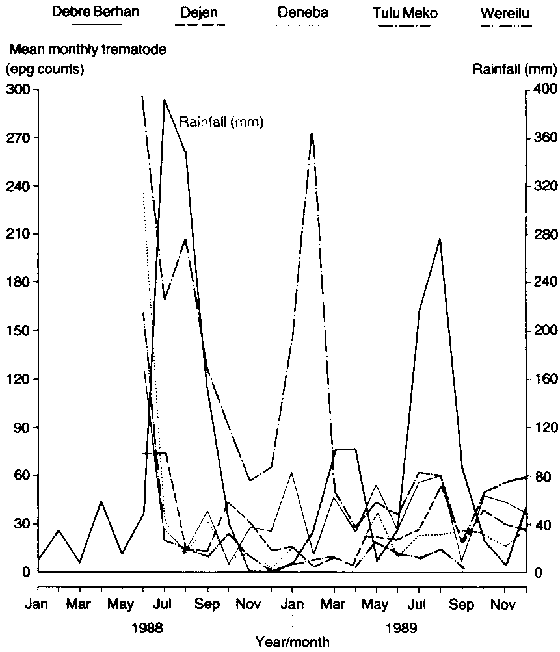
Figure 2. Correlation of mean monthly rainfall with mean monthly trematode egg counts by site (1988-1989).
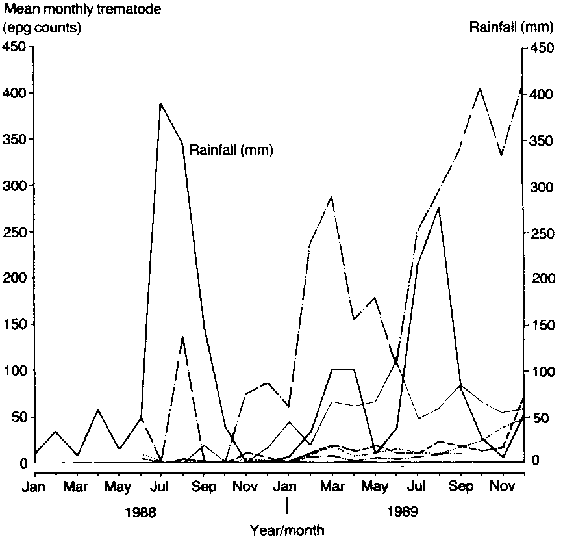
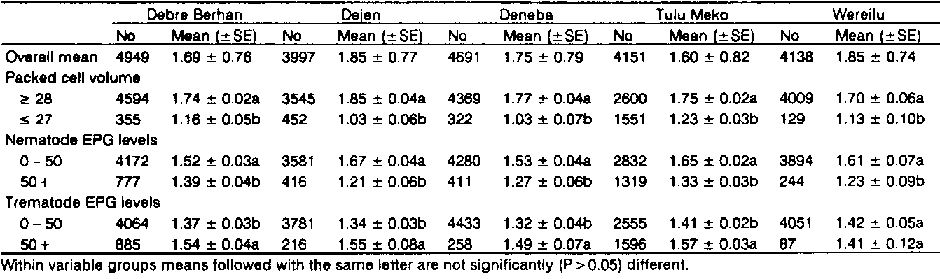
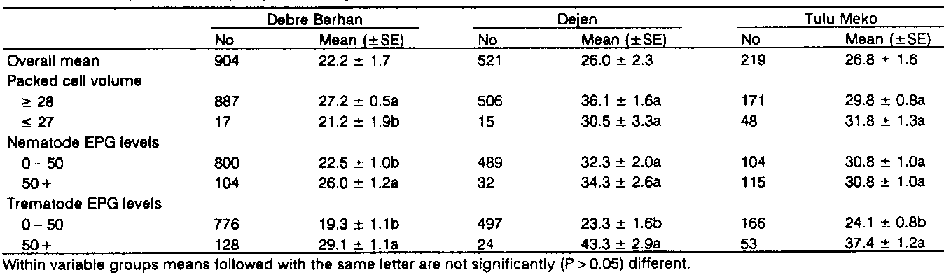
Figure 3 shows the frequency of average PCV (average above and below normal), nematode (average low and high EPG levels) and trematode (average low and high EPG levels) EPG levels of all sheep in different sites. These frequencies indicate that endoparasitism was highest at Tulu Meko with low PCV, high nematode EPG and high trematode EPG levels of 37.4, 31.8 and 38.4%, respectively. The least-squares means for body-condition scores, bodyweights of male sheep and lambing interval are, respectively, presented in Tables 1, 2 and 3. The means for body scores were 1.69 ± 0.76, 1.85 ± 0.71, 1.75 ± 0.79, 1.60 ± 0.82 and 1.85 ± 0.74 at Debre Berhan, Dejen, Deneba, Tulu Meko and Wereilu, respectively, and were significantly (P<0.05) affected by PCV, nematode and trematode EPG levels. Liveweights had mean squares of 22.2 ± 1.7, 26.0 ± 2.3 and 26.8 ± 1.6 kg at Debre Berhan, Dejen and Tulu Meko, respectively, with the subclass means showing significant (P <0.05) differences due to PCV and nematode EPG levels at Debre Berhan and trematode EPG levels in all. The least-squares means for lambing interval was 263.2 ± 4.0 days at Tulu Meko with no significant (P>0.05) effect by the different variables.
Figure 3. Frequency of average PCV, nematode and trematode EPG levels of all sheep in different sites.
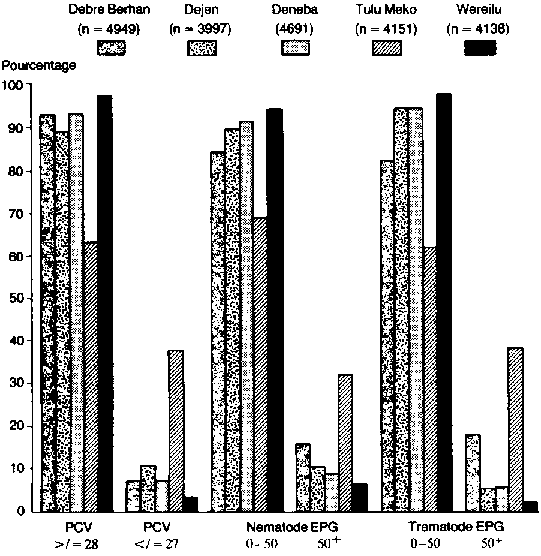
Table 1. Least-squares means (± SE) for body-condition score of all sheep in different sites.
Table 2. Least-squares means (± SE) for liveweight of all male sheep.
The repeatability values for PCV, bodyweight, body-condition score, lambing interval, nematode EPG and trematode EPG were 0.44 ± 0.01, 0.71 ± 0.01, 0.35 ± 0.01, 0.43 ± 0.14, 0.09 ± 0.01 and 0.20 ± 0.02, respectively (Table 4). Correlation coefficients between bodyweight and body-condition score were low (r= 0.3-0.5, P<0.01) for different sites.
Table 3. Least-squares means (± SE) for lambing interval at Tulu Meko.
|
Variable |
No |
Mean (± SE) |
|
Overall mean |
97 |
263.2 ±4.0 |
|
Packed cell volume |
||
|
³ 28 |
74 |
262s ± 7.7a |
|
£ 27 |
23 |
259.9 ± 1 5.5a |
|
Nematode EPG levels |
||
|
0-50 |
37 |
253.1 ± 15.5a |
|
50± |
60 |
266.3 ± 9.4a |
|
Trematode EPG levels |
||
|
0-50 |
39 |
257.3±12.8a |
|
50+ |
58 |
262.1 ± 9.3a |
Table 4. The repeatability (± SE) of eggs-per-gram (EPG) counts, packed cell volume (PCV), bodyweight, body-condition score and lambing interval for all sites.
|
Parameter |
Number of observations |
Repeatability |
|
Nematode EPG (log value) |
5750 |
0.09 0.01 |
|
Trematode EPG flog value) |
4331 |
0.20 0.02 |
|
Packed cell volume (PCv) |
22 464 |
0.44 0.01 |
|
Bodyweight |
22 669 |
0.71 0.01 |
|
Body-condition score |
22 671 |
0.35 0.01 |
|
Lambing interval |
475 |
0.43 0.14 |
Monthly nematode EPG counts were low with very little variation with rainfall for most sites except at Tulu Meko compared to previous findings (Tekelye Bekele et al, 1987). This agreed with the low to moderate worm counts (Skerman and Hillard, 1966) of necropsied sheep at Debre Berhan and Tulu Meko. The EPG of the necropsied sheep was also low. The moderately high nematode EPG counts at Tulu Meko was associated with the high intensity of worm load. The commonest species found during worm counting, T. colubriformis, has low prolificacy and pathogenicity (Holmes, 1985). Highly prolific worms like H. contortus had low counts specially at Debre Berhan although they were available in necropsied sheep and faecal cultures. This may be due to genetic factors where H. contortus was not established and/or was removed after infection due to self cure (Preston and Allonby, 1979; Kasali et al, 1988) and/or other environmental factors.
Trematode EPG counts were highest in 1989 than in 1988 in all sites which probably happened due to the heavy rainfall in 1988, which also increased the transmission of fascioliasis by increasing the abundance of the intermediate host, the snail, Lymnae truncatula (Golf and Scott, 1978). Fascioliasis, especially when complicated by Clostridium novyi infection, is the major cause of ovine mortality in the Ethiopian highlands (Njau et al, 1988). The presence of D. filaria in most necropsied sheep agreed with previous findings (Bekele Mamo et al, 1981). Its high frequency is suggestive of its importance since it is commonly complicated by pasteurellosis, inclement weather and inadequate nutrition.
The overall mean end subclass mean PCV were lowest at Tulu Meko which could be due to high intensity of endoparasitism as observed in the EPG and worm counts. This could also be due to differences in breed parasite tolerance and/or management. PCV variation with age, year and EPG load effects was common to most sites. PCV variation with age could be physiological, while year effect could be due to differences in the rainfall leading to differences in the degree of endoparasitism. The effect of season was variable depending on the degree of endoparasites and level of nutrition.
Repeated measurements of endoparasites indicated high frequencies of sheep with subnormal PCV, and high nematode and trematode EPG levels at Tulu Meko. This further confirmed the high intensity of endoparasitism in this site. Productivity traits like body-condition scores and bodyweights were directly correlated with the level of PCV, being low when PCV were low and high when PCV were high. High nematode EPG lowered body-condition scores and bodyweights. But high trematode EPG resulted in high body-condition scores and high bodyweights which could be due to repeated exposures to fascioliasis while at the same time growing and increasing in body mass. Endoparasitism did not have any effect on lambing interval which may be due to its periodic occurrence and/or it may not influence this parameter.
Monthly repeatability estimates for nematode and trematode EPG were low showing that egg output was variable being affected by different factors like age of the host, species and age of parasite, nutritional status of the host, season, physiological factors like pregnancy and degree of repeated infections. But although PCV could also be affected by multiple factors, its monthly within-animal variation was moderately high and hence it should be used in conjunction with EPG for monitoring the level of endoparasites. Although there are reports of high correlation between bodyweight and body-condition scores (Hossamo et al, 1986), this was not the case in this study. The repeatability of body-condition score was low which could be probably due to the effect of either within-animal and/or between-scorer variation. The repeatability estimates for lambing interval across parities is higher than the range reported (Wilson et al, 1989)
Armour J and Gettinby G.1983. A critical review of the evaluation of production effects of helminth disease and management of livestock production. production Proceedings of the Third International Symposium on Veterinary Epidemiology and Economics held in Arlington, Virginia, USA, 6-10 September 1982. Veterinary Medicine Publishing Company, Edwardsville, Kansas, USA. pp.164 172.
Bekele Mamo, Feseha Gebreab and Shibru Tedla. 1981. Observations on Dictyocaulus filaria (Rudolphi, 1809) in Welo and Arsi Administrative Regions of Ethiopia. Ethiopian Journal of Agricultural Sciences 3:75-80.
Goll P H and Scott J M. 1978. The inter-relationship of Lymnaea truncatula and ovine fascioliasis in the Ethiopian central highlands. British Veterinary Journal 134:551-555.
Graber M M.1975. Helminths and helminthiasis of domestic and wild animals of Ethiopia. Bulletin of Animal Health and Production in Africa 23:57 86.
Gryseels G. Anderson F. Getachew Assamenew, Abebe Misgina, Abiye Astatke and Woldeab Woldemariam. 1989. On-farm research to improve small holder livestock productivity in the Ethiopian highlands. Quarterly Journal of International Agriculture 28:365-375.
Harvey W R. 1987. Mixed model least-squares and maximum likelihood computer program. Columbus, Ohio, USA.
Holmes P H. 1985. Pathogenesis of trichostrongylosis. Veterinary Parasitology 18:89-101.
Hossamo H E, Owen J B and Farid M F A.1986. Body condition score and production in fat-tailed Awassi sheep under range conditions. Research and Development in Agriculture 3:99-104.
Kasali O B. Njau B C and Bekele T.1988. Controlling livestock diseases in the tropics by breeding: A perspective. In: Thomson E F and Thomson F S (eds), Increasing small ruminant productivity in semi-arid areas.
Proceedings of a workshop held at the International Center for Agricultural Research in the Dry Areas, Aleppo, Syria, 30 November to 3 December 1987. Kluwer Academic Publishers, Dordrecht, The Netherlands. pp. 237-242.
Lemma B. Gebre-ab F and Tedla S.1985. Studies on fascioliasis in four selected sites in Ethiopia. Veterinary Parasitology 18:29-37.
MAFF (Ministry of Agriculture, Fisheries and Food). 1984. Condition scoring of ewes. Agricultural Development Advisory Services, Sheep Advisors. Leaflet 797. pp.1-5.
Njau B C, Kasali O B. Scholtens R G and Mesfin Degafa. 1988. Review of sheep mortality in the Ethiopian highlands, 1982-86. ILCA Bulletin 31:19-22. International Livestock Centre for Africa, Addis Ababa, Ethiopia.
Preston J M and Allonby EW. 1979. The influence of breed on the susceptibility of sheep to Haemonchus contortus infection in Kenya. Research in Veterinary Science 26:134139.
SAS (Statistical Analysis System) Institute, Inc.. 1987. SAS/STAT guide for personal computers. Version 6 edition. SAS Institute, Inc. Cary, NC, USA. 1987. 1028 pp.
Scott J M and Goll P H. 1977. The epidemiology and anthelminthic control of ovine fascioliasis in the Ethiopian central highlands. British Veterinary Journal 133:273-288.
Skerman K D and Hillard J J. 1966. A handbook for studies of helminth parasites of ruminants. Near East Animal Health Institute, Iran Unit, UNDP/special fund.
Sykes A R. 1978. The effect of subclinical parasitism in sheep. Veterinary Record 102:32-34.
Tekelye Bekele, Mukasa-Mugerwa E and Scholtens R G. 1987. Seasonal changes in nematode faecal egg counts of sheep in Ethiopia. ILCA Bulletin 29:9-11. International Livestock Centre for Africa, Addis Ababa, Ethiopia.
Williamson G and Payne W J A.1959. An introduction to animal husbandry in the tropics. Longman, London, UK. 447 pp.
Wilson R T. Murayi T H and Rocha A. 1989. Indigenous African small ruminant strains with potentially high reproductive performance. Small Ruminant Research 2:107-117.