2.1 Methods
2.2 The production environment
2.3 Land holdings, use and productivity
2.4 Livestock holdings and productivity
2.5 Labour supply and allocation
2.6 Subsistence food economy
2.7 Agricultural product prices
2.8 Model of the traditional system
ILCA concentrated its initial research efforts on the central Ethiopian highlands. This is a large zone with an estimated area of 73 000 km². Ethiopia's capital city, Addis Ababa, stands at its southeastern edge. Within this zone ILCA selected two study areas for its field research, each at a different altitude: the first area lay around Debre Zeit, 50 km south of Addis Ababa at an altitude of 1800 m, while the second lay around Debre Berhan, 120 km northeast of Addis Ababa at an altitude of 2800 m. Research stations were established in both areas.
This chapter reports on the results of ILCA's studies in the traditional agricultural systems of these areas. The research design is given in Section 2.1; the production environment is summarized in Section 2.2; this is followed by five sections presenting key results on land holdings and land productivity, livestock holdings and their productivity, the supply and allocation of labour, the subsistence food economy, and finally some details of agricultural product prices; Section 2.8 places these results in the context of a model of the smallholder production system.
ILCA's studies on traditional agricultural systems in the Ethiopian highlands started in 1976 with an intensive literature and data review. In some areas previous studies had been conducted by various government agencies, research institutes and universities1.
1 Extensive bibliographies on these studies have been prepared by Alula Hidaru and Dessalegn Rahmato (1976), Ayele Gebre Mariam (1978) and Amare Getahun (1978b).
Most of this previous work, however, relates to the period before the 1975 land reform. ILCA therefore collected more up-to-date information through a series of field surveys, beginning with baseline surveys of the Ada Wereda around Debre Zeit and the Tegulet and Bulga Awraja around Debre Berhan².
² Within each Ethiopian province the administrative subdivisions are awrajas and weredas. Several weredas comprise each awraja.
Such baseline surveys serve as a reference point in time for the future comparison of selected parameters. Their objective is to provide a basic understanding of the farming system, the availability and allocation of resources, and the constraints on their use. A baseline survey is also used to assess, in general terms, the potential for agricultural development of the area under investigation and the feasibility of certain development paths in relation to the existing economic and political framework.
In the collection of data, a combination of onetime interviews with individuals and panel or group discussions were used as a method of investigation. Group interviews proved particularly useful for obtaining information on the agricultural calendar, prevalent plant and animal diseases and pests, crop yields, seeding rates and dates, consumption patterns, cultural practices, sociological and religious customs; and general agricultural problems in the area.
For the survey in Ada Wereda, 151 households affiliated with 21 PAs were randomly selected and interviewed. In the Tegulet and Bulga Awraja, five weredas were surveyed and a total of 226 households belonging to 24 different PAs were randomly selected for interview. The enumerators used for the interviews were local twelfth grade graduates, mostly the sons of farmers. They worked under the close supervision of professionally qualified staff. The results of both these baseline surveys are given in Telahun Makonnen and Getachew Assamenew (1978) and Telahun Makonnen (1978).
Following the baseline surveys, routine data collection systems have been set up in each study area to gather further information on the traditional farming system. These ongoing surveys cover a smaller sample than the baseline survey, but provide updated and detailed information on certain parameters which identify the dynamics of the traditional system. They help ILCA identify new opportunities for development as well as any special problems and processes likely to occur with the adoption of innovations in a peasant economy. These sample farmers do not test ILCA's innovations themselves, but serve as a control group against which the innovations introduced elsewhere are evaluated.
Technical assistants with training in agricultural economics were assigned to each study area to supervise data collection by enumerators. The enumerators were secondary school graduates recruited through the local PA. These routine data collections were initiated at the same time as development of the respective research stations. The farms involved were randomly selected from three PAs around the Debre Zeit research station and from four PAs surrounding the Debre Berhan station. Initially, these control groups of 60 "outside" farmers at each location were visited at least weekly. The data collection programme was evaluated at the end of each year and progressively scaled down: the number of outside farmers visited, the frequency of visits and the items recorded have been gradually reduced.
The following information was collected for the period 1978 to 1980 for the Debre Zeit and Debre Berhan study areas:
· inventories of land holdings and plot sizes, stock holdings, tools and equipment, and demographic data;· detailed input - output data on both crop and livestock production by labour category and farm operation.
In particular:
- basic agronomic data, including information on seeding, weeding and harvesting dates, crop diseases, and fertilizer response;- market information from both Debre Zeit and Debre Berhan covering crops, livestock and livestock products;
- labour inputs by activity, and by age, sex and status of worker;
- draught animal usage;
- inputs to each crop enterprise by plot, including seed, fertilizer and insecticides;
- inputs to livestock enterprises, including feed concentrates, veterinary supplies and grazing;
- breeding and animal health records;
- outputs of grain, straw and residues from crop enterprises;
- outputs of work, manure, meat and milk from livestock enterprises;
- disposal of crop and livestock products through consumption, sale or gift;
- meteorological data;
- household economy information on consumption and expenditure patterns, use of cash income and energy use;
- sociological/demographic information on family size, task responsibilities, observance of religious holidays and fasting periods.
These routine data collections have been supplemented at times by special-purpose surveys on particular topics where information was lacking or not current, but considered essential to the research.
The high-potential cereal/livestock zone is extremely diverse in its geology and soil formations. It is fragmented by valleys and rivers into many local land units, and consists of plateaux and tablelands surrounded by escarpments. The soils, shallow for the most part, are mainly alfisols, vertisols and inceptisols. They are red to light red-brown on the mountains and hillsides, red-brown on the intermediate slopes, brown to dark brown on the undulating plains, and black in the lower parts and bottomlands. The red-brown to dark brown soils are the most suitable for agriculture, particularly for grain crops. Stony mountain slopes and seasonally flooded bottomlands are used principally for grazing. The major soil-related problems are erosion on the slopes, poor drainage on the bottomlands and generally low levels of available phosphorus and nitrogen.
The rainfall regime over much of the highland area is typically bimodal, with the main rains, known as the meher, occurring from June through to September, and the short rains, known as the belg, occurring during February to May. Heavy storms and hail are common in much of the central highlands. The belg rains are not sufficiently reliable to permit crop planting each year, and when they do occur they can merge into the meher. The mean annual rainfall in the central highlands ranges from 500 to 1500 mm, depending on altitude. Some locations receive up to 2000 mm per year, but in spite of this, and because of excessive runoff, water shortage is a common problem for 5 or 6 months per year in many parts of the highlands. The belg rains are more reliable in the Debre Berhan area than at Debre Zeit.
Relative humidity is lowest in the year during the long dry period from November to March. Temperatures are generally moderate and uniform, although extreme diurnal variations can occur. Frosts occur above 2100 m between October and January.
Environmental conditions at the two sites selected by ILCA for its research work approximate to the upper and lower limits of the central highland plateau. They are representative of large areas of the Ethiopian highlands, so that the results of the research undertaken at either site will have broad applicability.
ILCA's initial field research in the Ethiopian highlands centred on a 160-ha site in the Ada Wereda of the Yerer Kereyu Awraja near Debre Zeit, 50 km south of Addis Ababa. The site was granted to ILCA by the Ethiopian Government in 1976.
The Ada Wereda covers an area of around 1750 km², with approximately 18 000 rural households belonging to 94 PAs. The total human population is about 130 000, of which approximately 45 000 live in Debre Zeit, the principal town. The average population density is 74 persons per km, with 0.8 ha per person of regularly cultivated farmland. Almost three quarters of the population are under 30 years old.
The area is well known for the quality of its teff, and is a net food exporter. Ada Wereda consists mainly of undulating plains with scattered crater hills, but can be divided into three altitude zones: an area of around 1000 km² or 57% of the land, at an altitude between 1800 and 2000 m; an area of approximately 600 km² or 34% of the land, at an altitude between 1500 and 1800 m; and the remainder, at altitudes of over 2000 m with peaks rising to 3100 m.
The ILCA research station is at 1850 m altitude. The annual mean temperature at the station is 16°C, ranging from a mean minimum of 10°C to a mean maximum of 22°C (1960-1974). Average annual rainfall is 845 mm, with 70% falling between June and September (1960-1974). Mean monthly rainfalls from October to February do not exceed 15 mm. From February to May the monthly average rainfall is approximately 40 mm, but is unreliable (Le Houérou, 1976). Normally there is only one cropping season.
An ILCA study of land-use patterns showed that 60% of the Ada Wereda is regularly cultivated, an additional 25% is seriously affected by ravine erosion and unsuitable for cultivation, and less than 15% is natural vegetation (Haywood et al, 1979). Half of this latter percentage is severely degraded owing to wood cutting and overgrazing. Of the total area, only 19% is high-potential farmland and a further 36% is medium-potential. The latter is on slopes subject to sheet and gully erosion. Low-potential cropland and degraded natural vegetation on steep slopes account for a further 16% of the wereda. Sheet and ravine erosion in these areas are widespread. Finally, 29% is forest, natural bush and grassland, urban areas and garden, a major part of which is also subject to sheet and ravine erosion.
On the ILCA station, soils vary from red sandy loams to clay and clay loams. Farmers in the area distinguish only between the light (red) and heavy (black) soils, located on hillsides and in valley bottoms respectively. Both types are slightly arid (pH 6.5 to 7) in the surface layers and neutral to alkaline in the deeper horizons. Soil fertility on the ILCA station is adequate with respect to phosphorus, at 35 to 70 ppm in the upper soil layers, while the potassium content is relatively high. Both the organic matter fraction at 1.52.5%, and nitrogen (0.1-0.2%), are low in the upper layers (Le Houérou, 1976).
In late 1978 three PAs provided a second site of 280 ha near Debre Berhan, 120 km north of Addis Ababa in the Tegulet and Bulga Awraja. This awraja covers 7844 km², with the rural population of around 530 000 organized in 761 PAs having a total farmer membership of 126 000. Its principal centre is Debre Berhan, which has a population of approximately 22 000. Seventy percent of the total population is under 30 years old. The awraja is divided into 12 weredas. The ILCA station is located in the Baso and Worena Wereda. The population of this wereda is organized in 100 PAs with a registered membership of just under 20 000 farm families.
The Baso and Worena Wereda is located around Debre Berhan and consists of undulating plains with hillocks and broad valley bottoms. This plateau area varies in altitude between 2600 and 3000 m. The ILCA station is at 2800 m altitude. The average annual rainfall is around 1150 mm, with 70% falling between July and September, which is the main cropping season. In some years cropping is also possible in the short rainy season from February to May. However, these short rains are unreliable, with adequate rainfall occurring only about one year in three³. Long-term data on temperatures in the Debre Berhan area are not available. Night frosts occur frequently from October to January, while hail is an important agricultural hazard and flooding on bottomland is a severe problem.
³ Based on observations over 10 years only.
Section 2.3 gives details of the traditional classification of land types in the area by farmers. Soils on the ILCA station are poorly draining vertisols typical of the plains south of Debre Berhan. According to Murphy (1959), these soils generally have an organic matter content of above 3%, while nitrogen content is typically above 1%. Soils at the ILCA site have pH values between 5 and 6 and a nitrogen content below 1%. Available phosphorus is also low, at less than 7 ppm. The potassium content is generally less than 150 ppm.
Thus the two ILCA study areas are contrasting, but both are representative of large areas of the Ethiopian highlands, where land use is dominated by mixed smallholder rainfed agriculture producing cereals, pulses and livestock. Traditional agricultural tools (maresha cultivators4, sickles and hoes) and paired oxen are used for producing a variety of crops such as teff, wheat, barley, sorghum, maize, horse beans, peas, lentils and a local type of hops. Annual crop yields average from 400 to 1000 kg per ha. Cereals are grown on about two thirds of the land cultivated each year, with the majority of the remainder sown to pulses. A widely practiced crop rotation is two consecutive cereal crops followed by a pulse crop, with a fallow period of variable length according to soil fertility and population pressures. Some control over crop diseases and weeds is also achieved by using this basic three-course rotation. Other rotations are also used, depending on the soil type and fertility. Land held in common and left uncultivated, as well as fallowed cropland, form a much higher fraction of the Baso and Worena Wereda than of the Ada Wereda.
4 The maresha is constructed by the farmer from wood and has a metal tip for penetrating the soil. It does not turn a furrow like the conventional mouldboard plough, but only breaks and disturbs the soil. One to five cultivations are usually carried out with the maresha on each plot prior to planting. These cultivations are done in different directions and at different angles.
However, in both areas permanent pasture land is increasingly being cultivated, fallow periods are being reduced and pressures are increasing on the available arable land for subsistence crop production. This trend has substantially added to the erosion problem, and average farm sizes are reducing in both locations.
Overall soil fertility is declining in the highlands. The use of chemical fertilizers is limited. Manure is normally dried and used as fuel, only rarely as a fertilizer. In Ethiopia over the period 1970-1977, overall annual fertilizer consumption per ha of agricultural land averaged only 0.2 kg (Blodig, 1982). Fewer than 10% of farmers regularly use chemical fertilizers or improved seeds.
Manure is made into dung cakes by drying after mixing with grass and straw. Typical weekly consumption of dung cakes is given in Table 2.1, together with the use of firewood.
Table 2.1. Typical weekly use of dung cakes and firewood by households in Ada and Baso and Worena Weredasa.
|
Fuel type |
Consumption (kg/family/week) |
|
|
Ada Wereda |
Baso and Worena Wereda |
|
|
Dung cakesb |
41 |
48 |
|
Firewood |
10 |
13 |
a From ILCA surveys in 1980 of 25 smallholder households near Debre Zeit and Debre Berhan.
b Based on sun-dried weight.
Firewood resources are not uniformly distributed throughout the highlands. Regions with high population densities tend to have limited forest cover. Since 1900, Ethiopia's forested area has been reduced from around 40% to only 4% of the land surface. The main species used for firewood are Acacia spp. and Eucalyptus spp.
Agricultural extension services are limited, and priority in the allocation of farm inputs is given to cooperatives. Most farmers own livestock, and a typical inventory is two oxen, a cow, a few sheep, a donkey and some chickens. Cattle (Zebu type) are kept mainly as a source of draught power and manure production. Milk, meat and hides are relatively less important byproducts. Sheep and goats require minimal inputs and provide investment and security in times of need. Donkeys are used extensively to transport agricultural inputs and farm produce. FAO (1979) reported the donkey population of Ethiopia at 3.9 million head, as well as 1.4 million mules and 1.5 million horses.
Productivity is low for all livestock species. The seasonal shortage of feed for livestock is acute throughout much of the highlands. Grazing on communal lands and fallow plots constitutes the main source of feed. It is supplemented with straws, crop residues and stubble grazing. The food grain needs of the rising human population are resulting in a progressive extension of the area under cultivation and a consequent reduction of fallow areas, leading to increased use of the limited grazing resources that remain. Work oxen and cows in milk are supplemented with hay in the dry season and straw in the wet season. Valley bottoms and crop stubbles are grazed during the dry season from December to April. From about May to November, livestock are largely dependent for fodder on hillsides, field verges and roadsides. Systematic rotational grazing or the cultivation of special-purpose fodder crops is rarely practiced. PAs have well defined boundaries and control access to grazing within these boundaries. Differences in the endowments of crop and grazing lands between PAs comprise a new constraint to livestock production at the wereda level.
A typical farm of 2.5 ha, two thirds of which is sown to cereals and the remainder to pulses, together with an additional 0.75 ha of communal grazing land, produces a total of approximately 6 t of DM in a normal year. The average farm stock holding is around 3.67 LU5.
5 One LU equals 250 kg liveweight.
If the daily feed requirement is 2.5 kg of DM per 100 kg of liveweight, annual feed requirement is 8.4 t of DM. Thus, less than 75% of the feed required for optimal growth is available overall, although there are strong seasonal variations. Locally too, this percentage can be higher or lower, but generally speaking overall livestock feed resources are already inadequate and will become increasingly so unless current trends are reversed. Furthermore, most forages consumed by stock are of low digestibility, allowing only limited periods in the year when livestock can gain weight without supplementation with high-quality feeds.
These technical and environmental constraints are exacerbated by cultural, social, institutional and infrastructural problems. The cultural and social constraints include strict religious beliefs, which limit the amount of time farmers can work in their fields, a conservative attitude towards technical innovations, and low consumer demand for animal products during fasting periods. Institutionally, there is a lack of efficient veterinary and extension services. A major infrastructural problem is the inadequate road and transport system in most areas of the highlands.
Around the ILCA Debre Zeit station the average farm size from 1978 to 1980 was approximately 2.5 ha, almost all of which was permanently cropped. The total area of fallow land was less than 5% of the total area regularly cultivated. Permanent pastures are often held in common and are overgrazed. Pasture areas on bottomland are seasonally flooded and during the rains grazing moves gradually onto the hillsides. Livestock must be herded only within the boundary of the PA of which the owner is a member.
In the vicinity of the ILCA Debre Berhan station, the average agricultural holding is 3.8 ha. This area is larger than at Debre Zeit, but only 50 to 60% of it - around 2.3 ha - is cultivated annually. Soil fertility levels are such that farmers keep the remainder as fallow or as pasture land to ensure long-term stability in crop yields. Most uncultivated land is in valley bottoms where, far more so than at Debre Zeit, cultivation is seriously constrained by seasonal flooding and frosts. Cropping intensity is highest on the hillsides.
Farmers around Debre Berhan, as throughout the highlands generally, distinguish three basic land classes: productive aredda, less productive aredda, and yemeda. Land is included in a particular class according to the natural environment, exposure to frost, fertility, and the type of crop grown.
Productive aredda land usually lies close to the homestead on the hillside. It is well drained, comparatively fertile, less exposed to frost and is usually cropped once a year during either the belg or meher seasons. Ash and manure are applied to this land class, and the fallow fraction is minimal. Horse beans, wheat and sometimes barley are grown, and the grain is used as seed for crops on all land classes. Average crop yields are highest on this land class, reflecting the factors mentioned above plus generally more intensive crop management. Grazing is actively restricted on productive aredda plots.
Land in the less productive aredda class is more exposed to frost and less well drained, with occasional waterlogging problems in the lower parts. Gaye or soil burning is sometimes practiced on this type of land6. Barley, horse beans, field peas, lentils and linseed are grown, again during either the belg or the meher seasons.
6 Soil burning, gaye, is a traditional form of fertilization. After a plot has been fallow for some years, the surface vegetation is mounded together with dung, covered with earth and then ignited. After burning the mounded material is spread. Mounds are spaced at 2 to 3 m intervals over the plots. Although gaye increases post-fallow cereal yields, the long-term impact of this practice on soil structure and fertility is negative.
The yemeda land class consists of the seasonally flooded bottomland, and is most exposed to frost. It is usually used for cropping only during the belg, when flooding is not a severe problem and frost incidence is lowest. The use of yemeda land for cropping during the meher season is minimal. Gaye is widely practiced. Barley, which is early maturing and relatively water-tolerant, is almost the only crop grown on this land class.
In both the Debre Zeit and Debre Berhan study areas, the individual farmer's land holdings are highly fragmented in various parcels, subdivided into different plots. Fragmentation arises from the PA strategy of allocating the different land classes equally among its member farmers. The average plot size is 3500 m² at Debre Zeit, but only 2300 m² at Debre Berhan. Around Debre Zeit, plots are on average 650 m from the homestead, with some up to 3500 m distant. At Debre Berhan, they are on average 525 m from the homestead, with single plots up to 3000 m distant. Fragmentation makes effective grazing control difficult. Weed invasion from adjacent plots is also a problem. Plot fragmentation at both Debre Berhan and Debre Zeit may, however, help to lower overall production risks, especially at the former location where it minimizes the impact of frost on the plots of any one farmer.
In the Debre Zeit area, the main cereals grown are teff, maize, wheat and barley. Horse beans, chick peas and field peas are the principal pulses. Time series cropping pattern data for Ada Wereda are summarized in Table 2.2. Overall, the proportion of land cropped in the Wereda has increased in recent years. There has also been a steady increase in the cultivation of teff, as might be expected with the rapidly rising producer prices for this cereal. Teff has increased in price more than threefold since 1973 (see Section 2.7).
In the ILCA baseline survey of Tegulet and Bulga Awraja, a marked difference in land-use patterns was observed between the area south of Debre Berhan, and that to the north of the town. Population pressures are relatively greater and soils are seriously degraded in the northern area. Here, holdings average 1.8 ha, with 87% under crops and only 13% under natural grassland and fallow. By contrast, to the south holdings average 3.8 ha, with approximately equal land areas under crops and under natural grassland or fallow. Barley, wheat and pulses dominate cropping in both areas. Teff is not grown in the wereda as the altitude is over the 2200 m limit for this crop.
The area south of Debre Berhan was selected as the focus of ILCA's research because the most pressing problems to the north are related to soil erosion, which does not come directly under ILCA's mandate. Table 2.3 presents the average percentages of cropland sown to the different crops during the main cropping season, south of Debre Berhan. During the belg season from February to May, barley is almost always the only crop planted.
Farmers in the Debre Berhan area have had little or no exposure to improved agricultural technologies. During ILCA's baseline survey in the Tegulet and Bulga Awraja in 1978, only 5% of the farmers interviewed reported having used any improved technology during any of the previous 5 years.
Table 2.3. Percentages of cropland sown to different crops during the main cropping season in Baso and Worena Wereda south of Debre Berhan (average, 1979-1980)a.
|
Crop |
Percentage |
|
Barley |
72 |
|
Wheat |
8 |
|
Horse beans |
12 |
|
Field peas |
6 |
|
Lentils and linseed |
2 |
a From ILCA surveys.
Table 2.2. Cropping pattern in Ada Wereda (percentage of total area under crops).
|
Crop |
Crop year(s) |
||||||
|
1960-61a |
1973b |
1975b |
1977c |
1978d |
1979d |
1980d |
|
|
Teff |
37 |
37 |
44 |
41 |
49 |
56 |
50 |
|
Wheat |
18 |
15 |
15 |
16 |
6 |
7 |
7 |
|
Other cereals |
17 |
23 |
10 |
16 |
5 |
5 |
4 |
|
Pulses |
28 |
24 |
30 |
25 |
37 |
31 |
36 |
|
Other |
- |
1 |
1 |
2 |
3 |
1 |
3 |
a From Borton et al (1969).
b From Vincent (1977).
c From Telahun Makonnen and Getachew Assamenew (1978).
d From ILCA surveys.
Table 2.4 presents comparative yields of the major crops grown using traditional farming practices in the two ILCA study areas. National average yields for these same crops are also tabulated. The table shows that relatively high teff yields are achieved in the Ada Wereda, but that pulses perform more favourably in the Baso and Worena Wereda.
The most important contribution of livestock to agricultural production in the Ethiopian highlands is the use of oxen as draught animals. Paired oxen are used for all but a small percentage of highland cultivation, and are also used for threshing. Milk, meat and hides from cattle are relatively less important byproducts, but manure is collected dried and used as the major household fuel. If he can, each farmer maintains one or two cows to produce the two oxen needed for draught. Entire males to be used as draught oxen are castrated at 4 to 5 years of age, when they are physically mature.
Cows are milked, with the milk being consumed mostly by young children. Domestic butter making is common. Livestock products are often sold to finance the purchase of basic household commodities such as coffee, tea, salt, cooking oil and sugar. Sheep and goats are kept mainly as a secondary investment and a source of cash in times of need. Only occasionally they are slaughtered for home consumption. Small ruminants are not milked. Riding horses are common, but seldom used as pack animals. Donkeys are widely used as transport animals. Poultry are widely kept, and are mainly used for egg production and home consumption. Livestock confer a certain degree of security in times of crop failure as they are a "near-cash" capital stock, important in areas where no institutional credit facilities exist.
Livestock productivity is low for all classes of animals, reflecting an underexploited resource and generally inadequate nutrition. Milk offtake from Zebu cows rarely exceeds 300 kg for a lactation period of less than 7 months. Calves consume some 100 kg of milk in their first 3 months of life. The annual calving rate for the indigenous Zebu types of cattle is just over 50%, which is adequate for maintenance of stock numbers but allows little opportunity for expanding offtake rates. Cows do not calve until approximately 4 years of age. Old cows and oxen and barren females account for almost all cattle sales. Cattle reach physical maturity at 4 to 5 years of age, with an average mature liveweight for cows of around 210 kg, while oxen average around 280 kg (Mukassa-Mugerwa, 1981).
Various factors contribute to the low lactation yields, extended calving intervals and relatively late ages at maturity of the indigenous cattle. Their overall genetic potential for production is considered to be low, but their low production also reflects an environment in which animals are subject to long periods of nutritional stress and heavy parasite burdens. The seasonal variability in the quality and quantity of feed on offer gives rise to an annual cyclical pattern of liveweight gains and losses. The pattern is also affected by energy demands for work.
Table 2.4. Average crop yields nationally and in Ada and Baso and Worena Weredas (kg/ha)a.
|
Crop |
National averageb |
Ada Weredac |
Baso and Worena Weredad |
|
Teff |
740 |
892 |
n.ap.c |
|
Wheat |
950 |
633 |
964 |
|
Barley |
952 |
n.av. |
846 |
|
Chick peas |
628 |
486 |
n.av. |
|
Field peas |
606 |
n.av. |
846 |
|
Horse beans |
986 |
758 |
1 295 |
a Wereda-level data are based on ILCA surveys at Debre Zeit and Debre Berhan.
b Average 1974-1978, compiled from Ministry of Agriculture (1979).
c From ILCA surveys, 1977-1980.
d From ILCA surveys 1979-1980, meher season only.
c Teff is not grown in this area.
Liveweights of oxen owned by participating farmers (see Chapter 3), who have better feed resources than traditional farmers, averaged 312 kg in 1980 and ranged from a maximum monthly average of 328 kg in December to a minimum one of 293 kg in July. The monthly averages are given in Table 2.5. December is at the end of the harvesting season, when straws and crop residues are in plentiful supply, while July is at the height of the cultivation season.
Table 2.5. Average monthly liveweights of indigenous oxen owned by participating farmers in Ada Weredaa.
|
Month |
Liveweight (kg) |
|
January |
317 |
|
February |
312 |
|
March |
323 |
|
April |
317 |
|
May |
309 |
|
June |
304 |
|
July |
293 |
|
August |
294 |
|
September |
300 |
|
October |
324 |
|
November |
327 |
|
December |
328 |
a From ILCA surveys, 1980.
Sheep are also relatively unproductive and, like the cattle, are subject to heavy endoparasitic burdens and long periods of nutritional stress. Available data suggest a lambing percentage of no more than 110% p.a., although local breeds lamb year-round. Morbidity and mortality are high - mortality rates of up to 30% p.a. have been reported - and liveweights at sale average 20 to 30 kg for typical sheep from the central highlands (Mukassa-Mugerwa, 1981).
Livestock graze in mixed sex groups, giving little opportunity for controlled mating or seasonal calving. Trypanosomiasis is not a problem in the highlands, but outbreaks of anthrax, pasteurellosis, blackquarter and foot-and-mouth disease occur sporadically. Ticks are common at the lower altitudes of the highlands, but endoparasites are responsible for the greatest production losses in livestock if morbidity and mortality are both taken into account. Liverfluke, lungworm and intestinal worm infection are important problems, principally due to extended periods of grazing on seasonally waterlogged bottomlands. More than 80% of cattle examined in a field survey at Debre Zeit had signs of liverfluke infestations as determined from faecal samples (Mukassa-Mugerwa, 1981).
Table 2.6 gives average holdings of livestock per farmer as determined in ILCA surveys in the Ada and Baso and Worena Weredas. The table highlights the regional differences in the relative importance of different livestock species. In particular, the average holdings of sheep and donkeys in Baso and Worena Wereda are substantially higher than in Ada Wereda. Observed minimum and maximum holdings of the different cattle classes are similar in both weredas.
An alternative compilation of the livestock inventory data is presented in Table 2.7, which gives the percentages of farmers in both weredas with holdings of various sets of livestock.
As in virtually all subsistence-oriented agricultural systems, the labour needed to operate family farms in the Ethiopian highlands is characterized by strong seasonality. Insofar as the family's work schedule is dictated by the agricultural calendar there are only limited opportunities for modifying it. An average rural family comprises five members, giving an annual labour supply in excess of aggregate labour needs for the farm operation. Nonetheless, non-family labour commonly has to be used by smallholders in the central Ethiopian highlands. Labour is both exchanged and hired to overcome labour bottlenecks. Hired labour is most important at harvest time, from October to December.
Table 2.6. Average livestock holdings per farmer in Ada and Baso and Worena Weredasa.
|
Livestock type |
Ada Wereda |
Baso and Worena Wereda |
|
Oxen |
1.86 (2,0 - 4)b |
1.02 (1,0 - 3)b |
|
Cows |
0.93 (0,0 - 4) |
1.45 (1,0 - 4) |
|
Heifers |
0 33 (0,0 - 2) |
0.88(1,0 - 3) |
|
Bulls |
0.48 (0,0 - 5) |
0.69 (0,0 - 2) |
|
Calves |
0.64 (0,0 - 3) |
0.98 (0,0 - 3) |
|
Sheep |
1.55 (0,0 - 4) |
10.69 (5,0 - 32) |
|
Goats |
1.00 (0, 0 - 6) |
0.12 (0,0 - 2) |
|
Horses |
0.05 (0,0 - 1) |
1.12 (0,0 - 2) |
|
Donkeys/mules |
0.98 (0,0 - 3) |
1.81 (1,0 - 5) |
a From ILCA surveys on 42 farms in each area during 1980.
b Bracketed values are mean, modal value and range respectively.
Table 2.7. Percentages of farmers in Ada and Baso and Worena Weredas with holdings of different classes of livestocka.
|
Holding |
Ada Wereda |
Baso and Worena Wereda |
|
No ox |
9 |
31 |
|
One ox |
12 |
38 |
|
Two or more oxen |
79 |
31 |
|
One or more cows |
52 |
76 |
|
One or more bulls |
7 |
55 |
|
Five or more sheep |
12 |
69 |
|
Twenty or more sheep |
0 |
14 |
|
One or more donkeys |
55 |
74 |
|
One or more horses |
5 |
50 |
a Compiled from ILCA surveys on 42 farms in each area during 1980.
All physically able members of the household assist in farm work. Tasks can be grouped as labour for crop production (seedbed preparation, planting, weeding, harvesting and transport of produce to the homestead, followed by threshing, winnowing and storing), livestock production (milking, feeding, herding, manure collection barn cleaning, butchering, etc), marketing, domestic chores, farm maintenance and communal farm work.
A typical farm of 2.5 ha of cropland, with two thirds sown to cereals and one third to pulses, requires approximately 1100 hours per year of labour, assuming no quality differences between the labour inputs of the different age and sex groups. This gives an average labour input of around 440 hours per ha per year. Of this total around two thirds is typically supplied by the family, about one quarter is exchange labour, and less than 10% is hired. Most labour for cropping is supplied by adult males. Together, women and children (less than 15 years old) contribute up to one third of the total labour input for cropping enterprises.
Labour inputs by crop vary both yearly and according to location because of differences in rainfall, soil and land types, cultivation practices and crop yield. High yields can be due to more intensive weeding and better seedbed preparation, but in turn they require extra labour for harvesting and transport.
Teff (Eragrostis tef) is the most labour-intensive of all the food crops grown in the central high lands. It requires a clean seedbed, and plots have to be cultivated up to six times before planting. Substantial labour is required for weeding teff. Average labour inputs to the major crops grown around Debre Zeit and Debre Berhan are summarized in Table 2.8. The labour inputs from land preparation through to threshing are included.
Table 2.8. Average annual labour inputs by crop in Ada and Baso and Worena Weredas (hours/ha).
|
Crop |
Ada Weredaa |
Baso and Worena Weredab |
|
Teff |
550 |
n.ap.c |
|
Wheat |
480 |
425 |
|
Barley |
n.av.d |
395 |
|
Horse beans |
320 |
415 |
|
Chick peas/field peas |
295 |
255 |
a Average 1978 - 1980, for data collected on 42 farms.
b Average 1979 - 1980, for data collected on 42 farms.
c Teff is not grown in this area.
d Barley is grown in this area, but not by the farmers surveyed.
The labour inputs to each crop can be broken down according to activities. Labour allocation by activity for the major crop types is summarized in Table 2.9. The values are indicative and differences will occur locally, across years and between farmers. Adult men prepare the seedbed and plant, sometimes assisted by older children. The other crop labour activities are carried out mostly by men, but also by women and children.
In the two ILCA study areas, average crop labour inputs in 1980 were distributed over the year as shown in Table 2.10. Although in some years there are two cultivation seasons around Debre Berhan, the data tabulated are based on observations in 1980, when there was only one crop season.
Table 2.9. Average annual labour allocations in Ada and Baso and Worena Weredas for teff, other cereals and pulse crops by activity (percentage labour input)a.
|
Activity |
Teff |
Other cereals |
Pulses |
|
Seedbed preparation and planting |
30 |
30 |
35 |
|
Weeding |
25 |
30 |
15 |
|
Harvesting and transport |
30 |
25 |
35 |
|
Threshing, winnowing end storing |
15 |
15 |
15 |
|
Total |
15/100 |
15/100 |
15/100 |
a Compiled from ILCA surveys on 42 farms in each area during 1980.
Table 2.10. Average monthly labour inputs for all field operations in Ada and Baso and Worena Weredas (hours/farm)a.
|
Month |
Ada Weredab |
Baso and Worena Weredab |
|
January 1980c |
2 |
21 |
|
February |
5 |
39 |
|
March |
27 |
54 |
|
April |
29 |
44 |
|
May |
31 |
45 |
|
June |
53 |
73 |
|
July |
125 |
36 |
|
August |
112 |
33 |
|
September |
138 |
46 |
|
October |
136 |
89 |
|
November |
207 |
182 |
|
December |
160 |
150 |
|
January 1981c |
129 |
83 |
a From ILCA surveys on 42 farms in each area during 1980.
b Labour inputs by all family members are given equal weights for addition purposes.
c The 1980 crop year began with land preparation in January 1980 and finished with threshing in January 1981.
Land preparation for the main cropping season usually starts during March or April. Most crops are planted around July, after the onset of the main rains, and harvested in November and December. The latter two months are periods of peak labour demand and it is mainly then that labour is hired, at an average adult wage rate of approximately US$ 1 per 8-hour day. However, most non-family labour is on an exchange basis and does not involve cash payments.
Cultural factors limit the field work of Coptic Christian farmers, who observe between 150 and 200 religious holidays each year. However, given local differences in the observance of religious festivals, these totals are indicative only. For the Ethiopian calendar year ended August 1981, strict observance of religious festivals in the Debre Berhan area would have curtailed the farmers' field activities by 188 days in the year.
Labour inputs to livestock production, such as milking, barn cleaning, manure collection and handling, feeding and watering, are principally made by women and children. Herding is done mostly by the younger children and takes approximately 8 hours a day year-round. Young boys and girls herd the animals on their own from 7 years of age onwards. Girls help their mothers collect water and firewood, and assist with other household activities such as cooking and preparing dung cakes for fuel. At least once weekly the farmer, his wife or another member of the family attends the local market to sell farm produce and/or purchase household goods.
The amount of land cultivated cooperatively varies widely from one PA to another, but often seems to diminish from year to year as new farmers emerge within the PA and are allocated land. The output from cooperative land is used for social and political projects. Each farmer is required to supply labour to the collective enterprise with which he is affiliated. In many PAs this obligation is discharged on a fixed day each week. Additionally, farmers are expected to contribute their labour to assist aged or disabled farmers, and those families whose household head is away on government service. Seedbed preparation on the collective enterprise often has to be finished before the farmer can start on his individually assigned plots. These communal farm operations are mainly crop enterprises, and only limited numbers of dairy cooperatives have been established since the Land Reform Proclamation.
Ethiopian farm families are heavily dependent on home production for their consumption. The staple food of most Amhara people - the dominant social group in the ILCA study areas - is injera and wot. Injera is a porous, sour pancake, a few millimetres thick and 40 to 50 cm in diameter. Although injera made from teff is generally preferred, it is also made from barley, wheat, maize and sorghum or even a mixture of these, depending on availability and price. The ingredients of wot, the highly spiced sauce which accompanies the injera, depend on what is available, fasting requirements and local tastes. Meat wot is preferred, but most farmers can afford it only on feast-days7.
7 Such as Easter, New Year, Christmas, Epiphany, the end of the short fast in August, Meskel (a religious festival) and weddings.
The fasting rules of the Christian Orthodox church prohibit the consumption of food containing animal protein (except fish) on Wednesdays and Fridays, and during long fasting periods, such as the 8 weeks before Easter and the second and third weeks of August. Most Christian families are thus confined to a vegetarian diet for 130 to 150 days per year. For those who also observe optional fasting days, the total can be as high as 220 days per year. On fasting days the wot is made of pulses (peas, beans, lentils) and spices.
Sheep account for most domestic meat consumption. Mutton and lamb consumption in rural areas is almost exclusively from home-produced sheep, while the beef consumed is usually purchased. Veal and pork are not traditionally consumed in Amhara areas. Pork is proscribed to followers of the Orthodox church.
A typical family farm in the central highlands produces sufficient cereals and pulses from its own cropped land to have a modest surplus over and above minimum family food needs in an average year. Table 2.11 presents indicative total production and its allocation for an "average" household of five people (two adults and three children) on an "average" farm of 2.5 ha in an "average" year.
Assuming average farm gate prices of US$ 35 per 100 kg for cereals and US$ 20 per 100 kg for pulses, the annual cash return from crops, after deducting seed and subsistence food needs from total yields, averages around US$ 90 per farm for the 155 kg of cereals and 175 kg of pulses sold. The value of home consumption, using the same prices, is US$ 400, giving a total value of crops produced less seed required for sowing of US$ 490.
Home consumption of animal products is limited by the low productivity of livestock and the need to use them as a principal source of cash for non-farm consumer items. On average a family will slaughter and eat a sheep three times a year. Beef is consumed only rarely: once a year a group of some eight to ten farmers may purchase an ox or cow jointly for slaughter and consumption. Total red meat consumption is approximately 10 kg per head per year. Average per caput consumption of dairy products is around 30 kg of milk equivalent per year. An annual consumption of one chicken and 20 eggs per head is also indicated by the limited data available on the productivity of indigenous poultry. On average, almost 50 kg of cattle dung cakes are consumed weekly for cooking, and sometimes a surplus is available for sale. Assuming prices of US$ 2 per kg of meat, US$ 0.30 per kg of milk and US$ 0.05 per kg of dung cakes, and an average family size of five, the value of consumed livestock products is US$ 288 per year.
Together then, the total gross annual value of crop and livestock products, using market prices for subsistence consumption, is US$ 490 plus US$ 288, or US$ 778 in all.
Cash returns on sales of livestock, livestock products (milk, butter, meat, eggs and dung) and traditional home-made alcoholic drinks total around US$ 50 annually, according to information collected in ILCA surveys. Off-farm income is low because labour is generally in abundant supply and opportunities for non-agricultural employment are very limited. It is usually about US$ 15 per family per year.
Together these sources of income give the "average" farm family a gross cash income in the region of US$ 155 per year - US$ 90 from the sale of crops, US$ 50 from livestock or livestock products and US$ 15 from other sources. This figure is only approximate and wide variations are encountered8. Nonetheless, this modest cash component within the system highlights the limited opportunity for internal financing of improvements. Cash is used to purchase agricultural inputs, to buy household goods, and to pay church dues and PA fees, taxes, medical and educational expenses and entertainment. Some money is also put aside for savings.
8 A subsequent ILCA research report will analyse in detail the consumption and income patterns of smallholders surveyed in the Debre Zeit and Debre Berhan areas.
Table 2.11. Indicative annual production and disposal of food crops on a typical 2.5-ha family farm in the central highlands.
|
Crop type (area) |
Total productiona (kg) |
Seed required for following cropb (kg) |
Home consumptionc (kg) |
Available for sale (kg) |
|
Cereals (1.65 ha) |
1 320 |
165 |
1000 |
155 |
|
Pulses (0.85 ha) |
510 |
85 |
250 |
175 |
a Assuming harvested yield of 800 kg/ha for cereals and 600 kg/ha for pulses.
b Seeding rates vary widely both yearly and according to location. ILCA has observed seeding rates from 50 kg to 250 kg/ha for the same crop. The values here are calculated on the basis of seeding rates of 100 kg/ha for both cereals and pulses.
c Assuming a family of five with average annual consumption each of 200 kg of cereals and 50 kg of pulses.
The subsistence component of an Ethiopian smallholder can be analysed in terms of the food energy consumption on his farm. Using FAO/WHO standards (as reported in Agren and Gibson, 1968) the "average" farm family has an annual energy requirement of around 4.61 million cal, while the protein requirement is approximately 106 kg per year. Cereals produced in Ethiopia contain an average of 3360 cal and 100 g of protein per kg. Pulses have a higher nutritional value, at 3600 cal and 190 g of protein per kg. One kg of milk contains 760 cal and 34 g of protein, meat 1870 cal and 164 g of protein, eggs 4400 cal and 323 g of protein, and chickens 1200 cal and 155 g of protein (Agree and Gibson, 1968). Annual family consumption on the "average" farm can therefore be estimated as presented in Table 2.12, using the same data (for crops) as in Table 2.11.
The table shows that most of the food energy intake is from crops, and that the proportion of animal protein to total protein consumption is small. The calculations are approximate as they are based on average situations, and only take calories and protein into account. However, they show that in an average year a typical farm family consumed somewhat less than the subsistence food energy requirement in terms of calories, but well over the quantity of protein required. This may indicate that people use their excess protein for energy purposes. In good years, agricultural surpluses are used to build up the household food reserve and stock numbers. Teff in particular can be stored for several years with little loss. In the Debre Berhan study area, average sheep holdings doubled between 1979 and 1981 as a result of favourable crop harvests, which increased the amount of grain available for disposal.
Although in normal years sufficient is produced to satisfy the subsistence requirements of the farm family, there appears to be a chronic shortage of certain vitamins and minerals in the staple diet, such as vitamin A and riboflavin.
The food balance as discussed here is based on averages of "normal" years. Little is known on the probabilities of good and bad agricultural years, and a quantitative assessment of yield variances over time has not yet been undertaken. Nevertheless, Tables 2.11 and 2.12 show that if cereal crops were to fail and the net yield were half the normal amount, the farm family would face an energy shortage of almost 2 million cal. Farmers survive such years by consuming stored supplies and selling stock - sheep and goats initially, then oxen, and finally breeding cows at a later, more desperate stage.
Land reform has resulted in a redistribution of assets and incomes toward former tenants and landless labourers. Detailed studies of the impact of this redistribution are not available. However, the farm gate prices of major staple crops such as teff have risen sharply. As a consequence, urban food prices have also risen substantially, due to both demand and supply factors.
Table 2.12. Annual food energy consumption and requirements for a typical highland smallholder family.
|
Product |
|
Quantity |
|
Calories (x 106) |
Protein (kg) |
|
Cropsa: |
Cereals |
(1000 kg) |
|
3.36 |
100.0 |
|
|
Pulses |
(250 kg) |
|
0.9 |
47.5 |
|
|
|
|
Subtotal |
4.26 |
147.5 |
|
Livestockb: |
Milk |
(150 kg) |
|
0.11 |
5.1 |
|
|
Mutton/beef |
(50 kg) |
|
0.09 |
8.2 |
|
|
Chicken and eggs |
(3 kg) and (100) |
|
0.02 |
1.2 |
|
|
|
|
Subtotal |
0.22 |
14.5 |
|
Total food energy available |
|
|
|
4.48 |
162.0 |
|
Total food energy required |
|
|
|
4.61 |
106.0 |
|
|
|
|
Balance |
-0.13 |
+56.0 |
a See Table 2.11 for consumption estimates.
b See text for consumption estimates.
Under the tenancy system existing before the land reform, tenant farmers had to give a portion of their output to the landlord, who channelled a large part of this to the urban market. This portion usually ranged from 30 to 50% of total yield, differing according to local tenancy customs. Farmers appear to have responded to land reform by increasing on-farm consumption and maintaining higher on-farm stocks. In both ILCA study areas, most farmers reported consuming more than before the land reform.
Other factors, such as marketing and transport problems, might be contributing to the reduction in marketed surplus, but it will be some years before the causal mechanisms become both apparent and stable.
On the demand side, purchasing power in rural areas has increased substantially, and there is also better distribution of food in towns through shops run by the Urban Dwellers' Associations (kebeles).
In 1975 the government introduced fixed purchase prices for most crops. Table 2.13 presents official government wholesale prices and free market prices for a range of crops for 1973, 1979 and 1980 at a selection of markets. The data show the substantial differences between the two prices, and provide evidence of the more favourable terms of trade for farmers compared with urban dwellers resulting from the land reform.
Crop prices fluctuate seasonally, with a peak in the rainy season around July when crops are being planted. The lowest prices occur at harvesting and threshing time from November to January, when market supplies are most abundant. Although food crops such as teff are easily stored, few farmers keep their surpluses until prices rise. Domestic cash needs are usually such that most of the output available for sale must be sold immediately after threshing. The seasonality in prices of selected crops is illustrated in Table 2.14, where the average monthly market prices of the major crop produced in the area are tabulated for both Debre Zeit and Debre Berhan. At Debre Zeit in 1980, the peak mean monthly price for white teff of US$ 100 per kg in July was 43% higher than the minimum mean monthly price of US$ 35 per kg in January. At Debre Berhan in 1980, the minimum and maximum mean prices for barley occurred in the same months, with the July price 50% higher than the January one.
Table 2.14. Average monthly prices in 1980 at the Debre Zeit and Debre Berhan markets for the main cereal crop (US$/100 kg)a.
|
Month |
Debre Zeit |
Debre Berhan |
|
White teff |
Barley |
|
|
January |
35 |
22 |
|
February |
40 |
22 |
|
March |
39 |
23 |
|
April |
42 |
24 |
|
May |
45 |
27 |
|
June |
46 |
30 |
|
July |
50 |
33 |
|
August |
47 |
31 |
|
September |
45 |
30 |
|
October |
46 |
29 |
|
November |
42 |
26 |
|
December |
40 |
25 |
a From weekly ILCA market surveys.
Table 2.13. Official government and average market prices for selected crops in 1973, 1979 and 1980 (US$/100 kg).
|
|
Market prices |
Official price (1980) |
Market prices |
||||
|
1973 |
1979 |
1980 |
|||||
|
Nazaretha |
Debre Zeitb |
Debre Berhanb |
Debre Zeitb |
Debre Berhanb |
Addis Ababac |
||
|
White teff |
12 |
41 |
43 |
23 |
43 |
46 |
45 |
|
Red teff |
12 |
35 |
38 |
17 |
37 |
42 |
37 |
|
Wheat |
11 |
41 |
37 |
15 |
41 |
44 |
40 |
|
Barley |
8 |
22 |
22 |
13 |
27 |
26 |
29 |
|
Sorghum |
8 |
28 |
26 |
14 |
22 |
25 |
27 |
|
Chick peas |
11 |
25 |
23 |
15 |
28 |
29 |
26 |
|
Field peas |
n.av. |
25 |
20 |
16 |
31 |
25 |
28 |
|
Horse beans |
9 |
17 |
17 |
15 |
19 |
20 |
20 |
|
Maize |
8 |
17 |
23 |
10 |
19 |
23 |
15 |
a Central Statistical Office (1975). Nazareth is approximately 45 km south of Debre Zeit.
b Compiled from weekly ILCA market surveys.
c From data collected by the Agricultural Marketing Corporation.
Farm input costs have risen rapidly in recent years. Seed costs have increased directly in line with escalating output prices. Fertilizer prices have tripled over the last 10 years, as shown in Table 2.15. Access to institutional credit is limited, and only available for short-term loans, usually for the cropping season only.
Table 2.15. Fertilizer prices, 1971-1981 (US$/100 kg)a.
|
Year |
DAPb |
Ureac |
|
1971-1973 |
19 |
16 |
|
1974 |
22 |
20 |
|
1975 |
25 |
25 |
|
1976 |
24 |
20 |
|
1977 |
24 |
20 |
|
1978 |
27.50 |
27.50 |
|
1979 |
32.50 |
32.50 |
|
1980 |
42.50 (37.50)d |
42.50 (37.50)d |
|
1981 |
58 (42.50)d |
41 (35)d |
a Farm gate price.
b DAP: 18-46-0
c Urea: 46-0-0.
d Beginning in 1980, prices to individual farmers were higher than to cooperatives and PAs. Prices to PAs are given in parentheses.
Most cattle sold by smallholders are old oxen or old/barren cows. Seasonality in cattle prices is minimal, particularly at the point of sale by farmers. Cattle intended for sale are usually given preferential feeding by farmers for up to 3 weeks before sale. Prices of smallstock are more variable than for cattle and fluctuate over the year according to the timing of fasting periods, feasts and other celebrations. They are highest immediately before Easter and Christmas.
Table 2.16 presents typical values of various classes of livestock held by farmers. The values tabulated are based on averages observed during weekly ILCA market surveys at Debre Zeit and Debre Berhan during 1979 and 19809. Application of these approximate values to the average holdings of the farmers surveyed by ILCA in 1980 (see Table 2.6) gives average livestock inventory values of US$ 578 in Ada Wereda and of US$ 793 in Baso and Worena Wereda10.
9 Local differences not reflected in the table do occur: sheep, for instance, have higher average values in the Debre Berhan than in the Debre Zeit area.10 Sheep and goats of mixed ages are valued at US$ 20 per head. Horses are excluded because they do not contribute directly to smallholder production.
Table 2.16. Typical values of livestock held by farmers in the central highlands (US$/head)a.
|
Livestock type classb |
Value (US$/head) |
|
Oxen |
150 |
|
Bulls |
120 |
|
Cows |
110 |
|
Heifers |
100 |
|
Calves (mixed sex) |
40 |
|
Adult sheep |
25 |
|
Lambs |
12 |
|
Adult goats |
25 |
|
Kids |
10 |
|
Donkeys/mules (mixed sex) |
30 |
a Based on weekly ILCA market survey data, 1979-1980.
b All stock are of indigenous breeds.
The marketing of fluid milk is organized by the Dairy Development Enterprise (DDE)11, which operates a-milk factory in Addis Ababa. This enterprise pays farmers US$ 0.22 per litre of milk. Milk is collected up to 120 km from Addis Ababa along four major routes radiating from the city. Individual farmers deliver milk to local collection centres, whence it is brought by DDE vehicles to the factory. After standardization to 2.7% butterfat, pasteurized milk is sold by DDE to consumers at US$ 0.30 per litre. This official milk channel is not able to satisfy the demand for milk in Addis Ababa, and urban and pert-urban milk producers selling on the open market receive almost twice the official price. Nonetheless, urban dairies are important sources of milk in most large communities in Ethiopia12.
11 Previously known as the Dairy Development Agency (DDA) and founded in 1971 with funds provided by IBRD.12 A study of the milk market in Debre Berhan was initiated by ILCA in 1981 and will be reported separately. The study is relevant to a significant number of Ethiopian country towns.
The supply of milk from rural smallholders varies seasonally according to the quantity and quality of the feed on offer to the cows. All but a small percentage of the cows owned by smallholders are of indigenous breeds, and are seldom provided with special-purpose feed supplements to boost milk productions
Butter prices are higher than liquid milk prices on a per litre of milk equivalent basis. The majority of farmers do not have access to a fresh milk market, and they commonly market butter and consume the residual of the conversion process in the home, either as cottage cheese and whey, or else as sour milk. The traditional practice of converting milk into other products largely overcomes the marketing problems associated with fresh milk.
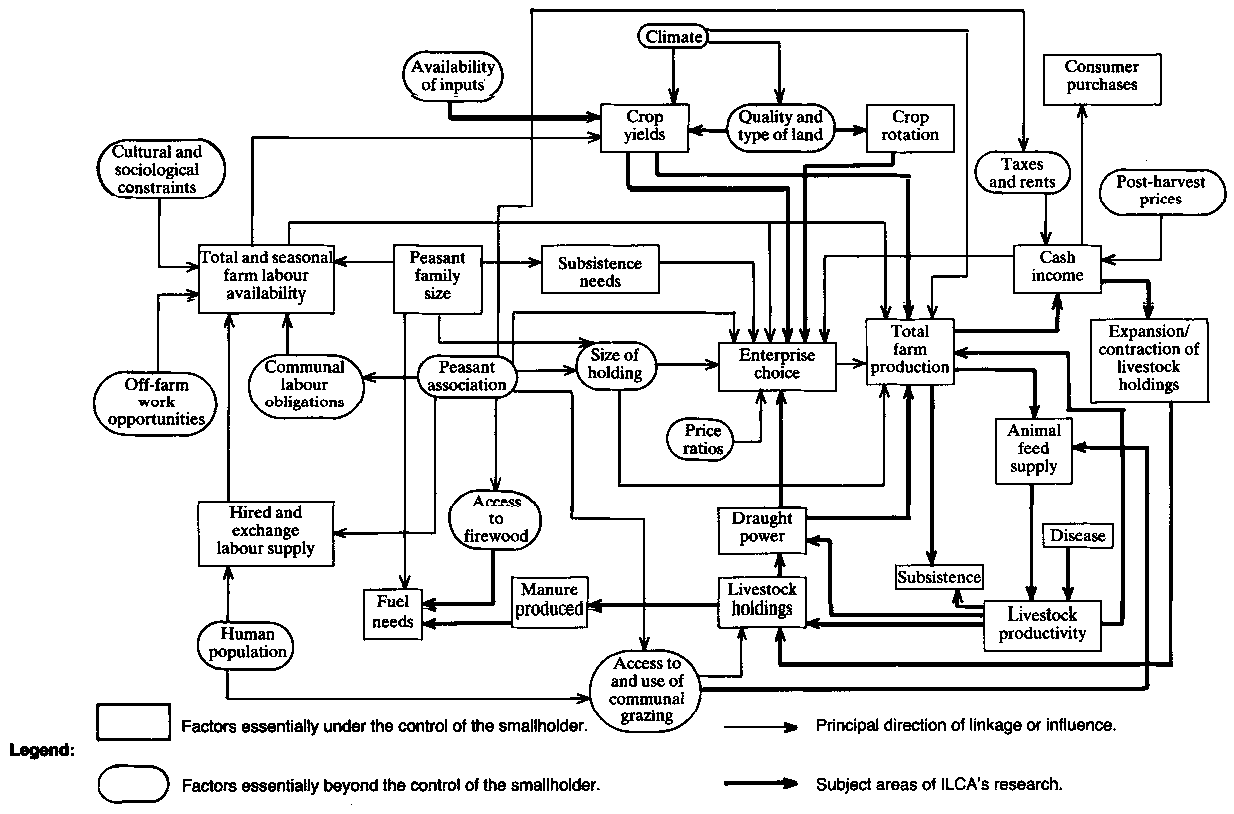
Figure 2.1 is a representation of the main factors influencing the enterprise choice and productivity of an Ethiopian smallholder. The principal purpose of this schematic model is to illustrate the complexity of the agricultural system from the point of view of the smallholder. Even so, it necessarily simplifies the processes and factors involved. The model distinguishes between factors which can be considered as essentially under the control of the smallholder, and those factors over which he has little or no control. A further distinction is made between subject areas being researched by ILCA, and those which are not. The model does not explicitly recognize the time delays involved between inputs and outputs, nor the time sequencing of inputs or outputs.
Not all the linkages in the model can be discussed here. Instead, only those which concern the relationship between a smallholder and the PA of which he is a member are discussed; since they have particular implications for national development of the highland smallholder system.
Membership in a PA implies access to land for communal and individual cultivation, with the size of the individual holding determined mainly by the size of the smallholder's family and the total land area and mix of land qualities available to the PA. Plots allocated to a smallholder in one year are not necessarily allocated to him again in subsequent years.
At present individual stock holdings are not restricted by the PAs, but steady increases in the area cropped within each PA will occur as a consequence of growth in the human population, and it is therefore conceivable that such controls will be introduced in the future. However, PAs do control access to communal grazing lands, and via this mechanism some indirect regulation of individual livestock holdings may be achievable.
As already noted, it is common practice for the communal farm area to be cultivated before the individual farmer's plots. Timeliness of cultivation is a major determinant of crop yields. In this regard the potential competition for labour and ox power between communal and individual plots is an important practical consideration in formulating strategies to achieve the most productive use of a PA's total land resources.
Forested areas are diminishing rapidly over much of the central highlands. The remaining timbered areas are under the direct control of the PA. As noted previously, farmers are now heavily dependent on dung cakes instead of firewood for household fuel. Expansion of the forested area will be a key long-run determinant of the stability of the smallholder family system, as trees not only produce wood for fuel but can also contribute to soil stability by reducing erosion and water runoff. In the more exposed areas, they can additionally be used to reduce crop damage and soil dessication due to strong winds, which are common in the highlands. The government has an active national reafforestation programme. The PA also taxes its members to finance local forestry and other development ventures.
PAs with the authority to implement local development are appropriate vehicles for the introduction of innovations into the livestock component of the smallholder system. With limited trained manpower available, the Ethiopian Government must necessarily concentrate its inputs to development at the PA level. It does not have the resources to service individual farmers. Any technology developments for use by individuals will come to them mainly via their PA.
Figure 2.1. Main factors influencing enterprise choice and productivity of an Ethiopian smallholder.