Introduction
Seasonality
Age at first calving
Calving interval
Length of reproductive life
Number of services per conception
Gestation length
Reproductive is of major importance in a dairy enterprise. The percentage calf crop is crucial for herd replacement, and milk production is heavily dependent on regular reproduction. The rate of genetic progress is also closely linked with reproductive efficiency.
The main traits related to reproductive performance are age at first calving, the interval between successive carvings and, from these two, the potential lifetime production. Under station conditions, age at first calving depends not only on the rate of growth achieved by calves but is also influenced by the management policies with regard to weight or age at first mating and whether or not seasonal breeding is practiced. Calving interval is influenced by such factors as cow and bull fertility, lactation anoestrus and possibly by other effects of lactation on fertility. Calving interval is also affected by management policy in relation to a service period, by the number of services required per conceptions by effects of season and year of last calving and by the effects of the age of the cow.
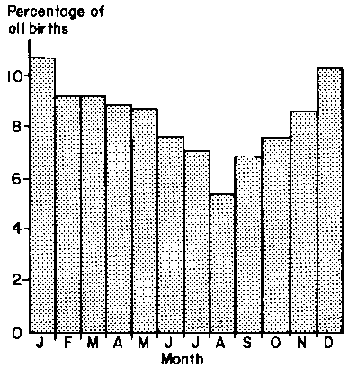
The distribution by month of 3988 births over the period 1957 to 1984 is shown in Figure 7. There were significant differences (X² = 125.3, d.f. = 11, P<0.001) among months in the number of births, most births taking place in December and January and least between July and September. Most conceptions therefore occurred during part of the hot summer in March and April and least in the late wet summer and early winter from October to December.
Although there were significant differences among months in the number of carvings (and by implication, in the number of conceptions), the observed differences were not as marked as expected for an area with the climatic pattern of Um Banein. Farther west in Sudan, in Darfur and under traditional management, the seasonality is very marked, with more than 60% of all carvings taking place in a 3-month period related to conception in the previous rainy season (Wilson and Clarke, 1976). Similarly, in central Mali, where climatic variation is equally marked, the calving pattern is close to that observed in Darfur (Wilson, 1985). At Um Banein, the reduced seasonality is undoubtedly related to supplementary feeding during lactation as most cows reconceive during this period, at about 180 days postpartum. The monthly pattern of carvings at the Gezira research farm for 1939 to 1957 was similar to that at Um Banein (Alim, 1960).
In Kenya cattle, oestrus occurs throughout the year but in some seasons the oestrus period is short and the signs are not pronounced (Mohamed et at, 1985). The system of hand mating practiced from 1959 to 1980 may thus be partly responsible for the slight seasonality, as it could be expected that herdsmen would miss some of the silent or less pronounced heats. The greater number of conceptions during the hot dry summer is rather surprising, however, as is the lower number of services per conception during the wet summer and dry winter periods.
Figure 7. Monthly distribution of carvings at Um Banein for the period 1957-84 (n = 3988).
The mean ± S.E. of age at first calving was 1502 ± 12.4 days with a coefficient of variation of 17.7%. Figure 8 shows the percentage distribution of age at first calving grouped by 90-day periods and also the differences in ages at first calving among years and months.
The mean squares from the analysis of variance for age at first calving are laid out in Table 3. This analysis showed that only the year of a heifer's birth significantly affected the age at which she first calved. Her own month of birth had no overall effect on the age at which she first calved.
The least-squares means for age at first calving are shown in Table 4. The effects of year of the heifer's birth on age at first calving were highly significant. Following a rather advanced age for the few heifers born in 1958, the age was reduced for those born from 1959 to 1961. The age at first calving then increased for animals born from 1962 to 1965 before decreasing for those born in 1966 to 1969. Animals born in these last 4 years had the youngest age at first calving overall. Age at first calving increased sharply for animals born during or after 1970.
Table 3. Mean squares from the analysis of variance for age at first calving.
|
Source of variation |
d.f. |
MS |
|
Month |
11 |
68 740 |
|
Year |
14 |
1 836 024*** |
|
Error |
430 |
70 323 |
*** p<0.001
At Um Banein, heifers are put into the breeding herd at about 2 years old. The mean age at first calving (50.1 months) calculated from the present data set is thus very late. Over a 22-year period, the delay between introduction to the breeding herd and conception averaged about 18 months. The least-squares analysis (Table 4) shows increasing age at first calving over time and this has become more marked since the early 1970s. Average age at first calving for the period 1960-70 has previously been determined at 45.2 ± 7.6 months (El-Khidir et al, 1979) for Um Banein. Earlier studies on Kenana cattle at other locations in Sudan have shown even earlier ages at first calving than the best period for Um Banein: 40.6 months at the Gezira research farm (McLaughlin, 1955); 38.4 months, again at the Gezira farm (Alim, 1960); and 42.9 months at Khartoum University (Khalifa and Shafei, 1965).
In addition to the increased age at first calving over the years at Um Banein, the standard errors as a percentage of the respective annual means have increased. This indicates that there could now be major problems of infertility or sub-optimal fertility in the herd, although it is probable that this is closely related to the nutritional status of heifers. In 1978/79 in a small trial in which 16 heifers were provided with 2 kg concentrate per day and ad lib groundnut hay for a period of 12 months from 6 months of age, the age at first calving was 38.4 months compared with 82.7 months in a control of 36 heifers.
Figure 8. Distribution of ages at first calving for (a) all observed data (n = 475) and as affected by (b) year and (c) month of the heifer's birth.
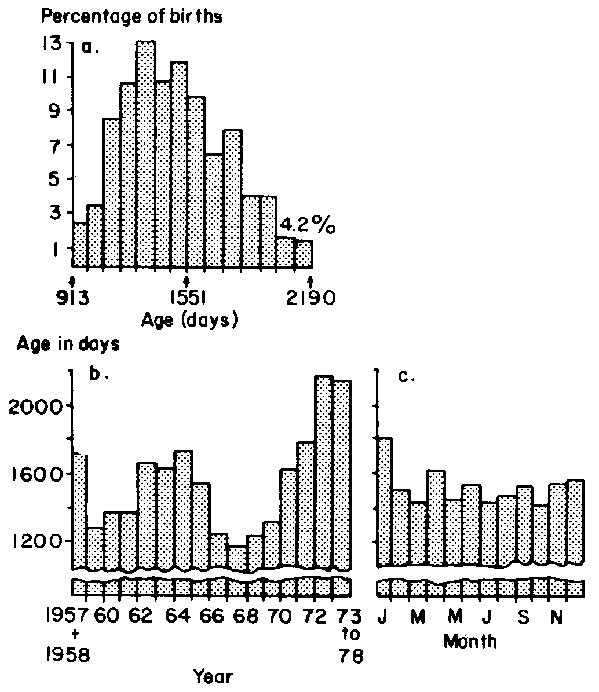
Table 4. Least-squares means for age at first calving.
|
Variable |
n |
|
|
|
Overall L.S. mean |
456 |
1535 |
|
|
Month: |
January |
25 |
1617 |
|
February |
45 |
1502 |
|
|
March |
56 |
1522 |
|
|
April |
40 |
1525 |
|
|
May |
48 |
1455 |
|
|
June |
52 |
1536 |
|
|
July |
43 |
1502 |
|
|
August |
25 |
1511 |
|
|
September |
27 |
1547 |
|
|
October |
31 |
1536 |
|
|
November |
27 |
1559 |
|
|
December |
37 |
1607 |
|
|
Average S.E. |
45.9 |
||
|
Year:
|
1958 |
10 |
1754ai |
|
1959 |
17 |
1313ncf |
|
|
1960 |
15 |
1365c |
|
|
1961 |
16 |
1402cdg |
|
|
1962 |
39 |
1680ai |
|
|
1963 |
17 |
1635aei |
|
|
1964 |
23 |
1731ai |
|
|
1965 |
44 |
1550defh |
|
|
1966 |
39 |
1257bc |
|
|
1967 |
35 |
1190b |
|
|
1968 |
37 |
1233b |
|
|
1969 |
50 |
1311bg |
|
|
1970 |
62 |
1620ah |
|
|
1971 |
32 |
1790i |
|
|
1972 |
20 |
2191j |
|
|
Average S.E. |
54.0 |
||
Within variables, means without a common superscript differ significantly (P<0.05).
Table 5. Mean squares from the analysis of variance for parturition interval.
|
Source of variation |
d.f. |
MS |
|
Dam |
403 |
45 747*** |
|
Month |
11 |
16 162 |
|
Year group |
3 |
103 314** |
|
Lactation number |
6 |
154 006*** |
|
Error |
857 |
23 948 |
*** P<0.001; ** P<0.01.
Table 6. Least-squares means for parturition intervals.
|
Variable |
n |
|
|
|
Overall L.S. mean |
1281 |
534 |
|
|
Month: |
January |
118 |
526 |
|
February |
116 |
494 |
|
|
March |
125 |
537 |
|
|
April |
105 |
551 |
|
|
May |
121 |
549 |
|
|
June |
95 |
541 |
|
|
July |
89 |
538 |
|
|
August |
81 |
551 |
|
|
September |
93 |
529 |
|
|
October |
107 |
528 |
|
|
November |
96 |
526 |
|
|
December |
135 |
536 |
|
|
Average S.E. |
20.4 |
||
|
Year group: |
1964-1967 |
154 |
621a |
|
1968-1971 |
370 |
530b |
|
|
1972-1975 |
469 |
521b |
|
|
1976-1980 |
288 |
463c |
|
|
Average S.E. |
22.6 |
||
|
Lactation number: |
1 |
364 |
457a |
|
2 |
295 |
465ab |
|
|
3 |
225 |
496b |
|
|
4 |
162 |
503b |
|
|
5 |
111 |
544c |
|
|
6 |
65 |
580c |
|
|
>7 |
59 |
692d |
|
|
Average S.E. |
19.2 |
||
Within variables, means without a common superscript differ significantly (P<0.05).
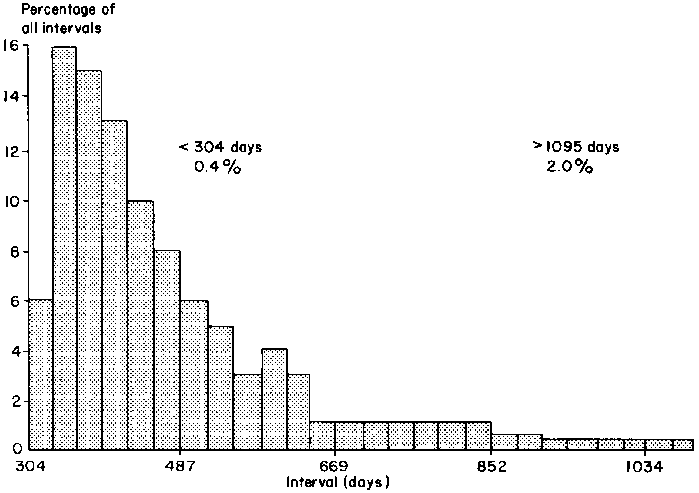
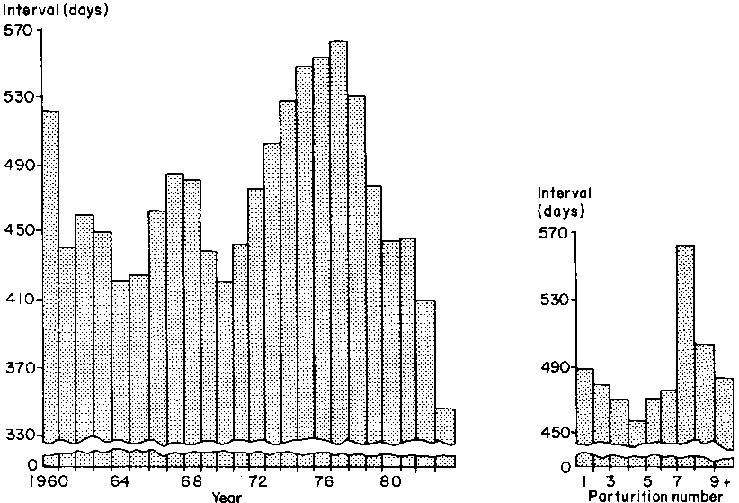
The unadjusted mean calving interval was 485 ± 5.1 days with a coefficient of variation of 36.2%. The percentage distribution of these intervals is shown in Figure 9 and the effects of year and parturition number in Figure 10.
The mean squares from the analysis of variance for calving interval are shown in Table 5 and the least-squares means for this trait are laid out in Table 6. Month of previous parturition did not significantly affect the subsequent interval and most intervals were clustered about the mean. In the least-squares analysis the effects of year group showed a shortening interval with the passage of time. The interval increased with advancing age of the cow, intervals after the fourth and subsequent parturitions being considerably longer than those observed in younger cows.
The repeatability of the interval considered as a trait of the dam was 0.23 ± 0.031.
There is no policy for a required period of time post-partum before cows are bred. The calving interval at Um Banein is longer than intervals recorded for other Kenana cattle. Three other data sets are available for comparison, although all relate to animals at the Gezira farm: Hattersley (1951) recorded 368 days; McLaughlin (1955) noted 408 days; and an interval of 395 days was calculated by Alim (1960).
Figure 9. Distribution of calving intervals in Kenana cows at Um Banein (n = 1782).
The repeatability found in the current study is higher than that estimated for Kenana cows by Khalafalla and Khalifa (1983) and is also higher than most other estimates for this trait in other African cattle (Mahadevan, 1965).
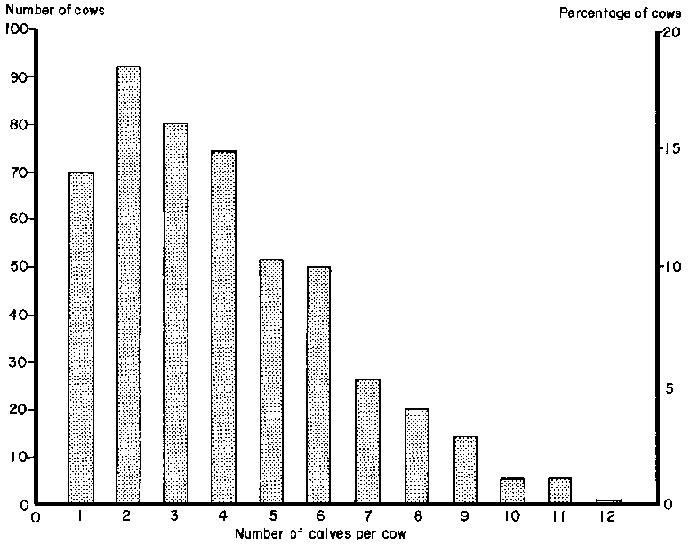
The analysis for length of reproductive life (for cows born on the station and having already left the herd) is shown in Figure 11. One cow had 12 calves but most were culled or left the herd after the sixth parturition. The mean number of calves born per cow was 4.02.
This mean compares with that of 5.4 calculated by Alim (1965) for the Gezira herd. Long reproductive lives assist in maintaining a high intensity of selection for economic characters and, providing that the cows with the greatest numbers of lactation are the highest producers, keeping them in the herd to advanced ages might be good policy. Increased longevity is also instrumental, however, in increasing the generation length and the balance between these two parameters needs to be considered in deciding the overall breeding policy.
Data relating to the number of services per conception were available for 1229 cases. The distribution of the number of services per conception is shown in Figure 12, the mean number of services being 1.21 per conception.
Earlier analyses (Mohamed et al, 1985) indicated 1.41 services per conception for the period 1970-74 (n = 1215 services) or a conception rate of 70.9%, but the number of services per conception increased to 1.84 (n = 412 services, conception rate = 54.3%) during 1980/81. In both these periods, fewer services were required per conception (Table 7) in the dry summer than in the other two seasons. This finding is consistent with the higher total number of conceptions in the dry summer. The reason for the apparently higher fertility and fecundity at this time of year needs to be investigated.
Gestation lengths recorded as being outside lower and upper limits of 265 and 305 days respectively were eliminated from the analysis. The calculated mean and standard error were 286.5 0.20 days with a coefficient of variation of 6.38% (Figure 13).
The gestation period of 286.5 days is as expected. In an earlier analysis (Khalafalla and Khalifa, 1983) the mean period was calculated as 287 0.3 days: that study showed significant effects (P<0.001) of sex of calf on the period, male calves being carried 1.7 days longer than females, but there were no significant effects (P>0.05) due to age of cow.
Figure 12. Number of services per conception expressed as percentage of all recorded conceptions.
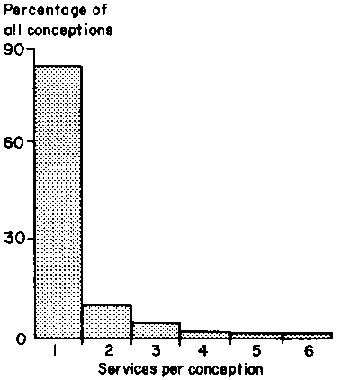
Figure 13. Percentage distribution of gestation periods about intervals of 5 days.
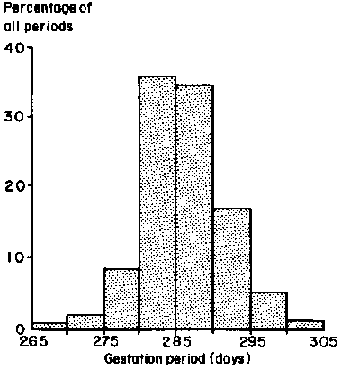
Table 7. Conception rates and number of services per conception for two year-groups and three seasons.
|
Season |
1970-1974 |
1980-1981 |
||||
|
Number of services |
Conception rate(%) |
Services per conception |
Number of services |
Conception rate(%) |
Services per conception |
|
|
Winter |
277 |
68.9 |
1.45 |
114 |
52.6 |
1.9 |
|
Dry summer |
443 |
74.5 |
1.34 |
118 |
79.2 |
1.4 |
|
Wet summer |
495 |
68.7 |
1.45 |
180 |
47.8 |
2.1 |
|
Overall |
1215 |
70.9 |
1.41 |
412 |
54.3 |
1.8 |

 (days)