Introduction
Birth weight
Weights from birth to weaning
Breeding cow weights
A high growth rate is of economic importance for both beef and dairy enterprises. In the case of beef, animals that grow faster reach slaughter weight earlier and therefore overhead costs are lower. In the case of dairy animals, culling can be more rigorous and stock can be replaced earlier if growth rates are higher, as heifers can calve at a younger age and hence increase their lifetime productivity in terms of calves and milk.
At Um Banein, more emphasis has been placed in the past on milk production than on growth, except when particular station directors or researchers have had a special interest in aspects of growth and weight. While a complete series of birth weights is available, data on other weights tend to have been unevenly recorded over the life of the station. This chapter analyses the available data in order to provide results for comparison with future data, which should be more rigorously collected.
Birth weights of 3466 calves were recorded in the period 1957-84. The unadjusted mean and standard error were 23.2 ± 0.05 kg (range 8.0-43.0 kg) with a coefficient of variation of 13.4%. The frequency distribution of these weights is shown in Figure 14.
The management system at Um Banein has not allowed the use of an analytical model in which dams could be analyzed within sire groups. Separate mixed models were therefore used to analyze the influences of individual dams and sires on birth weight. The mean squares from the analysis of variance for the dam effects are shown in Table 8 and the least-squares means in Table 9. The mean squares from the sire analysis are shown in Table 10 and the least-squares means in Table 11.
In both series of analyses it was shown that month of birth did not have a significant influence on birth weight, while year-group, sex of young and age of the dam had significant effects. There were no significant effects of the dam on birth weight but there were highly significant differences due to the sire.
Male calves were significantly heavier than females at birth. Calves born during the period 1968-75 were generally heavier than calves born during other periods, but in the dam analysis calves born in the period 1981-84 were heavier than calves born in any period except 1968-71. In the sire analysis, calf birth weights declined from a peak in 1968-1971. In the dam analysis; calf birth weights declined from dams more than 10 years old, while in the sire analysis weights increased throughout the life of the dam.
Figure 14. Frequency distribution of birth weights of Kenana calves born at Um Banein.
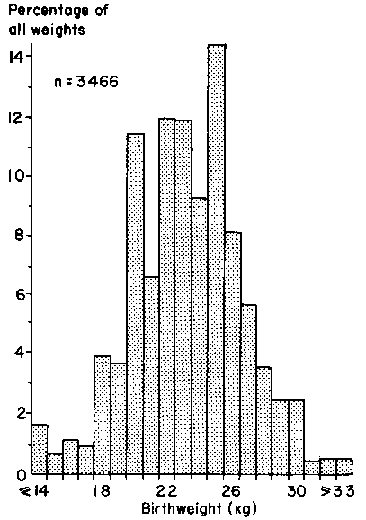
Table 8. Mean squares from the analysis of variance for birth weight (dam model).
|
Source of variation |
d.f. |
MS |
|
Dam |
744 |
13.2*** |
|
Month |
11 |
10.8 |
|
Year group |
5 |
167.4*** |
|
Sex |
1 |
1201.9*** |
|
Damage |
9 |
26.5*** |
|
Error |
1638 |
7.3 |
*** P<0.001.
Table 9. Least-squares means for birth weight of Kenana calves (dam model).
|
|
Variable |
n |
|
|
Overall L.S. mean |
2409 |
22.7 |
|
|
Month: |
January |
222 |
22.6 |
|
February |
206 |
22.7 |
|
|
March |
210 |
22.9 |
|
|
April |
210 |
22.3 |
|
|
May |
215 |
22.4 |
|
|
June |
180 |
22.7 |
|
|
July |
194 |
22.7 |
|
|
August |
153 |
22.8 |
|
|
September |
198 |
23.4 |
|
|
October |
195 |
22.6 |
|
|
November |
189 |
22.8 |
|
|
December |
237 |
22.3 |
|
|
Average S.E. |
0.26 |
||
|
Year group: |
1961-1963 |
55 |
20.8a |
|
1964-1967 |
308 |
21.3a |
|
|
1968-1971 |
548 |
23.8b |
|
|
1972-1975 |
680 |
22.9c |
|
|
1976-1980 |
545 |
22.6ac |
|
|
1981-1984 |
273 |
24.6b |
|
|
Average S.E. |
0.42 |
||
|
Sex: |
female |
1207 |
21.8a |
|
male |
1202 |
23.5b |
|
|
Average S.E. |
0.14 |
||
|
Dam age (years):
|
<4 |
165 |
23.2a |
|
4 - 5 |
345 |
23.4a |
|
|
5 - 6 |
425 |
23.2a |
|
|
6 - 7 |
345 |
23.4a |
|
|
7 - 8 |
300 |
23.1a |
|
|
8 - 9 |
222 |
22.9a |
|
|
9 - 10 |
177 |
22.8ab |
|
|
10 - 11 |
140 |
22.1bc |
|
|
11 - 12 |
103 |
21.6cd |
|
|
>12 |
187 |
21.1d |
|
|
Average S.E. |
0.29 |
||
Within variables means without a common superscript differ significantly (P<0.05).
Table 10. Mean squares from the analysis of variance for birth weight (sire model).
|
Source of variation |
d.f. |
MS |
|
Sire |
90 |
19.1*** |
|
Month |
11 |
11.6 |
|
Year group |
5 |
108.2*** |
|
Sex |
1 |
1635.4*** |
|
Dam age |
9 |
42.9*** |
|
Error |
2292 |
8.8 |
*** P<0.001.
Table 11. Least-squares means for birth weight of Kenana calves (sire model).
|
Variable |
n |
|
|
|
Overall L.S. mean |
2409 |
23.2 |
|
|
Month:
|
January |
222 |
23.1 |
|
February |
206 |
23.2 |
|
|
March |
210 |
23.5 |
|
|
April |
210 |
23.2 |
|
|
May |
215 |
22.9 |
|
|
June |
180 |
23.2 |
|
|
July |
194 |
22.8 |
|
|
August |
153 |
23.3 |
|
|
September |
198 |
23.7 |
|
|
October |
195 |
23.4 |
|
|
November |
189 |
23.2 |
|
|
December |
237 |
23.0 |
|
|
Average S.E. |
0.29 |
||
|
Year group: |
1961-1963 |
55 |
23.9ab |
|
1964-1967 |
308 |
23.8a |
|
|
1968-1971 |
548 |
24.7b |
|
|
1972-1975 |
680 |
23.4a |
|
|
1976-1980 |
545 |
22.2c |
|
|
1981-1984 |
273 |
21.1d |
|
|
Average S.E. |
0.38 |
||
|
Sex: |
female |
1207 |
22.3a |
|
male |
1202 |
24.1b |
|
|
Average S.E. |
0.21 |
||
|
Dam age (years):
|
4 |
165 |
22.1a |
|
4 - 5 |
345 |
22.5ab |
|
|
5 - 6 |
425 |
22.9bc |
|
|
6 - 7 |
345 |
23.6cd |
|
|
7 - 8 |
300 |
23.5cd |
|
|
8 - 9 |
222 |
23.5cd |
|
|
9 - 10 |
177 |
23.5cd |
|
|
10 - 11 |
140 |
23.3bcd |
|
|
11 - 12 |
103 |
23.2bcd |
|
|
>12 |
187 |
23.9d |
|
|
Average S.E. |
0.29 |
||
Within variables means without a common superscript differ significantly (P<0.05).
Repeatability of birth weight (as a trait of the dam) was found to be 0.200 ± 0.022. Heritability (estimated as a trait of the sire) was 0.190 ± 0.048.
The mean birth weight found in this study is less than that reported by Khalifa and Khalafalla (1979) but slightly heavier than that reported by Hattersley (1951) for Kenana cattle. Male calves in the current study were 1.7 kg heavier than female calves, compared with an earlier difference of 1.3 kg (Khalifa and Khalafalla, 1979). The decline in birth weight from 1968 to 1971 can be attributed to shortage of feed due to the high stocking rates during those years (c.f. Figure 6). The effect of dam age on birth weight in the sire analysis in this study is in agreement with that found by Khalifa and Khalafalla (1979), who reported that birth weight tended to increase with age of dam, reaching a maximum in cows more than 7.5 years old.
The heritability and repeatability of birth weight in this study estimated at 0.190 ± 0.048 and 0.200 ± 0.022 respectively were lower than those reported by Khalifa and Khalafalla (1979). This could be due to the deterioration of management and fluctuation of environmental conditions in the period 1972-84.
Calf weaning weights
Calf body weights from birth to 180 days
Calf growth rate from birth to 180 days
Phenotypic correlations at different ages for body weight and growth rate
Weight measurements after birth were made on calves born in 1958 and 1959, in 1978 and then from 1980 onwards. The earlier measurements were made on calves born of foundation dams and the later ones on calves of station-bred dams. The later weights were taken following a long period of overstocking and during a prolonged drought. It should therefore be recognized that the observed weights are probably lower than long-term weights would be and that growth rates would also be lower.
The unadjusted mean and standard error of weaning weight at 120 days for calves born in 1980 to 1984 were 52.4 ± 0.57 kg with a coefficient of variation of 22.3%.
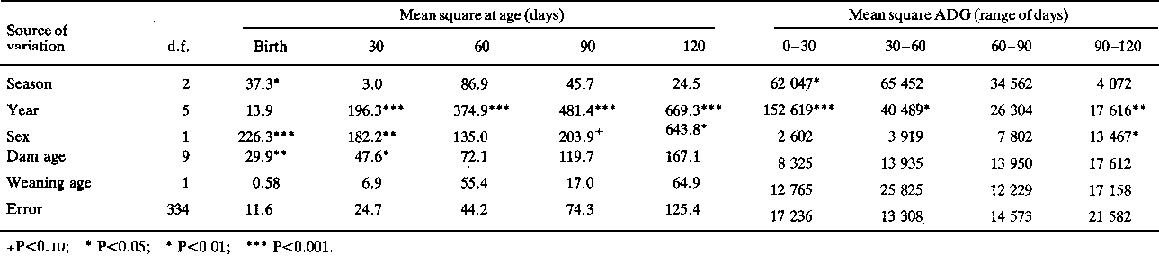
Table 12 presents the mean squares from the analysis of variance for weaning weight. Only the sex of the calf and year of birth had significant effects on this trait. Season of birth and dam age showed no significant effect on weaning weight.
Least-squares means of weaning weight are shown in Table 13. Calves weaned in 1983 and 1984 were significantly heavier than those weaned in other years. Males were significantly heavier than females. There was a slight but non-significant increase in weaning weight as dam age increased.
Table 12. Mean squares from the analysis of variance for 120-day weaning weight.
|
Source of variations |
d.f. |
MS |
|
Season of birth |
2 |
43 402 |
|
Year of birth |
4 |
45 517* |
|
Sex |
1 |
192 126** |
|
Dam age |
9 |
19 231 |
|
Error |
323 |
21 085 |
<0.05; *+ P<0.01.
Table 13. Least-squares means of 120-day weaning weight of Kenana calves.
|
Variable |
n |
|
|
|
Overall L.S. mean |
340 |
51.2 |
|
|
Season: |
winter |
155 |
51.0 |
|
hot summer |
65 |
51.9 |
|
|
wet summer |
120 |
50.6 |
|
|
Average S.E. |
2.39 |
||
|
Year: |
1980 |
55 |
50.3a |
|
1981 |
73 |
49.0a |
|
|
1982 |
69 |
48.0a |
|
|
1983 |
77 |
52.4b |
|
|
1984 |
66 |
56.1b |
|
|
Average S.E. |
|
|
1.60 |
|
Sex: |
female |
182 |
49.5a |
|
male |
158 |
52.8b |
|
|
Average S.E. |
1.07 |
||
|
Dam age (years):
|
<4 |
4 |
41.5 |
|
4 - 5 |
14 |
47.3 |
|
|
5 - 6 |
48 |
50.8 |
|
|
6 - 7 |
36 |
52.9 |
|
|
7 - 8 |
33 |
53.2 |
|
|
8 - 9 |
29 |
51.1 |
|
|
9 - 10 |
39 |
51.8 |
|
|
10 - 11 |
36 |
52.9 |
|
|
11 - 12 |
33 |
56.2 |
|
|
>12 |
68 |
53.8 |
|
|
Average S.E. |
2.40 |
||
Within variables, means without a common superscript differ significantly (P<0.05).
In a trial carried out on the station, weight gains and growth rates of calves weaned at 60 days of age were compared with those of calves weaned at 120 days. Table 14 shows the least-squares analysis of variance of this comparison while least-squares means of body weight and daily gains are shown in Table 15 for the two different groups. It is clear from these two tables that early weaning did not affect subsequent growth up to the age of 120 days.
There are, apparently, no earlier comparative data available on the weaning weights of Kenana calves.
The high weaning weights in 1983 and 1984 are due to these calves being fed green legumes and concentrate ad lib from the age of 1 week onwards. Male calves outweighed female calves by 2.8 kg and this could be due to the fact that the calves that were heaviest at birth were heaviest at weaning (Mukhtar, 1961; Osman and Rizgalla, 1968). The absence of significant effects of season and dam age on this trait is as expected, since calves were artificially reared.
Early weaning (60 days) did not affect subsequent growth of calves at least until the age of 120 days. In this case, liquid milk could be saved for human consumption and farmers would be able to sell the surplus to maximize profit. A 60 day-old calf weighing 35.5 kg consumes 2.2 kg of milk per day (Table 2). If this amount were saved and sold, it would provide an income of LSud 3.74 per cow per day if sold at the Khartoum market price of LSud 1.70 per litter (LSud 3.00 = US$ 1.00).
Data for growth rate from birth to 180 days of age were available for 156 calves (97 males and 59 females) born from 1980 to 1984.
Mean squares from the analysis of variance for body weights from birth to 180 days of age are shown in Table 16. Season of calving had a significant effect on birth weight only and did not affect weights at older ages. Year of calving affected birth, 30-day, 60-day and 90-day weights significantly. Sex had a significant effect on both birth weight and 30-day weight. Dam age had a significant effect only on birth weight.
Least-squares means of body weights from birth to 180 days of age are given in Table 17. Calves born in winter had significantly higher birth weights than those born in the hot and wet summers. Season had no significant influence on body weights from 30 days up to 180 days. Year of calving affected body weights from birth to 180 days in an increasing pattern, being low in 1980 and high in 1984. Males were significantly heavier at birth than females and were still significantly heavier at 30 days old. Dam age significantly affected birth weight, calves from older dams being generally heavier, but had no effect on body weight at other ages.
Table 15. Comparison of body weights and growth rates of early-weaned calves (W days) with calves weaned at 120 days old.
|
|
Weight (kg) at age (days) |
ADG (g) for period (days) |
||||||||
|
n |
Birth |
30 |
60 |
90 |
120 |
0-30 |
30-60 |
60-90 |
90-120 |
|
|
Weaned at 120 days |
318 |
20.4 |
28.5 |
35.5 |
42.8 |
49.7 |
269.1 |
235.2 |
240.6 |
229.9 |
|
Weaned at 60 days |
35 |
20.2 |
29.0 |
37.0 |
43.6 |
51.3 |
291.9 |
267.5 |
218.4 |
256.2 |
Table 16. Mean squares from the analysis of variance for body weights of Kenana calves from birth to 180 days of age.
|
Mean squares at age (days) | ||||||||
|
Source of variation |
d.f. |
Birth |
30 |
60 |
90 |
120 |
150 |
180 |
|
Season |
2 |
26.2* |
11.6 |
35.3 |
17.5 |
2.6 |
166.2 |
482.7 |
|
Year |
4 |
34.2** |
172.5*** |
306.1*** |
284.0** |
191.8 |
111.7 |
78.7 |
|
Sex |
1 |
75.2** |
94.9* |
67.6 |
69.7 |
139.6 |
135.1 |
29.3 |
|
Damage |
8 |
35.4*** |
35.6 |
42.7 |
64.5 |
112.4 |
113.7 |
113.8 |
|
Error |
140 |
7.9 |
19.4 |
34.7 |
62.8 |
105.9 |
129.1 |
153.3 |
Data available for this analysis were the same as those for weights to 180 days.
The mean squares from the analysis of variance of growth rate are shown in Table 18. Season had a significant effect on growth from 30 days to 60 days, 120 to 150 days and 150 to 180 days. Year of calving affected growth significantly from birth to 30 days of age only. Dam age and the sex of the calf had no significant effects on growth rate at any stage.
Least-squares means of growth rate are presented in Table 19. Growth rates from 30 to 60 days were significantly higher for calves born in the dry summer than for those born in the winter and wet summer periods. Calves born during the wet summer had significantly higher growth rates from 120 to 150 days and from 150 to 180 days of age than calves born in other seasons. Year of calving significantly affected growth rate from birth to 30 days, 1984 calves growing fastest, but had no effect on growth rate at later ages.
Growth rates declined as age advanced there being a particularly marked reduction in average daily gain (ADG) after weaning at 120 days (Figure 15).
The high ADG in the summer, from 30 to 60 days of age, was probably due to supplementary feeding of cotton stubble's and hay to these calves in this season (see Table 1). After weaning at 120 days, these calves were kept on natural grazing, this being reflected by the high ADG in wet summer from 120 to 180 days of age.
The high ADG from birth to 30 days in 1984 was probably due to the high birth weight, the calves that were heaviest at birth growing fastest (Mukhtar, 1961; Osman and Rizgalla, 1968). From Table 19, it can be seen that ADG declined as age advanced, with a sharp drop just after weaning.
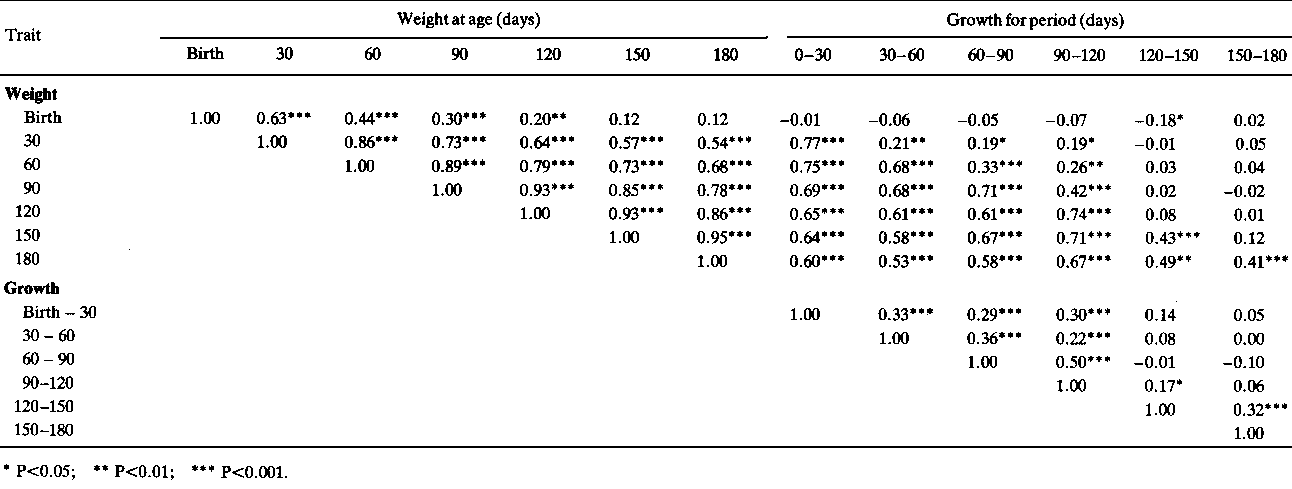
Table 20 shows the phenotypic correlations between body weights and growth rate from birth to 180 days of age. The negative correlations between birth weight and growth undoubtedly are a result of the fixed amounts of feed provided to calves: heavier calves have to devote more to maintenance and less to growth than their lighter-born contemporaries.
Adult cows were not weighed regularly at Um Banein, except during 1984 and 1985, when all breeding cows on the station were weighed four times in order to establish the magnitudes of seasonal changes. The observed pattern of changes (Table 21) was similar to that already recorded for growing stock. Maximum weights were achieved following the rainy season and minimum weights at the end of the hot dry summer just prior to a rapid increase in weight at the onset of the rains.
In 1985, 46 cows and heifers within 2 weeks before parturition weighed an average of 308 kg, with post-partum weights within 2 weeks of having given birth averaging 268 kg, the loss being equivalent to 13% of body weight.
Table 17. Least-squares means of body weight for Kenana calves from birth to 180 days of age.
|
Variable |
Weight (kg) at age |
||||||||
|
n |
Birth |
30 |
60 |
90 |
120 |
150 |
180 |
||
|
Overall L.S. mean |
156 |
20.9 |
29.0 |
36.2 |
43.0 |
49.2 |
53.5 |
56.7 |
|
|
Season: |
|||||||||
|
|
winter |
79 |
21.7a |
29.1 |
35.4 |
42.7 |
49.1 |
51.6 |
53.6 |
|
|
dry summer |
26 |
20.3b |
29.4 |
37.5 |
43.8 |
49.5 |
53.8 |
57.1 |
|
|
wet summer |
51 |
20.5b |
28.3 |
35.7 |
49.0 |
55.0 |
55.0 |
59.4 |
|
Average S.E. |
|
0.48 |
0.74 |
0.99 |
1.33 |
1.74 |
1.92 |
2.09 |
|
|
Year: |
|||||||||
|
|
1980 |
10 |
19.2a |
25.6a |
32.3 |
39.0a |
46.8 |
51.9 |
54.3 |
|
|
1981 |
45 |
19.9a |
27.1a |
33.8 |
40.4a |
46.6 |
51.8 |
56.1 |
|
|
1982 |
40 |
21.1b |
29.4b |
35.9 |
42.6a |
48.2 |
52.1 |
55.3 |
|
|
1983 |
35 |
21.1ab |
28.8ab |
36.2 |
43.4a |
50.3 |
54.3 |
58.4 |
|
|
1984 |
26 |
22.9c |
33.9c |
42.9 |
49.3b |
54.1 |
57.2 |
59.3 |
|
Average S.E. |
|
0.62 |
0.97 |
1.30 |
1.75 |
2.28 |
2.51 |
2.74 |
|
|
Sex: |
|||||||||
|
|
female |
97 |
20.1a |
28.1a |
35.5 |
42.2 |
48.2 |
52.4 |
56.2 |
|
|
male |
59 |
21.6b |
29.8b |
36.9 |
43.7 |
50.2 |
54.5 |
57.2 |
|
Dam age (years): |
|||||||||
|
|
<5 |
8 |
19.9abc |
26.6 |
32.3 |
38.1 |
42.1 |
45.3 |
47.9 |
|
|
5 - 6 |
23 |
18.1b |
27.2 |
34.7 |
42.0 |
49.3 |
53.4 |
57.3 |
|
|
6 - 7 |
13 |
20.7acd |
27.5 |
35.5 |
41.6 |
47.1 |
52.7 |
57.0 |
|
|
7 - 8 |
15 |
21.3acd |
29.3 |
36.8 |
43.9 |
51.9 |
56.2 |
57.8 |
|
|
8 - 9 |
13 |
20.9acd |
29.7 |
37.9 |
44.9 |
52.1 |
54.6 |
57.5 |
|
|
9 - 10 |
17 |
22.7d |
31.0 |
38.7 |
45.7 |
51.6 |
55.6 |
59.4 |
|
|
10 - 11 |
16 |
20.0d |
28.4 |
35.8 |
43.3 |
49.8 |
55.6 |
59.4 |
|
|
11 - 12 |
10 |
22.1acd |
30.2 |
36.6 |
42.1 |
47.1 |
52.0 |
55.3 |
|
|
>12 |
41 |
22.0ac |
30.6 |
37.6 |
45.2 |
51.7 |
56.2 |
59.2 |
|
AverageS.E. |
|
0.78 |
1.22 |
1.63 |
2.20 |
2.85 |
3.15 |
3.44 |
|
Within variables, means in the same column without a common superscript differ significantly (P<0.05).
Table 18. Mean squares from the analysis of variance of growth rate of Kenana calves from birth to 180 days of age.
|
Source of variation |
d.f. |
Mean square for ADG (range of days) |
|||||
|
0-30 |
30-60 |
60-90 |
90-120 |
120-150 |
150-180 |
||
|
Season |
2 |
27 951.8 |
32 513.8* |
12 079.4 |
7 305.6 |
193 270.0*** |
91 696.6** |
|
Year of calving |
4 |
61 189.5** |
26 466.8* |
3 152.6 |
25 792.3 |
17 900.4 |
25 333.8 |
|
Sex |
1 |
1 273.6 |
2 521.1 |
12.7 |
13 311.9 |
44.2 |
42 573.8 |
|
Dam age |
8 |
9 656.1 |
6 813.4 |
8 141.5 |
18 543.1 |
13 338.6 |
10 522.8 |
|
Error |
140 |
12 966.2 |
10 589.5 |
15 162.2 |
17 917.0 |
18 313.2 |
15 434.9 |
* P<0.05; ** P<0.01; *'* P<0.001.
Table 19. Least-squares means of average daily gain (ADG) of Kenana calves from to 180 days of age.
|
Variable |
n |
ADG (g/day) for period |
||||||
|
0-30 |
30-60 |
60-90 |
90-120 |
120-150 |
150-180 |
|||
|
Overall L.S. mean |
156 |
269.7 |
241.9 |
224.6 |
207.5 |
142.0 |
106.5 |
|
|
Season: |
||||||||
|
|
winter |
79 |
245.5 |
211.9a |
242.9 |
211.9 |
83.9a |
64.7a |
|
|
dry summer |
26 |
303.4 |
267.4b |
212.0 |
189.7 |
140.7ab |
109.8ab |
|
|
wet summer |
51 |
260.1 |
246.5ab |
219 |
220.9 |
201.4b |
145.1b |
|
Average S.E. |
|
19.23 |
17.38 |
20.80 |
22.60 |
22.85 |
20.98 |
|
|
Year: |
||||||||
|
|
1980 |
10 |
212.8 |
221.8ab |
225.0 |
259.4 |
168.9 |
80.3 |
|
|
1981 |
45 |
240.0 |
222.2a |
220.9 |
205.1 |
173.5 |
141.9 |
|
|
1982 |
40 |
274.7 |
218.5a |
222.7 |
187.4 |
129.9 |
105.8 |
|
|
1983 |
35 |
257.3 |
245.5a |
241.5 |
228.2 |
133.4 |
135.1 |
|
|
1984 |
26 |
363.6 |
301.7b |
213.2 |
157.3 |
104.4 |
69.6 |
|
Average S.E. |
|
25.18 |
22.76 |
27.23 |
29.60 |
29.93 |
31.67 |
|
|
Sex: |
||||||||
|
|
female |
97 |
266.5 |
246.4 |
224.3 |
197.3 |
142.6 |
124.8 |
|
|
male |
59 |
272.8 |
237.5 |
224.9 |
217.9 |
141.4 |
88.3 |
|
Average S.E. |
|
16.01 |
14.47 |
17.32 |
18.83 |
19.04 |
17.47 |
|
|
Dam age (years): |
||||||||
|
|
<5 |
8 |
224.8 |
188.4 |
192.0 |
134.7 |
105.5 |
85.7 |
|
|
5 - 6 |
23 |
304.2 |
250.7 |
241.7 |
243.9 |
135.6 |
129.2 |
|
|
6 - 7 |
13 |
226.5 |
266.1 |
200.9 |
184.5 |
186.7 |
143.8 |
|
|
7 - 8 |
15 |
265.4 |
249.3 |
236.5 |
267.3 |
144.7 |
52.6 |
|
|
8 - 9 |
13 |
293.4 |
270.8 |
235.3 |
238.4 |
83.3 |
95.9 |
|
|
9 - 10 |
17 |
276.9 |
256.3 |
232.4 |
198.3 |
131.7 |
127.6 |
|
|
10 - 11 |
16 |
280.9 |
246.3 |
248.3 |
215.5 |
178.6 |
113.2 |
|
|
11 - 12 |
10 |
268.4 |
215.7 |
182.6 |
165.8 |
162.6 |
110.7 |
|
|
>12 |
41 |
286.6 |
233.7 |
251.9 |
219.0 |
149.3 |
100.3 |
|
Average S.E. |
|
31.60 |
28.55 |
34.17 |
37.14 |
37.55 |
34.47 |
|
Within variables, means in the same column without a common superscript differ significantly (P<0.05).
Figure 15. Average daily gain for specified periods after birth of Kenana calves at Um Banein.
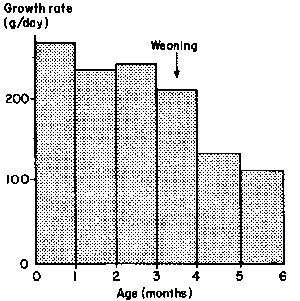
Table 21. Seasonal variation in weight of breeding cows at Um Banein, 1984185.
|
Parameter |
Season of weighing |
||||
|
Late wet summer |
End of cold winter |
End of hot summer |
Early wet summer |
||
|
Number of cows |
89 |
95 |
89 |
90 |
|
|
Mean weight |
(kg) |
315.4 |
261.9 |
253.1 |
299.4 |
|
(s.d.) |
50.3 |
40.0 |
41.5 |
48.1 |
|
|
(range) |
210-430 |
180-390 |
175-400 |
200-440 |
|

 (Kg)
(Kg)
 (Kg)
(Kg)