Introduction
Production traits
The profitability of a dairy enterprise depends on obtaining as high a level of milk production as possible within local nutritional constraints, relative to the maintenance cost of the animals.
The milk production parameters studied were total lactation yield, lactation length, yield per day of lactation and annual milk yield. The last was calculated in an attempt to combine reproductive performance and milk production in order to define one of the most important parameters of a dairy enterprise. Lactation curves were also established, bearing in mind their potential importance in the nutritional management of Kenana cattle.
Uncorrected means and standard deviations for the main parameters of milk production are shown in Table 22. The data relating to parturition interval have already been presented in Figure 10.
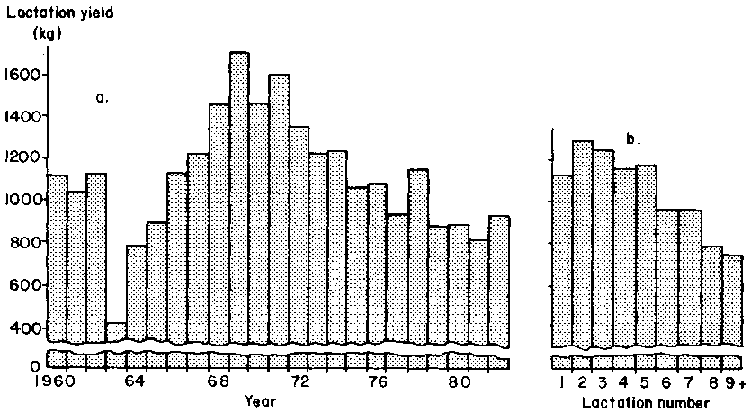
The uncorrected mean lactation milk yield for all cows calculated for the years 1957-83 was 1160 ± 17.8 kg with a coefficient of variation of 74.3%. The highest yield was 4530 kg. This mean for both station-bred and foundation cows included many zero yields which were largely due to missing data in the early years of the station: when these records were discarded, the mean for station-bred cows was 1511 ± 18.7 kg with a coefficient of variation of 44.4%. Uncorrected means for years and for lactation number are shown in Figure 16.
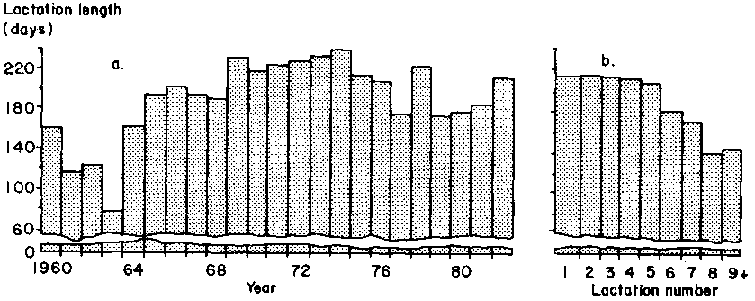
The mean lactation length of all cows was 198 ± 2.4 days, with a coefficient of variation of 59.3%. For station-bred cows, excluding zero yields, it was 257 ± 1.9 days with a coefficient of variation of 26.7%. Variation of lactation length with year of calving is shown in Figure 17.
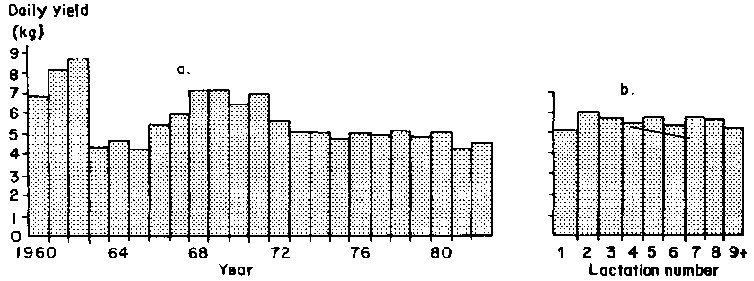
The mean milk yield per day of lactation for all cows was 4.6 ± 0.06 kg, the coefficient of variation being 64.9%. For station-bred cows, with zero yields excluded, it was 5.7 ± 0.06 kg per day, with a coefficient of variation of 35.0%. The effects of year of calving and of lactation number on this variable are shown in Figure 18.
Lactation curves established from the uncorrected data are shown in Figure 19. The month in which lactation started did not appear to affect the shape or height of the curve. Year had a considerable effect on the height of the curve (i.e. the total amount of milk produced) but, with the exception of 1973, did not appear to affect the shape. In 1973, peak yield was not achieved until the second month whereas in all other years yield peaked in the first month.
Table 22. Lactation milk yield, lactation length and milk yield per day of lactation in Kenana cattle at Um Banein.
|
Class of cow |
n |
Lactation yield(kg) |
Lactation length(days) |
Yield per day of lactation (kg) |
||||||
|
|
± |
s.d. |
|
± |
s.d. |
|
± |
s.d. |
||
|
Foundation + station-bred |
2362 |
1160 |
|
863.3 |
198 |
|
117.8 |
4.6 |
|
2.32 |
|
Foundation + station-bred without zero yields |
1564 |
1497 |
|
728.8 |
251 |
|
73.2 |
5.7 |
|
2.28 |
|
Station-bred |
1995 |
1162 |
|
831.9 |
202 |
|
117.8 |
4.6 |
|
2.82 |
|
Station-bred without zero yields |
1281 |
1511 |
|
671.2 |
257 |
|
68.6 |
5.7 |
|
1.99 |
Figure 19. Lactation curves of Kenana cows at Um Banein for (a) selected years and (b) lactation numbers.
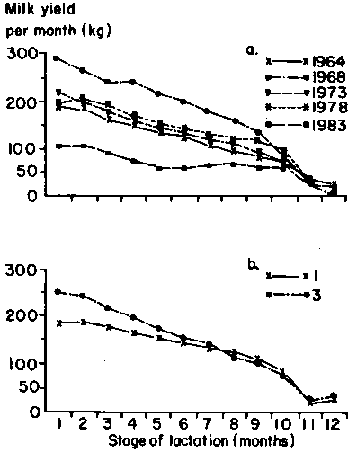
Effects of lactation number appeared to be similar for all lactations except the first. The first lactation had a slightly delayed peak monthly yield and high levels of production persisted longer than in later lactations.
The mean squares from the analysis of variance are shown in Table 23. Dam was included in the analysis to remove the effects of repeat observations. Lactation yield was significantly affected by lactation number and year of calving but not by month of calving: similar effects were evident for yield per day of lactation, calving interval and annual yield. There were no significant effects of any of the fixed effects tested on lactation length.
The least-squares means for lactation yield, lactation length, milk yield per day of lactation, calving interval and annual yield are shown in Table 24.
Lactation yield increased significantly from the first to the third lactation. The year of calving also had a significant effect, with highest yields occurring in the period 1968-71.
Average daily yield as affected by lactation number and year showed a pattern very similar to lactation milk yield, mainly because lactation length differences were non-significant.
Annual yield increased from first to third lactations with fourth and fifth lactations not differing significantly from the first. Sixth, seventh and subsequent annual yields were very much less than those from younger cows.
When cow origin (foundation or station-born) was considered as a source of variation in the analysis for these traits, it was shown to have no significant effect.
The repeatabilities of the traits (established only for station cows, with zero yield excluded) were 0.37 ± 0.030 for lactation yield, 0.29 ± 0.030 for lactation length, 0.34 ± 0.030 for yield per day of lactation, 0.23 ± 0.031 for calving interval and 0.27 ± 0.030 for annual yield. There were highly significant differences (P<0.001) among dams for all traits studied.
The unadjusted mean lactation milk yield of 1497 kg is lower than that reported for the Gezira Research Farm and the Khartoum University herds (Table 25), although the Um Banein sample was larger and short lactations were not discarded.
The variation in milk yield with parity, exhibiting a significant increase from first to second and third lactations as shown in the least-squares analysis, follows the pattern for Friesians (Wood, 1969).
Table 23. Mean squares from the analysis of variance for lactation yield, lactation length, milk yield per day of lactation, calving interval and annual milk yield.
|
Source of variation |
d.f. |
Lactation yield |
Lactation length |
Milk yield per day of lactation |
Calving interval |
Annual variation yield |
|
Dam |
403 |
811 300*** |
8 898*** |
5.8*** |
45 747*** |
594 017*** |
|
Lactation number |
6 |
2 629 485*** |
2 426 |
37.1*** |
154 006*** |
3 525 656*** |
|
Month of calving |
11 |
225 483 |
2 597 |
1.4- |
16 162 |
207 937 |
|
Year group of calving |
3 |
7 678 337*** |
1 861 |
110.2*** |
103 314** |
7 432 414*** |
|
Error |
857 |
210 812 |
2 356 |
1.8 |
23 948 |
205 789 |
** P<0.01; *** P<0.001.
Table 24. Least-squares means for lactation yield, lactation length, milk yield per day of lactation, calving interval and annual milk yield.
|
Variable |
|
n |
Lactation yield (kg) |
Lactation length (days) |
Yield per day of lactation (kg) |
Calving interval (days) |
Annual yield (kg) |
|
Overall L.S. mean |
1281 |
1415.1 |
251.5 |
5.4 |
534 |
1067.0 |
|
|
Lactation number: |
1 |
364 |
1415.5ad |
261.5 |
5.1a |
457a |
1189.3a |
|
2 |
295 |
1547.5b |
258.6 |
5.8b |
465ab |
1288.9bc |
|
|
3 |
225 |
1645.8c |
259.0 |
6.1c |
496b |
1334.0c |
|
|
4 |
162 |
1487.8ab |
250.1 |
5.7b |
503b |
1185.9ab |
|
|
5 |
111 |
1475.8ab |
252.3 |
5.6b |
544c |
1108.8a |
|
|
6 |
65 |
1301.6d |
242.9 |
5.1a |
580c |
866.5d |
|
|
>7 |
59 |
1031.6e |
236.0 |
4.2 |
692d |
495.6e |
|
|
Average S.E. |
|
64.17 |
6.76 |
0.18 |
19.2 |
60.01 |
|
|
Month1:
|
January |
118 |
1377.9 |
246.0 |
5.3 |
526 |
1034.3 |
|
February |
116 |
1417.1 |
249.6 |
5.4 |
494 |
1156.3 |
|
|
March |
125 |
1542.9 |
262.2 |
5.7 |
537 |
1177.1 |
|
|
April |
105 |
1420.5 |
253.9 |
5.4 |
531 |
1048.1 |
|
|
May |
121 |
1348.5 |
245.0 |
5.3 |
549 |
1012.0 |
|
|
June |
95 |
1398.9 |
246.4 |
5.3 |
541 |
1031.0 |
|
|
July |
89 |
1337.4 |
243.3 |
5.3 |
538 |
982.3 |
|
|
August |
81 |
1490.6 |
257.8 |
5.6 |
551 |
1087.4 |
|
|
September |
93 |
1410.0 |
248.2 |
5.4 |
529 |
1047.1 |
|
|
October |
107 |
1408.9 |
252.0 |
5.3 |
528 |
1079.8 |
|
|
November |
96 |
1413.3 |
254.3 |
5.3 |
526 |
1079.1 |
|
|
December |
135 |
1415.0 |
259.1 |
5.3 |
536 |
1069.7 |
|
|
Average S.E |
|
66.93 |
7.06 |
0.19 |
20.4 |
63.03 |
|
|
Year group1: |
1964-1967 |
154 |
1162.7a |
243.9 |
4.5a |
621a |
733.8a |
|
1968-1971 |
370 |
1724.9a |
248.3 |
6.7b |
530b |
1350.2b |
|
|
1972-1975 |
469 |
1328.2a |
251.6 |
5.1a |
521b |
1011.5c |
|
|
1976-1980 |
288 |
1444.5a |
262.1 |
5.3a |
463c |
1172.5b |
|
|
Average S.E. |
|
|
73.50 |
7.72 |
0.21 |
22.6 |
69.55 |
¹ Refers to month and year-group of commencement of lactation.Within variables, means in the same column without a common superscript differ significantly (P<0.05).
The significant effects of year-group can be related mainly to the levels of management and stocking rates on the station. For example, when analysis was carried out for individual years rather than year-groups, cows calving in 1969 had a significantly higher milk yield than cows calving in all other years except 1968. The 1969 yield was attained after overcoming the early critical management problems of the station but before stocking rates became excessive during the 1970s (Figure 6). As can be seen from Table 25, the unadjusted mean of 1718 kg for 1969 is within the range of yields from the other Kenana herds. Lactation yields were lower during the 1970s, this being related to the higher stocking rates in those years.
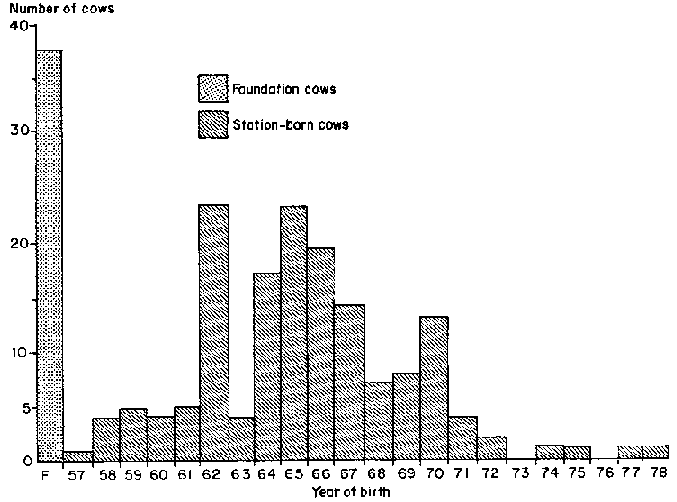
The number of yields in excess of 2000 kg has also followed a similar pattern (Figure 20). A total of 192 cows gave 381 lactations of over 2000 kg, the majority being foundation cows or cows born in the 1960s. These yields represent some 16% of lactations used in the analyses.
The large variation in milk yield due to year of calving, related to stocking rate and management levels, implies that selection should be based on comparison of yields within years and not between or among years.
The lack of effect of month of calving on lactation yield at Um Banein, despite very marked seasonal climatic variation, may be explained by the provision of some irrigated fodder in the earlier years and supplementary feeding provided in the dry season. Alim (1960) also reported no effects due to month of calving, with similar seasonality of irrigation. In later years, when there were shortages of fodder during the dry summer, the weight changes of the cows may have had a buffering effect which prevented significant milk yield differences.
Table 25. Lactation data from Kenana cattle herds.
|
Herd and source of data |
n |
Lactation yield (kg) |
Lactation length (days) |
Calving interval (days) |
Annual yield (kg) |
|
Gezira Research Farm (Alim, 1960) |
539 |
1613 |
224 |
395 |
1491 |
|
Khartoum University (El Amin, 1969) |
1537 |
1860 |
294 |
428 |
1568 |
|
Um Banein (present study) |
2362 |
1497 |
251 |
479 |
1141 |
|
Um Banein (1969 only) |
102 |
1718 |
230 |
432 |
1451 |
The Kenana would appear to compare favourably with other zebu breeds in Africa in terms of lactation yield; Kimenye (1981) reported an average yield of 1455 kg from 3995 records from the Kenyan National Sahiwal Stud.
The lactation length reported from these data can be compared with records from other Kenana herds (Table 25) and is intermediate between the two others quoted.
Milk yield per day of lactation followed a similar pattern to that outlined for lactation milk yield as regards the effect of parity because lactation length showed no significant variation with parity. Similarly, the significant effect of year-group of calving showed a maximum daily yield in the period 1968-71 with a continuing fall thereafter.
The conclusions to be drawn from the effect of the variables investigated on annual milk yield are of importance as this parameter amalgamates the individual lactation traits with reproductive performance. The effect on annual yield of a longer calving interval combined with lactation traits shows a fall in productivity from the fifth to the seventh lactation, which suggests the need to consider culling all but the highest yielding cows at this time. As with other lactation traits, year-group had a significant effect. This may be related to improved management during the 1960s. The maximum adjusted mean was again observed in 1969. The high stocking rate of the 1970s must largely explain the fall in annual yield. The increased lactation length and decreased calving interval noted after the destocking in the early 1980s may have ameliorated the effect of lower yield per day of lactation and thus caused a small increase in annual milk yield.
Although lactation yield at Um Banein was only slightly lower than in the other herds (Table 25), the long calving interval meant that the annual yield was much lower. The figure for the "best" year (1969) at Um Banein, with higher yields and a shorter calving interval is, however, similar to the other data. The analysis shows the importance of matching animal numbers to feed supply by controlling stocking rates.
The effect of parity on the lactation curve is as could be expected from references to Friesians (Wood, 1969) and zebu cattle (Rao and Sundaresan, 1979). The lactation curves were characterized by peak yields occurring immediately after calving, whereas in most cattle the peak occurs 42 to 60 days after calving. These results imply that cattle at Um Banein were underfed before parturition and until 60 days after parturition. Further investigations on changing the pattern of supplementary feeding, with more emphasis on these earlier stages and a reduction in feed supply in late lactation, would seem to be warranted. A study on 37 cows carried out during the "best" period of Um Banein showed that peak lactation occurred 56 days after calving (Bashir, 1969).