K. Otieno1, J.F.M. Onim2 and M.N. Mathuva1
1 Ministry of Livestock Development/SR-CRSP, Maseno, Kenya.
2 Winrock International Institute for Agricultural Development, Morrilton, Arkansas, USA.
Abstract
Introduction
Materials and methods
Results and discussion
References
Maize (Zea mays) stalks, sugarcane (Saccharum officinarum) tops, sorghum (Sorghum bicolor) stalks and bane grass (Pennisetum purpureum × P. typhoides) were chopped and compacted in synthetic gunny bags which were then buried in a trench silo 5 m long, 3 m wide and 1.5 m deep. To some bags of each crop, molasses was added at the rate of 5% by weight of the material in the bags on green matter basis. The molasses was diluted with an equal amount of water before application. The silages was then sampled after two months. The pH of all the silages was in the range expected for good silages (pH 3-4) except that of bane grass without molasses which had a pH of 5.18. Addition of molasses thus improved the fermentation quality of bane grass. Maize stalks, sugarcane tops and bane grass with molasses silages had the highest condition scores based on appearance and smell. Bana grass without molasses had the lowest score. Ensiling appeared to lower the in vitro dry-matter digestibilities of maize stalks, bane grass and sugarcane tops by approximately 4.68%, 11.45% and 16.18% respectively and increased that of sorghum stalks by 1.91%.
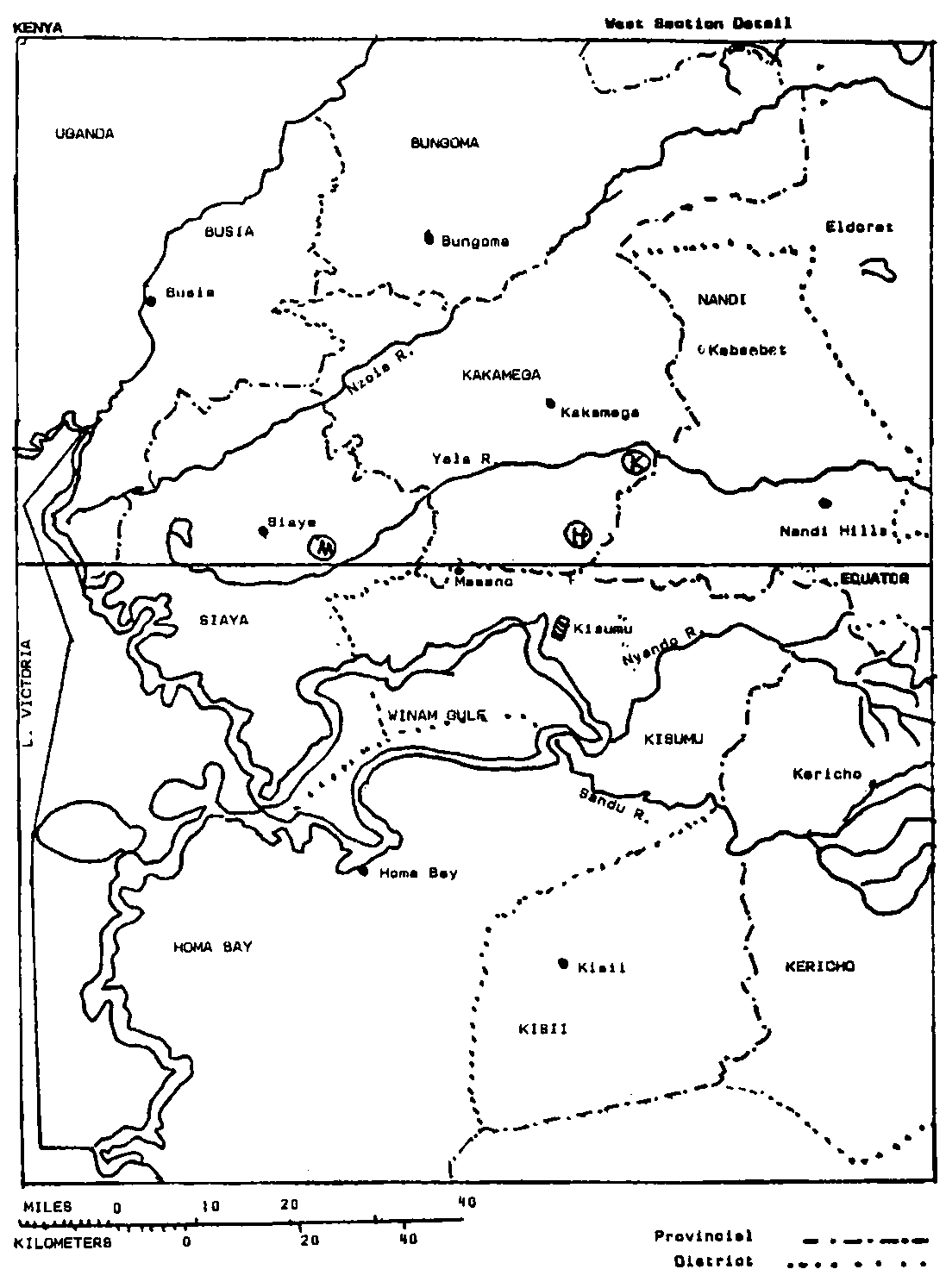
Western Kenya (Figure 1) has a bimodal rainfall pattern with the long rains occurring in March, April and May, and short rains in September, October and November with an annual mean rainfall of about 1600 mm.
The distribution of livestock feeds closely follow this pattern resulting into periods of feed shortage in between the rainy seasons with the effect that there is often a deficit between feed availability and its demand on the farms. To stabilise the supply throughout the year and ensure adequate nutrition of the livestock, there is a need to conserve the excess feeds that occur during the rains. This can also enable the farmers to increase the herd size on a given farm (Hart et al., 1984). Conservation would also be important in that it would be in line with the government's policy on the development of production in high and medium potential areas through investment proposals which emphasise zero and near zero-grazing of livestock (Anon, 1981).
Feeds can be conserved either as hay or as silage. However, the major limitation to the use of these methods by small-scale farmers is the lack of simple and appropriate technologies for hay balling and ensiling. The feed resources (FR) project of the Small Ruminants Collaborative Research Support Programme (SR-CRSP), Kenya has already developed a simple hay balling box for small-scale farmers (Onim et al., 1985). However, there are certain feeds available on these farms which would be more suitable to conserve as silage than as hay.
This paper reports on a study undertaken to evaluate the technical feasibility of using synthetic gunny-bags and molasses (or jaggery sugar) as an additive for ensiling small batches of some forages commonly available on the small-scale farms in western Kenya.
Maize stalks
Sorghum stalks
Sugarcane tops
Bana grass
Methods
Materials:
a) Crops ensiled.
Maize is the most important food crop grown in Kenya and since its introduction in the middle of the 16th century (Miracle, 1966) it has become the main staple food of most Kenyans. It is grown practically everywhere in the country with the small-scale farmer playing an important role in its production. The greater proportion of small-scale output comes from holdings with less than five hectares in size (Senga, 1976) and this is a common feature in western Kenya. The sum total of maize output from both large and small-scale sectors puts western Kenya as the major growing area in the country (Maritim, 1982).
Apart from its importance as a food crop in the region, maize is equally important as livestock feed and it is used either as thinnings, leaf strippings, toppings or as stover which is left over after harvesting the ears. The toppings and the stovers are, however low in quality and usually the animal would select only the softer and more palatable leaves rejecting the tough and stemmy portions. To miximise the use of maize as a livestock feed, it would be appropriate to harvest the stalks while still green, chop everything including the stem and ensile. When cut at this stage the quality of the stalks will still be higher than that of the dry stover and there would be little wastage in the form of refused stems.
However, unlike in the developed countries where it is common to ensile a whole maize plant with ears, in the developing countries the high demand for grains for human consumption militates against the use of a whole maize plant for ensiling. Fortunately, in western Kenya, a lot of maize is harvested green for sale as boiled or roasted maize for human consumption. This is done when the ears are at early-dough to hard-dough stage which coincidentally is also the time recommended for cutting maize for silage in western Kenya (Sheldrick, 1975).
The maize crop used in the study reported here, was thus harvested when the ears were ready for roasting, and that was 125 days from planting. The cobs were sold for consumption and the green stalks chopped for ensiling.
Sorghum (Sorghum bicolor) is also a popular crop especially in lower parts of western Kenya (altitude below 1300 m a.s.l.) such as South Nyanza, Kisumu, Busia and Siaya districts (Figure 1). It is often made available to livestock as feed either by defoliating the leaves which are then fed to the livestock while tethered or by grazing the livestock in the sorghum fields after harvesting the heads. An alternative to leaf stripping and field grazing would be to harvest the heads and then ensile the green stalks.
However, unlike in maize where the ears can be harvested and utilised when still green, the sorghum heads have to be fully mature before they can be harvested and sun-dried for threshing.
The sorghum stalks used in this study were thus obtained from a local farmer near the Maseno research station after he had harvested the heads and this was about 150 days from planting.
Sugarcane (Saccharum officinarum) is increasingly becoming one of the major cash crops for small-scale farmers in Kenya. In 1981 for instance, of the estimated 3.8 million metric tons of sugarcane produced in Kenya, 1.7 million metric tons of sugarcane was produced by smallholders (Schluter, 1984). The figure increased to 57% in 1982/83. However, it should be indicated here that a key policy issue in Kenyan agriculture is the balance to be maintained in land allocation between sugarcane and maize.
Western Kenya is a major sugarcane growing area in the country and most of the cane goes into white sugar manufacturing or into jaggery factories. However, the cane tops are often burned before harvesting cane or thrown to waste and only a small proportion of it is used for livestock feeding. This could be mainly due to lack of appropriate methods for conserving it since after it dries it becomes rough and less palatable.
In this study the cane tops were obtained from a small-scale sugarcane farmer near the Maseno research station when he was harvesting his cane for sale to a nearby jaggery factory.
Napier grass (Pennisetum purpureum) and its derivatives such as bane grass (P. purpureum × P. typhoides) is the most widely grown cut-and-carry fodder crop in Kenya. Over 30 types of Napier grass have been tested in Kenya and currently bane is the most popular type especially for dairy cattle feeding. Yields of upto 10 tons of dry matter (DM) per hectare (ha) after 8 months of growth have been reported in Kenya (KARI, 1985). In western Kenya Mathuva et al (1985) reported a cumulative dry-matter (DM) yield of 40 tons/ha after 3 cuts in a year with an application of 100 kg N/ha of NPK (20-20-0) fertilizer. Because of these very high yields there is often excess of it on the farms especially during the rainy seasons. The recommended cutting height for utilisation is when the grass has attained a height of 1 m and when the grass is left in the field for a longer duration it overgrows into canes which are of little use to livestock. When the excess is conserved as hay it becomes very brittle and rough, making it less palatable to livestock. The alternative would be ensiling. The bane grass that was used for this study was harvested when about 1 m high and that was 101 days from planting.
b) The additive used: Molasses:
Molasses, which is a by-product of the sugarcane and sugarbeet industries is a relatively cheap source of fermentable carbohydrates which is widely available in the tropics and which is not a staple of the human diet (Preston and Leng, 1985).
In industrialised countries, molasses has been used in the manufacture of drinking alcohols e.g. rums, industrial alcohols for mixing with petrol to constitute gasohol, fattening livestock, e.g. in Cuba (Preston and Willis, 1974) and in compounding livestock feeds to improve palatability, pelleting and reducing dustiness. However, in the developing countries molasses is more available than the other potential feed ingredients. It can be used as a source of fermentable carbohydrates providing the basis of the diet for ruminants, as a palatable carrier for urea, minerals and other nutrients for improving the efficiency of utilisation of low-N diets (e.g crops residues, sugarcane and agro-industrial byproducts) and as a source of trace minerals and some macro-elements e.g. sulphur, calcium and potassium (Preston and Leng, 1985).
It has also been used widely from the beginning of this century as an additive in silage (Castle and Watson, 1985) and excellent results have been obtained with lucerne silages (Reed and Fitch, 1917).
In the study reported here it was used mainly to provide the fermentable carbohydrates for appropriate lactic acid (CH3.CH(OH).COOH) fermentation that would result into a well-preserved silage. It was also hoped that it would improve the palatability of the silage and that by acting as a source of trace minerals and some macro-elements it would improve the overall quality of the silage. The molasses was purchased from a nearby white sugar factory at the price of Ksh. 100.00 per ton*.
* 1 US$ = 16.00 KSh., 1986.
c) Synthetic gunny bags
These are commonly available in retail shops in the country and are traditionally used for packaging sugar, salt, rice and maize flour. The empty bags are then sold in the local open markets at a price of about Ksh. 7.00 per bag. The decision to use these bags in the study were based on the assumptions that:
1. It would be easier to ration the silage at the time of feeding if it is in small batches of known quantity.2. Spoilage at feeding due to aerobic deterioration would be reduced since the bags would be easier to remove and this would reduce the length of exposure to air.
3. It would be easier to apply the desired amount of molasses to the small batches which are known quantity than to unknown quantity (by weight) of materials in a trench or pit silo.
4. Since the different crops available on the farms for ensiling reach physiological maturity at different times, the gunny bags would allow each to be ensiled as it becomes available.
5. If any of the crops is more susceptible to spoilage, this spoilage would be confined to only a few bags containing that crop.
6. The bags would allow the ensilage of small batches of the available forages, and
7. The bags would be reused in ensiling several times before they got old.
The bags used in this study had no polythene liners inside.
d) The trench silo
The silo that was used in this study was a trench dug 5 m long, 3 m wide and 1.5 m deep giving a total volume of 18 m3 as recommended by Stotz (1983). Neither the floor nor the walls of the trench were cemented.
The different crops were each chopped separately using a double-bladed hand operated chaff cutter and the chopped materials subsequently packed tightly into the synthetic gunny bags. Each bag was then weighed using a spring balance and each weighed 38 kg. For each of the crops used half of the bags received molasses while others did not. The molasses was applied at 5% by weight of the materials in each bag on green matter basis. Thus each bag received about 2 kg of molasses which was diluted with an equal amount of water before applying uniformly on to the materials in the bags. The dilution was to ensure uniform spread of the molasses which is normally thick and viscous. Samples were taken from each of the bags for DM estimation and chemical analysis.
Each bag was then tightly knotted using sisal twines and then arranged horizontally in rows in the pre-dug trench silo. A polythene sheeting was then overlaid on top of the bags before covering with soil which was then tightly pressed by trampling on it. The silo was then left undisturbed for two months after which it was opened for the first sampling of the silages. The subsequent samplings followed after four and six months respectively.
Duplicate samples were taken per crop and treatment, one sample being dried in an oven at 100°C for 24 hours for DM determination while the second sample was sun-dried for four days and used for laboratory analyses.
Nitrogen determination on the samples was done in duplicate according to the Association of Official Analytical Chemists (A.O.A.C., 1975) methods. Neutral detergent fibre (NDF), acid detergent fibre (ADF), sulphuric acid lignin (ADL) and cellulose were determined according to the procedure described by Goering and Van Soest (1970). The digestibility was determined by the in vitro technique of Tilley and Terry (1963). The percentage of lignin in ADF was merely calculated from the results.
The pH of the silages was determined by soaking 20 g of the materials overnight in 100 ml of distilled water. This was then divided into three portions, filtered and pH determined using a pH meter. The mean pH for each crop was then calculated.
During the sampling the silages were visually assessed in terms of appearance. The smell of each silage was also noted. An arbitrary condition score was then used to compare the silages in terms of appearance and smell.
Table 1 shows a summary of the mean values of quality parameters for the treatments two months after ensiling. The DM levels of the ensiled crops together with the additional water soluble carbohydrate (WSC) from the molasses had marked effects on the fermentation quality of the silages. The pH values were all in the range expected for good silages (pH 3-4) except in the case of unmolassed bane grass silage which also had a foul smell attributable to putrefaction. In the molassed bane grass silage, the pH was not very different from that of maize stalks, sugarcane tops and sorghum silages. This difference in pH between the unmolassed and molassed bane silage was caused by high contents and hence low DM of 15.90% (c.f. 22.58% for maize) and the WSC content of the ensiled crops. Grasses are generally inherently low in WSC and this means that they have less substrate for lactic acid fermentation. Where molasses was added the level of WSC was raised and this improved the quality of the fermentation thus lowering the pH. In the unmolassed bane grass silage, the acidity was not sufficient to suppress the growth of clostridal bacteria which were responsible for secondary fermentation of lactic acid to butyric acid (C3H7COOH) and deamination and decarboxylation of amino acids resulting into putrefaction (Stoskopf, 1981).
Table 1: Mean value of quality parameters for the ensiled crops and their respective silages (1st sampling).
|
CROPS |
%DM |
%CP |
IVDMD |
ADL |
ADF |
LIGN/ADF % |
NDF |
pH |
|
MAIZE STOVER | ||||||||
|
Material ensiled |
22.58 |
6.08 |
51.05 |
10.83 |
49.70 |
0.22 |
77.82 |
- |
|
Silage without mol. |
20.83 |
9.28 |
47.31 |
7.25 |
43.48 |
0.17 |
64.31 |
4.50 |
|
Silage with mol. |
22.77 |
6.85 |
50.00 |
7.29 |
37.34 |
0.20 |
66.49 |
4.10 |
|
BANA GRASS | ||||||||
|
Material ensiled |
15.90 |
12.59 |
68.97 |
15.71 |
47.19 |
0.33 |
78.48 |
- |
|
Silage without mol. |
16.94 |
10.38 |
56.28 |
5.52 |
40.54 |
0.14 |
59.46 |
5.18 |
|
Silage with mol. |
19.77 |
11.94 |
65.86 |
9.11 |
34.61 |
0.26 |
56.47 |
4.18 |
|
SUGARCANE TOPS | ||||||||
|
Material ensiled |
23.67 |
5.52 |
52.24 |
11.32 |
47.27 |
0.24 |
77.31 |
|
|
Silage without mol. |
33.97 |
3.88 |
45.51 |
11.61 |
42.86 |
0.27 |
71.43 |
4.70 |
|
Silage with mol. |
36.12 |
4.85 |
42.06 |
10.77 |
42.19 |
0.26 |
75.41 |
4.00 |
|
SORGHUM STOVER | ||||||||
|
Material ensiled |
35.55 |
4.68 |
48.13 |
13.54 |
46.76 |
0.29 |
75.88 |
- |
|
Silage without mol. |
43.06 |
6.47 |
53.16 |
10.77 |
40.40 |
0.27 |
64.64 |
4.13 |
|
Silage with mol. |
41.10 |
3.88 |
44.93 |
7.11 |
43.52 |
0.16 |
64.84 |
4.20 |
The pH level at which clostridial activity is prevented varies with water content of the ensiled material. At a water content of 50% silage can be well preserved at a pH of 5.0 whereas secondary aerobic fermentation can occur in silage with 85% water content even when the pH is below 4.0 (Thomas and Young, n.d.). With moist materials the content of water tends to counteract the preservative action of the primary fermentation acids. This explains why, without an additional source of WSC to ensure rapid drop in pH, it was not easy to achieve excellent silage in unmolassed bane grass. A pH below 3.5 was necessary to achieve this as illustrated in Figure 2. The data shows slight increases in DM of the silages where molasses was applied and this agrees with the observations of McDonald (1981) who also noted that losses of soluble carbohydrates in effluent, particularly from wet crops, can be high and this can also influence the type of fermentation in the silage. Table 2 shows a comparison of the silages using an arbitrary condition score.
Table 2. Conditions scores* of the different silages on the basis of appearance and smell.
|
|
Conditions scores | ||
|
Types of silage |
Appearance |
Smell |
Total score |
|
Maize stover | |||
|
Silage without molasses |
3 |
3 |
6 |
|
Silage with molasses |
3 |
3 |
6 |
|
Bana grass | |||
|
Silage without molasses |
2 |
1 |
3 |
|
Silage with molasses |
3 |
3 |
6 |
|
Sugarcane tops | |||
|
Silage without molasses |
3 |
3 |
6 |
|
Silage with molasses |
3 |
3 |
6 |
|
Sorghum stover | |||
|
Silage without molasses |
2 |
2 |
4 |
|
Silage with molasses |
2 |
2 |
4 |
* The scores used are 1 = poor, 2 = moderate and 3 = good. For appearance, a condition score of 3 indicates a brownish, well pickled silage while for smell it refers to the typical silage smell without any foul odour often associated with putrefaction.
Figure 2. Fermentation quality in relation to silage and DM content.
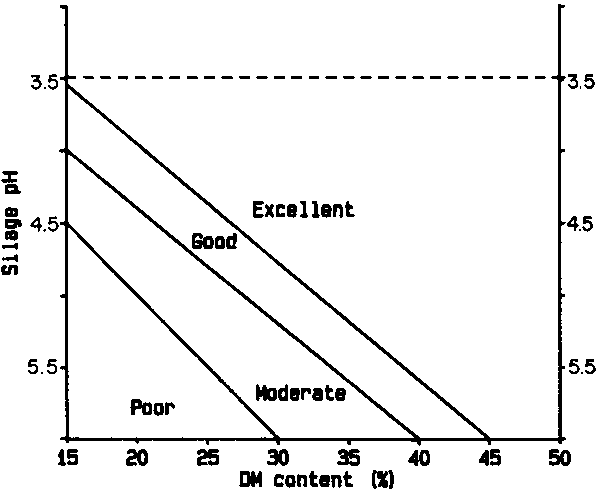
Source: Thomas and Young (n.d.).
It can be seen that the bane grass silage without molasses had the lowest total score and the addition of molasses greatly improved the score.
In all the crops presented in Table 1, except bane grass, CP was lower than the minimum level of 7% below which the intake of forages is markedly reduced (Milford and Minson, 1966). Protein supplementation would therefore be necessary for efficient utilisation of these silages. This becomes even more crucial in cases where molasses is added. Studies elsewhere (Peralta and Hughes-Jones, 1981; Sutton, 1979) have shown that when molasses is used, even at restricted levels, as the sole supplement to low quality roughages, digestibility, rate of passage and voluntary feed intake may be reduced. This is because the molasses would promote a rapid growth of fast-growing sugar digesting microbes and these would deprive the slower-growing cellulolytic organisms of what little N is available in the rumen (Gilchrist and Schwartz, 1971). Bana grass had the highest in vitro dry-matter digestibility (IVDMD) with sorghum having the lowest (Table 1). It is not clear why bane grass which also had the highest lignin as a percentage of ADF (lignin/ADF%) had the highest IVDMD. Sands et al. (1982) reported a negative correlation between IVDMD and lignin/ADF ratio for certain feeds in western Kenya.
Ensiling appeared to lower the IVDMD of maize stover, bane grass and sugarcane tops by approximately 4.68%, 11.5% and 16.18% respectively and increased that of sorghum stalks by 1.91%. Deville and Cheong (1978) however, reported similar digestibility and volatile fatty acid pattern between fresh cane tops and cane tops silage with the addition of molasses and ammonia in a feeding trial with goats.
Although organic acids with and without formal in are currently being widely used as silage additives and are rated highly in terms of their effects on preservation and animal performance (Anon, 1983), it is claimed that many of them are unpleasant to use. This has caused a renewed interest in molasses and today simple effective methods of handling and applying it to crops have been developed. Ely (1978) has reviewed the effect of silages treated with molasses on milk production and he concluded that this additive was most successful with low DM, high protein crops.
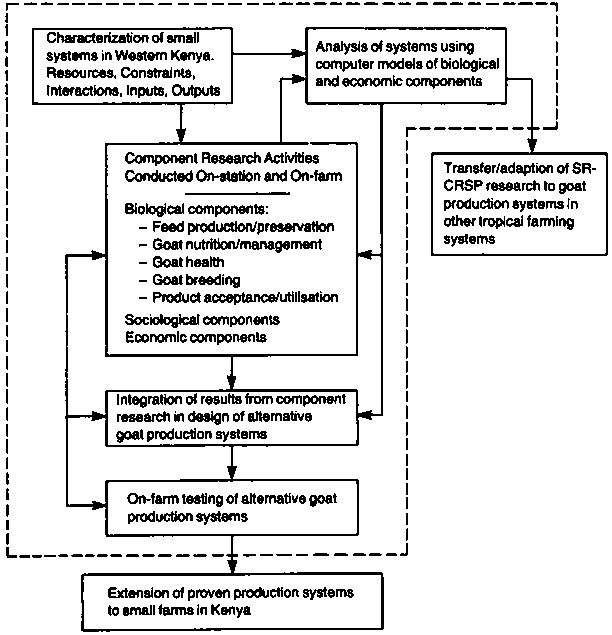
The results from this study demonstrate the technical feasibility of ensiling maize stover, surgarcane tops, bane grass and sorghum stover in synthetic gunny bags. It also shows the importance of using molasses as an additive when the material to be ensiled has a high water content. Our immediate concern now is to extend this technology to our clientele, the small-scale farmers in Western Kenya. In our research programme we follow the systems approach as shown in Figure 3. Having developed the technology on the station, the next phase is to implement it on the farms, first as a researcher-managed trials, then as a researcher-farmer managed trials, before it is fully given over to the farmers themselves. As an initial step in this process we have conducted training workshops for our field staff and some representative farmers from the study communities in which we are operating. These representative farmers were also people with certain responsibilities in their respective communities e.g. assistant chiefs, primary and secondary school teachers etc. On the other hand we have also conducted training workshops for the farmers themselves in schools within their communities. The workshops involve theoretical packages developed on the station. These are conducted in the local languages of the farmers. In addition to this, we have regularly mounted field-days in our research station and invited the agricultural extension personnel and local farmers. We do also participate in the local agricultural shows. These activities have created a working relationship between us (researchers), our clients (the farmers) and the extension personnel. It also reduces the amount of work that the extension staff have got to do. In many instances the extension personnel are not able to make regular visits to farmers within their designated areas of work. This is usually due to the fact that they have too many farmers to serve across a very wide area with no proper provision for transport (Reynolds et al., 1984). Thus the diffusion of new technologies would be too slow if one relied entirely on the extension staff. Moreover, individual farm visits would be too cumbersome. Thus group extension approach can be more appropriate and practical.
Important too is the question of whether the inputs in this technology would be readily available within reach to the farmers and whether they will be able to afford them. It has to be accepted that adoption of any innovation involves some initial capital inputs and sometimes these can be very substantial. The two major sources of capital inflow for smallholders in western Kenya can be categorised broadly into on-farm and non-farm (or off-farm). The non-farm sources of income are mainly in the form of urban migration and subsequent wage employment particularly by the male members of the households and remittances from sons and daughters employed in the urban areas.
Mukhebi et al., (1986) reported that on average 66% of the total household cash receipts of the families within the clusters where SR-CRSP works is derived off-farm. The importance of non-farm income and/or loans in financing innovation in the rural areas in Kenya only become evident when it is realized that if the average poor smallholder in Central, Nyanza and Western provinces, for instance, were to increase his purchased farm inputs to the level of the mean for all smallholders, he would have to reduce his household consumption by 25% if he has to meet the costs off his normal income (Collier and Lal, 1984).
One form of non-farm income is credit from financial institutions. Even though it is generally agreed that access to credit facilitates agricultural innovation in Kenya, self-financing has been more important than formal credit as a motivating force in increasing productivity for most smallholders (Commins et al. 1986). As Pischke (1977) argues, self-finance is simpler, involves the farmer in less financial risk than the formal credit and leaves the farmer in greater control over his activities. It is also compatible with gradual, risk-averting innovation with respect to enterprises not subject to indivisibilities. Moreover, format credits are also often difficult to administer and this raises the question of whether they are really cost-effective. If seen in this light then it can be argued that rather than provide credit to marginal producers, the government should invest more in the productive infrastructure such as roads and marketing facilities. According to Ranjhan and Faylon (1987), strong institutional backup is required to introduce a new technology in a way that it can be adopted by farmers.
In Tanzania, for instance, dairy farmers around Kilimanjaro area have been using molasses extensively for feeding their livestock. However, its use has been more or less limited only to a few "progressive" or well-to-do farmers. This is because they are the ones who could afford transport to bring in the molasses from about 20 km south of Moshi town. The Government therefore through the FAO/UNDP dairy development project has now established a distribution network for molasses in Arusha and Kilimanjaro area (Urio, 1987). This project has constructed a small plant for mixing urea and molasses and also established collection centres in selected villages where upto 10,000 litres of molasses can be stored and from where farmers can purchase them. For our smallholders in western Kenya we are also experimenting with jaggery sugar which is much easier to obtain as it is sold locally in the retail shops. Initial results are already encouraging.
It would be difficult at this stage to talk about the economic benefits of this technology since an attempt to quantity these at this stage when the farmers are still just being introduced to it would lead to an unrealistic assessment. Feedback from the on-farm trials will certainly be of value in pointing to us the strengths and the weaknesses of this technology.
AOAC (Association of Official Analytical Chemists) 1975. Official Methods of Analysis 12th ed. Washington.
Castle, M.E. and Watson, J.N. 1985. Silage and milk production: Studies with molasses and formic acid as additives for grass silages. Grass and Forage Science. 40:85-92.
Collier, P. and Lal, D. 1984. Why poor people get rich: Kenya 1960-79. World Development. 12(10):1007-1018.
Commins, S.K., Lofchie, M.F. and Payne, R. (eds): 1986. Africa's agrarian crisis. The roots of famine Lyne Rienner Publisher, Inc. Boulder, Colorado.
Devile, J. and Cheong, Y.W. 1978. Digestibility and ruminant volatile fatty acid production of sugarcane tops silage by goats. Revue Agricole et sucriere de L'lle Maurice. 57:45-49.
Ely, l.O. 1978. The use of added feedstuffs in silage production. In: M.E. McCullough (ed) Fermentation of silage - a review National Feed Ingredients Association, Des Moines, IOWA. pp.235-280.
Gilchrist, F.M.C. and Schwartz, H.M. 1972. Microbiology in the rumen in relation to the nutrients and physiology of the rumen. South African Journal of Animal Science 2:161.
Goering, H.K. and Van Soest, P. 1970. Forage fibre analysis (Apparatus. reagents. procedures and some applications). Handbook No. 379, ARS, USDA. Washington, D.C. pp. 1-20.
Government of Kenya 1981. Sessional Paper No. 4 on National Food Policy, Nairobi, Kenya.
Hart, R.D., Onim, J.F.M., Russo, S.L., Mathuva, M., Otieno, K., Fitzhugh, H.A. 1984. An analytical framework for feed resources research on mixed farms in Western Kenya. SR-CRSP Technical Report No.46. Small Ruminant collaborative Research Support Programme (SR-CRSP), Nairobi, Kenya.
KARI, (Kenya Agricultural Research Institute). 1985. Technical Note No. 1 on Animal Nutrition. Feb. 1985, Kabete, Kenya.
Maritim, H.K. 1982. Maize marketing in Kenya; an assessment of interregional commodity flow pattern. Department of Economics, University of Nairobi, Kabete, Kenya.
Mathuva, M., Onim, J.F.M., Fitzhugh, H.A. and Otieno, K. 1985. yield and quality evaluation of potential forage grasses in western Kenya. Proceedings of the Fourth workshop of Small Ruminant Collaborative Research Support Programme (SR-CRSP), Kakamega, March, 1985, SR-CRSP, Nairobi, Kenya.
Milford, R. and Minson, D.J. 1966. Intake of tropical pastures. Proc. of the 9th International Grassland Congress, Sao Paulo, Brazil. pp. 815-828.
Ministry of Agriculture, Fisheries and Food. 1983. Silage Additives, 1983 season. Min. of Agric., Fisheries and Food. U.K.
Miracle, M.P. 1966. Maize in tropical Africa. The University of Wisconsin, Madison, Wisconsin, USA.
Mukhebi, A.W., Nyaribo, F., Oyugi, L. and Knipsheer, H. 1986. Cash flow patterns of small-scale farm households in Western Kenya. Proceedings of the Fifth workshop Small Ruminant Collaborative Research Support Programme (SR-CRSP) Kenya, Kabete, Nov. 1986. SR-CRSP, Nairobi, Kenya.
Onim, J.F.M., Mathuva, M., Otieno, K. and Fitzhugh, H.A. 1985. Simplified hay making for small-scale farmers in western Kenya. Proceedings of the Fourth workshop of Small Ruminant Collaborative Research Support Programme (SR-CRSP) Kenya, Kakamega, March 1985, SR-CRSP, Nairobi, Kenya.
Peralta, A. end Hughes-Jones, M. 1981. Effect of restricted molasses on feed intake, feed conversion and weight gains of young bulls. Tropical Animal Production. 4:1-12.
Pischke, J.D. von 1977. The political economy of farm credit in Kenya. Ph.D. dissertation, University of Glasgow, Glasgow, U.K. pp. 261-262.
Preston, T.R. and leng, R.A. 1986. Matching Livestock Production Systems to available resources. Pretesting edition. ILCA, Addis Ababa, Ethiopia.
Preston, T.R. and Willis, H.B. 1974. Intensive beef production. 2nd ed. Pergamon Press, Oxford 567 pp.
Ranjhan, S.K. and Faylon, P.S. 1987. On-farm testing of animal research technologies generated in the institution. The case of Carabas development. In: P. Amir and H. knipsheer (eds). Proceedings of On-farm animal research/extension and its economic analysis. Los Banos, Philippines, 19-23 January, 1987. Winrock International Institute for Agricultural Development, Morrilton, Arkansas, USA.
Reed, D.E. and Fitch, J.B. 1917. Alfalfa silage. Kansas Agricultural Experiment Station Bulletin No. 217, Kansas, USA.
Reynolds, J.E., Mbabu, A.N. and Nolan, M.F. 1984. Extension Services and the smallholder: A report of preliminary findings. Proceedings of the third workshop of Small Ruminant Collaborative Research Support Programme (SR-CRSP) Kenya. Kabete, 5-6 March 1984. SR-CRSP, Nairobi, Kenya.
Sands, M.W., Fitzhugh, H.A., Kekovole, J. and Gachuki, P. 1982. Results of small farm systems survey with implication to the potential for dual-purpose goats on small farms in Kenya. Proceedings of the First workshop of Small Ruminant Collaborative Research Support Programme (SR-CRSP) Kenya, Nairobi, 15 March, SR-CRSP, Nairobi, Kenya. pp. 12-34.
Schluter, M. 1984. Constraints on Kenya's food and beverage exports. Research Report 44. International Food policy Research Institute, Washington, D.C.
Senga, W.M. 1976. Kenya's agricultural sector. In: J. Heyer, J.K. Maitha and W.M. Senga (eds): Agricultural development in Kenya. An economic assessment. Oxford University Press, Nairobi. pp. 67-110.
Sheldrick, R.D. 1975. Optimum cutting period for silage maize in Western Kenya. E. Afr. Agric. For. J. 40(4):394-399.
Stoskopf, N.C. 1981. Understanding crop production. Reston Publishing Company, Inc. Reston, Virginia.
Stotz, D. 1983. Production techniques and economics of smallholder livestock production systems in Kenya. Ministry of Livestock Development, Animal Production Division, Nairobi. In: Farm management handbook of Kenya. Vol. IV. p.48.
Sutton, J.D. 1979. Rumen function and the utilisation of readily fermentable carbohydrates by dairy cows. Tropical Animal Production. 4:1-12.
Tilley, J.M.A. and Terry, R.A. 1963. A two stage technique for the in vitro digestion of forage crop. J. Br. Grassl. Soc. 18:104-111.
Thomas, C. and Young, J.W.O. (eds): (n.d). Milk from grass. Billingham Press Ltd., Cleverland, U.K. 104 pp.
Urio, N.A. 1987. Feed resources for dairy farmers in Kilimanjaro, Tanzania. In: J.A. Kategile, A.N. Said and B.H. Dzowela (eds), Proceedings of the second PANESA workshops Animal feed resources for small-scale livestock producers held in Nairobi, Kenya, 11-15 Nov. 1985. IDRC-MR 165e, International Development Research Centre, Ottawa, Ontaria. pp. 167-173.