3.1 Centre Mandate and the Ecoregional Approach
3.2 Relations with NARS
3.3 Management of Programmes
3.4 Opportunity Analysis
3.5 Resource Allocation
3.6 Impact Assessment
3.7 Germplasm Enhancement and Breeding
3.8 True Potato Seed (TPS)
3.9 Pest and Disease Management
3.10 International Movement of Research Germplasm
3.11 Seed Distribution to Farmers
3.12 Post-Harvest Technology
3.13 Science Leadership and Quality
3.14 CIP Governance
3.15 Finance and Resources
After visits to CIP-Lima and field visits elsewhere in Peru and to Regional Offices, collaborating institutions and other CIP partners in both developing and developed countries, plus reviewing publications and key documents, the Panel decided to concentrate on some major opportunities and issues facing CIP now and in the future. The topics were chosen by consensus and became the object of special analysis and study, including interviews with CIP management and scientists. Not all topics warranted coverage in the report. This chapter is a synopsis of the analysis of the topics chosen for attention and, where necessary, gives recommendations or suggestions to the Centre and its Board of Trustees.
As noted in Section 1.3.1, Mandate and Evolution, in 1985 the operational mandate of CIP was formulated as:
"To conduct the research necessary to solve priority problems that limit potato and sweetpotato production and consumption in developing countries. This includes adaptation of the collective knowledge existing in the industrialized countries, as well as pertinent post-harvest research".
In 1993, CIP proposed, and TAC concurred, to include "lesser-known Andean root and tuber crops" (ARTC) as a core-funded activity, on the basis of ensuring biodiversity. CIP plans to include the ARTC as part of its efforts in the CONDESAN research consortium for sustainable development in the Andean region. ARTC consist of at least seven species belonging to seven different genera, and the Panel was told that CIP's involvement is concentrated on rescue efforts for threatened plant materials and the knowledge systems that accompany their cultivation and use. CIP consider this to be a basic part of a natural resources management research programme. Five research projects and 25 sub-projects are planned for the ARTC, so the whole effort does not appear to be small. As noted earlier, in its meeting in Indonesia in April/May 1992, the Board of Trustees asked CIP management to redraft the operational mandate to include the proposed new activities in ARTC.
An important issue for CIP is the extent of its role in ecoregional research. The Panel will review briefly its understanding of the evolution of this question, especially as it relates to CIP.
In 1990, the CGIAR responded to international concerns for the conservation of natural resources by modifying its mission statement to stress the objective "to contribute to sustainable improvements in the productivity of agriculture...". Centres responded with proposals to give more attention to aspects of sustainability of agriculture in their research programmes. At the same time, the CGIAR endorsed TAC's proposal for an ecoregional approach to planning and operation of CGIAR activities to meet the sustainability challenge.
Since 1989 CIP has had a special project for research on conserving the biodiversity of ARTC. Recognizing the fragility of the Andean region, the increasing population pressure on the land, and the poverty of the people of the region, in 1992 and 1993 CIP hosted meetings on the Andean Ecosystem for interested Andean institutions. This resulted in the formation of CONDESAN, a multi-country, multi-institutional consortium to coordinate and facilitate research on natural resources management in the Andean region. Five main themes were identified as the most important areas for research: biodiversity of ARTC; land and water use; policy and rural development; commodity systems; and INFOANDINA, an electronic mail driven network for improving communication and access to databases.
CIP was invited to be the coordinator for the regional consortium, and donor support was forthcoming for the early phases of operation. CIP's Medium Term Plan, approved by both the CIP Board and the CGIAR, included six complementary-funded positions for its Andean Ecoregional Initiative.
Two CIP core staff have so far been recruited to help coordinate CONDESAN activities, and a third position (in soil and water management research) has been advertised. Research activities have been started through CONDESAN at several institutions in the region, including CIP, especially on ARTC biodiversity and INFOANDINA. Currently, there are 35 related sub-projects in the CIP 1995 research programme (out of a total of 242) and 21 sub-projects listed in the programme of CONDESAN, plus 12 centres developing data bases for INFOANDINA. Most of the operations are to be funded from complementary sources, but some CIP core staff are supported from sources restricted to natural resources management research.
CIP submitted a proposal to TAC in August 1994 for a CGIAR global initiative on Sustainable Mountain Agriculture Development (SMAD), with CIP as the global convenor for the initiative, to embrace CONDESAN, the African Highlands Initiative (coordinated by ICRAF), and a Himalayan initiative (to be coordinated by ICIMOD). TAC has recommended an allocation of US$ 200,000 in 1995 for CIP to work in cooperation with ICRAF and ICIMOD to develop a revised proposal through consultation, field visits, and workshops, to be submitted to TAC. At that time, based on the quality of the proposal, TAC may recommend further seed money for the implementation of this global initiative. A substantial role for CIP is envisaged in both SMAD and in CONDESAN, and the potential scope of systems research activity on Andean mountain problems is very large. However, there are a number of uncertainties. Two of these uncertainties are the validity of the organizational concept for CONDESAN, which is not yet fully implemented, and concerns for the future extent of national, donor, and CGIAR support beyond the preliminary phase.
In the current state of flux in the CGIAR with new kinds of research proposals, new scales of operation, novel modes of regional and systemwide collaboration, and experimental patterns of governance, together with fresh potential sources of funding, it is difficult to formulate a coherent evaluation of proposed activities. The background for decision-making is moving rapidly. However, some reference points seem clear.
Currently, CIP's clear research strength lies in germplasm management and associated aspects of pest and disease research for its commodities. CIP can collaborate in any ecoregional initiative and contribute in that cropping complex as far as potato and sweetpotato are concerned. CIP is already working on biodiversity aspects of ARTC at a significant level of activity, and it is providing leadership and encouraging collaboration on ARTC in CONDESAN. Work on ARTC was not included in the major priority setting exercise carried out at CIP on projects for its main commodities. CIP recognizes that work on ARTC would not stand high in a CIP-kind of priority analysis or in a TAC weighted-criteria analysis. Justification for the research effort on ARTC rests in the overriding importance given to the objectives of sustainability and conservation of biodiversity found in CGIAR statements.
However, in the Panel's view, CIP would need to link its system-wide capabilities in soil and water management, livestock systems, and policy analysis research, all important parts of natural resources research in the highlands. The convening activity for SMAD and CONDESAN promises to make serious demands on senior staff time.
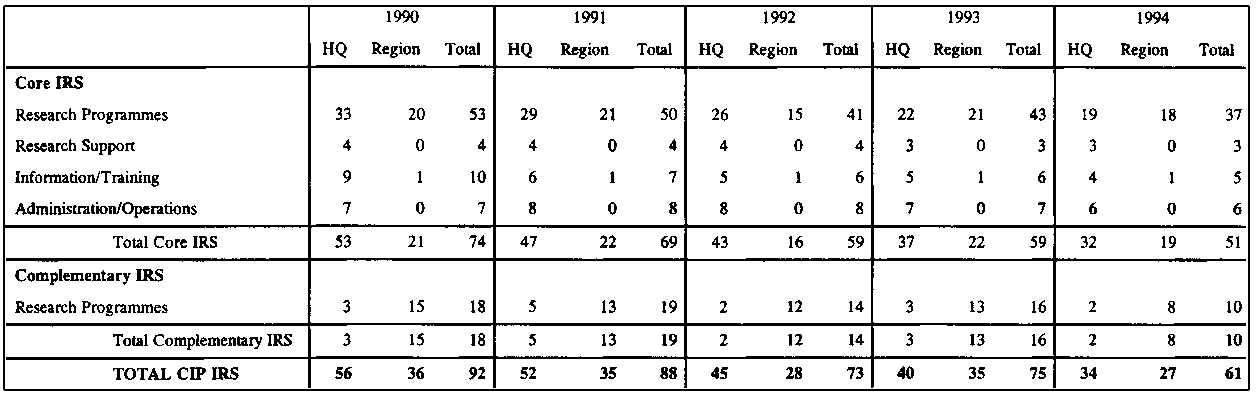
Meanwhile, the Panel considers that the critical mass for CIP's essential international role in potato and sweetpotato at CIP-Lima and in the regions is close to its lower limit after internationally recruited core staff numbers were reduced from 74 to 51 during the past 5 years (see Table 3.1). Any extra commitment to coordination and participation in natural resources research will require additional core staff. CIP's current role within the CGIAR is to improve the potential of potato and sweetpotato for developing countries. This responsibility requires all currently available research staff, if CIP is to maintain a serious position of scientific leadership in these mandated areas.
The Panel noted that the CONDESAN initiative opens a door to regional natural resource management research at CIP, and depending on the way it is implemented could take the Centre well beyond its role as a global commodity centre to a centre with both global germplasm-centred research and regional natural resource management research. Panel discussions included the fact that global commodity centres emphasize germplasm conservation, enhancement, and research on global constraints facing important crops, including natural resources management research carried out within the context of global crop needs. It was on the point of the amount and type of natural resources management research that the Panel could not reach a consensus. Some Panel members considered it essential for CIP to remain a global commodity centre, while other members just as strongly considered it essential that CIP take on the new ecoregional research paradigm and carry out natural resources management research in the high Andes.
In examining CIP's programme and activities, it is clear that there is insufficient agreement between the operational mandate and some of the new activities. The Panel understands clearly that the legal mandate cannot be changed. However, because an operational mandate is a kind of charter for a centre and its research, the Panel believes CIP's operational mandate should be rewritten to reflect its current programme better. As it does this, CIP should be able to address the matter of ARTC, and in addition, make some major decisions on the kind of centre CIP should be in the future.
With respect to CIP's vision and mandate, the Panel recommends that CIP define the Centre's nature by formulating a vision statement and clarify through its operational mandate CIP's degree of commitment to global germplasm research vis-à-vis assuming an ecoregional responsibility for the Andean region.
Table 3.1 - CIP Internationally Recruited Staff (IRS), 1990-1994
Source: CIP, 1995.
As previously stated, the Panel could not reach a consensus on the nature and amount of natural resource management research in which CIP should become involved. Part of the reason for this is that the amount of changes and new operational models being considered in the CGIAR and in TAC are too numerous to be able to choose wisely between the options that might be available to CIP. The Panel decided this matter was beyond its ability to assess and judge with the time and information available. The Panel therefore considers it necessary for the Board to continue to examine the alternatives that CIP faces, and work out how CIP should approach natural resource management research and what kind of centre CIP should be in the future. It should be possible then to make changes in the operational mandate, including the work on ARTC.
By CIP's mandate, CIP has an essential global role to help in generating and transferring improved germplasm, new technologies, and information to client NARS, and to strengthen NARS' research capabilities for potato and sweetpotato. CIP also has a responsibility to ensure that the client countries' problems and their needs are communicated to CIP researchers to help in setting CIP's research agenda. The Panel notes that this geographically widespread set of activities cannot be efficiently dealt with from one location.
Many different kinds of linkages have been established with NARS to facilitate this two-way exchange of material and knowledge. The bare minimal service to any country is to supply it with limited amounts of specific germplasm on request (if possible), and with appropriate information on potato and sweetpotato. Beyond that, CIP has used many mechanisms to achieve its goals in as cost-effective a way as possible, including outposting of CIP research staff in key regional locations, establishing Regional Offices and teams to conduct research for both regional and global benefit; and strengthening NARS research capacities through training courses and research networks. More recently, CIP has entered into contracts with stronger and more sophisticated developing country NARS, to carry out research work for CIP and to train research staff from other NARS.
CIP's record in the past for close collaboration with NARS has been highly praised, and weaker NARS (and bilateral donors) still welcome CIP's assistance to such countries in institution-building. However, some stronger NARS believe those times are past, and even see CIP as a possible competitor in the supply of assistance to other NARS.
CIP's Strategy for Collaboration (MTP 1994-98) is very clear and appropriate, stressing the strengthening of national systems to do their own research, and using information and competencies from outside CIP whenever possible. The networking arrangements have been praised for involving national scientists closely in decision-making, and for resting authority for the programmes with senior research leaders in the countries concerned.
However, most national potato and sweetpotato research programmes will evolve toward maturity and the pattern of CIP collaboration will need to change.
|
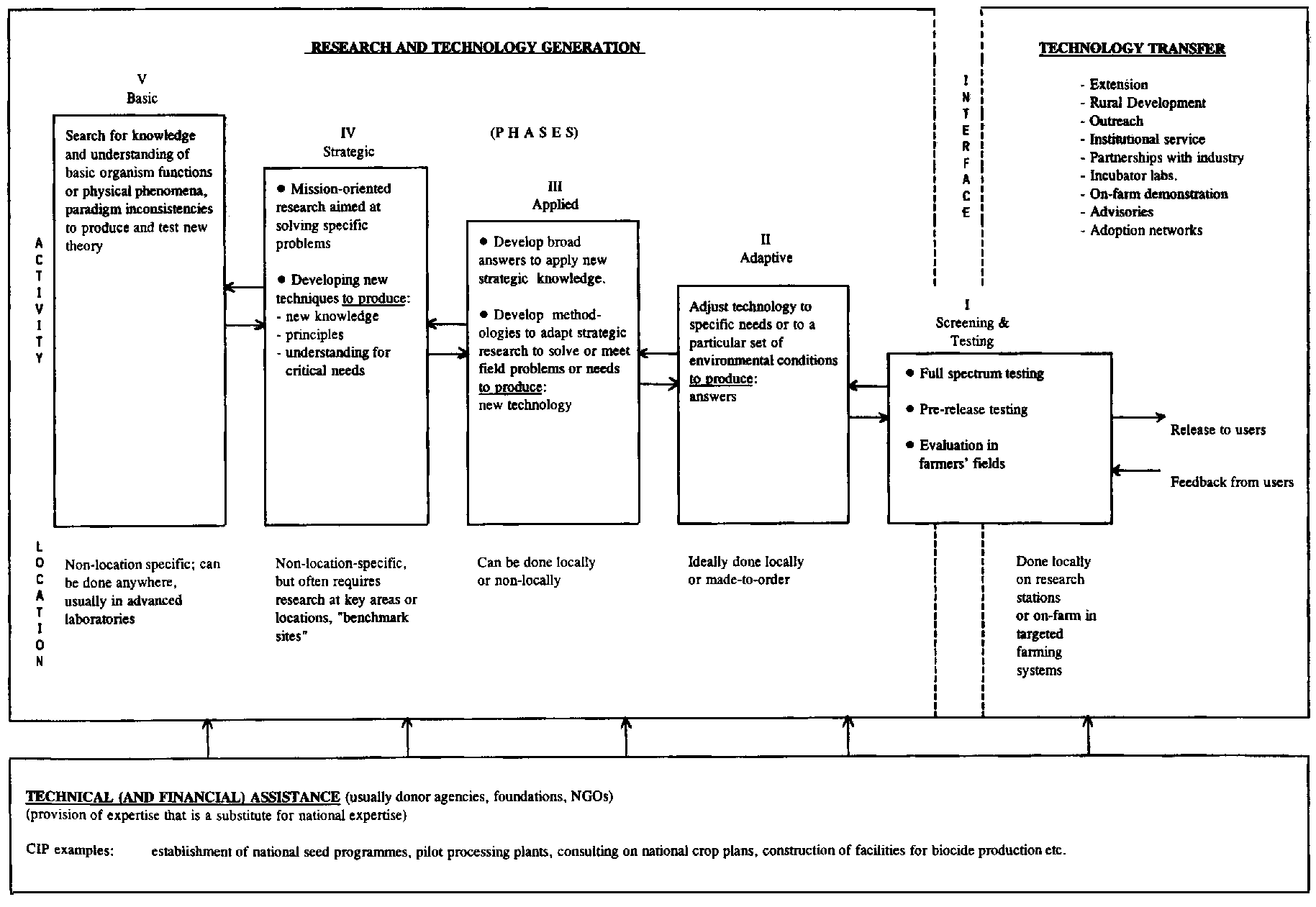
A PARADIGM FOR AGRICULTURAL RESEARCH The process of gaining new knowledge is called research. This activity has been divided into typological segments for convenience. These segments are called "basic", "strategic", "applied", and "adaptive" in the CG System, with each term depicting a sequence in a "stream" of knowledge-generation, perhaps leading to some eventual use (Figure 2.1). The terminology is somewhat unfortunate in that to some individuals it implies a greater value of some types of research. It also may imply to some individuals that certain types of research maybe of higher quality or value than other research activities. Neither of these perceptions are tenable. Research managers talk about moving "up-stream" or "down-stream" to depict institutional positioning on the types of research appropriate to the institution's mission. This terminology may be somewhat misleading in that the research process is a complex network of information generation, but for purposes of communication, the Panel has prepared a diagram of agriculture research activities. Research scientist don't worry about their position on the "stream", but institutions must pay attention to where resources are to be allocated. That is raison d'être for the terminology. Agricultural research results need to be transferred as technology for use, and this responsibility can take several forms depending on the mechanism of delivery. Public and private institutions engage in technology transfer, but the coupling of technology transfer with the research "stream" is a very important linkage often confused by cross-over activities blurred by exactly who is engaged in field testing and demonstration research. In a healthy agricultural research and technology transfer system the transfer of technology is seamless; and little concern is given to who gets responsibility for successful technology adoption. Everyone works together to get the job done. In resource constrained systems, the demarcation is important if resources are to be properly allocated. A related concept is the realm of technical and financial assistance (Figure 2.1). These activities are sometimes confused with the agricultural research and technology transfer process. Technical assistance to research is provided by outside services to support activities anywhere along the continuum of research to technology transfer. Some technical assistance may be supplemented with financial assistance. At other times assistance may be only financial. This distinction of terminologies is important to research planners for a number of reasons. Primary among these is the tendency for some researchers to seek to make applications of their discoveries through technology transfer especially when encouraged by donor insistence on showing technology impact. Research institutions need to monitor the demarcation between research and technology transfer activities. Research managers have an obligation to maintain institutional positions on the research "stream" in mandated areas of responsibility. In agricultural research there is a tendency to move "down-stream" as a consequence of internal expectations and outside forces. Clarifying these relationships is important if research managers are to understand how to deal with demands for programme responsiveness, research relevance, and science quality, each of which must be maintained in a delicate balance, if an institution is to stay positioned on its mandated topics. |
Figure 3.1: RESEARCH, TECHNOLOGY GENERATION AND DIFFUSION CONTINUUM
|
Classification of National Agricultural Research Systems (NARS) The following typology places NARS in categories according to capacity to do research as well as the role(s) they may be able to play domestically and globally, using plant breeding capability as a proxy for relative stage of development of scientific capacity. Category I. Technology-importing countries that do almost no experimentation and whose capacity consists mainly as generalist contact with outside research organizations. In such countries, with proper training, rudimentary Screening and Testing (Level I) might be possible, but effective linkages with researchers and research development elsewhere will be limited. Category II. Technology-importing NARS mat do limited experimentation, mostly in Adaptive Research (Level II) and Screening and Testing (Level I) and with no plant breeding capability, except for limited plant selection. Category III. NARS that import technology but also carry out Screening and Testing (Level I), Adaptive Research (Level II), and some Applied Research (Level III). Some capability in selection of improved crop plants but no plant breeding. Category IV. NARS that are linked effectively into the global research system, that have plant breeding capability, and with ease, can carry out Screening and Testing (Level I), Adaptive Research (Level II), and Applied Research (Level III). Category V. NARS that enjoy peer or near-peer relationships with IARC's and developed country research institutions (DCRI's) in selected areas of research, and are capable of carrying out Strategic Research (Level IV) in those selected areas when necessary. With ease, they can carry out Levels I, II, and III. These NARS have effective plant breeding capability, including me ability to handle and utilize basic germplasm and advanced techniques. Category V NARS can be full partners in helping to solve certain pressing global or continental research problems. |
Source: Plucknett D.L. 1994. Agricultural research and technology innovation in Africa: Organizational and financial concerns. Paper prepared for USAID for the SAATS Project (Sustainable African Agricultural Technology System).
In 1994, CIP had 27 (about 44%) of its internationally recruited staff in countries and regions, with 8 supported by complementary funding. Of these outposted scientists, about one quarter are mostly concerned with strengthening NARS' research capacity, in roles that the Panel feels might be played by other agencies or other mature NARS. Given this situation, the Panel developed some options for consideration.
CIP could rapidly close down all technical assistance support and direct all country (and donor) requests to competent mature NARS in developing countries (while providing technical backstopping advice).
Alternatively, CIP could cut down on technical assistance steadily and more frequently recruit staff from mature NARS in developing countries, as consultants for training courses and in-country technical assistance.
Or, CIP could continue to carry on with technical assistance to countries that request it as long as there is complementary funding to cover real costs, and until NARS are able to cope adequately for themselves.
With respect to NARS-supporting activity, the Panel recommends that CIP disengage itself from technical assistance activities and non-research technology adoption activities.
The Panel expresses concern that CIP may be increasingly influenced by the requirements inherent in complementary funding, with the result that NARS assistance becomes an inappropriately prominent component of CIP's overall enterprise. CIP management states, however, that the complementary funding is not transferable to core activity, and it provides opportunities for collaborative research. CIP management further states that such project grants contain overhead funds adequate to cover management costs associated with the activities.
The Panel believes that such technical assistance projects are not without hidden costs, such as diversion of Trustee, management and core scientist time, and other administrative costs which may not be fully compensated by an overhead funding component in the project.
The management of research programmes depends on the structure of the research organization and the procedures for deciding what projects, and component experiments and studies, will be carried out. The following section looks at CIP's management of research programmes.
CIP has selected a matrix management structure to manage its research activities. This matrix structure is composed of cells formed from disciplinary departments by programme areas set in a third dimension of regionality. This matrix gives CIP opportunity to implement its "Strategy for the 1990's and Beyond", according to CIP.
CIP's matrix does have several attributes that work in its favour. CIP reduced the number of programmes, departments, and regions to match its research strategy and, coincidentally, made the matrix more manageable.
The Panel has evaluated CIP's use of matrix management and concluded that, in its present configuration, CIP is not getting full benefit from the structure. This is for the following reasons.
CIP's matrix is flat in structure inasmuch as discipline departments, for the most part, are synonymous with programmes. In fact, in the majority of cases, the programme leader is also the department leader. This defeats the purpose of matrix management which intentionally sets up an internal dichotomy, with programme leaders responsible for completing the research on time, within budget, and to agreed specifications. Disciplinary unit leaders are responsible for providing, maintaining, and managing the professional skills and scientific quality of the discipline scientists. This is not done when the leaders are the same person. The dynamic tension created in a formal matrix gets lost at CIP.
However, the Panel believes that the matrix should also reflect more explicitly the main physical and abiotic constraints to productivity in the major ecosystems, such as moisture, radiation, temperature, and humidity in addition to soil conditions. It is further suggested that the Physiology Department assume specific responsibilities for this contribution to the matrix across all programmes.
With respect to organizational structure, the Panel recommends that CIP re-invent its matrix, incorporating good management principles, to obtain the full benefits from the structure.
The rationale for this recommendation is that CIP has a unique opportunity to enhance its research impact through a well engineered matrix management structure. Alternative models might include programmes targeting more cross-cutting opportunities. Examples of alternatives have been shared with CIP.
A second weakness in CIP's use of matrix management is in the budgeting and reporting of expenditures for research projects. Although the budgets for operating costs are allocated to projects and sub-projects, the cost of salaries for scientists and support staff are not included in the accounting, but this is indeed the largest part of the costs of the projects. This information is crucial for a complete picture on the total cost of proposed or completed research.
The Panel suggests that full cost-accounting be used to inform programme, department, and regional leaders of the anticipated total costs and actual expenditures for research, extending to the individual experiment level, wherever possible.
CIP has used research planning processes to gather input and to debate alternatives that lead to priority setting. However, CIP determined that its well-regarded planning conferences of the 1980's were unsuitable for strategic planning, even though conference-based planning had been recommended in the 1989 External Review. The Panel reviewed a list of conferences held from 1972 to 1990 and noted that indeed, many of the conferences were on "micro" technologies, and therefore concurs with CIP's conclusion that such conferences were not appropriate for strategic planning purposes. However, this Panel believes the intent of the 1989 Panel's recommendation was not to focus on individual topics, but rather to use a formal planning-conference setting as a vehicle for obtaining a broad spectrum of "top-in-the-field" scientists to provide a rich backdrop of ideas against which a critical exchange of views on strategic options could be debated.
As noted in Section 2.2.1, CIP in fact has used a formal priority setting methodology to help decide on the ranking of projects using criteria reflecting objectives of efficiency, environmental impact, equity, and scientific validity. The Panel suggests that this framework be used annually to help decision-making in small groups down to the level of experiments and studies in sub-projects. The same objectives would apply, but criteria and weighting would need to be changed at the level of experiments.
At present, the priority setting exercise7 is considered the main formal tool for CIP's management decisions on choice of projects to pursue. The Panel acknowledges the progress made since the 1989 External Review. However, it believes that further efforts are needed to improve the approach and its integration into the planning cycle.
7 Collion and Gregory 1993, op cit.
The data used were derived from over two decades of close collaboration with NARS and the exercise was valuable in pulling together CIP's institutional experience and judgement. CIP should complement its approach with help from representative NARS and additional external experts. Also, Andean root and tuber crops as well as natural resources should be included.
Furthermore, the exercise helped in making broad allocations at one point in time, but as time passes new information is being generated on both the performance of crops and evolving socioeconomic settings.
On the other hand, CIP's MTP states that yield gap analyses will be undertaken and that secondary data will be assembled into regional data bases for potato and sweetpotato production systems. A large body of information is continuously being assembled and produced by CIP's own surveys, trials, etc., therefore:
With respect to priority-setting, the Panel recommends that CIP consolidate existing information into ex ante analyses to develop analytically valid strategies for each mandated commodity, disaggregated by region.
CIP's strategies for each region should be written documents giving the relevant agronomic and socioeconomic background information, the strategies and approaches taken, the opportunities for CIP's involvement, milestones for achievement, final deliverables, and the division of labour with other national and international institutions. These documents should be developed in consultation with key stakeholders (e.g. NARS, donors, farmer organizations, etc.). They should be updated before a new MTP is prepared.
As already recommended in the 1989 External Review, CIP needs to refine its yearly cycle of project planning, implementation and monitoring of research results. This must be established to rapidly focus resources on a more limited number of key entry points for impact than is now the case.
Research funds should be allocated such that their marginal impact per dollar spent in each project is equal. This principle is complicated at CIP because of the existence of different kinds of projects (e.g. potato breeding versus natural resource management in the high Andes), and because resources to carry out the work are generally not fungible (some of the funding is from special earmarked projects).
According to estimates compiled in mid-1994, CIP's 1994 core expenditures were estimated to be US$ 15.3 million, allocated as follows: 45% for research, 13% for research support, 14% for training/communications/information and 27% for management. The data for CIP and the CGIAR System (1992-94) are shown in Table 3.2. Clearly, research expenditure shares have fluctuated widely in recent years, but overall CIP research spending has tended to be below the CGIAR average. CGIAR research expenditures for core programmes in 1994 were estimated to be 22% (i.e. 10 percentage points) higher than that for CIP.
Table 3.2 - CIP and CGIAR Core Expenditure Summary, 1992-1994 (%)
|
Category |
1992 (actual) |
1993 (actual) |
1994 (est.) |
|||
|
CIP |
CGIAR |
CIP |
CGIAR |
CIP |
CGIAR |
|
|
Research Programmes |
49 |
48 |
41 |
48 |
45 |
55 |
|
Research Support |
12 |
10 |
13 |
9 |
13 |
8 |
|
Sub-total |
61 |
58 |
54 |
57 |
58 |
63 |
|
Training & Information |
10 |
16 |
17 |
15 |
14 |
13 |
|
Administration/Operations |
29 |
26 |
29 |
28 |
27 |
24 |
|
Total |
100 |
100 |
100 |
100 |
100 |
100 |
|
Personnel |
62 |
57 |
58 |
57 |
60 |
57 |
|
Supplies/Services |
27 |
30 |
30 |
28 |
28 |
30 |
|
Travel |
7 |
6 |
7 |
6 |
7 |
6 |
|
Depreciation |
4 |
7 |
4 |
7 |
5 |
7 |
Source: "1995 Funding Requirements of the CGIAR", CGIAR Secretariat, October 1994. The CIP percentage calculations were prepared from data in CIP's 1995 financial requirements submission.Note: Numbers may not sum up due to computer rounding.
CIP management believes that CIP's 1995 research share of operations will be higher than in 1993 and 1994.
With respect to programme expenditure shares, the Panel recommends that CIP continue to increase research spending to reach, by 1997, at least the mean level of the CGIAR centres, with spending on administration and operations reduced accordingly.
Table 3.1 shows the evolution of internationally-recruited staff (IRS) and locally-hired staff over the period.
It is clear that CIP has managed to keep the proportion of scientists above 65 % of the total number of internationally recruited staff in the core programme. The panel endorses the priority given to scientist positions in the Centre.
Table 3.3 presents CIP's core research expenditures for the period 1992-94. Over the three year period, the number of internationally recruited scientists declined markedly, with only a moderate decline in research expenditures in nominal terms. This would indicate that the Centre has maintained a consistent level of operating funds for its scientists, though the purchasing power of these funds has eroded because of relatively high inflation. Programme III (disease management) is clearly the largest, but its size has been declining, while Programme VI (post-harvest management and marketing) has been growing steadily in budgetary terms.
Table 3.3 - Core Research Expenditure by Programme (1992-1994)
|
|
Actual |
Actual |
Actual |
|||
|
1992 |
1993 |
1994 |
||||
|
IRS |
$'000 |
IRS |
$'000 |
IRS |
$'000 |
|
|
Programme I |
7 |
909 |
7 |
1,003 |
7 |
852 |
|
Programme II |
7 |
909 |
7 |
1,081 |
7 |
908 |
|
Programme III |
13 |
1,689 |
10 |
1,385 |
9 |
1,302 |
|
Programme IV |
6 |
779 |
4 |
732 |
4 |
908 |
|
Programme V |
13 |
1,754 |
10 |
1,482 |
6 |
1,132 |
|
Programme VI |
3 |
455 |
4 |
713 |
3 |
908 |
|
Andean RTC |
|
|
|
|
2 |
270 |
|
Total |
49 |
6,495 |
42 |
6,396 |
38 |
6,280 |
Source: CIP 1995 Programme and Budget, (July, 1994).
The core research budget allocation by crop and region for 1994 is shown in Table 3.4. The overall ratio of 63% spent on potato research varies widely among regions, with the extreme being in Africa, where it only represents 42 % of the core research funds spent in the region.
Table 3.4 - Expenditures by Commodity and Region 1994 ($000 and %)
|
|
AFRICA |
ASIA |
LAC |
WANA |
TOTAL |
|||||
|
$ |
% |
$ |
% |
$ |
% |
$ |
% |
$ |
% |
|
|
Potato |
554 |
42 |
1,562 |
65 |
929 |
64 |
691 |
89 |
3,735 |
63 |
|
Sweetpotato |
767 |
58 |
856 |
35 |
400 |
28 |
85 |
11 |
2,109 |
35 |
|
ARTC |
0 |
0 |
0 |
0 |
115 |
8 |
0 |
0 |
115 |
2 |
|
Total |
1,321 |
100 |
2,418 |
100 |
1,444 |
100 |
755 |
100 |
5,959 |
100 |
Source: CIP 1995 Programme and Budget (July 1994).
In response to the 1989 External Review, CIP gave priority to increasing its capacity to induce changes in farmers' fields by catalyzing diffusion and adoption of ripe technologies, and to documenting ex post impact of selected past interventions linked to CIP's work. The effort was focused on the direct impacts on production, consumption and human welfare. Drafts of nine case studies (three on potato varieties, three on IPM, and three on seed systems) were completed by the time of the present Review (see Table 2.1).
Except for the resources spent in the country where the study was undertaken, CIP's own headquarters' direct investment is considered a sunk cost (i.e. not factored into the analysis). Thus, these cases do not allow an assessment of CIP's total investment in research, but only its direct project-related research costs in several cases where research led to practical impact. Nevertheless, the studies do demonstrate that several CIP-related technologies have had an attractive return from the perspective of farmers and the national institutions involved. A study on the impact of pesticides used in potato production was completed in Ecuador. This will be a valuable building block for future environmental impact assessment of CIP technologies.
A deficiency in these analyses has been the weak data on adoption. The need to establish mechanisms to generate such information had been flagged by the last Review. In response, CIP has established a database on varieties released and a survey of national programmes was started in 1993. At present, information on 26 countries is available at CIP. Even here, only part of the data includes information on areas under improved varieties, numbers of farmers involved, etc.
|
IMPACT ASSESSMENT Agricultural research impact assessment is research in and of itself and is clearly distinguishable from activities that introduce a technology to attain adoption and thus impact. This is an important distinction. There is a great difference between efforts to achieve impact in farmers' fields (e.g. typically activities of seed programmes, extension, training of farmers) and efforts of impact assessment (i.e. research to quantify benefits, costs, consequences, and risks) related to activities conducive to farmer use of technology. In a publicly funded research institution, ex post impact assessment research has two main objectives: accountability and feedback. The former is outward-oriented and gives stakeholders information on achievements, hopefully to induce them to continue supporting the research. The feedback function is mainly oriented toward informing research managers and peers of the lessons learned in order to build them into the R&D planning process. |
No analysis has been made of less successful cases, such as diffused light storage (one of CIP's past flagship technologies); on small-scale potato processing; on TPS in China; on the lack of dissemination of CIP-related potato clones, etc. These analyses could yield valuable lessons, particularly when somewhat similar approaches are being proposed for the future, e.g. rustic ware potato storage, regional seed programmes, and so on.
Issues of impact of CIP-related technology on equity, gender, and environmental impact have also not been explicitly addressed. CIP's institutional and scientific impact are considered in a subsequent section on science quality (Section 3.13).
Notwithstanding the above comments, the Panel commends CIP for the substantial progress made on impact assessment since the last Review.
With respect to impact assessment, the Panel recommends that CIP develop a strategy for continuously monitoring and evaluating the performance of its research outputs in terms of their impact - both positive and negative - on welfare, gender, and the environment.
This activity should include setting up appropriate mechanisms for collecting data, analyzing successes and failures, and inputting these results into the planning process. The Panel is aware of the resource implications of the above recommendation, but considers ex ante and ex post impact analyses a key element in linking activities in the field to overall planning.
Finally, the Panel notes that highly capable social scientists are performing administrative functions, such as regional representatives, heads of stations, and programme leaders. Thus, social science research capacity is lower than what might be assumed, given the number of social scientists actually employed at CIP. This situation should be reassessed by CIP management.
Institutional Positioning
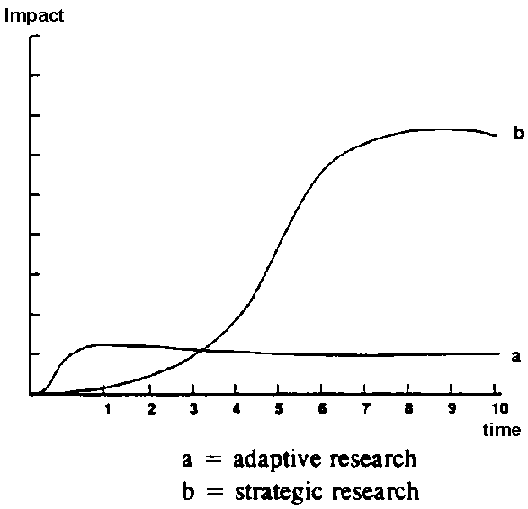
The positioning of a research institution on the conceptual continuum of research activities (basic, strategic, applied, adaptive) is an important and ongoing responsibility. The importance of this positioning is derived from the magnitude of the expected payoff and the necessary conditions that must be met for research success. To demonstrate these principles two types of research activities are compared - adaptive and strategic.
The contrasting patterns of distribution over time and magnitude of impact of both types of research are presented below.
|
|
Adaptive |
Strategic |
|
Magnitude of Impact |
Local solutions to problems specific to a single production area |
Large benefits due to the generic nature of the research, leading to a wide range of applications related to a globally or regionally significant issue. |
|
Lagtime for Impact |
Quick turnaround of results with close-linkages to claimants, and thus likely quick adoption by local farmers. |
Research impacts may be in the distant future. Moreover, once technology is developed, the deployment may take considerably more time to attain adoption. |
|
Uncertainty of Outcome |
The immediacy of the problem-solving reduces somewhat the degree of uncertainty and research risk. |
The nature of this research has inherently higher uncertainty as far less is initially known. |
|
Distribution of Benefits |
By definition the benefits will be diffused only locally or within the target area. |
Vast potential for the distribution of benefits globally, i.e. beyond national borders. |
|
Dependence on other Actors |
Local "actors" may be the only individuals involved. More commonly, adaptive research may have, for that area, very few actors. |
A range of actors, from researchers using the initial concept, to those that incorporate it into specific technologies, to local researchers doing adaptive trials, are needed to achieve farm level impact. |
The preceding comparison clearly shows the compelling arguments for having a rational distribution of research efforts along the entire research continuum. International actors such as the CGIAR should operate towards the strategic end. Given the potentially wide geographic spread of the impact, such research will not be undertaken by individual countries because of the free-rider problem and the sophistication required in research capability. On the other hand, this description also highlights the interdependence of both types of research to achieve impact. Strategic research has to be fine tuned by adaptive research to be of use, and conversely, adaptive research needs applied and strategic work to identify new opportunities for impact. This is the rationale for a functional international agricultural research system with interdependent NARSs and IARCs.
CIP's germplasm collections of potato and sweetpotato are a valuable international research asset that needs to be preserved and exploited for agriculture. These collections form the basis for the international research community's genetic enhancement strategies and they represent some of the most valuable genetic diversity available for these crops.
CIP's germplasm collections provide the foundation for its genetic enhancement and breeding strategies. CIP has selected as a breeding strategy, bulk population crossing followed by recurrent selection. For the most part, this is CIP's singular breeding approach for crop improvement. Recurrent selection as a plant breeding strategy is based on the argument that the traits of importance to CIP's breeding programmes are multigenic. Given the complex genetic systems of potato and sweetpotato, population breeding through recurrent selection is expected to allow genetic traits to recombine more efficiently, at least more efficiently than would other forms of breeding (such as the more common pedigree method).
This breeding strategy is arguable and has been vigorously debated even within CIP. Moreover, criticism has been levelled against CIP's potato breeding programme for not making sufficient progress in the development of replacement cultivars for client countries (note previous Reviews). In CIP's defense, its record of improved germplasm releases is comparable to potato breeding programmes in North America and Europe, where the pedigree method is commonly used and where adoption of newly released cultivars is admittedly more complicated than for other crops.
CIP supplements its breeding programme efforts with multilocational testing, mostly through its regionally distributed breeding and evaluation programmes. CIP also works with partner NARS through a network of participants who receive CIP material for evaluation. This effort is greatly complicated by phytosanitary requirements for both crops and the relatively weak phenotypic stability found in most clones.
CIP's network of testing sites is now undergoing evolution as it attempts to span latitudes (e.g., Mexico 18° North and Argentina at 40° South) and regions (Southeast Asia, China, East Africa). This change could help CIP breeders better select for phenotypic stability, which is difficult to do near the equator, with its 12 hour daylengths.
CIP is also incorporating the "new tools" of biotechnology for potato and sweetpotato. It is working with others to map and track genetically inherited Mendelian and quantitative trait loci (QTL), and to genetically engineer traits such as the Bt delta-endotoxin gene for insect resistance.
Some factors have constrained the CIP potato and sweetpotato breeding programmes. Until recently, civil strife in Peru caused limited access to some CIP research sites. Some senior staff vacancies have left major components of CIP's breeding programme leaderless. Also, CIP's matrix management may not be particularly well suited to the Centre's breeding efforts, especially when viewed from the perspective of a regionally distributed research network. CIP scientists have too few opportunities to exchange information, ideas, and opinions face-to-face.
In another dimension, it appears that CIP has not completed the definition of the minimum necessary characteristics of improved cultivars of potato and sweetpotato. For instance, the development of processing cultivars of potato and sweetpotato need to meet the requirements of the processing industry and the product consumer, in addition to the crop producers. These considerations should be taken into account when planning plant breeding strategies for potato and sweetpotato. CIP has an enormously valuable resource in its Social Sciences Department, which has studied many of the factors for successful cultivar adoption. This information should help clarify how to establish breeding strategies for CIP's two commodities. In the Panel's opinion, these considerations have not been sufficiently incorporated into CIP's breeding strategies for potato or sweetpotato.
The Panel considered several options available to CIP to improve its potato and sweetpotato germplasm enhancement breeding programmes. The Centre could decide to "stay the course" in population breeding combined with enhancement for special traits and conventional testing approaches. Or, it could focus on germplasm collection, preservation and enhancement while devolving breeding activities to stronger NARS. Alternatively, CIP could add pedigree breeding to its breeding methods, especially for single gene traits and particularly to augment genetic engineering. CIP could also seek alternative breeding strategies and invest significantly greater resources in understanding genetic heritability of traits of interest. The Panel decided not to recommend any of these options, but instead to recommend postponing such an evaluation until a new leader of the CIP breeding programme arrives and is in place.
With respect to crop improvement, the Panel recommends that TAC commission a mid-term review (in 1997) of the potato and sweetpotato genetic enhancement and breeding efforts at CIP.
The rationale for this recommendation is that CIP needs time to reorganize and refocus its genetic enhancement and breeding efforts under new leadership. A new Director of Genetic Resources has been identified by the Centre. He will arrive at CIP-Lima in March 1995. A mid-term review of potato and sweetpotato enhancement and breeding would give the new Director an opportunity to plan and implement breeding strategies for the Centre's mandated crops.
As noted in Section 2.1.3, CIP has successfully developed TPS and has demonstrated the feasibility of the technology.
The Centre now appears to be looking for measurable impact of TPS technology, but this raises the question: How far downstream should CIP go to assure TPS adoption? The Centre seems to lack a definition of a research end-point and has not defined what is reasonable to expect if it is to attain "completion" of this technology.
In the course of analyzing the current situation, the Panel developed and evaluated a number of options.
CIP could continue to work with the stronger NARS to devolve into their hands the TPS technology and thus let them complete its development. Alternatively, CIP could look to existing private companies (e.g. California, India, and Chile) to take up CIP's technology and commercialize it. While CIP feels strongly that it should now focus on remaining TPS research issues in areas such as improved parental lines with early maturity, disease resistance and processing quality, the Panel disagrees.
With respect to the future of TPS at CIP, the Panel recommends that CIP devolve true potato seed (TPS) technology to specifically-identified, research-strong NARS and private enterprise.
The rationale for this recommendation is that downstream research and development of any technology are costly activities (perhaps 6 to 10 times the cost of the research) accompanied by considerable financial risk. CIP's experience with technology development and commercialization is very limited. Commercialization of TPS technology is more suited to the private sector than to an IARC. Therefore, the Centre should be extremely careful in its attempts to extend the technology development beyond the current stage. In the Panel's view, this would be best left to others.
As noted earlier, potato and sweetpotato are vegetatively propagated. This practice contributes significantly to pest and disease problems. In addition, a number of the pathogens of these crops exhibit enormous genetic plasticity expressed in the evolution of new pathogenic races and new biotypes with resistance to pesticides. This is particularly true for the potato late blight fungus, which, with the discovery of two sexually compatible mating types of the pathogen, was unfortunately found to have escaped quarantine measures in Europe, North America and other regions. The epidemiological consequences of these breaches of quarantine are still being studied.
In many potato and sweetpotato production areas, crop protection is dependent upon agricultural pesticides. This "chemical dependency" has enormous consequences in terms of production costs, public health risks, and environmental concerns.
The extent of crop losses caused by potato and sweetpotato pest and diseases is not well documented, but it is generally understood to be considerable. In fact, the heavy dependence of potato on pesticides in many parts of the world reflects this concern.
There is a growing interest in reducing this agricultural chemical dependency for the production of many crops, especially potato. This is being done through the development of components of integrated pest management (IPM), often through research to achieve biological controls and better host-plant resistance. These two IPM components are particularly suitable to the mission of CIP. Through its partnerships with NARS, an extensive research network from the Centre permits multiple site-screening for durable resistance. Contract research in developed and developing countries supplements the IPM technologies generated by the CIP research programme.
CIP's research on improving pest and disease management methods is also employing new and emerging technologies. Biotechnology, gene mapping, genetic engineering, pathogen-free testing, and similar approaches provide CIP with new opportunities to do research on problems that were previously thought to be controllable only by chemical means.
CIP's plant protection research finds itself drawn to a number of problems (by one count, 17 biotic and abiotic stresses for potato) that, arguably, have different levels of importance. From a global perspective, some of these are clearly more important than others, although lesser biotic and abiotic stresses may be very important in a given region.
CIP has an opportunity to provide global scientific leadership for the most important biotic and abiotic stress problems of potato and sweetpotato. This needs to be done through a focused effort on the most important priority problems. In the Panel's view, the necessary focusing has not been done, apparently as a result of standing expectations for the Centre to provide more immediate impacts, and on the part of CIP, to demonstrate achievements in the short-term. This is truly unfortunate, as this "quick payoff" approach to research constrains research capacity. In the Panel's view, CIP is trying to respond to too many pressures.
The Panel recognizes that CIP could "stay the course" by committing its pest, disease, and abiotic stress management research programme to the service of the many needs of CIP's claimants. Or, CIP could reduce its research activities in crop protection to become an information clearinghouse for potato and sweetpotato pest and disease management (e.g. information on germplasm collections and screening information), especially through the "electronic highway". Or, CIP could "move upstream" to do strategic crop protection research in carefully selected and emerging areas.
The Panel considered these options and formulated the following recommendation.
With respect to crop protection research, the Panel recommends that the CIP carefully select a small number of key crop protection research activities and, for these, move up-stream to do carefully-targeted, global-perspective strategic research for potato and sweetpotato.
This recommendation would require CIP to divest itself of all but the most important pest, disease, and abiotic stress problems of potato and sweetpotato. These most important topics must be carefully selected for the Centre's research agenda, giving recognition to its comparative advantages in science quality and research capacity.
The Panel's rationale for this recommendation is that CIP cannot be all things to all people, especially in the area of crop protection. CIP needs to find ways to magnify its research impact through quality scientific research, selected to help solve the most important strategic problems.
The Panel notes that CIP's outposting of research scientists has been rational and that choices of locations and scientific talents for research have been based on programme needs.
The Panel is however concerned that CIP has stationed too many of its internationally recruited scientific staff in the regions, and that this may have significantly reduced its "critical mass" at CIP-Lima for crop protection research. The Panel questions this deployment, as it contradicts the benefits of physically concentrated scientific research teams.
With respect to deployment of scientists, the Panel recommends that CIP concentrate its crop protection research programme at a central location in order to provide a nucleus sufficient to undertake globally-important, strategically-significant crop protection research, to further the potato and sweetpotato mandate of the Centre.
The Panel's rationale for making this recommendation is that a dispersed crop protection research component too frequently devolves into a service enterprise for other research activities. This recommendation refers only to the crop protection disciplines, as it is understood that there are valid reasons why CIP plant breeders, for example, may be distributed regionally.
Each year CIP ships hundreds of samples of pathogen-tested materials, mostly potato, to its collaborators or to persons who request them. These materials come from four collections: cultivars and advanced clones used for adaptative and seed production trials; wild and native cultivars from the world collection; special purpose clones (e.g. indicator host plants, differentials); and true potato seed progenies for ware potato production. Pathogen-tested materials are sent from both CIP-Lima and from the Regional Offices.
Materials are shipped in several forms: in vitro plantlets, tubers from CIP-Lima, tubers from CIP germplasm cleaning and distribution units in the Philippines and Kenya, clones for late blight resistance, progenitors for breeding programmes, true seeds of segregating populations, tuber families, and TPS for producing ware potatoes.
A Phytosanitary Certificate is sent out with each shipment. Some of the international shipments are requested by CIP researchers or the Centre's research partners. Table 3.5 presents information on distribution figures of potato in 1994, while Table 3.6 presents similar information on distribution of sweetpotato in 1994.
One major problem facing CIP is the amount of germplasm that has been pathogen-tested (often referred to as "cleaning" or "virus-freeing") and that is available for transfer. Slow clean-up of germplasm hampers distribution. The 1989 External Review had recommended that "CIP continue to give high priority to .... pathogen testing of cultivated potato clones so that they will be freely available on request". That the problem still remains is shown in Table 3.7 which gives information on the number of clones of pathogen-tested materials of potato, sweetpotato, and Andean root and tuber crops that were available in May 1994. From this table, one can see that of the total potato germplasm collection in 1994, only 26% was pathogen-tested and available for international transfer. At present, some 200 accessions of potato are being cleaned and pathogen-tested each year. At this rate, it will take nearly 17 years, until about 2012, to get the collection cleaned and ready for transfer. For sweetpotato, the picture is even bleaker. The total collection numbers more than 5,300, with 542 accessions having been cleaned or in the process of cleaning (about 10%). At a cleaning rate of 200 per year, it could take 24 years, or until approximately 2020 to complete the cleaning and pathogen-testing process.
Table 3.5 - Number of Countries that Received Potato Germplasm in 1994
|
Region |
Clones |
Families |
TPS |
||
|
Tubers |
In vitro |
Tuber |
True seed |
Progenies |
|
|
LAC |
16 |
17 |
3 |
4 |
12 |
|
SSA |
4 |
2 |
2 |
3 |
2 |
|
MENA |
1 |
1 |
5 |
1 |
5 |
|
SWA |
2 |
3 |
1 |
1 |
3 |
|
ESEAP |
3 |
5 |
0 |
5 |
4 |
|
Others |
1 |
11 |
0 |
1 |
3 |
|
Total |
27 |
39 |
11 |
15 |
29 |
Source: CIP
Table 3.6 - Number of Countries that Received Sweetpotato Germplasm in 1994
|
Region |
Clones |
In vitro |
True seed |
|
LAC |
1 |
7 |
1 |
|
SSA |
0 |
7 |
4 |
|
MENA |
0 |
3 |
0 |
|
SWA |
0 |
2 |
2 |
|
ESEAP |
0 |
5 |
6 |
|
Others |
0 |
6 |
0 |
|
Total |
1 |
30 |
13 |
Source: CIP
Table 3.7 - Number of Clones in Pathogen-tested Collection (May 1994)
|
Situation RTC* |
Potato |
Sweetpotato |
Andean |
|
|
Germplasm collection (total) |
4,690 |
5,318 |
977 |
|
|
Pathogen-tested List |
||||
|
|
· Exportable materials |
1,242 |
472 |
0 |
|
|
· Materials in "Cleaning" |
86 |
70 |
0 |
|
|
1,328 (28.3%) |
542 (10.2%) |
0 (0%) |
|
|
Present cleaning capacity/yr |
200 |
200 |
? |
|
|
Years needed to complete cleaning at present rate |
17 |
24 |
? |
|
Source: CIP
There is no clear agreement at CIP as to which materials should receive priority for cleaning. A Germplasm Committee exists that could help determine such priorities, but one of the reasons for the lack of progress in priority setting is lack of agreement as to which materials are likely to be of most use and should therefore receive priority in cleaning. Such decisions are not made easier by the long periods required at present rates of cleaning. If something is not to be cleaned for 20 years or so, the priorities would be different than if cleaning were accelerated to, for example, four or five years to complete the whole operation.
To assist the clean-up effort, two donors, Austria and Australia, have undertaken clean-up for some potato accessions. This is a help, and the Panel wishes to recognize the contribution of these countries to the total effort, but such materials, when returned to CIP, still require checking for pathogens before distribution can take place.
CIP might wish to consider contracting with competent research institutions in other countries, developed and developing, to help clean up the remaining materials in the three collections; potato, sweetpotato and ARTC. This might be especially important for sweetpotato, which could be cleaned up through contracts in China, where the crop is most important.
CIP itself could clean up the materials, if it placed higher priority on getting it done. The Panel considers this work to be of high priority, especially when CIP's role as a responsible trustee for these crops on behalf of the world community is considered. Perhaps some of the materials do not present as much potential and importance for research now as do other materials, but the Panel considers it important for CIP's image and standing as a trustee of selected global genetic resources that the clean-up work be completed very soon.
The costs of clean-up do not appear daunting. According to estimates by CIP, it appears that the cost for potato would be around US$ 500 per accession, amounting to about US$ 1.6 million to complete the work. For sweetpotato, the cost is estimated at US$ 400 per accession, amounting to about US$ 1.9 million. CIP seems to have the capacity and facilities to carry out the clean-up, if given the resources. However, it needs a plan with a strategy for clean-up, for possible partnerships, including contracts with capable developing countries, and for handling the materials once they are cleaned.
The Panel considers it essential for CIP to speed up the clean-up of the potato and sweetpotato collections in particular, so that both collections can be certified as pathogen-tested and be available for international transfer to users. Also, passport and evaluation data for all pathogen-tested materials should be available to be sent along with all pathogen-tested materials.
With respect to the global potato and sweetpotato germplasm collections, the Panel recommends that CIP accelerate the clean-up and pathogen-testing of potato and sweetpotato accessions, by developing plans and a strategy for doing this, including the necessary arrangements for partnerships, and contracts, to complete the work before the year 2000.
The 1989 External Review pointed out that CIP's potato material had not managed to cover large areas. Subsequently, from its work on conditions related to varietal change, CIP postulated that several factors make varietal change more likely in developing countries than in developed countries with a mature potato industry and strongly differentiated market preferences. First, institutional seed programmes, if they exist, do not function well. The inability of seed programmes in the formal sector to deliver clean seed is a constraint as well as a subtle advantage. Without a reliable source of clean seed, it is hard to transfer new varieties, but the scarcity of such seed means that any new varieties must compete with farmers' seed under conditions where it degenerates. This enhances demand for virus resistance in cultivars. Second, chemical control, although widespread in developing countries, is costly; and disease pressure, particularly with the severity of late blight, is often more intense. Third, market preferences are not that distinct.
A number of anecdotal cases from developing countries appear to lend support to this hypothesis, and CIP plans to test the validity of this relationship. CIP considers that a point has been reached whereby there is a backlog of good clones because they cannot be properly propagated and distributed to farmers for lack of an adequate propagation and delivery system. CIP also considers it important to examine whether the so-called superior cultivars from multilocational trials maintain their superior performance under field-scale farmer conditions, or whether the breeding and testing programme is in someway deficient in being able to identify superior new cultivars. CIP has agreed to undertake, in close consultation and collaboration with the Philippines and Kenya, an adoption and diffusion study in which it plans to distribute sufficient quantities of clean seeds of up to five 'superior' varieties to 20-30 potato farmers in each country. The study would monitor technical and socioeconomic factors to understand better the adoption and dissemination processes, and their implications for CIP's breeding and impact strategies.
The study is in its design and early implementation stage. The Philippines and Kenya have been selected for the study because CIP's propagation and redistribution units are located in those countries; and because CIP and the national programmes believe that the experimental cultivars are superior to those currently preferred by farmers, i.e. 'Granola' in the Philippines and 'K-Baraka' in Kenya.
CIP is aware that, ultimately, large increases in potato production must be supported by large-scale seed multiplication and supply programmes to deliver new varieties to farmers. It has emphasized seed supply programmes in its work with NARS, and has also recognized that, in some countries such as the Philippines and Kenya, informal as well as formal seed systems exist. The Panel can see good reasons why CIP should be keen to see if the above hypothesis can be validated or refuted, and to improve the effectiveness of its breeding and testing programme. The Panel believes that a new cultivar with any likelihood of replacing existing popular varieties would need to offer a large enough advantage in crop management requirements, productivity and profit for the adoption and dissemination processes to become demand-driven through informal and/or formal seed systems.
The Panel considers it important that such a study clearly define the hypothesis being tested, have a study rationale and objectives, provide details of partnerships and research protocols, and have a timeframe and future programmatic implications of positive and negative outcomes. From what the Panel has learned, there is a possibility for this study to be used by CIP as a vehicle for a supply-push effort to distribute potato seeds to farmers. Instead, the Panel would encourage assessments of seed adoption and diffusion by farmers, of seed flow paths in developing countries, and the development of demand-driven strategies to use these seed flows effectively to maximize its potential for their impact in viable production systems. CIP should not engage in non-research and costly extension-oriented field activities involving seed distribution to farmers.
With respect to the proposed seed distribution experiment, the Panel recommends that CIP undertake a limited number of clearly defined institutional experiments to test the hypothesis that potato cultivars with resistance to major pests and diseases will diffuse through the informal seed sector if an initial volume of seed is made available.
The basic premise of this research is that private actors will not get involved in the multiplication and distribution of such cultivars because their pest and disease resistance will allow farmers to greatly reduce recurrent purchases of clean seed tubers. If this is the case, a public investment might be justified in a one-time "big push" launching of such varieties.
The 1989 External Review strongly recommended that CIP get more involved in post-harvest technology. CIP has responded by initiating a series of projects, frequently with special project funding, and by establishing the Post-Harvest Management and Marketing Programme. CIP's 1994-98 MTP states that the major effort of this programme will be the identification and exploitation of new markets for processed sweetpotato products.
CIP's past involvement in potato marketing research has been very successful. Publications are frequently cited and used beyond the limits of the potato research community. Small-scale potato processing research has been less successful8. CIP is to be commended for the decision to cease this research. At present, the programme is consolidating in terms of both getting a team of core staff and a research focus.
8 G. Scott et al. 1993, Improving Village Level Processing in Developing Countries: The Case of Potatoes, in: Ecology of Food and Nutrition. Vol 30, pp 145-163.
The programme leader indicated that a certain priority is being given to rustic storage of ware potatoes in the Indo-Gangetic plains and to sweetpotato processing in four selected countries of Asia (China, Vietnam, Indonesia, Philippines), Uganda, Kenya, and Peru. He further stated that, though not reflected in the names of the sub-projects, several special projects are looking at the production and marketing economics of sweetpotato-based products in some of those countries.
Analysis of the 1995 sub-projects under Programme VI indicates a very broad range of activities being pursued, involving topics of storage, processing, breeding, marketing, policy research, transfer of technology and product development. Seventeen sub-projects are on sweetpotato, 8 on potato and 10 on Andean root and tuber crops. Activities are based in a total of 13 countries. The Panel acknowledges the evolving nature of the programme, but has not seen a written work strategy nor is its existence reflected in the present sub-project portfolio.
The Panel notes that the 1989 Review recommended that CIP pay much greater attention to ex ante impact assessment of its technologies under development. This recommendation is repeated here.
With respect to post-harvest technology, the Panel recommends that CIP expand macroeconomic ex ante studies of the competitiveness of major sweetpotato-based products in the key countries that the programme has selected for potential impact.
CIP should then use the results, along with the experience gained with the ongoing post-harvest research, to develop a comprehensive, highly focused strategy for future post-production research at CIP. These economic studies should look at existing large and growing markets for products such as starch and animal feeds. Project selection should reflect the public funding being used and the need to focus on CIP's international role.
Understanding the competitiveness of diverse end-uses of sweetpotato will also help focus the work of CIP's breeding strategy, i.e. in situations where processing will be the key use of sweetpotato, storability will have a lower priority in the breeding programme than dry matter content or starch quality.
The excellent methodological work undertaken by CIP in marketing and product development for potato should increasingly enable NARS to undertake this type of research themselves. The post-production studies for Andean roots and tubers should be undertaken largely by NARS, in the Panel's view.
A centre of research excellence must balance relevance, responsiveness, and science quality. CIP was created as a centre of research excellence, and the Panel endorses this concept as a guiding principle for CIP in addressing its mandate and in working in partnerships with NARS and advanced laboratories in industrialized countries. CIP should be a centre of excellence in research for its primary mandate crops, potato and sweetpotato, especially because the Centre holds and studies global collections of these important crops in trust for the world. Global germplasm collections deserve the attention of the best scientific minds and standards if the genetic wealth held and studied is to be made available in a purposeful and powerful way to benefit farmers and the poor of developing countries.
|
SCIENCE QUALITY ASSURANCE There are three points of intervention in the research process that permit science quality assurance. The first point of intervention occurs prior to research initiation, when proposed research is evaluated, usually by peer scientists judging die likelihood of success, adequacy of design, and acceptability of methods. This process is sometimes done through a formal process such as competitive grant reviews by panels, internal evaluations by scientists knowledgeable of the discipline standards, or ad hoc mail out peer reviews. Such activity is intended to judge the quality of me proposed research program or project. The second point of intervention allowing science quality evaluation occurs during the process of the research investigation. This type of science quality evaluation typically uses either internal or external reviewers to judge research progress, the quality of the achievements, and the prospects for completion. The third point of intervention for science quality evaluation is after the research has been completed. This is commonly done through a number of mechanisms such as peer review of manuscripts submitted as research articles. But peer review, even if only as periodic checking, is also appropriate for many other types of publications (proceedings, abstracts, newsletters) to assure scientific quality of the reported research results. There are, of course, a number of important research-institution management responsibilities for providing science quality assurance. Research managers must provide a creative research atmosphere and institutional culture that embraces science quality and encourages innovation. Science quality must be linked to performance evaluation. Assessment of research achievements must go beyond counting numbers of publications to judge the value of scientific contributions to the body of knowledge that makes up science. Scientists need feedback from managers to fully appreciate the value of the quality of their research results. This needs to be done in ways that are meaningful and relevant to the expectations of their positions and the institution. Scientists also need clearly established milestones so they can work better with management when assessing themselves for their own research progress. Scientists need to clearly visualize the expected deliverables that are to be provided at the end of an agreed project term. These factors are a research manager's primary responsibilities. To be successful they must be done in a supportive atmosphere that provides for career development, necessary resources, and with encouragements for innovation using the best possible science. |
In the Panel's visit to national and regional programmes, words of appreciation were often heard, for example, for CIP's technical assistance work, as help in gaining access to germplasm, financial support, and training. However, the Panel did not often hear CIP referred to as a centre of excellence. Indeed, what was heard seemed to reflect a yearning for greater scientific strength at CIP, especially at CIP-Lima.
The Panel perceived that CIP, in its drive to demonstrate impact in farmers' fields, has moved more downstream since the 1989 External Review. The Panel often heard the remark that all CIP scientists were now impact-oriented. Impact of research is important, but is always based on the scientific strength of a global commodity centre. This strength should not be allowed to run down or to be valued less.
Since the 1989 External Review, CIP has also taken on new responsibilities. Andean root and tuber crops have been added, and a regional mountain agriculture research effort in the Andes has been initiated with special project funds. The Panel is concerned that these new initiatives are distracting from the Centre's focus.
The Panel investigated how CIP fosters and measures scientific quality and its leadership standing. Regarding scientific publications, during the period 1989-94, CIP produced 1,533 publications: 414 conference papers, 529 abstracts, 281 journal articles, and 309 monographs or book chapters (CIP Staff Publications 1989-1994). Most of these publications (1,023) concerned potato, while the remainder were for sweetpotato (225) and Andean root and tuber crops (48).
CIP tends to include all publications relating to any aspects of its work: research contracts, regional collaboration, postgraduate students, and national collaborators are all in its list of publications. The Panel would like to have seen a list that included only the publications of CIP's internationally recruited staff, so as to attain a better understanding of the nature of CIP's scientific publications.
Sabbatical leaves can foster scientific quality. During the period 1989-94, 12 CIP scientists were granted sabbatical leaves, all of them in prestigious institutions in Canada, France, Germany and the USA.
Peer review at CIP needs strengthening, both through scientific publications and through the planning, conducting and evaluation of research.
Research planning conferences could play a larger role in strengthening scientific quality and peer review at CIP, especially when world authorities within their fields are brought in to help assess the state of knowledge on a pressing problem, identify key strategies and describe lines of research to meet objectives, and maybe even divide up some of the research tasks with CIP and other institutions according to comparative advantage in science. Such planning could also identify key sites around the world where needed research could best be carried out.
With respect to scientific quality and its relation to scientific leadership in dealing with global responsibilities for potato and sweetpotato, the Panel recommends that CIP take early steps to enhance the quality of CIP's research, both at CIP-Lima as well as in the regions.
|
SCIENTIFIC COMPETENCE, QUALITY, AND LEADERSHIP Leadership is the art of gaining followers. It is distinguished from management in that leadership does not carry mandated authority or power. Leadership is earned through shared vision, is based on past achievement, and can be seen as patterns of allies who seek to follow a leader. Scientific leadership is peer recognition of valued products of research, based on closely held discipline standards of (potential and actual) performance. Across discipline judgements of science quality are frequently difficult, as methodological approaches, acceptable variances, and research traditions commonly dictate peer science acceptance of research results. Scientific competence is the ability to conduct scientific activities. It combines innate abilities, knowledge, skills, and access to research support into an opportunity to generate new knowledge through research activities. Scientific competence is a necessary but not sufficient condition for scientific quality. Without scientific competence, it is not reasonable to expect scientific quality. In turn, scientific quality is a necessary but not sufficient condition for scientific leadership. Without a record of scientific quality it is not reasonable to expect an individual or institution to be accepted as a scientific leader. |
CIP's Board of Trustees and management have very clearly repaired many of the process/operational problems that the 1989 External Review identified. The Panel commends all parties concerned for the thorough manner in which such changes have been implemented.
With respect to the Board's policy-making and oversight responsibilities, the Panel noted that there remain some areas where improvements could be made. It also notes that these are very difficult areas, and is mindful that Trustees typically have limited time to digest the mass of technical, budgetary, and organizational material they are required to handle in their meetings. The Panel also notes that in addition to the disruptive financial environment in the CGIAR, which all centres have had to face in the 1990s, CIP's Board has also had a heavy responsibility for monitoring the well-being of many of CIP's programmes and employees during the recent violent period in Peru. The Panel makes allowance for this reality.
The Panel believes that the Board's Programme Committee could be more focused in its analysis of the science options available to CIP, and that CIP management should be very clear in its presentation and description of the nature of the research actually being carried out in the various locations. Clearly, with such a broad geographical spread of activity, the Board will have to continue to rely on management's information in order to fully assess the nature and quality of the research. That is, it will not often be possible for Board members to visit more than a relatively small sample of the research sites outside of Peru.
Since the 1989 External Review there have been major economic changes in Peru which have impacted negatively on CIP. During the years of very high inflation and relatively low local currency devaluation (notably 1989-1991) CIP's reserves were severely depleted, and the Centre was frequently required to borrow funds to meet day to day cash requirements. In 1994, CIP sought and received an exceptional financial grant from the CGIAR, to aid in the rebuilding of its reserves. In spite of a very positive financial performance in 1994, CIP management will be required to continue to act decisively in ensuring that adequate liquidity is maintained, and the Centre has a sufficiently large operating fund (i.e. "retained earnings").
With respect to the Centre's financial health, the Panel recommends that the Board continually monitor CIP's liquidity and operating fund levels, and establish a timetable for achieving what CIP management proposes as prudent and reasonable targets.
Also with respect to its financial oversight responsibilities the Board might assess whether a future Trustee might be selected on the basis of financial management expertise. The Panel does not necessarily prescribe the appointment of a financial specialist to the Board, as it recognizes that such an action could narrow the scientific breadth of the Board. It is for the Trustees to decide if in fact adequate expertise already exists. The Panel notes also that the Board has recognized the need to better monitor these financial dimensions and endorses the Board's decision to seek assistance in this area. The Panel is of the view also that management's financial accounting reports to the Board could be improved, and urges management to comply more fully with CGIAR financial reporting guidelines. This should facilitate better monitoring from the Board.
The Panel examined various aspects of resource management and allocation at CIP, and reviewed its operating procedures and systems. The Panel was very favourably impressed with the high calibre of personnel and the efficient systems that operate at headquarters. Regional operations tend to be predictably more modest in scale and in terms of the numbers of support staff engaged. It is evident that many of the recommendations from the 1989 External Review have been implemented by management, with positive results. As technology improves and as the local economy also develops, CIP should look forward to additional improvements and rationalization of supporting operations.
While the Panel is mindful of the difficulty of cross-centre expenditure comparisons, it does believe that CIP may not yet have reduced its overhead/management costs to an optimal level. The Panel noted in Section 3.5 that CIP's expenditures on research programmes were below the CGIAR average; it further notes that CIP's administrative cost is above the average.
The Panel reviewed CIP's international staff salary and emoluments package, and believes it is generally in line with other Centres in the CGIAR, insofar as comparisons can be made in this area (taking into account the different locations of employment, etc.).
Possible Excess Capacity
In a period of resource constraint, and especially in light of future funding uncertainties coupled with possible capital development requirements (for example, CIP informed the Panel that funding is needed for improved germplasm facilities, a biosafety facility, and housing for post-doctoral fellows), it is prudent to assess whether or not there may be underemployed assets or facilities. The question is, are there assets or facilities that could be disposed of, and which might result in not only a cash benefit but also a reduction in annual operating costs? The Panel does not have the information necessary to state that such a situation exists at CIP, but it does believe that there are a few areas where additional or renewed analysis may be useful. Among others, these include assessing the economic benefit of maintaining the CIP aircraft, keeping all of the publication/audio-visual facilities, and operating the large fleet of buses used for staff transport. In all cases, alternatives appear to exist in the local market, i.e. contracting out of services or simply purchasing a service when required.
While it is often difficult to conceive of operating any other way than as at present, it is sometimes useful to ask whether certain equipment and assets would be acquired today, if the Centre was being established.
With respect to CIP's fixed assets and certain associated operating costs, the Panel recommends that CIP periodically review its investments in service areas, where local alternatives exist, in order to determine whether or not to dispose of possible excess capacity, thereby adding to capital fund reserves and possibly reducing operating costs overall.
The Panel notes with admiration that CIP operates an appropriate and extremely well maintained physical plant in Lima, and the Centre's relatively low depreciation expense is due mainly to the age and modesty of the buildings, laboratories, and farm facilities. The recommendation above does not in any way imply that CIP's physical plant is excessive in scale or appointments; it only suggests that a periodic review of certain fixed assets be carried out.
Financial Summary
As has been noted earlier, CGIAR funding has not increased in real terms, while certain unit costs in the centres have increased. The challenge for management is obvious. In CIP's case, the CGIAR funding stagnation was compounded by hyperinflation in Peru. Although there are considerable CIP programme investments in different regions of the world, some 40% of CIP's core expenditures are incurred in Peruvian currency (mainly personnel costs and supplies/services in Lima). Thus, as described in section 3.14, the impact of Peruvian inflation was considerable in the late 1980s and early 1990s. The Peruvian currency has recently stabilized, to the point where there was virtually no devaluation in 1994 - therefore local inflation, while nowhere near the explosive levels of previous years, is a continuing financial risk for CIP. This will require careful management, as there is no sign that there will be re-establishment of a Systemwide stabilization mechanism. Table 3.8 summarizes CIP's income and expenditures in recent years.
Table 3.8 - CIP: Summary of Income and Expenditure, 1990-1994 (current $'000)
|
|
1990 |
1991 |
1992 |
1993 |
1994 |
|
INCOME | |||||
|
Unrestricted Core |
13,403 |
13,857 |
13,589 |
12,225 |
14,139 |
|
Restricted core |
3,361 |
2,333 |
1,698 |
2,499 |
1,729 |
|
Non-Core Grants |
4,287 |
4,067 |
5,644 |
5,927 |
7,148 |
|
Other income |
1,052 |
498 |
1,054 |
1,007 |
1,079 |
|
TOTAL |
22,103 |
20,755 |
21,985 |
21,658 |
24,095 |
|
EXPENDITURE | |||||
|
Core Operations |
18,344 |
17,953 |
15,481 |
14,931 |
14,963 |
|
Depreciation |
- |
1,537 |
635 |
677 |
708 |
|
Capital |
1,848 |
- |
- |
- |
- |
|
Non-Core Operations |
3,295 |
4,067 |
5,644 |
5,927 |
7,148 |
|
TOTAL |
23,487 |
23,557 |
21,760 |
21,535 |
22,819 |
|
NET INCOME |
(1,384) |
(2,802) |
225 |
123 |
1,276 |
|
Balance Sheet Memo Notes (at Dec. 31): | |||||
|
Operating Fund Balance |
1,438 |
(1,241) |
(1,118) |
(995) |
281 |
|
Capital Fund Balance |
149 |
1,536 |
2,107 |
2,179 |
2,448 |
Source: Derived from CIP financial statements 1990-1993, and unaudited draft financial statement for 1994.
The Centre's large operating deficits in 1990-91 wiped out the operating funds that had been accumulated in prior years, leaving an accumulated deficit of about US$ 1 million at year-end 1993. By a combination of effective management action and an exceptional CGIAR contribution of US$ 800,000 for, addition to CIP's reserves in 1994, the Centre appears to be on its way to re-establishing its operating fund at an appropriate level. The Panel's recommendation in this fundamental area of financial management is included in Section 3.14, and does not need to be repeated here. As seen in the resource snapshot, CIP has built up a capital fund, which should ensure that asset replacement can be accommodated.
Financial Reporting and Control
CIP management receives monthly financial/budget reports of extremely high quality, and on a timely basis. The Panel was most impressed with the recently implemented financial information system, and indeed with several other databases and computer systems in various administrative areas (example: purchasing/warehousing management).
However, there is one area where the Panel noted that some changes may be necessary. As noted earlier (Section 3.14), CIP does not follow CGIAR guidelines in some areas of accounting and financial statement presentation, such as the CGIAR convention with respect to how multi-year special project grant funds are accounted for in annual statements. This has introduced inaccuracies in the analysis of CIP's operating results by some observers, and may have contributed to some lack of clarity in the financial position with respect to CIP's (earlier and now rectified) accumulated deficit. The Panel notes that CIP's external auditors have also urged that the Centre be in compliance with CGIAR policies, such as reporting of overhead recovery. The Panel hastens to note that CIP's financial reporting is in compliance with generally accepted accounting principles, and that the deficiencies are only related to specific CGIAR guidelines. There is absolutely no question but that good financial controls are in place at CIP - the only issue relates to the clarity of certain financial presentations.
The position of internal auditor was unfilled at the time of the Review, but the Panel understands that this is a temporary situation. Should it be impossible for cost reasons to engage a full-time internal auditor, CIP management might explore the possibility of a service agreement with another CGIAR centre, for periodic sharing of their internal auditor.