


HENNING STEINFELD
Senior Officer (Livestock Development Planning), Animal Production and Health Division, FAO, Rome, Italy.
Overview
Industrial production of pork, poultry and (feedlot) beef and mutton is the fastest growing form of animal production. In 1996, it provided more than half the global pork and poultry (broiler) production and 10 percent of the beef and mutton production. This represented 43 percent of the total global meat production, up from 37 percent in 1991-93. Moreover, it provided more than two-thirds of the global egg supply. Geographically, the industrialized countries dominate industrial pig and poultry production accounting for 52 percent of the global industrial pork production and 58 percent of the poultry production. Asia contributes 31 percent of the world's pork production (Sere and Steinfeld, 1996).
Industrial ruminant production is concentrated in Eastern Europe, the ex-Soviet Union and in the OECD countries. Typical examples are large-scale feedlots in the USA and in the formally centrally planned economies. Industrial sheep feedlots are found in the Near East, North Africa and the USA.
The industrial production system is open both in physical and economic terms. It depends on outside supply of feed, energy and other inputs. Technology, capital and infrastructure requirements are based on large economies of scale and, because of this, production efficiency is high in terms of output per unit of feed or per man-hour, less so when measured in terms of energy units. Yet as the world's main provider of eggs, poultry meat and pork at competitive prices, it meets most of the escalating demands for low cost animal products in rapidly growing urban centres of the developing world.
Environmental challenges
Because of its open nature and many interfaces with the natural resource base, the industrial ‘bio-industry’ system signifies for many the epitome of what is wrong with animal production. The industrial scale implies large herd/flock sizes, large volumes of waste, high animal health risks, and often less attention to animal welfare. It has multiple opportunities to dump its waste products without accounting for the environmental costs. The biggest problem, however, is the over-concentration of animals in areas of high human population density with little viable opportunities to utilize waste products on land. The biggest challenge is to establish policies and identify technologies that will help in bringing animal waste in line with the assimilative capacities of land.
Status quo of interactions
The industrial system acts directly on land, water, air and biodiversity through the emission of animal waste, use of fossil fuels and substitution of animal genetic resources. In addition, it affects the golbal land base indirectly, through its effects on the arable land to satisfy its feed concentrate requirements. Ammonia emissions from manure storage and application lead to localized acid rain and ailing forests, for example in European countries. Also, the industrial system requires the use of uniform animals of similar genetic composition. This contributes to within-breed erosion of domestic animal diversity.
Animal Waste
Land, water and air are the environmental components mostly affected by the concentration of animals and waste production. Manure is the main agent having effect, mostly during storage and after application on the land. Pigs and poultry excrete some 65 to 70 percent, respectively, of their nitrogen and phosphate intake. Nitrogen, under aerobic conditions, can evaporate in the form of ammonia with toxic, eutrophic and acidifying effects on eco-systems (Wilson and Skeffington, 1994). A greenhouse gas, nitrous oxide (N2O) is formed as part of the denitrification process with particularly harmful effects on the environment. Nitrates are leached into the groundwater posing human health hazards, and run-off and leaching of nitrogen directly lead to eutrophication and bio-diversity loss in surface waters and connected ecosystems. Phosphorus, on the other hand, is rather stable in the soil, but, when P saturation is reached after long-term high level application of manure, leaching occurs and this also causes eutrophication.
Ammonia and other nitrogenous gases result from the digestion of protein, part of which is lost in manure and urine. Growing pigs, for example, excrete 70 percent of the protein in feed while beef cattle excrete 80 to 90 percent and broiler chickens 55 percent (Jongbloed and Lenis, 1992). Ammonia, in high concentrations in the air, can have a direct effect on plant growth, by damaging leaf absorption capacities but its indirect effect on soil chemistry is even more important. Ammonia acidifies the soil, interferes with the absorption of other essential plant elements, particularly in nitrogen-poor ecosystems such as forests. Livestock production is a major source of ammonia emissions in the industrial world. For example, of the 208,000 tons of ammonia emitted in the Netherlands in 1993, 181,000 tons was estimated to come from manure (Heij, 1995). This was about 55 percent of the total acid deposits in the Netherlands, industry and traffic being other important contributors.
The various forms of nitrogen losses lead to much reduced levels available for crop nutrition. Plant uptake and use depend on a series of other factors such as species, climatic and soil conditions. According to Bos and de Wit (1996), 20, 50 and 44 percent of the nitrogen excreted by pigs, broilers and laying hens are lost to the atmosphere as NH3. Because of its different chemical properties, phosphorus losses are insignificant because phosphorus is not very mobile in the soil.
The amount of N, P, K and other nutrients available to the crop within the soil determine the fertilizer value of manure. Further significant losses may occur depending on the type of stable and manure management system ( Safeley et al., 1992) and thus define the direct environmental impact. Substantial nitrogen and phosphorus losses also occur when manure is applied on the land. The spreading of manure directly on the land can lead to nitrogen leaching into water as nitrates and contamination of surface waters. This in turn leads to high algae growth, eutrophication and, as a result damages aquatic ecosystems. Not all soils are equally susceptible to nutrient loading and contamination. Sandy soils with low cation exchange capacity and, consequently, poor retention characteristics and high run-off , are particularly at risk.
Heavy metals
Copper and zinc, which are essential minerals in animal nutrition, are deliberately added to concentrate feed whereas other heavy metals, in particular cadmium, are introduced via feed phosphates. Only 5 to 15 percent of metal additives are absorbed by animals, the rest is excreted. Soils, on which poultry and pig manure are continuously applied at high rates, accumulate heavy metals, jeopardizing the good functioning of soil, contaminating crops and posing human health risks (Conway and Pretty, 1991)
Fossil fuels
The industrial system is a poor converter of fossil energy. Fossil energy is a major input of intensive livestock production systems, mainly indirectly for the production of feed . Brand and Melman (1993) show in case studies that, typically, feed accounts for 70 to 75 percent of the total energy input except for veal production where it is almost 90 percent. Energy output for livestock products comprises food and non-food items. Southwell and Rothwell (1977) calculated output/input ratios of 0. 38, 0. 11 and 0. 32 for pork, poultry and eggs respectively, considering fossil energy only.
A large portion of non-food energy output is in the form of manure and the potential for recovery of this energy in the form of methane has greatly increased in recent years. The heavy concentration of animals in certain regions, particularly of pigs and poultry, has given rise to the development of large- scale processing for use elsewhere. Most problems lie in high energy expenditure for drying and for transport.
Biodiversity
The industrial system has a threefold effect on species wealth through:
Environmental benefits of industrial production systems
First, the rapid development of ‘modern’ industrial pig and poultry systems helps to reduce the total feed requirements of the global livestock sector to meet a given demand. It may therefore alleviate pressures for deforestation and degradation of rangelands, such as is happening in parts of Latin America and Asia, thus saving land and preserving biodiversity. Second, the feed-saving technologies developed for this system can be effective at any scale and therefore can be successfully transferred to mixed farming systems. The same holds true for waste prevention and treatment technologies which have been developed following regulations applied mainly to the industrial system. There, the resource-saving and waste management technologies generated by the industrial systems bring benefits to the sector as a whole.
Driving forces in industrial production
Population growth, rising income and urbanization are the fundamental driving forces determining growth of industrial livestock production. Globally, industrial animal production is the fastest growing sector, with over 4 and 5 percent growth per year in pork and broiler production, respectively. The Annual growth for eggs is 3.8 percent and for mutton and beef 2.5 percent. Driven by rising incomes and rapid urbanization, Asia experienced a staggering growth of 9 percent per year in industrial pig and poultry production over the last decade, trailed by Latin America with a strong growth in poultry.
As shown above, it is not industrial production per se which creates environmental problems but the fact that production units tend to concentrate in certain areas. The reasons are the following:
Policies
In the past, industrial and intensive mixed farming systems have benefited from policy distortions and the absence of regulations or their enforcement and, in many cases, this vacuum has given this system a competitive edge over land-based systems. Furthermore, some policies have misdirected resource use and encouraged the development of technologies which are inefficient outside the distorted context. In the EU, for example, high domestic prices for beef, pork and milk have benefited industrial production. In the Near East, small ruminant feedlots are heavily dependent on subsidized feed, and this has encouraged inefficient feed use. Likewise, in the former centrally planned economies, feedlots were based on heavily subsidized feed grain and on subsidized fuel and transport. In many developing countries, there are not only direct subsidies on feed but also on energy. As energy is a major direct and indirect cost item in industrial production systems, economy-wide policies often tend to favour industrial production over grazing systems and mixed farming.
Finally, in practically no country in the world, is the industrial system charged with the full environmental costs of production. It appears that societies prefer the cheap supply of animal products over the functions of the ecosystems concerned. Self-sufficiency in animal products and supply of high-value food commodities to urban populations seem to be overriding policy objectives, particularly in developing countries.
Technology and policy options
In the developed world, the pollution of land, water and air has raised acute awareness of the environmental problems associated with industrial livestock production. This has, in many cases, triggered the establishment of policies and regulatory measures that address these problems. To the contrary, the absence of regulations and their enforcement, together with a surge in demand and a continued indifference about growing environmental hazards in the developing countries call for immediate action. The challenge is to identify and mix the appropriate technologies and policies that suit local circumstances.
Policies and regulations
A trend to rational zoning is not only fostered through environmental concerns but also by changes in overall policies, often triggered by the removal of government interventions and trade liberalization. In the Near East, for example, industrial small ruminant systems have been kept viable through subsidies on grains and are increasingly under pressure because of the financial requirements to maintain these subsidies.
The most efficient and direct financial instrument would be to internalize all environmental costs into the consumer price. However, implementation of such policies is not easy. First, there is a lack of accurate economic evaluation of these costs, for example for biodiversity and some gaseous emissions and some indirect costs (soil erosion of feed production, for example). Initial calculations point to an increase of 10 to 15 percent in cost price. Second, unequal application of the inclusion of environmental costs in the product price puts some producers at a disadvantage.
Current financial instruments therefore focus on reducing emission of nitrogen and phosphates and other potential pollutants, particularly in susceptible and already burdened areas. The levies and taxes currently imposed on the intensive mixed and industrial systems in pratically all developed countries fall into this category. Others are:
Technologies
The above policies have been accompanied by the introduction of a wide range of new techniques. Because of the commercial and demand-driven nature of the industrial system, development and transfer of technologies are usually not a problem. A whole range of technologies exists that could alleviate the environmental burden created by this system and seek improvement in two areas:
Reduction of nitrogen and phosphate excretion by improving feed utilization can be achieved through:
Reduce the emission from manure storage and during application. Nutrient losses from manure in stables and during storage can be reduced through improved collection and storage techniques. In animal buildings, manure is stored either under a solid floor, under a slatted floor, or within a housing system with litter. A large part of ammonia emissions comes from the manure surface in storage, either under the slatted floor or in open tanks. The main focus has to be on reducing nitrogen losses, most of which are in the form of ammonia from the manure surface. Possibilities are:
Methods that efficiently re-use energy and nutrients in manure in cases where manure is not directly used for agriculture. Biogas plants of all sizes and different levels of sophistication exist. They not only recover the energy contained in manure but also eliminate most of the animal and human health problems associated with micro-biological contamination by micro-organisms. Other methods of controlling the waste load are purifying and drying the manure; reducing nutrient losses during and after application of manure on soils. Injection or swad application of manure into the subsoil and appropriate timing significantly reduces losses. Nitrification inhibitors can be added to the slurry to decrease leaching from the soil under wet conditions.
Large-scale manure processing is possible where intensive production is concentrated in certain zones but that is often not viable economically. The efficient use of manure for feed and energy production requires high capital investments which often cannot be borne by individual farmers.
Recycling manure by feeding it back to livestock, including fish (Müller, 1980) is practised only on a limited scale. In addition to widespread reluctance to use manure as feed, mainly originating from fear of health hazards, most types of manure have a low nutritive value with the exception of poultry manure which is of a reasonable quality. In intensive production systems with large amounts of collectable manure, cheaper feeds are also available, while in production systems where utilization of low quality feeds is common, high collection and opportunity costs (manure as fertilizer or fuel) prohibit the use of manure as feed.
Conclusions
Stricter environmental standards and corresponding incentives to a better balanced land and animal distribution could be a powerful tool to promote rural and agricultural development: prices for animal products would increase, providing land-based production incentives to intensify; and the development would be more decentralized, creating employment and marketing opportunities outside the large urban centres. Such a process will have to be monitored carefully so as not to lose the technological edge by removing economies of scale and functioning infrastructure and needs to be seen in a regional development context. As has been shown, the industrial system obtains its advantage in efficiency through a combination of factors:
This has important implications for the future. The analysis shows that most expansion and productivity growth will have to be sustained through the provision of concentrate feed, which normally would require additional land. The establishment of proper controls for the industrial system would then lead to intensifying livestock production through better feed conversions, and intensifying crop production aiming at higher yields. Both will reduce the land requirements for given volumes of final products and alleviate pressures on habitats and biodiversity.
Following the line of argument, measures to foster biodiversity and protection of natural resources would encourage improvements in feed conversion by removing obstacles and providing incentives for a more efficient use of feed. Large opportunities lie in astute pricing of concentrate feed and in providing access to related technologies. A practical difficulty lies in the crop-country nature of measures and effects when feed is imported and international agreements will need to be found.
In conclusion, the industrial system poses a large range of environmental problems but also offers many possible solutions. The world's human population will increase from today's 5.5 billion to around 10 billion by the year 2030, i.e. almost double. With increasing incomes, urbanization and ageing populations, the world demand for animal products is likely to triple, perhaps quadruple.
Neither the grazing nor the mixed farming system, as we know it, will be able to satisfy this increase in demand. The greatest part of the additional demand will have to be supplied by the industrial type of production.
For this to happen, two requirements must be met:
References
Brand, R. A. and Melman, A. G. (1993). Energie inhoudnormen van de veehouderij; deel 2 proceskaarten. (Energy values of inputs of animal husbandry). TNO, Instituut voor milieu- en energietechnologie, Apeldoorn, The Netherlands.
Bos, J. F. F. P. and de Wit, J (1996). Environmental impact assessment of landless monogastric livestock production systems. In:Livestock and the Enviornment:Finding a balance. FAO/World Bank/USAID. Rome.
Conway, G. R. and Pretty, J. N. (1991). Unwelcome harvest-agriculture and pollution. Earthscan publications Ltd. London.
Grashuis, J. and van Vliet, N. (1958). Doelmatige Varkensvoeding. (Efficient pig Nutrition) Hoogland, The Netherlands.
Heij, G. J. (ed. ) (1995). Additioneel programma verzurings onderzoek. Eind rapport derde phase. (Additional programme on acidification research. Final report, third phase). Rijks Instituut voor Volksgezondheid en Milieu (RIVM). Bilthoven.
Jongbloed, A. W. and Lenis, N. P. (1992). Excretion of nitrogen and some minerals of livestock in nitrogen flow. In: Pig Production and Environmental Consequences, Wageningen, The Netherlands. EAAP, Publication No. 69.
Manale, A. P. (1991). European Community Programmes to control nitrate emissions from agricultural activities: an evaluation of their state of implementation and effectiveness. Washington, D. C. Environmental Protection Agency.
Muller,Z. O. (1980). Feed from animal wastes:state of knowledge. Animal Production and Health Paper No. 18. FAO. Rome.
Safeley, L. M. Casada, M. E., Woodbury, J. W. and Roos,K. F. (1992). Global methane emissions from livestock and poultry manure. United States Environmental Protection Agency, EPA/4001/1–91/048.
Sere, C. And Steinfeld, H. (1996). World livestock production systems:Current status, issues and trends. Animal Production and Health Paper No. 127.FAO. Rome.
Southwell, P. and Rothwell, T. M. (1977). Analysis of output/input energy ratios of food production in Ontario. School of Engineering, University of Guelph, Canada.
Van der Zijpp, A. J. (1992). Sustainable animal production: a response to environmental problems. In: Boyazoglu, J. and Renaud, J. (Eds. ). The livestock production sector in eastern Europe as affected by current changes. EAAP Publication No. 57, Wageningen, p. 191–197.
Voorburg, J. H. (1994). Farmers options to reduce odour and ammonia emissions from animal buildings and storage. In: Proceedings of 7th Technical Consultation of the European Cooperative Research Network on Animal Waste Utilization, Bad Zwischenahn, Germany, 17–20 May 1994.
Wilson, E. J. and Skeffington, R. A. (1994). The effects of excess nitrogen deposition on young Norway spruce trees. Part I: The soil. In: Environmental Pollution 86: 141–152.
KE BINGSHENG
China Agricultural University, Beijing, China
The current and future food issues in China have aroused worldwide attention and concerns in recent years. The future food issue in China is by nature a livestock problem. Expanding population, rising income and aspiration, coupled with rapid urbanization, will continuously enhance the demand for livestock. This growth in demand calls for further intensification of natural resource uses, which will increasingly have significant economic, ecological and environmental impacts. As China becomes more and more integrated in the global economy, this development trend in China will not only have significant implications for China itself, but also for the rest of the world. This paper will provide an overview and a review on the driving forces for livestock demand, the industrialization of livestock production, the requirements for feed resources and the environmental implications in China.
1. Main factors influencing the demand for livestock products
Major factors influencing the demand for livestock products include population growth, growth of the per capita income changes in population structure and marketing infrastructure as well as policies.
Population development
The population expansion has had one of the most important influences on the demand for livestock products in China. The average annual population growth for the past decade was 1.4%. If this trend continues in the next 35 years, China's population will reach 2.0 billion by the year 2030. The Chinese government has set a very high goal for population control, according to which the total population should be 1.4 billion in 2010, 1.5 billion in 2020, and 1.6 billion in 2030 (IOSC, 1996). Whether or not this goal can be realized will have substantial impacts on the growth of the demand for livestock and hence on the Chinese food balance in the future. The high scenario for population growth implies a 25% higher need for food compared to the low scenario for population growth, while other factors remain unchanged.
Population structure change (urbanization)
The urbanization process is another major factor influencing the demand for livestockproducts. The consumption level of meat and other livestock products in the urban households is two to three times as high as that in the rural households. The share of the urban population has risen from 23.7% in 1985 to 29.0% in 1995 (SSB, 1985–1995). If this trend continues in the next 35 years, the urban share will be nearly 50% by 2030. This urbanization process is and will further generate an increased demand for livestock products in China.
Income growth
An improvement in income is the prime driving force for an increase in livestock consumption. The average income for urban and rural population has risen significantly in the past 15 years. The nominal income per capita rose over sevenfold for both urban and rural households. In real terms, namely reduced by the inflation rate, the per capita income has increased by 170% for urban and 150% for rural residents.
Cross sectional statistics of income also show a close relationship between income and livestock consumption. As for rural residents, the group with a higher income has a markedly higher consumption level of livestock products. The top income group consumes about 70% more pork than the lowest income group. For chicken, beef and mutton, the consumption disparity is about 100% (SSB, 1981 – 1995).
According to a study of the State Statistical Bureau (SSB), the average income elasticities for poultry meat and fish were the highest in 1988, 1.46 and 1.34 respectively. The corresponding figures for pork, beef and mutton were at the same level of 0. 57. The figure for eggs was somewhat higher, 0. 66. In comparision with crop products, of which the income elasticity was below 0. 30, all livestock products had an apparent higher income elasticity.
Another study has been undertaken by the International Food Policy Research Institute (Huang, et al., 1997), showing a similar picture of the income elasticity for livestock products in China. The income elasticity for all livestock products was in the range of 0. 75-0. 85 in the early 1990s and will increase slightly towards the 2010s. Milk has the highest income elasticity, over 1.5 in the early 1990s, followed by fish and poultry. Beef and mutton have the lowest income elasticity, 0. 34 for the rural residents and 0. 69 for the urban consumers.
Improvement in marketing sectors
Significant improvements have been made in marketing sectors for livestock products, enabling the potential demand to be met adequately, satisfactorily and more timely,. For example, the development of the milk processing industry has provided more and diversified milk products and has greatly stimulated milk demand. Prior to the reform in the late 1970s, there were hardly any other milk products besides milk powder. The development of the milk processing industry and the related food industry, including ice cream, yogurt, butter, cheese, cakes and so on, have created a large demand for milk. On the other hand, market development, especially the expansion of retailer shops with refrigerator facilities, have significantly enlarged the market reach of milk and meat products. Food shops with refrigerators can now be found anywhere in cities and towns. Fifteen years ago, there were hardly any such shops, even in large cities like Beijing.
Policy Development
Livestock, especially large animals such as horses, donkeys, cattle and buffaloes, were considered to be production means during the pre-reform period, and were owned either by state farms or collectives. Individual farmers were not allowed to raise large animals. There were only exceptions in the northwest and southwest nomadic regions, where each household was permitted to keep one or two milk cattle, or a couple of sheep or goats, to meet the consumption needs of the family. The same applied for pig and poultry raising in farming areas, mostly located in the eastern half of China.
Since the end of 1970s, the old system has been reformed progressively. Though farming land as well as grazing land remain public goods, their right of use has been contracted to the individual farmers and herdsmen. Livestock herds in both pastoral areas and cropping areas have been allocated to individual herdsmen and farmers. The prevailing production system has turned from a collective to a rural household- based one. Presently, except for a limited number of large-scale state pig and dairy cattle farms in suburbs of large cities like Beijing and Shanghai, almost all livestock is owned by individual farmers.
The reform process of the livestock sector can basically be regarded as one of privatization. The individual farmers and herdsmen have become the decision-makers for their livestock production and marketing. This has greatly improved production incentives, resulting in a rapid expansion of livestock inventory and output. However, at the same time, over-grazing and other environmental problems have also been aggravated.
There were times when individual farmers also got direct support for pig raising and milk production through the provision of subsidized feed. This practice has been abolished in the past decade. The only form of direct assistance still provided by local or central goverments is granting subsidized credit for investment, provision of technical assistance and improved breeds to individual farmers and setting up pilot farms, for example, in the northeastern region.
Parallel to the reform of the production policy, marketing and price policies for livestock products have undergone dramatic changes since 1980 as well. The market liberalization process for livestock products was initiated much earlier than that for grain. By the mid-1980s, the obligatory delivery scheme had been completely abolished. Not only have livestock raisers obtained the freedom to make marketing decisions, but also private middlemen have been allowed to enter the livestock market. The state monopoly in the marketing of livestock products has been abolished and a very competitive market has formed.
Price control in various forms has gradually been lifted Government subsidies to state-owned marketing agencies and shops have substantially been reduced. In small cities and towns and in vast rural areas, the state marketing agencies receive no more subsidies. Only in large cities do they still get a direct subsidy, but at a much reduced level. Reasons for the maintenance of the subsidies include cost compensation for stock holding, price stabilization and support to retired state enterprise employees. The level of the subsidy is usually the result of negotiations between the state marketing agency and the municipal government.
In the pre-reform period, before the end of the 1970s, livestock products were provided at subsidized prices and rationed to urban consumers. The rural population was not covered by the ration scheme, but had to meet the consumption need themselves. The availability of the livestock products in each city determined the level of rationing. Both the quantity and quality of the rationed products were far from satisfactory. Meat purchasing was often a source of quarrels between customers and the butchers' clerk, for the customers usually could only get the pieces of meat the clerk assigned to them, but not the ones they most preferred. Following the abolition of the rationing system in the mid-1980s, the entire population has been given access to meat at market retail prices.
2. Structural changes in the livestock sector
Dramatic structural changes have taken place in China's livestock sector, primarily in three aspects: intensification, production of different kinds of meat, and geographical patterns.
The modern production system, i.e. the commercialized intensive system, has grown fast and remarkably increased its share in the total production especially for the poultry sector. Fifteen years ago, almost all chickens were raised in the traditional backyard system. According to officials from the Ministry of Agriculture (MOA), the intensive poultry farming by now consists of 40% broilers and 60% layers. The intensive system is probably much larger in the coast regions such as Shanghai and Guangdong Province, where the offtake rate for poultry is over 400%. There are also similar shifts in the pig sector and the dairy sector, though the modern sector still is a much smaller, around 10-15%.
The industrialization or intensification of livestock production in China is to a large degree stimulated by the development of the industrial feed industry. The first premix feed plant was only constructed in 1985 (Simpson et al., 1994). Industrial feed production soared from merely 2 million tons in 1980 to over 50 million tons in 1995, including complete feed, concentrated and premixed feed (NOFI, 1996). In its development process, the quality and the credit of the industrial feed has also been improved gradually. Many livestock producers, including those in the traditional sector, have changed their reticence towards using industrial feed and have become accustomed to it. The robust development of the industrial feed sector has been the decisive factor for the rising share of intensive livestock systems, especially for the poultry and pig sectors.
Pig feed has the lion share in the total industrial feed production; this was 42% in 1995. Layer feed and broiler feed have similar shares, together accounting for 50% of the total production. Fish feed has a share of 5%, and the remaining 3% is divided between cattle and other animals. From this information it is apparent that the layer and broiler sector have been commercialized to a much larger extent than cattle and other livestock sectors.
Due to the differences in development level among the various meat categories, the composition of meat production has changed. The share of pork fell continuously, from 87% in 1980 to 69% in 1995, while that of all other meat categories has risen. The share of poultry registered the largest increase from 8% to 18%, followed by beef from 2% to 8%, and mutton from 3% to 4%.
The changes in the structure of meat production reflect the changes on the technical side and on the economic environment. Given its efficient feed-meat conversion ratio, the commercialized chicken industry has developed fastest. Cattle raising, under the prevailing raising systems in China, needs less grain than pig raising. Furthermore, the mechanization process in crop production has reduced the number of draught animals and increased the number of beef and dairy cattle. The mutton and goat meat production have increased, but due to the constraint in grazing areas, the growth rate is slower than that of cattle.
Geographically, the share in total livestock production of the major cropping areas has increased, and the importance of the pastoral areas has declined substantially. The five pastoral provinces, Xinjiang, Gansu, Tibet, Qinghai and Inner Mongolia, have considerably lost their share in beef production from 55% in 1980 to only 13% in 1995. Five major cropping provinces, Shandong, Henan, Hebei, Liaoning and Anhui, in contrast, have become the most important beef producers in China, with their combined share rising from 10% in 1980 to 57% in 1995. The trend for mutton is similar. The mutton share of Inner Mongolia, previously the top producer, has dropped sharply from 17% in 1980 to 8% in 1995. The share of Xinjiang has also declined from 14.6% to 12.2% in the same period. In contrast, Shandong's share has increased from 6.9% to 19.4%, making it by far the top mutton producer in China. Pork production is concentrated in the central part of the country, while poultry production is concentrated in the coast areas of the South and the East. Milk production is concentrated in the North. With a share of nearly 30% in the national total, the Heilongjiang Province is by far the largest milk producer in China, followed by Inner Mongolia and Xinjiang, each with around 8%. The three municipalities, Beijing, Shanghai and Tianjin, are also important in milk production, taking into account that they are very small in areas. The milk production system in the suburbs of those three large cities is highly intensive and productive. The lactation yields are over 3500 kg, more than double the national average. The pastoral areas in Xinjiang, Gansu, Tibet and Inner Mongolia, in contrast, have much lower yields, just 500–800 kg.
The changes in technical variables and other factors affecting efficient production are expressed in changes of a number of production parameters. The offtake rate for pigs has increased steadily and considerably, from 62% in 1980 to 116% in 1995. At the same time, slaughtered animals have become heavier. The average slaughterweight of hogs has increased from 57 kg to 76 kg. The meat production per head, the combined results of the offtake rate and the slaughter weight, more than doubled in the past 15 years. The offtake rate for beef cattle improved spectacularly, from 5% in 1980 to 25% in 1995. However, this should be adjusted downwards, since these rates could be overestimated. The most significant achievements in efficiency are found in the poultry sector. Poultry production has seen the fastest growth in the past 15 years compared to all meat categories, from 1 million tons in 1980 to 9.35 million tons in 1995. The egg production has almost shown the same growth rate, from 2.57 million tons to 16.77 million tons in 1995. The poultry population amounted to 3740 million birds in 1995, an increase of 3.4 times the production in 1980, implying a significant improvement in the offtake rate, which increased from 105% in 1991 to 170% in 1995.
3. Meeting the demand for feed concentrates(grains)
The growth potential for grain production in China is one of the most controversial issues in the recent hot debate on “who will feed China. ” The prevailing views of most Chinese scholars are that China basically has to rely on itself to meet the increasing demand. The growth potential lies in yield improvement which can be realized through intensification of land use, as there is hardly any possibility to expand the farmland area.
In China, virtually all arable land has been put into cultivation. In many places, such as in the Loess Plateau, semi-arid regions in the Northwest and mountainous areas in the Southwest, very fragile lands which are not suitable for cultivation at all have also been explored for grain production.
The exact figure of the area of cultivated land in China is a disputed issue. According to many estimates, the actual figure should be 30-40% higher than the officially released figures. One major reason for the under-reporting of farmland is that most newly reclaimed farmland has not been included in the statistics. Farmers and local government do not like to report this due to economic and other reasons. Another reason is that a large part of the unreported land is marginal land and often abandoned after one or two years of cultivation.
According to SSB statistics, arable land areas have declined from 103.3 million ha in 1965 to 95.0 million ha in 1995, or a decline of 8% during the last three decades (Table 1). The modernization process in China will take away more fertile farmland from agriculture. Though there are still reclaimable land resources, which are estimated at 14.7 million ha in total (IOSC, 1996), their reclamation needs high investments and is very expensive. Quantitatively, the land reclaimed annually might offset the farmland reduction and keep the total farmland areas at the same level. However, qualitatively, the productivity of the newly reclaimed land cannot be compared with the land lost. The lost areas are mostly in the South and the East, and are usually flat and suitable for two or three crops a year, while the added land is usually in the North and the West, mostly under dry, cold and poor fertility conditions.
Table 1 Agricultural Areas in China, million ha
| Cultivated Areas | Paddy Fields | Irrigated | Sown areas Total | Grain Areas | Cropping Index, % | |
|---|---|---|---|---|---|---|
| 1965 | 103.6 | 25.0 | 33.1 | 143.3 | 119.6 | 138 |
| 1975 | 99.7 | 25.5 | 43.3 | 149.5 | 121.1 | 150 |
| 1985 | 96.8 | 25.0 | 44.0 | 143.6 | 108.8 | 148 |
| 1995 | 95.0 | 24.9 | 49.3 | 149.9 | 110.1 | 158 |
Source: SSB, Statistical Yearbook of China, various years.
Multiple cropping is one of the major ways to intensify land use. The multiple cropping index was raised from 138% in 1965 to 158% in 1995, resulting in an increase of 5% in sown areas despite the 8% decline in cultivated land areas. Irrigated areas were also substantially expanded, from 32% of the total farmland to 52% during the same period.
Great efforts have been made in building terraced fields, which accounts for 8% of the total farmland. Another area-related measure is the rapid expansion of areas covered with plastic sheeting. This practice significantly improves the temperature conditions of the fields and enables early planting, which is especially important in the northern provinces.
The application of chemical fertilizers has played a very significant role in intensifying the land use and improving the productivity. Chemical fertilizer input increased dramatically from 2 million tons in 1965 to 13 million tons in 1980 and 36 million tons in 1995, with an annual growth of 10% for the three decades. The quantity of pesticides used did not increase much, fluctuating largely between 0. 25-0. 45 million tons during the 1965-1995 period. However, the quality probably improved.
Technical progress in crop growing and improved varieties has made a substantial contribution to the yield growth in China. The development of hybrid rice and crossbred corn varieties and the continuing expansion of areas with those varieties, coupled with other related measures including seed coating and improved sowing methods, have played a very important part in the growth in grain yields in China.
There is a wide range of other measures to intensify the use of land The total power of agricultural machinery increased from 15 million kw in 1965 to 147 million kw in 1980 and to 361 in 1995. This progress in mechanization has enabled a better timing for planting and harvesting, has caused a reduction in post-harvest loss, and reduced the number of and the need for feed of draught animals, thus increasing the available feed for meat and milk production. With the institutional and policy reform, individual farmers can make their own decision on what and how to produce, resulting in more rationalized production patterns, adapted to the local natural and economical conditions. Regional specialization makes a better and more efficient use of land resources. The arising corn belt in north and northeast China centered in Jilin Province is an example.
The effects of all the intensification measures mentioned above reflect on the continued yield improvement, as indicated in Table 2. Through the intensification of land use, China has been able to increase its grain production from 200 million tons in the mid-1960s to 400 million tons in the mid-1980s, and to 467 million tons in 1995.
Table 2 Grain yield growth in China, ton/ha sown area
| Year | Total | Paddy | Wheat | Corn | Soybean |
|---|---|---|---|---|---|
| 1954/56 | 1.4 | 2.5 | 0. 9 | 1.3 | 0. 8 |
| 1964/66 | 1.6 | 3.0 | 1.0 | 1.5 | 0. 8 |
| 1974/76 | 2.3 | 3.5 | 1.6 | 2.5 | 1.0 |
| 1984/86 | 3.5 | 5.3 | 3.0 | 3.8 | 1.4 |
| 1993/95 | 4.1 | 5.9 | 3.5 | 4.9 | 1.6 |
Source: SSB, Statistical Yearbook of China, various years.
Apart from domestic production, China has also actively participated in the world grain trade. Until recently, China used to import wheat and export rice and feedgrain.
The total corn export in 1993 and 1994 amounted to 20 million tons. However, China began to be a net importer of grain for both human and animal consumption in 1995 and 1996. Many studies have projected that, in the long run, China would increase its grain import in the future. However, for a large country such as China, the import could only play a supplementary role, and China mainly has to rely on itself to meet the increased requirements for concentrate feed
4. Environmental impacts of the production of feed concentrates (grain)
Some of the measures to increase the concentrate feed production have already shown negative ecological and environmental impacts. Those mainly include problems caused by too high levels of fertilizer use, soil erosion and river water pollution from over-cultivation. underground water depletion and reduction of river water due to irrigation, and other forms of resource depletion and degradation.
As indicated in Table 3, the fertilizer input is very high in most provinces in China, especially in the Southeast. In Guangdong and Fujian, for example, the input of chemical fertilizer was over 800 kg/ha in 1995, compared with 200–300 kg/ha in the western European countries. Suburb areas in large cities are also especially burdened with a very high fertilizer input. For example, a state farm in Beijing suburb has 800 ha farmland, 7900 dairy cows, 900 sows, and 0. 84 million slaughtering ducks a year. All manure from livestock production was used on the 800 ha farm land. In addition, around 700 kg/ha chemical fertilizer was added to the fields.
Table 3 Fertilizer Input in China, 1995, effective components
| Province | kg/ha | Province | kg/ha | Province | kg/ha |
|---|---|---|---|---|---|
| Fujian | 866 | Henan | 473 | Tianjin | 286 |
| Guangdong | 845 | Guangxi | 470 | Jilin | 256 |
| Shanghai | 786 | Beijing | 468 | Xinjiang | 217 |
| Hubei | 680 | Hainan | 403 | Shanxi | 212 |
| Jiangsu | 658 | Sichuan | 396 | Ningxia | 203 |
| Zhejiang | 603 | Hebei | 339 | Gansu | 146 |
| Shandong | 541 | Guizhou | 330 | Heilongjiang | 121 |
| Hunan | 517 | Shaanxi | 330 | Qinghai | 110 |
| Jiangxi | 486 | Yunnan | 307 | Inner Mongolia | 98 |
| Anhui | 474 | Liaoning | 304 | Tibet | 68 |
Note: National average: 378 kg/ha.
Source: SSB. Statistical Yearbook of China, various years.
Soil erosion from over-cultivation is another serious environmental problem. Despite continued water and soil conservation efforts, areas of soil erosion had been expanding, from 1.29 million square km in 1985 to 1.63 square km in 1995, reaching 17% of the total land area in China. As mentioned earlier, terraced areas account for 8% of the total farmland. In many mountainous places, steep slopes are cultivated without being terraced, resulting in not only high soil and nutrient losses, but also environmental problems for surface water. The soil and sand content in rivers has been rising, especially in the South. It is reported that the soil losses in the nation amount to 5 billion tons a year, containing nutrients equivalent to the total fertilizer production (Li and Yang, 1994). The soil and sand content in the Yellow River is as high as 37 kg per cubic meter. The Yangtze River, the largest river in China, has virtually become the second “Yellow River”. Soil erosion is particularly serious in the ecologically fragile regions, such as the Loess Plateau, the mountainous areas in the southwest and in the southeast.
In the North China Plane, irrigation depends heavily on groundwater. Wells as deep as over 300 meters are built to draw groundwater for drinking and irrigation. Such deep wells are built through a range of regional development and public agricultural investment policies in promoting farm production. In many places, the groundwater level has been declining at a speed of almost one meter a year, increasingly causing concerns for the sustainability of the development. Too much and inefficient utilization of river water for farmland irrigation in the upper reach of the Yellow River has caused critical shortages for the lower reach of the river. It was reported last year that the entire lower reach of the Yellow River dried up for several months.
In the 1970s, a massive campaign was launched to reclaim farmland in the lake areas in Central China. The reclamation reduced the surface area of the lakes, weakened their ability to absorb floods, and lowered the bio-diversity. The dramatic decline in water storage capacity in those lakes is believed to be the major reason for last year's heavy flooding in Hubei and Hunan provinces. Over-cultivation in the arid and semi-arid areas, especially in the transition zones between agricultural and pastoral production systems in the North and the Northwest, has caused desertification problems. There are reports that the threat of desertification due to over-cultivation and over-grazing is aggravating continuously, currently at an expansion rate of over 1000 square kilometers a year (Li and Yang, 1994). Over-cultivation is also one of the major reasons for the deforestation. The forest coverage in many places has declined dramatically. For example, in Sichuan Province, one of the most important forest regions in China, the forest coverage has fallen from 20% to 12% during the last three decades.
There are also other problems which are of a “chronic” nature, i.e. not explicitly and readily recognizable as the problems mentioned above, including the decline of organic matter in the soil, an unfavorable development trend in soil structure, and, in the suburban areas of big cities, heavy metal pollution of the soil and plants through irrigation, using polluted surface water.
5. Lessons learnt and future development perspectives
Important lessons learnt from China's experience in the agricultural and livestock development of the past decades can be summarized as follows:
First, incentives for producers are crucial to stimulate both the concentrate feed and the livestock production. Through market-oriented policy reforms and institutional innovation. China has greatly inspired the incentives for the producers, and the productivity has dramatically improved since the reform policies were introduced in the late 1970s. Looking into the future, China will continue her reform policy and accelerate the transforming process toward a market economy. Better incentives for all stakeholders will enable a more efficient use of the scarce natural resources.
Second, special care should be taken of the ecological and environmental impacts when designing regional development policies. The current development goals (production growth, income enhancing) should be better balanced with the consideration on the sustainability of the natural and environmental resources. Problems from the encroachment of agriculture on lakes and semi-arid grassland, and the investment in drilling deep wells for irrigation in the North China Plane, for example, have taught China to pay much more respect to the environmental rules of the nature. China has launched an array of measures to protect farmland, to rehabilitate resource quality and to save water use.
Third, agricultural and livestock research and the technical extension to improve yields should be given more attention. The great achievements of agricultural and livestock production in the past two decades have been accomplished, entirely for the crop sector and substantially for the livestock sector, through an increased productivity. Looking into the future, under increased resource constraints, intensification of production through technical progress and its application will be the only hope for China to meet its food demand for an expanding population with rising consumption aspirations in the long-run. It is urgently needed to increase government investments in research and training substantially, for both the grain (concentrate feed) sector and the livestock sector.
Fourth the development of the feed processing industry is very important to increase the efficiency and productivity of the livestock sector. Shortage of feed resources is a crucial bottleneck for the development of livestock production in China. On the one hand, two thirds of the concentrate feed is still fed directly to animals without processing. On the other hand, large amounts of crop by-products such as straw remain unused or are burnt in the fields. It is not only a loss of potential feed resources, but it also causes environmental pollution. The development of the feed processing industry, including the concentrate feed processing and the treatment of crop by-products and forages for feed, has a high priority in China's development strategy for the livestock sector. A more efficient use will not only stimulate livestock production, but also considerably reduce the pressure placed on the environment in the form of over-grazing and over-cultivation.
Finally, the “commercialization” of the livestock sector in China is inevitable and should be welcomed. A commercialized production system is not only efficient when looked at from an economic or feed production point of view but also from the environmental point of view. From all estimates and projections, the demand for livestock products will see a continuing strong growth in the next three decades and beyond. Commercialization of livestock production in an intensive system may cause some environmental problems for the production sites, but this is a tradeoff for protecting other more fragile land areas. Pollution caused by a commercialized system is a point-pollution problem and is relatively easy to be handled. Technical progress in improving an efficient use of resources will first find application in the commercialized intensive system, and lead to a much higher resource/product conversion ratio. This will lessen the pressure on the resources and environment for the whole country. Without a commercialized livestock sector based on efficient feed uses, the land, water and other natural resources and environmental degradation and deterioration problems will inevitably worsen under the pressing demand requirements.
Looking into the future, there are great challenges for China to meet its rising livestock demand in a sustainable and environmentally benign way. Through further policy reform and institutional innovation, a better management of resources, an enhanced technical research and application, more rationalized production patterns adapted to the advantages of local resource and a closer international cooperation, it will be possible for China to balance the triangular relationship between livestock production, human food need and environment in a successful way
References
Huang, Jikun, et al., 1997, “China's Food economy to the 21st Century: Supply, Demand, and Trade,” IFPRI Discussion Paper.
Information Office of the State Council (IOSC), 1996, The Grain issue in China.
Li, W. and Yang, X., 1994, Environment and Development, Science and Technology Literature Publishing House, Beijing.
National Office for Feed Industry (NOFI), 1996, Statistical data of feed industry.
Simpson, James R. et al., 1994, China's livestock and related agriculture: projections to 2025, CAB International, Wallingford, UK.
State Statistical Bureau (SSB), 1981–1996, Statistical yearbook of China.
Dr. ARÛNAS SVITOJUSa, ALMONAS GUTKAUSKASb
a The Secretary of the Ministry of Agriculture and Forestry of the Republic of Lithuania
b Chief Ecologist of the Ministry of Agriculture and Forestry of the Republic of Lithuania
Abstract
Lithuania is a country where animal production forms the major part of agriculture.
During the current period of transition and before the planned entry into the EU, the Lithuanian agriculture is being restructured extensively. One of the most important processes involved is the shift from natural resource consuming and polluting farming methods to sustainable and ecological agriculture which leads to important changes in the farming structures
Lithuania was the first country in Central and Eastern Europe to develop strategic guidelines, legislation and programmes at government level for the transition to ecological farming:
This year the “Tatula” programme was extended this year to the entire Lithuanian territory.
Non-government organizations and agricultural research, training and extension institutes have also given great impetus to the movement of ecological agriculture. The “Gaja” society is one of the most famous and successful ones among these organizations. The “Tatula” programme has been implemented for five years. The programme develops ecological, sustainable and alternative farming. At the same time the programme puts great emphasis on ecological training, extension, research and ecological monitoring. The target for the year 2005, set by the strategic guidelines and the “Tatula” programme, is that ecological farming will constitute 5% or 40,000 ha of agricultural land in the Karstic region and 80,000 ha in all Lithuania. Lithuania has 33 large pig raising complexes with a capacity of 12,000 to 54,000 pigs per year. The aggregate pollution of these enterprises is equivalent to the pollution of a city with a population of 5 million. In 1996 a separate national programme was approved to convert these complexes into sustainable farms.
1. Introduction
On 1 January, 1996, the population of Lithuania amounted to 3.71 million, 32% of whom were rural residents.
On 1 January, 1997, the total area of the country was 6,530 thousand ha. Of this total, agricultural land made up 3,504 thousand ha (53.7%), forests - 1,979 thousand ha (30. 3%), water - 263 thousand ha (4.0%) and bogs - 150 thousand ha (2.3%). Drainage systems were installed on 3,046 ha.
The area of protected territories is 724,033 ha or 11.08% of the total area of the republic, including five state preserves (23,508 ha or 0. 4%), five national parks (138,070 ha or 2.1%), thirty regional parks (380,880 ha or 5.8%), 290 state preserves (176,390 ha or 2.7%) and 62 municipal preserves (5,035 ha).
The changing market structure, the decline in available feed, the fragmentation of land holding and the uncertainty among the new private owners have led to a major reduction of the country's livestock population. The population of pigs and poultry declined sharply during 1992, when imported feed became increasingly difficult to obtain. Overall, the population of cattle, cows, pigs, small ruminants and poultry declined by 56, 31, 53, 40 and 51% respectively from 1989 to 1996 (Figure 1); the number of horses stayed around 78,000 throughout the period; the number of goats and rabbits also remained stable as well or increased slightly (Table 1).
Figure 1: Livestock population 1989 – 1997
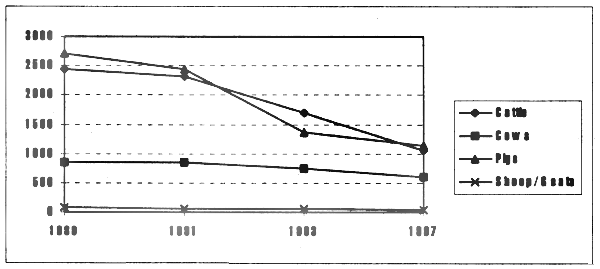
The number of fish farms, which also depend on concentrate feed, fell, as did the numbers of farms with fur animals. These numbers are tentative, as the data collection system is also in transition, and data from new private farmers are difficult to collect. Data are mainly derived from the Lithuanian Department of Statistics.
Table 1: Population of the animals and poultry in Lithuania (thousands)
| 1989 | 1990 | 1991 | 1992 | 1993 | 1994 | 1995 | 1996 | 1997 | |
|---|---|---|---|---|---|---|---|---|---|
| Total cattle | 2435 | 2422 | 2322 | 2197 | 1701 | 1384 | 1152 | 1065 | 1054 |
| Cows | 850 | 848 | 842 | 832 | 738 | 678 | 615 | 586 | 590 |
| Total pigs | 2705 | 2730 | 2436 | 2180 | 1360 | 1196 | 1260 | 1270 | 1128 |
| Sows | 196 | 198 | 190 | 175 | 92 | 81 | 70 | 59 | 58 |
| Horses | 78 | 78 | 80 | 83 | 80 | 81 | 78 | 78 | 81 |
| Sheep | 75 | 65 | 57 | 58 | 52 | 45 | 40 | 32 | 45 |
| Goats | 4 | 4 | 5 | 6 | 9 | 10 | 12 | 15 | |
| Poultry | 17231 | 17486 | 16875 | 16994 | 8258 | 8728 | 8848 | 8444 | 7775 |
2. Main developments in the animal husbandry sector
The Lithuanian agriculture is based on animal production. Even in crop production the feed crops predominate. Before World War II, Lithuania successfully exported its animal products to Western European markets. Until the proclamation of independence in 1990, Lithuanian agriculture did not have problems with the marketing of its products either. About half of its production was exported into the Soviet Union. The production was increased more and more without considering environmental consequences. Chemicals were used ruthlessly, land was reclaimed and large animal husbandry complexes were constructed. All this ceased promptly at the beginning of the transition period. During 1990–1995 not only the production fell (meat by 60% and milk by 42%) but domestic consumption declined as well (by 52% and 45% respectively). The export of Lithuanian products to traditional and to domestic markets have become increasingly difficult. The meat-processing plants process large quantities of cheap imported meat which is detrimental to local farmers. Difficulties in the marketing of animals has lead to a huge fall in feed crop production. The delivered products were no longer paid for.
The conditions of the market economy are causing drastic changes in the structure of the crop production patterns. In the long run changes will only increase.
We think that even if the entire agriculture will be transformed into a sustainable and ecological agriculture (and this will, of course, take much more than one or two years), the cultivation of traditional crops shall be abandoned in the less-productive area of over 1,000,000 ha (the areas where the coefficient of productivity is under 45). There are no ready-made recipes for suitable activities for this type of land. The development of investment programmes to solve this problem is, however, being initiated.
In 1997 the Ministry of Agriculture and Forestry created the Rural Support Fund, which will accumulate the funds from the state budget and other sources allocated for the support of investment programmes and projects. However, it is not realistic to think that all less productive and ecologically sensitive lands can be converted to forest. People live in those areas and they cannot go anywhere else. It is also not realistic to believe that the majority of farmers will be able to introduce alternative forms of farming.
Therefore, we are inclined to think that a real alternative could be grassland cultivation coupled with animal husbandry. This might, however, be a very daring assumption in the present day situation where the supply of animals is well above the demand. Moreover, the hope of being competitive in world markets is not very realistic in the short run, at least not until the radical restructuring of the animal production sector is completed.
During the period of transition and preparation for the EU membership, the restructuring process in animal husbandry takes three main directions:
3. Environmental programmes in the animal husbandry sector
The “Tatula” Programme: The movement of non-government organizations and agricultural research, training and extension institutes.
Lithuania was the first country in Central and Eastern Europe to develop strategic guidelines, legislation and programmes at government level for the transition to ecological farming:
This year the programme “Tatula” was extended to the entire Lithuanian territory. Non-government organizations and agricultural research, training and extension institutions have also given great impetus to the movement of ecological agriculture. This is very important in present day conditions when our financial resources are very limited. The “Gaja” society is one of the most famous and successful ones of these organizations.
The “Tatula” Programme has been implemented for five years. It is a complex investment programme. The state budget allocates 1.0 millions USD for “Tatula” every year. The programme develops ecological, sustainable and alternative farming, one of the important tools being pilot projects and schemes. At the same time the programme puts great emphasis on ecological training, extension, research and ecological monitoring. The self-governing cooperative body named the Fund of “Tatula”(in the beginning of 1997 it was reregistered as a non-profit organization “Tatulos programa”) includes 98 farmers, 9 agricultural companies, 13 processing enterprises and other organizations. The membership of “Tatulos programa” is rapidly increasing.
Forty farmers and 5 processing enterprises have received large amounts of interest-free credits (from 5.0 to 125.0 thousand USD). The credits are allocated on a competitive basis and a business plan is one of the requirements. The “Tatulos programa” will channel the repayments of the credits.
The ecological farming in the Karstic region concentrates on two main sectors: feed production and animal husbandry. Two companies from the Karstic region that belong to the “Tatulos programa” are famous throughout our country - they are the meat company UAB Jovaras and the Birzai Joint Stock Dairy Company.
Large amounts of interest-free credits were allocated to Mr. A. Ratkus, a farmer, (50,000 USD) for the construction of a pilot dairy farm (this project is also supported by the above-mentioned Birzai Joint Stock Dairy Company), to Mr. B. Morkvenas (6,000 USD), veterinary doctor, for the development of a ecoveterinary hospital and to Mr. P. Kasiulynas (12,400), veterinary doctor, for the development of an ecological animal breeding farm.
The strategic guidelines and the “Tatula” programme targeted for the year 2005 that ecological farming would constitute 5% or 40,000 ha of agricultural land in the Karstic region (as experience all over the world shows, 5% constitutes a serious break-through in the development process) and 80,000 ha in all Lithuania. Sustainable farming needs to be expanded considerably as it is the best way to fight competition in both foreign and domestic markets.
The initial period of the implementation of the programme gives us reason for optimism about the potential market for ecoproducts. It appears that the demand for certified ecoproducts will not be met for a long time in both the domestic and the international markets. This assumption is confirmed by three years of our activities in organizing a marketing chain and exhibitions for ecoproducts. However, contrary to what we assumed, two problems proved to be more complicated than expected:
The programme for restructuring large animal husbandry complexes. The Karstic region possesses two large pig complexes: the AB Salnaiciu agrofirma in Pasvalys region (12 thousands pigs per year) and the AB Ausruvos agrofirma (27 thousand pigs per year). They are very big sources of local pollution, but due to the limited funds of the “Tatula” programme we have not yet been able to start restructuring them.
Lithuania has 33 large pig raising complexes (further referred to as complexes) with a capacity of 12,000 to 54,000 pigs per year. There is a separate national programme, approved in 1996, to convert these complexes into sustainable farming enterprises. However, in the present financial situation we cannot yet implement this programme.
Certain researchers, politicians and experts consider large complexes a potential threat to the environment. Especially those that are built close to protected areas, (AB Ausruvos agrofirma in Birzai district, AB Salnaiciu agrofirma in Pasvals district, AB Gaurupës agrofirma in Taurage district etc. ), towns or cities (Agricultural company Sirvinta in Sirvintai district, UAB Eigirdzio agrofirma in the Telsiai district etc. ).
According to the calculations made by the water management institute, the aggregate pollution of Lithuanian pig complexes is equivalent to that of a city with 5 million inhabitants (industry excluded).
In the past, pig complexes with a capacity of 12,000 pigs a year had the problem of how to dispose of their manure. This was solved by mechanic transport. During the spring and fall, however, fields were impassable, and in the summer there were not enough areas in which to spread slurry. The problem became more acute when it became clear that there were about 200 cubic meters of slurry per day instead of the planned 100. To solve this problem, the government allotted funds for the construction of irrigation systems. In order to enable complexes to spread slurry through the irrigation systems, the construction of equipment for the separation of fractions, sedimentation and storage of slurry started.
At that time (1974–1984) people were of the opinion that this technology of slurry utilization was a progressive from an ecological point of view.
Although this technology was implemented through government funds, the local governments of four districts refused to implement it. That is why the complexes in these four districts as well as the above mentioned complex AB “Dalnaièi∅ agrofirma” in Pasvalys region (due to a very high degree infiltration in the ground), lack irrigation systems. In other complexes only half of the irrigation systems planned had been completed at the end of the Soviet period.
In 1988 and afterwards, when the activities of the “Greens” reached their peak, the ecological awareness grew. It became clear that the above mentioned technology, where manure is removed from pigsties by using water, goes against the requirements of ecology (the exception is the AB “Santuva” complex in Mariampole district where manure is removed mechanically.
Researchers have developed concepts on restructuring the large complexes. They have practically investigated all possible technologies for the removal and use of manure. To introduce a new technology instead of using an already existing and not yet fully completed technology involves a major reconstruction. In the nineties no funds for such an undertaking were available any longer. Besides, there are doubts whether it is reasonable to maintain these gigantic enterprises which were imposed on Lithuania during the Soviet period.
After 1990, when the kolkhoses were disrupted, the complexes subsisted as main pork producers in the country. The economic situation of many of them became stronger.
After the beginning of the reforms in agriculture, ecological awareness became less. Besides, the agrarian reform has a direct impact because the irrigated areas around the large complexes where manure was spread, used to be state property. They are now returned to their former owners and the problem of lease agreements arises. These complexes lack the funds to maintain and repair the irrigation systems.
In this way, the complexes carry the heavy burden of unresolved ecological problems. If we do not solve them, we cannot even prevent this pollution to reach the Baltic sea.
If the environmental issues are not solved and if the production technology is not changed radically complexes will be unable to meet the competition because of their very high cost of production. The complex most successful in restructuring is AB “Krekenavos agrofirma” which has started to introduce innovations since the first days of the agricultural restructuring. They hope to have their meat processing enterprise certified by the EU Commission in Brussels in July 1997.
References
Natural Resources and Environmental Protection. Department of Statistics of the Government of the Republic of Lithuania, Vilnius, 1996.
The Land Fund of the Republic of Lithuania for January 1, 1997. State Land Management and Geodesy Service at the Ministry of Agriculture, State Land Cadaster Company, Vilnius, 1997(in Lithuanian).
Human Resources Development and Support to Cattle Breeding Project. Lithuanian Livestock(Cattle) Survey, 1996.
