


AARINENA: Research networking and capacity building for sustainable agriculture
The Association of Agricultural Research Institutions in the Near East and North Africa (AARINENA) was established in 1985 as an instrument of change. It was seen as a means of reinforcing national and regional agricultural research capacities in the Near East and North Africa so as to reverse downward trends in agricultural productivity and the deterioration of natural resources.
AARINENA’s mission, then, is to enhance agricultural and rural development in member countries by fostering research and technology development and by strengthening links among them and with the outside world. The Association strives to assist members in creating effective NARSs and promotes regional and subregional scientific collaboration.
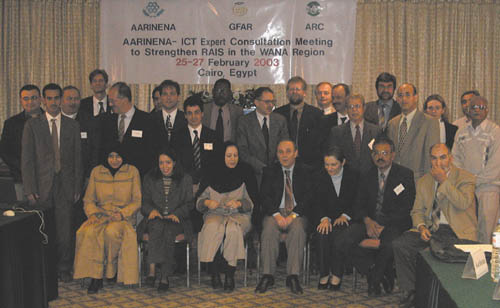
Participants in AARINENA’s expert consultation on information and communication technologies in Cairo. Research organizations in some countries of the region still lack good communications infrastructure. Photo: AARINENA
Executive Committee at work
In December 2002, the Committee met in Oman to translate the guidelines of the 8th General Conference, held in May 2002 in Jordan, into concrete action. The resulting work plan called for the establishment of a Regional Agricultural Information System (RAIS), an inter-regional cotton network, an olive oil network, a medicinal and herbal plants network, and a regional training course in postharvest technology. As part of its work plan, AARINENA also merged its Regional Date Palm Network with the Date Palm Global Network (DPGN), assembled a regional delegation for the 2003 GFAR Conference, and committed itself to building the Association’s membership. The rest of this report illustrates the significant progress to date.
Regional Agricultural Information System (RAIS)
The Association’s homepage
The AARINENA ‘homepage’ has been operating since July 2002 from the Agricultural Research & Education Organization (AREO) in Iran in collaboration with GFAR. AARINENA’s website (www.aarinena.org) acts as a gateway from which one can find information on national agricultural research institutions, universities, government ministries, NGOs, the private sector and farmers’ organizations in the region. It collects information through national information nodal points from each subregion. Direct links to regional and international organizations, publications, news and events, regional networks and databases are also available at this website.
A new scroll-text spotlight feature has been added to the AARINENA website, allowing users to find information more easily. A search function has also been added for locating information on specific subregions. A project to redesign AARINENA’s website is under way in collaboration with GFAR. A mock-up is available for viewing at http://www.egfar.org/aarinena/default.html.
ICT Steering Committee and NARS questionnaire results
AARINENA’s Steering Committee on Information and Communication Technology (ICT) was established upon the recommendation of participants in the AARINENA ICT Expert Consultation, held in February 2003 in Cairo, Egypt. Supported by GFAR and FAO, the meeting was organized with the aim of strengthening the RAIS. The Steering Committee’s membership comprises representatives of the five subregions and representatives of the Arab Organization for Agricultural Development (AOAD), FAO, GFAR and the International Center for Agricultural Research in the Dry Areas (ICARDA).
The Committee held its first meeting at ICARDA on 28 July 2003 and reported the following activities:
Preparation of the committee’s terms of reference and approval by the AARINENA Executive Committee
Drafting the collaborative programme framework (see below)
Collection and classification of comments received by the Steering Committee regarding the collaborative program
Preparation of a National Agricultural Information System (NAIS) questionnaire for NARSs in the West Asia and North Africa (WANA) region (see below).
The committee identified the following ICT-related weaknesses in the region:
Lack of well-qualified human resources
Lack of national policy on information management
Language barriers (and hence the need for multilingual systems)
Poor communication at the subregional level
Poor communications infrastructure in some countries (low bandwidth).
The framework of the collaborative programme of RAISs has been reviewed by all members. The proposed programme includes the following six projects:
Design of a management information system (MIS) database
Design and implementation of four topic-specific information systems: experts, institutes, projects and research outputs
Creation of an electronic forum for discussion.
The NAIS questionnaire for NARSs was prepared by the chair of the ICT Steering Committee and approved by its members. Eight countries in the WANA region completed the questionnaire. Preliminary analysis of the results revealed that most national research organizations in respondent countries have a body responsible for information management and maintain a local area network. The Internet connectivity rate is not mentioned in some responses, suggesting that some countries still have problems in this area. The number of work stations ranges from three to more than 300 in national research organizations. Most of the software identified indicates that computers are used mainly for office automation or using ready-made information packages such as CDS-ISIS. Few countries have a Data Base Management System (DBMS) such as SQL or Oracle.
No country has a complete NAIS as specified in the ICT Steering Committee minutes of the meeting held at ICARDA in July 2003. Most countries that have one or two modules have built them using tools provided by international organizations. Half the respondent countries are not satisfied with their current system; the other half, although satisfied, do not have a complete system or indicate that they wish to modify it. Only two countries assigned priority to the NAIS. Four countries indicated they do not have the human capacity to develop it. Some countries did not respond to this question because they are satisfied with what they have; however, this does not indicate that they in fact have the human capacity to build new modules.
The Steering Committee has scheduled its second meeting for September 2004.
Research networks
Date palm
AARINENA’s Regional Date Palm Network was established on the basis of the project document adopted by the Association’s 7th General Conference in Beirut, Lebanon.
The regional network then merged with the Date Palm Global Network. (DPGN was established under the aegis of FAO and operates from the United Arab Emirates University at Al-Ain, assisted by an FAO technical secretariat.) AARINENA serves on the coordinating board of DPGN. The network’s constitution and work plan were approved at the board’s first meeting in June 2003 in Cairo.
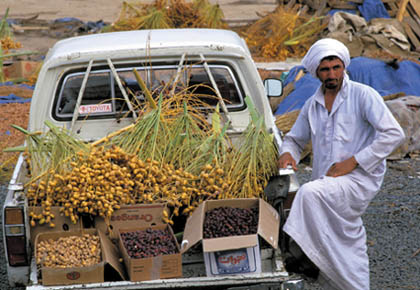
Selling dates in Saudi Arabia. Photo: Jeremy Horner, Panos Pictures
Cotton
The Inter-Regional Network for Research Collaboration on Sustainable Cotton Production in Asia and North Africa (INCANA) was established in October 2002 at AREO in Iran. Its purpose is to strengthen cooperation among regional and international cotton research institutes, including the exchange of information, experience and scientific results.
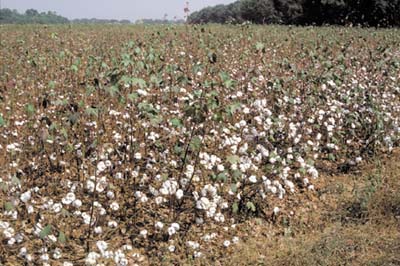
Cotton in India. INCANA will promote collaboration to improve cotton production technology in Asia and North Africa. Photo: Rex Parry, Panos Pictures
As cotton is a way of life in many countries of Asia and North Africa, it was necessary to set up a cross-regional research network for this important commodity. INCANA’s mission is to establish regional collaboration for improving cotton production technology via research, workshops and training. Network partners include APAARI, AARINENA, ICARDA, the Central Asia and Caucasus Agricultural Research Forum (CAC Forum), GFAR and AREO.
Since its establishment, INCANA has contacted NARSs and agricultural research institutes to promote the exchange of germplasm and information. It has also established a database on AARINENA’s website and planned databases for research institutes and research programs for NARS in participating regions. A regular electronic newsletter on cotton is on the drawing board as well.
Olive oil
AARINENA is planning an expert consultation for February 2004 in Sfax, Tunisia. Supported by GFAR, FAO and ICARDA, the meeting will move forward with the creation of a regional cooperative olive oil network to be hosted by the Olive Tree Institute in Sfax. Subgroups will be established to cover three areas: production and plant protection, postharvest technology, and socioeconomics and commercialization.
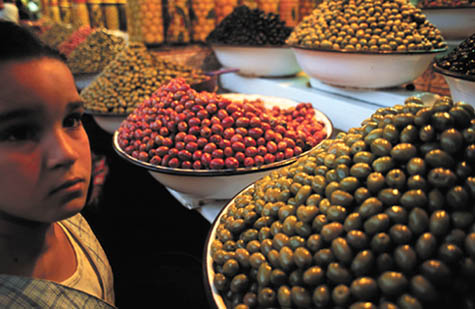
Selling olives in Morocco. The new olive oil research network will look at all aspects of the production-to-consumption chain. Photo: Eric Miller, Panos Pictures
Medicinal and herbal plants
Contacts were made with the president of the Egyptian Society for Medicinal and Herbal Plants and with the coordinator of the medicinal and herbal plant project conducted by Jordan’s National Center for Agricultural Research and Technology Transfer (NCARTT). As a result, prospects for setting up a regional network for this area of research will be explored during the International Conference on Medicinal and Herbal plants, scheduled for 28 - 30 September 2004, in Cairo.
Training courses
Jointly with the FAO Regional Office (Near East), AARINENA co-sponsored a regional training course on postharvest technology in January 2003 in Jordan, and a biosafety workshop, in August 2003 in Syria. An advanced course on postharvest technology is scheduled to be held in Jordan 6 - 8 April 2004.
Publications: Keeping the region informed
Volume 11 of the AARINENA Newsletter was circulated in May 2003 to all members, research institutions and university faculties of agriculture in the region. Issues of the newsletter are also posted on the Association’s website. Reports of meetings, workshops and training courses were likewise distributed.
The amended Constitution of AARINENA has been published and circulated to all members. Rules of procedure, adopted by the 8th General Conference, were also published.
A growing membership
The Secretariat’s recruitment efforts have resulted in seven new members joining the Association: Algeria, Somalia, Tunisia, the University of Jordan, Jordan University of Science & Technology (JUST), the International Center for Biosaline Agriculture (ICBA), and King Abdelaziz City for Science and Technology in Saudi Arabia.
Summing up
Over the years AARINENA has successfully supported NARS capacity building in the region - through training programmes, technical and scientific workshops and conferences, and a regional information and communication system. As a catalyst and facilitator, it has also brought the views, aspirations and agricultural research priorities of people in the WANA region to the attention of the international development community. In advancing the cause of sustainable agriculture, the Association hopes to attract vital donor support for its regional and subregional research projects and supporting activities.
APAARI: a conduit for sharing knowledge and building scientific capacity
The Asia - Pacific Association of Agricultural Research Institutions (APAARI) was established in 1990 as an apolitical, nonprofit and neutral forum for NARSs. While NARSs constitute its core membership, several international agricultural research institutes, including centres of the CGIAR, are associate members.
The mission of APAARI is to promote the development of NARSs in the Asia - Pacific region through intraregional, interinstitutional and international cooperation. APAARI stakeholders have developed long-term plans and research programmes to address important issues such as regional collaboration, networking of research efforts, policy advocacy, resource mobilization and scientific publishing. Some activities under these plans aim to improve the exchange of scientific and technical know-how and information on ARD. Others aim to strengthen the research capability of member institutions and promote linkages among national, regional and international research organizations.
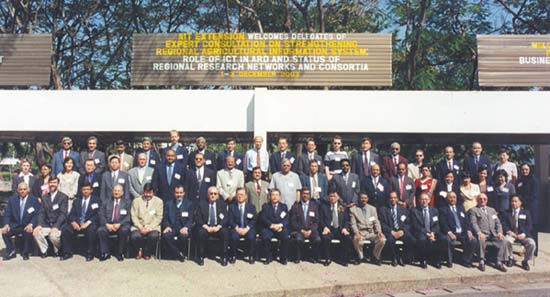
Participants in the APAARI consultation on information and communication technology, held in Bangkok, recommended that the Association strengthen its advocacy role in this area. Photo: APAARI
The rest of this section highlights the major activities of APAARI during 2003.
Asia - Pacific Consortium on Agricultural Biotechnology (APCoAB)
In December 2002, the APAARI General Assembly endorsed the establishment of APCoAB. Since then, APAARI stakeholders have taken steps to implement this decision. A first meeting to discuss the issue was jointly organized by the FAO’s Regional Office for Asia and the Pacific (FAO/RAP) and the APAARI Secretariat on 4 April 2003, in Bangkok. It was attended by about 25 participants representing NARSs, international institutes including CGIAR centres, NGOs, foundations and private-sector concerns from the region. After a full day of deliberations, the participants made the following recommendations:
That APCoAB be established as a neutral platform for its stakeholders to exchange views, ideas and knowledge in the field of agricultural biotechnology
That the initial focus be on achievable objectives following further prioritization of APCoAB activities
That active financial support for the initiative be sought from sources other than APAARI, such as FAO, the International Service for National Agricultural Research (ISNAR), GFAR, the Asian Development Bank, the World Bank, prominent foundations, the private sector, and even through membership contributions from NARSs
That an APCoAB Steering/Advisory Committee be formed to guide programme, constitutional and legal issues of the consortium
That the recommendations and proceedings of the meeting be sent to all NARSs associated with APAARI stakeholders.
Participants acknowledged the efforts of FAO’s Bangkok office and the APAARI Secretariat for having developed the APCoAB concept through extensive consultation and for having organized the meeting.
Following the conceptualization of APCoAB, the primary donor group met in Bangkok in July 2003 to accelerate the consortium’s development. Participants included representatives from FAO/RAP, APAARI, the International Crops Research Institute for the Semi-Arid Tropics (ICRISAT), the Australian Centre for International Agricultural Research (ACIAR), ISNAR and Monsanto Corporation. They discussed APCoAB issues such as formation of the steering committee, priority activities and programmes, funding support, location of the APCoAB Secretariat, and potential collaborators. Here are the key decisions taken:
The APCoAB Steering Committee should have the following composition: two NARS representatives (APAARI’s Chair and one NARS leader from a developing country); one FAO representative; one CGIAR centre representative, from ICRISAT, ISNAR or the International Rice Research Institute (IRRI), on a rotational basis; one GFAR representative (its Executive Secretary); one private-sector representative (initially from Monsanto); one representative of the International Service for the Acquisition of Agri-biotech Applications (ISAAA); and one representative each of CSOs, NGOs and farmer groups. In addition, APCoAB’s coordinator will serve as the Steering Committee’s Member-Secretary.
Priority activities of APCoAB will include research partnership, information dissemination, capacity building, public awareness and policy advocacy.
APAARI should present these recommendations to its Executive Committee and seek further funding support from international and regional organizations, both private and public.
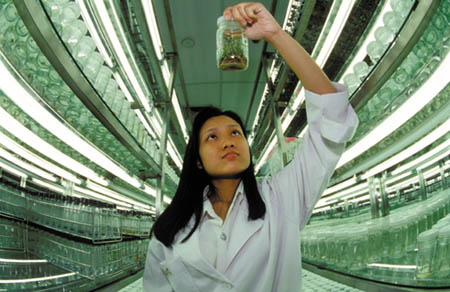
APAARI has set up the Asia-Pacific Consortium for Agricultural Biotechnology (APCoAB). Its priorities are to promote research partnerships, disseminate information, build scientific capacity, increase public awareness and engage in policy advocacy. Photo: Marcus Rose, Panos Pictures
Expert consultation on ICTs
This consultation took place 1 - 3 December 2003, with partial financial support from GFAR. Its aims were to strengthen the regional agricultural information system (APARIS) and national information nodal points (NINPs), and to further identify specific programmes to enhance the role of ICTs in Asia - Pacific ARD. Conclusions and recommendations included the following:
Agriculture is becoming increasingly knowledge-intensive and market-oriented in a globalized world. The use of ICTs is vital for accelerated growth of this sector.
The Asia-Pacific region contains several hot spots of rural poverty, dominated by smallholders. Information and knowledge sharing via both conventional and new ICTs has great potential to boost agricultural productivity and alleviate poverty.
APARIS, as a regional agricultural information resource and intermediary, and APAARI, as a regional organization, have critical roles to play in improving the efficiency and effectiveness of agricultural information and knowledge flows in the Asia - Pacific region.
Relationships between NARSs (represented by NINPs) and APARIS should be enhanced for greater collaboration in information exchange.
NINPs’ capacity to use and manage ICTs should be strengthened.
APAARI’s advocacy role in the area of information and communication management for ARD should be improved.
ICT indicators and the ICT status of NARSs and member institutes should be identified.
Status of regional research networks
On 2 December 2003, APAARI organized a meeting of the coordinators of the following networks:
Council for Partnerships on Rice Research in Asia (CORRA)
Cereals and Legumes Asia Network (CLAN), led by ICRISAT
Group of Fisheries and Aquatic Research (GoFAR)
Underutilized Tropical Fruits in Asia Network (UTFANET)
Plant Genetic Resources (PGR) Networks
Tropical Asian Maize Network (TAMNET)
Inter-Regional Network for Research Collaboration on Sustainable Cotton Production in Asia and North Africa (INCANA)
Biosaline Networks
International Tropical Fruits Network (ITFNET).
During the session, participants brainstormed on ways to reinforce the networks. Discussion on the role of the networks was lively. Member NARSs felt the networks were serving a useful purpose and must be further strengthened and supported, especially through active involvement of concerned NARSs. It was suggested that, in order to improve financial support, a regional level donor meeting should be organized in collaboration with FAO, GFAR and the international agricultural research centres. Furthermore, the APAARI Secretariat should facilitate this process and provide needs-based support, wherever necessary.
Participants agreed that CGIAR centres should be asked to continue playing their important facilitating function for existing networks and that member NARSs should contribute towards better network sustainability, in part by assuming responsibility in future for running their secretariats. It was suggested that private-sector involvement be sought in the future, and that facilitating centres or institutes should be encouraged to conduct internal reviews of the existing networks, for gap analysis and restructuring where needed. Finally, participants expressed the need for research networking activities in the livestock sector, involving the International Livestock Research Institute (ILRI), and in agroforestry, involving the World Agroforestry Centre (ICRAF). The initiative to establish INCANA, the cotton network, was appreciated by participants; it was felt that similar efforts in the future will strengthen NARSs considerably.
Support to NARSs and their networks
CLAN: an expanding mandate
The steering committee of the Cereals and Legumes Asia Network (CLAN) met to examine the possibility of expanding network activities to include research on cover crops such as soybean, mungbean and lentil. The meeting, organized by ICRISAT and APAARI, took place in Hyderabad, India in November. The proposed expansion would be done in partnership with the World Vegetable Center (AVRDC) and ICARDA. ICRISAT, ICARDA and AVRDC have agreed in principle to collaborate and will initiate specific activities under the network to support APAARI member NARS in the Asia - Pacific region.
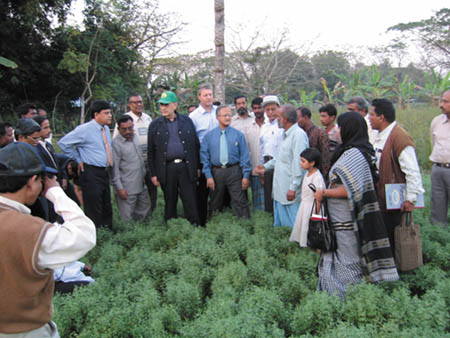
The Cereals and Legumes Asia Network (CLAN) will expand its scope to include research on cover crops such as soybean, mungbean and lentil. Photo: APAARI
TAMNET revival
In cooperation with FAO and APSA, APAARI facilitated the revitalization of TAMNET and provided support for the distribution of hybrid maize seed to network members for trials.
CORRA and GoFAR
CORRA and GoFAR presented activity reports during the APAARI-organized expert consultation on Strengthening of Research Partnerships through Networks and Consortia.
INCANA
APAARI contributed US$5,000 to INCANA, the inter-regional cotton network hosted by Iran’s AREO.
Seventh APAARI Executive Committee Meeting
The seventh APAARI Executive Committee meeting, held on 4 December 2003, reviewed APAARI activities during 2003, including membership status and audited accounts. It finalized the 2004 work plan and approved the establishment of APCoAB.
Information and communication technology (ICT)
APAARI homepage
The redesigned APAARI homepage (www.apaari.org) was enriched with new information and links. The site now provides useful information on agricultural R&D activities in the region such as seminars, symposia and conferences, and serves as a portal to regional research networks. This component of APARIS facilitates access to Internet-based information, both through search engines and by linking to other ARD-related websites. This is only a portal service, however, not a centralized database. The improved site has features for e-discussion among NINPs. Most APAARI publications are now available on the website for download.
APARIS update
Two new functions - gateway and the regional agricultural expert locator (RAEL) - are currently being developed to make APARIS more useful to agricultural researchers and other experts in the region and elsewhere. The gateway function will be able to perform keyword-based searches for ARD information resources available in the region and the RAEL function will maintain a database of agricultural experts. Interested experts will be able to log on to APARIS and to upload/update their information, including publications lists.
On 3 April 2003 the APARIS support group met to formalize bilateral cooperation on ICT, between APAARI and members of its support group, including FAO/RAP, GFAR, ISNAR and the Asian Institute of Technology (AIT). Decisions and recommendations included the following:
APAARI and FAO/RAP representatives were mandated to discuss and develop a proposal for collaborative activities to be considered by FAO/RAP and APAARI management.
APAARI and ISNAR were urged to develop a memorandum of understanding for future collaboration, particularly for ICT needs assessment, ISNAR’s support for ICT capacity building in the Asia - Pacific region, and possible integration of ISNAR and APARIS information resources.
APAARI and AIT were mandated to finalize arrangements for a proposed ICT workshop at AIT in December 2003 with major support from GFAR.
APAARI, ISNAR and FAO/RAP were requested to jointly develop a guide to useful ARD information resources, for distribution to APAARI members.
APAARI will move forward to develop a simplified gateway function with the help of ISNAR, FAO, AIT and CAB International, as well as a RAEL function with the collaboration of FAO/RAP.
APAARI, in collaboration with its support group members, will develop a framework for a project proposal to be submitted to ADB, the World Bank or other donor organizations.
FAO/RAP - APAARI collaboration on ICT activities
FAO/RAP and APAARI representatives jointly developed a work plan to promote ICT in ARD. Proposed activities include demonstration of FAO’s ICT tools to the NINPs of APAARI and publication of the benchmark report on the status and progress of ICT in ARD in the Asia - Pacific region.
Publications
Newsletters
Two issues of the APAARI Newsletter (December 2002 and June 2003) were published and circulated. Electronic versions were also posted on the APAARI website.
Proceedings of expert consultations
Reports of the following expert consultations were published, distributed widely and posted on the APAARI homepage:
Proceedings of the Expert Consultations on Strengthening Regional Agricultural Information Systems and Regional Research Networks and the Seventh Executive Committee Meeting of APAARI
Proceedings of the Seventh General Assembly of APAARI and Expert Consultation on Strengthening of Research Partnerships through Networks and Consortia.
Success stories
“Lentil Improvement in Bangladesh” was the 20th ‘success story’ in a series published by APAARI. It has been circulated to all Association members and to key ARD contacts for wider dissemination. It will also appear on the APAARI website. Other new stories in the series are “Control of Newcastle Disease in Village Chickens Using Thermo-tolerant Vaccines” (no. 19) and “Biological Control of Insect Pests in India” (in preparation).
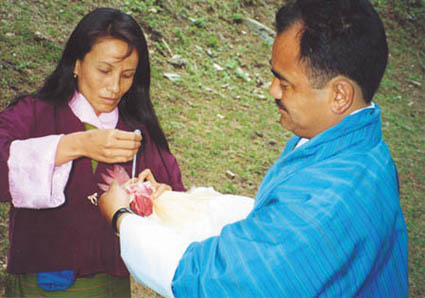
A village chicken being vaccinated against Newcastle Disease. Photo: APAARI
APAARI Constitution
The revised Constitution of APAARI was published, widely disseminated and posted on the Association’s website.
Expanding membership
Four groups recently joined APAARI as associate members: the Asia and Pacific Seed Association (APSA), the Network of Aquaculture Centres in Asia-Pacific (NACA), the Asia-Pacific Association of Forestry Research Institutions (APAFRI), and the Association of Agricultural Research Institutions in the Near East and North Africa (AARINENA). They have also accepted APAARI as an associate member on a reciprocal basis.
The NARSs of Bhutan, Cambodia, China, Indonesia, Laos and Myanmar have been approached about APAARI membership.
Past and future: summing up
APAARI’s diverse activities over the past year have helped strengthen partnerships, collaboration and networking in agricultural R&D in the Asia - Pacific region and have addressed the emerging needs and expectations of the national systems. APAARI looks forward to continued partnership with ARD organizations in pursuing common goals, especially in the areas of genetic resources conservation, biotechnology, natural resources management, ICT networking and commodity chain programmes. APAARI also hopes to strengthen links with other regional fora through GFAR.
APAARI would now like to move forward with a gap analysis based on the results of earlier regional and subregional priority-setting exercises. This will be followed by collaborative efforts to bridge those gaps. Agricultural biotechnology and postharvest technology are being considered as top priorities.
FARA’s role in the research community
A country’s agricultural development depends on the presence of strong research institutions which, working in unison, form a dynamic national agricultural research system, or NARS. At the next level up, subregional organizations (SROs) work with the NARSs of their member countries to identify common priorities and build a critical mass of research capacity.
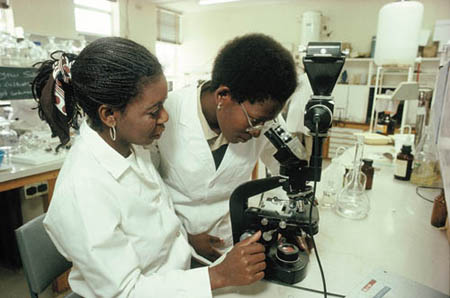
FARA is committed to revitalizing African agricultural research institutions and learning at all levels. Photo: David Reed, Panos Pictures
Until the Forum for Agricultural Research in Africa (FARA) became active in mid-2002, there were missing links among the African SROs and between the African research community and GFAR, the global platform for exchanging knowledge and best practices. The first FARA plenary meeting, held in Maputo, Mozambique, in July 2002, defined the way forward by articulating the ‘Vision for African Agriculture’. This guiding framework for agricultural R&D on the continent moved a step closer to reality with the launch of the Comprehensive African Agricultural Development Programme (CAADP), under the New Partnership for Africa’s Development. (NEPAD is the strategic framework for the continent’s renewal, adopted by African leaders in 2001.)
FARA’s second plenary meeting was held back-to-back with the GFAR Conference in Dakar, Senegal, in May 2003. Participants endorsed the call-for-action made two years earlier in Durban, South Africa, and confirmed the African vision. In effect, FARA recommitted itself to:
Pursuing the agricultural R&D priorities and agenda of the African Union, as expressed in CAADP
Renewing and strengthening research capacity by revitalizing institutions, training and learning at all levels
Providing governments and development agencies with policy options for promoting agricultural market development and innovation
Advancing research on natural resource management so that it takes into account the environmental, social, economic and policy-related conditions faced by Africa’s smallholders and pastoralists
Building African capacity in biotechnology as a way of sustainably intensifying agriculture and solving stress-related production constraints in a market context rarely conducive to major private investment in research
Enhancing biosafety in the region by promoting the development of guidelines for national policy making in this area and by raising political leaders’ awareness of the importance of biosafety procedures and regulations
Encouraging partnerships through which the African technology coalition can pool available resources for the greatest possible positive impact.
African leadership and ownership
Through NEPAD, African leaders are demonstrating political responsibility and renewed determination to seize the initiative in the fight against poverty, food insecurity and loss of natural resources. Central to this battle is the imperative to turn agriculture around, to make it the engine of economic growth. NEPAD recognizes the importance of harnessing agricultural research for development. The creation of FARA was a significant step in ensuring African ownership of that process.
FARA organized a retreat in August 2003. This allowed it and the SROs to set common goals and objectives and to work out how their different mandates, perspectives and resources might be melded to promote the work of the NARSs and their partners.
The retreat formulated the following action plan:
Consolidate the alignment of FARA with NEPAD by ensuring North Africa is represented in FARA and by creating mechanisms for coordinating FARA’s work with that of the NEPAD Secretariat and relevant African Union structures
Establish capacity-building programmes for NARSs that include African women and youth
Strengthen NARS and SRO capacity in strategic planning, impact studies and proposal writing, and share best practices with respect to administrative, financial and scientific procedures
Assess the capacities and resources of NARSs to determine how FARA can best assist the SROs with their NARS-support work
Sign service-level agreements between the FARA Secretariat and the SRO Executive Offices
Create a database of African agricultural research experts who can help NARSs strengthen their scientific centres of excellence
Establish an effective FARA information-sharing and management system
Support SROs in their promotion of good governance of NARS by:
establishing governance bodies (boards and executive committees)
establishing capable scientific and technical committees which include external and independent authoritative scientists
compiling a manual of administrative, financial and scientific procedures
institutionalizing the practice of assessing programs (for both scientific quality and overall performance) and structures at the NARS level
Enhance advocacy for agricultural research within NEPAD and its partners by:
adopting a communication strategy and advocacy plan of action
investigating the feasibility of producing a regular FARA newsletter, communiqué or journal
popularizing and supporting the FARA website.
Advocacy for agricultural research for development
Africa’s problems, particularly with agriculture and food security, are much better known than its achievements. FARA is working hard to create a more balanced image by highlighting the many success stories in agricultural research on the continent. Among these are improved maize, cassava, cowpea, cooking banana, yams and the ‘new rices for Africa’ (NERICAs).
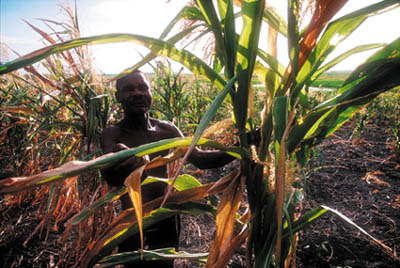
An Angolan farmer examines a maize crop. Photo: Trygve Bolstad, Panos Pictures
The Forum believes the sustainability of African NARSs depends on greater investment by governments. This is also important from the donor perspective, as it is taken as an indicator of national commitment. But for public investment in agricultural research to grow, policy makers need to be better informed of the successes to date.
The strong message about the value of agricultural research that came from the Conference of Ministers of Agriculture, and which was endorsed by the Heads of State at the African Union Summit in Maputo in July 2003, was an important step forward. Advocacy is now needed at government level to ensure that this conviction leads to action.
Promoting partnerships
FARA is engaged with other stakeholders in designing and promoting several major Africa-wide agricultural research and capacity-building programmes linked to CAADP. One of these is the Sub-Saharan Africa Challenge Programme, which will be grounded in partnerships for Integrated Agricultural Research for Development (IAR4D). This was the outcome of extensive and intensive consultations exemplified by a vigorous Programme Formulation Workshop held in Accra, Ghana, in March 2003.
The consultations continued through an e-forum on mobilizing partnerships for capacity building in IAR4D. The discussion was hosted by the International Centre for development oriented Research in Agriculture (ICRA) and the Network of European Agricultural [Tropically and Subtropically Oriented] Universities and Scientific Complexes Related with Agricultural Development (NATURA). It was stimulated by agrowing consensus “that a new paradigm of agricultural research for development is needed in Africa”.
Higher yields and better plant and animal resistance to stresses are clearly not enough to meet the UN Millennium Goals and the objectives of CAADP. These advances must be accompanied by research-based solutions to other problems such as lack of markets and unsupportive policies. A holistic approach, like that embodied in IAR4D, is required to improve human livelihoods, boost economic competitiveness, and ensure sustainable use of natural resources and biodiversity.
Under the IAR4D model, national, regional and international researchers will work together with smallholders, extension agencies and civil society to multiply the impact of innovations. This means taking the products of research to national and regional levels (upscaling) and disseminating them from participating communities to their neighbours (outscaling). Institutional change will likewise be an essential ingredient in such a paradigm shift.
Among other FARA - NEPAD initiatives is the Multi-country Agricultural Productivity Programme (MAPP), aimed at providing the stimulus and resources to reinvigorate African NARSs. A phased programme over 13 years, MAPP has three mutually reinforcing thrusts:
On the technology demand side: To strengthen farmers’ capacity to (i) identify and understand income-generating opportunities, production constraints and technology options, and (ii) mobilize the resources and services needed to develop or acquire the necessary technologies.
On the technology supply side: (i) To improve the efficiency, accountability and sustainability of national agricultural technology-generation and advisory systems; this includes reinforcing their links with regional and international institutions; (ii) to promote the development of efficient market chains (for technology, inputs and farm produce), especially through outreach and greater efficiency among private operators.
On the policy side: To promote policy and regulatory environments supportive of rapid and sustained technology generation, diffusion and adoption. This means: (i) strengthening national government capacity to perform core functions such as policymaking, design and enforcement of regulations, and monitoring indicators of productivity, environmental impact, rural income and poverty reduction; (ii) supporting the development of regional-level associations and networks of technology users and suppliers, research institutions, and policy makers, as well as the creation of large integrated markets for efficient technology generation and diffusion.
Better access to information and knowledge
Despite rapid advances in information technology, Africa’s scientists, policy makers, agribusiness operators and especially its producers have poor access to the knowledge and information they need. FARA is committed to helping eliminate this major constraint to agricultural development and will investigate the products and services available. It will then assess how it can contribute to improving the exchange of agricultural information and knowledge.
To this end, FARA envisages a collaborative project with other regional fora, such as APAARI and AARINENA, and with GFAR. The aim will be to improve linkages and interactive capacity among information and knowledge providers such as WAICENT, European Information System (INFOSYS), CAB International (CABI), the International Network for the Availability of Scientific Publications (INASP), the CGIAR centres, and delivery channels such as the Africa Link project of the United States Agency for International Development (USAID), which provides e-mail access for NARSs.
Together with NEPAD, FARA is designing a project on the Dissemination of New Agricultural Technologies in Africa (DONATA). It has three key objectives:
To improve dissemination of information on African model crops (NERICAs, cassava and tissue culture banana) within four regions of Africa
To build the capacity of NARS to disseminate new technologies in the subregions
To institutionalize links among major stakeholders (regional, subregional and national) for disseminating promising technologies in Africa.
A note of recognition
While FARA is still young - less than two years old - it was given an excellent head start by the preparatory work carried out over the years by the Special Programme for African Agricultural Research. SPAAR not only convened the consultations that culminated in the formation of FARA by the subregional organizations, but also invested FARA with the good will of many stakeholders in African agricultural research, including the donors. FARA is keenly aware of its responsibility to retain and build on that good will.
FORAGRO: An emphasis on competitive and sustainable small-scale agriculture
The Forum has made major progress in implementing the provisions of the Declaration of Brasilia, which was a key outcome of the Third International Meeting of FORAGRO, held in April 2002 in Brazil. The following report was prepared by FORAGRO’s Technical Secretariat, hosted and operated by the Inter-American Institute for Cooperation on Agriculture (IICA), in Costa Rica.
Further information, including technology policy documents and institutional links, can be found on FORAGRO’s web page (www.iica.int/foragro) and that of INFOTEC (Scientific and Technological Information System for the Agricultural sector in the Americas, http://infotec.ws), which grew out of FORAGRO. All Forum stakeholders are encouraged to consult those resources.
Follow-up to Brasilia
The Technical Secretariat prepared proceedings of the meeting and circulated them in July 2003. Papers presented at the meeting and the Declaration of Brasilia itself were also made available to participants and members through INFOTEC and the Forum’s website. With a view to implementing the Declaration, FORAGRO prepared its 2003 - 2005 medium-term plan and 2003 - 2004 plan of action, which were both approved by the Executive Committee.
Executive Committee
New officers were nominated for the FORAGRO Executive Committee. David Berroa, Director General of Panama’s Instituto de Investigación Agropecuaria (IDIAP), President of the Sistema de Integración Centroamericano de Tecnología Agrícola (SICTA) until November 2003, and FORAGRO Vice President, took office as Committee President.
The following Vice Presidents were appointed: Claudio Barriga, representing the private sector; Mario Ahumada, Director of the Chilean branch of the Latin American Agroecological Movement (MAELA), representing NGOs; and Francisco Delgado de la Flor, Chancellor of La Molina Agricultural University, Peru, representing agricultural universities. Jorge Ardila and Enrique Alarcón, of IICA’s Directorate of Technology and Innovation, continue to operate FORAGRO’s Technical Secretariat.
The Seventh Meeting of the Executive Committee was held in Panama in September 2003. A key outcome was the approval of work programmes for the execution of hemispheric activities in four priority areas: new biotechnologies; agribusiness, innovation and small-scale agriculture; genetic resources; and natural resource management. The Committee also decided that the Fourth International Meeting should emphasize competitiveness and market access for agricultural products; ways to promote the modernization of small-scale agriculture; strengthening of national research institutions; and making better use of the institutional framework of the Regional Research System of the Americas.
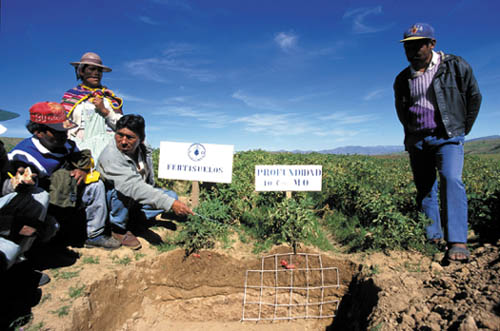
Participatory research in Latin America. An educational workshop on an experimental farm in Bolivia. Photo: Rhodri Jones, Panos Pictures
FORAGRO linkages
With members
Priority topics at the hemispheric level were identified for cooperative research on the basis of subregional topics and a hemispheric vision of the problems now facing agriculture in a globalized world. This will promote congruence between the activities of FORAGRO and those of the subregional Programas Cooperativos de Investigación y Transferencia de Tecnología Agrícola (PROCIs).
The research topics have been disseminated and discussed, particularly in the meetings of the steering committees of the following PROCIs:
the Cooperative Program for Research and Technology Transfer for the South American Tropics (PROCITROPICOS)
the Programa Cooperativo para el Desarrollo Tecnológico Agropecuario del Cono Sur (PROCISUR)
the Programa Cooperativo de Investigación Agrícola para la Región Norte (PROCINORTE)
the System for Central American Integration of Agricultural Technology (SICTA)
the Regional Fund on Agricultural Technology (FONTAGRO)
the Cooperative Program for Improvement of Crops and Livestock in Central America (PCCMCA).
The Technical Secretariat continued to support the consolidation of the regional research system by promoting and assisting the most recently created cooperative mechanisms as follows:
SICTA: An operations agreement was signed between participating countries, IICA and the Tropical Agriculture Research and Education Center (CATIE).
PROCICARIBE (Caribbean Agricultural Science and Technology Networking System): A review of its impact and its operating model were programmed.
PROCINORTE: New support was received and the programme’s first Executive Secretary, a professional from Mexico’s Instituto Nacional de Investigaciones Forestales, Agrícolas y Pecuarias (INIFAP), was appointed.
With Latin American legislators
The President of FORAGRO was invited to a trade and agriculture meeting of the Agricultural Commissions of Legislators, in São Paulo, Brazil in April 2003. It was an excellent opportunity to discuss cooperation between FORAGRO and the Latin American Parliament (PARLATINO), on the basis of a proposal by Parliamentarian Carlos Recondo, delegate to the Third International Meeting of FORAGRO, in 2002. The Secretariats of the Commissions of PARLATINO and of FORAGRO are working on a draft PARLATINO - FORAGRO agreement, to be signed in 2004. This will enable the two regional organizations to strengthen ties and carry out joint activities.
With GFAR
Representatives of Latin American and Caribbean public and private institutions belonging to FORAGRO participated in the Second Triennial GFAR Conference, held in Dakar, Senegal. Of particular note was the presence of the President of the Brazilian Agricultural Research Corporation (EMBRAPA), also President of FORAGRO at the time. He shared with GFAR members details of a successful partnership known as LABEX (EMBRAPA Overseas Laboratory). This experience was singled out as an example of a partnership for advancing science between institutions in developing and developed countries.
During the Dakar conference, the FORAGRO and GFAR secretariats met to identify joint actions based on their respective plans of action. The development of RAIS and reciprocal cooperation between continental fora deserve mention. Specifically, public - private partnerships in R&D, development of institutional innovations, and the creation of information systems are of special interest.
With the CGIAR
The Technical Secretariat of FORAGRO contributed to the interim Science Council (iSC) of the CGIAR in its efforts to develop a new vision of the CGIAR system, submitting an analytical paper titled “Constraints and Priorities in Agriculture from the Technological Perspective in LAC”. This document presents FORAGRO proposals and a vision of agriculture and the rural sector from the technological perspective, and the hemispheric priorities for research in Latin America and the Caribbean (LAC). This task is part of the Forum’s mission to influence the international research agenda.
In late 2003, the GFAR Secretariat consulted FORAGRO about becoming an alternate member of FARA, which currently represents the regional fora on the Executive Committee of the CGIAR. FORAGRO agreed to the proposal and hopes, after its tenure as alternate, to represent the regional fora on the CGIAR Committee in two years time.
With NGOs
The Latin American and Caribbean Agroecological Movement (MAELA), under the direction of Mario Ahumada, also Vice President of FORAGRO, held its regional conference in Costa Rica. FORAGRO’s Secretariat attended. During the meeting, MAELA’s President made important proposals, which are consistent with priority subjects outlined in the Declaration of Brasilia. These proposals relate to current trade regimes and their effects on rural development, food security, local markets, sovereignty and the struggle against poverty.
Plan of action: 2003 - 2004
The plan calls for several activities that correspond to the Forum’s ‘lines of action’. Here we highlight four areas: the regional information system, inter-regional coordination, hemispheric priority topics and advocacy at the political level.
INFOTEC
Development of the Scientific and Technological Information System for the Agricultural sector in the Americas (INFOTEC) continues. In addition, two agreements were negotiated to mobilize technical and financial support for INFOTEC activities. One is between IICA and FAO, to develop a directory of research institutions for use by Forum members, FAO’s World Agricultural Information Centre (WAICENT) and the larger global community. The second agreement, with GFAR, calls for the establishment of a network of specialists in information and communication technologies in the area of agriculture, and the preparation of a conceptual and operating guide to support development of this discipline in the NARSs and subregional fora.
Strengthening FORAGRO and inter-regional coordination
The Technical Group in Support of the FORAGRO Secretariat (GTAF) was set up. It comprises the Executive Secretariats of the PROCIs of the Northern, Andean, Southern, Caribbean, Tropical Amazon and Central (under SICTA) regions, and a specialist from EMBRAPA. The group, coordinated by the FORAGRO Technical Secretariat, established its mission and work programme as a way to catalyze the 2003 - 2004 plan of action.
Hemispheric topics
GTAF members programmed activities to be carried out in connection with the four agreed-on priority issues for the region. Initially, studies will be conducted to establish the state-of-the-art across the region for each of the four topics. The execution of specific activities by multinational consortia will then be promoted. FORAGRO is accelerating phase one activities so that preliminary results can be presented at the Fourth International Meeting in Panama.
Political presence
FORAGRO is keen to have research and technology development assigned a more prominent position on national and regional political agendas. To this end, FORAGRO’s President recently addressed the ministers of agriculture of 34 countries of the Americas. In his report to the meeting of the Inter-American Board of Agriculture (IABA), in Panama in November 2003, the President outlined the conclusions of the Third International Meeting of FORAGRO, held in Brasilia. He referred to ways in which FORAGRO can cooperate on the AGRO 2003 - 2015 Plan of Action.
As a result of this intervention, IABA issued a resolution in support of the Forum. (The first such endorsement was issued in Chile in 1997, asking IICA to support the Technical Secretariat.) Resolution 398 states that the ministers welcome the conclusions of the Third International Meeting and that they encourage IICA and the countries of the region to strengthen their participation in FORAGRO.
Consolidation of regional R&D through PROCIs
The main activities conducted in relation to PROCIs were:
Andean region/PROCIANDINO
As a mechanism for regional cooperation, the Programa Cooperativo de Investigacíon y Transferencia de Tecnología para la Region Andina (PROCIANDINO) was consolidated through the signing of an agreement among IICA countries covering the period 2003 - 2006. Cooperation in promoting innovation in R&D on fruits, vegetables, potatoes, maize and dual-purpose cattle was intensified. A project to monitor the performance and institutional building processes of national institutions was continued. In collaboration with ISNAR and as part of ISNAR’s project on public - private partnerships, models for financing innovation were identified. PROCIANDINO coordinated the implementation of 12 regional research projects sponsored by FONTAGRO and several workshops took place on experiences in the use of competitive grants for agricultural research. Cooperation on agroforestry systems and plant genetic resources took place through the relevant networks on these subjects, the Redes de Sistemas Agroforestales y de Recursos Filogéneticos (REDARFIT). PROCIANDINO also initiated activities on biotechnology and biosafety in order to strengthen the capacities of national research institutes in this field. A total of 21 seminars and workshops were conducted with the participation of 600 professionals.
Amazon basin region/PROCITROPICOS
Special emphasis was given to cooperation among countries in the areas of conservation of genetic resources, the rehabilitation of degraded land, the management of natural resources and the establishment of platforms for identifying commodity system constraints for cocoa, coffee, oil palm, dual-purpose cattle, tropical fruits and acquaculture. The integration of border areas in technology development and dissemination was also covered. Eleven international workshops, three of them scientific conferences, were held, at which more than 3000 professionals and producers participated. The outcomes of these events are available in nine CD-ROMs and other publications.
Central region/SICTA
To strengthen cooperation among the countries of Central America, an agreement was signed between SICTA, IICA and CATIE to implement a project worth US$ 45 000 per year. At the request of ministries of agriculture in the region, a proposal was developed to formulate a Central American policy statement on technology and diversification. A collaborative project was agreed between the IICA and the Swiss Agency for Development and Cooperation (SDC) on networking for innovation in maize, beans and root crops. This project will command a budget of US$ 1 million per year. A new website for SICTA was created and is being maintained by INFOTEC. A project on biodiversity conservation was submitted to the Global Environment Facility (GEF) of the World Bank under the auspices of REMERFI, the Mesoamerican Network for Genetic Resources. Organic production was supported through the formulation of a strategy for this sector. Training courses on this subject were also held.
Northern region/PROCINORTE
PROCINORTE’s operations were consolidated through the designation of a permanent Executive Secretary, provided by INIFAP, Mexico. A work plan was also developed for four networks, on plant genetic resources, tropical and subtropical fruits, agro-ecosystems health and cooperation between agricultural libraries. At the same time, links between PROCINORTE, FORAGRO and other PROCIs were strengthened, on the topics already mentioned as well as on technology transfer and North - South cooperation in cutting edge areas such as biotechnology and biosafety.
Southern region/PROCISUR
Three important events took place. First, PROCISUR was consolidated as a mechanism for encouraging subregional cooperation through the signing of an agreement among IICA countries for the period 2003 - 2006. Second, PROCISUR was recognized as playing an important strategic role in the development and dissemination of agricultural technology by the region’s Council of Ministries of Agriculture. Third, a new Executive Secretary was designated, who is also an IICA regional specialist. As regards technical cooperation, new networks were established on beef quality and environmental sustainability and collaborative regional projects were launched on direct sowing and eco-certification. PROCISUR coordinated the implementation of eight regional research projects sponsored by FONTAGRO and several workshops took place on the use of competitive grants for funding research. A regional project on maize and wheat mycotoxins, supported by the European Union, was launched. Cooperation was strengthened through networks on genetic resources and precision farming.
