


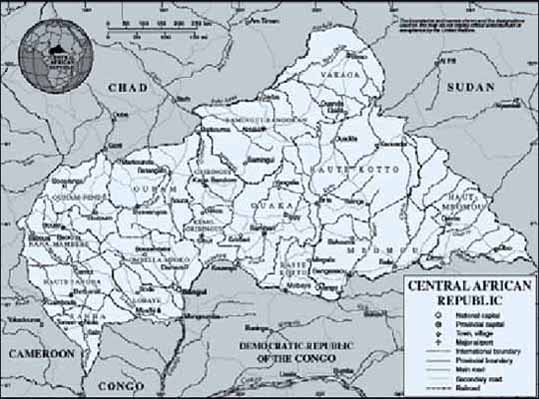
Civil unrest in the Central African Republic (CAR) has worsened the ongoing crisis and people are suffering from the aftermath of the heavy fighting that divided the country for five months in 2002 and 2003. There has been a severe deterioration of the living conditions for some two million people who were directly or indirectly affected by the conflict. School attendance has gone down, light arms are in the hands of criminal gangs, kidnapping and other crimes continue to be rampant. All these developments set against a backdrop of the spread human diseases such as polio, meningitis, tropical ulcers and HIV/AIDS, as well as the outbreak of transboundary animal diseases.
However, the country shows signs of recuperation. An 18-month long period of peace process and a transition government will culminate in elections in January 2005 and efforts are being made by the interim government and international development organizations to raise the welfare of the population.
Needs Assessment
Today, approximately 60 percent of the population of the CAR live below the poverty line. Nutritional deficiencies are widespread. Only a third of the population have access to safe drinking water. Malnutrition affects 28 percent of the children under five years of age and at least an equivalent percentage of school-aged children.
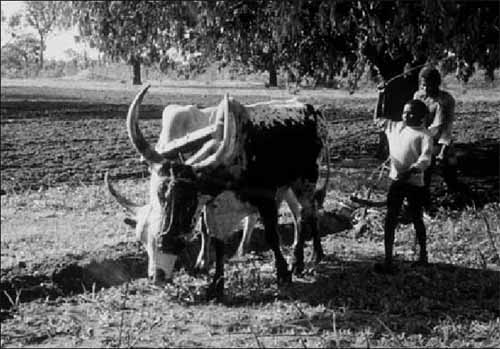
Subsistence agriculture, together with forestry, remains the backbone of the economy, with more than 70 percent of the population living in outlying areas. The agricultural sector generates half of the GDP.
While the country is highly dependent on agriculture, farmers have been faced with rising insecurity. Several have abandoned their farms, while seed stocks have been looted or consumed as a result of wide spread food shortage. The need for seeds and tools by farmers has remained unmet.
The livestock industry has been under severe threat for the last 15 months. Cattle are believed to be afflicted with a resistant form of Trypanosomiasis. Animal breeders get 80 percent of their income from the cattle. Thus, if no action is taken, their economic situation will become extremely precarious.
PROJECTS
(full French version available in Annex
République Centrafricaine)
FAO agricultural relief component: US$3 347 284
Rehabilitation of poultry production activities in urban and peri-urban areas through the introduction of hatchery facilities in Bangui, Bouar, Berberati, Bambari et Bossangoa for the production of one-day chicks
Objective
A rehabilitation of eggs and broiler breeder frock’s production will cover animal protein needs of populations in the most war-affected prefectures. To achieve this objective, the project will install pilot hatching facilities for one-day chick through cheap imported fertilized eggs, and at a later stage eggs will be obtained from improved species (through interbreeding with local species). Poultry farmers associations will be identified for contracting out production, including the vaccination of chickens. Vaccines and technical support for setting up of vaccination programs and follow-up veterinary checkups on the farm level will be provided. Another activity will involve the generation of pilot units of food mixture for the preparation of balanced food rations, managed by poultry farmers associations.
Project code: CAF-05/A03
Beneficiaries:
Populations of the most war-affected prefectures (Bangui, Kémo, Ouham,
Ouham Pendé, Nana Grébizi, Ombella Mpoko)
Implementing
partners: Ministry of Livestock and Agriculture, National Federation of
Central African poultry farmers
Project duration: January - December
2005
Funds requested: US$480 800
Support to the development of market gardens in a hundred schools in the most crisisaffected areas
Objective
Approximately 100 primary schools in the most affected zones will be supported to undertake agricultural activities that are complementary to their general education. Thus contributing to the improvement of the nutrition and food security of the children of the surrounding community, as well as teaching conditions will be improved.
The project will provide seeds for gardening and other appropriate agricultural inputs; support technical and pedagogical organisation and training; coordinate and coordinate with NGOs in the agricultural sector and with the Association des parents d’élèves; create of a school development fund to support the pupils' productions and sustain the project; and offer humanitarian assistance in the framework of a “food for work” programme for the preparation of 2 000 black boards for teaching.
Project code: CAF-05/A01AB
Beneficiaries:
Pupils of a hundred schools of the most war-affected areas (Bangui, Kémo,
Ouham, Ouham-Pendé, Nana-Grébizi,
Ombella-Mpoko)
Implementing partners: UNICEF, Ministry of Livestock
and Agriculture, Ministry of Education, parents Associations, NGOs
Project
duration: January - December 2005
Funds requested: US$1 136
000
Epidemiologic and Socio-economic evaluation of the sanitary cattle emergency in the North and the South of the country and first sanitary measures
Objective
There exist some indications of a pathological threat to cattle in Birao (capital of Vakaga). If not treated in time, the disease may spread within Birao and into other prefectures of CAR from the beginning of the transhumance season (October 2004). The project seeks to confirm and evaluate the socio-economic impact of the cattle’s pathology. It also seeks to implement emergency sanitary and prevention measures for the animal’s health. A veterinary pharmaceutical depot will be established supporting pastoralist groups in the treatment of their herds.
Project code: CAF-05/A04
Beneficiaries:
Populations of the Vakaga and Haut Mboumou Prefectures
Implementing
partners: Ministry of Livestock and Agriculture, Ministry of Water, Forest
and Fishery
Project duration: January - December 2005
Funds
requested: US$536 484
Support to the seeds production and distribution system’s rehabilitation in disaster-affected areas
Objective
Farmers’ seed stocks have been plundered or consumed when faced with food shortage. The project aims at helping 5 500 farming families who have returned to their disaster-afflicted villages to regenerate their stocks of certified seeds to restore their food security and those of the populations of surrounding areas. Through this seed distribution, farmers can provide for their own food while building the base of a Seed Bank, which in turn will ensure not only the diffusion of the seeds but also the sustainability of the process. To foster a collective production of quality seeds, groups of seed producing farmers will be reconstituted.
Project code: CAF-05/A02AB
Beneficiaries:
Populations from the most conflict-affected Prefectures (Kémo, Ouham,
Ouham-Pendé, Nana-Grébizi, Ombella-Mpoko)
Implementing
partners: Ministry of Livestock and Agriculture
Project duration:
January - December 2005
Funds requested: US$1 194 000
