


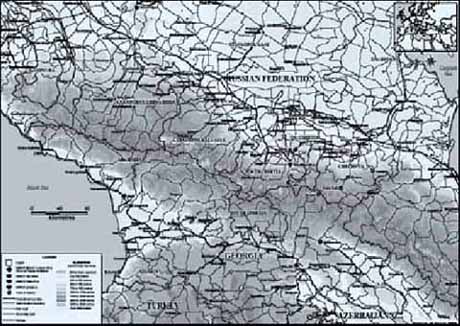
The conflict that started in the autumn of 1999 has severely disrupted the livelihoods of Chechnya’s civilian population. Some 130 000 people remain displaced in the neighbouring Republic of Ingushetia with a further 160 000 inside Chechnya itself. Estimates indicate 344 500 unemployed in the Ingushetia as of June 2004, equivalent to some 80 percent of the total employable population. The cost of the government-indexed subsistence food basket in Chechnya was 14 percent higher than the average in the Russian Federation. Labour-intensive, small-scale agriculture has traditionally been one of the coping strategies adopted by people to complement poorly paid jobs. However, access to agricultural inputs (seeds, tools, veterinary treatment) is limited. Even if they are generally available in local markets, poor households cannot pay the relatively high prices. Thousands of people who have lost their livelihoods are now depending on food aid.
In 2004, a larger than expected number of displaced persons hosted in Ingushetia was returning to Chechnya. Some 19 000 returnees have been estimated for 2004. A dialogue is presently taking place with government officials and humanitarian operations are now facilitated to a higher degree than before. Nevertheless, the Government’s programme for compensation for destroyed housing, launched in 2003, has so far reached only 8 000 persons of the 80 000 who had applied for assistance. Year 2004 also witnessed a series of violent confrontations and acts of terror, both inside and around Chechnya. The security situation of Ingushetia has been deteriorating throughout the year.
Needs Assessment
Due to the protracted military operations in Chechnya, thousands of IDPs and other vulnerable groups have become food insecure. The diet for the majority of the population is mostly based on staple food and includes a low share of animal protein and key micronutrients. Before the conflict, livestock rearing and small-scale poultry production were widespread in rural areas, providing quality food and income. At present, most of the small livestock and cattle have been lost and inputs needed for restarting household production are far too expensive for the majority.
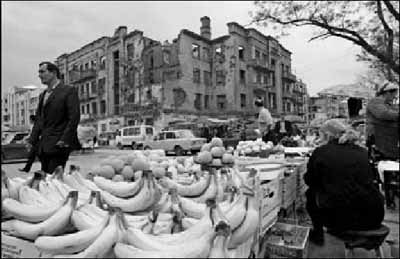
Likewise, the provision of animal health services in Chechnya has substantially decreased. Animal diseases (e.g., rabies, brucellosis, tuberculosis, anthrax, FMD, sheep and goat pox, leptospirosis) remain uncontrolled and/or are rising in incidence. Several of these diseases constitute serious human health risks apart from their impact on animal production and productivity. In Ingushetia, IDPs from Chechnya brought along some of their animals. This animal population has expanded over time resulting in an additional workload for the Ingushetian veterinary service. In both republics, most of the livestock (_ 95 percent, FAO 2004) is now held by private owners, including poor households. However, the population lacks access to veterinary services and sufficient knowledge on animal husbandry. The federal budget provides limited quantities of vaccines for prophylaxis of critical animal diseases. The field veterinarians lack tools and equipment to carry out their duties. There is no system for training of the veterinarians. Essential laboratory services and the system of surveillance/reporting of transboundary and zoonotic diseases are inadequate. Thus, animal productivity is very low and humans are contracting some preventable diseases from animals.
In addition to livestock requirements, assistance to local agricultural production is also crucial. Agricultural activities remain a major source of food and income, although the armed hostilities and the transition from a centralized to a market economy have had a negative impact on the local food production. By reducing the dependency from food aid and improving food security, the promotion of agricultural rehabilitation through coordination among the various players in the sector will improve the living conditions of IDPs and affected rural poor.
PROJECTS
FAO agricultural relief component: US$831 000
Coordination of emergency assistance to the agricultural sector
Objective
The proposed project will create prerequisites for improved assistance to the agriculture/food security sectors by focusing on the following major outputs: recording of ongoing and planned interventions and projects in the agriculture/food security sectors in Chechnya and Ingushetia; assessment and indication of needs and priorities for assistance; monitoring of the local availability of agricultural inputs and the food security situation; monitoring of the impact of the assistance to the agriculture/food security sectors; the establishment of a coordination committee involving the governments as well as aid providers for operational coordination at field level; and technical advice to humanitarian organizations active in the agricultural sector.
Project code: RUS-05/F03
Beneficiaries:
Direct: the Governments of Chechnya and Ingushetia, international and national
aid providers (UN and NGOs); indirect: the food insecure population in Chechnya
and Ingushetia
Implementing partners: The Governments, UN agencies,
international and national NGOs
Project duration: January - December
2005
Funds requested: US$190 000
Food security and income generation through small-scale poultry production
Objective
In selected districts of Chechnya and Ingushetia, poultry production kits will be provided to 500 affected poor households (about 2 500 individuals). Each kit will contain pullets, mixed feed, wire-mesh and other inputs. Prior to the distribution of these inputs, beneficiaries will receive basic training in chicken-rearing practices. A field veterinarian will be responsible for Newcastle Disease vaccination and other animal health issues.
By generating an increased access to animal protein from eggs and meat the project is expected to improve diet quality, as well as strengthening livelihoods through incomes generated from sales of chickens and eggs.
Project code: RUS-05/F06
Beneficiaries:
TOTAL: 500 poor households
Women: 500 women as direct
recipients
Implementing partners: NGOs
Project duration:
February 2005 - September 2005
Funds requested: US$66 000
Poverty reduction and improved public health through rehabilitation of veterinary services
Objective
Through improved animal health, the project will increase food security and reduce animal and human health risks in Chechnya and Ingushetia. The project will therefore provide a basic kit of medicines, tools, equipment and literature to field veterinarians in strategic locations, thus fostering their skills and capacity to contribute to the development of the society. Training/sensitization workshops will be organized to update the veterinarians on current challenges, methods of treatment and to facilitate revival of the veterinary services. Essential assistance in terms of equipment, tools and consumables will be provided for the rehabilitation of the main public health-related veterinary laboratory services in Chechnya and for their strengthening in Ingushetia.
Project code: RUS-05/F05
Beneficiaries:
Direct: 250 veterinary services staff; indirect: rural and urban populations
of
Chechnya and Ingushetia
Implementing partners: Governmental
veterinary services, WHO, DRC, PIN
Project duration: January -
December 2005
Funds requested: US$195 000
Provision of agricultural inputs to support the food security of the poor affected by the war in Chechnya
Objective
Some 35 000 affected households (some 175 000 persons) will be targeted primarily in Chechnya, as well as in Ingushetia. Beneficiaries will be identified among vulnerable groups such as IDPs, IDPs hosts and rural poor, who are food insecure given their low income and limited access to the inputs for agricultural production.
A choice of quality seeds of the most popular crops, farming tools, farming instructions and other inputs will be provided in quantities adequate to the size of land available. Part of the inputs will be distributed to social institutions (schools, kindergartens) to supplement on-going school feeding programmes. Potato, a major staple crop for the beneficiaries, will also be allocated to experienced growers for seed multiplication on a contractual basis.
Project code: RUS-05/F04
Beneficiaries:
TOTAL: approx. 175 000 (Women: 87 500; Other group: Schools and
kindergartens)
Implementing partners: DRC, PIN, IMC, HI, WVRF and
local NGOs
Project duration: January - December 2005
Total
project budget: US$1 230 000
Funds requested for 2005: US$380
000
