


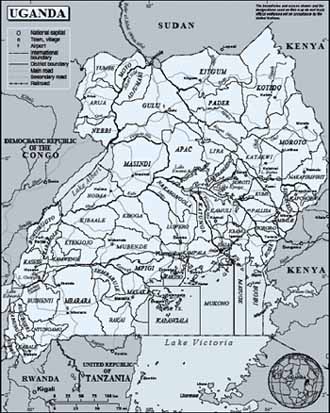
Ongoing conflict in Uganda has resulted in a grave humanitarian crisis. The frequent, brutal armed attacks by the Lord’s Resistance Army (LRA) have displaced more than 1.6 million people. IDPs live in 180 camps and temporary shelters, largely depending on food aid for their survival. These camps and settlements have been subjected to LRA attacks. As a result, humanitarian and aid workers have been severely constrained in delivering services to these camps. The LRA is notorious for abducting children and turning them into soldiers and sex slaves. Since October 2003, the rebel group kidnapped 3 000 children, in addition to the 18 000 already previously abducted.
From the second half of 2004, there has been some improvement in the security situation, especially in the IDP camps. This has been due to high rates of LRA desertions, which was a result of the campaign waged by the government troops, as well as the implementation of an Amnesty Act. The change has also allowed more humanitarian access and assistance to the camps and to vulnerable groups, children in particular. However, the security in Gulu, Kitgum and Pader districts remains volatile.
Needs Assessment
The increasing concentration of IDPs has put significant pressure on the sustainability of environmental resources such as land fertility and trees for fuel wood, the construction of shelters and charcoal. The situation has been further exacerbated by the clearing of vegetation, including trees, from and around the camps for security reasons, as well as the burning down of most of the fruit trees in abandoned homesteads. Additionally, women and young girls are at risk of being abducted as they leave the camps in search of fuel wood. Thus it is important to institute environmental conservation in the camps to sustain the needs of the IDPs.
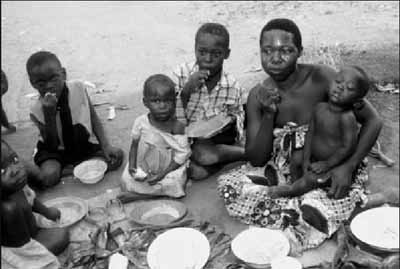
A return of IDPs to their areas of origin will require the re-establishment of sustainable livelihoods in environments which have changed since they left. However, some IDPs may instead to settle permanently in the areas where they have sought refuge. In order to plan for a sustainable return and local integration, there is a need to assess the potential for re-establishing agriculture-based livelihoods, including crop farming, livestock management, and the use of natural resources such as water, pasture land and forests.
The signing of the negotiated peace agreement between the Government of Uganda and the defunct National Rescue Front II (UNRFII) in December 2002 marked the end of the armed conflict in the West Nile region and the resettlement of all ex-combatants of UNRFII. Assistance to the demobilized soldiers could trigger a phase of economic growth to benefit the whole of the West Nile region, and for this the resumption of agricultural activities is fundamental.
PROJECTS
FAO agricultural relief component: US$4 262 750
Emergency distribution of agricultural inputs to conflict-affected IDPs and coordination of emergency agriculture initiatives
Objective
FAO intends to support WFP’s food distribution by providing a package of vegetable and staple crop seeds and hand tools to IDPs that have safe access to land in order to allow them to cover their food household needs. The kit composition will vary according to the agro-climatic areas and eating habits of the population and will allow short cycle crop production (90 to 120 days) on a very limited area to complement WFP distributed rations. This will improve the diet of the beneficiaries and their families, while developing a minimal income generating activity especially for female-headed households. The targeted population with safe access to land has been estimated at 180 000 households.
In order to assist such large vulnerable populations through the existing NGO network, FAO has established an Emergency Coordination Unit (ECU) to improve the delivery of humanitarian assistance in the agriculture sector and to support OCHA’s general coordination. The ECU will ensure partners’ adherence to common objectives and coordinate activities to avoid gaps and duplication, thus optimising the use of the limited resources made available by donors. The ECU will also improve the flow of information and facilitate resource mobilisation for all partners. The ECU will perform a crucial role in collecting and analysing data, monitoring ongoing actions and ensuring coherence between humanitarian action and government policies.
Project code: UGA-05/A02
Beneficiaries: IDPs
and other vulnerable populations
Implementing partners: OPM, MAAIF,
district and local authorities, UN agencies, NGOs
Project duration:
January - December 2005
Funds requested: US$2 966 892
Environmental conservation in IDP camps
Objective
Environmental conservation systems will be supported through improved fallow, biomass transfer, boundary tree planting, community forestry, trees dispersion on cropland, and training of IDPs and host community on environmentally sound approach and agro-forestry. The project will provide multipurpose tree seedlings to be planted within the close proximity of the camps. The trees to be selected include fast growing specimens that can provide fodder, poles for shelter construction and fuel wood and can improve soil fertility. This project will be implemented in IDP camps with high population density and where environmental degradation has been a major problem as a result of continuous use of the same pieces of land. Some 16 000 households will be provided with tree seedlings and extension services to ensure appropriate planting and tending in their immediate neighbourhood. Each household beneficiary will be offered two fruit tree seedlings and five non-fruit tree seedlings. FAO will collaborate with district environmental, forestry and security officers during the implementation of this project.
Project code: UGA-05/A01
Target
beneficiaries: 16 000 IDP and host community households
Implementing
partners: NGOs, local authorities, OPM, MAAIF
Project duration:
January - December 2005
Funds requested: US$498 200
Provision of agricultural inputs to former rebels of UNRF II in Arua, Yumbe, Moyo and Nebbi districts of West Nile Region
Objective
This project falls within the promises of the peace agreement between the Government of Uganda and defunct National Rescue Front II (UNRFII) in December 2002 to assist the rehabilitation and reintegration of UNRF II ex-combatants into their communities and to consolidate peace-building in the area. The 2 500 former UNRFII rebels in Arua, Yumbe, Moyo and Nebbi districts will be assisted by FAO through provision of agricultural inputs consisting of basic tools and high yielding seeds to enhance their productive capacities and empower them with knowledge and skills in modern agriculture.
Project code: UGA-05/A04
Targeted
beneficiaries: 2 500 households of former rebels
Implementing
partners: OPM, MAAIF, CBOs, local authorities, NGOs
Project
Duration: January - December 2005
Funds Requested: US$105
052
Provision of essential agricultural inputs to the disarmed and drought-affected households in the Kotido, Moroto and Nakapiripirit districts of Karamoja region
Objective
Karamoja is a drought-prone region, chronically food-deficient and has had two successive years of crop failure. This region is mainly inhabited by semi-nomadic populations and characterized by constant conflict between clans and is furthermore victim to constant armed raids by Karimojong warriors, who besides acting within the area also make incursions in other districts, like Katakwi, Lira and Kapchorwa. In addition to recurrent cattle rustling, harsh weather conditions such as long dry spells, short unreliable rains and occasional floods are constraining pasturing and agriculture.
In order to support food security, local capacities, disarmament and re-integration of Karimojong warriors in the area, FAO will target 20 000 households with agricultural inputs consisting of improved seeds of maize, sorghum, cowpea, beans and hand hoes. FAO will target mainly women in droughtaffected households and disarmed warriors.
Project code: UGA-05/A03
Target
beneficiaries: 20 000 households of disarmed warriors and drought-affected
families
Implementing partners: OPM, MAAIF, CBOs, local authorities,
WFP, NGOs
Project duration: January - December 2005
Funds
requested: US$439 606
Support to the planning of sustainable natural resources use in the return/resettlement context
Objective
Training will be provided to IDP farmers on the sustainable use of natural resources. Training within refugee camps has proved to be an effective approach, since IDPs tend to be less busy, are gathered in manageable locations and are easily accessible. Furthermore, the close contact among IDPs in the camps facilitates interaction and knowledge transfer among farmers.
The project will also address the need for monitoring and planning of land use, supported by Geographic Information Systems (GIS) and satellite data. Combined with ground information, these data will provide the tools for informed decision making. GIS products include both large-scale trends in vegetation cover (grazing, forest and crop land) over the last 20 years and small-scale high resolution imagery for detailed hot-spot analyses in areas of return, such as crop land, water points for livestock, water harvesting and soil conservation works. Remote sensing data and analysis will be combined with limited field verification to generate meaningful information tools for large areas where accessibility is difficult.
Throughout the implementation of this project, FAO will promote a participatory approach to empower and build ownership with local line ministries and other actors, e.g. NGOs.
Project code: UGA-05/A05
Beneficiaries: Local
authorities and local and international aid agencies
Implementing
partners: Local authorities, OPM, MAAIF, Office of Statistics,
NGOs
Project duration: January - December 2005
Funds
requested: US$253 000
