Cities

Key messages
Videos
Publications
Press releases and editorials
Expert interviews
Audio
| PhotosQuiz: forests and cities
Social media cards
| ||||||||||
|
| |||||||||||
 A growing population means more buildings to fit everyone. By 2030, we will have to house an additional 3 billion people. Using wood from sustainably managed forests means we can create homes that don’t cost us the Earth. [
 Built with wood, cities could become extensions of our forests, helping to combat climate change and keep the planet healthy. Wood is renewable and stores carbon for its lifetime, helping to keep it locked away from the atmosphere. Buildings and the construction sector currently emit almost 40% of energy-related greenhouse gas emissions globally. [
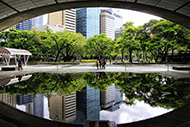
 More people live in cities than ever before and by 2050, 6 billion people or as much as 70% of the global population is expected to live in urban areas. But rapid urbanization does not need to result in polluted urban sprawl. Trees and urban forests can make our cities greener, healthier and happier places to live. [
 Large urban trees are excellent filters for urban pollutants and fine particulates. Trees can provide food, such as fruits, nuts and leaves. Spending time near trees improves physical and mental health by increasing energy level and speed of recovery. [
 This report provides a region-by-region overview of the current state of urban forestry worldwide, and also includes case studies of how some cities and regions are investing in green infrastructure and solutions to achieve better outcomes for all residents in the face of global warming [
 Citing examples and case studies from dryland cities worldwide, the report shows how urban greenery can offset the impact of growing urban populations on drylands by cooling ambient temperatures – and adjacent buildings – cleaning the air, sequestering carbon and contributing to soil and water quality. For communities, urban green spaces can also provide social cohesion and increased well-being, promote cultural values and support livelihoods and local economies. [




lastUpdate Saturday, November 12, 2022
Key messages
Videos
Publications
Press releases and editorials
Expert interviews
Audio
| PhotosQuiz: forests and cities
Social media cards
| ||||||||||
|
| |||||||||||