
Where science meets storytelling: insights from five women journalists

To mark the International Day of Women and Girls in Science, the GFCM celebrates the crucial role of women in science communication across the Mediterranean and the Black Sea.
Addressing the mounting pressures on our seas requires not only sound science, but also collaboration across sectors, borders and communities. Storytelling plays an essential part in this process, helping turn research outcomes and data into accessible narratives that raise awareness and inspire collective action.
Five women journalists from across the region explain the importance of communicating science for the region and share their tips to communicate research effectively.
“Scientific facts alone rarely change behaviours, stories do.”
Mayssa Sandli
Environmental journalist and Co-founder, Blue TN, Tunisia
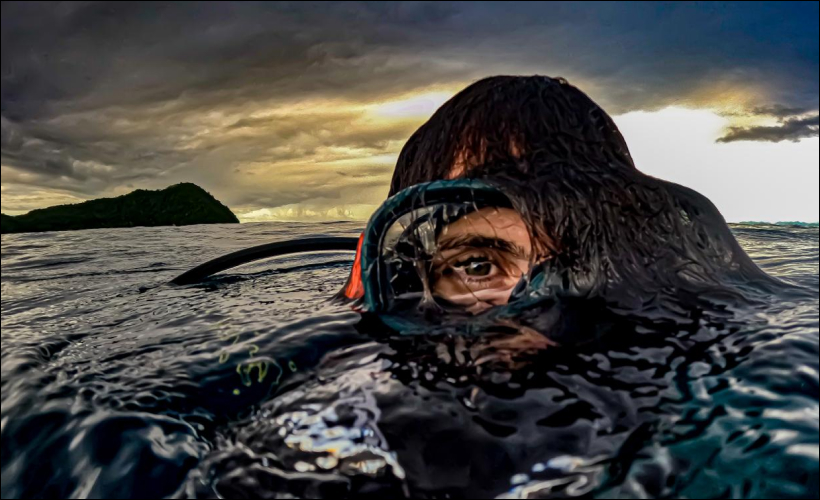 ©Kerim Bouzouita
Mayssa Sandli grew up in a small village in Tunisia’s Cap Bon region, surrounded by animals and open nature. Translating data, field research and experiences into narratives that resonate became her way of making science meaningful, particularly in contexts where environmental issues directly affect livelihoods, well-being and inclusive governance.
Through the digital media Blue TN, she works to place environmental education at the core of learning, using creative storytelling to inspire younger generations.
Why is it important to make complex scientific information accessible to wider audiences?
Our region is on the frontline of climate change, biodiversity loss and water scarcity, yet scientific knowledge often remains confined to experts. Making science accessible empowers citizens, strengthens public debate and supports informed decision-making.
In Tunisia and across the Mediterranean, scientific knowledge is often produced in highly technical language, accessible only to specialists. Yet the communities most affected by environmental and climate impacts are often the least able to access or understand these reports.
By translating complex scientific findings into clear, locally relevant narratives, often in local languages, we make science inclusive, empower vulnerable communities, and ensure that knowledge reaches those who need it most to adapt, engage, and act.
Tips from Mayssa to communicate research effectively
- Start with “why it matters” before “how it works.” Use concrete examples, local impacts and human stories.
- I recommend participatory formats such as public talks or community-based media. Collaborating with journalists early can help shape clearer narratives.
- AI tools can help simplify language, but human context, ethics and environmental impact must remain central.
With a background in media development and science storytelling, Mayssa works at the intersection of journalism, research and civic engagement. She collaborates with scientists, institutions and civil society to translate complex environmental challenges into accessible and impactful narratives for diverse audiences.
Follow Mayssa on Facebook or LinkedIn
“Journalism and science share the same curiosity”
Biriz Özbakır
Environment correspondent, Anadolu Agency, Türkiye
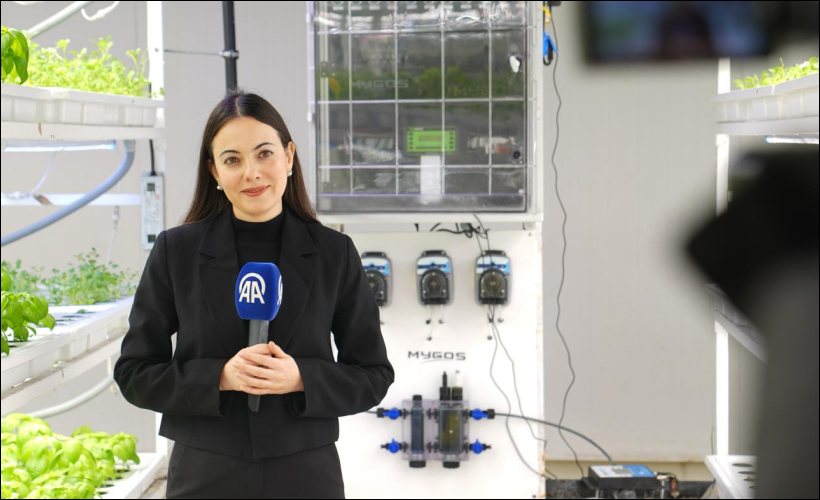 ©Biriz Özbakır
Biriz Özbakır believes that journalism is rooted in the same deep curiosity that drives science. Both journalism and science ask “Why is this so?” and “What is really happening?”. Science explores these questions systematically, while journalism brings them to life through human stories, emotions and context.
For her, understanding what lies behind the facts is central to both fields, and the thrill of uncovering and sharing a story mirrors the excitement of scientific discovery.
Why is it important to make complex scientific information accessible to wider audiences?
Clearly explaining complex scientific issues in the Mediterranean and the Black Seas is crucial for raising public awareness, managing resources sustainably and protecting marine ecosystems.
Although the Mediterranean covers just 1 percent of the world's oceans, it is home to around 10 percent of marine species. The Black Sea, nourished by numerous large rivers, supports fish stocks through increased plankton production. Yet both seas face serious environmental threats. Communicating the origins and potential consequences of these challenges in clear, accessible language is essential for fostering public understanding and a shared sense of responsibility towards protecting these vital marine ecosystems.
Tips from Biriz to communicate research effectively
- When scientific news is relevant, connected to daily life and engaging, knowledge can move beyond academia and transform into meaningful social benefit.
- News agencies, television, newspapers, press releases and special reports are vital tools for reaching a wide audience.
- Infographics, maps, short animations and social media posts make complex information easier to understand.
After graduating, she worked as a reporter at Habertürk Television and later periodically prepared and presented university promotional programmes on Bloomberg HT. For the past four years, she has been working as a reporter at Yeşilhat, Türkiye’s first environmental and agriculture news directorate within the Anadolu Agency.
Follow Biriz on LinkedIn and X
“Science shapes the lives of people across the Mediterranean and the Black Sea”
Assia Chaneva
Editor, Bulgarian National Radio, Bulgaria
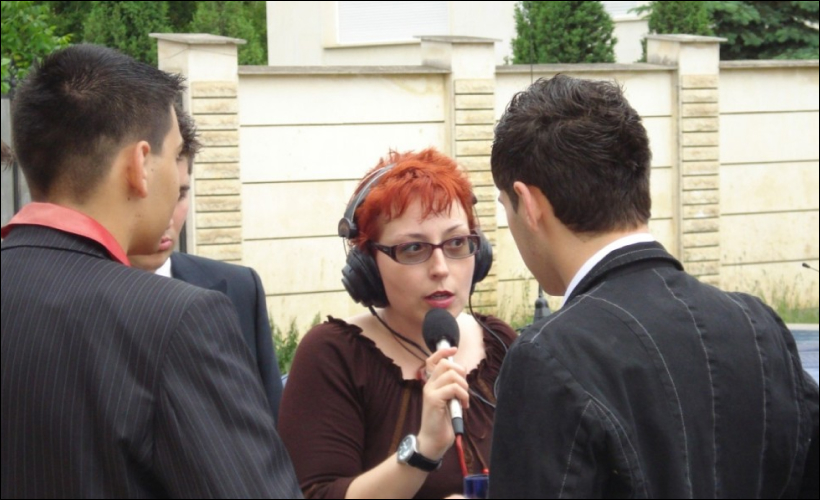 ©Assia Chaneva
Assia Chaneva was drawn to journalism by curiosity, a desire to understand things and people and a drive to share discoveries with others. She is captivated by science because it advances through uncertainties, failures and breakthroughs. “Behind every dataset are people, choices and consequences,” she notes.
By translating complex research into human-centred stories, she bridges the scientific knowledge with everyday experience, approaching her journalistic work with dedication and responsibility.
Why is it important to make complex scientific information accessible to wider audiences?
Science profoundly shapes the lives of people across the Mediterranean and the Black Sea – from fisheries and food systems to overtourism, climate change disasters and biodiversity loss.
Making scientific knowledge accessible means giving communities the tools to understand the changes affecting their livelihoods and environments. Clear, people-focused communication helps build trust, encourages dialogue and ensures that science is not distant or abstract but connected to live experiences and shared responsibility
Tips from Assia to communicate research effectively
- Before explaining methods or results, start by asking why the research matters and to whom.
- Use clear language, concrete examples and storytelling to guide the audience through complexity without flattening it.
- Visual tools, infographics and short formats can help, but clarity should come first.
- Collaborating with journalists or science communicators can be invaluable — not to simplify science but to make its meaning clearer.
She has extensive international experience, including with BBC Radio Northern Ireland in Belfast, the Balkan Investigative Reporting Network Summer School for Investigative Journalism, Internews’ Earth Journalism Network fellowship at COP23 and the Falling Walls Berlin Science Summit fellowship.
Assia was the silver medal winner at the 21st International Radio and Television Union (URTI) International Radio Grand Prix and has received several awards for her journalistic work on the protection and restoration of the Black Sea.
Follow Assia on Linkedin and X
“The dialogue between science and society is essential”
Francesca Buoninconti
Science journalist, Radio3 Scienza, Rai, Italy
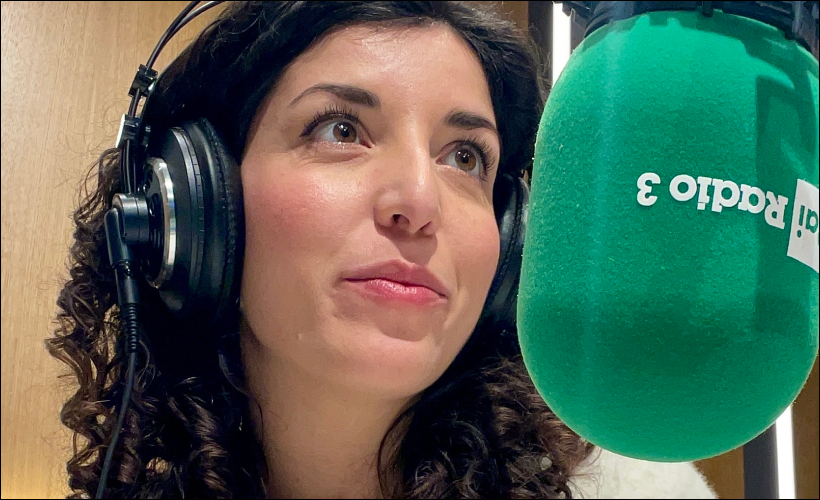 ©Francesca Buoninconti
Francesca Buoninconti has always enjoyed telling stories about nature. What she loves about her job is how it continuously feeds her curiosity. She reads extensively, keeps up to date with the latest published studies and interviews those who build science piece by piece.
Whether on the radio or on social media, she interacts with the public directly and immediately through live messages that convey reactions, curiosities, doubts and opinions. “This connection is essential in our work,” she says.
Why is it important to make complex scientific information accessible to wider audiences?
The Mediterranean Sea is warming faster than many other places on the planet, and everything that represents our history, our culture, our diet, our way of experiencing the sea and living along its coasts is changing rapidly. We need to adapt, find solutions and change our perspective. To do this, we must maintain a constant dialogue between science and society.
The role of science communicators is essential to deliver accurate information and provide tools to understand the transformation we are experiencing and make informed decisions. And above all, for me, it means upholding the principles of a democratic knowledge-based society, where no one is left behind in the transition process.
Tips from Francesca to communicate research effectively
- Imagine you’re speaking to a high school student. This can help you put yourself in the shoes of a general audience
- Avoid excessive graphs, numbers and technical terms that push general audiences away.
- Taking a course in science communication never hurts; understanding when and how to present data and how to explain things is always helpful. But theory is never enough; practice is essential.
Follow Francesca on Instagram and LinkedIn
“Proper science storytelling is the best weapon against disinformation”
Vedrana Simičević
Freelance journalist, Croatia
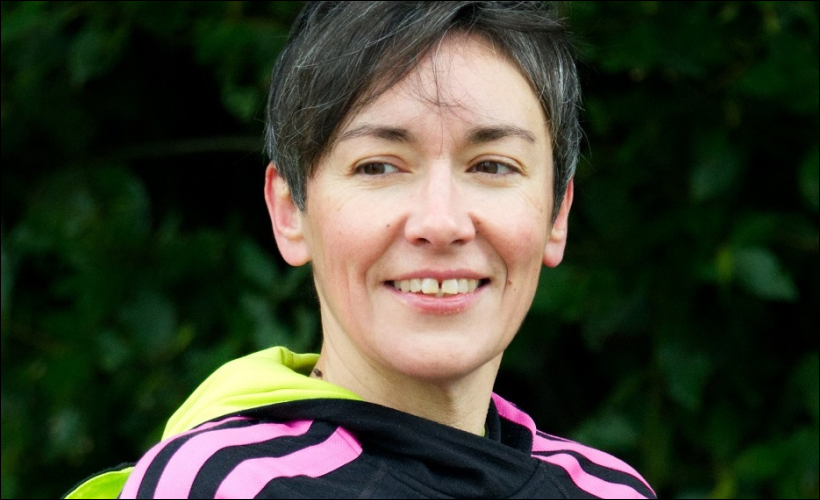 ©Marin Aničić
Vedrana Šimičević has always loved writing. She began practising journalism at the age of 18, as an additional source of income while studying psychology. Her academic studies awakened her interest for science and she began practising journalism on full-time basis after graduating.
She gravitated towards science-focused stories after seeing how often science stories are marginalised in the media, and she realized that bringing science stories to the wider public was important for society.
Why is it important to make complex scientific information accessible to wider audiences?
Science is immensely important for the development of society and it is incorporated into every layer of our everyday life. As such, we should consider science as our guiding light for the majority of important decisions.
But the era of the internet and social networks has, paradoxically, widened the gap between the public and science and fuelled the rise of misinformation and superficial content.
This is where quality science journalism can play an important role, bringing scientific results into the context of everyday life through stories that are easy to understand and interesting. Proper science storytelling is the best tool that we have against disinformation.
Tips from Vedrana to communicate research effectively
- People tend to feel suspiciously toward something they cannot understand. If we want to strengthen public trust in science, the most important is to explain scientific findings in a way that is easily understandable for a non-expert audience. This is a skill that needs to be practised.
- The public actually really loves stories from science, and you can find a good story in every research or project. It can be the amount of effort someone invested, an interesting detail from laboratory or field research or a challenge that needed to be overcome. A good story is a great tool for drawing attention to scientific findings.
She is a two-time recipient of the Croatian national award Velebitska degenija for the best environmental protection story, and she has received several international journalism grants, including the Balkan Fellowship for Journalistic Excellence, the Reporters in the Field grant, and Journalismfund Europe investigative grants. She is also a FRONTIERS science journalism initiative fellow.
In her science communication courses, Vedrana teaches scientists how to communicate science effectively to the public and the media.
Follow Vedrana on Facebook, Instagram, LinkedIn and X
The GFCM wishes a happy international day to all the women and girls in science!
Discover how women and young people are central to the GFCM 2030 strategy
- Two seas, one vision: celebrating women in science in the Mediterranean and Black Sea region
- FAO, 2024. Women in fisheries in the Mediterranean and Black Sea region: roles, challenges and opportunities.
- Regional Plan of Action for Small-Scale Fisheries in the Mediterranean and the Black Sea | Role of women
- Strengthening women’s leadership and investment readiness in Mediterranean and Black Sea aquaculture
- Network of Women in Aquaculture
The GFCM activities are carried out thanks to the support of countries and multiple donors. These include the European Union, as the main contributor, as well as the Global Environment Facility through dedicated multiyear projects.