Information and knowledge:
we maintain an extensive multi-scale information base on water for use at global, national and local levels.
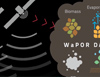
AQUASTAT, FAO's global information system of water and agriculture, monitors and reports on water resources and agricultural water use in member countries. It also contributes extensively to the periodic issuance of the UN World Water Development Report.
At global level, we contribute to the development of perspective studies on agriculture, food production, food security and environment services, and on the impact of global warming on future water resources and use.
Our information serves as basis for decision in major international natural resources management initiatives (UN-Water, World Water Forum, etc.) and feeds into international conventions (UN-CCD, UNFCC, CSD) in whichwe are active and provide our knowledge and expertise. At national and local level, we assist countries and local institutions in enhancing their natural resources assessment and monitoring capacities.
Policy advice:
we provides assistance to countries in shaping their agricultural policies, in relation to land and water management. Of specific importance is the linkage between water and agricultural policies, and the need for enhancement of agricultural productivity in a situation of rapidly growing water scarcity. We assist countries in developing targeted investment policies in agriculture that respond to the development needs of rural populations in a sustainable way.
Technical assistance:
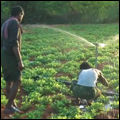
we maintain a strong technical expertise in the field of water management, with special focus on enhanced agricultural productivity, poverty eradication and environmental sustainability.
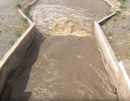
Technical fields include the development of water resources through small scale irrigation and appropriate water control technologies; modernisation of large irrigation schemes, best practices for sustainable water use and conservation (including dryland management) water harvesting, integrated water-soil fertility management, and conservation agriculture approaches.
Watershed management and multiple use of water including agriculture-aquaculture integration are also promoted in FAO projects. Expertise in environmental impact management includes wastewater treatment and reuse, drainage and salinity control. At field level, FAO has adopted the “Farmer Field School” approach, promoting a participatory approach to water management based on the principles of efficiency, equity, and empowerment.
|