


Abstract
Résumé
Introduction
Materials and methods
Discussion
Conclusion
References
L.O. Wosu, J.E. Okiri and P.A. Enwezor
Department of Veterinary Medicine
University of Nigeria, Nsukka, Nigeria
Investigation of the incidence of peste des petits ruminants (PPR) disease in goats revealed seasonality in its natural occurrence in the environment. Tissue culture rinderpest vaccine was effective in protecting goats against the disease. The optimal time for vaccinating goats against PPR was when the least number of animals were incubating the disease. In the tropical humid zone of West Africa this would be in late November.
II est montré que l'incidence de la peste des petits ruminants (PPR) chez les caprins dans la zone tropicale humide du Nigéria a un caractère saisonnier. Le vaccin sur culture tissulaire contre la peste bovine s'est avéré apte à les protéger efficacement contre cette maladie. Cette étude montre que le meilleur moment pour vacciner les chèvres contre la PPR correspond à la période d'incidence minimum, au cours de laquelle le nombre d'animaux couvant la maladie est particulièrement réduit, soit de fin novembre à la mi-décembre dans la zone tropicale humide d'Afrique occidentale.
Peste des petite ruminants (PPR) disease is an acute or subacute viral disease of goats and sheep characterised by fever, stomatitis, gastro-enteritis arid pneumonia. It is an endemic disease in West Africa especially in the humid zone. The disease is caused by a paramyxovirus, close to the rinderpest virus.
PPR disease is of great economic importance. It was described as the most destructive viral disease against small ruminant flocks (Bourdin, 1983) and as number one constraint to intensive small ruminant farming. Mortality in susceptible flocks varies from 10% to 100% and morbidity from 50% to 100%.
Tissue culture rinderpest vaccine (TCRV) is widely used in West Africa in the control of PPR disease. However, to date, there are conflicting reports both documented and mostly undocumented by field veterinarians as to the effectiveness of TCRV in controlling this disease.
This study was therefore carried out in the tropical humid zone in southern Nigeria to determine whether this disease shows clear seasonality of occurrence and whether this accounts for the conflicting reports on the effectiveness of TCRV in controlling PPR.
Locality
Nsukka is a small university town in a rural agricultural environment. It is located in the tropical humid zone in southern Nigeria. It lies approximately on latitude 06°52'N and longitude 07°24'E.
Climatic data
Rainfall and mean daily temperature data on monthly basis over a five-year period (1982-1986) in Nsukka environs were obtained from the university farm meteorological unit where the records were maintained on daily basis.
Prevalence of PPR
Two veterinary clinics in the town, the University veterinary teaching hospital and the town veterinary clinic were patronised by small ruminant owners from Nsukka and the surrounding villages within 15-20 km radius of the town. From daily treatment records in both clinics over the period of study, data were collected on monthly basis of the first-time reports of cases characteristic of PPR. Cases of pneumonia only or parasitic gastro-enteritis shown in the records were excluded from the data. Data from the two clinics were pooled on monthly basis
Source of Tissue Culture Rinderpest Vaccine (TCRV)
The TCRV was obtained from the National Veterinary Research Institute (NVRI), Oji River depot.
Method of vaccination with TCRV in each location
One-hundred dose vial of freeze-dried TCRV was reconstituted in 100 ml of sterile refrigerated normal saline. 1 ml of the reconstituted vaccine was injected into a goat subcutaneously in the neck region, with a sterile needle. Animals less than three months old were excluded from the experiment.
With the co-operation of the owners, the number of goats in each household was split into two equal groups taking into consideration age, sex and body condition. One group was vaccinated and the other was not (control). Only clinically healthy goats with no history of previous vaccination were used in the project. The ages ranged from six months to four years. Animals were individually identified.
Goats were vaccinated either at the end of November or end of January.
a) Vaccination in November
On 24th November 1988, 100 goats were vaccinated and 101 goats left as controls in various households as described above at Obukpa on the outskirts of Nsukka town. Twenty households were involved.
On 28th November 1988, 100 goats were vaccinated and 103 goats left as controls in various households as described above at Afikpo about 120 km south of Nsukka. Thirty households were involved.
b) Vaccination in January
On 25th January 1989, 200 goats from 45 households in Nkpirimkpi, a village in another part of the Nsukka outskirts, were vaccinated and 200 goats left as control.
All the locations were in the tropical humid zone in southern Nigeria.
Observation period
All animals in the project at the various locations were monitored for 12 weeks post-vaccination both by regular weekly visits and with the aid of the local veterinarian for evidence of PPR or any other illness in any of the experimental animals.
Table 1. PPR incidence and climatic data, Nsukka environs, Nigeria.
|
|
|
1982 |
1983 |
1984 |
1985 |
1986 |
Cum monthly PPR* |
|
January
|
PPR |
10 |
11 |
9 |
10 |
11 |
51 |
|
RF |
17.3 |
Nil |
Nil |
6.9 |
8.9 |
6.6 |
|
|
RH |
61 |
20 |
52 |
71 |
59 |
53 |
|
|
T |
27 |
24 |
24.5 |
24.5 |
26.5 |
26.0 |
|
|
February |
PPR |
11 |
14 |
12 |
13 |
12 |
61 |
|
RF |
55.7 |
Nil |
Nil |
Nil |
Nil |
11.1 |
|
|
RH |
59 |
54 |
64 |
68 |
74 |
63.6 |
|
|
T |
27.5 |
26.5 |
26.5 |
24.5 |
28 |
27 |
|
|
March |
PPR |
15 |
15 |
13 |
16 |
15 |
72 |
|
RF |
56.4 |
Nil |
47.8 |
153.9 |
83.0 |
68.3 |
|
|
RH |
69 |
51.7 |
69 |
70 |
73 |
16.5 |
|
|
T |
27 |
26.5 |
26 |
25.5 |
27 |
26 |
|
|
April |
PPR |
19 |
16 |
17 |
15 |
16 |
83 |
|
RF |
113.4 |
46.7 |
138.1 |
120.3 |
179.8 |
120 |
|
|
RH |
76 |
68 |
83 |
74 |
76 |
75.4 |
|
|
T |
27 |
28 |
25 |
24.5 |
27.5 |
26 |
|
|
May |
PPR |
10 |
24 |
21 |
20 |
12 |
87 |
|
RF |
217.2 |
114.4 |
129.3 |
264.5 |
172.1 |
180 |
|
|
RH |
81 |
78 |
87 |
77 |
72 |
80 |
|
|
T |
25.5 |
25 |
24 |
23.5 |
26 |
25 |
|
|
June |
PPR |
13 |
15 |
13 |
12 |
11 |
64 |
|
RF |
255.4 |
198.5 |
232.8 |
139.2 |
195.1 |
204 |
|
|
RH |
86 |
86 |
88 |
83 |
82 |
84.8 |
|
|
T |
23.5 |
23.5 |
23 |
22.5 |
25 |
24 |
|
|
July |
PPR |
5 |
7 |
6 |
4 |
6 |
28 |
|
RF |
312.9 |
158.7 |
379.1 |
276.2 |
217.5 |
269 |
|
|
RH |
90 |
89 |
85 |
90 |
87 |
88.2 |
|
|
T |
23 |
23 |
22.5 |
21.5 |
24 |
23 |
|
|
August |
PPR |
Nil |
3 |
2 |
3 |
5 |
13 |
|
RF |
108.9 |
102.4 |
294.4 |
191.1 |
141.9 |
178 |
|
|
RH |
90 |
92 |
88 |
87 |
86 |
88.6 |
|
|
T |
22.5 |
22 |
22 |
24.5 |
23.5 |
23 |
|
|
Sept |
PPR |
2 |
Nil |
3 |
5 |
Nil |
10 |
|
RF |
228.5 |
241.2 |
253.6 |
234.3 |
248.4 |
241 |
|
|
RH |
83 |
87 |
90 |
84 |
13 |
86.4 |
|
|
T |
28 |
23 |
22 |
14.5 |
24.5 |
23 |
|
|
October |
PPR |
2 |
2 |
Nil |
3 |
4 |
11 |
|
RF |
302.1 |
55.8 |
126.2 |
192.9 |
116.0 |
159 |
|
|
RH |
85 |
79 |
89 |
77 |
80 |
82 |
|
|
T |
23.5 |
2.3 |
23 |
25.5 |
25 |
14 |
|
|
November |
PPR |
7 |
6 |
11 |
5 |
7 |
36 |
|
RF |
19.0 |
33.1 |
14.4 |
17.3 |
19.3 |
23 |
|
|
RH |
64 |
75 |
82 |
76 |
74 |
74.2 |
|
|
T |
25 |
24.5 |
23 |
25.5 |
24.5 |
25 |
|
|
December |
PPR |
6 |
7 |
3 |
6 |
4 |
26 |
|
RF |
Nil |
11.2 |
Nil |
Nil |
Nil |
2.3 |
|
|
RH |
66 |
67 |
48 |
48 |
41 |
54 |
|
|
T |
25 |
24.5 |
23 |
25.5 |
24.5 |
25 |
PPR = Peste des petite ruminants; RF = Rainfall (mm); T= Temperature (C); RH = Relative humidity (%).
Results
Table 1 shows the monthly occurrence of PPR, rainfall, mean daily relative humidity and temperature for each year of the five-year period of the study undertaken in Nsukka environs. The cumulative monthly PPR incidence and rainfall over the period are shown in Figure 1.
Table 1 and Figure 1 show that PPR occurs throughout the year. PPR incidence starts to build up from end of December and rises rapidly during harmattan season to a peak in the early rainy season in April. There was a sharp fall in the incidence over the latter part of the rainy season (May to September) in each year of study.
Daily records showed no reports of new PPR cases within 40 hours of rainfall.
The effects of vaccinating goats with TCRV against PPR are shown in Table 2 for the November vaccinations and Table 3 for the January vaccination.
Figure 1. 1982-1986 mean monthly rainfall and PPR incidence rate in Nsukka, Nigeria.
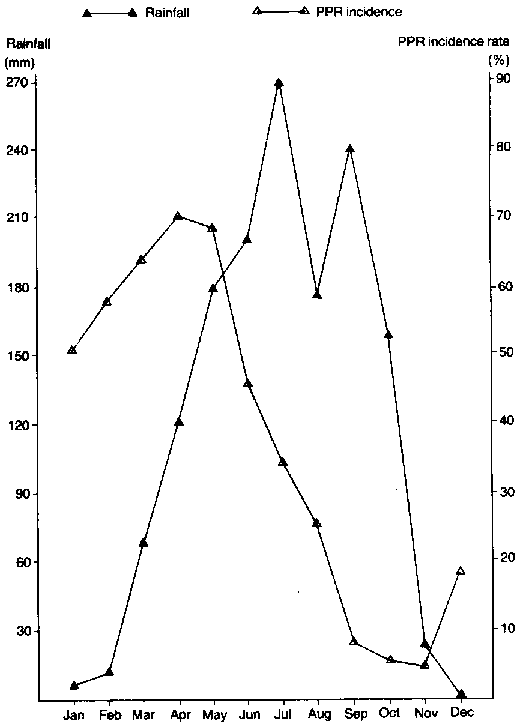
Table 2. Effect of November vaccination.
|
|
Obukpa |
Afikpo |
||
|
Vaccinated |
Non-vaccinated |
Vaccinated |
Non-vaccinated |
|
|
Location |
N= 100 |
N= 101 |
N= 100 |
N= 103 |
|
No of PPR cases |
0 |
9 |
0 |
8 |
Table 3. Effect of January vaccination at Nkpirimki location.
|
|
Vaccinated |
Non-vaccinated |
|
N = 200 |
N = 200 |
|
|
Total PPR cases |
16 |
83 |
|
Mortality from PPR |
3 |
22 |
Though PPR seems to occur throughout the year, there is a definite indication of seasonality in its natural occurrence in the Nduaka environs (Figure 1). The incidences were higher during the dry harmattan season than during the rainy season. It appears that the inclement dry, cold and dusty harmattan weather (December-February) and the poor nutrition by this time combine to spread PPR. The incidence seems to rise rapidly from December to a peak in April. Obi (1983a) and Durojaiye (1983) in western Nigeria also associated most outbreaks with this season of the year. In Oyo State (western Nigeria), Opasina (1983) observed two out of four outbreaks in the early dry season and an other two in the last third of the dry season (January). These observations were in a climatic zone similar to that in Nsukka. Bourdin (1983) on the other hand stated that in the Sahelian climate of Senegal, outbreaks of PPR occur mostly during the rainy season. Reported occurrence of new outbreaks within 48 hours of rainfall as in Ondo State in Nigeria (Ojo, 1983) could not be confirmed in this study. January to April appeared to be the period of greatest risk of small ruminants to PPR each year (Table 1). This raises the question of how long a naturally acquired immunity after a field outbreak lasts. The 3-5 year cycle of occurrence reported by Obi (1983) was not observed in this study.
There have been conflicting reports on the effectiveness of Tissue Culture Rinderpest Vaccine (TCRV) to control PPR in goats and sheep. Effective vaccination against PPR is a major advance in the control of the disease. According to Gibbs et al (1977) TCRV confers complete immunity to goats without transferring the disease to other animals. Adu and Nawathe (1981) reported that even pregnant animals tolerated TCRV well. On the contrary, Abegunde (1983) suggested that if animals are not screened for sub-clinical infection prior to vaccination, they may come down with the disease and that abortions may occur in pregnant animals. There are more undocumented similar conflicting reports by field veterinarians.
The results of various times of vaccination with TCRV to protect the goats against PPR in this study seem to confirm the observations made by Abegunde (1983). When the goats were vaccinated with TCRV in November, a period of sub-clinical infection, none of them came down with PPR infection while about 8.5% of the control came down with PPR. However, when the vaccination was done in January, a period of peak infection, about 8% of PPR cases including 1.5% mortality were recorded among the vaccinated animals. About 41.5% of PPR cases including about 11.0% mortality were recorded among the control.
Our work thus confirms that TCRV is very effective in protecting goats against the PPR disease, but that this efficacy only holds if the vaccination is done when the animals are at a subclinical level of infection (Abegunde, 1983). In the Nsukka environment in Nigeria, the end of November seems to be the right period for TCRV vaccination.
Acknowledgement
The authors acknowledge with gratitude the cooperation received from the farmers and field colleagues in carrying out this investigation. We also acknowledge the cooperation of the staff of the town veterinary clinic and teaching hospital and financial support of the National Committee for Small Ruminant Research, Nigeria.
Abegunde A. 1983. Problems connected with TCRV vaccination of sheep and goats. In: Hill D H (ed), Peste des petite ruminants (PPR) in sheep and goats. Proceedings of the international workshop held at IITA, Ibadan, Nigeria, 24-26 September 1980. lLCA (International Livestock Centre for Africa), Addis Ababa, Ethiopia. pp. 79-81.
Adu F D and Nawathe D R. 1981. Safety of tissue culture rinderpest vaccine in pregnant goats. Research note. Tropical Animal Health and Production 13:166.
Bourdin P. 1983. History, epidemiology end economic significance of PPR in West Africa and Nigeria in particular. In: Hill D H (ed), Peste des petite ruminants (PPR) in sheep and goats. Proceedings of the international workshop held at IITA, Ibadan, Nigeria, 24-26 September 1980. ILCA (International Livestock Centre for Africa), Addis Ababa, Ethiopia. pp. 10-11.
Durojaiye O A. 1983. Brief notes on history, epizootiology and the economic importance of PPR in Nigeria. In: Hill D H (ed), Peste des petite ruminants (PPR) in sheep and goats. Proceedings of the international workshop held at IITA, Ibadan, Nigeria, 24-26 September 1980. ILCA (International Livestock Centre for Africa), Addis Ababa, Ethiopia. pp. 24 27.
Gibbs E P J. Taylor W P and Lawman M J P. 1977. The isolation of adenoviruses from goats affected with peste des petite ruminants (kata and stomatitis pneumoenteritis complex) in Nigeria. Research in Veterinary Science 23(3) :331-335.
Obi T U. 1983a. Symptomatology. In: Hill D H (ed), Peste des petite ruminants (PPR) in sheep and goats. Proceedings of the international workshop held at IITA, Ibadan, Nigeria, 24-26 September 1980. ILCA (International Livestock Centre for Africa), Addis Ababa, Ethiopia. p. 10.
Obi T U. 1983b. Results of TCRV vaccination in Nigeria. In: Hill D H (ed), Peste des petite ruminants (PPR) in sheep and goats. Proceedings of the international workshop held at IITA, Ibadan, Nigeria, 24-26 September 1980. ILCA (International Livestock Centre for Africa), Addis Ababa, Ethiopia. pp. 82-83.
Ojo M O. 1983. Role of other agents and factors responsible for the pathogenesis of PPR. In: Hill D H (ed), Peste des petite ruminants (PPR) in sheep and goats. Proceedings of the international workshop held at IITA, Ibadan, Nigeria, 24-26 September 1980. ILCA (International Livestock Centre for Africa), Addis Ababa, Ethiopia. p. 54.
Opasina B A. 1983. Epidemiology of PPR in the humid forest and the derived savanna zones. In: Hill D H (ed), Peste des petite ruminants (PPR) in sheep and goats. Proceedings of the international workshop held at IITA, Ibadan, Nigeria, 24-26 September 1980. ILCA (International Livestock Centre for Africa), Addis Ababa, Ethiopia. pp. 14-21.
