General
Cattle types and distribution
Small ruminant types and distribution
Almost all livestock output in developing countries results from animals kept in the traditional sector. However, attempts to improve output are based almost exclusively on transferring technologies developed under experimental station conditions. While local types of animals are often used on these stations, usually little is known of the actual performance 'across the fence' under traditional systems of management.
In an attempt to overcome this deficit of information, the International Livestock Centre for Africa (ILCA) has embarked on a series of systems studies in various ecological zones. Central Mali is part of the Sahel ecoclimatic zone where ILCA has been conducting a long-term study since the beginning of 1976. The results presented in this report are from data collected over a period of more than 6 years from 1978 to mid-1984.
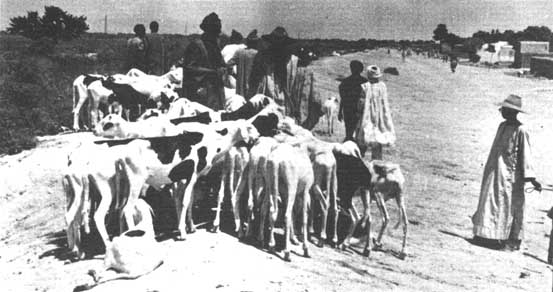
In 1981 the livestock population of Mali was estimated to include 5.1 million cattle, 6.3 million sheep, 7 million goats and 173 000 camels (FAO, 1981). These figures were similar to those reported before the 1968-1973 Sahelian drought. In terms of numbers, cattle are thus very important in the Malian livestock economy. They represent more than 70% of the total liveweight of all domestic ruminants, and therefore are the major consumers of the fodder resources available.
Most cattle in Mali are in the Sahelian and Sahelo-Sudanian zones in the central belt of the country between about 12° and 17° latitude. Annual rainfall in this area varies from 100 mm in the north to 1200 mm in the south. North of 17° there is virtually no permanent livestock population. To the south, livestock management is complicated by the presence of the tsetse fly, although there are some Bos taurus cattle of the N'Dama and West African Shorthorn types in this zone, and it is possible to maintain reasonably high levels of production under chemical prophylaxis (Logan et al, 1984).
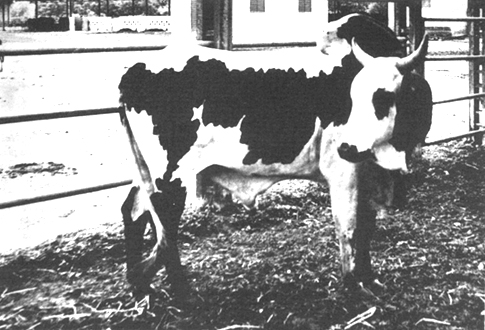
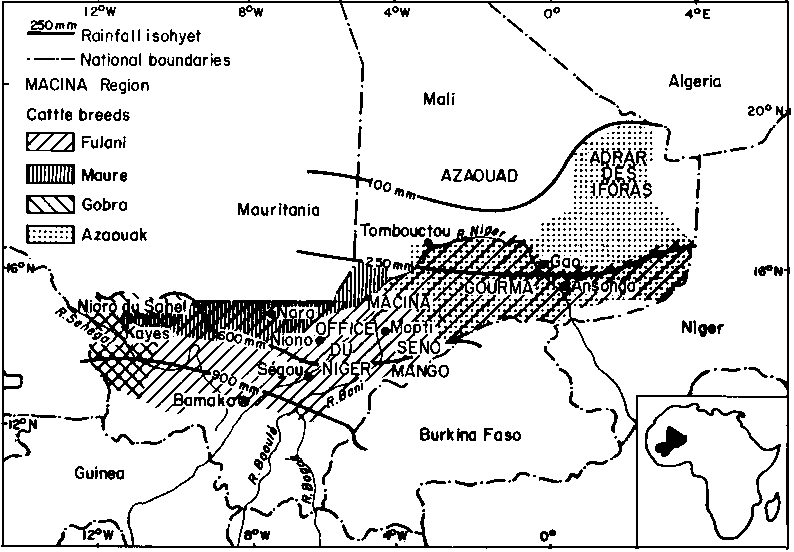
The predominant breed of cattle in central Mali is the Sudanese Fulani (Mason, 1969). A male animal of this breed is shown in Figure 1. In the extreme west near the Senegal border, some Gobra are present; Maure cattle occur seasonally along the Mauritanian frontier and the Azaouak breed belonging to the Tuareg is found in the east. Figure 2 shows the principal features of central Mali and the distribution of the main cattle types.
Based on the demographic structure of the livestock population and the mean population weight, goats and sheep account for 22.2% of the total domestic ruminant biomass in central Mali. They are thus an important resource not only in the livestock economy but also in the total economy of the country. Their ability to produce meat, milk and other products even under the harsh environmental conditions of the semiarid zone and at periods of the year when cattle are not producing makes them very important in the livelihood of traditional pastoralists and agropastoralists.
In the study area, direct subsistence is a major objective of small ruminant husbandry. Meat, milk and fibre all contribute to this subsistence while surplus males are sold off for cash.
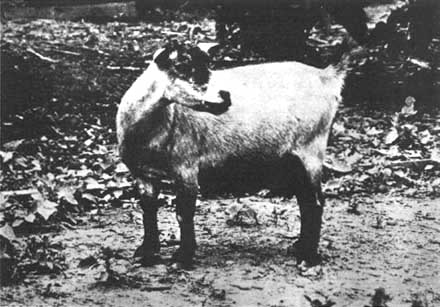
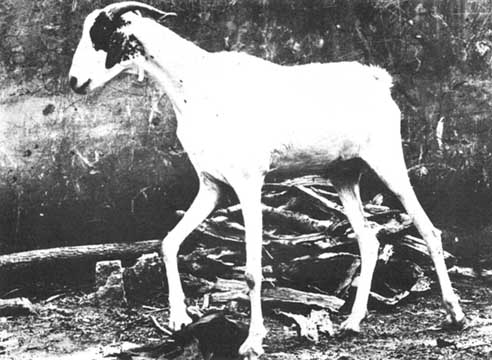
In central Mali the majority of goats are of the West African Sahel type (Mason, 1969). In some urban areas and in the south small numbers of the dwarf type of goat, common in the more heavily wooded and forested humid zones, are found (Figure 3). Although attempts are sometimes made to classify the Sahel goats (Figure 4) into breeds, the difference between them is negligible and there seems to be no justification for this practice.
Figure 1. A Sudanese Fulani stud bull at the Station du Sahel, Niono.
Figure 2. Distribution of cattle types in central Mali.
Figure 3. A goat of the West African Dwarf type.
Figure 4. A goat of the West African Long-legged type.
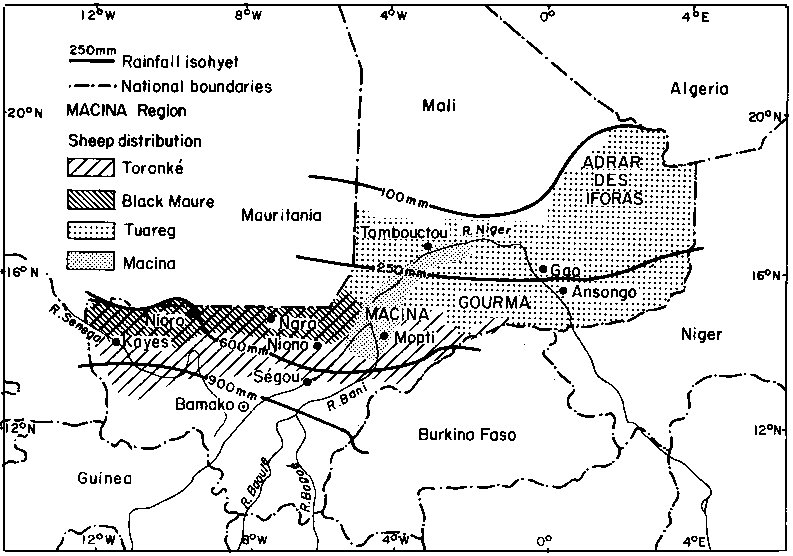
The variation in sheep is greater, and there are three distinct types of-the West African Long-legged sheep (Mason, 1969). These are:
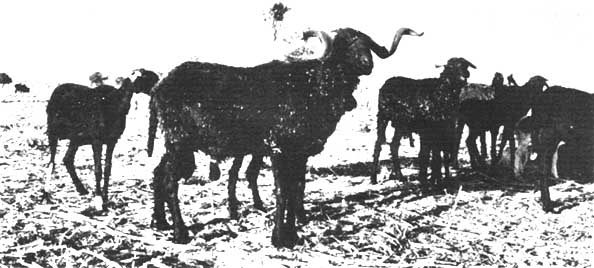
· The Toronké variety of the Fulani breed (Figure 5), which is owned by Fulani transhumants who migrate seasonally over most of central Mali. Animals of this variety (and its crosses with the West African Dwarf) are also owned by most of the agropastoral sedentary farmers of the region. This variety is the one used in the long-term studies described in this report.· The long-haired Black Maure (Figure 6), which is found in the dry season along the Mauritania/Mali border and southwards for distances of up to 100 km. The flocks are kept as pure as possible so that the hair used in tent-making will be of good quality. As most Moors keep flocks of the short-haired White Maure or Tuabir sheep in addition to the black breed, some crossing and dilution does occur.
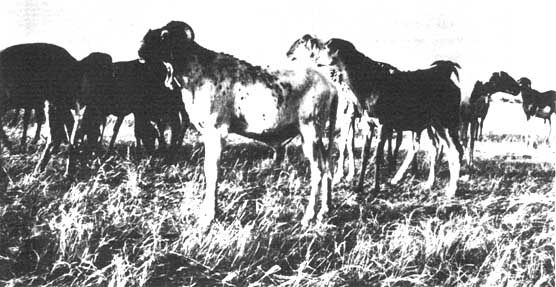
· The white, pied or fawn Tuareg breed (Figure 7), which is kept mainly by nomadic or transhumant Tuaregs. In central Mali, the breed is found mainly in the Gourma region but it also extends north of the Niger river to the Adrar des Iforas and eastwards into the Niger Republic.
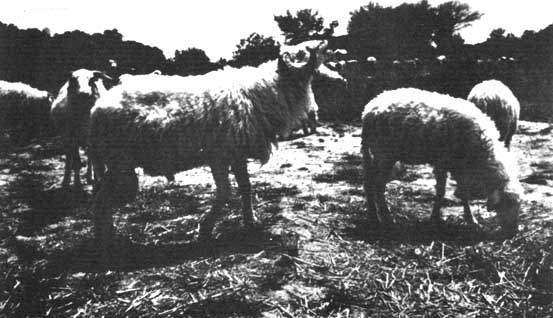
In addition to these hair sheep, one of the few true wooled breeds of Africa also occurs in central Mali. This is the Macina breed (Figure 8), which is kept mainly for its coarse wool which is used in local blanket and garment manufacture. The owners are almost all agropastoral Fulani who also cultivate rice. The sheep is confined largely to the inundation zone of the River Niger, but short-distance migration takes place each year to avoid the seasonal floods.
Figure 5. Toronké variety of the Fulani sheep at Niono market.
Figure 6. Black Maure ram in a harvested field.
Figure 7. A ram of the Tuareg type in central Mali.
The distribution of these types of sheep in central Mali and adjoining areas is shown in Figure 9.
Figure 9. Distribution of the main sheep types in central Mali.