Birthweight
Growth to maturity
Breeding female postpartum weight
Effects of climate on growth and mature weight
Discussion
The observed birthweight ( ± s.d.) of 107 calves born during the 1978-1984 period was 16.6 ± 2.67 kg. The analysis of variance of this trait (Table 23) demonstrates that only parity (i.e. dam's age) has any significant effect. The least-squares means for all the variables considered are shown in Table 24.
For cattle of known birth date, a generalised growth curve to 4 years of age is shown in Figure 31. Analyses of variance and least-squares means for weights at various ages are shown in Tables 23 and 24 respectively. The observed sample means used in Figure 31 differ somewhat from the computed least-squares means shown in Table 24, as these last are adjusted for the unequal subclass numbers. The season of birth had a highly significant effect on growth throughout the life of the animal to its maturity (Figure 32). The year of birth also had consistent significant effects on weight at all ages (except birth) up to 9 months of age. Among herds, differences in growth rate were also significant. Coefficients of variation for weights at various ages were: 30 days, 20.00%; 90 days, 20.63%; 180 days, 19.98%; 210 days, 19.16%; 270 days, 18.49%; 365 days, 18.43%; 550 days, 17.06%; 730 days, 16.43%; and 1095 days, 14.55%. Phenotypic correlations between calf weights at different ages are shown in Table 25.
Cows did not reach final mature weights until after 5 years of age. Mature weights were 230.4 kg in the rainfed millet subsystem and 224.5 kg in the rice subsystem. Males - exemplified in this study by work oxen in the irrigated subsystem - had average mature weight of 297.2 kg at ages above 6 years, although the largest individuals weighed up to 430 kg.
The observed postpartum weight ( ± s.d.) was 214.7 ± 33.63 kg with a coefficient of variation of 13.04%.
The mean squares from the analysis of variance are set out in Table 26 which shows that parity, season and year exerted highly significant effects on postpartum weight while differences among herds were also significant in both rainfed and irrigated subsystems. The least-squares means for postpartum weights are given in Table 27 while graphic representations of the main variables affecting this parameter are shown in Figure 33.
The postpartum weight was reduced by 0.016 kg for each day of reduction to the previous parturition, this effect being non-significant.
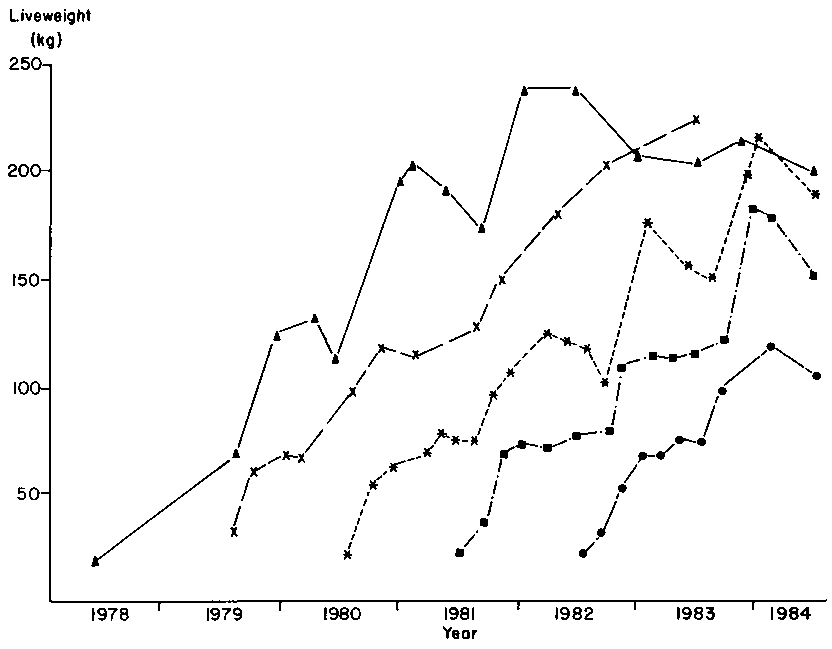
Growth curves for calves born during the main calving season in each year from 1978 to 1982 are shown in Figure 34. The figure clearly shows the effects of the fluctuating feed supply on the overall development of weight over medium- to long-term periods.
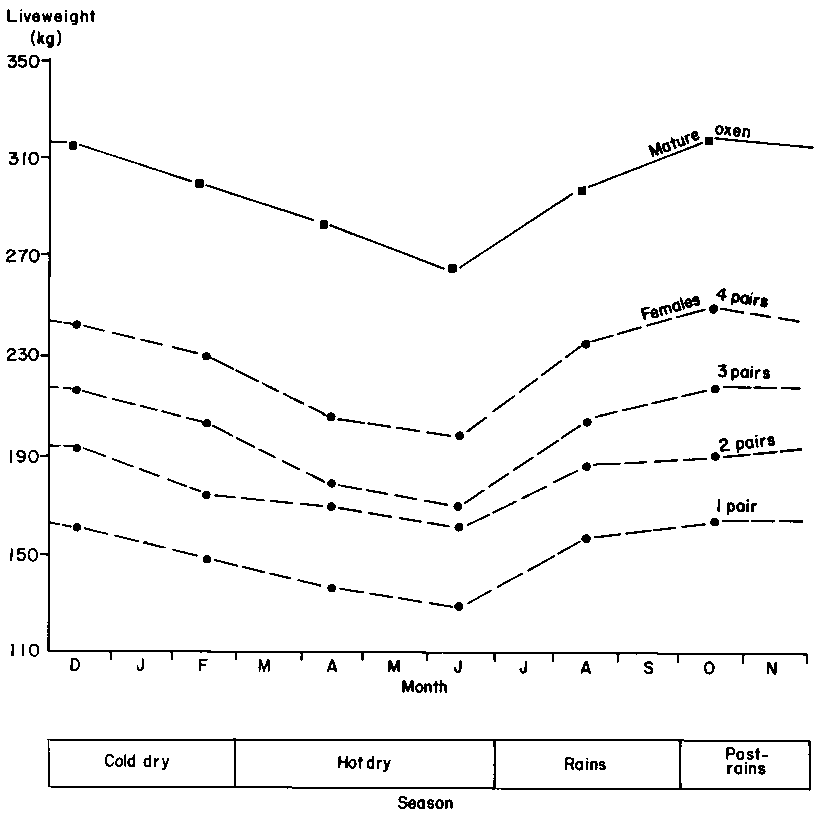
The weight of mature oxen fluctuated from 88.9 to 107.2% of their mean weight when weights were pooled over two-monthly periods (Figure 35). When weights for single months were used, the minimum early July weight (240.5 kg) was found to be only 72.5% of the maximum weight of 331.9 kg in November. Similar ranges of variation were found for all ages of breeding females, reinforcing the picture shown in Figure 34. Adult females with four pairs of incisors varied from 87.7 to 110.2% of their mean weight.
The most perturbing long-term effect is shown in Figure 36 supported by the data in Table 28. The poor rainfall (in relation to the long-term mean) encountered at the beginning of the study period has continued and even been aggravated. As a result, the mean mature weight of work oxen fell by about 1.4 kg per month over the whole period. Similar, although less spectacular, losses were recorded in mature females.
Table 23. Analysis of variance of cattle weights at specified ages.
|
Source of variation |
Birth |
30 days |
90 days |
180 days |
210 days |
270 days |
365 days |
550 days |
730 days |
1095 days |
||||||||||
|
d.f. |
MS |
d.f. |
MS |
d.f. |
MS |
d.f. |
MS |
d.f. |
MS |
d.f. |
MS |
d.f. |
MS |
d.f. |
MS |
d.f. |
MS |
d.f. |
MS |
|
|
System |
1 |
2.25 |
1 |
17.8 |
1 |
66.5 |
1 |
88.6 |
1 |
61.6 |
1 |
25.4 |
1 |
3.5 |
1 |
0.2 |
1 |
259.1 |
1 |
186.0 |
|
Sex |
1 |
1.73 |
1 |
2.2 |
1 |
13.3 |
1 |
77.4 |
1 |
14.1 |
1 |
35.5 |
1 |
107.5 |
1 |
67.1 |
1 |
789.4 |
1 |
1 547.0 |
|
Parity |
3 |
13.42* |
3 |
20.0 |
3 |
70.6 |
3 |
292.1 |
3 |
193.3 |
3 |
284.0 |
3 |
684.8* |
3 |
553.1 |
3 |
1 128.6* |
3 |
1 481.4 |
|
Season |
1 |
3.54 |
3 |
251.1*** |
3 |
610.5*** |
3 |
3 059.7*** |
3 |
2 241.7*** |
3 |
1 223.0*** |
3 |
508.4* |
3 |
2 465.5*** |
3 |
2 024.9*** |
3 |
3 419.6*** |
|
Year |
4 |
7.03 |
6 |
72.9** |
4 |
248.1** |
4 |
604.3** |
4 |
764.5*** |
2 |
523.4* |
4 |
286.5 |
4 |
280.4 |
4 |
1 131.0* |
3 |
1 262.4 |
|
Herd/millet |
3 |
28.99** |
3 |
18.2 |
3 |
115.9 |
3 |
380.8* |
3 |
562.0** |
3 |
592.8* |
3 |
328.8 |
3 |
634.9 |
3 |
236.7 |
2 |
88.5 |
|
Herd/rice |
4 |
16.28* |
4 |
9.9 |
4 |
90.7 |
4 |
150.1 |
4 |
330.1 |
4 |
865.4*** |
4 |
549.1* |
4 |
1 155.8* |
4 |
860.5 |
4 |
2 523.2** |
|
System x Season |
- |
- |
3 |
22.6 |
3 |
167.3 |
3 |
270.9 |
3 |
155.8 |
3 |
56.0 |
3 |
364.1 |
3 |
169.2 |
3 |
69.7 |
3 |
47.0 |
|
Sex x Season |
- |
- |
3 |
50.3 |
3 |
53.6 |
3 |
102.2 |
3 |
19.3 |
3 |
56.4 |
3 |
312.4 |
3 |
29.4 |
3 |
365.5 |
3 |
810.6 |
|
Error |
88 |
5.07 |
167 |
24.3 |
310 |
62.6 |
328 |
135.5 |
328 |
143.9 |
305 |
159.7 |
260 |
189.6 |
211 |
349.3 |
161 |
370.3 |
82 |
559.0 |
***P<0.001; **P<0.01; *P<0.05.
Table 24. Least-squares mean weights (kg) for agropastoral cattle at different ages.
|
Variable |
Birth |
30 days |
90 days |
180 days |
210 days |
270 days |
365 days |
550 days |
730 days |
1095 days |
|||||||||||
|
n |
|
n |
|
n |
|
n |
|
n |
|
n |
|
n |
|
n |
|
n |
|
n |
|
||
|
Overall |
107 |
17.73 |
295 |
26.26 |
336 |
38.19 |
354 |
52.20 |
354 |
56.76 |
331 |
64.01 |
286 |
74.36 |
237 |
102.75 |
187 |
123.18 |
106 |
175.39 |
|
|
System |
|||||||||||||||||||||
|
|
Millet |
53 |
17.93 |
132 |
25.73 |
138 |
37.33 |
144 |
51.22 |
142 |
55.92 |
131 |
62.46 |
115 |
74.14 |
100 |
102.69 |
80 |
120.93 |
40 |
172.06 |
|
|
Rice |
54 |
17.53 |
163 |
26.79 |
198 |
39.05 |
210 |
53.18 |
212 |
57.61 |
200 |
64.57 |
171 |
74.57 |
137 |
102.79 |
107 |
125.43 |
66 |
178.71 |
|
Sex |
|||||||||||||||||||||
|
|
Female |
58 |
17.59 |
164 |
26.43 |
189 |
38.56 |
198 |
53.09 |
197 |
56.33 |
187 |
64.69 |
159 |
73.14 |
133 |
101.82 |
106 |
119.70 |
61 |
167.33 |
|
|
Male |
49 |
17.87 |
131 |
26.09 |
147 |
37.82 |
156 |
51.31 |
157 |
57.19 |
144 |
63.32 |
127 |
75.58 |
104 |
103.68 |
81 |
126.66 |
45 |
183.44 |
|
Parity |
|||||||||||||||||||||
|
|
1 |
25 |
17.39ab |
82 |
25.61 |
93 |
37.15 |
93 |
50.66 |
93 |
54.68 |
83 |
62.43 |
68 |
71.70a |
63 |
98.92 |
50 |
166.98a |
26 |
183.44 |
|
|
2 |
22 |
18.60a |
54 |
26.64 |
65 |
38.60 |
71 |
54.47 |
73 |
58.46 |
68 |
66.72 |
58 |
77.83b |
45 |
104.90 |
30 |
122.56ab |
16 |
178.12ab |
|
|
3 |
14 |
18.10ab |
41 |
26.11 |
46 |
39.54 |
53 |
53.24 |
52 |
57.14 |
49 |
62.24 |
45 |
71.08a |
39 |
101.68 |
37 |
121.72ab |
22 |
171.28a |
|
|
'9' |
46 |
16.83b |
118 |
26.0 |
132 |
37.47 |
137 |
50.53 |
136 |
56.77 |
131 |
64.66 |
115 |
76.82b |
90 |
105.50 |
70 |
129.99b |
42 |
185.16b |
|
Season |
|
|
|
|
|
|
|
|
|
|
|
|
|
|
|
|
|
|
|
|
|
|
|
Cold dry |
15 |
17.24 |
36 |
24.14a |
47 |
33.81a |
47 |
46.89a |
47 |
54.37a |
47 |
68.10ab |
43 |
79.05a |
33 |
102.25a |
29 |
135.15a |
21 |
187.00ac |
|
|
Hot dry |
80 |
17.54 |
223 |
23.94a |
233 |
38.82b |
243 |
61.19b |
244 |
65.38b |
228 |
69.66a |
196 |
73.89b |
166 |
113.69b |
131 |
118.37b |
72 |
162.48b |
|
|
Rains |
12 |
18.41 |
27 |
29.72b |
44 |
43.21c |
44 |
56.97c |
53 |
57.54a |
53 |
59.78c |
37 |
69.48b |
27 |
104.98a |
16 |
105.75b |
7 |
153.29ab |
|
|
Post-rains |
14 |
18.41 |
9 |
27.23ab |
12 |
36.93ab |
11 |
43.76a |
10 |
49.75a |
10 |
58.51bc |
10 |
75.00ab |
10 |
390.08ab |
11 |
133.44a |
6 |
198.77c |
|
Year |
|
|
|
|
|
|
|
|
|
|
|
|
|
|
|
|
|
|
|
|
|
|
|
1978 |
- |
- |
6 |
24.17a |
- |
- |
- |
- |
- |
- |
- |
- |
- |
- |
10 |
100.96 |
10 |
138.66a |
9 |
182.12 |
|
|
1979 |
- |
- |
9 |
31.83b |
22 |
39.39ab |
28 |
48.98ac |
27 |
52.98a |
26 |
61.32a |
26 |
77.78 |
25 |
104.68 |
21 |
120.31b |
17 |
178.05 |
|
|
1980 |
14 |
18.62 |
39 |
25.51a |
52 |
37.36a |
81 |
52.67ab |
89 |
56.77ab |
90 |
63.30a |
90 |
72.26 |
79 |
102.93 |
76 |
114.85b |
56 |
163.95 |
|
|
1981 |
24 |
18.13 |
71 |
26.69a |
81 |
39.12ab |
80 |
55.20b |
78 |
60.60b |
76 |
68.63b |
74 |
76.73 |
62 |
99.56 |
56 |
121.88b |
24 |
177.63 |
|
|
1982 |
32 |
17.60 |
79 |
25.26a |
94 |
35.69a |
84 |
48.93c |
81 |
53.31a |
78 |
61.73a |
71 |
73.79 |
61 |
105.62 |
24 |
120.19b |
- |
- |
|
|
1983 |
24 |
16.83 |
81 |
26.42a |
87 |
40.39b |
81 |
55.22b |
79 |
60.15b |
61 |
65.09a |
25 |
71.23 |
- |
- |
- |
- |
- |
- |
|
|
1984 |
13 |
17.46 |
10 |
- |
- |
- |
- |
- |
- |
- |
- |
- |
- |
- |
- |
- |
- |
- |
- |
- |
|
Herd/millet |
|||||||||||||||||||||
|
|
5 |
4 |
18.16ab |
13 |
25.86 |
16 |
35.73 |
20 |
55.58a |
20 |
62.48a |
17 |
68.30a |
14 |
77.18 |
10 |
108.43 |
6 |
128.40 |
4 |
177.81 |
|
|
7 |
4 |
21.52a |
12 |
24.05 |
10 |
35.42 |
16 |
44.76b |
16 |
48.48b |
16 |
53.82b |
15 |
67.81 |
9 |
90.26 |
7 |
112.13 |
- |
- |
|
|
8 |
27 |
16.58b |
71 |
26.31 |
74 |
40.02 |
73 |
53.59a |
73 |
57.40a |
68 |
65.25a |
58 |
73.37 |
56 |
107.85 |
47 |
121.43 |
27 |
10.55 |
|
|
15 |
18 |
15.45b |
36 |
26.0 |
38 |
38.13 |
35 |
50.94ab |
33 |
55.30ab |
30 |
66.47a |
28 |
78.19 |
25 |
104.22 |
20 |
121.76 |
9 |
168.83 |
|
Herd/rice |
|||||||||||||||||||||
|
|
53 |
12 |
15.41a |
45 |
26.80 |
56 |
37.01 |
63 |
51.31 |
63 |
57.28 |
62 |
65.01a |
59 |
76.25ab |
48 |
95.15a |
34 |
126.40 |
22 |
168.80ac |
|
|
60 |
16 |
18.66b |
34 |
27.07 |
41 |
40.08 |
46 |
53.97 |
46 |
58.61 |
44 |
64.47ab |
35 |
70.42b |
28 |
100.60ab |
25 |
119.13 |
15 |
178.18abc |
|
|
64 |
15 |
17.34ab |
39 |
26.29 |
50 |
39.21 |
52 |
51.19 |
56 |
53.65 |
50 |
57.65b |
45 |
71.09b |
36 |
96.19a |
25 |
116.42 |
14 |
153.75c |
|
|
67 |
4 |
18.70b |
25 |
26.08 |
29 |
37.95 |
D |
56.05 |
25 |
62.02 |
23 |
72.13a |
17 |
82.24a |
13 |
106.53ab |
11 |
130.0 |
9 |
190.80ab |
|
|
89 |
7 |
17.54ab |
20 |
27.72 |
22 |
41.02 |
22 |
53.47 |
22 |
56.48 |
21 |
63.56ab |
15 |
72.87ab |
12 |
115.53b |
11 |
134.47 |
6 |
202.03b |
Within variable groups, means followed by different letters differ significantly (P<0.05). Variable groups without any letters did not show a significant difference in the analysis of variance.
Figure 31. Generalised growth curve to 4 years of age for cattle of known birth date.
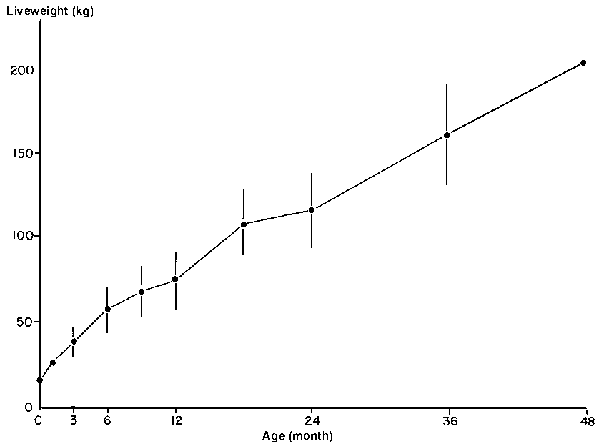
Growth rates were very slow, averaging only 185 g/day from birth to presumed weaning at 7 months of age. From this age to 1 year growth slowed even further to an average of only 121 g/day. This period corresponds to postweaning and, for the majority of calves born during the late hot dry season, would coincide with the worst period of the year from February or March through to May or June. In fact, calves born during the hot dry season had a postweaning gain of only 59 g/day compared with 174 g/day gained by those few calves that were born in the post-rains season and thus benefitted from the following year's rainy season during their postweaning period.
As can be seen from Figure 32, the significant effects of season of birth on growth were not only marked but followed a logical pattern related to suckling and then to the availability of fodder right up to the age of 2 years.
Although between- and among-year effects were significant up to 9 months of age, there was no clear relationship with total annual rainfall for the year in question. It is probable that the pattern of rainfall within the season and variation in management practices between years masked any direct effects. System did not exert a significant influence on growth but except at birth, cattle in the irrigated rice subsystem were consistently heavier than their contemporaries in the rainfed subsystem up to adult weights. Males were lighter than females after weaning, this probably indicating that slightly more care was given to female calves or that less milk was removed for human consumption from dams of female calves. From 1 year of age onwards males continued to be heavier than females, with an advantage of 3.0% at 1 year, 6.0% at 2 years, 10% at 3 years, 17% at 4 years and 32% at mature weights. Differences in weight between the sexes were not significant up to 3 years of age.
The significant differences in weight which occurred among herds have not yet been explained in terms of the differing management practices or individual abilities of the owners or herders.
Figure 32. Relationship between season of birth and growth of cattle to 3 years of age.
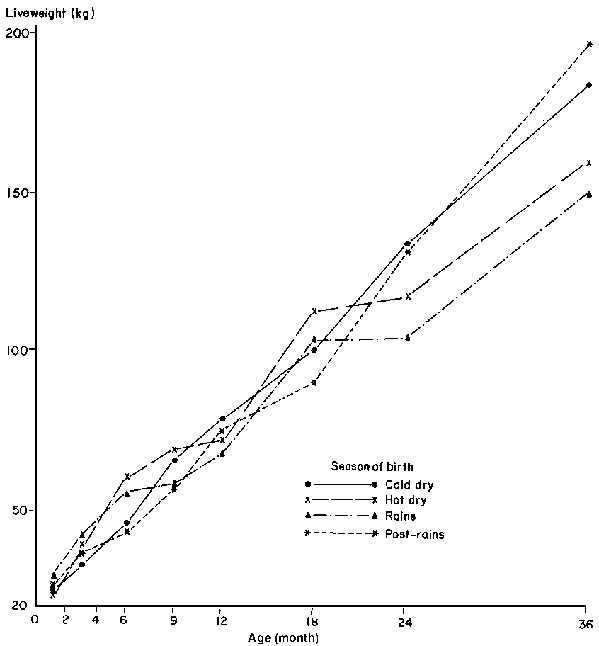
Table 25. Phenotypic correlations between calf weights.
|
Age (days)
|
Age (days) |
||||||||
|
30 |
90 |
180 |
210 |
270 |
365 |
550 |
730 |
1095 |
|
|
30 |
1.00 |
0.47 |
0.01 |
0.14 |
0.20 |
0.23 |
0.16 |
0.38 |
0.37 |
|
90 |
|
1.00 |
0.31 |
0.25 |
0.04 |
0.04 |
0.31 |
0.26 |
0.15 |
|
180 |
|
|
1.00 |
0.91 |
0.74 |
0.46 |
0.62 |
0.38 |
0.37 |
|
210 |
|
|
|
1.00 |
0.86 |
0.67 |
0.61 |
0.52 |
0.51 |
|
365 |
|
|
|
|
|
1.00 |
0.44 |
0.66 |
0.72 |
|
550 |
|
|
|
|
|
|
1.00 |
0.62 |
0.51 |
|
730 |
|
|
|
|
|
|
|
1.00 |
0.75 |
|
1095 |
|
|
|
|
|
|
|
|
1.00 |
Table 26. Analysis of variance of postpartum weights of dams.
|
Source of variation |
d. f. |
MS |
|
System |
1 |
797.73 |
|
Sex |
1 |
857.92 |
|
Parity |
3 |
19 354.09*** |
|
Season |
3 |
10 286.64*** |
|
Year |
6 |
6 433.46*** |
|
Herd/millet |
3 |
3 282.96** |
|
Herd/rice |
4 |
2 812.88** |
|
Error |
414 |
783.95 |
***P<0.001; **P<0.01.
There is an absence of a clear inflection point in the growth curve in early life. Indeed, growth rates from 1 to 2 years at 134 g/day and from 2 to 3 years at 143 g/day exceeded the postweaning gain to 1 year of 121 g/day. Calves and growing stock obviously suffered severely from poor nutrition. In the rice subsystem, the probably slightly better feed situation was offset by heavier parasite burdens, especially by liver flukes (Traoré, 1984).
Postpartum weights in general followed the pattern that could be expected for parity and season. Primiparous cows weighed approximately 202 kg, compared with a mean weight of 192 kg for all females at 1460 days. This weight, obtained from a much larger sample (n = 107) than the small number (n = 20) of animals whose age at first calving was known for certain (Section 7), adds firmly to the hypothesis that first calving generally occurs at just over 4 years of age. The present main calving season is in the late hot dry season, this having repercussions on cow weight (and therefore ability to survive and supply milk) as well as the postweaning growth of calves, as already noted.
The low and diminishing rainfall over the 7-year study period (1984 weights were included in this analysis) resulted in a long-term and apparently sustained reduction in postpartum weights. Weights for the years 1982 to 1984 inclusive were all below the 7-year mean, the lowest being 4.7% below the overall average and 12.5% below the maximum weight observed in 1980.
Seasonal effects were evident not only on growth rates but also on the intra-annual change in weight of cattle within specified age groups (Figure 35), including those under 4 years of age which should still be actively growing. In addition to the effects on reproductive performance and overall output of breeding females, the consequences are serious for other aspects of agropastoral operations. Work oxen enter the cultivation season in very low condition. Compensatory recovery in weight is further delayed in this class of stock as they have little time for grazing during the period of agricultural operations and are not, in general, given adequate high-energy supplementation to satisfy their needs.
Table 27. Least-squares means for postpartum weights (kg) of dams.
|
Variable |
n |
|
± SE |
|
|
Overall |
433 |
222 |
2.73 |
|
|
System |
||||
|
|
Millet |
192 |
220 |
3.28 |
|
|
Rice |
241 |
223 |
3.06 |
|
Sex of cuff |
||||
|
|
Female |
231 |
223 |
3.07 |
|
|
Male |
202 |
220 |
3.05 |
|
Parity |
||||
|
|
1 |
107 |
202a |
3.67 |
|
|
2 |
86 |
227b |
3.85 |
|
|
3 |
59 |
227b |
4.42 |
|
|
'9' |
181 |
231b |
3.00 |
|
Season |
||||
|
|
Cold dry |
69 |
220a |
3.83 |
|
|
Hot dry |
283 |
209b |
2.49 |
|
|
Rains |
64 |
232c |
4.08 |
|
|
Post-rains |
17 |
227ac |
7.15 |
|
Year |
||||
|
|
1978 |
15 |
227abc |
7.78 |
|
|
1979 |
31 |
227a |
5.52 |
|
|
1980 |
97 |
238b |
3.50 |
|
|
1981 |
85 |
222a |
3.63 |
|
|
1982 |
106 |
216c |
3.53 |
|
|
1983 |
85 |
212c |
3.68 |
|
|
1984 |
14 |
215c |
7.97 |
|
Herd/millet |
||||
|
|
5 |
23 |
217ab |
6.48 |
|
|
7 |
25 |
218a |
6.31 |
|
|
8 |
88 |
215a |
3.65 |
|
|
15 |
56 |
232a |
4.30 |
|
Herd/rice |
||||
|
|
53 |
78 |
213a |
3.82 |
|
|
60 |
52 |
219ab |
4.58 |
|
|
64 |
57 |
225ab |
4.47 |
|
|
67 |
31 |
232b |
5.61 |
|
|
69 |
23 |
228b |
6.37 |
Note: '9' are dams with known parities ³ 4 and unknown parities ³ 3.Within variable groups, means followed by different letters differ significantly (P<0.05). Variable groups without any letters did not show a significant difference in the analysis of variance.
The long-term decline in mature weight (Figure 36) is seen to be correlated, at least in part, with a similar decline in the amount of rainfall. Mature weights of oxen were lower by about 80 kg at the beginning of 1984 compared with the initial weights in 1978, this decline being equivalent to about 4% per year. In cows, while absolute weigh changes were less than for oxen - 40 kg lighter (2.7% per year) in the rice subsystem and 27 kg lighter (1.8% per year) in the millet subsystem - the consequences on productivity are likely to be more serious. These long-term changes in individual body weight are a result not only of the reduced rainfall leading to lower fodder availability, but also of a probable increase in cattle numbers over the study period. These weight changes do not appear to have resulted, so far, in decreased calving rates or increased mortality, but the time cannot be far distant when these will occur.
Figure 33. Relationships between postpartum weights of cattle and parity, season and year of calving.
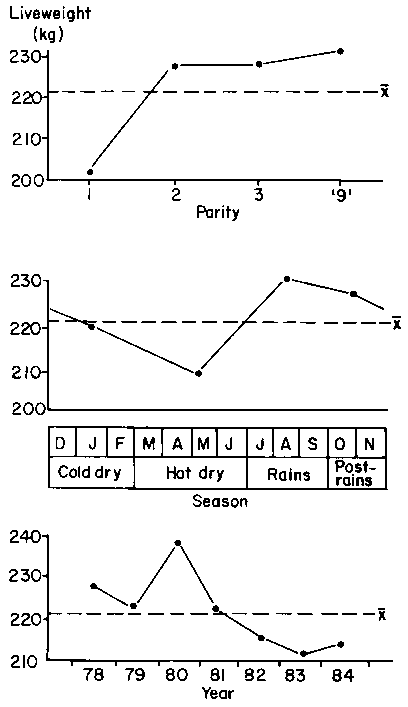
Figure 34. Long-term growth patterns for calves born in May each year from 1978 to 1982.
Figure 36. Long-term weight changes in oxen and breeding cows related to changes in rainfall.
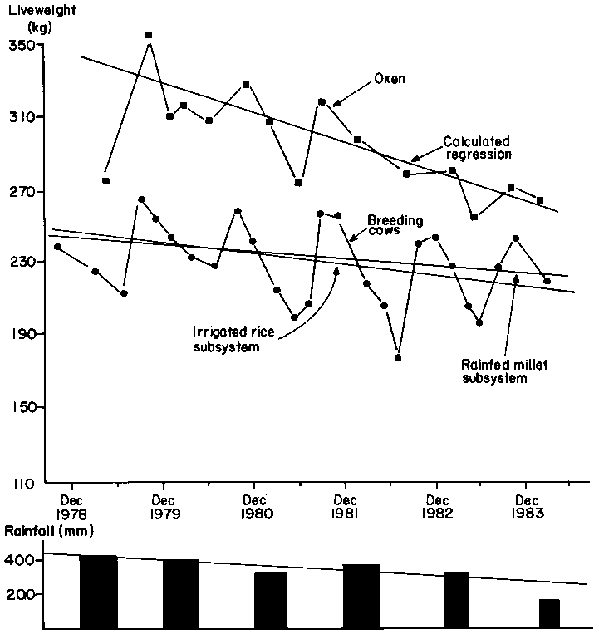
Table 28. Regression analysesa of weight (kg) on time for different classes of cattle and of rainfall (mm) on time, 1977
|
Subsystem and class |
|
Number of observations |
a |
b |
r |
P |
|
|
Rice |
|||||||
|
|
Mature work oxen |
|
835 |
-1.37 |
378.6 |
-0.3856 |
0.0000 |
|
|
Females |
4 pairs incisors |
1 364 |
-0.56 |
259.3 |
-0.2279 |
0.0000 |
|
|
3 pairs incisors |
341 |
-0.57 |
237.8 |
-0.2322 |
0.0000 |
|
|
|
2 pairs incisors |
272 |
-0.36 |
200.7 |
-0.1821 |
0.0013 |
|
|
|
1 pair incisors |
246 |
-0.51 |
183.3 |
-0.2265 |
0.0002 |
|
|
Millet |
|||||||
|
|
Females |
4 pairs incisors |
1 070 |
-0.38 |
252.2 |
-0.1972 |
0.0000 |
|
|
3 pairs incisors |
229 |
0.48 |
175.5 |
0.1924 |
0.0017 |
|
|
|
2 pairs incisors |
193 |
-0.03 |
181.4 |
-0.0188 |
0.3978 |
|
|
|
1 pair incisors |
155 |
-0.40 |
175.8 |
-0.2194 |
0.0030 |
|
|
Rainfall |
|
7 |
-33.40 |
452.1 |
-0.7871 |
0.0450 |
|
a y = ax + b, intercept at January 1977.