Abortions
Mortality to 4 years of age
Mortality in adult cattle
Offtake
Discussion
A total of 15 (3.32%) of all the 452 births recorded were abortions.
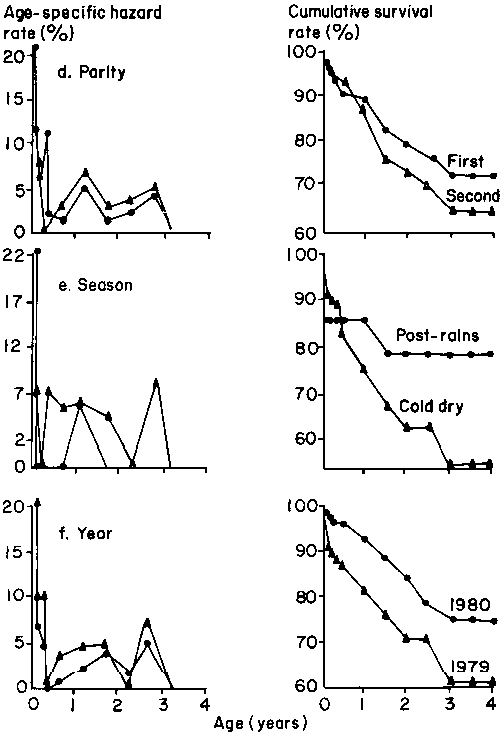
Details of deaths to 4 years of age are given in Table 29. The calculated overall figure was 31.6% of all animals born (excluding abortions - if these are included, the figure would be 34.9%), although a true figure would be slightly higher than this as a number of animals had not reached 4 years. Deaths to weaning at about 7 months of age were about 9% (Figure 37), with the major risk of dying during the first month of life. There was a low death rate between weaning and 1 year of age. A major crisis period for young animals was during their second year of life, this being followed again by a low death rate between 2 and 3 years of age and an almost negligible risk of dying in the fourth year.
As can be seen from Table 29, the system, the season of birth and the year of birth had significant effects on the levels of mortality.
Cattle over 4 years old (those with four pairs of permanent incisors if actual age was not known) were considered to be adult. The number of adult cattle years was calculated for the whole study period as 1877.5. A total of 94 adult cattle died (including eight lost and not recovered). The death rate was calculated as 94/1877.5 x 100, this being equal to 5.01%.
Offtake was calculated as sales plus slaughter (for social purposes or in extremis) plus animals gifted-out permanently. A few slaughters and sales (especially the latter) took place before animals were mature. Calculated on the same basis as adult mortality, total offtake was 8.36% composed of 0.53% slaughtered, 6.98% sold and 0.85% gifted animals.
Abortion - at least in late pregnancy when it can be more easily detected - has been a minor problem since 1978. The main periods at which death occurred were the first months of life and the second year of age. It is probable that some young animals did not receive sufficient attention in early life to enable them to survive. The second-year death rate most probably resulted from an accumulation of general stress and disease factors.
No specific diseases were identified as major causes of death during this phase of the study, although liver fluke has since been identified as a contributing factor in the general debility (Traoré, 1984). A constantly low - and decreasing in the long term - level of nutrition plays a major overall part in animal losses.
Overall, the abortion rate recorded in this study was considerably lower than that found on the Station du Sahel from 1966 to 1976, and the total mortality rate was not much higher than the 26% to 3 years of age recorded there (ILCA/IER, 1978).
Table 29. Observed mortality ratesa for agropastoral cattle to 4-years of age, presented by different variables.
|
System |
% |
Sex |
% |
Parity |
% |
Season of birth |
% |
Year of birth |
% |
|
|
Millet |
37.3 |
Female |
29.2 |
1 |
27.7 |
Cold dry |
41.7 |
1978 |
28.6 |
|
|
Rice
|
26.3 |
Male |
34.3 |
2 |
36.5 |
Hot dry |
27.4 |
1979 |
39.5 |
|
|
|
|
|
3 |
31.2 |
Rains |
46.0 |
1980 |
27.4 |
||
|
|
|
|
4 |
28.6 |
Post-rains |
21.4 |
1981 |
31.7 |
||
|
|
|
|
'9' |
32.7 |
|
|
1982 |
3.0 |
||
|
Mantel-Cox Test |
||||||||||
|
|
Statistic |
4.82 |
|
1.55 |
|
1.77 |
|
9.67 |
|
15.23 |
|
|
d.f. |
1 |
|
1 |
|
4 |
|
1 |
|
5 |
|
|
Significance |
0.0281 |
|
0.2831 |
|
0.7784 |
|
0.0216 |
|
0.0094 |
a= 31.6%
Figure 37. Age-specific hazard and cumulative survival rates for agropastoral cattle in central Mali.
Figure 1
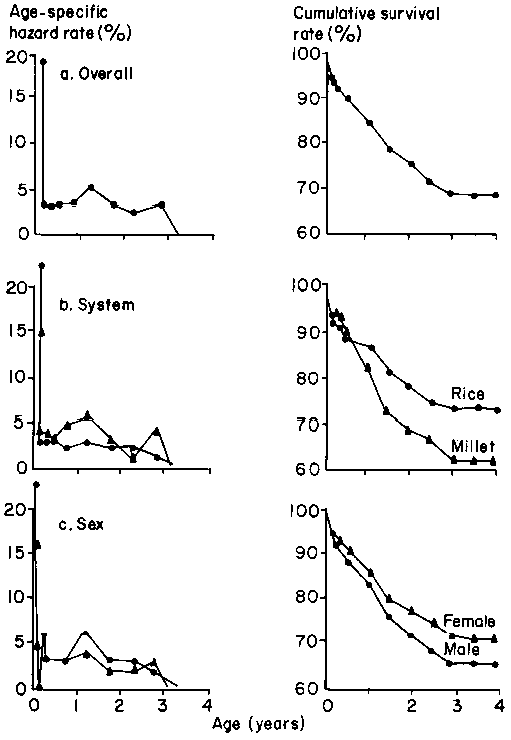
Figure 2