The real producer price of livestock product
Implicit taxation (or subsidisation) of livestock producers
Having examined the of livestock pricing policies and the main mechanisms through which prices are influenced in the study countries, attention is turned in this chapter to an analysis of the official price data on livestock products. The price data are analysed with a view to determine how successful governments have been in meeting some of their stated pricing policy objectives and to measure the impact of price intervention policies on production incentives and consumer prices. The methodology used for the analysis is set out in Appendix 1. The sources and limitations of the data used and the constraints which they impose on the interpretation of the results are also discussed in Appendix 1.
In what follows, we first examine empirical evidence on the real producer prices and the real border equivalent producer prices of livestock products. Next, variations in the two prices over time are analysed and nominal protection coefficients (NPCs) are estimated to establish the relative degree of implicit taxation or subsidisation of producers. The trend in real consumer prices is then examined and NPCs are also estimated for consumers. The chapter concludes by drawing out the implications of the results for livestock production incentives and for government effectiveness in influencing prices to achieve their objectives.
Real producer prices, obtained by deflating farm-gate prices by the consumer price index (CPI), provide a direct, albeit incomplete, measure of incentives provided to livestock producers when technology and prices for inputs are held constant. 12 The incentives are transmitted through the cost of consumer goods as measured by the CPI and will generate income and work/leisure substitution effects as a result of changes in the real returns to labour. 13 Viewed in this light, the incentive (disincentive) effect arises when the prices received by the producer exhibit a significant upward (downward) trend relative to the cost-of-living index as measured by the CPI. This means that producers receive an incentive when nominal producer prices rise faster than inflation and a disincentive when domestic inflation exceeds the rise in nominal producer prices and thus erodes the purchasing power of producers' income. In countries where producer prices are fixed, real producer prices will rise when official prices are raised much faster than inflation, possibly through liberalisation of marketing and pricing policies. Conversely, infrequent or insufficient adjustments to officially fixed nominal prices coupled with high domestic inflation will bring about declining real producer prices.
12. For a discussion of the rationale and limitations of using the CPI as a deflator of producer prices, see Appendix 1.
13. In principle, it is possible to distinguish between three related kinds of price incentives to producers, viz: incentives to encourage the substitution of work for leisure with the ultimate aim of increasing the output of a commodity incentives to promote the production of a domestic commodity over other competing domestic products; and incentives to stimulate the domestic production of a commodity in order to reduce the volume of competing imports. The discussion in this section is limited only to the first kind of incentives since competing domestic products and imports are not explicitly considered here. However, the incentive system in a country may encompass all three kinds.
The estimated rates of growth of real domestic producer prices in the study countries between the early 1970s and mid-1980s are shown in Table 14. Some caution is required in comparing results across countries and commodities. This is because for one of the study countries, Mali, a CPI does not exist. Instead, the food price index (FPI) has been used to deflate producer prices. Moreover, while similar time periods were used for beef and mutton, a slightly different time period was used for milk due to the non-availability of data for one year in one of the study countries.
Table 14. Annual percentage growth a of real domestic and border equivalent producer prices in the study countries, 1970-86. b
|
|
Compound annual percentage rate of growth |
|
|
1970-72 to 1984-86 |
||
|
Product and county |
Real domestic producer price |
Border equivalent producer price in real domestic terms |
|
Beef |
||
|
Côte d'Ivoire |
-1.3 |
-3.9 ns |
|
Mali |
-3.9 |
-5.3 |
|
Nigeria |
0.2 ns |
-4.6 |
|
Sudan |
5.8 |
-6.5 |
|
Zimbabwe |
-0.2 ns |
-0.7 ns |
|
Mutton |
||
|
Côte d'Ivoire |
3.3 |
-2.5 |
|
Nigeria |
-0.7 ns |
-6.7 |
|
Sudan |
6.4 |
-1.6 ns |
|
Cow's milk b |
||
|
Mali |
2.4 ns |
-2.9 |
|
Sudan |
1.3 ns |
-7.4 |
|
Zimbabwe |
4.0 |
-1.6 ns |
ns = not statistically significant at the 01 level
a. The annual growth rates have been estimated as log-linear trends by ordinary least-squares regression.
b. For milk, growth rates were estimated for the period 1971/73 -1984/86.
Source: Estimated from data collected from the study countries by the author
Nonetheless, the table indicates that there were four statistically significant cases of increases and two statistically significant cases of decreases in the real domestic producer prices of the commodities surveyed. If the signs of the non-significant coefficients are examined, the table shows that on balance there was a general picture of upward movement in real producer prices. The pattern, however, varies among commodities even within the same country. For example, in Côte d'Ivoire the producer price for beef fell, while it increased for mutton over the same period.
Real border equivalent producer prices (RBEPPs) were also estimated for the study countries in order to assess the opportunities available to producers through international trade and to provide a basis for comparison with real domestic producer prices. 14 For each commodity, the RBEPP was estimated by converting a world representative price into local currency using the official exchange rate and then deflating by the domestic rate of inflation. The estimate thus obtained provides an indication of the real value of the border price in domestic terms and will vary from one country to the other depending on the rates of exchange and domestic inflation.
14. In general, the use of border prices as the point of reference in price policy analysis does not imply that international prices are necessarily fair or equitable, but simply that such prices are a measure of the alternatives available to a county under free trade. Thus, they provide a guide for the use of that county's resources (Johnson, 1978). See Appendix 1 for a discussion of the method used to derive BEPPs.
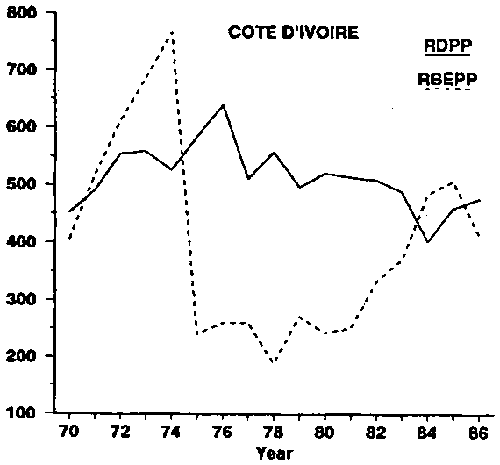
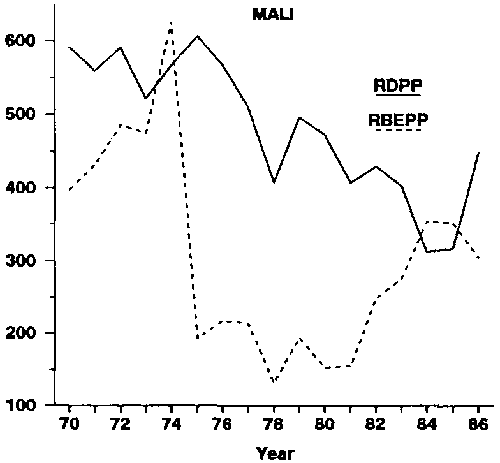
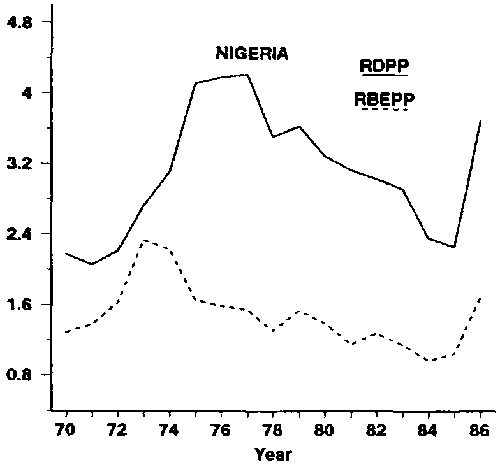
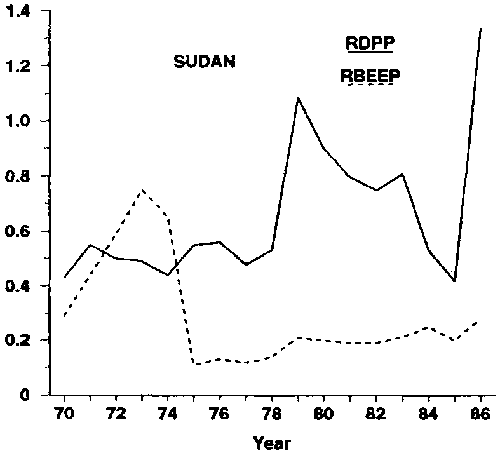
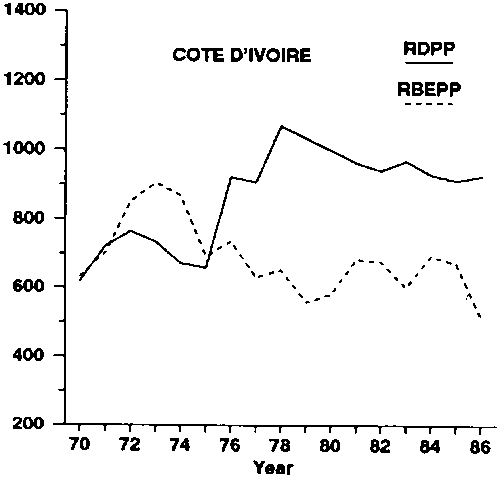
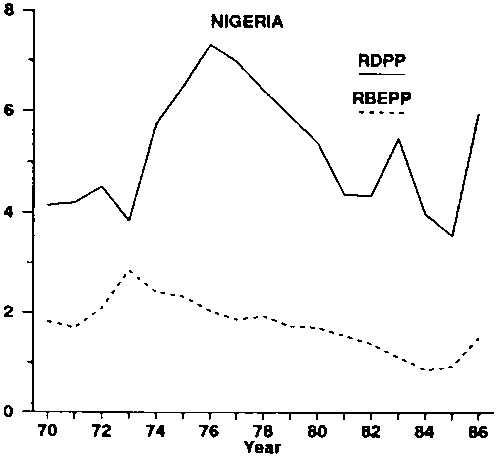
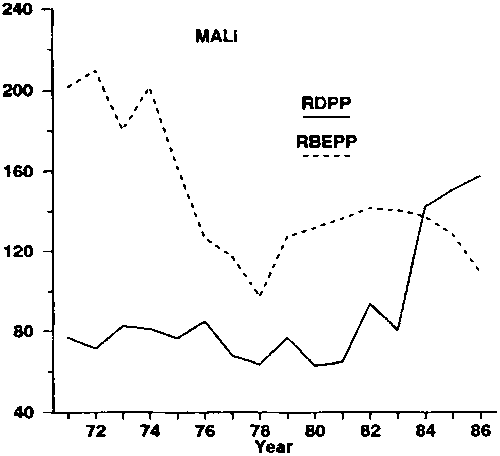
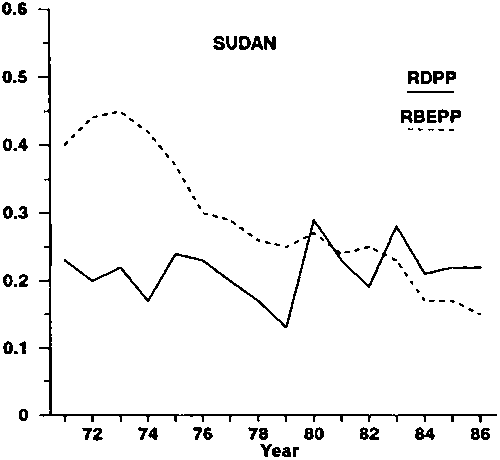
The rates of growth of real border equivalent producer prices are shown in Table 14. In principle, the lower the rate of inflation and/or the higher the rate of devaluation of the exchange rate, the greater will be the tendency for the RBEPP to rise in local currency terms. Conversely, countries with a high rate of inflation and a relatively constant exchange rate, i.e. countries allowing their currencies to become overvalued will show a rapidly declining RBEPP. Table 14 underscores this latter point for all the study countries. As the table shows, RBEPPs fell in real domestic terms in all the countries studied. If this result is taken together with the fact that the real domestic producer price rose in some countries and fell less rapidly than the RBEPP in others (see also Figures 3 and 4), the implication is that the ratio of domestic producer price to BEPP will, at least, show a moderate increase in most of the study countries. This point is largely confirmed as we shall see later on in this chapter.
At this juncture, it is useful to examine a slightly different issue relating to the degree of price variability in the study countries. As discussed in Chapter 3, one policy objective that is frequently mentioned by most governments is price stabilisation. Table 15 gives an indication of how successful the study countries have been in minimising year-to-year variations in producer prices. Judging by the coefficient of variation, except for mutton in Côte d'Ivoire and milk in Mali, real domestic producer prices have fluctuated less than RBEPPs over the entire period covered. This finding is also partly confirmed by Figures 3, 4 and 5. When the entire period covered is divided into two subperiods, the above result remains largely unchanged. With respect to beef in Côte d'Ivoire, Mali, Sudan and Zimbabwe, in the period 1970-78, the coefficient of variation in RBEPP was at least four times as high as the coefficient of variation in real domestic producer prices (see Appendix 2). Further, if the variation in real domestic producer prices is considered alone, the results indicate that for beef in Côte d'Ivoire, Nigeria and Zimbabwe and for mutton in Côte d'Ivoire and Nigeria, the variation in domestic producer prices was higher in the period 197078 than it was in the period 1979 86. However, the opposite seems to be the ease for beef and milk in Mali and for beef, mutton and milk in Sudan (see Appendix 2). For Sudan, part of the explanation for the higher coefficient of variation in real domestic producer prices in the period 1979-86 (compared with 1970-78) lies in the successive devaluations of the Sudanese pound which started around 1979 and continued for much of the 1980s. The devaluations which were necessitated by structural imbalances within the economy led to wide fluctuations in food prices, including the prices of livestock products.
Table 15. Variability in real domestic and border equivalent producer prices, 1970-86.
|
Product and country |
Real producer price |
Border equivalent producer price in real domestic terms |
|
|
CV |
CV |
|
Beef |
|
|
|
Côte d'Ivoire |
10.7 |
42.8 |
|
Mali |
19.5 |
45.8 |
|
Nigeria |
23.4 |
25.1 |
|
Sudan |
39.3 |
67.3 |
|
Zimbabwe |
11.9 |
48.1 |
|
Mutton |
|
|
|
Côte d'Ivoire |
16.2 |
15.5 |
|
Nigeria |
22.4 |
29.8 |
|
Sudan |
34.3 |
36.0 |
|
Cow's milk 1 |
|
|
|
Mali |
34.7 |
23.3 |
|
Sudan |
18.5 |
33.5 |
|
Zimbabwe |
17.3 |
18.8 |
1. For milk, the period considered was 1971-86.
Notes:
(1) CV = Coefficient of variation(2) Nominal and real producer prices for the products and periods covered in this table are given in Appendix 4, Tables 1 to 12.
Source: Estimated from data collected from the study.
Overall, the results suggest that in comparison with RBEPPs, a certain degree of success was achieved in the study countries in minimising the year-to-year fluctuations in real domestic producer prices over the period considered. Interestingly, it also indicates a point made earlier on in Chapter 3 about the unstable nature of world commodity markets. It shows, for beef in particular, just how unstable the beef industry would be in the study countries if it were exposed to unrestricted world prices.
As noted under the discussion of real producer price trends, it appears that a certain amount of incentive has been provided to livestock producers through the rise in real producer prices of some of the commodities surveyed. Real price trends, however, provide only a partial picture of the complex interaction of sector and macro-economic policies on production incentives. To provide a better measure of the effect of price policy interventions on production incentives, the nominal protection coefficient (NPC) - which is defined as the ratio of the domestic producer price to the border equivalent price - can be used to assess both the level of taxation against (or subsidisation of) livestock production and the scope for increasing incentives. 15 By comparing domestic producer prices to the maximum that could be offered to producers through international trade (i.e. border price less domestic marketing costs), the NPC provides an indication of the taxation (or subsidisation) rate for producers and thus, a measure of the distortion of production incentives. 16 An NPC equal to one would indicate that at the official exchange rate the producer is obtaining the equivalent of the world price and, in this sense, is neither being taxed nor subsidised. A coefficient greater than one would suggest subsidisation, while a coefficient of less than one would indicate that governments are taxing producers of the commodity in question. Given the latter situation, there exists the scope for increasing price incentives by raising the domestic producer price to the same level as the border equivalent price.
15. See Appendix 1 for the full derivation of the NPC.
16. While the NPC represents a simple and straight for yard measure of price incentives (or disincentives), it suffers from the disadvantage that only the product price is considered, and not the prices of inputs. More complex measures such as the Effective Protection Coefficient (EPC) and Effective Subsidy Coefficient (ESC) which take the prices of inputs into consideration require data on farm budgets which were not available in most of the study countries. In any case, given the low level of purchased inputs in ruminant livestock production in the majority of the countries studied, it is most likely that the NPC will closely approximate these other measures.
In Table 16, the estimated NPCs 17 for the producers of beef, mutton and milk are presented. 18 The results indicate that, except for beef in Côte d'Ivoire, policy measures in the study countries have implicitly subsidised livestock producers over the period covered. When the NPCs for beef and mutton are compared, the latter appear higher than the former mainly as a result of higher domestic mutton prices in the study countries.
17. A major problem in estimating NPCs relates to the choice of an appropriate world market price to use as a reference price since a number of different world price series exist. A description of the world price series used for this study is provided in Appendix 1.
18. Since the NPCs presented in Table 16 were estimated using official exchange rates, it is to be expected that this will lead to a significant upward bias in the NPCs of those countries with overvalued exchange rates.
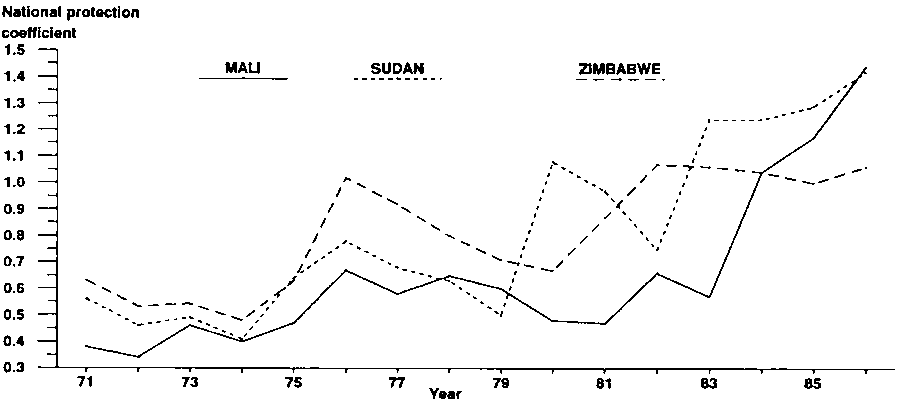
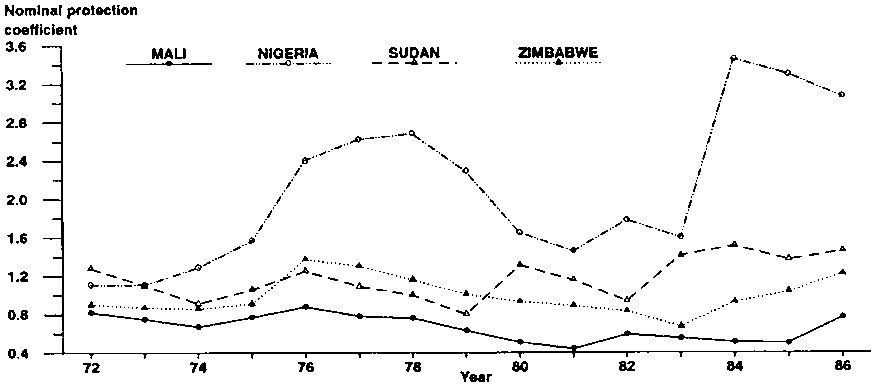
In explaining inter-country differences in the NPCs, it is useful to distinguish between importing and exporting countries. For the livestock products considered in Table 16, Côte d'Ivoire and Nigeria are net importers. In the case of milk, all the countries considered in Panel B of the table can be classified as net importers for most of the period covered. In these circumstances, we would expect the domestic price for these products to rise in relation to the border price because of the increasing need to import to meet the domestic deficit. This indeed occurred to some extent in most of the importing countries, with beef in Côte d'Ivoire being the only major exception. 19 If this fact is taken together with the decline in the real border equivalent producer price in these countries, we would expect the ratio of producer price to border price to rise over time for beef, mutton and milk in the importing countries. This expectation is largely confirmed by the results in Table 16. Figure 6 also shows the gradual rise in the NPCs for milk producers in Mali, Sudan and Zimbabwe.
19. Although the rise in the real producer price in some of the importing countries was statistically insignificant (as shown in Table 14), the sign of the coefficients suggest an upward trend. For mutton in Nigeria, the fall in the real producer price was small and statistically non-significant.
Table 16. Average nominal protection coefficients for livestock producers in the study countries, selected periods. 1
|
Panel A. Beef sad mutton |
|||
|
|
Period |
||
|
Product and country |
1970-72 |
1977-79 |
1984-86 |
|
Beef |
|||
|
Côte d'Ivoire |
0.99 |
2.24 |
0.97 |
|
Mali |
1.33 |
2.68 |
1.08 |
|
Nigeria |
1.52 |
2.59 |
2.27 |
|
Sudan |
1.18 |
4.33 |
3.01 |
|
Zimbabwe |
2.46 |
1.80 |
1.20 |
|
Mutton |
|||
|
Côte d'Ivoire |
0.97 |
1.64 |
1.50 |
|
Nigeria |
2.35 |
3.50 |
4.12 |
|
Sudan |
2.39 |
3.64 |
4.51 |
|
Panel B. Milk |
|||
|
|
Period |
||
|
Product and country |
1971-73 |
1977-79 |
1984-86 |
|
Milk |
|||
|
Mali |
0.36 |
0.61 |
1.21 |
|
Sudan |
0.51 |
0.60 |
1.32 |
|
Zimbabwe |
0.58 |
0.81 |
1.04 |
1. NPCs were estimated using official exchange rates.
Source: Estimated from data collected from the study countries by the author.
In Mali, which is a livestock exporting country, the real border equivalent producer price for beef fell markedly between 1974 and 1975 and remained at a depressed level until about 1981 (see Figure 3). The real domestic producer price also fell but not as rapidly, thus leading to a rise in the NPC over the period covered.
In Sudan, another livestock exporting country, the lucrative export market provided by the oil rich Gulf states and the frequent devaluations of the Sudanese pound from 1979 onwards indirectly led to a rise in the real producer price of meat products. At the same time that the real domestic producer price was rising, the real border equivalent price was declining. The result was a substantial rise in the NPCs of beef and mutton over the period considered.
With respect to Zimbabwe, a beef exporting country, the fall in the NPC for beef, particularly between 1984-86, was caused by a rise in the real border equivalent price coupled with a moderate fall in the real domestic producer price (see Figure 3). The rise in the border price was in large part due to Zimbabwe's realistic exchange rate policy during this period. Although the nominal producer price increased between 1984-86, domestic inflation increased much faster leading to a fall in the real producer price. The overall effect of the divergent directions of these two prices was a decline in the NPC for beef.
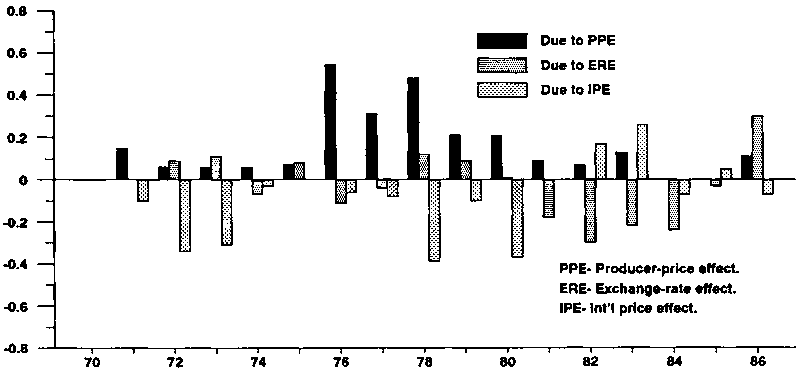
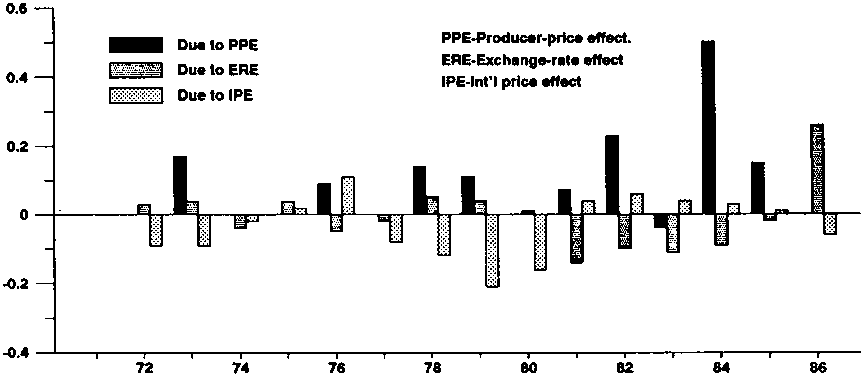
For each commodity considered above, the underlying causes of annual changes in the NPCs may be analysed by a simple decomposition. A cursory glance at the equation used to derive the NPC (see Appendix 1) will show that three variables (the nominal producer price, the exchange rate and the border price) determine the value of the NPC. Following Jaeger and Humphreys (1988), the NPC is decomposed using a difference equation which for small changes approximates the total derivative of the NPC's three components or sources of change (see Appendix 3). Examining these changes in conjunction with trends in real price changes can help explain the underlying pattern of changing production incentives. The NPCs for mutton and milk in Côte d'Ivoire and Mali, respectively, have been decomposed in the above fashion and the observed changes are explained below.
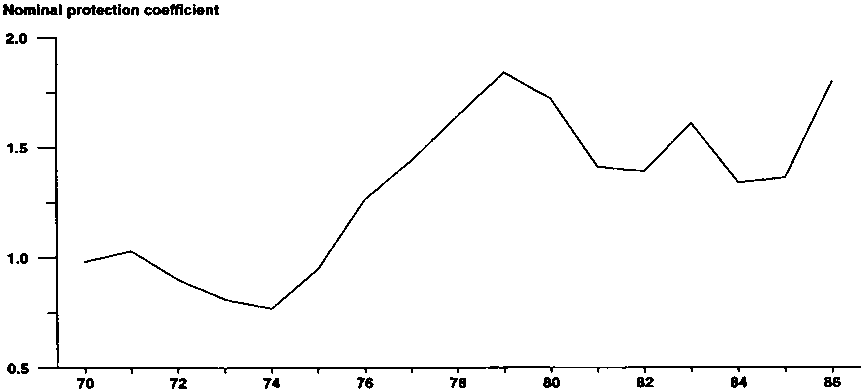
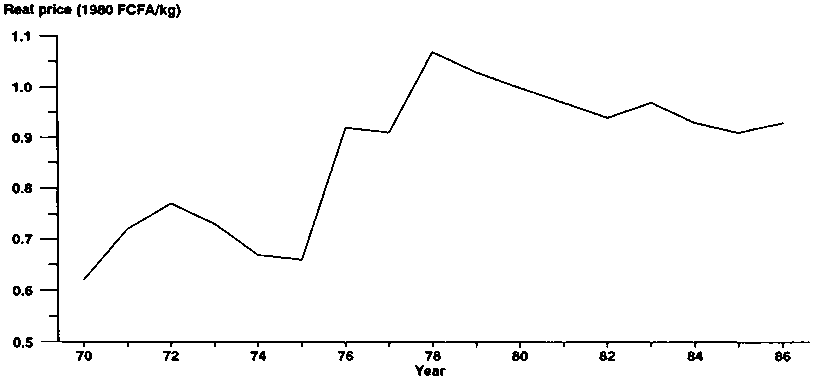
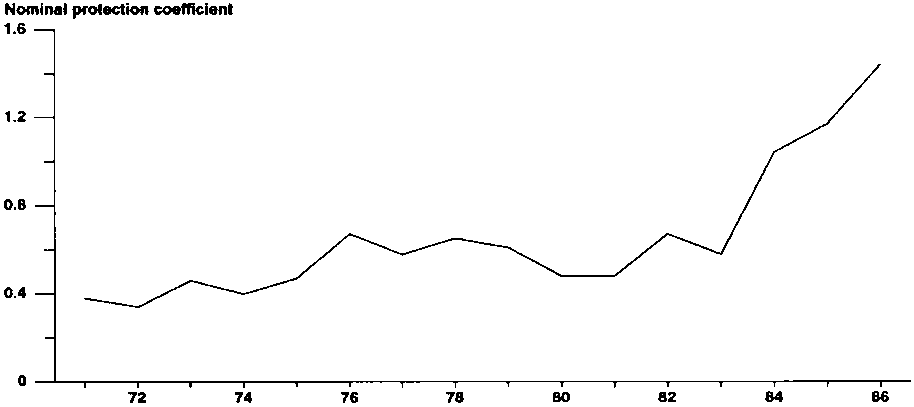
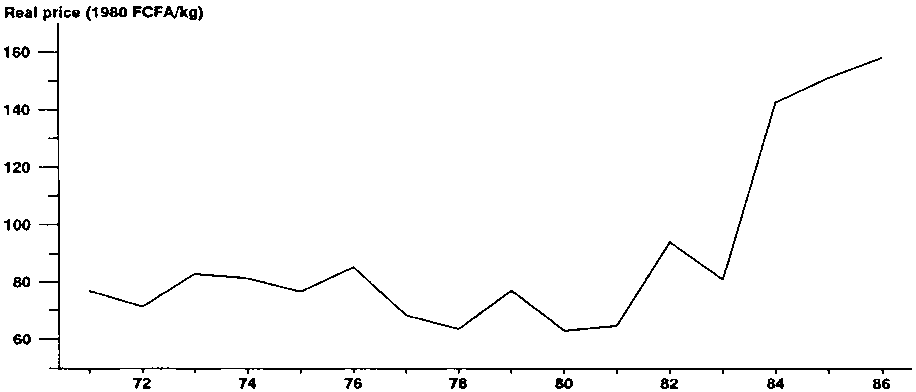
We examine first the NPC for mutton in Côte d'Ivoire which is shown in Figure 7 (Panel A). As the graph indicates, the NPC fell below one between 1971 and 1974, but rose to 1.84 in 1979 before falling to 1.38 in 1982. By 1986, it rose again to 1.79. In general, there was a move away from taxation towards subsidisation of mutton producers during this period. The decomposed annual change in the NPC is shown in Panel B (Figure 7). In this figure, each set of 3 bars represents the decomposed annual change in the NPC due to the 3 principal components. The three, taken together, should roughly approximate the actual change in the NPC from the previous year (Panel A). The decomposition indicates that in all years, with the exception of 1984 and 1985, changes in nominal producer prices have helped raise the NPC, with larger magnitudes in 1976 and 1978 (see also Panel C). Rising international prices lowered the NPC between 1971-73 and 1979 80. Lowering of the NPC between 1980-82 and 1983-84 was primarily a result of nominal devaluations which have the effect of making international prices appear higher in domestic currency terms. At the same time that border prices were going up, rising inflation caused the real producer price to drop (Panel C of Figure 7), thus contributing to the fall in the NPC in those years.
In the case of milk in Mali, the decomposition of the NPC shows that nominal producer prices remained unchanged between 1971-72 and 1973-75 with the result that changes in the NPC in those years were entirely due to changes in exchange rate and international price (Figure 8, Panel B). The changes in the latter two variables were quite small and consequently the changes in the NPC were minimal. Between 1983 and 1984, a large nominal producer price increase helped raise the NPC above the NPC values of the early 1970s. As Panel C indicates, there was also an upward trend in the real producer price around this period.
Overall, what these decompositions have clearly shown is that the scope for governments in the study countries to raise incentives for livestock producers depends on a number of factors including policies affecting the formation of nominal producer prices, macro-economic policies influencing the rate of inflation and the exchange rate and international livestock products prices. While governments can act directly to influence the first three factors, only indirect action may be possible in the case of international prices. For the two Francophone countries included in the study, the room for manoeuvre on exchange rate management is even limited given the fact that their currencies are tied to the French franc.
One prime objective of governments in the study countries is to keep the consumer price of livestock products down in order to restrain rises in the cost of living. The data in Table 17 indicate that, with the exception of milk, governments have not been entirely successful in this respect. Although there was a statistically significant fall in the retail price of beef in Zimbabwe, for meat products in general there was a rise in retail prices. The rise in Sudan was particularly high. Given the fact that in some countries official rather than market prices were used, and because meat shortages at times led to the development of parallel markets with meat being sold at prices higher than the official ones, the rise in meat prices could have been higher than the figures in Table 17 suggest. Table 18 also shows that retail prices have not been particularly stable over the period covered. Judging by the coefficient of variation, the fluctuations in retail prices almost parallel those of producer prices. In order to establish the extent of subsidisation (or taxation) of consumers, NPCs were also estimated for consumers and the results are presented in Table 19. In the case of consumers, an NPC of less than one implies implicit subsidisation while a coefficient greater than one means implicit taxation. For meat products, the results in Table 19 show that in the period between the early and late 1970s, there was a gradual shift away from subsidisation to taxation of consumers. Implicit taxation of consumers continued till the mid-1980s in most countries, the only exception being with regard to beef in Côte d'Ivoire and Zimbabwe. This result is in agreement with the trends in meat retail prices reported in Table 17. Throughout the period covered, milk consumers were subsidised in Mali, but were implicitly taxed in the remaining countries (see Figure 9). These results thus show that in the majority of cases, the objective of keeping retail prices down for the benefit of consumers has not been fully realised. The only caveat is that the NPCs shown here may overstate the actual level of consumer taxation since the official exchange rate was used to estimate them.
Table 17. Annual percentage growth of real consumer prices in the study countries, 1970-86.
|
|
Percentage growth rate |
|
Product and country |
1970/72-1984/86 |
|
Beef | |
|
Côte d'Ivoire |
1.9 |
|
Mali |
1.4 ns |
|
Nigeria |
0.8 ns |
|
Sudan |
7.2 |
|
Zimbabwe |
-3.9 |
|
Mutton | |
|
Côte d'Ivoire |
-0.3 ns |
|
Mali |
2.5 |
|
Nigeria |
0.5 ns |
|
Sudan |
7.7 |
|
Milk 1 | |
|
Mali |
-7.5 |
|
Nigeria |
-4.4 |
|
Sudan |
-4.9 |
|
Zimbabwe |
-2.9 |
ns = not statistically significant at the 0.1 level.
The annual growth rates have been estimated as log- linear trends by ordinary least squares regression.
1. For milk, growth rates were estimated for the period 1972-74 to 1984-86. The milk considered here is reconstituted milk in the case of Mali; condensed and evaporated milk in the case of Nigeria, and fresh milk in the case of Sudan and Zimbabwe.
Source: Estimated from data collected from the study countries by the author.
Table 18. Variability in real consumer prices in the study countries, 1970-86.
|
Product and country |
Coefficient of variation |
|
Beef | |
|
Côte d'Ivoire |
9.8 |
|
Mali |
16.9 |
|
Nigeria |
20.8 |
|
Sudan |
35.9 |
|
Zimbabwe |
23.1 |
|
Mutton | |
|
Côte d'Ivoire |
12.9 |
|
Mali |
18.3 |
|
Nigeria |
12.7 |
|
Sudan |
36.4 |
|
Milk 1 | |
|
Mali |
36.5 |
|
Nigeria |
35.9 |
|
Sudan |
28.9 |
|
Zimbabwe |
11.8 |
1. The period considered for milk was 1972-86. The different types of milk considered in this table are similar to those in Table 17 (see note under Table 17).
Source: Estimated from data collected from the study countries by the author.
Table 19. Average nominal protection coefficients (NPCs) for consumers in the study countries, selected periods. 1
|
Panel A. Beef and Mutton | |||
|
|
Period | ||
|
Product and country |
1970-72 |
1977 - 79 |
1984-86 |
|
Beef | |||
|
Côte d'Ivoire |
0.56 |
1.06 |
0.74 |
|
Mali |
0.79 |
1.84 |
1.12 |
|
Nigeria |
0.82 |
1.28 |
1.26 |
|
Sudan |
0.51 |
1.06 |
1.40 |
|
Zimbabwe |
0.98 |
1.18 |
0.59 |
|
Mutton | |||
|
Côte d'Ivoire |
0.98 |
0.87 |
1.11 |
|
Mali |
0.54 |
0.87 |
0.79 |
|
Nigeria |
0.83 |
0.95 |
1.15 |
|
Sudan |
0.80 |
0.95 |
2.02 |
|
Panel B. Milk | |||
|
Product and country |
1972-73 |
1977-79 |
1984-86 |
|
Milk | |||
|
Mali |
0.78 |
0.72 |
0.59 |
|
Nigeria |
1.11 |
2.53 |
3.27 |
|
Sudan |
1.16 |
0.97 |
1.45 |
|
Zimbabwe |
0.88 |
1.16 |
1.06 |
1. NPCs were estimated using the official exchange rates.
Source: Estimated from data collected from the study countries by the author.
Figure 3. Comparison of real domestic and border equivalent producer prices for beef in the study countries, 1970-86
Real price (1980 FCFA/kg) Figure 1
Real price (1980 FCFA/kg) Figure 2
Real price (1980 Naira/kg)
Real price (1980 SD. Pound/kg)
Real price (1980 Z. Cents/kg)
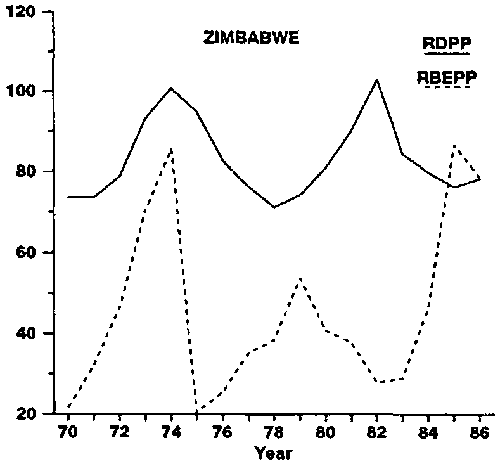
Figure 4. Comparison of real domestic and border equivalent producer prices for mutton in the study countries. 1970-86.
Real price (1980 FCFA/kg)
Real price (1980 Naira/kg)
Real price (1980 SD. Pound/kg)
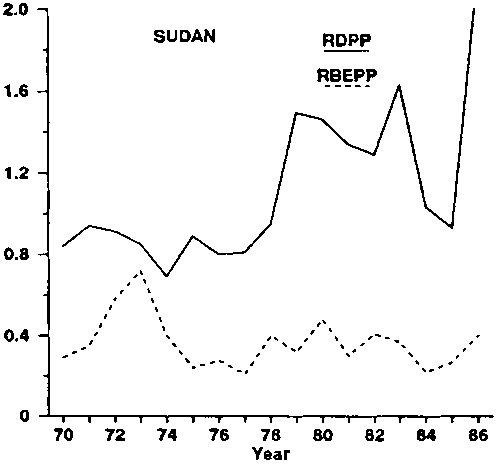
Figure 5. Comparison of real domestic and border equivalent producer prices for milk in the study countries, 1970 86
Real price (1980 FCFA/kg)
Real price (1980 SD. Pound/kg)
Real price (1980 Z. Cents/kg)
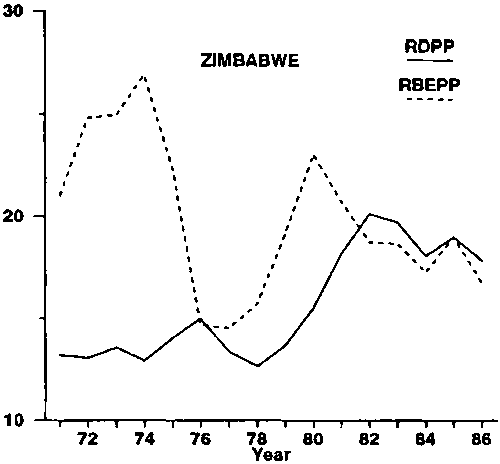
Figure 7. Annual changes in price incentives to mutton producers in Côte d'Ivoire, 1970-86
Panel B. Decomposition of annual changes in NPC, 1970-86.
Panel C. Real producer price, 1970-86.
Figure 8. Annual changes in price incentives to milk producers in Mali, 1971-86.
Panel B. Decomposition of annual changes in NPC, 1971-86.
Panel C. Real producer price, 1971-86.