D.M. Thairu and S. Tessema
National Dryland Farming Research Station, Katumani,
P.O. Box 340, Machakos, Kenya
Abstract
Introduction
Natural pasture grazing
Vegetation
Plant factors affecting nutritive value of natural herbage
Planted pastures
Crop residues
Summary
References
The research studies carried out on animal-feed resources at the Katumani Research Station have shown that the problem of continuity of feed supply should be addressed by designing an integrated feeding system that includes the improvement of natural pastures, the production of pasture grasses and fodder crops and the increased use of crop residues in combination with legume fodders such as Leucaena, if adequate nutrition for livestock is to be ensured.
The semi-arid regions of Kenya account for about 60% (342,000 km²) of the country's surface area. Although extensive, they are not homogenous. The areas cover a wide range of physical features, including flat lands and gently rolling or steep and rugged hills and valleys. Elevations range from 700 m to 1800 m. Slopes can be as much as 30%, making large areas prone to erosion. The majority of soil types are relatively shallow, and range from well drained reddish soils to loamy and stony sands with a limited capacity for storing water.
The rainfall is noted for being low in most years and for its erratic occurrence. The annual rainfall pattern is monomodal in certain areas (west of the Rift Valley) and bimodal in other areas (east of the Rift Valley). For 5-7 months of the year the climate over most of these areas is mild or hot resulting in high evapotranspiration. Areas with less than 500 mm of rainfall are considered to be too dry for rain-fed cultivated pasture with the current available technology.
Research work in pasture and animal production at the National Dryland Farming Research Station, Katumani, is aimed at finding ways of increasing feed resources in smallholder agricultural systems of dryland areas and developing technologies and management systems that will improve animal productivity and profitability.
Under the present livestock-raising system practiced by small-scale farmer, almost all the feed supply for livestock in the semi-arid areas comes from herbage on non-arable natural grazing lands or fallowed crop lands. A fixed rate of stocking is generally practiced by farmers as they do not have the option of decreasing stock numbers during the dry season or increasing them during the growing season. This situation almost always results in high grazing pressures leading to soil erosion and land degradation. Many areas become bare and others have been ingressed by scrub bush and unpalatable species which diminish the effective grazing area.
The experimental work carried out on these pastures included assessments of:
(a) Their productivity and nutritive value;
(b) The appropriate grazing pressure to be employed; and
(c) The contribution that these pastures can make to the year-round feeding system.
The vegetation of semi-arid areas is generally described as savannah, being almost treeless in some areas and with a scattering of trees in other areas (Rattray 1960). Although rainfall, temperature, soil conditions and topography are the main factors that determined the original distribution of vegetation in semi-arid areas, the tree/grass complex that is observed today is largely a direct expression of different degrees of man's disturbance to which the vegetation has been subjected in the recent past; i.e. fire, grazing, tillage, fuelwood extraction, and other activities. Large areas are covered by dense deciduous thicket and bush surrounded by areas that have degenerated under overgrazing. Natural swards found under thick thorny bushes where livestock have not been able to get at them contain an abundance of good grazing species.
Table 1 shows the distribution of grasses in combination with herbaceous plants, shurbs and trees as well as information on the percentage of plant species collected from bush and where grazing pressure has been controlled. The collected herbage was separated into major species of grasses and broad/leafed weeds. Trees and shrubs were only identified in the field and the most prominent species were Acacia spp. Combretum spp. Commiphora africana and Indigophera sp. It can be seen from the table that a wealth of very good grass and browse species grow in these environments when given the opportunity. Some of the grasses are of very high quality during the growing season and would be comparable to good-quality fodder crops. Even during the dry season when the grasses are extremely scarce, livestock browse to a considerable extent on the shrubs and herbs which are still succulent and high in nutritive value.
Dry-matter Production of Natural Pastures
Estimates of forage biomass were obtained from 3 m² enclosure cages which were moved to new sites every 20 days throughout the year. All plant material within the cage was harvested and weighed in the field. In order to overcome bias four cages were used at a time and they were placed at random on each cutting date. Samples of the vegetation harvested were oven dried at 65°C for 48 hours and the percentage composition and biomass data are given on an oven-dried basis that allows comparisons to be made irrespective of the moisture content of various species.
The biomass and percentage dry matter and rainfall during each cutting period are given in Table 2. The table shows that the natural pastures grow very fast with the onset of the rains and by the end of the rains the grasses have flowered and set seed. In eight weeks, most grasses will have completed their reproductive cycle and dormant and have set seed until the next season. The dry-matter accumulation at each cutting, shown in Table 2, shows marked seasonal variation which is closely related to precipitation. The total annual dry-matter yield of 2,335 kg per hectare, extrapolated from the clipping measurements, represents reasonably high dry-matter production. It must be pointed out, however, that this production level was from well managed grassland on an experimental station which is an indication only of what can potentially be achieved in a semi-arid environment. Dry-matter yields of open grasslands under farm or communal-grazing conditions are 2550% lower than the yields obtained from clipping studies.
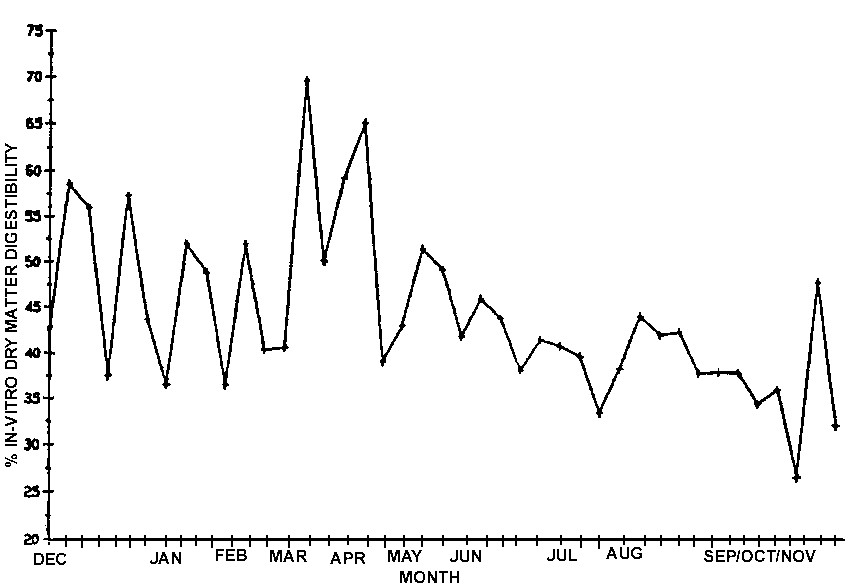
This fast growth and development of the pasture grasses is normally accompanied by rapid deposition of fibrous components making them less digestible by ruminants. Table 3 gives the chemical composition and in vitro dry-matter digestibilities of the natural grassland vegetation on various cutting dates. The values are averages for three years, including two good ones and one bad. The detergent system of partitioning forage dry-matter into cell wall and cell contents (Van Soest 1978), as well as the proximate-analysis method were employed. The in vitro dry matter disappearance system employed was the modified Tilley and Terry (1963) method using the cellulose enzyme in the second stage of the analysis.
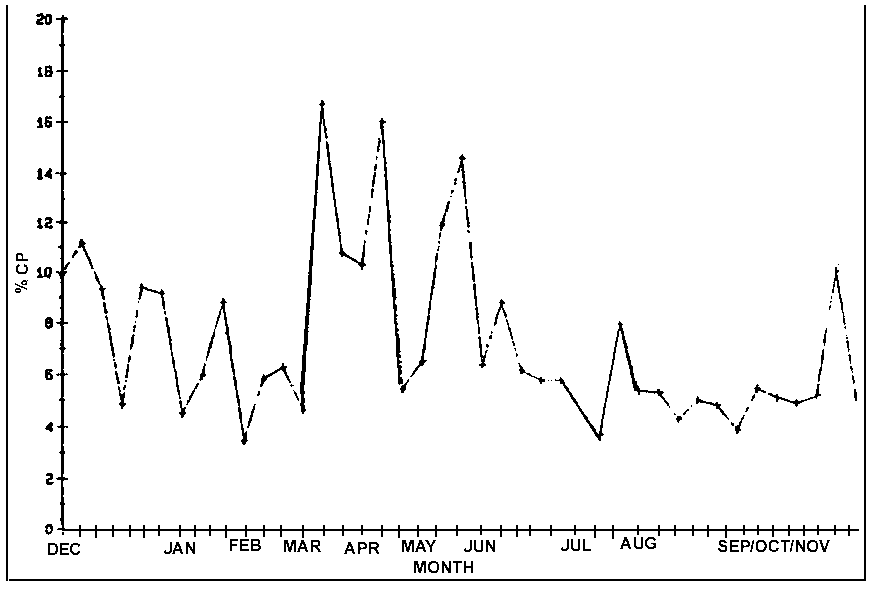
It can be seen from the table that the time when the natural vegetation has a high nutritional value is limited to short period of rapid growth which last no more than two months. A rapid increase in crude-protein (of 7.47-10.11%) is observed in response to the first rains during November and December. From then onwards the drop is rapid (6.99% in January and 5.46% in February). The crude-protein content responded similarly to the second rains, with rising values in March (10.53%, April 10.9% and May 10.1%). The crude-protein content goes down to 4.40 to 5.12% during the dry months of August and October.
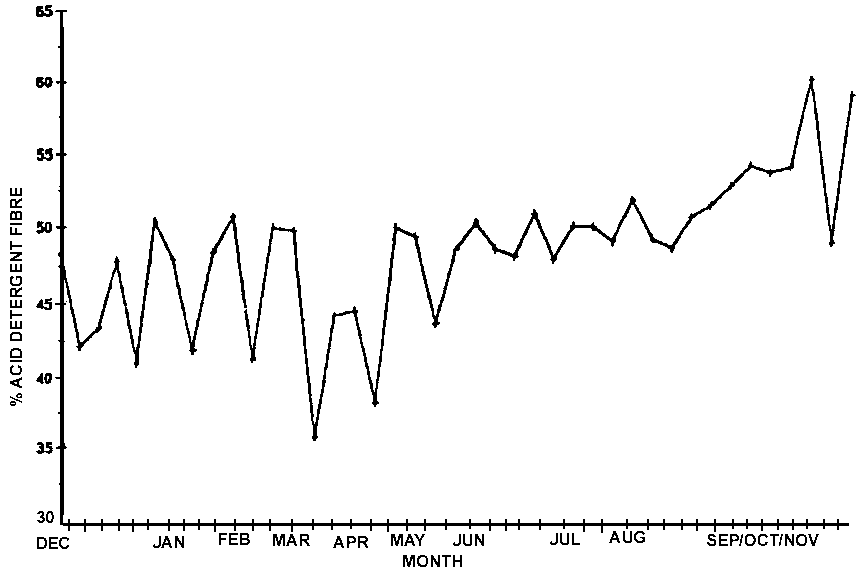
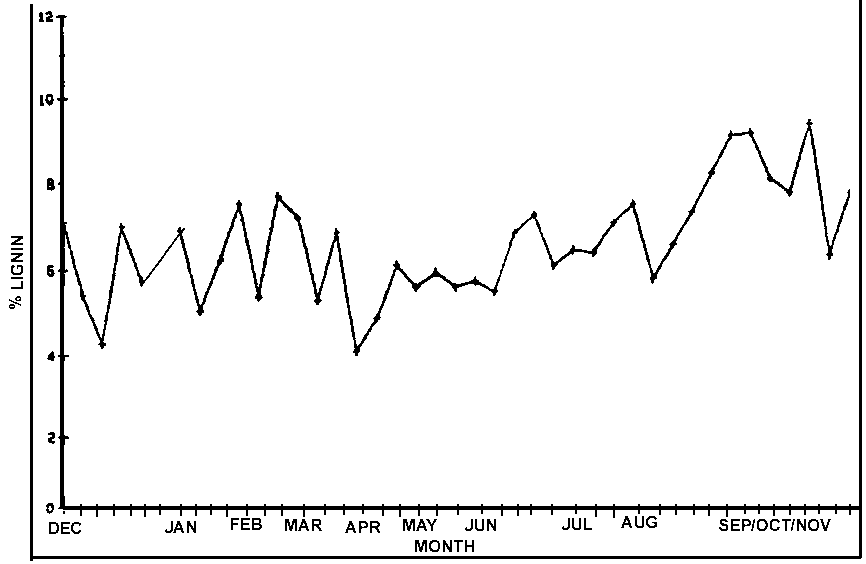
Figures, 1, 2, 3 and 4 show the relationships between date of cutting and the composition of various plant parts in the natural pasture herbage. The corresponding analysis of variances are shown in Table 4.
Table 1. Species composition of natural herbage and percentage occurrence of each species at different cutting dates
|
Species
|
CUTTING DATES |
|||||||||||
|
21/11/84 |
5/12/84 |
7/1/85 |
5/2/85 |
5/3/85 |
4/4/85 |
6/5/85 |
20/5/85 |
5/7/85 |
5/8/85 |
5/9/85 |
||
|
GRASSES |
||||||||||||
|
|
1. Themeda triandra |
49.69 |
50.75 |
15.5 |
- |
16.49 |
13.41 |
31.59 |
14.48 |
22.23 |
32.01 |
34.09 |
|
|
2. Sporobolus fimbriatus |
6.32 |
- |
- |
- |
6.72 |
8.14 |
0,37 |
- |
- |
- |
- |
|
|
3. Cenchrus ciliaris |
15.72 |
6.41 |
- |
5.47 |
4.38 |
- |
0.64 |
2.08 |
1.82 |
2.22 |
2.66 |
|
|
4. Digitaria milanjiana |
9.21 |
20.97 |
3.3 |
40.41 |
0.92 |
- |
3.89 |
- |
- |
- |
- |
|
|
5. Digitaria abyssinica |
0.33 |
1.92 |
- |
- |
1.80 |
16.03 |
2.25 |
0.70 |
8.45 |
- |
3.45 |
|
|
6. Eragrostis superba |
- |
0.86 |
0.8 |
- |
- |
4.21 |
1.18 |
- |
- |
- |
1.73 |
|
|
7. Eragrostis cilianensis |
- |
- |
- |
- |
- |
- |
1.08 |
5.11 |
- |
- |
- |
|
|
8. Eustachyus paspaloides |
0.94 |
1.02 |
- |
- |
- |
- |
- |
- |
- |
- |
- |
|
|
9. Aristida adcensionia |
0.56 |
1.25 |
3.2 |
- |
1.23 |
- |
- |
- |
- |
- |
- |
|
|
10. Aristida kenyensis |
- |
- |
- |
3.86 |
22.69 |
44.78 |
36.84 |
32.17 |
43.51 |
61.79 |
58.05 |
|
|
11. Panicum maximum |
- |
- |
8.9 |
9.60 |
- |
- |
4.17 |
- |
- |
- |
- |
|
|
12. Cynodon spp. |
- |
1.22 |
- |
14.24 |
- |
- |
- |
0.61 |
- |
- |
- |
|
|
13. Bothriachloa insculpta |
- |
0.71 |
- |
5.63 |
- |
- |
- |
- |
- |
- |
- |
|
|
14. Heteropogon contortus |
- |
- |
3.1 |
19.99 |
- |
9.61 |
6.51 |
9.58 |
6.48 |
1.64 |
- |
|
BROAD-LEAFED WEEDS |
||||||||||||
|
|
1. Solanum incanum |
- |
- |
1.3 |
- |
3.53 |
3.09 |
- |
8.92 |
- |
- |
- |
|
|
2. Polygala sphenoptera |
- |
- |
2.2 |
- |
15.13 |
- |
0.80 |
1.04 |
2.91 |
- |
- |
|
|
3. Umbelliferae |
3.18 |
3.12 |
- |
- |
- |
- |
- |
- |
- |
- |
- |
|
|
4. Papilionaceae |
- |
10.08 |
2.2 |
- |
4.03 |
- |
- |
6.40 |
- |
- |
- |
|
|
5. Commelina sp. |
0.35 |
- |
16.1 |
5.76 |
- |
5.69 |
0.93 |
0.67 |
1.81 |
- |
- |
|
INDETERMINABLE SPECIMEN |
13.68 |
3.38 |
30.5 |
- |
23.0 |
- |
6.51 |
18.0 |
13.0 |
2.0 |
- |
|
Table 2. Monthly rainfall, dry-matter production (kg/ha) and percentage dry matter of the herbage from natural grazing lands
|
Months |
Rainfall (mm) |
Dry-matter production (kg/ha) |
DM % |
|
November |
154 |
292 |
40 |
|
December |
80 |
318 |
40 |
|
January |
56 |
191 |
35 |
|
February |
43 |
134 |
63 |
|
March |
73 |
191 |
58 |
|
April |
115 |
109 |
45 |
|
Nay |
64 |
298 |
48 |
|
June |
11 |
287 |
59 |
|
July |
4 |
156 |
59 |
|
August |
4 |
188 |
70 |
|
September |
7 |
171 |
73 |
|
TOTAL |
611 |
2,335 |
|
Table 3. Chemical composition and in vitro dry-matter digestibility of natural pasture herbage at various cutting dates
|
Date of cutting |
CHEMICAL COMPOSITION |
In vitro matter |
||||||
|
% ASH |
% CP |
% NDF |
% ADF |
% ADL |
% CELL |
% HEM |
% CELL |
|
|
9/12 |
9.06 |
10.11 |
71.12 |
44.53 |
5.61 |
34.64 |
26.79 |
52.44 |
|
31/12 |
8.13 |
7.77 |
73.29 |
46.34 |
6.38 |
34.56 |
26.95 |
46.16 |
|
22/1 |
7.86 |
6.39 |
74.01 |
46.01 |
6.30 |
35.86 |
28.01 |
45.80 |
|
13/2 |
7.25 |
5.46 |
75.64 |
47.26 |
6.87 |
36.16 |
28.38 |
42.97 |
|
7/3 |
9.38 |
10.58 |
68.16 |
42.67 |
6.25 |
32.31 |
24.99 |
55.22 |
|
29/3 |
10.05 |
10.48 |
66.22 |
44.13 |
6.86 |
34.02 |
22.09 |
50.18 |
|
20/4 |
9.81 |
10.90 |
70.01 |
44.15 |
5.04 |
32.95 |
25.86 |
54.57 |
|
12/5 |
8.67 |
10.90 |
71.53 |
47.08 |
5.73 |
37.59 |
24.45 |
48.00 |
|
3/6 |
7.64 |
6.99 |
73.28 |
48.88 |
6.04 |
39.06 |
24.40 |
42.96 |
|
25/6 |
7.05 |
5.59 |
73.04 |
49.30 |
6.70 |
38.81 |
23.54 |
40.00 |
|
17/7 |
7.02 |
5.68 |
75.32 |
49.60 |
6.60 |
39.61 |
25.72 |
38.19 |
|
8/8 |
8.59 |
4.82 |
72.28 |
49.76 |
6.64 |
38.16 |
22.52 |
41.70 |
|
31/8 |
9.49 |
4.40 |
78.17 |
51.54 |
8.22 |
38.52 |
26.63 |
39.66 |
|
21/9 |
7.47 |
5.12 |
78.19 |
53.84 |
8.63 |
41.27 |
24.35 |
36.48 |
|
13/10 |
7.65 |
4.88 |
73.52 |
57.04 |
8.58 |
39.83 |
16.49 |
31.73 |
|
3/11 |
9.19 |
7.47 |
74.57 |
53.85 |
7.07 |
38.93 |
22.19 |
40.30 |
The crude-protein composition showed the greatest change per unit of time. It ranged from 4.40 (August) to 10.90 (April and December). The proportion of cell wall, as determined by neutral detergent fibre (NDF) did not show significant changes with time (Table 4). It ranged from 66.22% (March) to 78.19% (August). As this fraction includes the hemicellulose, cellulose and lignin, it is the fundamental characteristic of the plant as it is the first stable product of photosynthesis and must remain so throughout the life of the plant. The acid detergent fibre (ADF) portion of the plants shows highly significant changes with dates of cutting (Table 4). The ADF fraction, as determined by the acid detergent solution, recovers cellulose as well as lignin in the plant.
Table 4. Analysis of variance data of plant characteristics and cutting dates
|
Source of variation
|
CP |
NDF |
ADF |
ADL |
CELL |
HEMCELL |
IVDMS |
||||||||||||||
|
df |
MS |
F |
df |
MS |
F |
df |
MS |
F |
df |
MS |
F |
df |
MS |
F |
df |
MS |
F |
df |
MS |
F |
|
|
Between dates |
9 |
22.25 |
2.80 (a) |
9 |
28.00 |
98 NS |
9 |
56.26 |
3.91 (b) |
9 |
3.38 |
3.48 (a) |
9 |
26.62 |
2.80 (b) |
9 |
21.23 |
87 NS |
9 |
155.54 |
2.55 (a) |
|
|
|
|
|
|
|
|
|
|
|
|
|
|
|
||||||||
|
Within dates |
30 |
7.96 |
|
31 |
28.45 |
|
31 |
14.40 |
|
30 |
|
|
30 |
9.52 |
|
31 |
24.49 |
|
31 |
60.12 |
|
|
Total |
39 |
|
|
40 |
|
|
40 |
|
|
39 |
|
|
39 |
|
|
40 |
|
|
40 |
|
|
(a) = (P<0.05)
(b) = (P<0.01)
NS = Not significant
The percentage ADF in the natural pasture ranged from 42.67 (March) to 57.04 (October). The proportion of lignin also, showed highly significant changes with dates of cutting (Figure 3). ADF and lignin were more consistently associated in the plant than were other components. Percentage lignin ranged from 5.04 (April) to 8.58 (October), while percentage cellulose ranged from 32.31 (March) to 41.27 (September), also showing significant variability with cutting dates.
These changes in herbage quality with time are functions of the maturation process as well as of environmental factors. Deinum (1976) and van Soest (1978) have shown that lignification is strongly influenced by environmental temperature. High temperatures decreased water-soluble carbohydrates and increased fibre content causing decreased digestibility. Light, on the other hand, increased water-soluble carbohydrates and decreased fibre content causing increasing digestibility. In the semi-arid bimodal rainfall areas such as Katumani, the natural pastures have two periods of morphological development during the year.
The Relationship Between Chemical Composition and Digestibility
To understand the nutritional worth of the natural pasture herbage, it is necessary to know the quantitative relationships of the various plant components. In Table 5, Correlation coefficients between these constituents are presented. The quantitative relationship between the structural components shows that the components are not uniformly controlled by lignification As expected, all the fibre fraction, i.e. NDF, ADF, lignin and cellulose (except hemicellulose) show significantly high negative relationships with digestibility. Among the fibres, however, cellulose had a more negative (r = -0.86*) relationship than lignin (r = -0.78a). Lignin was also more closely related to cellulose than hemicellulose and had a greater effect on its digestibility. The lignin-cellulose ratio is the critical factor which determines the rate curve of cell-wall fermentation.
Table 5. Simple correlation coefficients observed between various plant dry-matter components of natural pasture herbage
|
|
CP |
NDF |
ADF |
ADL |
CELL |
HEMCELL |
IVDMS |
|
CP |
1.00 |
|
|
|
|
|
|
|
NDF |
0.48 |
1.00 |
|
|
|
|
|
|
ADF |
0.68 |
0.53 |
1.00 |
|
|
|
|
|
ADL |
0.58 |
0.50 |
0.77 |
1.00 |
|
|
|
|
CELL |
0.68 |
0.65 |
0.87 |
0.58 |
1.00 |
|
|
|
HEMCELL |
0.19 |
0.51 |
0.44 |
0.21 |
0.21 |
1.00 |
|
|
IVDMS |
0.80 |
0.57 |
0.91 |
0.78 |
0.86 |
0.31 |
1.00 |
Regression equations that show the relationship between in vitro dry-matter digestibility and various plant parts are presented in Table 6. The equations show the regression of in vitro digestibilities on the percentage of various plants parts.
Table 6. Relationships between in vitro dry-matter digestibility and various plants parts
|
Plant parts (predictors) |
Regression equation |
Sdr |
Sds |
r |
r² |
|
Crude protein |
Y = 28.67+2.17X |
5.54 |
0.26 |
-0.80** |
0.64 |
|
NDF |
Y = 115.64-0.97X |
7.69 |
0.23 |
-0.54** |
0.32 |
|
ADF |
Y = 125.42-1.68X |
3.93 |
0.13 |
-0.9** |
0.82 |
|
ADL |
Y = 82.67 = 5.76X |
5.83 |
0.76 |
-0.78** |
0.61 |
Sdr = Standard deviation from regression
Sds = Standard deviation from the slope
a = P < 0.05
b = P < 0.01
NS = Not significant
Y = in vitro dry-matter disappearance (%)
X = plant parts in dry-matter (%)
The mean chemical composition values of the natural pasture herbage cut at various stages of growth show that the quantity of ADF in the herbage did not appear to be associated with digestibility.
The main factor that influenced the digestibility was ADF, as indicated by the regression equations in Table 6. The relationships are significantly negative for all fibre components (P= < 0.01).
While the ADF fraction, which consists of the lignin and cellulose components in close association, most positively affected digestibility, the most amount of protein in the forage was also a factor. It could also be used as a better predictor of digestibility of the natural pasture herbage than some of the fibre fractions (Table 6).
It has been found that the herbage consumed by the grazing animal may have a composition diverging widely from that of the total herbage available (van Soest 1978). A comparison was made between the nutritional value of hand-plucked samples and samples collected by the grazing animals from the same pasture. Table 7 shows the percentage of protein in the dry matter of the two samples.
The herbage consumed by the grazing cows contained more crude protein than the herbage clipping from the same source. When the grass was immature, during the months of April and May, there appeared to be little selection by the grazing animal. But as the plant matured, during the months of June and July, the difference in composition between the selected the clipped herbage became greater. Clipping herbage, therefore, did not provide definite quantitative values of the nutrients available to the grazing animal.
Table 7. Percent crude protein dry matter of sample collected from two oesophageal-fistulated cows compared to percentage protein in dry matter of clipping herbage from natural grazing land (1985)
|
|
Dates of sampling |
||||||
|
16/4 |
30/4 |
11/5 |
3/6 |
25/6 |
5/7 |
16/7 |
|
|
% |
% |
% |
% |
% |
% |
% |
|
|
Fistula sample |
13.50 |
12.69 |
13.13 |
11.80 |
9.38 |
11.94 |
6.56 |
|
Clipping sample |
10.90 |
10.48 |
10.90 |
6.99 |
5.59 |
5.68 |
4.82 |
Livestock Responses to Natural Pasture Grazing with no Supplementary Feeding
Table 8 shows mean liveweight responses of steers, goats and sheep at two different stocking rates. Pronounced seasonal variations were observed in liveweight changes of all three species. Over the whole grazing cycle, however, no significant differences were observed between animals grazing at the rate of 0.54 LU/ha* and those grazing at the rate of 0.35 LU/ha. Compensatory gains during the wet season offset the losses made during the dry season. Sustained liveweight gains of between 160 and 180 g per day for steers and 35-40 g per day for sheep were achieved during a year's cycle. During the wet season, however, rates of gain were as high as 90 g for sheep and goats and 250 g for steers, clearly showing the possibility of intensive short-season utilization of natural pastures.
Grazing management had very little influence on weight changes. There were no significant differences in rates of gain between continuous and rotation grazing during any seasons of the year or over the whole year.
Pasture research for medium- and low-potential areas has been going on for many years. However, it has not received adequate attention compared to pasture research in high-potential areas, and thus development of relevant technology for farmers in these areas has lagged behind.
Grasses for Planted Pastures
Bogdan (1965) described cultivated varieties of tropical and subtropical herbage plants in Kenya issued by the then Grassland Research Station, Kitale since 1953. The species that were recommended for dryland farming areas included Chloris gayana (Kunth), (Mpwapwa, Mbarara and Rongai), Panicum coloratum L. (coloured Guinea grass). Panicum maximum Jacq (Guinea grass, varieties Makueni and Mackinnon Road). Other species which had been tested included Cenchrus ciliaris, Brachiaria brizantha, Themeda triandra and Cynodon dactylon.
Table 8. Weight changes of steers, goats and sheep when grazing natural pastures at two stocking rates (1981/82)
|
|
Steers |
Goats |
Sheep | |||
|
Number of days |
323 |
323 |
323 | |||
|
Stocking ratesa |
0.54 |
0.35 |
0.54 |
0.35 |
0.54 |
0.35 |
|
Number of animals |
14 |
10 |
28 |
20 |
28 |
20 |
|
Initial average wt (kg) |
246 |
260 |
30 |
29 |
31 |
32 |
|
Final average wt (kg) |
308 |
312 |
38 |
42 |
42 |
42 |
|
Average daily gain (g) |
189 |
161 |
25 |
36 |
30 |
32 |
|
|
Summary of Analysis of Variance | |||||
|
Source |
d.f. |
MSS (F) |
d.f. |
MSS (F) |
d.f. |
MSS (F) |
|
Treatments |
1 |
4,882 (NS) |
1 |
1,509 (NS) |
1 |
9 (NS) |
|
Fields |
1 |
51 |
1 |
1,509 (NS) |
1 |
30 (NS) |
|
Treatment x fields |
1 |
7, 375 MS |
1 |
240 MS |
1 |
239 MS |
|
Error |
20 |
5,857 |
44 |
140 |
44 |
231 |
|
S E |
20.5 |
24.2 |
2.2 |
2.6 |
2.5 |
3.5 |
a) In LU per hectare.
NS = Difference not significant
* One Livestock Unit (LU) represents 250 kg liveweight.
Many ley grass species were evaluated at the Katumani Research Station between 1957 and 1984. Studies comparing various planted grass species and cultivars showed that Panicum maximum (Makueni) and Cenchrus ciliaris (Biloela) were the two species with widest adaptability in dryland areas. The Makueni variety of Panicum was found to be the most vigorous tufted perennial. P. maximum (Makinnon Road) established from splits at a spacing of 2.4 m x 0.5 m and managed for dry-season utilization yielded a total of 4.5 tons DM per hectare. In trials to evaluate planted pastures through the grazing animal several varieties of Cenchrus ciliaris (Biloela, Mbalambala, P6012, P6010, Kongwa 531 and K5148), Chloris gayana (Mpwapwa); Panicum maximum (Makueni); and Cynodon dactylon and Cynodon plectostachysis were evaluated by liveweight increases of Dorper lambs at Katumani. The best performance was from P. maximum (Makueni) with lambs averaging 230 g per day (Department of Agriculture, Kenya 1964).
Establishment of ley grasses without fertilizers has been one of the major problems in the marginal potential areas due to unreliable rainfall. Unavailability of good quality seeds has also been a bottleneck. Weed competition was the most important factor affecting establishment. A study of the persistency of the ley grasses shows that production drops markedly after two or three seasons (12 to 18 months). Attempts to incorporate certain grasses such as Rhodes grass in mixtures with more persistent species were not successful.
Table 9 shows the dry-matter yields in pasture-grass ecotype trials during the long rains of 1983 (March/May) and the short rains of 1984 (November/December). The long rains of 1983 were much below average and the short rains of 1984 were much above average.
Table 9 shows that wide variations exist in dry-matter yields between the various ecotypes and these variations are not only due to species differences but also to variation in rainfall, establishment difficulties, weeds and persistency. Those that had a high dry-matter yield during a bad year did not respond well when rainfall was favourable due to their inability to compete with weeds.
Table 9. Dry-matter yield of 12 selected pasture grass ecotypes at Katumani Research Station
|
Ecotypes |
1983 long rains (good season) |
1984 short rains |
|||
|
DM production (mean t/ha) |
Rank |
DM production (mean t/ha) |
Rank |
||
|
P. maximum |
|||||
|
|
K7317/21 |
4.06 |
1 |
2.72 |
7 |
|
|
K583/87 |
4.03 |
2 |
0.36 |
11 |
|
|
K585 |
3.61 |
3 |
0.27 |
12 |
|
|
K6016 |
3.58 |
4 |
4.67 |
3 |
|
|
K6541/45 |
3.50 |
5 |
2.83 |
5 |
|
|
K8168/72 |
3.42 |
6 |
0.86 |
9 |
|
P. coloratum K5389 |
3.33 |
7 |
2.82 |
6 |
|
|
P. maximum (Makueni) |
3.28 |
8 |
4.90 |
2 |
|
|
P. maximum K6462 |
3.17 |
9 |
5.11 |
1 |
|
|
Brachiaria brizantha |
3.10 |
10 |
1.10 |
8 |
|
|
P. coloratum 52430 |
2.89 |
11 |
0.39 |
10 |
|
|
Cenchrus ciliaris |
2.64 |
12 |
4.06 |
4 |
|
Although suitable pasture species can be identified through vigorous introduction and selection, the overall place of such grasses for ley farming in these dryland environments is becoming questionable. This is because of the difficulty of establishing and maintaining such pastures under an inadequate rainfall regime since, in the main, they have to be established from seed. The use of fertilizers for establishing these pastures is not economically feasible. Furthermore, the place of these pastures in small-farm systems is not clear in view of the type of livestock-raising system presently being practiced.
Legumes for Planted Pastures
Although pasture research in Kenya has been carried out for many years, our knowledge on forage legumes, particularly in the medium-potential areas, has lagged behind compared with that on pasture grasses. Grass-based pastures are usually very productive during the first two years, but yields drop markedly during subsequent seasons. Nitrogenous fertilizers could sustain yields and prolong the life of the pasture if applied at strategic times. Nitrogen fertilizer is, however, too expensive for farmers of the medium-potential areas.
The answer to these problems is the introduction of legume species to be grown in association with the grasses. A number of pasture legumes have been introduced and are being tested. Among these are Stylosanthes scabra, Macroptilium atropurpureum (siratro) and Leucaena leucocephala. These are still being examined both for use in grass/legume mixture lays or for improving pasture grazing schemes. Much testing for drought tolerance and herbage yield will be needed.
It has been suggested that productive legumes are absent from pastures in some parts of Kenya either because they have not been introduced or because they have not been maintained for various reasons including:
a) inadequate supply of nutrients and possibly trace elements;b) failure to tolerate heavy grazing,
c) drought stress;
d) ineffective nodulation,
e) insufficient quantity of germinable seed of annual species at the start of the growing season; and
f) availability and cost of seed.
It is therefore suggested that serious research gaps exist in the area of pasture legumes for marginal- and low-potential areas and particularly the improvement of indigenous legume species such as Neonotonia wightii and Trifolium semipilosum glabrescens. Development of legumes which could be used to provide ground cover on arable land and high quality livestock feeds during the dry season should be given high priority.
Fodder Crops
Planted fodder crops, both annual and perennials, are becoming very important animal feed resources in the medium-potential areas, mainly because of their apparent dry-matter-yield superiority. The most important species are elephant grass or Napier grass (Pennisetum purpureum), and Guinea grass (Panicum maximum). Napier grass has received more research attention than most other potential fodder crops and has become very popular with farmers in all areas. Two varieties of Napier grass, i.e. French Cameroon and Bana, and one hybrid (Pennisetum purpureum x Pennisetum typhoides), known as Bajra, have been studied the most.
The Napier cv Bana variety is leafier and shorter than the other two. The Napier cv Cameroon variety has a distinct spreading habit while the hybrid Bajra grows tall and has more stalk. Bajra Napier outyields both the Bana and French Cameroon varieties and seems also to be more drought resistant than the other two as it grows and stays green-long into the dry season. There is, however, the disadvantage that it becomes quite stemmy and looses its quality very rapidly after flowering.
In cutting management and defoliation studies, the dry-matter yields attained from the three varieties, over a number of seasons that included those below and above average rainfalls, were as follows: Bana 3.25 tons per hectare, Bajra 4.43 tons per hectare and French Cameroon 3.75 tons per hectare per season. When rainfall was average, two 4-weekly cuts and one 6-weekly cut were possible from the three fodder grasses during each of the two growing seasons, i.e. from the three fodder grasses during each of the whole growing seasons, i.e. November/January and March/May. The amount produced from any of these grasses would be more than enough for the average smallholder. However, the farmer obviously needs a continuous supply of fodder and would not be able to utilize excess supplies over a short period of time, which would necessitate either the development of a conservation system (hay or silage) or the integration of fodder feeding within an intermitent system of utilization i.e. using fodder in the wet season and conserving other grasses for later grazing, or growing two plots, one for the wet season and one for the dry season with some fodder from the latter spinning off into-the wet-season system.
Screening studies of a number of Panicum maximum fodder ecotypes have also been carried out at the Katumani Research Station. Nine promising ecotypes have been pre-selected and screening tests are still continuing. Table 10 gives the dry-matter yield as compared to that for Bajra Napier.
The reason underlying the decrease of yield in the long rains 1983 is the low rainfall received. The best ecotypes in both seasons responded better to more moisture availability. It is also seen from the table that some of the ecotypes compared very favourably with Bajra Napier in both good and bad years. An added advantage of those that compare well with Bajra was that they had a higher leaf-to-stem ratio and stayed even longer into the dry season. Those ecotypes of Panicums are therefore rapidly increasing in importance as fodder crops for small farmer systems.
Table 10. Dry-matter yields of Panicum maximum ecotypes as compared to the yield of Bajra Napier (t/ha)
|
Ecotypes |
1982/83 short rains |
1983 long rainsa |
|
DM production (t/ha) |
DM production (t/ha) |
|
|
P. maximum K52-129 |
4.62 |
1.79 |
|
P. maximum K8168/72 |
4.05 |
1.59 |
|
P. maximum K5383 |
3.29 |
1.51 |
|
P. maximum K74.2367 |
3.23 |
1.51 |
|
P. maximum K5918 |
3.13 |
1.61 |
|
P. maximum K1231 |
3.09 |
1.11 |
|
P. maximum K5083 |
1.91 |
1.07 |
|
P. maximum K5239/43 |
1.87 |
1.04 |
|
P. maximum K1234 |
1.59 |
0.71 |
|
Bajra Napier |
5.43 |
2.57 |
SE Treatment mean = 0.279
CD at 5% = 0.81
CD at 1% = 1.09
a) The 1983 long rains were almost a complete failure.
Intensive animal production utilizing these fodder crops in an integrated feeding system is a possibility, although it can be a delicate undertaking in semi-arid situations because the farmer gives priority to growing food crops. Forage crops can only become part of the cropping system after improvements in food crop husbandry have resulted in two- or three-fold yields. Secondly, the impact of cultivated fodder crops on profitability depends upon the net income margin between the animal product and food-crop production.
Studies have been carried out at the Katumani Station to measure the amount of milk produced when fodder was fed as the sole source of feed made available to lactating dairy cows. Table 11 shows the milk production and dry-matter intakes of cross-bred lactating cows fed on Bana grass ad libitum as compared to milk production from similar cows supplemented with Bana grass plus dairy meal.
Table 11. Milk production from cross-bred dairy cows supplemented with Bana Napier grass fed ad libitum compared with cows supplemented with Bana Napier grass fed ad libitum plus dairy meal (16% protein commercial feed)
|
|
Treatments |
|||
|
Bana grass alone |
Bana grass + dairy meal |
SE |
||
|
Number of cows |
18 |
18 |
|
|
|
Number of days |
143 |
143 |
|
|
|
Average number of days after calving |
163 |
177 |
|
|
|
Average daily milk per day (kg) |
6.56 |
9.75 |
1.32 (P<0.05) |
|
|
Total milk yield/animal for period |
938 |
1,395 |
|
|
|
Average DM intake per animal per day (kg) as fed |
||||
|
|
Bana |
48.0 |
47.0 |
|
|
|
Dairy meal |
0 |
1.85 |
|
Significant differences were observed between the treatments, as expected, in view of the wide differences in the feeding systems. However, the main goals were to see the magnitude of the difference and to determine the level of milk production that could be supported by the Bana grass alone. The table shows that Bana grass fed ad libitum level can support up to 6.56 litres of milk per day without recourse to concentrate feeding. The group on Bana grass plus dairy meal gave 30% more milk per day than those fed Bana grass alone. To increase the milk output from an average of 6.5 kg to an average of 9.75 kg per day, an additional intake of 1.85 kg of dairy meal was required. The expected increase from 1.85 kg concentrated feed was 4.6 kg of milk. The responses in this study showed that this method is not an economically attractive proposition. Such studies reinforce the role of fodder crops in small-scale dairy systems.
Cropping is now being practiced on substantial portions of the semiarid dryland areas and it is anticipated that more areas of the region will be put under crops in coming decades. In Kenya, most of the dryland areas are found in the Coast, Eastern and Rift Valley Provinces. Here the principal food crops with residues that are suitable for animal feeding are maize, sorghum, millet, beans, cow peas, pigeon peas, cassava and sweet potatoes. Maize is the most abundant, followed by sorghum, beans and pigeon peas.
At present, crop residues have a variety of uses including animal feeding, fuel, mulch, bedding and for returning organic matter to the soil. However, the utilization of crop residues for animal feeding is likely to be greatly increased in the future since:
1) crop production is increasing, following increases in acreages as well as yield, and2) acreages of grazing lands and lands under fallow are being reduced making it necessary for animals to depend more and more on crop residues for part of their nutrition.
Table 12 shows total land areas under the three main cereal crops and yields and crop residues produced in the three provinces. The total quantity of residue available is then estimated by assuming a 1:1 grain to stover ratio. It can be seen from the table that a substantial amount of residue is produced seasonally from just these three crops. If we assume that one ton of maize stover produces 7,560 MJ of gross energy (Morgan Rees et al, 1977), the contribution that these feedstuffs can make to the feed budget is substantial.
Table 12. Land area (ha) under maize, sorghum and millet and amounts (tons) of the crops and crop residue produced in Coast, Eastern and Rift Valley Provinces (1982)
|
Province |
Crops grown |
Area (ha) |
Crop yields (kg/ha) |
Residue (tons) |
|
Coast
|
Maize |
51,570 |
831 |
42,855 |
|
Sorghum |
520 |
615 |
320 |
|
|
Millet |
160 |
375 |
60 |
|
|
Eastern
|
Maize |
357,510 |
1,274 |
455,467 |
|
Sorghum |
34,300 |
528 |
18,110 |
|
|
Millet |
33,380 |
401 |
13,385 |
|
|
Rift Valley
|
Maize |
153,220 |
1,191 |
182,485 |
|
Sorghum |
380 |
1,042 |
396 |
|
|
Millet |
2,750 |
495 |
1,361 |
|
|
TOTAL |
|
|
|
714,439 |
Source: Ministry of Livestock Development 1983 Annual Report
At present, crop residues are the second most important feed resource available to livestock in the dryland areas of Kenya. While they are generally used after each harvest season, these residues may be the only source of feed for a large number of livestock for a period of one or two months at the end of the long dry season when natural grazing is drastically reduced. Some farmers collect and store these residues especially maize and sorghum stovers, while the bulk is left for the animals to graze in situ after the-harvest, thus losing a considerable amount from trampling wastage. Because of the difficulties of collection, transportation and storage, only a small part of the thousands of tons of crop residues available are used as feed, and when they are used, the efficiency of utilization is very low. These crop residues vary widely in nutritive value. The variations are due to differences in proportions of plant components such as the ratio of leaf-to-stem, genotypic differences and to environmental conditions of growth. Being deficient in several nutrients (protein, energy and minerals) and containing a number of factors that limit optimum utilization, these feed sources are of little value when fed as they are. The development by plant breeders of stiff-stalked and insect- and disease-resistant varieties of maize and sorghum may also result in varieties with high lignin content and low digestibility.
Improvement of the nutritive value of these feedstuffs can be achieved through:
a) treatment methods that increase the availability of nutrients, and
b) supplementation methods that correct nutrient imbalances.
It has been established by numerous research workers (Jackson 1978; Kategile et al 1981; Mwakatundu and Owen 1974) that processing of poor quality roughages by physical and chemical means can considerably increase the availability of nutrients in field-crop residues. In his review, Jackson (1978) reported that 10-20% increments in digestibility and more than 100% increments in voluntary intake can he achieved by processing. Physical treatments such as chopping do not increase digestibility but have the advantage of reducing wastage by reducing selection by the animal. They also increase the amount consumed. Treatment with alkali saponifies the linkages between lignin and fibrous fractions (cellulose ad hemicellulose). The lignin content is not reduced but digestibility is increased substantially.
Sodium hydroxide is the most fully investigated and widespread chemical applied to poor quality roughages. Its application, especially for small-scale operation, is usually discounted because it is expensive and difficult to handle. Of the alkalis tested, ammonia generated from urea is preferred because it provides both the alkali effect and a source of nitrogen for microbial fermentation. Supplementation aimed at alleviating nutrient deficiencies is another method of improving the utilization of low quality roughages. It is recognized that conventional energy and protein feeds such as grains and oil-seed cakes are not only unavailable but are also too expensive for the small-scale farmer. It is therefore necessary to consider cheaper, preferably home-grown supplements, e.g. fodder shrubs such as Leucaena leucocephala, pigeon pea stover, Sesbania, cassava leaves, sweet-potato leaves and vines.
Thinnings and stripping from crop fields are of little significance as supplements to poor quality roughages, for two reasons. Firstly, they are always available during the green season when plenty of green forage is available and little or no crop residue is being fed. Secondly, the crop fields (maize and sorghum) are thinned during the first weeding and at this time the thinnings amount to too little quantitatively. The farmer cannot afford to delay thinning in order to get bigger plants as this would lead to severe plant competition.
A number of palatable browse trees and shrubs exist in the region, e.g. Acacia spp., but they can only be grazed in situ. Small ruminants, especially goats, make better use of these feed sources than cattle. The growing of forage legumes such as Leucaena leucocephala, or the proper use of leguminous crop residues such as pigeon-pea leaves and stems and cassava leaves, seems to be a practical alternative to the problem of supplementing poor quality roughages.
A series of experiments have been conducted at the Katumani Research Station to:
a) determine the effect of alkali treatment of stovers;b) determine the effects of supplementing stovers with protein sources; and
c) to evaluate the effect on weight changes in livestock fed with crop residues whose quality has been improved through various treatments and supplements.
Animal Responses to Treated and Supplemented Crop Residues
Table 13 shows the responses of sheep and goats to supplementation of treated and untreated stover with either Leucaena or pigeon-pea leaves and stems added to the diet. The trials were conducted during the dry season and the animals were grazed all day and supplemented with the diet in the evening.
It can be seen from Table 13 that the feeding of urea-treated stover improved weight gains in sheep and goats. In an earlier experiment, the feeding of untreated stover during the dry season only resulted in a daily gain of 19 g, while animals on grazing alone mostly lost weight during the dry season. It was not possible during this experiment to make an economic assessment of the value of the incremental weight gains from the feeding of treated stover when either Leucaena or pigeon-pea stovers were added to the diet as the animals were not immediately sold on the open market. But considering the fact that most animals lose weight during the dry season even the weight gains made with the Leucaena and pigeon-pea supplements were quite considerable.
Table 13. Responses of sheep and goats when supplemented with urea-treated and untreated maize stover and with either Leucaena leucocephala or pigeon-pea leaves and stems added to the diet
|
|
Untreated stover + Leucaenaa |
Treatedb stover + Leucaena |
Untreated stover + Pigeon peac |
Treated stover + Pigeon pea |
|
Number of animals (half sheep, half goats) |
28 |
28 |
16 |
16 |
|
Number of days (trial) |
90 |
90 |
110 |
110 |
|
Initial average weight (kg) |
25.0 |
26.0 |
18.0 |
19.0 |
|
Final average weight (kg) |
31.0 |
34.0 |
24.0 |
29.0 |
|
Average daily gain (g) |
67 |
90 |
55 |
91.0 |
|
Average DM intake (g) |
250 |
300 |
220 |
279 |
a = Leucaena leucocephala was fed as green chop and mixed with the stover at 20% of the dry-matter offered.b = Treatment of stover was by 5% urea solution added to the chopped stover and the material kept in an airtight bin for 20 days before feeding.
c = Pigeon-pea residue (after grain harvest) was fed as green chop and mixed with the chopped stover at 50% of the dry-matter offered.
The primary source of feed in the semi-arid dryland farming systems is natural pasture. Improvement in the management and utilization of this important feed resource should thus be an essential point of departure for the development of a more productive livestock feeding system.
Total animal dry-matter production yield of the natural pasture (2,335 kg DM) was reasonably high when properly utilized. The high dry-matter yields are undoubtedly a function of the bimodal rainfall pattern that is common in the semi-arid regions of Kenya and this has a favourable effect on forage growth-cycle. Marked seasonal variations are observed in dry-matter yields, and the rates of growth were highest in Nay and December which corresponded with the times of highest rainfall. Trends in nutritive value, especially crude protein, followed the same pattern.
Mean liveweight gains from steers, sheep and goats showed pronounced seasonal variations. Compensatory gains during the green season compensate for the losses made during the dry season and sustained liveweight gains of 160-180 g per day per steer and 35-40 g per day per sheep and/or goat over a year's cycle.
Forage grasses and fodder crops offer the best possibilities for improving livestock products per animal and per land unit. A number of suitable pasture grasses, legumes and fodder crops have been identified. Among these are many Panicum species, Cenchrus ciliaris, Cynodon dactylon, varies varieties of Napier grass (Bane, Bajra, French Cameroon cultivars), the fodder Panicum ecotypes, Macroptilium atropurpureum, Stylosanthes scabra and Leucaena leucocephala.
Trials conducted to determine the amount of milk produced when fodder (Bane) was the only source of feed available to the grazing cow resulted in average yields of 6.56 kg of milk per day.
A series of trials to evaluate the results of various physical and chemical treatments and supplementation of stovers showed that the nutritive value of crop residues can be considerably improved. The method that showed the greatest potential for application seems to be that of supplementing these feedstuffs with home-grown proteinaceous feedstuffs such as Leucaena leucocephala or pigeon-pea leaves and stemps.
Bogdan, A.V. (1965). Cultivated varieties of tropical and sub-tropical herbage plants in Kenya. East African Agricultural and Forestry Journal 30: 330-338.
Dienum, B. (1976). Effect of age, leaf number and temperature on cell-wall digestibility of maize. In: Carbohydrate research in plants and animal. Misc. Paper 12. P.W. van Adrichem (ed.). The Netherlands.
Harkin, J.M. (1973). Lignin. In: Chemistry and biochemistry of Herbage. London: Academic Press. Volume 1.
Jackson, M.G. (1978). Treating of straw for animal feeding. FAO Animal Production and Health Paper No. 10, FAO, Rome.
Kategile, J.A., Urio, N.A., Sunstol, F. and Mzihiriwa, Y.C. (1981). Simplified method for alkali treatment of low quality roughages for use by small-holders in developing countries. Animal Feed Science and Technology. 6:133-143.
Kenya Government, National Development Plan 1979-1983.
Kenya Government, Department of Agriculture, Annual Report 1964.
Morgan Rees, A.M., Williams, T.E., Smith, A.J. and Capper, B.S. (1977). Report of DDM Mission to Egypt to undertake the prefeasibility study of forage production and animal feeds. London Tropical Products Institute.
Mwakatundu, A.G.K. and Owen, E. (1974). In vitro digestibility of sodium hydroxide treated grass harvested at different stages of growth. East African Agriculture and Forestry Journal 40: 1-10.
Pratt, D. and Gwynne, M. (1972). Rangeland Management and Ecology in Kenya.
Rattary, J.M. (1960). The grass cover of Africa. FAO/UN Agricultural Studies. Bulletin No. 49, Rome, Italy.
Tilley, J.M.S. and Terry, R.R. (1963). A two-stage technique for the in vitro digestion of forage crops. Journal of the British Grassland Society 18.
Van Soest, P.J. (1978). Dietary fibres: their definition and nutritional properties. American Journal of Clinical Nutrition 31: pp. 512-520.