8.1 Research Management
8.2 Institutional Management
8.3 Organizational Structure
8.1.1 Priority Setting
8.1.2 Project Planning, Budgeting and Monitoring
8.1.3 Information Systems
8.1.4 Matrix and Project-Based management
The preparation in 1992 of ICRISAT's 1994-98 Medium Term Plan (MTP), was a very structured and analytical process which provided clear yardsticks to measure progress. As one of the most quantitative of all CGIAR Centres' MTPs, it broke new ground and was commended by TAC and others inside and outside the CGIAR System. Ninety-two research themes, covering the Institute's five mandated crops, were identified as a result of this iterative and highly participative process which involved scientists within and outside ICRISAT. These themes were then prioritized according to four criteria: efficiency (net benefit/cost ratio), equity (poverty and gender), internationality, and sustainability.
The 1998-2000 MTP is being similarly prepared by an in-house working group with extensive input from ICRISAT research staff, NARS and regional organizations. The working group is reviewing the thematic priorities in the 1994-98 MTP as an input into project formulation and priority setting. Twelve projects have been defined and broken down into subprojects and activities. Achievements will be measured through objectives at the project level, milestones at the subproject level, and outputs at the activity level. MTP research themes have been prioritized using a Delphi approach (to factor in experience and judgment) as well as a set of 7 criteria, namely: equity (including the new TAC poverty modifier), efficiency (same as the last MTP), internationality (including TAC's 'alternative sources of supply' factor), sustainability (including an explicit recognition of the importance of diversification of agricultural systems), 'new science' opportunity, relevance to NARS priorities, and future trends. Prioritization across projects will be done in early 1997 based mainly on: the recommendations of this EPMR report, the TAC Priorities and Strategies paper, ICRISAT's comparative advantages, and the concept of international public goods.
In addition, during the 4 years since the previous MTP, there have been annual reviews of projects as well as sector reviews, making the priority-setting exercise highly intensive and time consuming. This is possibly 'too much of a good thing', especially since ICRISAT has had to reset priorities periodically anyway in reaction to a constantly-changing funding situation. The absence of clear-cut priorities across projects has made it difficult to adjust adequately to this volatile funding situation; and the Institute has periodically found itself in a reactive, crisis-management mode which is wasteful of scarce resources (particularly scientists' time) and creates, among managers and scientists, a sense of frustration and low morale. The lack of clear guidance to the Centre on the future financing scenario has contributed significantly to the ongoing internal change process.
In addressing the likely funding shortfall in 1997-98 (see Section 8.2.3), management has proposed staff cuts which the Board expects to review after a clear programmatic rationale is provided. In this respect, as mentioned earlier in this report, the Programme Committee of the Board should play a much more active role in defining and proposing programme priorities to the Board at large. This would ensure that priorities are set both on the basis of quantitative analysis by staff and in-depth discussion by members of the Board.
Further, as the volatile funding situation is not likely to change in the near term, management and the Board should define a strategic vision for ICRISAT in a dwindling funding environment, clarifying the Institute's specific operational mandate, specifying what it should be doing in 5 years or 10 years, and the strategies to get there. In this respect, the 1990 EPMR recommended that "the Board formulate an operational mandate which is well within the boundaries of the formal mandate, but at the same time more open to change". The Panel believes strongly that had this important recommendation been implemented, it might have facilitated the adjustment to the funding shortfalls. The Panel's version of an operational mandate for ICRISAT's long term future is outlined in Section 9.1.3 of this report.
Management has made significant progress in this particular area in implementing the recommendations of the 1990 EPMR Panel report. The 'project' has become the basic unit for planning and managing research. Project goals and objectives are developed, and drive the basic resource allocation process; and project management tools are now being designed and implemented, including a project database and documentation system.
PTLs are responsible and accountable for 15-20% of the total budgetary resources needed, because project budgets do not cover the cost of capital items and the salaries of IRS and NRS staff. A shift to full project-based budgeting, which was scheduled for 1995/96 but did not occur, needs to be implemented to reap the full benefits of project-based management. The Panel is pleased to note that this is proposed in the draft MTP 1998-2000, and suggests that the budget figures reflect average actual costs for each major category of expenditure, with scientists being placed, for budgeting purposes, in two separate categories - IRS scientists and NR scientists - in view of the large difference in cost of these two cadres of staff.
However, for that part of the budget which PTLs do manage, budgeting by subproject and activities has gone into excessive detail (down to a few hundred dollars), while the existing systems of accountability do not allow appropriate and timely monitoring of these expenses by the PTLs. Similarly, and as noted by the O&M CCER, the allocation of a scientist's time by activity was excessively fragmented. The Panel notes that management has moved to reduce this fragmentation.
A commonly-expressed frustration of the PTLs is that their budget envelope is often not provided to them until the budget year has already started. The Panel wishes to point out, however, that this is a consequence of the CGIAR system itself not being able to get an accurate confirmation of the total resource envelope until well into the year, and hence is not a reflection on ICRISAT's management. The problem is exacerbated in today's resource-constrained environment, resulting in a less-than-full commitment from some staff to the planning/budgeting process, which in turn affects the quality of project planning.
Scientific staff have mentioned that they prefer to plan on the certainties than to plan on full funding, begin the programme, and then change the activities and rewrite the plans during the year, once better funding estimates are available. To answer such concerns, management has indeed allocated the 1996 budget only at the 90% level, and PTLs were advised that, depending on funding, the remaining 10% may or may not be allocated. This should allow the PTLs to identify which activities can be pursued and which should be deferred, until full funding is assured.
A number of other improvements in the planning and budgeting process are being implemented or contemplated by management. The panel endorses these:
· Preparation of a formal budget manual to standardize the methodology used across the Institute and at field offices.· Preparation of standard cost data to enable PTLs to budget accurately for labour, consumables and other inputs.
· Implementation of a zero-based budgeting approach for all budget items, perhaps every three years. A major budget component, supplies and services, totals about one-third of ICRISAT's budget. Since this budget category consists of a 'grab-bag' of small items, it tends to get budgeted on the basis of 'last year plus x percent' rather than by careful analysis of the individual components that, together, make up such a large proportion of the total.
· Review of the budgets by the Finance Department once they have been prepared and submitted to management, in order to identify abnormal trends or usage patterns, lack of information/justification for capital purchases, and lack of supporting documentation.
8.1.3.1 Management and Financial Information Systems
An important factor contributing to weaknesses in management processes at ICRISAT is the poor quality and use of information for management decision-making. A sure sign of an inaccurate/inadequate management information system (MIS) is a proliferation of 'private' schemes, however elaborate or approximate, for obtaining the necessary data to manage costs. ICRISAT has many such schemes run by individual scientific staff, with all the attendant costs attached thereto.
The sine qua non of good management information is that it be relevant, timely, appropriate, and accurate. The SUN System adopted by the Institute a few years ago for financial information management, (with minor customizing for ICRISAT), was reportedly installed without adequate consultation with scientists (a primary user group), or staff of other functional areas, to determine their information and reporting needs. For example, the Purchasing Department was not adequately involved in the design of reports it would receive, nor in determining what information it would require for adequately managing stocks, reordering, and accounting for commitments. As a consequence, despite the large investment made in the SUN System, in its present form it does not meet the needs of many users.
Given the present inadequacies of the current financial information system (FIS), the 'fall-back' position adopted at ICRISAT seems to be to provide whatever accounting information is available out of the SUN System, in its 'unprocessed' form. For example, current budget versus actual reports to cost centres do not provide information about future commitments made by staff; only information already vouchered into the accounting system is provided. Information regarding travel, capital purchases, and some elements of supplies and services are not necessarily, nor consistently, recorded in reports to management. The net result is that PTLs are unable to determine if the information provided them is a fair representation of what they have spent or committed through that time period, unless they maintain separate spreadsheets of their own to capture the relevant information.
Further, since the time recording capability of the SUN System's Conversion Module is not being used, it is not possible to use the system adequately to allocate costs across multiple cost centres. Without such data, it is not possible to determine fully the real costs of a project.
Thus, much needs to be done to improve the overall quality of management and financial information available at ICRISAT. An early and concerted effort to do this is necessary. The Panel strongly suggests that the status of the FIS be reviewed, to examine if it meets the needs of each level of management, and to determine how it could better serve the needs of project-based management at the Institute, both at headquarters and in the field offices. In this context, the Panel is pleased to note that the new Finance Director has initiated steps in this direction. He will need strong management backing in this endeavour.
8.1.3.2 Other Information Systems
Information is at the vital core of all the functions of a research institute such as ICRISAT, and it must be managed in a state-of-the-art fashion. Electronic technology is one of the great transforming features of modem society and is no longer the domain of a few specialists; it is an essential tool for all professionals in the institution. Electronic technology is defined as hardware, software, telecommunications networks, and computerized information resources. Important trends in the use of electronic technology include: networked organizations and collaborative communities; widespread and easy access to database resources; new tools for accessing, annotating and archiving database resources; advanced data-processing resources; customized printing; and collaborative work and communication.
Thoughtful planning of electronic technology is essential for the ICRISAT of the future. Because of the nature of the technology, and the cost, an integrated approach is needed. Currently, several nodes of independent activity exist, though some work closely together: computer services; geographic information systems (GIS); modeling; statistics; electronic publishing and library; and financial systems.
The Panel is concerned that, perhaps in part due to this fragmentation, management's control over procurement of computer systems seems to have been deficient in recent years, and some unwise (in hindsight) and poorly coordinated investment decisions have been made - particularly in relation to the procurement of the SUN System. The panel is also seriously concerned that there does not seem to be Institute-wide policies for documentation, maintenance and retrieval of research data. As a result, research data have not always been handed over when a scientist leaves the Institute, thus jeopardizing the possibility of further analysis of these data sets and increasing the risk of valuable data being lost (see also Section 5.3).
To avoid recurrence of such problems and to improve overall coordination. Computer Services has been recently organized as an Institute-wide Programme. While computerized operations are still planned and executed locally, they are expected to be integrated and coordinated at the Institute level. The Panel is pleased that a Computer Services Policy and Review Committee has been recently created, chaired by the Assistant Director General. The Head of Computer Services at Patancheru is Secretary to the Committee, in his capacity as coordinator of the Institute-wide Programme.
Under this arrangement, the major users of information technology should be able to discuss strategies and policies and to coordinate their needs through the development of an Institute-wide annual plan. Since this arrangement is new to ICRISAT, the Panel strongly suggests that the situation be monitored closely by management in the coming months, and corrective action be taken as needed. Additionally, in view of the concerns mentioned above and in the context of: (a) a fast-evolving technology; (b) the need for increased donor awareness through the provision of appropriate information; and (c) the need for more information and data sharing within the Institute, the Panel suggests that the Board should commission a CCER in information management within the next 1-2 years. As well, management might want to consider appointing a manager for all information services.
Meanwhile, the Panel suggests that, at a suitable time, the coordinator of the Institute-wide Computer Services Programme visit major agricultural research institutions to gain a better understanding of the opportunities that exist for supporting research and associated functions, and to provide the basis for a strategic plan for information technology at ICRISAT. The Panel believes that ICRISAT's location near one of the premier centres of software technology in India should not only enable it to adequately meet its own information technology needs at fairly low cost, but could also facilitate its becoming a major contributor to information systems development in the CGIAR system.
8.1.4.1 The ICRISAT Matrix
In 1993 ICRISAT introduced a global project-based research management system to be facilitated by a matrix organization (see Figure 1.1). Seven discipline-based Research Divisions were created, each headed by a Research Division Director (RDD), and into which all scientific and senior technical staff were assigned. The RDD was given responsibility for allocating the time of his/her divisional staff to various projects, for ensuring the scientific quality of the work carried out by the staff in these projects, and for strategic planning for that disciplinary group. This was conceived as a part-time role, and the RDDs remained active scientists.
Twenty-two research projects were defined, each headed by a different Project Team Leader (PTL) who manages a multidisciplinary team of scientists and is accountable for meeting the project's goals and objectives. Projects were broken-down into 108 sub-projects and about 1,200 activities. An activity may be spread over several of ICRISAT's locations and may involve several scientists, or Project Team Members (PTMs). A scientist, including the RDDs, can concurrently be a member of several projects, a coordinator of a subproject or a PTL of another project.
Three Regional Executive Directors, based respectively in Patancheru (India), Niamey (Niger) and Matopos (Zimbabwe) are responsible for: liaison with regional governments, NARS, IARCs and regional organizations; ensuring the relevance of the Institute's research agenda to their region; and managing the administrative and logistical support provided to projects in their region.
8.1.4.2 Organization & management CCER
An Organization and management CCER was commissioned by ICRISAT's Board in 1995 to report on the efficiency and effectiveness of the matrix and project-based management system, its impact on the scientific quality of the Institute's research, and its impact on the Institute's scientific, administrative and financial management.
The O&M CCER panel conducted a comprehensive review. It recognized that ICRISAT management had 'carried through a far-reaching set of changes'; and took note of the fact that though the system had been in place about 18 months at the time of the review, it was still encountering 'teething' problems.
In the O&M CCER panel's view, the expected (potential) advantages of the matrix adopted by ICRISAT are that it could: successfully integrate research across regions and link strategic with adaptive research; overcome the problem of critical mass in a particular discipline (though not in a particular location or project); enable a limited number of scientists to tackle a wide range of complex problems; foster a less hierarchical organization and a more business-like approach to projects by identifying objectives and milestones; foster integrated crop improvement and resources management research focused on target production systems; and foster a team spirit at the project level. The 'globalization' of projects covering more than one continent was also facilitated, thus meeting one of the key requirements of ICRISAT's MTP 1994-98.
On the other hand, the model's most important (potential) drawbacks identified by the CCER were that: the large number of activities could lead to fragmentation and the risk of spreading resources too thinly and that this could result in projects being multidisciplinary (each PTM doing his/her own work independently) instead of interdisciplinary (all PTMs working as a team). Fragmentation of the Institute's research portfolio could also result in requiring a complex set of planning, budgeting, accounting and reporting relationships, which could divert much of the scientists' time from research to administration of the system. Thus transaction costs would be high and the added administrative burden would not foster scientific creativity. The CCER also noted that the model was demanding in terms of managerial capacity.
The O&M CCER panel concluded that some improvements were required in the way the model is applied, but did not consider that a radical re-thinking of the model as a whole was needed. In fact, the panel warned against radical changes which, in its view, could lead to further confusion. The panel nevertheless stated that "a serious problem is the shortage of skills in three sectors: human resources management; training; and accounting and financial administration". Even though management training was provided prior to the implementation of the matrix, leadership of both projects and divisions was uneven. The Panel made 19 recommendations; these were mostly related to:
· Simplification of the system, through a reduction in the number of projects, activities and research divisions, a clarification of roles and responsibilities, a reduction in the fragmentation of scientists' time between projects, and a simplification of project-related administrative tasks.· Improvement of research management information and of financial/cost control and monitoring/reporting for the benefit of project team leaders and management.
· Abolition or merger of several committees and working groups.
· Development of training activities, including management training.
8.1.4.3 Assessment
The EPMR Panel benefited greatly from the O&M CCER in that it could focus on the most important issues highlighted in the CCER, and determine the extent to which the 'teething' problems had been resolved and the drawbacks overcome. Regrettably, the Panel concludes that the situation has improved only marginally, and that many of the deficiencies identified in 1995 by the CCER continue. The Panel therefore generally endorses the CCER's findings and most of its recommendations, some of which are only now being implemented. However, with the benefit of 18 more months of experience, and its own assessment, the EPMR Panel believes that some further re-thinking of the model is certainly warranted.
In the Panel's view, the move to a project-based management system is conceptually sound and is now well accepted and implemented in ICRISAT, as in other CGIAR Centres. Under such a system, objectives, expectations, milestones and work programmes can be better defined, at the level of the project and the individual project team member, thus increasing delegation of responsibility to PTLs and PTMs. The Panel suggests therefore that the organization of the research agenda into projects be maintained. However, what still needs to be improved is individual accountability through a more effective performance management system, which is in the process of being developed and implemented (see below).
The main difficulty lies with the complex matrix organization, as already highlighted by the O&M CCER. While conceptually sound and attractive, matrix management, to work effectively, requires a certain number of competencies which are still lacking in the Institute, e.g., strong managerial and communication skills at all supervisory levels of the organization; sophisticated planning, budgeting, monitoring and reporting tools; heightened cost-consciousness (because there is greater risk of duplication of functions, with attendant cost increases); good performance appraisal and reward systems (to overcome the diffused accountability for results); and a highly developed sense of collaborative teamwork.
A matrix system also requires clear definition of roles, responsibilities and accountability. This still isn't the case almost 3 years after the matrix was introduced. While the roles of REDs and PTLs seem fairly clear and generally well accepted, the role of RDDs has been continually debated. The O&M CCER expressed concern regarding the RDDs' line responsibility over PTLs; and recommended that this role be clarified. As a result, management decided that PTLs would henceforth report to the ADG(Research).
In the Panel's view, despite their conceptual appeal, the RDD positions are still not viable under current circumstances at ICRISAT, mainly because:
· In view of a sustained and significant decrease in funding, ICRISAT could face a potentially significant reduction in the number of senior scientist positions (especially IRS); and under these conditions, the Institute simply cannot afford to have a large number of scientists in managerial and/or quasi-managerial positions (i.e., REDs, RDDs and PTLs). Only the most essential of these 3 types of positions, those clearly adding the most value, can be retained.· With the number of projects proposed to be reduced to 12 (from January 1, 1997), ICRISAT should be able to appoint PTLs from within its ranks or from outside, outstanding scientific leaders with good managerial skills. These people should be able to provide, with the guidance of the ADG(R), the needed professional leadership to scientists of their discipline, whether they are in their (the PTLs') projects or not. However, because disciplinary networks and coordination across projects are important for staff development and quality assurance, the Panel suggests that a 'coordinator' for each cluster of related disciplines be designated by management, not for a managerial function but for network coordination and peer review.
· At present, RDDs are in a situation of potential conflict of interest in that they are concurrently leaders of some projects and members of others. For those projects which they manage, they compete with the non-RDD PTLs for resources which they (the RDDs) control; hence they can have a distinct advantage in resource allocation.
· Three years after their creation, the role of RDDs is still not fully established and is the subject of much disagreement.
· The 'new' ICRISAT proposed in this report (see Section 9.1.3) will entail fewer but more focused projects than are now being implemented; this will decrease even further the need for cross-project coordination.
In this context, the Panel notes that management has sought the Board's advice on this specific issue several times during the past year and a management recommendation to abolish the RDD positions has been submitted for Board approval. (At its September 1996 meeting, the Executive Committee of the Board had agreed to revisit this issue after receipt of the EPMR report). In light of the above, the Panel strongly suggests that the Board speedily endorse management's request to abolish the RDD positions.
However, before such a decision is implemented, and because the lack of clarity in role definitions has continuously bedeviled the existing matrix structure, management needs to clarify certain aspects:
· To whom would the PTMs (the scientists) report? The Panel suggests that the scientists report to the PTL of the project to which the highest proportion of their time is allocated. This would be a move towards a simplified matrix, and would give the PTLs more control over their resources since they would be the managers of at least some of the staff working on their projects. It would also require substantial cooperation among PTLs, and would require them to take an Institute-wide perspective, because each of them would need, for their respective project, resources managed by one or more of their colleagues.· Who would allocate scientists' time to projects? The Panel suggests that this could be done collectively by the PTLs on an annual, or as-needed basis, subject to ADG(R) endorsement or arbitration in case of disagreement. This would also allow PTLs to participate in cross-project prioritization, so that appropriate resources are allocated to the most important projects.
With respect to the RED positions, the Panel believes that, with the exception of the Asia RED (see below), under the present matrix organization their functions should essentially remain as they were defined in 1993. The REDs, therefore, would not exercise scientific control over the projects implemented in their region, this being the responsibility of the PTLs. However, because the REDs have knowledge and understanding of the local situation in their region which the PTLs or PTMs may not have, the Panel strongly suggests that REDs be fully consulted before any project activity is undertaken in their region, even though they already oversee the agenda via their participation in the RPCC/MC. In cases of serious disagreement between a PTM and the RED, both would address the issue to the PTL of that project, and if needed, to the ADG(R).
With respect to the REDs' administrative responsibilities, as recommended by the SEA CCER and accepted by management, "ICRISAT [should] bring its administrative practice more into line with its declared policy of devolving more authority to the region as represented by the RED." Further, for reasons discussed in the next section of this report (Section 8.2), and which have nothing to do with the matrix itself but with the co-location of ICRISAT Asia Centre and ICRISAT Headquarters, the Panel suggests that the Asia RED position be abolished. The Panel understands that management is presently putting that recommendation to the Board.
While the above suggestions represent a substantial departure from the existing situation, the Panel believes that they would further improve research management in ICRISAT. Because the Institute has focused so much in the recent past on planning mechanisms and organizational structure, at the cost of effective research management and efficient decision making, the Panel recommends that, in the coming years, management pay due attention to the following prerequisites of good research management: effective management information systems for adequate planning, budgeting and monitoring; heightened cost-consciousness; appropriate management skills; effective teamwork; and transparent performance appraisal and accountability systems at ICRISAT.
8.2.1 Leadership and Management
8.2.2 Human Resources Management
8.2.3 Financial Management
8.2.4 Administration
8.2.5. Overall Recommendation
ICRISAT management, and the Director General in particular, have the challenging task of managing one of the most complex centres in the CGIAR System. ICRISAT is a large research organization which: (a) is responsible for a set of difficult crops which are vital for the poorest of the poor but do not generate much donor enthusiasm; (b) faces a sustained funding crisis which its Board needs to address squarely; (c) has a large staff with high expectations of job security; and (d) is perceived as competing or overlapping with the host country's own agricultural research system. This is a formidable challenge for anyone, especially since some of these factors are not within management's control. The Panel wishes to commend the Director General and senior management for their dedication and commitment for the benefit of the Institute.
In addition to substantial scientific achievements, ICRISAT management has made major progress in some of the key areas highlighted in the last EPMR. For example, even if the original matrix organization has not worked as well as was hoped, project management has been successfully implemented, not a small task in a Centre this size, and one that requires willingness to take risks and to introduce change in order to move ahead. The previous EPMR noted ICRISAT's hierarchical culture and centralized decision-making. Since then, staff participation has increased and a number of committees and working groups have been established to ensure staff and user involvement in studying issues and making recommendations in a more transparent fashion. Similarly, the 1994-98 MTP was ground-breaking in its approach and consisted of a bottom-up exercise which involved a number of staff as well as many outside partners, and this process continues today.
There are other areas, however, where management has not been so successful, and where improvements are urgently needed:
· While there is almost a plethora of 'directors' (DG, DDG, ADGs, REDs, RDDS), as well as a Management Committee and a Management Committee Executive (comprised of the senior corporate executives), there is no 'senior management team', (i.e., a group leading in unison the Institute towards the achievements of the same goals). While discussions and disagreements are natural and, in fact, a healthy part of the management group's decision-making process, once a decision is made, and even if not all members agree with it, the management group should unite and give it full support to ensure that it has a fair chance of succeeding. The Panel is concerned that this has not always been the case, that disagreements have been openly expressed outside the senior management group, thus undermining the whole management team; and resulting in a perception of weak and divided management and in a lack of strong leadership; this is certainly not a desirable situation. A unified management team is essential if the 'new' ICRISAT proposed by the Panel (see Section 9.1.3) is to succeed.· The Institute, however, is not only managed by senior managers. All supervisors, down to the unit level, have to perceive themselves as managers, thereby feeling responsible and accountable for helping to achieve the Institute's mission and goals at their individual level and to manage the resources for which they are accountable, as effectively as possible. Because management skills in ICRISAT, as in many other research organizations, are in short supply, the Panel strongly suggests, as was suggested by the previous EPMR, that extensive management training be provided on a periodic basis to managers at all levels. This training should cover areas such as: people management (e.g., teamwork, conflict resolution, performance appraisal, staff development), planning and resource management, communications, decision making, personal effectiveness and, for the most senior managers, strategic leadership. The Panel is pleased that management development continues to be part of the Director Human Resources' priorities.
· The DG's welcomed participatory style has led him to rely, possibly excessively, on committees and working groups. While this ensures staff and management involvement, and should ensure better 'buy-in', it has sometimes delayed the decision-making process. Care should also be taken that participatory management does not evolve into management by committee. While all members of a committee or working group can, and indeed are, expected to express their views, it should be clear that the decision rests with the accountable manager and that such a decision might even go against the majority view. Also the Board should not be asked to make such decisions when they clearly are in management's domain.
· External and internal communications are in need of improvement. Externally, ICRISAT doesn't seem to have been able to convey as well as would be desirable the extent of its own achievements (see Section 5.3). This is particularly important at a time when funding is constrained. Management and the Board discussed this issue at the September 1996 Board meeting. A systematic marketing effort, involving the Board, management, senior staff and the Public Awareness Unit is needed.
· Internally, employee relations are at a low, as they have been at other occasions in the Institute's history. In a potentially militant and job-security conscious environment, some staff have a hard time accepting that further reductions might be needed because of reduced funding when they believe that cost-consciousness is not universally practiced in the Institute. The less than ideal handling of the July 1996 sit-in has not helped. The recent hiring of a senior employee relations manager should help to improve the situation and so should responsible cost management by managers at all levels. This is an issue that requires continuous monitoring and sensitive handling, including adequate consultation with the staff.
· Informal communication channels, on the other hand, seem to work too well! A concern expressed by several staff and managers is that anything sensitive cannot be kept confidential, even at the formative stage of decision-making. This is very disturbing; all ICRISAT staff have a responsibility to ensure that confidential information with which they are entrusted remains confidential.
· The introduction of project management and of a matrix organisation, the successive planning exercises resulting from the changing funding situation and from the concomitant reduction in the number of projects, the dynamic external environment involving NARS consultations and systemwide initiatives, among other aspects, have all taken up a substantial portion of the time of the DG and ADG(R). This has resulted in limited time being available for day-to-day management and less 'management by walking around' than would have been desirable. A more effective allocation of responsibilities to senior managers might free-up time for the DG and ADG(R).
· Partly as a result of all of the above and partly as a result of the funding crisis, there is low morale and limited enthusiasm in the work of the Institute. The result is that some senior staff are, at present, hesitant in recommending ICRISAT as a place to work. This can only make recruitment of highly qualified staff, whether national or international, more difficult. Admittedly, it is hard to be upbeat in the face of a possible downsizing. Hopefully, the longer-term view offered by the Panel will help rebuild confidence in the future of this fine Institute.
The Board will soon have to exercise one of its most, if not the most, important function; the recruitment of a new DG. As the process has started, and in view of the requirements of the proposed transition to a 'new' ICRISAT (see Section 9.1.3), the Panel strongly suggests that the new DG's managerial skills and competencies be considered as, if not more, important than his/her scientific skills.
Because, following the retirement of the current incumbent, recruitment for the DDG position is now underway, and several other senior managers are leaving the Institute within the next few months, the Panel is very concerned that the management not be further weakened during the upcoming transition period, and that a strong team of senior managers be constituted as soon as possible; and irrespective of the pressures to fill the position of DDG, and in view of the changes the Institute will have to face in the coming years in its move towards the 'new' ICRISAT, the Panel recommends that the selection of the new DDG be deferred until the new DG has joined and can participate fully in the recruitment process, and that a strong transition team of interim DDG and DG be put in place by the Board as soon as possible.
Since the last EPMR, ICRISAT's total staff has decreased by 42%, from 3, 213 in 1991 to 1,861 in 1996. The 1994/95 VRS alone resulted in a reduction of national staff by almost one-third in Patancheru and one fifth in Niamey. However, as mentioned in Chapter 7, it had the major flaw of being untargeted. The net result is that some units lost up to 50% of their staff, including some good performers (e.g., in the Purchasing and Finance departments). The Panel strongly suggests it is imperative that any future staff reduction be very targetted. Present staffing figures are given in Table 8.1.
TABLE 8.1 ICRISAT Staffing, 1991-96
|
Category of Staff |
1991 |
1996 |
Change 1996/1991 |
|
Internationally Recruited Staff |
113 |
82 |
-27.4% |
|
Other Staff |
3,100 |
1,779 |
-42.6% |
|
TOTAL |
3,213 |
1,861 |
-42.1% |
Despite the staff reductions implemented over the last few years, ICRISAT managers recognize that there still is overstaffing in some areas while there is, at the same time, a skills-mix issue. Therefore, intensive staff development or outside recruitment might be needed when the requisite skills are not available. The Panel suggests that ICRISAT undertake a benchmark study of areas such as Finance, Purchasing, Personnel, etc., with a view to optimizing their staffing levels.
Although ICRISAT had an Associate Director General Finance and Administration for several years, the Human Resources function, as well as the Finance function, were somewhat neglected during those years. However, substantial progress was made this past year following the recruitment of a Director Corporate Human Resources (HR) and a Director Finance in early 1996. Although they have only been on the job a few months, the Panel's view is that both are a welcome addition to the Institute's senior management team and have started to tackle long standing issues.
While implementation of the recommendations of the 1990 EPMR in the HR area was slow prior to his recruitment, the Director HR, in his first few months on the job, has mapped out a very ambitious strategy to catch up with the issues; and implementation has started on several of the proposed actions. The Panel believes that the plans, as proposed in the draft MTP for 1998-2000 are very appropriate; and if implemented by the middle of the upcoming Plan period, much progress will indeed have been made. The major areas that need attention are covered below:
· For a knowledge-based organization whose major asset is its people, training and, more generally, staff development, seem not to have been given a very high priority. The need was already identified in the last two reviews, yet it appears that only about 1% of ICRISAT's budget is devoted to training. The result is skills erosion compounded by the already mentioned effects of the VRS (i.e., departure of some good staff). Hence, as mentioned in other parts of this report, training and staff development are needed in many areas - management, finance, technology and, of course, scientific disciplines.· As mentioned earlier, accountability at all levels needs to be reinforced. The recent introduction of individual workplans (or performance plans), as a result of the switch to project management, has been a major step forward. The concept now must be introduced in all areas of the Institute. As a natural complement to performance plans, a more transparent performance appraisal and management system was devised by an internal Working Group on Performance Planning and Assessment. The system has been 'officially' implemented for IRS staff and NRS managers; but reality is substantially different, as the required discussions between staff and their managers do not yet always take place. A more effective and progressive implementation is now scheduled. It should ultimately apply to all managers and professional staff, whether international or national. If seriously applied, these instruments will not only help in the appraisal of staff but also in the identification of areas for training and development, thus constituting the basis for effective management of human resources. They would also help in improving succession planning and facilitating the selection of internal candidates when vacancies occur, especially unexpectedly. With respect to scientists, some managers and scientists have expressed a further need for peer review every two to three years, possibly before contract renewal, as part of the appraisal process. The Panel endorses the suggestion.
· ICRISAT has started work towards a performance-based pay system. A consultant did a very thorough study on Assessing and Rewarding Performance and identified the prerequisites to the introduction of a merit-pay system: adoption of a job classification system, or grade structure (ICRISAT opted for the UN Master Standard system); developing job descriptions and grading those jobs within the structure (another consultant has recently trained in-house staff to perform job grading); and determining individual salaries within the range corresponding to the job's grade, once the positions are graded. As the plan is to have one single grading system for IRS and NRS, this should help overcome the long-standing issue of NRS remuneration although the pay scales would differ. ICRISAT has had to go outside its grade structure, on occasion, to be able to attract NRS managers. As part of the study, the consultant assessed the existing personnel systems and made a number of recommendations which the Panel endorses.
· Comparative pay studies for national staff are underway which should permit a clarification of the situation and determine where ICRISAT stands in relation to the market. Similarly, results of an AIARC survey should shortly provide information on the competitiveness of the IRS compensation package within the internal CGIAR system (though not with the outside market). A proper market survey will be especially important if ICRISAT is to attract the top-level scientists and other staff it will need to perform its proposed new role or to retain those who might already be on board. The pay-for-performance study mentioned above, indicates that ICRISAT seems to be above the median of its comparative markets, but no hard data are provided. This needs to be confirmed since problems seem to exist at least at the research fellow level. As there are no formal grades and salary scales at the IRS level, individual salaries are determined at recruitment by external market forces, and staff feel that there is little rational basis for their salary levels. The job grading exercise mentioned above should help resolve this problem.
· Since its inception, ICRISAT has employed, in India, Ph.D. and MSc level national scientists who have made valuable contributions to the Institute's scientific achievements. In recent years the long-standing problems of disparities in compensation between IR scientists and NR scientists with similar qualifications, and engaged in similar work, have become more acute. These problems are compounded by the fact that long-standing NR scientists are supervised by younger IR scientists sometimes lacking the requisite cultural sensitivities. This issue, more pronounced in the case of Ph.D NR scientists, needs to be addressed with sensitivity through suitable adjustments in personnel policies relating to recruitment, contract terms, grades, salary, etc. Management has tried to address the issue by establishing an accelerated promotion scheme and by making no distinctions in terms of responsibilities assigned to IRS and NRS once they have been recruited. Some NR scientists have in fact become project team leaders. The problem might be further reduced in the future by recruiting M.Sc instead of Ph.D NR scientists, although this could have potentially adverse consequences on productivity and cost effectiveness of research.
· The manual of personnel policies and procedures needs to be reviewed and enforced. This would help solve two current issues: the consistent application of rules, which is presently questioned by some staff, and the clarification and consistent application of grievance procedures for all staff.
· The issue of employee relations was discussed earlier. The implementation of the above actions should contribute to their improvement.
· Conditions for research fellows and visiting scientists may need to be reviewed, especially in view of suggestions made elsewhere in this report for increased use of visiting scientists (see Section 6.3.4).
· Finally, an effort needs to be made to welcome new staff and facilitate their settling-in.
With respect to the gender composition of its staff, ICRISAT has made good progress over the last 5 years. The percentage of women on the Board has doubled (26% versus 13%) as has the percentage among IRS scientific staff (9% versus 4.3%). Progress has been slower for IRS administrative staff (11.8% versus 10%), for national scientists (4.3% versus 3.4%) and for other staff in Patancheru (10.3% versus 6.1%). Distribution by gender for other staff in Africa was not readily available to the Panel. The Panel commends the Institute for this improvement and encourages it to continue its efforts in this important area.
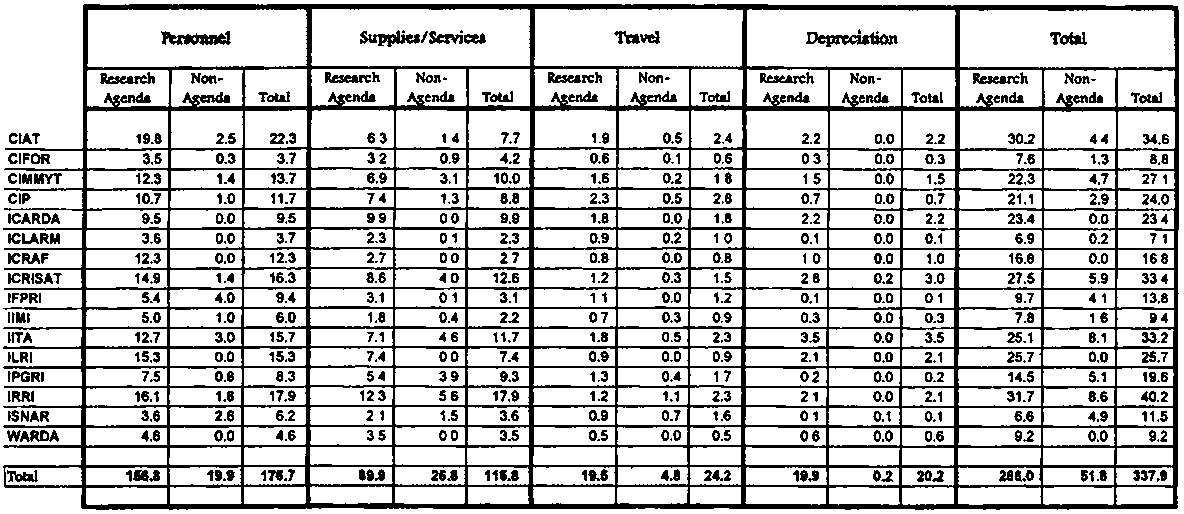
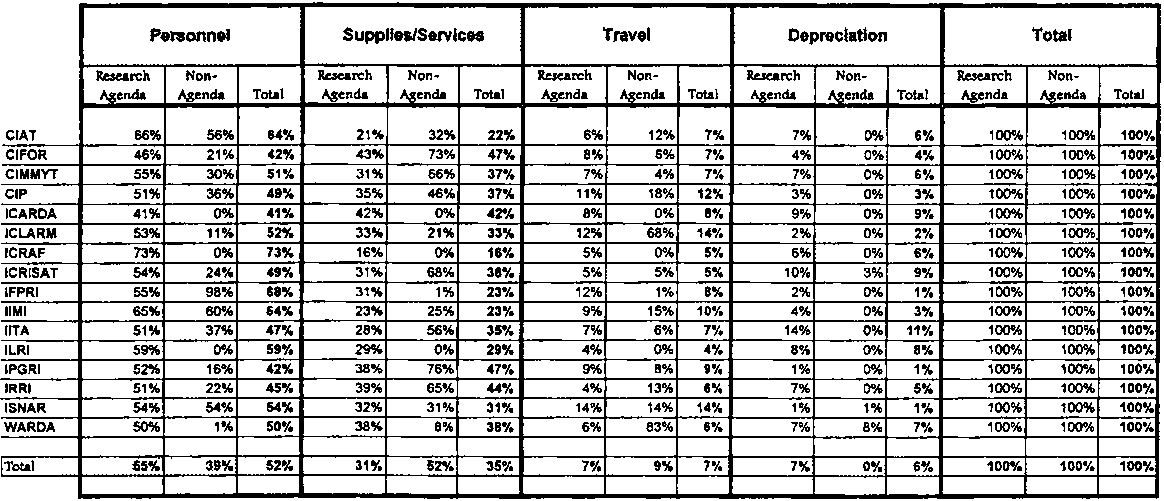
As one of the largest centres in the CGIAR System, ICRISAT also has one of its biggest budgets. As Table 8.2 shows, overall expenditures in 1995, $33.4 million, ranked third after IRRI ($40.2 million) and CIAT ($34.6 million). While these figures were not the final 1995 figures for ICRISAT, the order of magnitude remains the same and the distribution by percentage is virtually identical to the final figures. A comparative analysis of expenditure by major categories (Table 8.2) shows that ICRISAT spends its money in much the same fashion as the other Centres . Personnel expenditures (research agenda and non-agenda) represent 49% of its total expenditures (versus 45% for IRRI, 64% for CIAT and 52% on average for all centres) Supplies/services represent 38% (IRRI: 44%, CIAT: 22%, average: 35%). Travel represents 5% (IRRI: 6%, CIAT: 7%, average: 7%). Finally, depreciation represents 9% (IRRI: 5%, CIAT: 6%, average: 6%). At its September 1996 meeting, the Board decided to extend the depreciation period for ICRISAT's buildings, which will bring this category of expenditure more in line with other Centres. Since 1992, personnel expenditures have decreased, from 60% to 49% of total expenditure, while supplies/services expenditures have increased from 27% to 38%, travel has increased slightly from 4 to 5% despite the reduction in staff, and depreciation has remained constant. Expenditures on supplies/services and travel should be monitored on an ongoing basis.
TABLE 8.2 1995 CGIAR Object Expenditure (in $ million) (A)
TABLE 8.2 1995 CGIAR Object Expenditure (in $ million) (B)
A consultant to the EPMR Panel spent considerable time examining the financial records, testing the control systems, and discussing the Institute's financial integrity with the Internal and External Auditors. He concluded that, while in any system there is always the possibility of fraud and misuse of funds, the likelihood of some big problem occurring in ICRISAT is minimized by the appropriate use of systems and procedures to safeguard the financial integrity of the Institute. Based on their work with the Institute over the past 22 months, the external auditors also confirm this conclusion. Hence, based on the information available to the Panel, it appears that internationally-accepted financial accountability standards and controls are being met at ICRISAT. Incidentally, in the Panel's view, ICRISAT's use of Arthur Andersen as both the External and Internal Auditors for the period 1995/96, though unusual and costly, has proved to be a wise management decision at this time.
Nevertheless, there is always room for improvement. In view of the continuing funding crisis the Panel believes that even more attention should have been paid by the Board and management to the financial situation, to implementing recommendations of the 1990 EPMR, and in raising cost-consciousness. The Panel regrets that not enough was done in this direction by the former ADG (Finance and Administration), and indeed the situation was allowed to worsen as time went by.
In the past two years, ICRISAT has had to dip into its operating reserves and capital reserves, to cover the cost of the VRS. As currently projected cash expenditures in Table 8.3 clearly show, without substantial cuts in expenditures or a large increase in revenue in both 1997 and 1998, ICRISAT will be in extreme financial difficulties in 1998 or sooner, as it will have used all its available cash reserves. The Panel therefore strongly suggests that the Board immediately takes appropriate corrective measures.
TABLE 8.3 ICRISAT Cash Flow Analysis, 1995-98
|
ICRISAT CASH FLOW ANALYSIS |
|||||
|
|
1995 |
1996 |
1997a |
1998a |
|
|
Opening Balance |
12644 |
6852 |
3435 |
4349 |
|
|
Receipts |
|||||
|
|
Unrestricted Core |
13133 |
14047 |
15691 |
13921 |
|
Restricted Core |
4049 |
2776 |
5557 |
5000 |
|
|
Non-Agenda |
2656 |
1300 |
1500 |
1500 |
|
|
Grants Receivable |
4546 |
8082 |
9366 |
6570 |
|
|
Other |
1095 |
778 |
400 |
400 |
|
|
Sub-Total |
25479 |
26983 |
32514 |
27391 |
|
|
Expenditures |
|||||
|
|
IRS Salaries |
7866 |
7900 |
8400 |
8820 |
|
Other Salaries |
7335 |
7500 |
7600 |
7980 |
|
|
Travel |
2258 |
2000 |
2100 |
2200 |
|
|
Supplies & Services |
10196 |
9500 |
10000 |
10500 |
|
|
Other & Capital |
3616 |
3500 |
3500 |
3500 |
|
|
Sub-Total |
31271 |
30400 |
31600 |
33000 |
|
|
Closing Balance |
6852 |
3435 |
4349 |
-1260 |
|
a. The 1997 and 1998 estimates will need to be updated within the coming months. Also, they presume the status quo in terms of programme strategy, composition of the research portfolio, staffing levels, location of work, etc.
In the Panel's view, while there are financial and other management information systems in place that have worked, at least partially, the biggest factor that has brought ICRISAT to where it is today has been insufficient focus by senior management and the Board on the potential impact on internal accountability mechanisms and controls within the Institute as a result of the adoption of a matrix management structure, as well as the likely implications, to ICRISAT, of the long-term funding trends within the CGIAR. Illustrations of such potential impact are the fact that variable costs have not always decreased despite reductions in staff, and the fact that ICRISAT incurred more than $150,000 for airfreight in 1995 resulting, in large part, from late purchasing requests, possibly due to improper planning at the project level.
Suggestions and a recommendation have been made by the Panel in Section 8.1 of this report with respect to the need for an effective management information system to improve planning budgeting and monitoring. Other suggestions and indications of what works in similar situations in the Indian context can be found in Arthur Andersen's reports as both internal and external auditor.
In addition, from a financial management point of view, a careful monitoring of the total cash position is key to a number of management decisions, including: (a) investment term decisions; (b) donor relations; (c) bank overdraft protection decisions, and the like. The Panel suggests that monthly cash flow forecasts be prepared for the next 8 quarters for review by management and, periodically, by the Board's Finance/Audit Committee. In particular, expenditure data should continue to be provided both by object of expenditure and by project in budget versus actual format with explanations for significant variances. However, as mentioned earlier, efforts should be made to ensure that such data are current and take account of commitments. Only in this manner can costs be controlled adequately and only in this manner can the Board adequately formulate an opinion as to the cost-effectiveness of the research programme and the cost of the management 'overheads' required to implement the research programme.
The Panel is concerned that the financial and quantitative analytical skills needed for the successful upgrading of ICRISAT's planning and budgeting processes may not be available in the Institute. The Panel recognizes that some training had been provided but that some trained staff left the Institute as part of the VRS. Because of that the following recommendation of the 1990 EPMR is as relevant today as it was then: "in moving towards improved management information, the Institute [should] arrange for appropriate training for financial staff in advanced techniques of financial analysis. This should enable them to develop the capability to provide meaningful, analytical reports that point managers to key issues, present options for their resolution, and assist in implementing decisions."
The Panel did not have time to examine the other administrative functions in any detail and its comments are therefore limited. It does note that a number of measures are suggested in the MTP 1998-2000 to manage costs:
· The draft MTP indicates that ICRISAT plans to introduce or extend programmes to charge the costs of a number of support services to the user units (e.g., travel, transport, station support operations, computer services, statistical services, and scientific publishing). An internal Research management and Accounting Systems Working Group has made substantial progress in developing a framework for the implementation of such chargeback programmes. The Panel welcomes this approach but would like to make two cautionary points: (a) the administration of a chargeback entails some costs and therefore a cost/benefit analysis needs to be conducted to determine the viability of the proposed chargebacks; and (b) for a chargeback programme to be effective, management needs to be clear about what it wants to achieve through the programme (e.g., reduce/discourage demand, transfer the budget to the users by recovering costs partially or fully, make users cost conscious, eliminate policy limitations on the use of the services by making the user pay). The modalities of the programme and the rate of proposed cost-recovery will depend on: (a) the objectives assigned to the programme; and (b) whether the service provider is allowed to be in a monopolistic situation or whether users/clients are free to buy the services themselves on the market.· The MTP also indicates that management plans to explore outsourcing options for some services (e.g., housing, food services, transport (buses), routine maintenance in Farm and Engineering Services, and computer services). Other services could also be considered for outsourcing (e.g., security, printing and publishing). Here again the Panel endorses the approach and suggests caution. There are risks inherent to any outsourcing programme and a service outsourced is sometimes difficult to re-constitute if the external service provider turns out to be not up to standard. Careful examination of the market and of the capabilities, experience and expertise of the outside providers are needed as well as a cost/benefit analysis. Outsourcing may not always generate monetary savings, but it might simplify management supervision, an important factor when management skills are in short supply. The Panel would like to underline that the success of outsourcing also heavily depends on the ability of the outsourcer to manage the contract, (i.e., to very clearly define the requirements [what the provider is expected to do and/or not to do], the quantitative objectives, the qualitative standards, the performance monitoring instruments, the frequency of performance monitoring, the penalties for non-achievement of either quantitative or qualitative targets or the incentives for improving efficiency, the payment modalities [what the provider gets paid for and what he/she does not get paid for, mode and frequency of payment, etc.]). Contract management training would be a must for those ICRISAT staff who would have to manage outsourced programmes.
An alternative to outsourcing might be privatization of the service to former staff. Under such a scheme, ICRISAT would encourage and assist staff who are performing a service contemplated for outsourcing to create their own private company. That company would then be hired by ICRISAT to provide the service under mutually-agreed conditions and on a non-competitive basis for a period of, say, three years. At the end of that period ICRISAT would be free to procure the service on the market and the privatized company could, of course, bid competitively for the contract. ICRISAT should consider enlisting a highly-regarded India-based management consultancy organization, to help it design and implement such schemes.
The Panel also encourages ICRISAT's move towards providing, when feasible, allowances instead of benefits in kind (e.g., giving a fixed amount for housing, furniture or transportation rather than actually providing and maintaining a house, a car and furniture). This would simplify ICRISAT's administrative management and encourage staff to be more self-sufficient.
In view of the large inventories held by ICRISAT, the Panel suggests that management seek external assistance to examine its current inventory position, and the level of service by the research programmes and the control/reordering procedures needed to meet those service levels. The Head of Purchasing roughly estimated that some $600, 000 could possibly be saved if the proper analytical tools were used to eliminate excess inventories.
Although closer monitoring of administrative services, and especially of their expenditures is needed, the Panel would like to caution against over-reporting (i.e., asking too often for too detailed information which ultimately is not used either for reporting to management or for decision-making).
Finally, the Panel wishes to express its grave concerns about the level of pollution created in the Patancheru area by certain private companies. In addition to the health risks this represents for the local population and for ICRISAT employees, it also presents risks for the quality of scientific work conducted at ICRISAT's headquarters. The Panel strongly suggests that the management continue its active involvement in trying to solve this matter, and that the Board request the intervention of the Government of Andhra Pradesh and/or the Government of India to ensure that a satisfactory solution to this potentially major problem is found as soon as possible. In addition it is suggested that management monitor the pollution levels on campus on an on-going basis.
One of the key concerns of the Panel is the low morale of staff and the urgent need to strengthen confidence in the leadership of the Institute. Because the next few years will require enlightened and decisive management of ICRISAT, and as the Institute gears itself for the proposed revitalization, the Panel recommends that the management and Board provide adequate leadership to the Centre by nurturing an institutional culture that encourages scientific and managerial excellence, and by ensuring the effective management of financial, human and other resources of the Institute.
Since its inception, ICRISAT has had its principal headquarters at Patancheru (India); and for over a decade it has had regional headquarters at Niamey, (Niger) for the Western and Central Africa region, and at Matopos (Zimbabwe) for the Southern and Eastern Africa region. In 1995, to strengthen its institutional management functions, it organizationally separated its corporate functions from its regional research and management functions by establishing a corporate office and an Asia region headquarters, both at Patancheru.
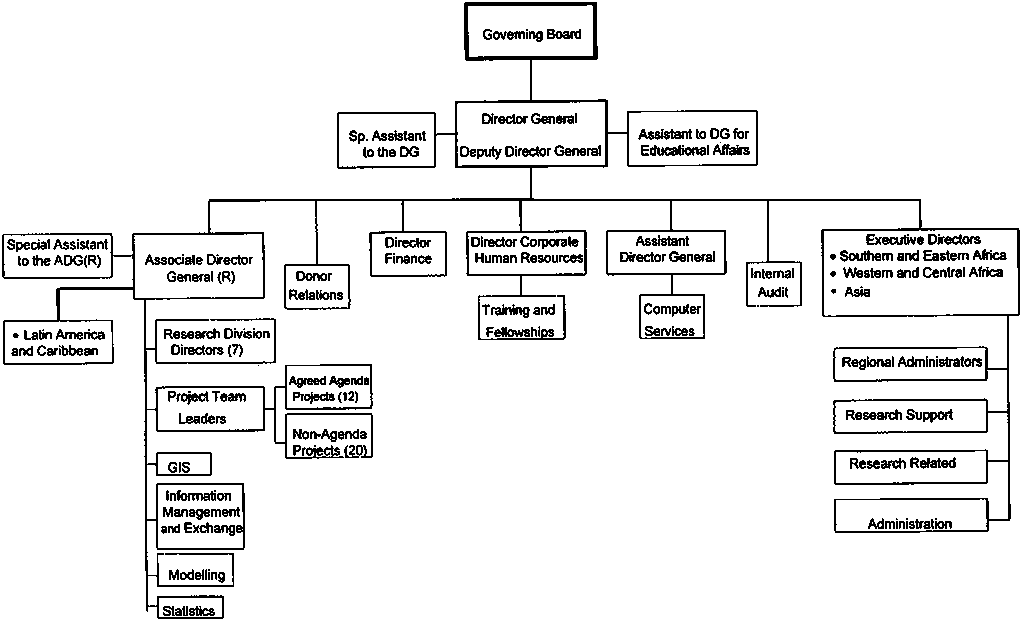
As ICRISAT is one of the more complex centres in the CGIAR System, this complexity is also reflected in its organizational structure. ICRISAT's corporate office is headed by a Director General (DG), supported in the current organization structure by a Deputy DG, an Associate DG (Research), an Assistant DG, two Directors (respectively for Finance and Corporate Human Resources), and several other internationally recruited staff. Each of the regional offices is headed by a Regional Executive Director (RED) reporting to the DG, and is supported by a Regional Administrator (RA), in the case of WCA and SEA, and managers for various administrative services. In addition, as discussed earlier in Section 8.1, ICRISAT established a two dimensional matrix structure in 1993 to manage its research activities. The 22 (soon to be 12) Project Team Leaders (PTLs) and seven discipline-oriented Research Division Directors (RDDs) report to the ADG(R) (see organogram. Figure 8.1).
This complex organizational structure was introduced by the Board on the recommendation of the management after extensive consultation within the Institute. Experienced management consultants guided the development of the framework and provided training to most senior IRS and NRS staff. For the last two years the matrix has been the subject of much debate within ICRISAT. The discussions have centred around the complementarities and overlaps of the respective roles and responsibilities of the PTLs, RDDs, and REDs as well as around the excessive fragmentation of projects and activities. It is worth noting that there were in excess of 280 research projects in the Institute prior to the reorganization. There was general agreement on the need to reduce fragmentation, and the number of projects was first reduced to 22 and soon will be reduced to 12. Activities have also been reduced substantially.
As noted in Section 8.1, the project-based management model has been well-accepted and implemented. However, the issue of roles is still much debated; and the operational reality is still one of lack of clarity. In addition, there have been issues of insufficient level of mutual support between the corporate office and the regional offices, especially the Asia regional office which is located in buildings adjoining the corporate office. Regional staff complain of undue interference of the corporate office in regional matters, which complicates decision-making and, in their view, means a devolution of accountability without a corresponding devolution of authority. At the same time there have been complaints of issues falling through the cracks in the organizational structure.
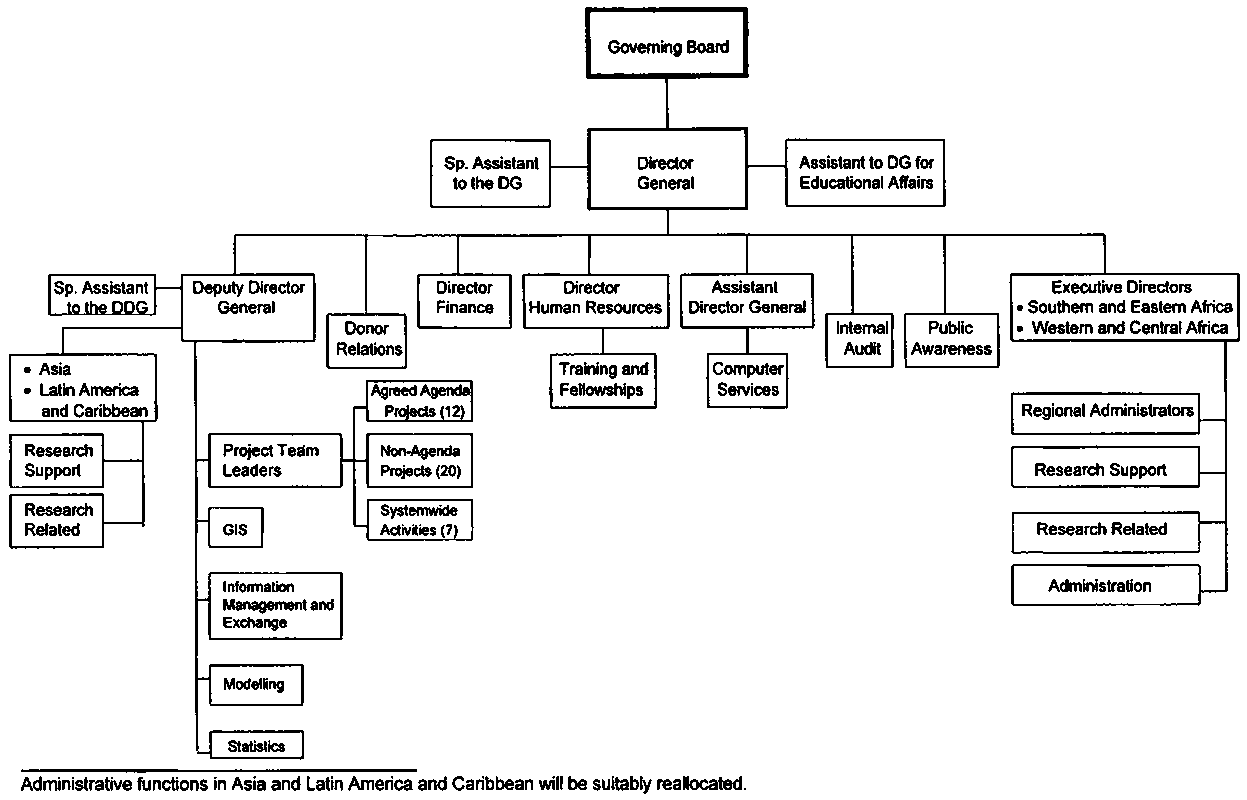
During 1995 and 1996 management took a number of measures to simplify the organizational arrangements, with a view to improving managerial accountability and decision-making. This effort continues: management proposes that the positions of RDDs and RED-Asia be discontinued, while the duties of the DDG and ADG(R) are being consolidated into a single DDG position at Patancheru. The new DDG position will be responsible for the coordination of research; the management of research-support and related services; the oversight of Asia and Latin America/Caribbean regional activities; and the formulation of most Institute-wide programmes (see proposed organogram. Figure 8.2).
Because of the generally recognized deficiencies of the present structure, and the anticipated benefits of the changes proposed, the Panel endorses the abolishing of the RDD (see Section 8.1.4.3) and RED-Asia positions. However, the Panel is very concerned that the duties of the new position of DDG - who would also have to officiate for the DG in his/her absence - are too heavy, even with the support of a special assistant. Under the present structure, staff already complain of bottlenecks at the level of the ADG(R)'s office, which is already overloaded. As now proposed the new DDG would have direct managerial responsibility for more than 40 senior staff - including PTLs/coordinators of agreed agenda projects (12), non-agenda projects (20), Systemwide activities (7), and institution-wide programmes (4). This task could easily prove unmanageable.
To reduce the administrative burden on the DDG, especially for routine non-scientific activities, and to further rationalize the proposed arrangements, the Panel suggests that ICRISAT management consider appointing a separate manager for research support services, and another manager for the combined information-related institution-wide programmes, both reporting to the DDG. Some of the administrative duties could be assigned to the ADG, a position traditionally occupied at ICRISAT by a seasoned administrator on secondment from the Indian Administrative Service, who could provide significant support to both the DG and the DDG positions.
To reduce the burden on the DG, further organizational simplifications could be envisaged: the Assistant to the DG for Educational Affairs (i.e., the head of the International School) could report to the Director Corporate Human Resources. Also, the position of special assistant to the DG could be given more substantive responsibilities (see below). In the current structure the Panel wonders whether this should be an IRS position.
Figure 8.1 ICRISAT Organogram November 1996
Figure 8.2 Proposed ICRISAT Organogram
While perhaps the EPMR should not propose a detailed organizational structure for the Institute, the Panel has sketched below its views on how the proposed 'new' ICRISAT (see Section 9.1.3) might be structured. Two options were considered by the Panel, each with its pros and cons. Depending on the programmatic requirements of the new strategy and programme thrusts finally adopted by ICRISAT management and Board, the organizational option that best fits the strategy could be selected. In any case, the Panel perceives a simpler organogram than exists today. In addition to the DG there would be, at the senior management levels:
Option 1
Top management
· A Deputy Director General, in the Office of the DG (ODG). The Panel feels that, in addition to Assistant Director General positions described below, a DDG position is needed in this option in view of (a) the increased importance of international cooperation and donor relations in the new ICRISAT; (b) the extensive travel the CGIAR Centre Directors have to do; and (c) the complexity of ICRISAT. The DDG would more particularly be in charge of: (a) developing a much more active marketing and donor relations programme and overseeing all related activities (information services, public awareness, donor relations); and (b) developing and facilitating ICRISAT's international cooperation activities (e.g., visiting scientists, partnership and contract research programmes) which will play a much more important role in the 'new' ICRISAT. The DDG would therefore be the second in command at ICRISAT and head of international relations and cooperation.· Supporting the Office of the DG would be a senior assistant to the ODG, who would provide 'staff (i.e., not line management) assistance on institution-wide planning, monitoring, reporting, liaison with the CGIAR (donors, TAC, the two Secretariats, Committees), Board matters (as Secretary), etc. The Panel expects that the ODG would have a suitable balance of senior IRS and NRS staff.
Research management
As proposed in Section 9.1.3, in broad terms, the panel envisages ICRISAT's strategic germplasm work to be concentrated in Asia and the strategic NRM work to be concentrated in Africa. Both research thrusts would cover the continuum of strategic/applied/adaptive research, though to differing degrees, and both would operate in Africa and Asia. To manage these two research components, the Panel envisages:
· An ADG(R) (Germplasm), based in Patancheru, overseeing all germplasm related activities and to whom the PTLs of the germplasm projects would report; this person would also be responsible for liaison with NARS in the Asia region and for supervising the manager of Farm and Engineering Services for the Patancheru campus.· An ADG(R) (Natural Resources management), based in Western Africa, who would direct ICRISAT's activities in the Africa region (which the Panel proposes would mainly relate to NRM), and to whom the PTLs of NRM projects would report. This person would also ensure relations with the host-country and NARS in the region and supervise all administrative functions in the regional headquarters. For the latter functions, there would be a regional administrator reporting to the ADG-NRM. Because this latter position would have programme as well as administrative and host-country responsibilities (which the ADG(R) Germplasm would not have), the person would need to be selected with some additional criteria in mind, and compensated accordingly.
· A manager for the Southern and Eastern Africa operations; this manager would report to the ADG(R) (NRM) for programmatic issues but would have substantial independence for administrative issues. He/she would be supported by an administrative officer and staff, as appropriate.
Administration
· An Assistant Director General (Administration and Liaison) based at Patancheru, who would be in charge of: (a) managing relations with the Indian authorities; and (b) overseeing the administration of the headquarters complex (e.g., building maintenance, security, travel, food, housing, purchasing and stores). The ADG (Liaison) has traditionally been held by a senior member of the Indian Administrative Service.· A Director Human Resources, based at Patancheru, who would be responsible for Institute-wide human resources policy issues and would oversee all human resource issues related to Asia-based staff.
· A Director Finance, based at Patancheru, who would be responsible for institute-wide financial management and would oversee the Finance and Accounts Department at the headquarters of ICRISAT.
· An Internal Auditor - reporting directly to the DG.
Option 2
Top management
· Under this option, there would be no DDG in the DG's Office; however the senior assistant to the DG would be retained with the same functions as in Option 1.
Research management
· One DDG (Germplasm and Asia) based in Patancheru and one DDG (NRM and Africa) based in Nairobi. This is a more balanced organizational structure, giving almost equal weight to the most senior research managers heading the two 'components' of ICRISAT's proposed research programme. Both DDGs would have equivalent responsibilities for research management, international cooperation and donor relations (similar to the DDG's reponsibilities in Option 1), covering their respective (global) research portfolios. However, the DDG (Germplasm and Asia) would officiate for the DG when needed, and the DDG (NRM and Africa) would represent the Institute in Africa on an ongoing basis. Their overall work load and responsibilities would therefore be comparable as would their organizational status, decision making authority, and compensation.· A Regional Director (Western and Central Africa) based in Niamey and reporting to the DDG (NRM and Africa). Because of the number and diversity of countries involved (mostly Francophone) and the more severe logistical constraints in WCA, the Panel considers such a position is needed to ensure closer host-country relations and coordination of the research activities. However, no such position is considered necessary for Southern and Eastern Africa (SEA).
· PTLs in Asia and in SEA would report directly to their respective DDG while PTLs based in WCA would report to the RD-WCA;
Administration
· The positions of ADG (Administration and Liaison), Director Human Resources, Director Finance, and Internal Auditor, remain the same as in Option 1.· Administrative support for the DDG (NRM and Africa) in Nairobi would be provided as far as possible through sister CGIAR Centres.
It should be noted that in Option 2 a greater degree of programme and administrative autonomy is envisaged for the DDG based in Africa. In both options:
· There is no separate organizational entity identified as the 'corporate office'.· The Human Resources and Finance functions have purposely been kept separate, each under a director reporting to the DG's office, rather than being combined under an ADG position. The panel feels that this is currently warranted, in view of the importance and complexity of the issues facing ICRISAT in these areas of management. This arrangement should be reviewed at a later date.
Because of the variety of issues relating to strategy and programme that still need to be resolved, the Panel has concluded that a specific recommendation regarding organizational structure would be premature at this stage. The above options are, therefore, outlined for further consideration by management during the coming months, although the Panel tends to favour Option 2.