3.1 Introduction
3.2 Small pelagic fish
3.3 Trigger fish
3.4 Demersal fish
3.5 Assemblages of demersal fish
Based on their behaviour fish species are generally classified as demersal or pelagic. Although many demersal fish often occur in mid water and pelagic fish near the bottom this is still a useful classification. One further classification is possible in presenting the results of acoustic-cum-fishing surveys, that of the triggerfish which is mostly found by itself in mid water and can easily be recognized in echo diagrams and sampled with fishing gear. The larger species of pelagic fish, tunas and billfishes are for methodical reasons not included in the survey.
The environmental regimes largely determine the species composition and abundance of the fish faunas contained within them. As described in Chapter 2 above the hydro-graphical environment off Gabon is characterized by an equatorial regime north of Cape Lopez and a regime south of the Cape influenced by the Angola Current which during a period of the year flows northwards and carries cooler water along the coast.
The pelagic species on the Gabon shelf can be divided into those with affinity for cooler waters and those with preference for warmer tropical waters. The former group is found in highest abundance south of Cape Lopez during the period when cool water from the south flows along the coast. The most important representative of this group is the round sardinella Sardinella aurita known to carry out extensive seasonal migrations along the coast southwards. The second group includes mainly species found in more shallow waters. In response to the inflow of cooler water from the south, they either move into shallower waters, as Ilisha africana or are pushed northwards, as the bumper Chloroscombrus chrysurus.
The demersal fish communities are very similar to those of the Gulf of Guinea. Abundance is higher south of Cape Lopez probably because of the seasonal effects of the cool rich waters from the south. Three main groups can be recognized: those living very close to the coast such as the croakers Pseudotolithus senegalensis and P. typus, the threadfin Galeoides decadactylus and others; those of deeper waters, usually below the thermocline such as the seabreams Dentex angolensis and D. congoensis, the driftfish Ariomma bondi and others; and finally those found above and below the thermocline some of them at times off the bottom such as the silverside grunt Brachydeuterus auritus and the triggerfish Balistes capriscus. Also the demersal communities are affected by the seasonal hydrographical changes: some of the shallow water species with high affinity for warm waters are pushed inshore during the cold season. Some of the species living below the thermocline are also able to move toward more shallow water during the cold season. For some of the seabreams, e.g. Dentex canariensis, Pagellus bellottii this movement is associated with spawning.
In the following we will describe the composition, distribution and abundance of the main groups of resources based on the four coverages during:
Survey 1, 2-15 March 1985As mentioned in Chapter 1 above the special oil drilling area south of Cape Lopez had to be omitted from the investigations since permission to operate there was not obtained. This detracts somewhat from the value of the survey. For the abundance estimates attempts have, however, been made to make adjustments for this omission by assuming that the closed area holds the same densities of fish as those found in the adjacent area.
Survey 2, 30 May-12 June 1985
Survey 3, 14-27 September 1985
Survey 4, 7-18 December 1985
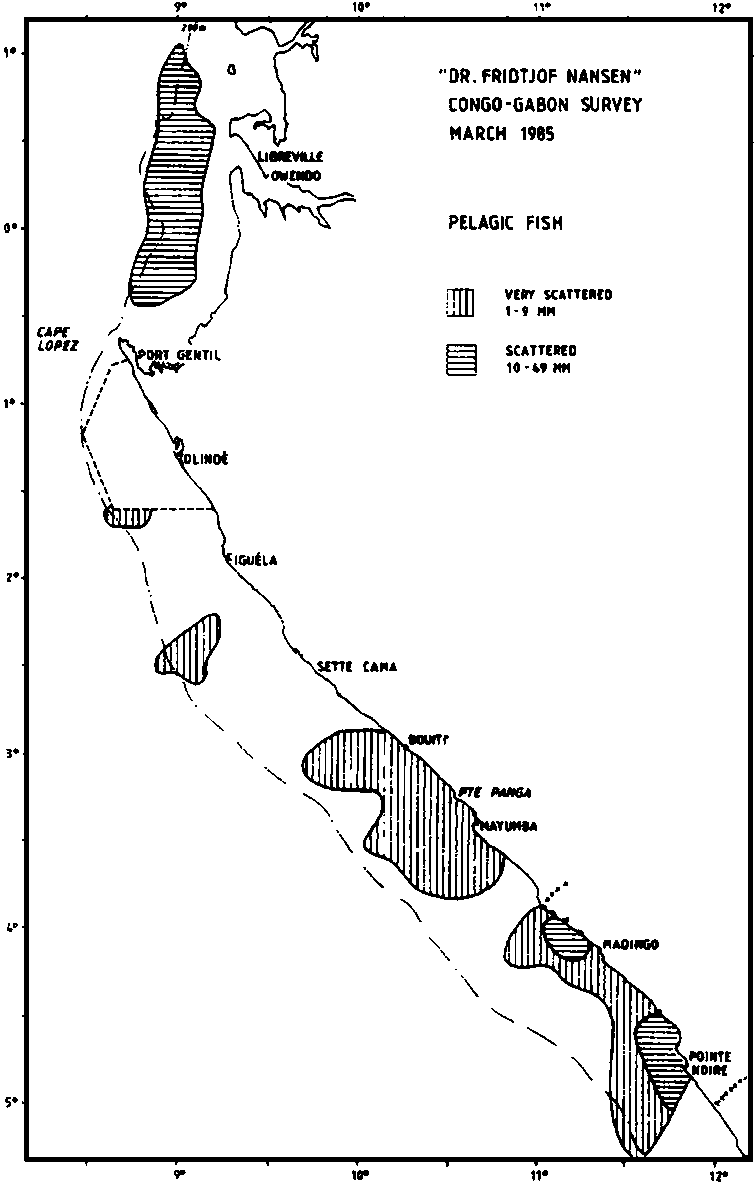
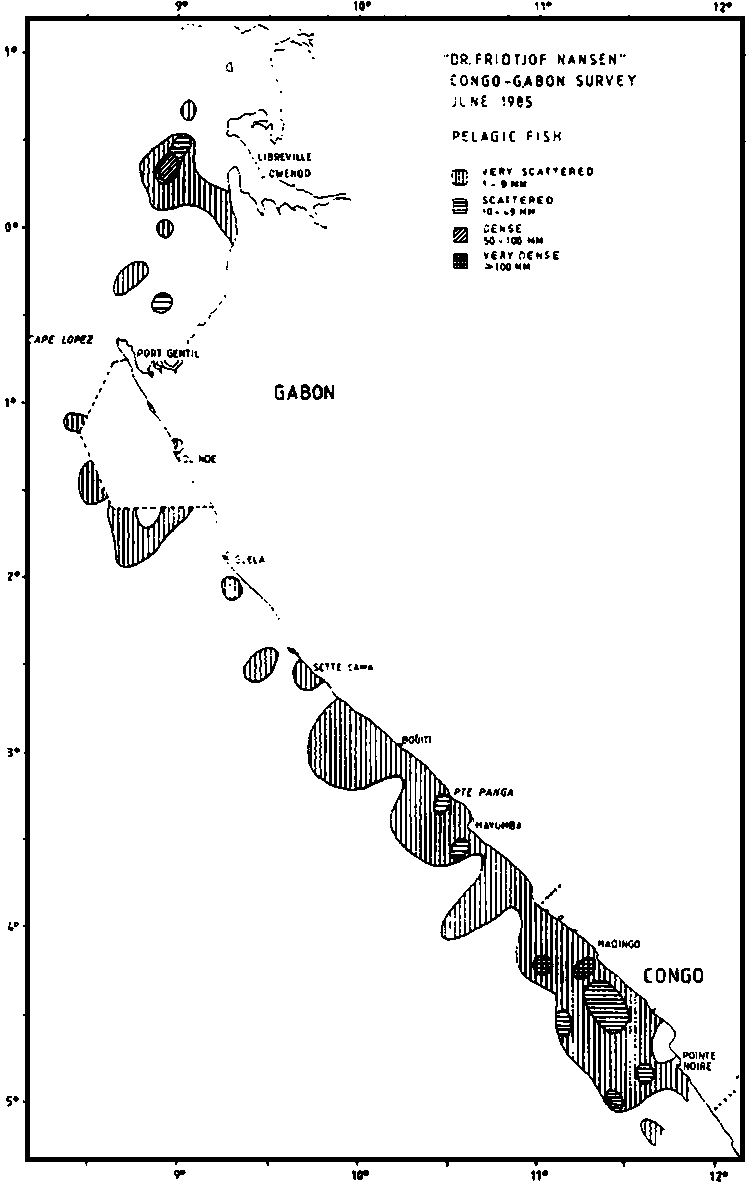
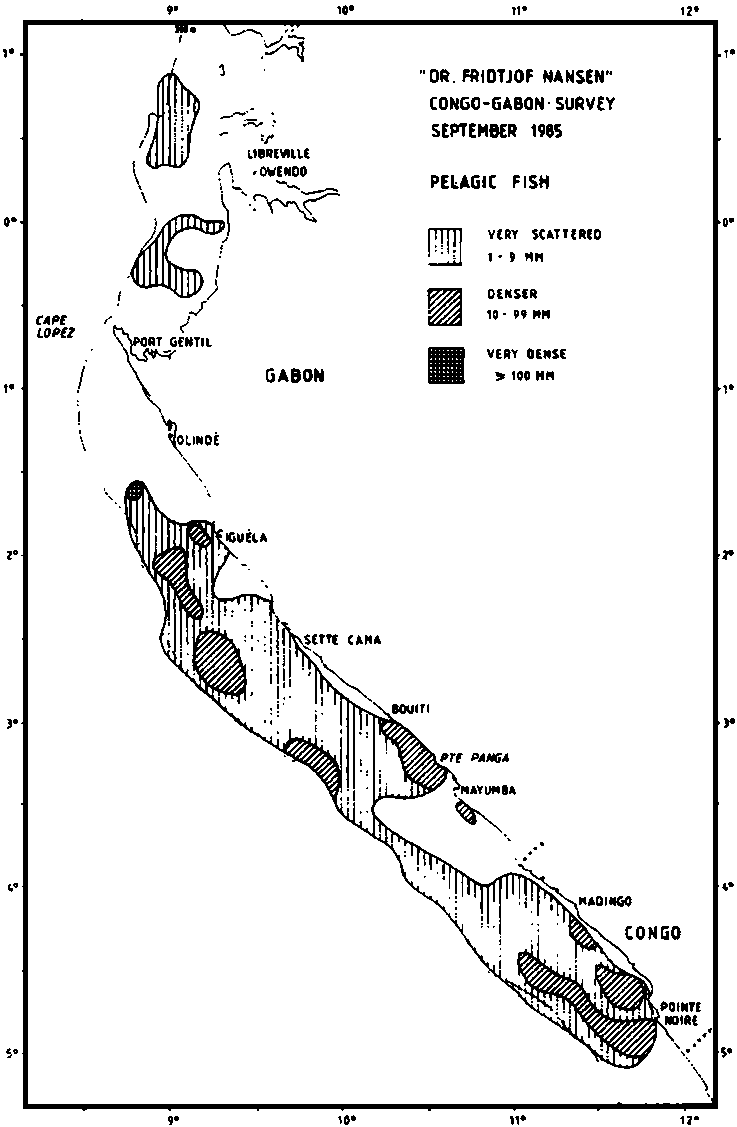
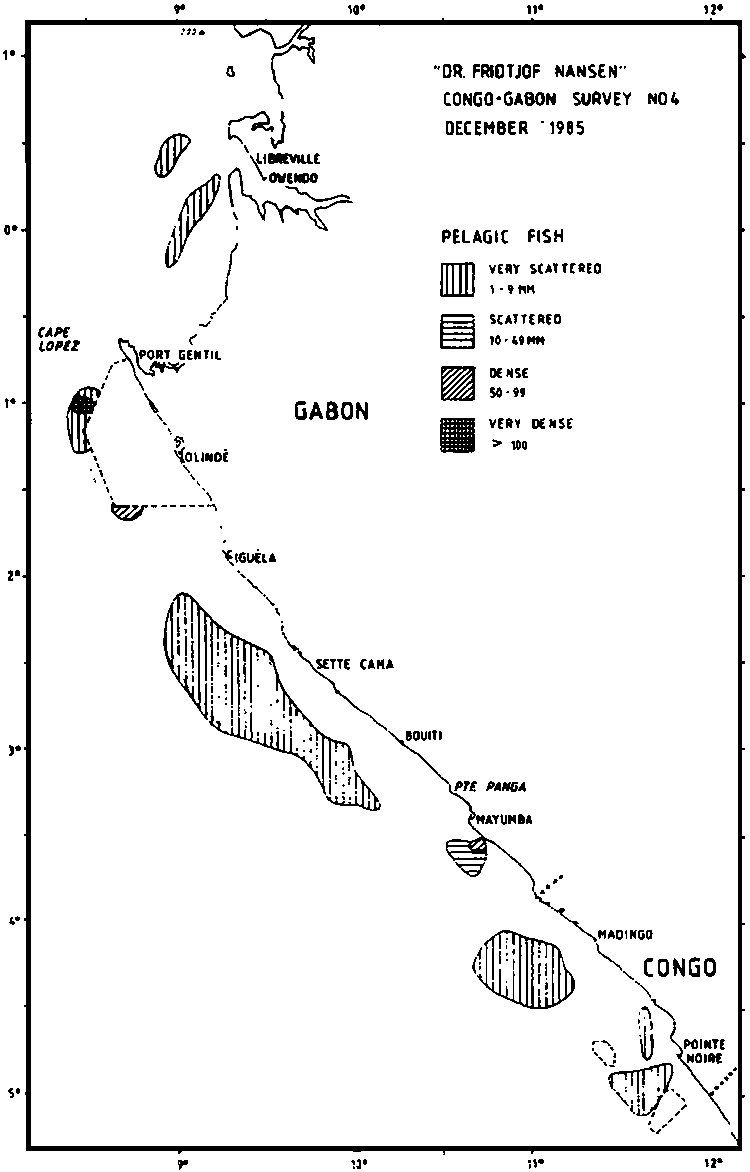
Figure 7 shows the distribution of pelagic fish as observed with the acoustic integration system for each of the surveys. The coverage off Congo has been included since the observations made there may help to demonstrate the migrational pattern of part of the resources.
The chart from Survey 1 shows that only low levels of densities of pelagic fish were recorded at that time. Sardinellas only occurred in a few cases as incidental by-catches. Otherwise the small pelagic resources were identified as scattered distributions of horse mackerel Trachurus trecae, round scad Decapterus punctatus, and bumper Chloroscombrus chrysurus. The main part of the pelagics north of Cape Lopez was identified as triggerfish Balistes capriscus. The samples of horse mackerel, scad and triggerfish all show small sized fish, mainly 10-15 cm of length.
Also during Survey 2 only relatively low density levels of pelagic fish were located over the shelf, but some denser recordings were made off Congo some of which were identified as round sardinella Sardinella aurita perhaps indicating a northward migration. In shallow waters the pelagic community up to Sette Cama consisted of bumper, West African ilisha Ilisha africana, barracuda Sphyraena gauchancho and lookdown Selene dorsalis, while that further offshore was dominated by horse mackerel and false scad Decapterus rhonchus. Inshore further north to abt. Iguela juveniles of both sardinella species and of scad and silverside grunt Brachydeuterus auritus were located. North of Cape Lopez the triggerfish was again the dominating species.
During Survey 3 in September a number of denser aggregations of pelagic fish were located over the whole shelf up to the closed area south of Port Gentil indicating an increase in abundance compared with the two previous coverages. The increase is represented mainly by juvenile stages of horse mackerel and round sardinella commonly found at 50-100 m depth up past Iguela. Also some anchovy Engraulis encrasicolus were caught. Round sardinella 12-15 cm of length dominated in the north outside Iguela where during daytime they aggregated in schools on the bottom and was fairly easy to catch with demersal trawl. From Pte. Panga south horse mackerel was caught together with hairtail Trichiurus lepturus. In shallow waters catches of pelagic fish consisted of bumper, ilisha and barracuda in addition to sardinellas and horse mackerel. North of Port Gentil pelagic fish was scarce and only some small sized horse mackerel was caught. In this survey no triggerfish was observed in Gabon waters.
Figure 7. Distribution of pelagic fish by surveys.
“DR. FRIDTJOF NANSEN” - CONGO-GABON SURVEY - MARCH 1985
“DR. FRIDTJOF NANSEN” - CONGO-GABON SURVEY - JUNE 1985
“DR. FRIDTJOF NANSEN” - CONGO-GABON SURVEY - SEPTEMBER 1985
“DR. FRIDTJOF NANSEN” - CONGO-GABON SURVEY NO 4 - DECEMBER 1985
During Survey 4 in December the pelagic fish was found nearly exclusively in very scattered distributions and the abundance had clearly declined since the September coverage. The small pelagics were located over the outer parts of the shelf and consisted of the two sardinella species, round scad and horse mackerel, all juvenile or immature stages and the pooled length samples show for all four species bi-modal distributions, one between 10 and 15 cm and one between 15 and 20 cm. No significant amounts of triggerfish was found during this survey.
In addition to providing observations for description of the distribution of pelagic fish the acoustic integration system also allows assessments to be made of the absolute abundance of the fish expressed in weight of standing biomass. The methodical basis for this is briefly explained in Chapter 1 above. Table 3.1 presents the estimates of abundance of small pelagic fish and trigger fish for each of the surveys and for the shelf areas north and south of Cape Lopez separately. An attempt has been made to adjust for the non-coverage of the restricted area south of Cape Lopez on the basis of an assumption that the mean density in this area is the same as that observed over the shelf southwards
|
Table 3.1. Estimated biomass of small pelagic fish and
trigger fish by surveys and areas. 1 000 tonnes. |
||||
|
|
N of Cape Lopez |
S of Cape Lopez |
Total |
|
|
|
Small pelagic |
Triggerf. |
Small pelagic |
|
|
Survey 1 |
|
52 |
24 |
76 |
|
Survey 2 |
|
15 |
30 |
45 |
|
Survey 3 |
10 |
|
160 |
170 |
|
Survey 4 |
3 |
|
54 |
57 |
Cape Lopez seems to represent a point of division in the distribution of these fish. No significant aggregations were located north of the Cape in any of the surveys. The scattered fish found here was identified as horse mackerel and round scad. South of Cape Lopez the March - and June surveys gave biomass estimates of 25-30 thousand tonnes which consisted of horse mackerel and scads offshore and bumper and ilisha in the inshore waters. Sardinellas were only found incidentally. The September survey showed, however, a marked increased biomass estimate with 170 thousand tonnes. The main part of this consisted of juvenile and immature stages (less than 20 cm total length) of horse mackerel and of sardinellas, mostly round sardinella. Some anchovy also formed part of the biomass. Finally in December the estimated biomass is about 100 thousand tonnes less than that found in September, but still some aggregations of small sized sardinellas and horse mackerel were found over the outer parts of the shelf.
The biological interpretation suggested by these findings is that the Gabon shelf south of Cape Lopez serves as a nursery ground for the sardinellas especially the round sardinella and for the horse mackerel. The main spawning grounds from which the juveniles are recruited are located to the south probably off the Congo and Cabinda, The current system transports the eggs and larvae northwards along the shelf in the early cold season and then perhaps also with a seasonal shift of direction contributes to the southward movement of the immature fish towards the end of the year. The main resources of small pelagic fish of Gabon would thus seem to be part of stocks shared with the Congo and Angola. The exploitation and management of these stocks is thus a matter of regional concern in the area. The inshore resources of bumper, ilisha, anchovy and barracudas probably represent local stocks, but their total abundance seems to be small compared to that of the sardinellas.
The comprehensive surveys of the area undertaken with the R/V NIZERY and CAPRICORNE in April, May and August 1982 (ORSTOM, 1983) showed a very similar pattern of distribution along the shelf with markedly reduced densities offish north of Cape Lopez. There was also a similar increase of estimated biomass of pelagic fish south of Cape Lopez from April-May till August as that found in our data. The absolute levels of the estimates were, however, considerably higher than ours and this will be commented on in Chapter 4 below.
The trigger fish is a species of wide distribution off West Africa ranging from southern Angola to Morocco. It is found both pelagic and close to the bottom and can be fished with mid water and demersal trawls. Stocks off Ghana and Guinea are known to have fluctuated greatly in size. The trigger fish was found in some quantities in the March and June surveys on the northern part of the Gabon shelf mostly to the north of Cape Lopez. Samples showed mostly juvenile fish. Its occurrence is possibly seasonal. There could also be a long term stock change since the CAPRICORN-NIZERY surveys only found insignificant amounts of the species off north Gabon and Equatorial Guinea.
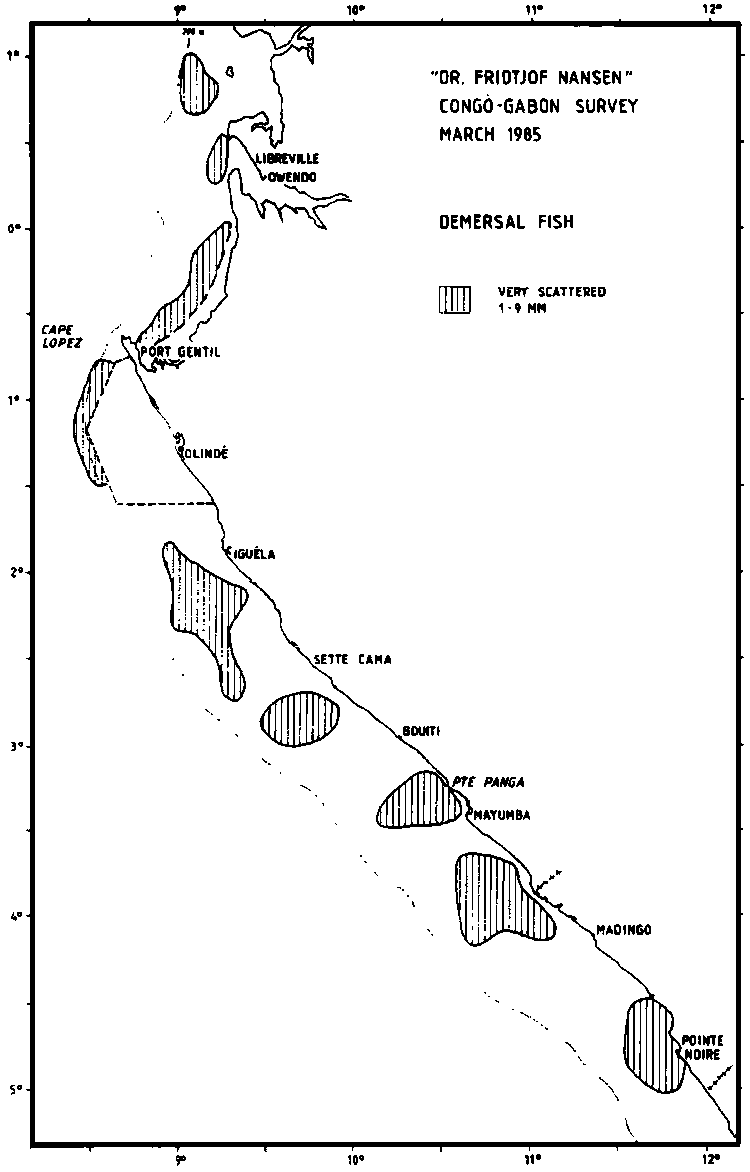
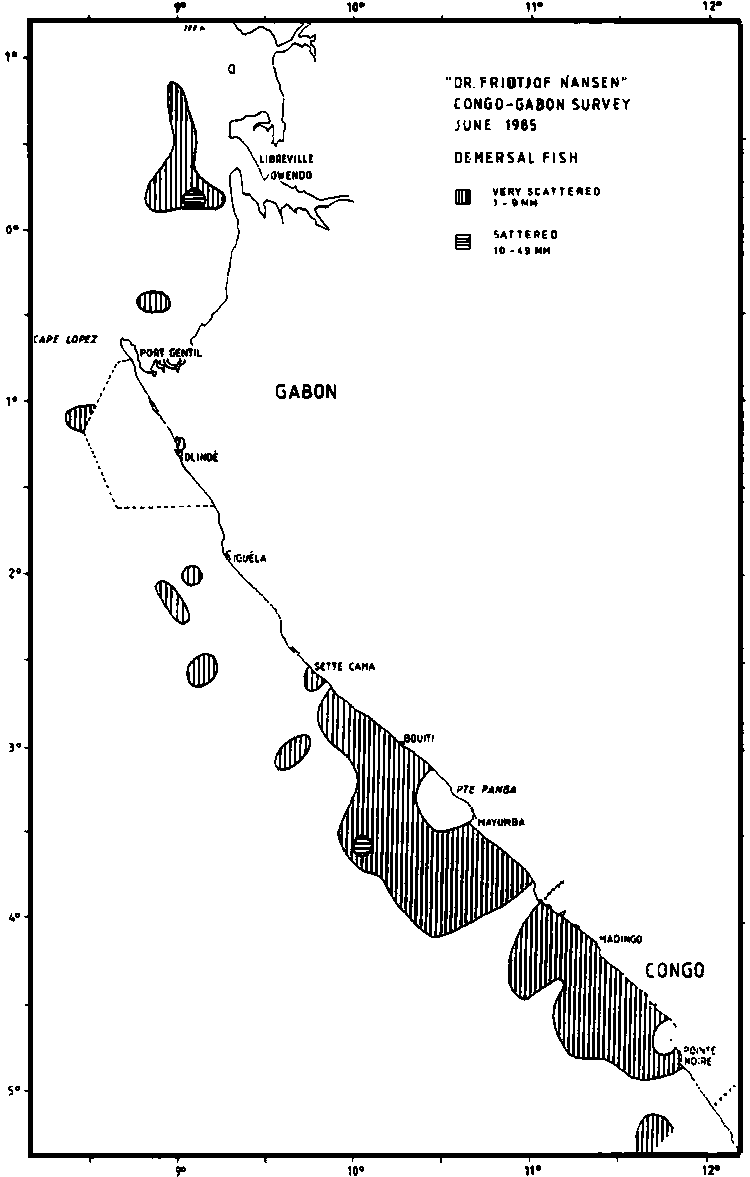
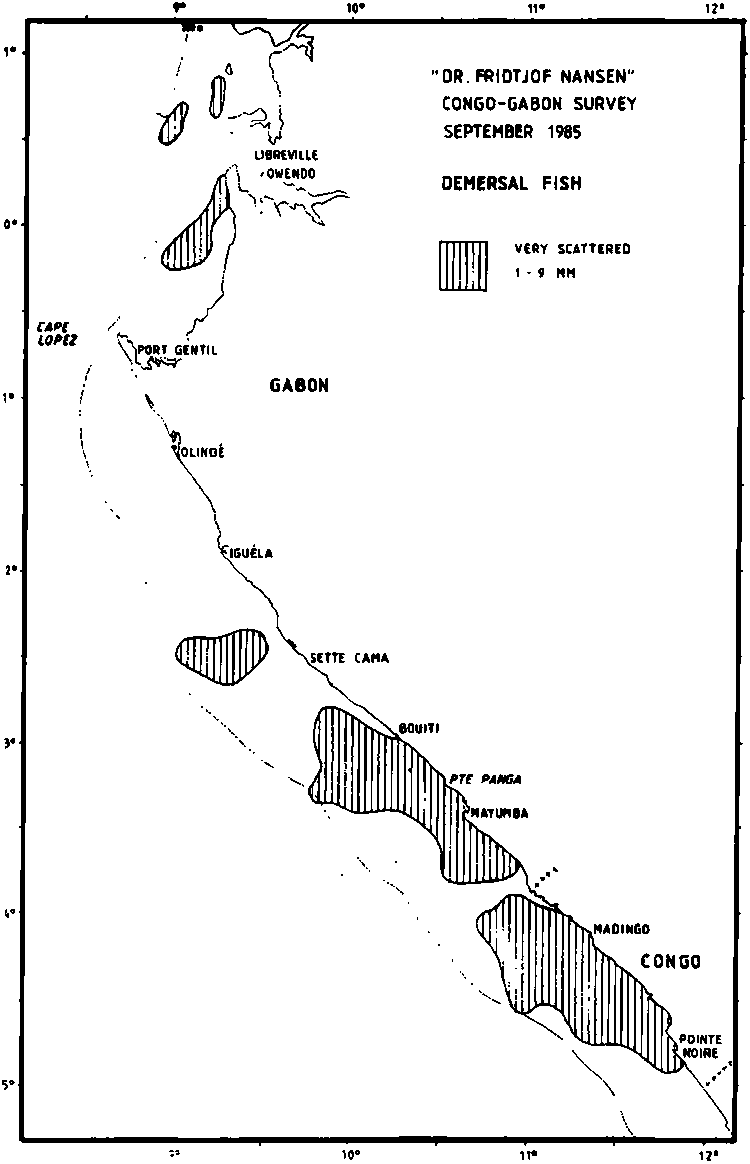
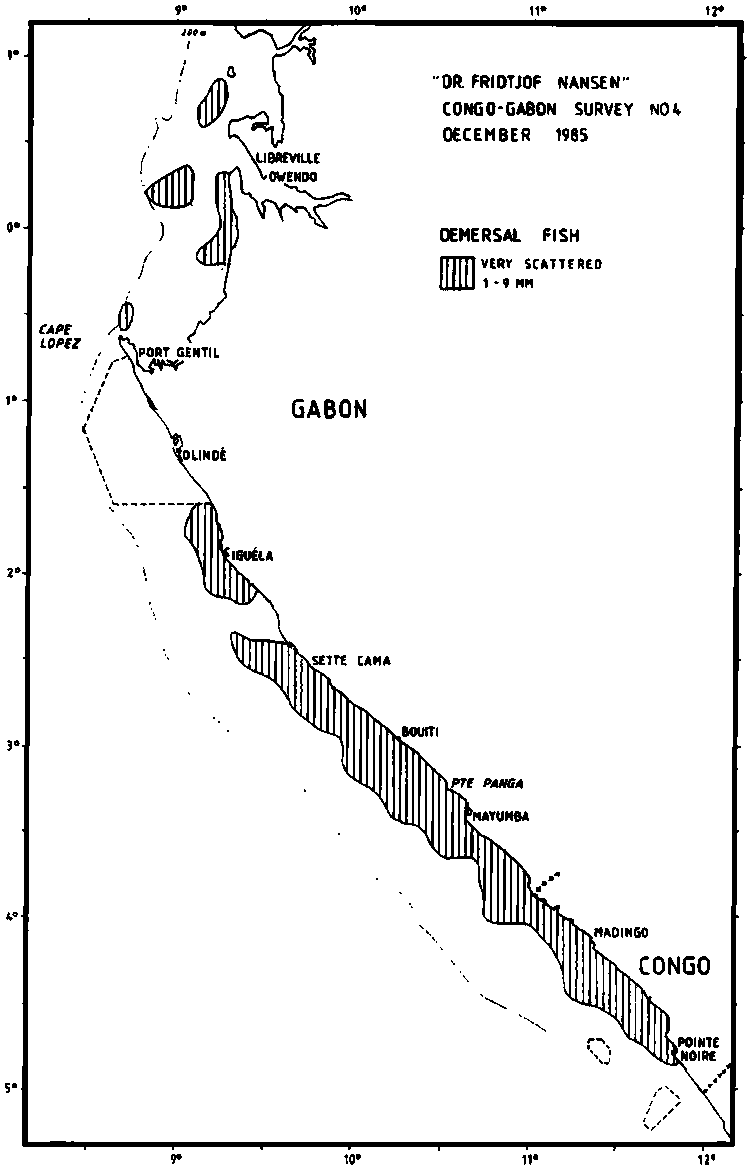
As described in Chapter 1 above two types of assessments have been made of the demersal fish, an acoustic estimate of the bottom fish which are observed in mid water and a “swept area estimate” based on catches in bottom trawl surveys. Figure 2 shows the distribution of the demersal fish in each of the surveys based on the acoustic observations. They indicate that also for this category of resource fish densities are lower on the shelf north of Cape Lopez than in the southern part. There are no indications of any great seasonal change in densities. General features of the composition is that silverside grunt Brachydeuterus auritus dominated in shallow waters in the south while further offshore and northwards towards Cape Lopez commercially valuable groups such as sea-breams, snappers and groupers made out the main part of the catches. Table 3.2 shows the biomass estimates of the demersal fish that could be observed in mid water and thus assessed with the acoustic integration system. They range from 19 to 37 thousand tonnes, but it is clear that this method grossly underestimates the total demersal biomass.
Figure 8. Distribution of demersal fish observed with the acoustic system by surveys.
“DR. FRIDTJOF NANSEN” - CONGO-GABON SURVEY - MARCH 1985
“DR. FRIDTJOF NANSEN” - CONGO-GABON SURVEY - JUNE 1985
“DR. FRIDTJOF NANSEN” - CONGO-GABON SURVEY - SEPTEMBER 1985
“DR. FRIDTJOF NANSEN” - CONGO-GABON SURVEY NO 4 - DECEMBER 1985
|
Table 3.2 Estimated biomass of demersal fish recorded in
mid water by acoustic surveys. 1 000 tonnes. |
|
|
Survey 1 |
20 |
|
Survey 2 |
25 |
|
Survey 3 |
19 |
|
Survey 4 |
37 |
The catch rates can be converted into a simple measure of fish density by assuming a certain efficiency of the trawl, estimate the area swept by the gear and then calculate the fish density corresponding to the catch rates obtained. Annex 8 shows the mean densities obtained in this way by species and with the data pooled for the shelf north, respectively south of Cape Lopez for each survey and for all surveys analysed together. In these data the typically pelagic species have been excluded. The mean densities for all demersal fish taken together are shown in Table 3.3. From this it is evident that the mean density (per unit area) is consistently two to three times higher in the southern area.
|
Table 3.3 Mean densities of demersal fish from swept area
trawl data by surveys and areas. Unit: Tonne per nm2. |
||||
|
|
North of Cape Lopez |
South of Cape Lopez |
||
|
|
No of hauls |
Density |
No of hauls |
Density |
|
Survey 1 |
12 |
4.6 |
15 |
10.8 |
|
Survey 2 |
13 |
5.6 |
21 |
16.0 |
|
Survey 3 |
7 |
6.6 |
23 |
13.9 |
|
Survey 4 |
7 |
2.3 |
18 |
13.8 |
|
All data |
39 |
4.8 |
77 |
13.9 |
|
Table 3.4 Estimated biomass of demersal fish based on trawl
survey data. 1 000 tonnes. |
|||
|
|
North of Cape Lopez |
South of Cape Lopez |
Total |
|
Total shelf |
16 |
120 |
136 |
|
0-50 m |
6 |
41 |
47 |
|
50-100 m |
3 |
56 |
59 |
|
100-200 m |
4 |
20 |
24 |
|
Table 3.5 Main groups of fish in the demersal trawl catches
and their part by weight of the estimated biomass. Per cent. |
|||
|
|
North of Cape Lopez |
South of Cape Lopez |
|
|
Commercial groups: |
|||
|
|
Seabreams, Sparidae |
42 |
26 |
|
|
Snappers, Lutjanidae |
3 |
8 |
|
|
Groupers, Serranidae |
5 |
4 |
|
|
Grunts, Pomadasyidae |
- |
3 |
|
|
Jacks, Carangidae |
3 |
1 |
|
|
Barracudas, Sphyraenidae |
3 |
5 |
|
Possibly commercial: |
|||
|
|
Atlantic bigeye, Priacanthus |
12 |
9 |
|
Other abundant species: |
|||
|
|
Bigeye grunt, Brachydeuterus auritus |
1 |
20 |
|
Deep water: |
|||
|
|
Driftfish, Ariomma sp. |
23 |
5 |
|
|
Picarel, Spicara alta |
2 |
5 |
A further 30 per cent of the demersal fish consists of three relatively abundant species: bigeye grunt, driftfish and picarel. The bigeye grunt is abundant in inshore waters in the south, the other two are found in deep water northwards. These fish are of acceptable quality for consumption, but their smallish size, commonly around 20 cm makes them less attractive for commercial fishing.
The composition of the demersal fish resources found in this survey and demonstrated in Table 3.5 above is somewhat different from that described in the report of the CAPRICORN/NIZERY survey, the most notable difference being the much higher relative abundance of croakers, Sciaenidae in their findings. Croakers also form an important part of the commercial catches of Gabon as do also catfishes and threadfins, all shallow water species. These forms are all poorly represented in our data, and one must conclude that the shallow water fauna was not well covered by our surveys. This is partly an effect of the abt. 10 fathoms limit of operability of the vessel.
The size compositions of samples of the main species of demersal fish are listed in Annex 5, and pooled length frequency diagrams by species and surveys are shown in Annex 6. These data are insufficient for a detailed analysis, but it is of interest to compare the sizes observed with the recorded maximum sizes in the region. For the most important commercial group, the seabreams, the common maximum sizes listed in FAO’s Field Guide for Angola are as follows:
|
Dentex canariensis |
35 |
cm |
|
“ angolensis |
25 |
“ |
|
“ congoensis |
20 |
“ |
|
“ gibbosus |
60 |
“ |
|
Pagellus bellotti |
25 |
“ |
|
Sparus caeruleostictus |
50 |
“ |
An analysis of the communities formed by the demersal fish would aid the further understanding of the composition and distribution of these resources.
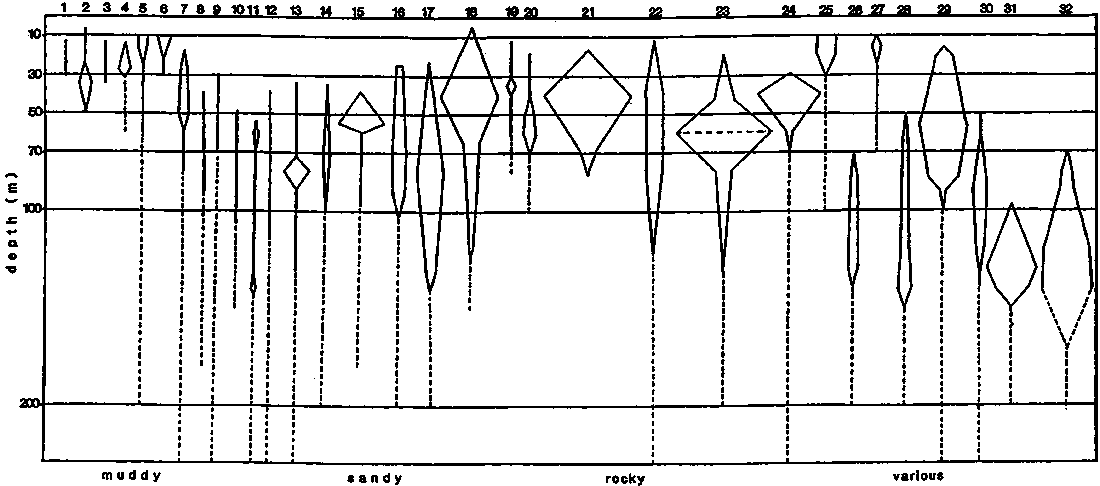
As seen in the introduction to section 3.1, the demersal species south and north of Cape Lopez resemble greatly those found in the Gulf of Guinea. This conclusion is based on the analysis of the catch composition in the demersal trawl in the course of the four surveys. Due to the different hydrological regimes found north and south of Cape Lopez, a separate analysis of the data from these two areas was carried out in order to detect possible differences. Fig. 9a and b shows the abundance reparation for the main demersal species south and north of Cape Lopez respectively, from about 10 to 200 m depth. Selection of the species to be included was based on abundance and/or frequency in the catches. Furthermore, those species also found off the bottom (i.e. Brachydeuterus auritus) were not included because not considered as typical demersal. Species were arranged according to their bottom preference (muddy, sandy, rocky, various bottoms) as reported in the litterature. Also, because no significant seasonal difference in the depth distribution of most species could clearly be detected, the description is generalized, without taking into account seasonal changes.
A more rich fauna seems to characterize the southern part of the shelf. However, practically all the species found in the southern part are also known to occur in the northern part and they may not have appeared in the catches because they were present only at very low densities.
3.5.1 Shallow-water communities
The shallow-water fish communities can be classified according to their bottom preference. Some species have a higher affinity for muddy/soft bottoms such as Pseudotolithus typus, Galeoides decadactylus, Pteroscion peli and Pseudupeneus prayensis, among those fished by “Dr. F. Nansen”. Species of Ariidae and Mugilidae are also very important components of these community, but they are mostly found in those shallow waters not accessible to the vessel. Mustelus mustelus, Raja miraletus and Torpedo torpedo are the representatives for sharks and rays within this assemblage. Penaeus notialis has also been included in this category, north of Cape Lopez only. Pseudotolithus senegalensis, although often very abundant over muddy bottoms, is actually reported on various types of bottoms and for this reason it has been included in the right part of the illustration, under “various”. Another group of shallow-water species has a clear preference for sandy and/or rocky bottoms. Among these Sparus caeruleostictus, Epinephelus aeneus, Lutjanus agennes and L. fulgens and Apsilus fuscus. Some of these species were caught at highest rates between 30 and 50 meters. More ubiquitous species are Pagellus bellottii and Pomadasys jubelini.
3.5.2 Deep-water communities
The subthermocline sparid community is well represented in Gabon waters. Dentex angolensis, Dentex congoensis and Sparus pagrus africanus have their maximum densities below 70 meters. Pagellus bellotti was also found in association with these species but it also occurs in shallower waters. Sometimes associated with this group were Ariomma bondi and Spicara alta. This latter species is known to occur from Senegal to Angola. It is reported to be abundant off Senegal and Angola, but only as rare in Congo waters. However, good catches of this species were obtained by “Dr. F. Nansen” between 100 and 150 m. depth off Gabon, which probably constitutes a new finding. Also, Priacanthus arenatus described in the litterature as occurring only sporadically, was caught at rates over 1 tonne/hour.
1. Arius speciesFig 3 b. Abundance repartition of the main demersal species in relation to depth, obtained from catch rates in bottom trawl. Broken lines extend the depth distribution of each species to its known range. b) north of Cape Lopez
2. Drepane africana
3. Ephippion guttifer
4. Pseudotolithus typus
5. Pteroscion peli
6. Galeoides decadactylus
7. Pseudupeneus prayensis
8. Lagocephalus laevigatus
9. Raja miraletus
10. Mustelus mustelus
11. Torpedo torpedo
12. Citharus linguatula
13. Umbrina canariensis
14. Chelidonichthys gabonensis
15. Plectorhynchus mediterraneus
16. Epinephelus aeneus
17. Dentex gibbosus
18. Sparus caeruleostictus
19. Pomadasys incisus
20. Lutjanus agennes
21. Lutjanus fulgens
22. Dentex canariensis
23. Priacanthus arenatus
24. Apsilus fuscus
25. Pomadasys jubelini
26. Sparus pagrus africanus
27. Pseudotolithus senegalensis
28. Dentex congoensis
29. Pagellus bellottii
30. Dentex angolensis
31. Spicara alta
32. Ariomma bondi
2. Drepane africana
3. Ephippion guttifer
7. Pseudupeneus prayensis
8. Lagocephalus laevigatus
10. Mustelus mustelus
13. Umbrina canariensis
15. Plectorhynchus mediterraneus
18. Sparus caeruleostictus
20. Lutjanus agennes
21. Lutjanus fulgens
22. Dentex canariensis
23. Priacanthus arenatus
28. Dentex congoensis
29. Pagellus bellottii
30. Dentex angolensis
31. Spicara alta
32. Ariomma bondi
33. Penaeus notialis