3.1.1 Small pelagic fish
3.1.2 Demersal resources
3.1.3 Overview and discussion of survey results
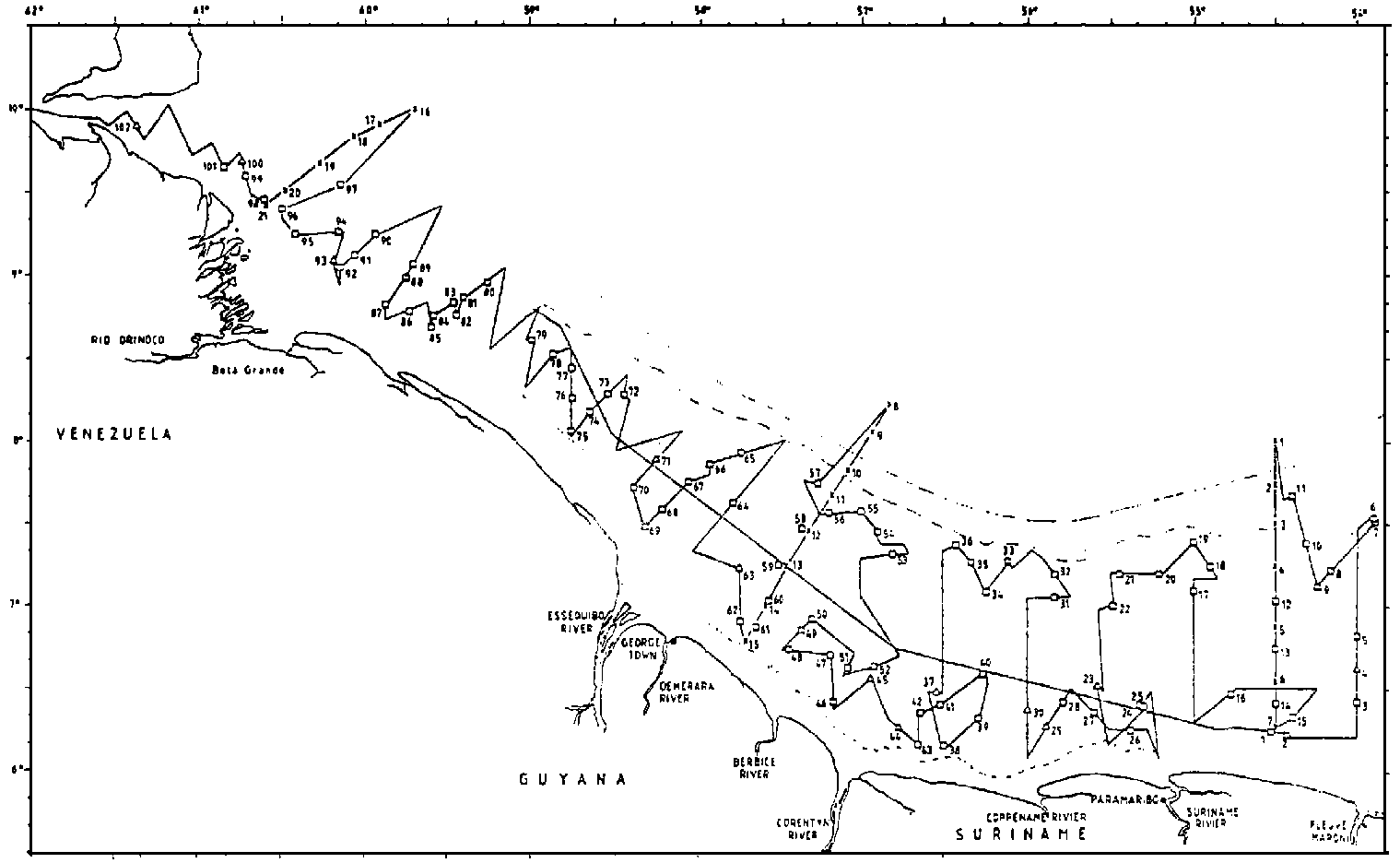
Figure 3.1.1 shows the course tracks and fishing stations in the area.
Distribution
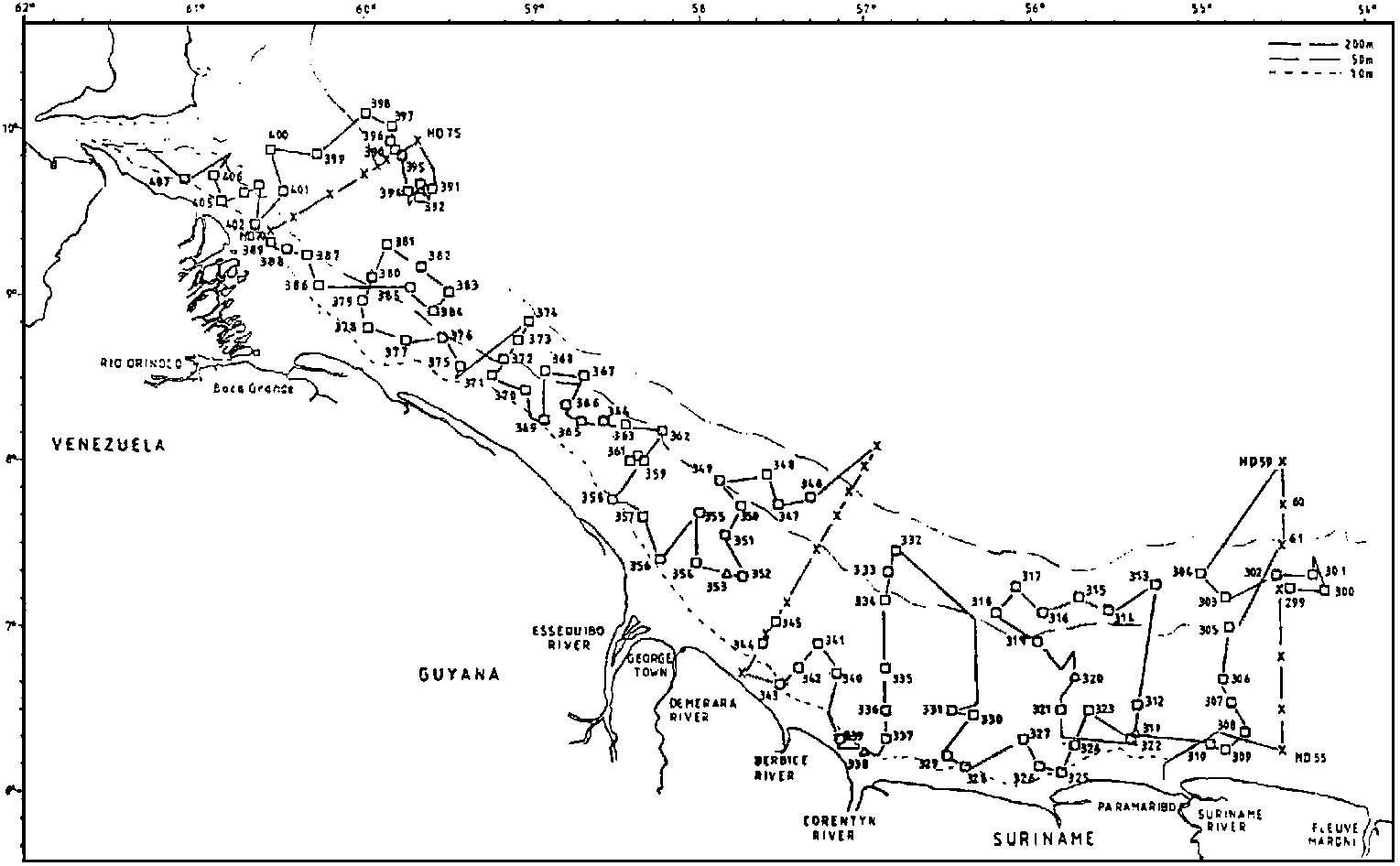
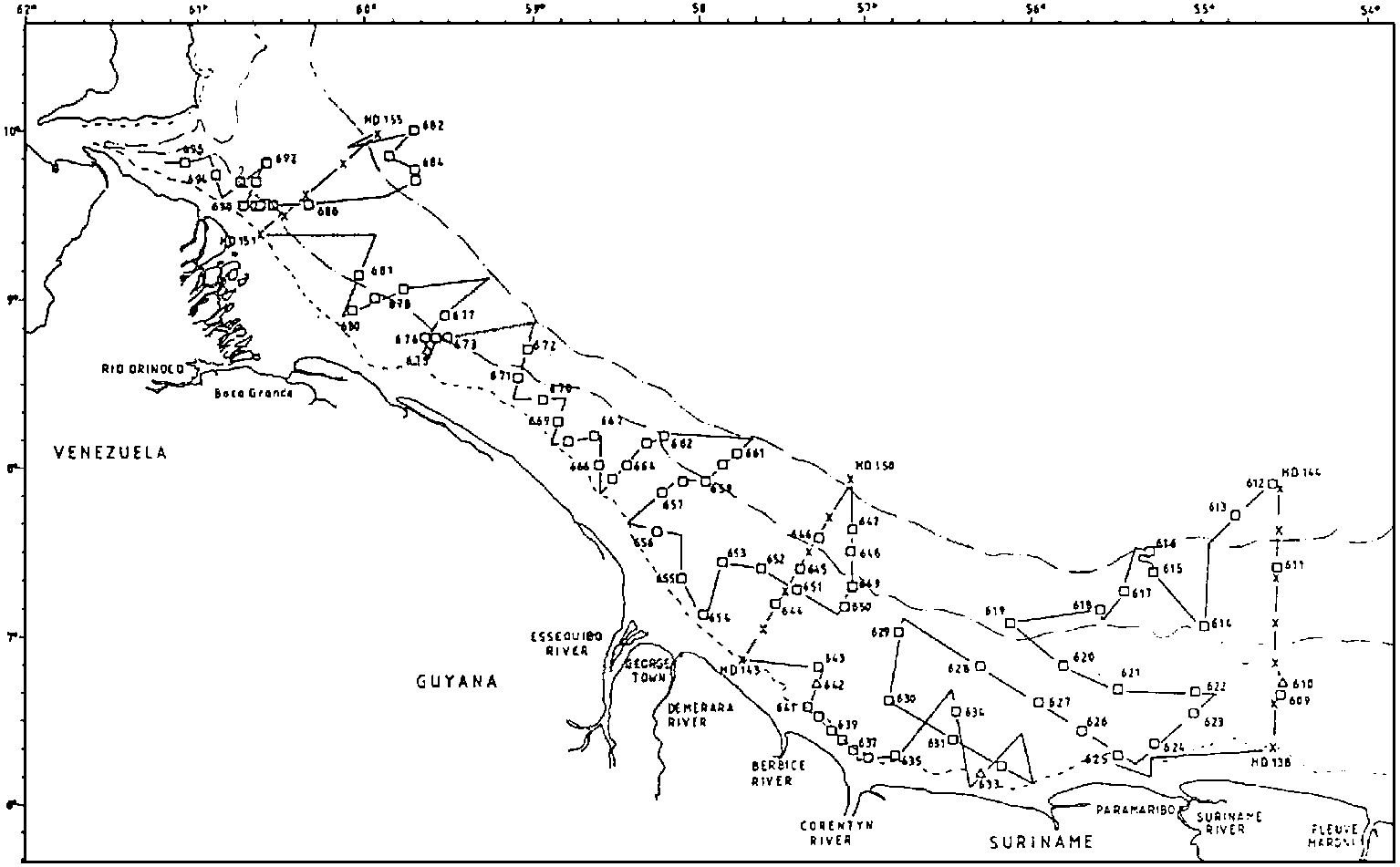
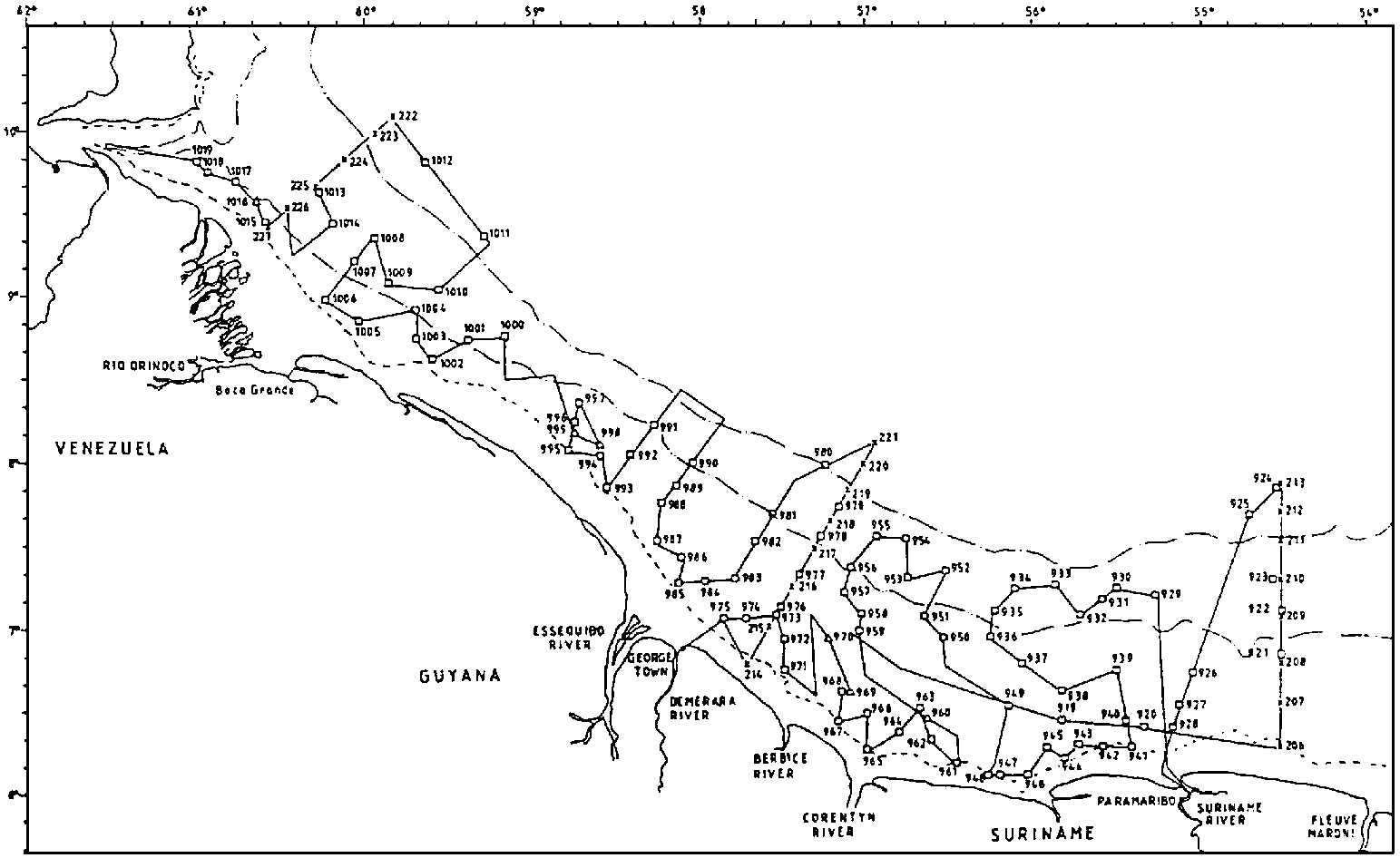
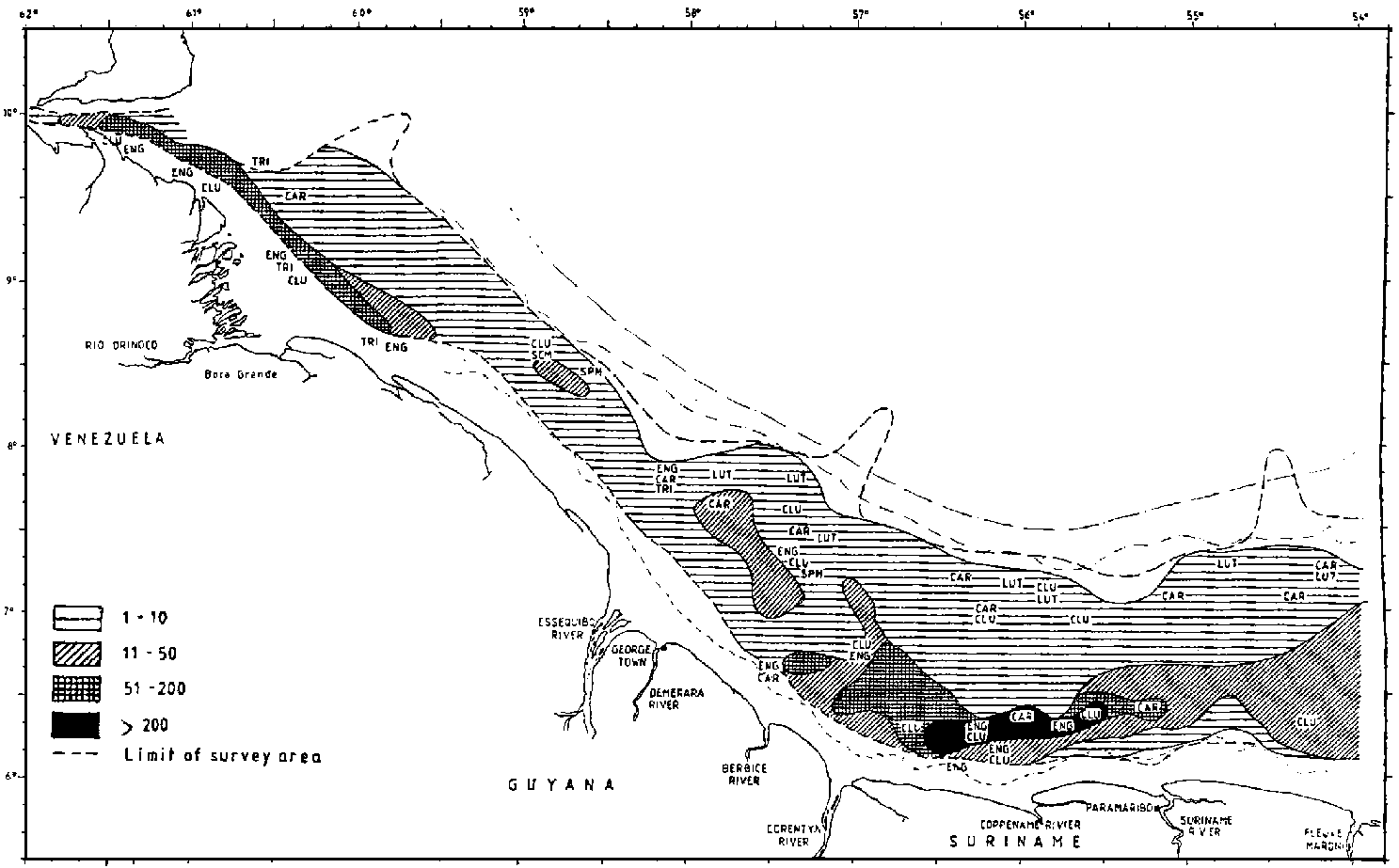
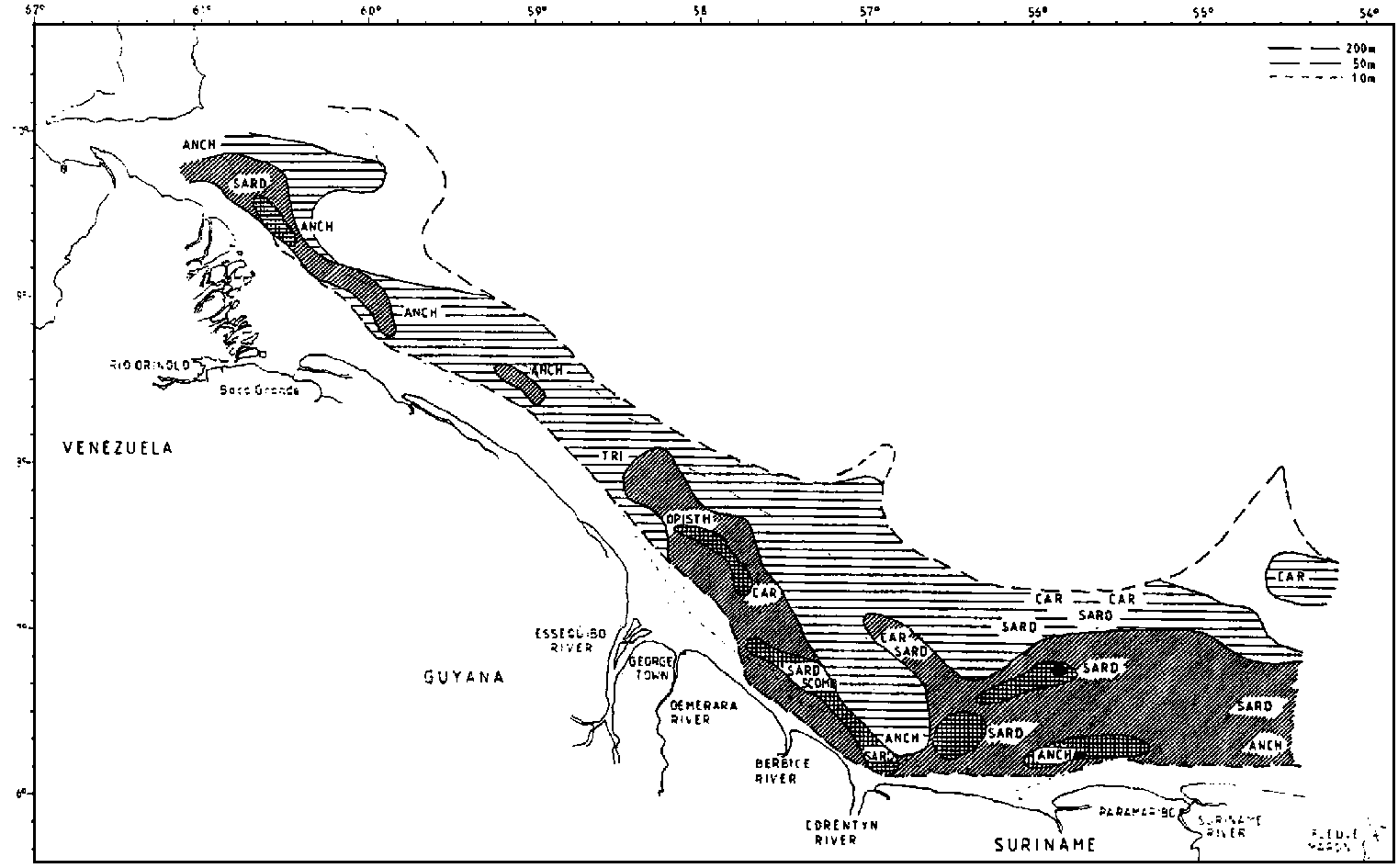
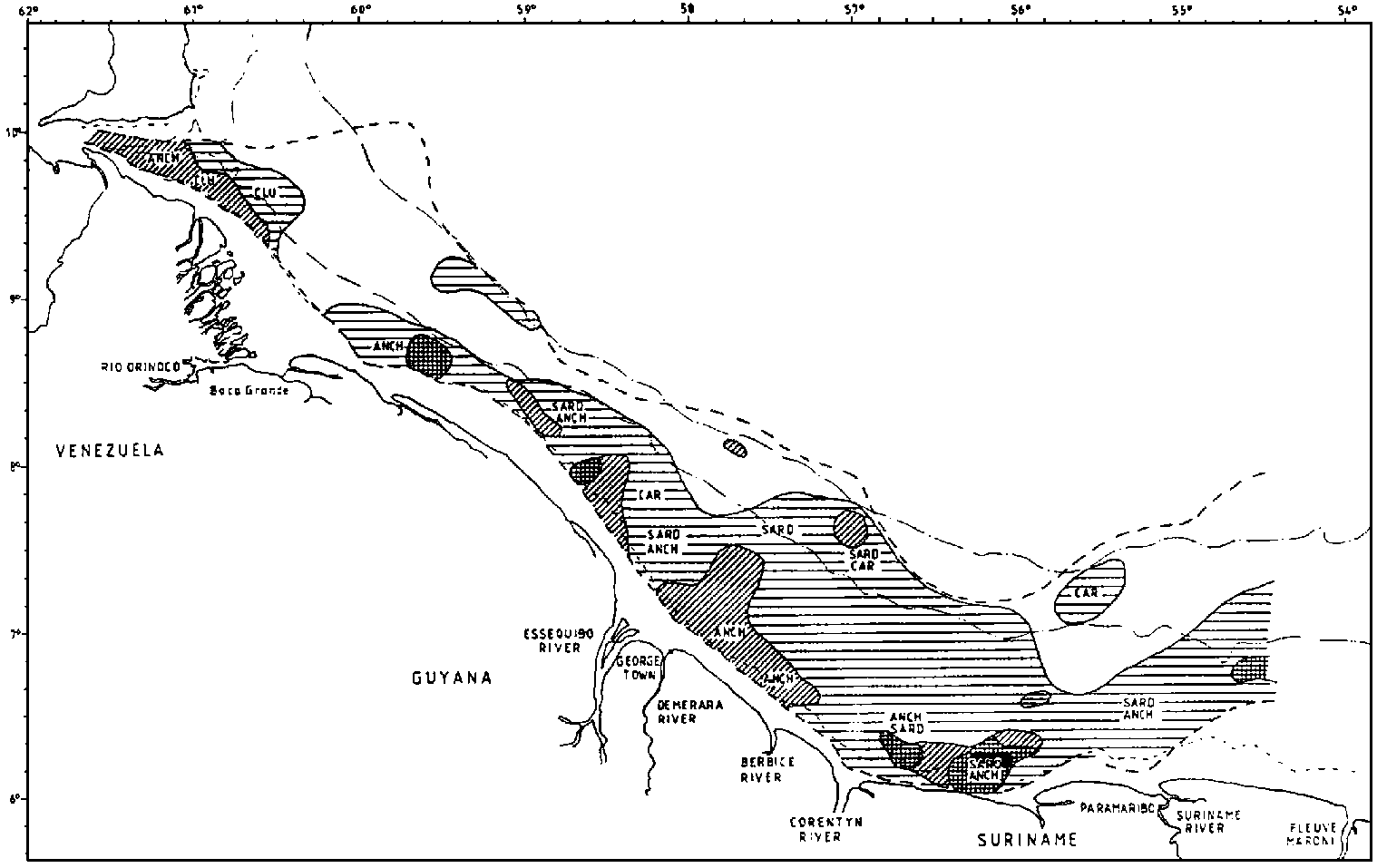
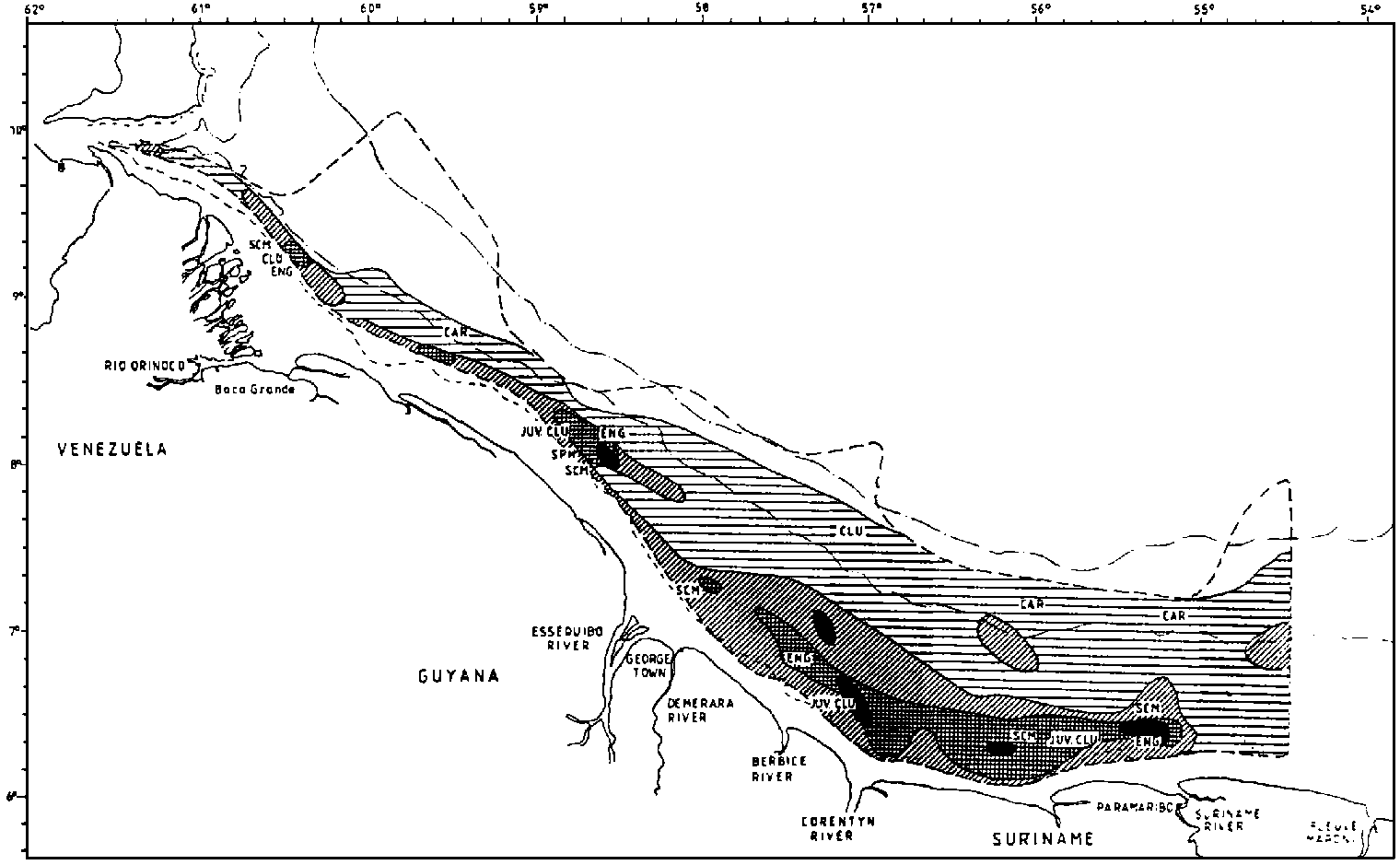
Figure 3.1.2 shows the distribution of the pelagic fish as observed with the acoustic integrations system for each of the surveys in January-February, May, August and October-November. Small pelagic fish, particularly engraulids and smaller clupeids are low in the food chain and their distribution is often closely related to areas of high primary and/or secondary production. As described in chapter 2 above, conditions for high primary production on the Guianas shelf are created by upwelling of intermediate water from the slope region and in part by discharges of the many rivers. The main concentrations of small pelagic fish were also mainly located in the cool inshore upwelled water which is also close to the river mouths. Most of the biomass of small pelagic fish was found in the water column above the thermocline. From the distribution charts it is evident that the assemblage of small pelagic fish is mainly restricted to the inner shelf area throughout the year, but with a somewhat more offshore distribution found in the May survey. A characteristic of the assemblage is that it consists of a relatively large number of species from three main families engraulids, clupeids and carangids. These are accompanied by large sized predators, barracudas, scombrids, and sharks in the pelagial. The distribution of demersal fish are also in a general way affected by that of the small pelagics which must represent their main food source.
While the main bulk of the small pelagic fish as observed by the acoustic system is found over the inner parts of the shelf, the outer shelf from about 50 m to the edge at about 100 m of depth was found to hold smaller amounts of pelagic fish in low densities distributed in small schools and aggregations. This assemblage differed in species distribution from that of the inner shelf with an absence of engraulids and with the clupeids represented nearly exclusively by adult Sardinella aurita and the carangids by the rough scad Trachurus lathami, the big-eye scad Selar crumenophthalmus, bumper and lookdowns. In terms of biomass this assemblage is of little importance, but the catches are analysed separately below to show the difference in compositions.
The distribution of small pelagic fish in the western Suriname shelf was usually found to have a continuous extention into Guyana and this means that the stocks in question to some degree are shared between the two countries.
Catch compositions
Pelagic types of fish often formed substantial parts of the catches in the hauls made with bottom trawl for swept area estimates and otherwise fishing for identification and sampling of pelagic types of fish was made both with demersal and mid water trawls. These data can add to our picture of the general occurrence and composition of the various groups and species, but they must be interpreted with caution. The catchability of these gears are often highly species and size selective. Some clupeids such as large sized schooling sardinella and thread herrings has for instance a low catchability while anchovy, smaller carangids such as bumper and scads and more solitary species such as Spanish mackerel and barracudas are more easily caught both at the bottom and in mid water. This difference in catchability detracts from the value of the records of the catches in describing the resource composition and this reservation should be kept in mind.
Complete catch records and various types of processed outputs giving catches by groups, species and surveys are available in the DATA FILE ANNEX to this report. Here we will only show some brief extracts of the catch data.
Figure 3.1.1. Suriname, Guyana and Venezuela, Orinoco. Course tracks and fishing stations, by surveys.
Figure 3.1.2. Suriname, Guyana and Venezuela, Orinoco. Fish distribution as recorded by the acoustic system, by surveys.
Tables 3.1.1 and 3.1.2 shows the mean catch rates in kg/hour, the three highest rates obtained and the incidence of occurrence by families and surveys and for the inner and outer shelf parts separately. Engraulids and clupeids show the highest rates on the inner shelf, carangids on the outer. There is a considerable variation through the year with particularly low rates for all groups in the August survey. For the short-lived anchovies this could be an effect of an annual production cycle. The biomass estimates show similar low values for this survey and the most likely explanation is a combination of a production cycle and movement out of the area covered by the survey, either into shallow inshore waters or southeast along the shelf. The low availability in August coincides with the summer season of reduced upwelling and a deeper and more pronounced thermocline.
Table 3.1.1 Suriname. Pelagic fish. Inner shelf. Catch rates in kg/hour by main groups by surveys. Mean rate, three highest rates and rate of occurrence.
|
Survey |
Mean rate |
Highest rates |
Rate of occurrence |
||
|
ENGRAULIDS |
|
||||
|
1 January |
176 |
1764, |
448, |
230 |
16/21 |
|
2 May |
46 |
512, |
146, |
133 |
10/23 |
|
3 August |
40 |
274, |
204, |
146 |
5/17 |
|
4 Oct.-Nov. |
113 |
1311, |
644, |
212 |
15/24 |
|
CLUPEIDS |
|
||||
|
1 January |
152 |
1320, |
497, |
283 |
19/21 |
|
2 May |
128 |
1369, |
618, |
536 |
18/23 |
|
3 August |
52 |
314, |
220, |
169 |
11/17 |
|
4 Oct.-Nov. |
152 |
1440, |
644, |
443 |
19/24 |
|
CARANGIDS |
|
||||
|
1 January |
75 |
1057, |
148, |
86 |
18/21 |
|
2 May |
77 |
948, |
234, |
180 |
22/23 |
|
3 August |
31 |
154, |
116, |
82 |
17/17 |
|
4 Oct.-Nov. |
39 |
311, |
154, |
101 |
22/24 |
|
SCOMBRIDS |
|
||||
|
1 January |
7 |
44, |
20, |
16 |
15/21 |
|
2 May |
25 |
185, |
83, |
69 |
15/23 |
|
3 August |
5 |
35, |
26, |
8 |
9/17 |
|
4 Oct.-Nov. |
22 |
103, |
57, |
53 |
18/24 |
|
BARRACUDAS |
|
||||
|
1 January |
22 |
147, |
137, |
113 |
9/21 |
|
2 May |
39 |
810, |
54, |
19 |
9/23 |
|
3 August |
5 |
34, |
19, |
16 |
7/17 |
|
4 Oct.-Nov. |
11 |
142, |
83, |
14 |
11/24 |
|
HAIRTAILS |
|
||||
|
1 January |
37 |
195, |
188, |
162 |
11/21 |
|
2 May |
65 |
905, |
382, |
78 |
9/23 |
|
3 August |
6 |
74, |
24, |
8 |
4/17 |
|
4 Oct.-Nov. |
24 |
263, |
75, |
58 |
13/24 |
|
Survey |
Mean rate |
Highest rates |
Rate of occurrence |
||
|
CLUPEIDS |
|
||||
|
1 January |
13 |
93, |
80, |
22 |
12/17 |
|
2 May |
17 |
135, |
82, |
56 |
7/17 |
|
3 August |
2 |
7, |
4, |
2 |
5/8 |
|
4 Oct.-Nov. |
6 |
64, |
6, |
5 |
8/14 |
|
CARANGIDS |
|
||||
|
1 January |
71 |
234, |
225, |
199 |
17/17 |
|
2 May |
113 |
499, |
236, |
212 |
15/17 |
|
3 August |
13 |
43, |
39, |
10 |
5/8 |
|
4 Oct.-Nov. |
99 |
582, |
283, |
201 |
14/14 |
|
SCOMBRIDS |
|
||||
|
1 January |
6 |
59, |
11, |
10 |
8/17 |
|
2 May |
10 |
84, |
47, |
14 |
6/17 |
|
3 August |
4 |
29, |
6, |
0 |
2/8 |
|
4 Oct.-Nov. |
4 |
18, |
8, |
8 |
8/14 |
|
BARRACUDAS |
|
||||
|
1 January |
4 |
21, |
15, |
13 |
8/17 |
|
2 May |
7 |
91, |
15, |
11 |
5/17 |
|
3 August |
1 |
5, |
0, |
0 |
1/8 |
|
4 Oct.-Nov. |
2 |
11, |
8, |
5 |
6/14 |
Table 3.1.3 Suriname. Species distribution by families of small pelagic fish. Catch by weight of species by surveys as per cent of total catch of family.
|
Survey: |
1 |
2 |
3 |
4 |
Mean |
|
ENGRAULIDS |
|
||||
|
Mean catch, kg/hour |
176 |
46 |
40 |
113 |
|
|
Anchoa spp. |
78 |
13 |
88 |
20 |
50 |
|
Anchoviella spp. |
7 |
48 |
12 |
28 |
24 |
|
Engraulis spp. |
15 |
18 |
|
49 |
21 |
|
Lycengraulis spp. |
|
21 |
|
|
5 |
|
CLUPEIDS |
|
||||
|
Mean catch, kg/hour |
98 |
97 |
36 |
109 |
|
|
Opisthonema oglinum |
54 |
21 |
8 |
5 |
22 |
|
Sardinella aurita |
14 |
11 |
|
3 |
7 |
|
Pellona harroweri |
8 |
39 |
14 |
16 |
19 |
|
Chirocentrodon bleekerianus |
3 |
13 |
63 |
70 |
37 |
|
Harengula jaguana |
|
16 |
12 |
1 |
7 |
|
Odontognathus spp. |
16 |
|
|
4 |
5 |
|
CARANGIDS |
|
||||
|
Mean catch, kg/hour |
73 |
92 |
27 |
62 |
|
|
Chloroscombrus chrysurus |
14 |
45 |
21 |
26 |
27 |
|
Selene spp. |
44 |
1 |
21 |
21 |
22 |
|
Trachurus lathami |
18 |
23 |
|
32 |
18 |
|
Hemicaranx amblyrhyncus |
2 |
|
14 |
9 |
6 |
|
Selar crumenophthalmus |
13 |
11 |
7 |
|
8 |
|
Decapterus punctatus |
1 |
8 |
|
1 |
2 |
|
Decapterus macarellus |
|
7 |
|
3 |
2 |
|
Trachinotus spp. |
|
|
31 |
2 |
8 |
|
Oligoplites spp. |
|
|
|
5 |
1 |
The scombrids consisted of the two species, king mackerel Scomberomorus cavalla and serra S. brasiliensis with the last form as the most common contributing 64% of the total Spanish mackerel catch. They were found in highest abundance on the inner shelf apparently related to the availability of prey species.
Also the barracudas were represented by two species with guachanch barracuda Sphyraena guachancho occurring about 6 times as frequent as the southern sennet Sphyraena picudilla which, however, produced an occasional very high catch. The barracudas were roughly three times more abundant in the inner than in the outer shelf.
The hairtails consisted of only one species the largeheaded hairtail Trichiurus lepturus and it was found nearly exclusively on the inner shelf.
Biomass estimates
The estimates of biomass based on the acoustic observations are shown in Table 3.1.4. As described under chapter 1 above a separation into two groups of fish is attempted during the processing of the data, Pelagic I consisting of engraulids and clupeids and Pelagic II which mainly includes carangids, scombrids, barracudas and hairtails. This separation is partly based on the catch compositions partly on characteristics of behaviour in relation to forms of aggregations and the results will only be an approximation of the proportions between the groups.
The estimates of total biomass vary through the year with a factor of more than three with particular low values for the August survey. The catch rates for the various groups show a roughly similar variation and this indicates variations not only in total abundance but also in the densities of the forms.
Table 3.1.4 Suriname. Estimates of standing biomass of pelagic fish by surveys and groups. 1 000 tonnes.
|
Survey |
Pelagic 1 |
Pelagic 2 |
Total |
|
1 January |
520 |
240 |
760 |
|
2 May |
310 |
240 |
550 |
|
3 August |
170 |
30 |
200 |
|
4 Oct.-Nov. |
240 |
140 |
380 |
For the purpose of estimating standing stock biomass it is proposed to disregard the summer season of low availability and use the average of the first two and the last survey. Such calculations give a total biomass of pelagic fish of 550 000 tonnes of which 360 000 tonnes is engraulids and clupeids and 200 000 tonnes carangids and others.
A further rough breakdown of these group estimates may be obtained by use of the proportions of the total catches between families and for the surveys 1, 2 and 4. The probable bias caused by differences in catchability between sizes and species should, however, be kept in mind. These calculations give the following breakdown:
|
Engraulids |
130 000 |
tonnes |
|
Clupeids |
230 000 |
tonnes |
|
Carangids |
120 000 |
tonnes |
|
Scombrids |
20 000 |
tonnes |
|
Barracudas |
25 000 |
tonnes |
|
Hairtails |
35 000 |
tonnes |
The main source of data for the analysis of the demersal resources is from the random bottom trawl stations carried out. For the Suriname shelf this material comprises 35, 37, 24 and 30 stations from the four coverages respectively. The slope was investigated to a much lesser intensity, with only 8 stations throughout the year. In the analysis below the datasets have been analysed by two bottom depth strata: 0-50 m and 50-120 m which are termed inner and outer shelf respectively. Below only the highlights from the analysis with the main commercial species or species groups are commented upon in the text The complete results from the analysis are included in Annex 7 of the DATA FILE.
Demersal fish
The main demersal species groups in Suriname waters are snappers, croakers and grunts. The outer shelf is clearly dominated by snappers, while the inner shelf in addition holds important resources of croakers and grunts.
The main species are for the inner shelf: lane snapper L. synagris, Corocoro grunt Orthopristis ruber, king weakfish Macrodon ancylodon, acoupa weakfish Cynoscion acoupa, dwarf goatfish Upeneus parvus, American harvestfish Peprilus paru and Jamaica weakfish Cynoscion jamaicensis in decreasing order of quantity. For the outer shelf the main species are vermillon snapper Rhomboplites aurorubens, southern red snapper L. purpureus and cardinal snapper Pristipomoides macrophthalmus.
The demersal fish has a continuously distribution on the Suriname-Guyana shelf. The stocks are thus shared, but to what extent is uncertain. A preliminary study of the snapper stocks indicates that a seasonal migration may take place in summer from the offshore Suriname shelf into more inshore Guyanese waters. Further analysis of the survey data should be made to study distribution patterns.
Catch composition
As most of the trawl hauls are randomly located for the purpose of swept area estimates, they will not be representative for aimed fishery at targeted species and locations. The highest catches may, however, be representative for a fishery and the mean catch might serve as indicators of minimum catch rates in a wide scale multi-species fishery.
Table 3.1.5 shows the mean catch rates by surveys in kg/hour and the total catch distribution by size classes for the main demersal species in Suriname waters.
Table 3.1.5 Suriname. Mean catch rates and catch distribution by size classes of main species in all hauls.
|
Species |
Mean rate |
Number of hauls in catch groups |
Rate of occurr. |
||||||
|
kg/hour |
1-30kg |
30-100 |
0.1-0.3t |
0.3-1t |
1-3t |
>3t |
|||
|
INNER SHELF 0-50 m |
|
||||||||
|
|
Lane snapper |
47 |
34 |
7 |
5 |
2 |
1 |
|
49/81 |
|
Corocoro grunt |
40 |
13 |
2 |
2 |
|
2 |
|
19/81 |
|
|
King weakfish |
14 |
10 |
6 |
4 |
|
|
|
20/81 |
|
|
Acoupa weakfish |
12 |
10 |
1 |
|
1 |
|
|
12/81 |
|
|
Dwarf goatfish |
8 |
42 |
6 |
2 |
|
|
|
50/81 |
|
|
Americ. harvestfish |
7 |
38 |
5 |
1 |
|
|
|
44/81 |
|
|
Jamaica weakfish |
8 |
16 |
3 |
2 |
|
|
|
21/81 |
|
|
OUTER SHELF 50-120 m |
|
||||||||
|
|
Vermillon snapper |
63 |
41 |
13 |
11 |
1 |
|
|
66/126* |
|
South. red snapper |
23 |
31 |
8 |
4 |
|
|
|
43/126* |
|
|
Cardinal snapper |
17 |
43 |
5 |
3 |
|
|
|
51/126* |
|
* Catch distribution and rate of occurrence for whole shelf (0-120 m).The vermillon snapper is also found in the inner shelf but at a very low catchrate (3 kg/h) and small sized, with average specimen weight 0.5 kg as compared to 1.43 kg at the outer shelf. This points to the inner shelf as nursery area for this species. The lane snapper, which was exclusively caught on the inner shelf also shows a size dependent depth distribution with a mean of 0.76 kg in the 20-30 m bottom depth range and 0.38 kg between 30 and 50 m. A more detailed analysis on the species level, which is not within the scope of this report, might show that the concentration of big sized snapper to the narrow depth range is restricted to one survey only, and might indicate a spawning aggregation.
By main groups the mean catch rates were:
|
INNER SHELF: 0-50 m |
|
|
|
|
|
Snappers |
60 kg/h |
|
Grunts |
50 kg/h |
|
Croakers |
62 kg/h |
|
|
|
|
OUTER SHELF: 50-120 m |
|
|
|
|
|
Snappers |
108 kg/h |
Estimates of fish density by depth strata are given in the DATA FILE of Annex 8. By multiplying these densities with the area of the shelf, shown in Table 2.3.1. depth stratified estimates of standing biomass are obtained by surveys and species or species groups. These estimates are presented for the main groups in Table 3.1.6.
Table 3.1.6 Suriname. Estimates of biomass of demersal fish by main groups and surveys.
|
|
Survey 1 |
Survey 2 |
Survey 3 |
Survey 4 |
All surveys |
|
|
INNER SHELF |
|
|||||
|
|
Snappers |
9 500 |
38 000 |
15 000 |
23 000 |
22 000 |
|
Grunts |
4 000 |
5 000 |
37 000 |
31 000 |
18 500 |
|
|
Croakers |
37 500 |
15 000 |
21 500 |
16 000 |
22 500 |
|
|
Other demersal |
25 000 |
55 000 |
32 000 |
37 000 |
40 000 |
|
|
OUTER SHELF |
|
|||||
|
|
Snappers |
16 000 |
13 000 |
17 000 |
19 500 |
16 000 |
|
Other demersal |
5 500 |
5 000 |
9 000 |
5 000 |
6 000 |
|
|
TOTAL SHELF |
|
|||||
|
|
Snappers |
25 500 |
51 000 |
32 000 |
42 500 |
38 000 |
|
Grunts |
4 000 |
5 000 |
37 000 |
31 000 |
18 500 |
|
|
Croakers |
37 500 |
15 000 |
21 500 |
16 000 |
22 500 |
|
|
Other demersal, mostly non comm. |
30 500 |
60 000 |
41 000 |
42 000 |
46 500 |
|
Sharks
Table 3.1.7 shows an analysis of the catch data for sharks by surveys. The highest catches were taken on the inner shelf and often together with large catches of small pelagic fish which represent the most important prey species. The mean catch rates were low, a consequence first of all of the restricted distribution on the shelf, demonstrated by the low rates of incidence. A swept area estimate based on the data from all the surveys gives a biomass of 5 000 tonnes. This is likely to be a considerable underestimate since sharks have a semi-pelagic behaviour.
Table 3.1.7 Suriname. Sharks. Catch rates in kg/hour by main groups by surveys. Mean rate, three highest rates and rate of occurrence.
|
Survey |
Mean rate |
Highest rates |
Rate of occurrence |
||
|
1 January |
10 |
87, |
68, |
25 |
18/32 |
|
2 May |
9 |
106, |
86, |
30 |
12/37 |
|
3 August |
14 |
105, |
71, |
32 |
9/19 |
|
4 Oct.-Nov. |
5 |
32, |
24, |
20 |
21/37 |
Table 3.1.8 Suriname. Sharks. Proportion by weight in catch, range of sizes and percentage occurrence in all catches.
|
|
|
Catch |
Range of size, |
Incidence |
|
Requiem sharks, |
Carcharhinus spp. |
18 |
1 - 10 |
3 - 6 |
|
Sharpnose sh., |
Rhizoprionodon spp. |
59 |
0.5 - 3 |
3 - 24 |
|
Hammerheads, |
Sphyrna spp. |
18 |
0.5 - 3 |
4 - 5 |
|
Smooth-hounds, |
Mustelus spp. |
5 |
1 |
2 - 6 |
Small sized shelf squid were caught in bottom trawl in daylight hauls, mostly in the depth range 20-50 m. Table 3.1.9 shows the catch data which include estimates of the mean rate from the hauls where present, which might better reflect the seasonal changes in availability. The catch rates are small or modest, the highest recorded from the May survey. The distribution tended to be patchy and special “squid grounds” may exist. 95% of the catch of squid on the shelf consisted of Loligo species with L. plei dominating and with smaller amounts of L. pealei, somewhat uncertain because of taxonomic difficulties. Sizes ranged from 5-20 cm mantle length, but not exceeding 10 cm in the August survey. A swept area estimate gives a mean standing biomass of about 3 000 tonnes based on the data from all four surveys. There is likely to be an annual cycle in the biomass of these species with levels considerably higher than this estimate, probably during the first half of the year. A biomass estimate of 1 400 tonnes was obtained in a Japanese survey, 1982-83 (Inada and Mito, 1983)
Table 3.1.9 Suriname. Squid. Inner shelf. Catch rates in kg/hour by main groups by surveys. Mean rate for all hauls and where present, three highest rates and rate of occurrence.
|
Survey |
Mean rate |
Highest rates |
Rate of occurrence |
|||
|
All |
Where pres. |
|||||
|
1 January |
4 |
12 |
44, |
4 |
33 |
5/15 |
|
2 May |
15 |
27 |
95, |
84, |
42 |
11/20 |
|
3 August |
8 |
15 |
58, |
14, |
12 |
8/15 |
|
4 Oct.-Nov. |
6 |
11 |
30, |
25, |
22 |
15/23 |
Shallow water shrimp. As discussed at the planning meeting the objectives of the programme did not include comprehensive coverage of the shallow water shrimps as this would have required a separate extensive effort. Some incidental observations were, however, made and these will be briefly reported on below.
The behaviour and distribution of the shrimps differ by species. Thus the brown shrimp Penaeus subtilis and the white shrimp P. schmitti have highest catchability in shallower parts of the shelf in daytime, while the red spotted shrimp P. brasiliensis is generally found deeper and give highest catches during the night. The pink shrimp P. notialis appeared in catches both at daytime and during the night. Because of the restricted data and the behaviour differences the analysis of the catch data has for this group been limited to the hauls in which the relevant species appeared. These data may be used to demonstrate relations between species and surveys, but not for estimates of biomass. The number of hauls made in the shrimp areas vary considerably from survey to survey with regard to depth and time of day. In order to obtain a comparable series of data an attempt has been made to convert the catch data to correspond to an equal number (20) of day and night hauls for each survey.
The data obtained on the small sized seabob Xiphopenaeus kroyeri and the white belly prawn Nematopalaemon schmitti have not been included in the analysis. They appeared sporadically with often high catch rates, but it is believed that the surveys only covered a smaller outer part of their more inshore distribution.
Table 3.1.10 shows the catch data for the four penaeid shrimp species for Suriname. The brown shrimp dominate in all surveys, but this may partly be an effect of an incomplete coverage of the medium shelf at night. Catch rates are low except for the second survey which is affected by a single haul in which 50 kg was caught in 12 minutes. If this observation is discounted there is no seasonal trend in catch rate, but the size compositions (see DATA FILES) suggest recruitment in January and in August. The size of the samples of red spotted shrimp varied little through the year.
It is thought that the survey data could provide a good basis for studies of the fish by-catch in the shrimp fisheries.
Table 3.1.10 Suriname. Shallow water shrimps. Mean catch rates in hauls where present and highest rates by surveys, mean rates for all surveys and by day/night, kg/hour. Total catch adjusted to a standard survey effort for all surveys.
|
|
Brown |
Red spotted |
White |
Pink |
|
1 January |
4 (19) |
2 |
|
|
|
2 May |
123 (240) |
2 |
|
2 |
|
3 August |
4 (7) |
4 (7) |
10 |
|
|
4 Oct.-Nov. |
3 (6) |
3 (4) |
|
1 |
|
All surveys |
14 |
2 |
3 |
1 |
|
All surveys day |
20.3 |
0.7 |
3.3 |
|
|
All surveys night |
2.6 |
2.1 |
0 |
1.0 |
|
Adjusted catch |
340 kg |
150 kg |
|
|
The following groups of resources were identified and will be discussed:
Small pelagic fish was found aggregated in areas over the inner shelf where they occurred in schools and layers. Fish densities were high and the areas extensive in all except the third survey. This assemblage consisted of a large number of species from three main families, engraulids, clupeids and carangids accompanied by larger sized predators, barracudas, scombrids and sharks in the pelagial. Lower densities of pelagic fish was found over the outer shelf consisting of fewer species, mainly round sardinella, rough scad and other carangids. Pelagic fish formed an important component of the catches also in the bottom trawl hauls. Catch rates were generally low in the August survey.Summary of biomass estimatesDemersal fish occurred in highest abundance on the inner shelf, the most important commercial groups being snappers, grunts and croakers. Various species of snappers dominated the outer shelf.
Sharks occurrence in the catches seemed to be associated with that of its main prey, small pelagic fish, but catch rates were modest and incidence low.
Shrimps. Only incidental observations are presented on the important resources of shallow water shrimps. For deep sea shrimp the results of some fishing tests are available.
Squid was found in modest amounts in the mid shelf consisting mainly of small Loligo species. The highest catch rates were obtained in the May survey.
Table 3.1.11 shows a summary of the assessments of the standing stock of the various groups. Some of these are likely to be underestimates e.g. those for sharks and perhaps the red snapper. With a total biomass of 680 000 tonnes and a shelf area of 15 000 nm2 the mean density of biomass of the Suriname shelf is 45 t/nm2 which indicates a fairly high productivity.
Summarized data are available on the findings from a number of previous trawl surveys of the Suriname shelf. In order to compare the resulting estimates of standing biomass the same catchability coefficient must be applied in the calculations. In Table 3.1.12 the results for each survey have been converted to the use of q = 1. There is a considerable variation between the results. Some of this could be caused by differences in survey methodology, thus surveys targeting on shrimp may have a high proportion of night hauls which will give a bias towards low fish catches. The groups of fish included may also vary between surveys. The comparison may, however, demonstrate a real decline of demersal fish biomass on the outer shelf over the long period from the 1960ies up to present. These offshore grounds must have held accumulated virgin stocks at that time. In general, however, our results fall reasonably into the ranges of the previous findings.
A comparison between our data on catch composition of demersal fish with that from the “BONITO” survey indicate that the proportion between main groups may have changed. The sea catfishes which after the croakers were the most important group in the “BONITO” catches appeared with only very low density in our catches.
In order to maintain the fish stocks as a lasting resource only a part of the standing stock can be fished. The proportion of this long term yield varies between types of fish, and existing fisheries must also be taken into account in calculating the total potentials. In the following we will use 40% for small pelagic fish and 20% for demersal fish and the larger sized pelagics such as barracudas, Spanish mackerels and hairtails. These proportions are based on the assumption that the demersal and larger sized fish are moderately exploited at present.
The official catch statistics for Suriname does not include a breakdown of the total catch on species or species groups of fish. One must assume that in addition to the reported 1987 catch of about 4 000 tonnes of marine finfish, the fish by-catch in the shrimp fisheries may exceed this by a considerable amount. On the assumption, however, that the main demersal fish stocks are only moderately exploited, the potential yield at 20% of the standing biomass would be 16 000 tonnes of snappers, grunts and croakers and about 10 000 tonnes of Spanish mackerels, barracudas and hairtails. Not all of the species included in these groups are of equal commercial interest, e.g. the small sized snappers and the grunts are probably of less value than the large sized red snapper. A more detailed analysis of the state of the stocks of highest commercial importance should be made on the bases of additional information on catches by species, size compositions etc. In addition there would be a considerable potential of small pelagic fish, mainly engraulids and clupeids if a fishery could be developed on these types of low-value resources. One should note that in a management sense the stocks are to some extent shared with Guyana.
Table 3.1.11 Suriname. Summary of estimates of standing stock biomass. Tonnes.
|
Pelagic fish |
|
|
|
|
|
Engraulids |
130 000 |
|
|
Clupeids |
230 000 |
|
|
|
Carangids |
147 000 |
|
|
|
Scombrids |
14 000 |
|
|
|
Barracudas |
16 000 |
|
|
|
Hairtails |
23 000 |
|
|
|
Total |
|
550 000 |
|
|
Demersal fish |
|
|
|
|
|
Snappers |
38 000 |
|
|
Grunts |
18 500 |
|
|
|
Croakers |
22 500 |
|
|
|
Other demersal mostly non-com. |
46 500 |
126 000 |
|
|
Sharks |
|
5 000 |
|
|
Squid |
|
3 000 |
|
|
Shallow water shrimp |
|
|
|
|
Deep water shrimp |
|
|
|
|
Total |
684 000 |
||
|
Survey: |
Inner shelf |
Outer shelf |
Total |
|
Coquette (1962-65) |
169 000 |
83 000 |
252 000 |
|
Calamar (1967-68) |
91 000 |
|
|
|
La Salle (1969) |
74 000 |
|
|
|
Oregon II (1972-77) |
|
72 000 |
|
|
Bonito (1980-81) |
105 000 |
|
|
|
Dr Fridtjof Nansen |
128 000 |
22 000 |
150 000 |