



 Antimicrobial Resistance
Antimicrobial resistance (AMR) is a major global threat of increasing concern to human and animal health. It also has implications for both food safety and food security and the economic well being of millions of farming households.
Food plays an important role in the development and spread of AMR. The presence of AMR microorganisms in agricultural production systems and food chains is a potential route of exposure for everyone. Good hygiene practices in agriculture, fundamental in achieving food safety, are also key to addressing antimicrobial resistance.
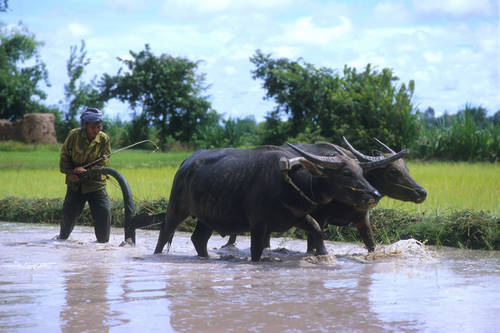
The role of Codex in AMR
Microorganisms (bacteria, parasites, viruses and fungi) in food are potential food safety hazards. The relationship of the use of antimicrobials (agents that can kill microorganisms or stop them from growing) in food-producing animals and the emergence of resistant microorganisms in the food chain is a concern and has been the subject of numerous national and international consultations.
The extent to which the use of antimicrobial agents in food animals (including aquaculture), horticulture or humans contributes to antimicrobial-resistant microorganisms in humans varies between the different microorganisms and different regions.
When humans ingest antimicrobial-resistant microorganisms in food, some species of microorganisms may cause illness. These and other species may also serve as a source of transferable resistance determinants for other microorganisms, including human pathogens.
In recognising the need for a more general and multidisciplinary response to deal with AMR, in 2006 Codex established a first Task Force on Antimicrobial Resistance to develop science-based guidance on how to assess and manage the risks to human health associated with the presence in food and feed (including aquaculture) and the transmission through food and feed of antimicrobial resistant microorganisms. A second Task Force, recently established in response to the increased global attention to the serious threat of AMR to public health, will develop science-based guidance to enable coherent management of antimicrobial resistance along the food chain.
Other Codex texts on veterinary drugs and their residues, food hygiene, animal feed, also contribute to tackle AMR by preventing the development and minimizing the transmission of AMR through the food chain.
Related Codex Texts
| Reference | Title | Committee | Last modified |
EN
FR
ES
AR
ZH
RU
|
|---|
News
.jpg.png)
World Food Safety Day / Morocco strengthens the fight against antimicrobial resistance in livestock farming
.jpg)
World Food Safety Day / Shifting from burden to solutions in tackling AMR

ACT and World Food Safety Day combined event for FAO council week
.jpg)
ACT Project closure meeting successfully held in the Republic of Korea

ACT project to share experiences at the 6th Global Conference on Foodborne AMR
 (cropped).JPG.jpg)
WAAW/ ACT countries acted now to protect our present and secure our future
ACT Project

Key Facts
- Around 500.000 human deaths each year are related to antimicrobial resistance
- 27 different antimicrobial classes are used in animals.
- Total global animal health market in 2011 was equivalent to USD 22 billion (OECD)
- Only 42 countries have a system to collect data on the use of antimicrobials in livestock (OIE)
- No standardized data available on the global use of antimicrobials in livestock
Source FAO
Video
ACT Video 2023
Available also in French, Spanish, Korean, Cambodian, Nepalese, Mongolian and Bolivian.
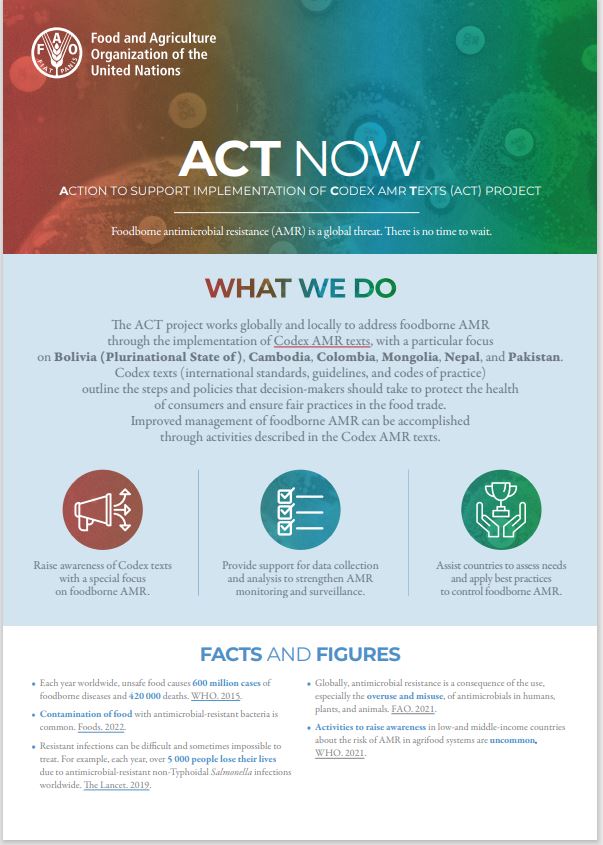
New ACT factsheets
- Bolivia (Plurinational State of) in ACTion
- Cambodia in ACTion
- Colombia in ACTion
- Mongolia in ACTion
- Nepal in ACTion
- Pakistan in ACTion
Available in: English, Spanish and Mongolian.
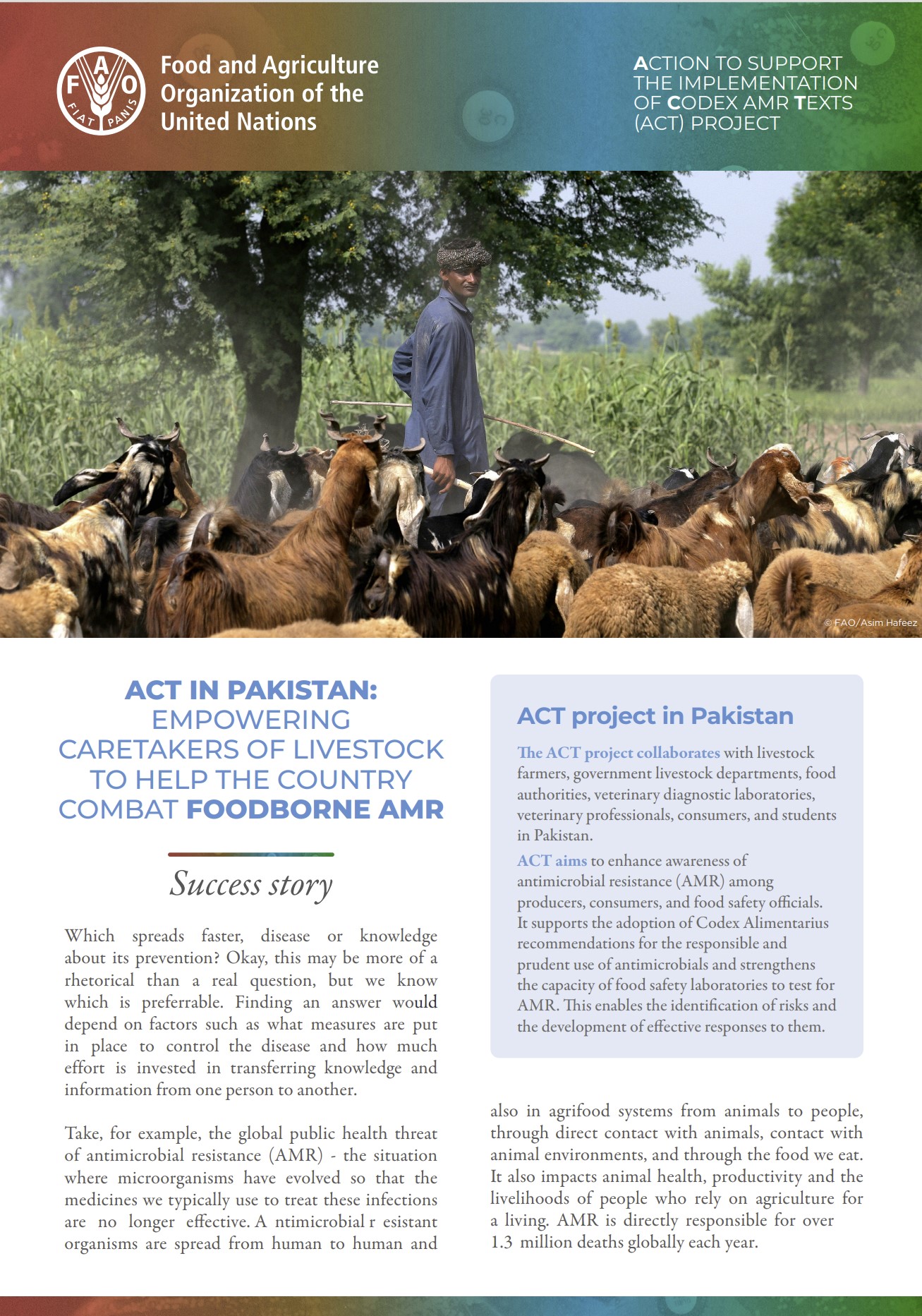
Available in: English.
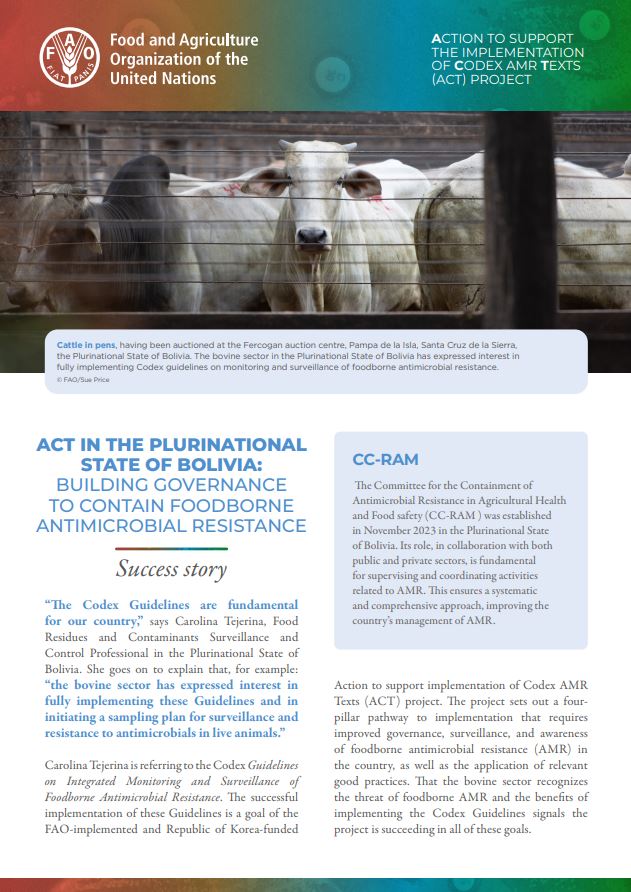
Available in: English.
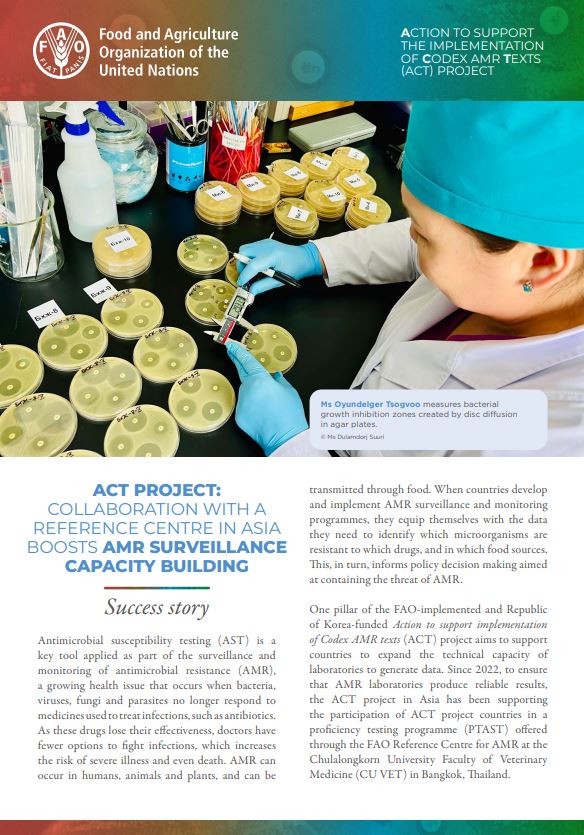
Available in: English.