Stories of agrifood systems change. Insights from Côte d’Ivoire, Cambodia, the Pacific, Guatemala and Albania
2024
A series of country change stories has been documented in an attempt to ground the global agrifood systems discourse in specific realities, demystify some of the terms involved and make sense of what they mean at country level.

Agrifood systems transformation in Mediterranean cities - Opportunities for collaborative action and shared learning
2024
This technical brief aims to provide an overview of urban agrifood systems in the Mediterranean region and propose possible ways forward to collaboratively transform them.

Policymaking for agrifood systems transformation in Costa Rica
2024
This brief provides a snapshot of agrifood policymaking in Costa Rica. It summarizes the government's efforts in achieving more sustainable agrifood systems in recent years, highlighting economic, environmental and social aspects. Against the backdrop of the country's participation in the UN Food Systems Summit and follow-up processes, it discusses agrifood policy coordination, multistakeholder engagement, and the importance of investments for sustainable agrifood systems in Costa Rica.

Policymaking for agrifood systems transformation in Zambia
2024
This brief provides a snapshot of agrifood policymaking in Zambia. It summarizes the government's efforts in achieving sustainable agrifood systems in recent years, highlighting economic, environmental and social aspects. Against the backdrop of the country's participation in the UN Food Systems Summit, and follow-up processes, it discusses the nation's agrifood policy coordination, multistakeholder engagement, and the importance of investments for sustainable agrifood systems.
?sfvrsn=2c66cd72_0 "cc9291en_200 (1)")
Developing sustainable food value chains - Practical guidance for systems-based analysis and design
2024
This brief outlines a rigorous and standardized approach for value chain analysis and design, taking a systems perspective to analyse and influence the behaviour and performance of value chain actors influenced by a complex environment...

Green growth: strategies and actions to shift towards sustainable agrifood systems in the Mediterranean region
2023
During this webinar, organized by the SFS-MED Platform and held on 12 September 2023, stakeholders from across the Mediterranean shared knowledge and concrete experiences about the challenges and opportunities in greening agrifood systems in the Mediterranean region...

A digital journey into Mediterranean agrifood systems
2023
Exploring catalytic levers, inspiring stories and common solutions for transformation...

Women as key players in greening Mediterranean food systems: drivers and challenges
2023
This publication reflects the outcomes of the webinar organized by the SFS-MED Platform on 5 June 2023. During the webinar stakeholders from across the Mediterranean shared knowledge and concrete experiences about the role that multiple stakeholders can play in promoting the effective participation of women to greener, more sustainable and more resilient agrifood systems in the Mediterranean.

The State of Food Security and Nutrition in the World
2023
Urbanization, agrifood systems transformation and healthy diets across the rural–urban continuum...

Rethinking our food systems: A guide for multi-stakeholder collaboration
2023
Multi-stakeholder collaboration is an important process that can serve as a tool and strategy to solve complex issues and problems such as transforming national food systems towards more sustainable outcomes...

Consumers and Mediterranean diet: towards food systems transformation
2023
Successful cases and experiences from the SFS-MED Platform webinar held on 26 January 2023.During this webinar, stakeholders from across the Mediterranean shared experiences and successful cases from the consumer perspective, including on transparent information and consumer education and innovative pathways for sustainable public procurement...


Linking agrifood SMEs to innovation for sustainable food systems: the role of multi-stakeholder approaches
2023
During this webinar, organized by the SFS-MED Platform and held on 13 October 2022, stakeholders from across the Mediterranean shared practical experiences of university-business cooperation, successful cases of innovation adoption and transfer, innovative pathways of capacity development, as well as provocative thoughts from investors and farmers...

Water-Energy-Food-Ecosystem (WEFE) Nexus to increase food systems' resilience to climate change and conflict's cascading effects in the Mediterranean region
2022
This publication reflects the outcome of the SFS-MED Platform Webinar, held on 6 July 2022. In this occasion, stakeholders from across the Mediterranean shared case studies and tangible examples of WEFE Nexus technical solutions applied in the Mediterranean region, reflecting on success factors, challenges and ways to replicate solutions across the Mediterranean...

Food waste management and circular economy in Mediterranean cities
2022
Outcomes of the Webinar on Food waste management and circular economy in Mediterranean cities, organized by the SFS-MED Platform and held on 25 May 2022...

Critical, emerging and enduring issues for food security and nutrition
2022
A note by the high-level panel of experts on food security and nutrition of the Committee on World Food Security (CFS)...

Voluntary code of conduct for food loss and waste reduction
2022
At its 26th Session in October 2018, the FAO Committee on Agriculture (COAG) requested FAO to take the lead to develop voluntary codes of conduct for the reduction of food loss and food waste. In response to the COAG request, FAO developed the Voluntary Code of Conduct for Food Loss and Waste Reduction, which was endorsed by the 42nd Session of the FAO Conference in June 2021...

Sixteen Urban Food Systems Dialogues for the UN Food Systems Summit
2022
This report summarizes the major outcomes of the dialogues that were conducted by more than 26 local governments and brought together about 1000 stakeholders under the partnership between the Food and Agriculture Organization of the United Nations (FAO) and the ICLEI - Local Governments for Sustainability in contribution to the United Nations Food Systems Summit 2021...

WEFE Nexus to increase resilience in Mediterranean food systems
2022
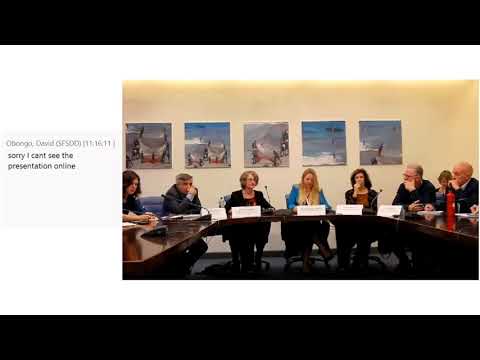
Recording of the Virtual Meeting


The SFS-MED Platform: Sustainable Food Systems in the Mediterranean
19/10/2021
The SFS-MED Platform offers a forum to facilitate collaboration beyond the Food Systems Summit. It is a multi-stakeholder initiative, by CIHEAM, FAO and UfMS, and shares a common approach to food systems transformation...
Play Video
Conference Recording: Addressing Nutrition and Environmental Challenges: The Role of Cities and Local Governments for Inclusive and Sustainable Food Systems Transformation (12 October 2021)
14/10/2021
Recording of the CFS 49 - Side Event no. 7
Play Video
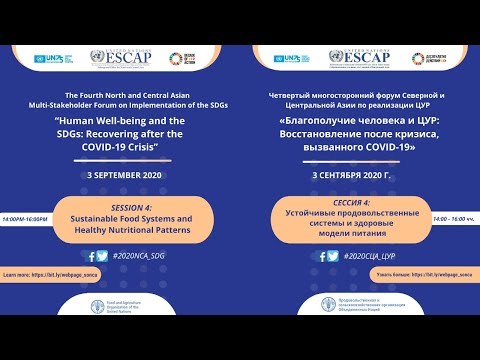
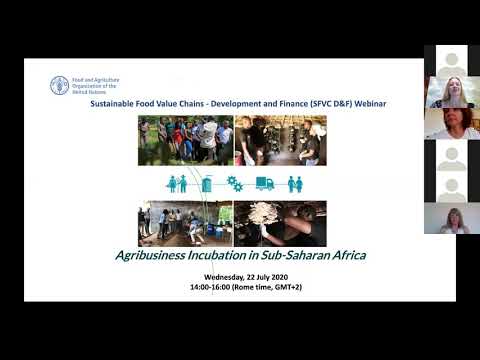
Webinar Recording: COVID-19 and investments in agriculture - Challenges and opportunities for transforming food systems in Africa
03/07/2020
In times of COVID-19, the Webinar held on 2 July 2020 analyses funding and investments opportunities for agrifood SMEs in Africa. It is a roundtable among different actors who interact and mutually share their experiences and innovative practices also to cope and react to the pandemic.
Play Video
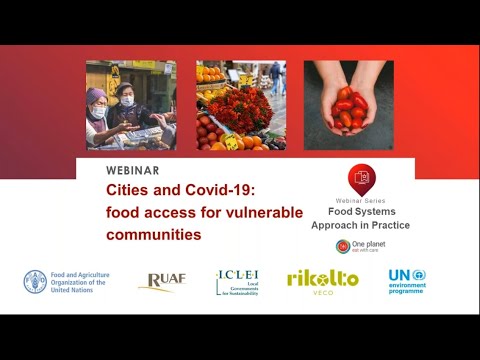
Webinar: Cities and Covid-19 - food access for vulnerable communities in practice
22/05/2020
How can cities maintain access to safe and nutritious food for vulnerable people during COVID-19? In this webinar FAO, UNEP, RUAF, ICLEI and Rikolto share the experience of 3 cities: New York City (USA), Kampala (Uganda) and Quito (Ecuador).
Play Video