
GFCM countries adopt new measures for the sustainability of aquatic foods and welcome Ukraine as a new member

Twenty-two countries and the European Union advanced their commitment to sustainable fisheries and aquaculture during the forty-eighth session of the General Fisheries Commission for the Mediterranean (GFCM) of the Food and Agriculture Organization of the United Nations (FAO).
The meeting, hosted by Spain in Málaga, was opened by Luis Planas, Minister of Agriculture, Fisheries and Food of Spain, Costas Kadis, European Commissioner for Fisheries and Oceans of the European Commission, Francisco de la Torre Prados, Mayor of Málaga, and Roland Kristo, Chairperson of the GFCM.
As the regional body in charge of managing fisheries and aquaculture in the Mediterranean and the Black Sea, the GFCM reviewed proposals for recommendations and resolutions based on the best available scientific advice. This year, 12 decisions were adopted.
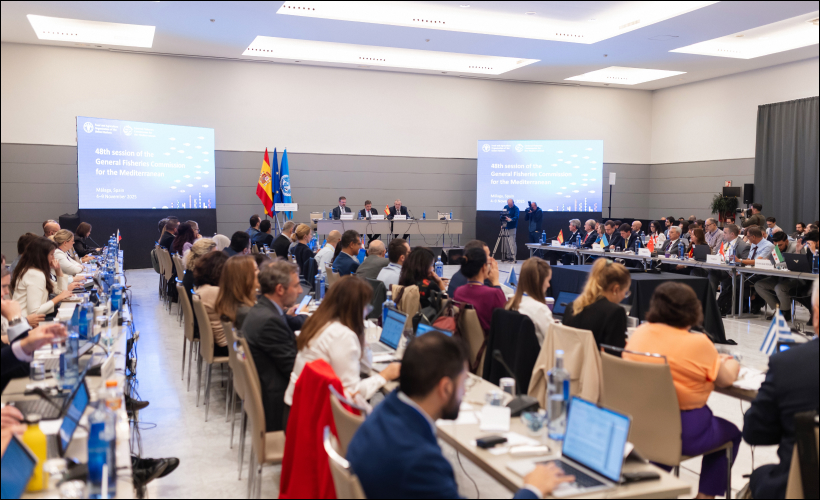

Opening by Spanish Minister, L. Planas ©FAO-GFCM/Carlos Diaz
“The GFCM session symbolizes the union between two sister seas that share history, culture and life, and represents an opportunity to move towards sustainable fisheries and aquaculture,” said Planas. He called for “cooperation between states to secure the future of fisheries and fishing communities, in which profitability and sustainability must go hand in hand.”
Strengthening compliance to combat illegal, unreported and unregulated fishing
One of the most important outcomes of this year’s session was the reinforcement of mechanisms to bolster compliance with GFCM decisions. The Commission agreed on an improved mechanism to assess data reporting and monitoring, control and surveillance (MCS) obligations and will facilitate identifying gaps and assist countries and the GFCM in addressing them. This approach strengthens its capacity to implement targeted remedies, ranging from technical assistance to enhanced vessel monitoring system requirements, and take follow-up actions, thereby fostering a regional culture of compliance and collective ownership of corrective measures.
The session also saw progress in terms of MCS, as the GFCM agreed to strengthen the voluntary exchange of vessel monitoring system data and introduced a new requirement for all vessels over 20 m in length operating in waters outside national jurisdiction to have an International Maritime Organisation number, thus improving traceability.
Albania, Algeria, Egypt, the European Union and its Member States, Montenegro, Morocco and Türkiye once again achieved Compliance category 1, confirming a strong regional commitment to data reporting and transposition of GFCM decisions into national legal frameworks.
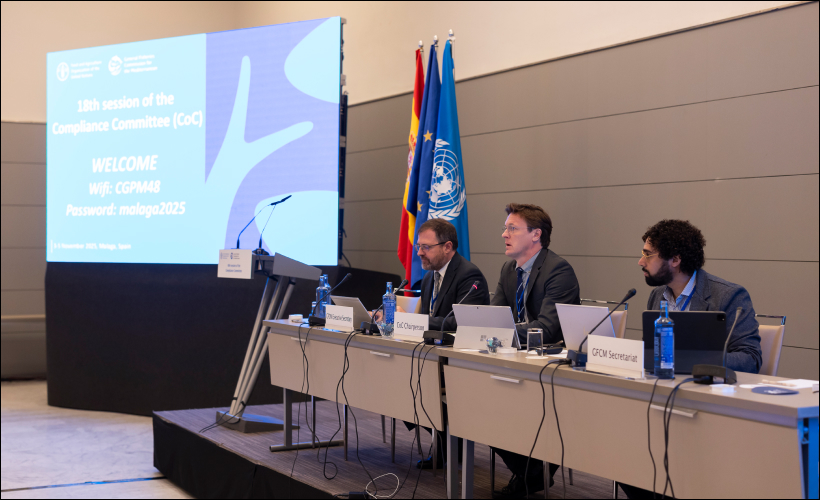
Eighteenth session of the Compliance Committee ©FAO-GFCM/Carlos Diaz
Boosting fisheries management
The adoption of a harvest control rule guiding future annual catch limits for blackspot seabream (Pagellus bogaraveo) in the Alboran Sea represents a critical milestone in the management of this depleted stock. It follows the completion of a management strategy evaluation – a collaborative approach underscored by the highest international standards on fisheries governance with extensive participation of all relevant stakeholders. The decision marks the culmination of eight years of dedicated scientific and management efforts and is expected to guide the fishery towards achieving sustainability goals.
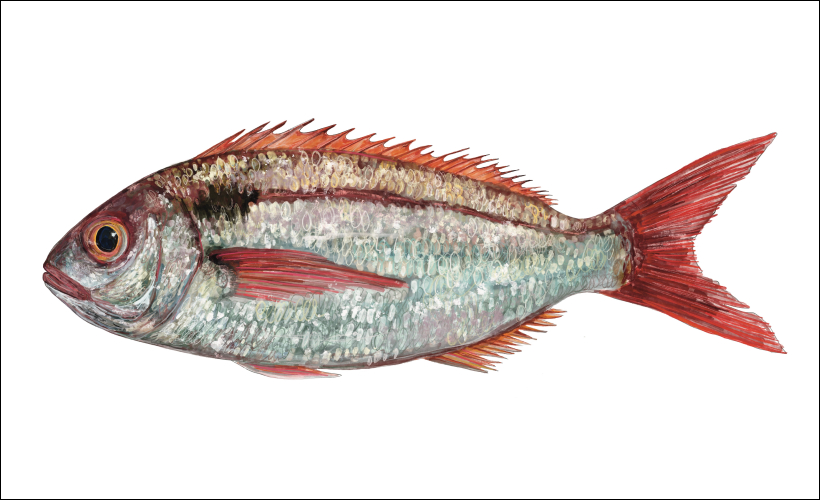
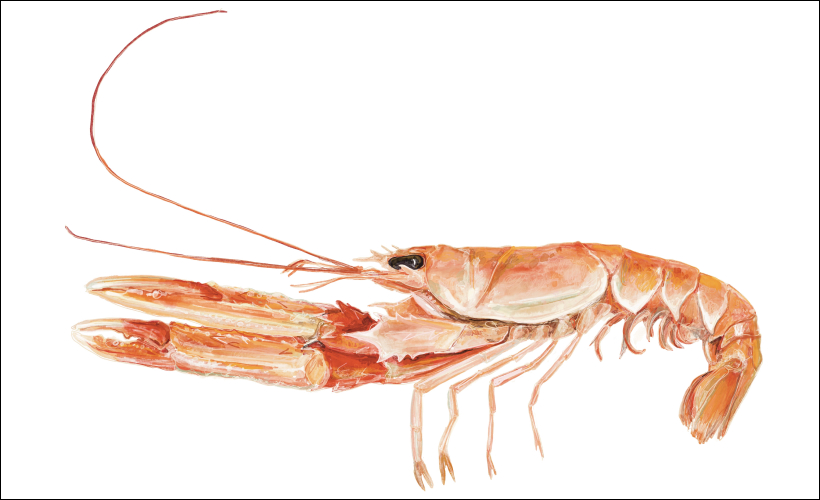
Blackspot seabream; Norway lobster ©FAO-GFCM/Ali Elly
In the Adriatic Sea, the Commission acknowledged the continued positive trends for four out of five demersal stocks, but noted that the status of Norway lobster (Nephrops norvegicus) was different across stock units. The Commission adopted a recommendation which further reduces the fishing effort of bottom otter trawls and strengthens spatio-temporal measures for Norway lobster, while increasing, for the first time, the effort allocation for beam trawls targeting the sustainably exploited common sole (Solea solea).
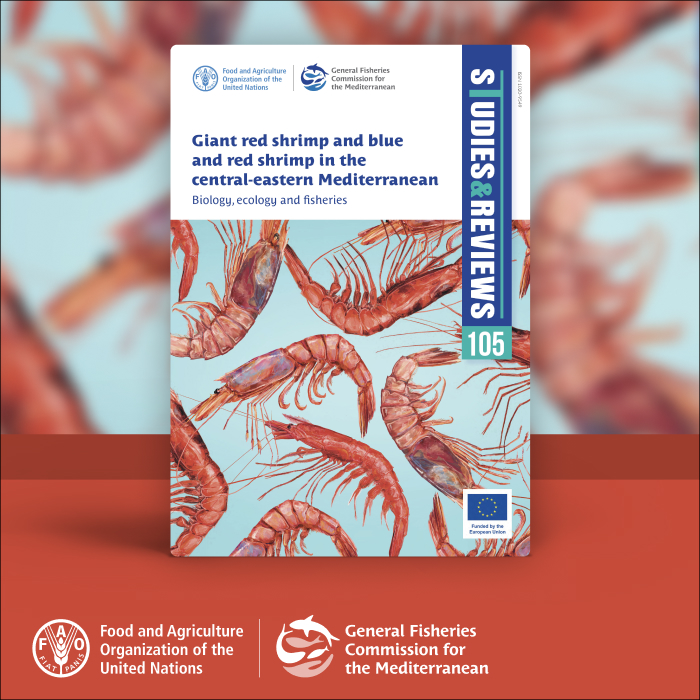
Regarding the management of central-eastern Mediterranean fisheries, three recommendations extend the transitional period of the multiannual management plans for giant red shrimp (Aristaeomorpha foliacea) and blue and red shrimp (Aristeus antennatus) in the Strait of Sicily, Ionian Sea and Levant Sea. These species represent some of the most valuable fishery resources in the Mediterranean.
For the Black Sea, the Commission welcomed significant progress in fisheries management, as scientific advice is now available for six of the eight priority species. The successful implementation of the turbot management plan stands out as a key achievement. Alongside technical advancements, large-scale awareness campaigns reached thousands of fishers, spotlighting the urgent need to reduce bycatch of vulnerable species such as sturgeons, piked dogfish (Squalus acanthias) and harbour porpoise (Phocoena phocoena).
The Commission also established the regional GFCM Network of Experts on Fisheries and Climate Change, which will advance the integration of climate aspects into GFCM scientific advice with a pilot focused on European sprat (Sprattus sprattus).
Advancing sustainable aquaculture
The Commission highlighted major progress in advancing sustainable aquaculture, praising stronger governance and scientific collaboration under the reformed Scientific Committee on Aquaculture, as well as improved coordination among its Technical Advisory Groups, and Information System for the Promotion of Aquaculture in the Mediterranean. This collaborative framework, also underpinned by the success of the Aquaculture Demonstration Centres in sharing knowledge across the region, continues to foster participatory, data-driven decision-making in the sector.
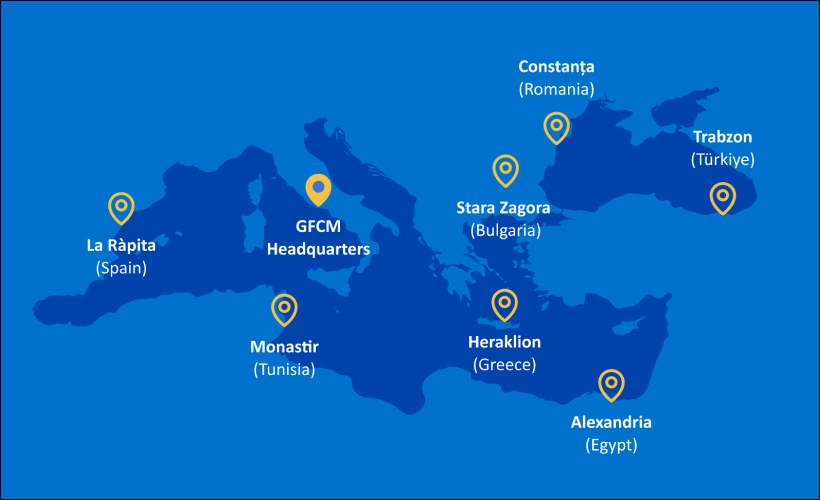
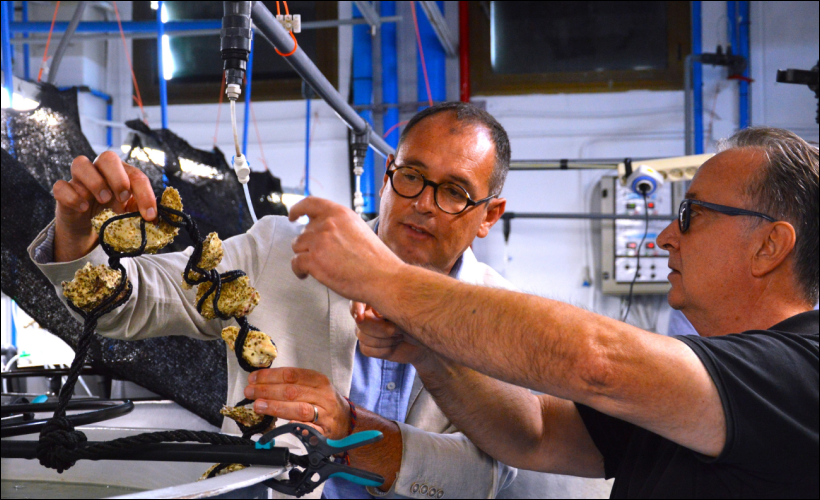
Map of Aquaculture Demonstration Centres ©FAO-GFCM; Training on restorative aquaculture ©IRTA
Building on the outcomes of the 2024 Regional Aquaculture Conference, the Commission welcomed the shared regional vision for sustainability under the upcoming MedFish4Ever Declaration and emphasized the need for continued cooperation with farmers’ associations.
Two key resolutions were adopted to enhance environmental sustainability: a harmonized environmental monitoring programme and an initiative aimed at establishing aquaculture zones for restoration, both promoting ecosystem health and resilience.
Ukraine: from successful cooperation to full membership
The Commission warmly welcomed Ukraine as its twenty-fourth contracting party, marking a significant step forward in regional cooperation in the Black Sea.
“This is a historic moment for Ukraine. Full participation in the work of the GFCM opens up new opportunities for the development of fisheries, aquaculture and the conservation of marine ecosystems of the Black Sea. We are ready to actively participate in the implementation of the GFCM's mission – the effective management of bioresources and support for the sustainable development of coastal communities,” said Taras Vysotsky, Deputy Minister of Economy, Environment and Agriculture of Ukraine.
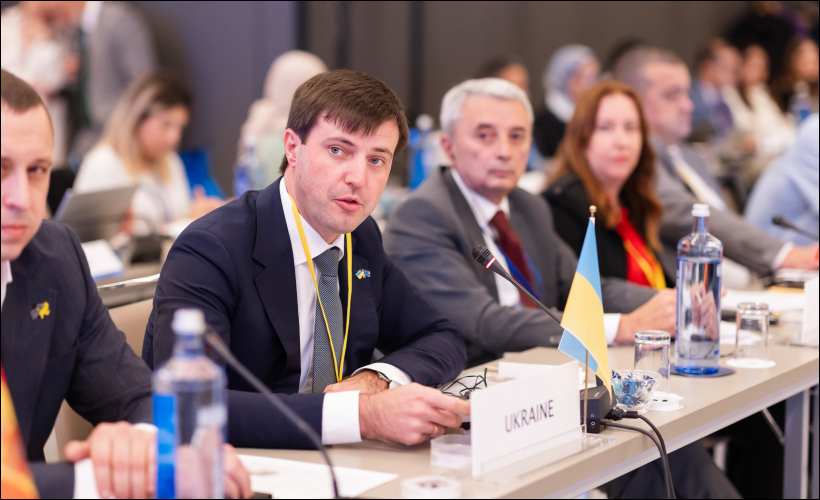
Ukrainian Deputy Minister, T. Vysotsky ©FAO-GFCM/Carlos Diaz
Since 2015, Ukraine had been a cooperating non-contracting party of the GFCM, contributing significantly to regional fisheries initiatives for assessing and restoring Black Sea commercial stocks. It supported sustainable aquaculture through capacity-development programmes, joined regional dialogues to strengthen MCS and aligned national legislation with GFCM standards.
Coinciding with the adhesion of Ukraine, the GFCM established the Scientific Advisory Committee for the Black Sea, as a result of the evolving work in the region. This new subsidiary body replaces the Working Group for the Black Sea, created in 2011 to develop the GFCM’s work in light of the specificities of the Black Sea, which has been successfully delivering quality advice underpinning decisions for the region.
New GFCM Bureau
The Commission welcomed the new GFCM Bureau for a four-year mandate. Eyüp Mümtaz Tiraşin of Türkiye is the new GFCM Chairperson, Francesco Saverio Abate of Italy is the first Vice-Chairperson and Saber Alazabi of Libya is the second Vice-Chairperson.
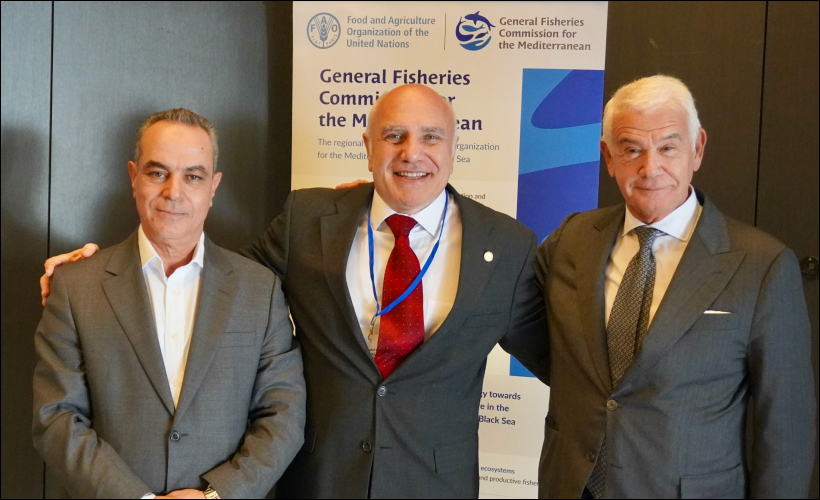
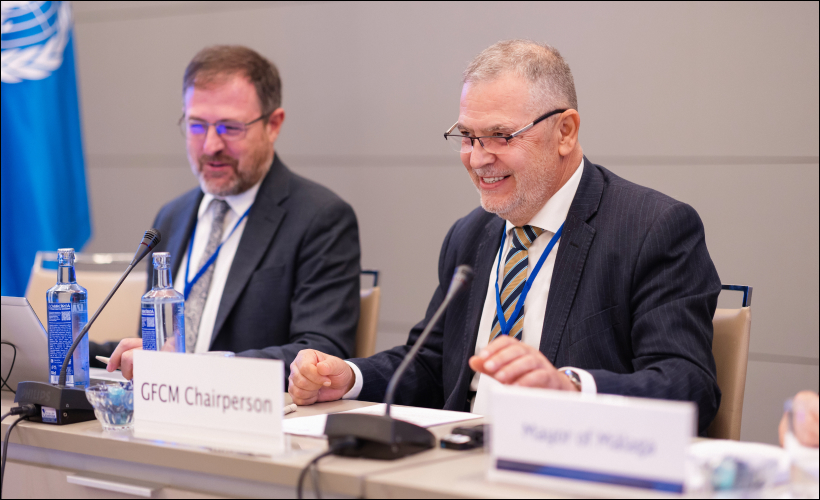
New GFCM bureau: S. Alazabi, E. Mümtaz Tiraşin and F. Saverio Abate ©FAO-GFCM/Adèle Peenaert; GFCM Executive Secretary, M. Bernal with outgoing GFCM Chairperson R. Kristo ©FAO-GFCM/Carlos Diaz
“Since 2018, together, we’ve laid the foundations for long-term sustainability in our region, we’ve deepened our scientific base, and we’ve shown that this Commission can be both a technical and political force for good,” reflected outgoing Chairperson Roland Kristo. “The GFCM is strong, focused, and ready for what’s next. I know the incoming Bureau will continue to lead with vision and determination.”
Decisions of the 48th Session of the GFCM
- Recommendation GFCM/48/2025/1 on the establishment of a fisheries restricted area in the Gulf of Lion (geographical subarea 7) to protect spawning aggregations and deep-sea sensitive habitats, amending Recommendation GFCM/46/2023/1
- Recommendation GFCM/48/2025/2 on the extension of the transitional period of the multiannual management plan for the sustainable exploitation of demersal stocks in the Strait of Sicily (geographical subareas 12 to 16), amending Recommendation GFCM/45/2022/4
- Recommendation GFCM/48/2025/3 on the extension of the transitional period of the multiannual management plan for the sustainable exploitation of giant red shrimp and blue and red shrimp in the Ionian Sea (geographical subareas 19 to 21), amending Recommendation GFCM/45/2022/6
- Recommendation GFCM/48/2025/4 on the extension of the transitional period of the multiannual management plan for sustainable demersal trawl fisheries targeting giant red shrimp and blue and red shrimp in the Levant Sea (geographical subareas 24 to 27), amending Recommendation GFCM/45/2022/7
- Recommendation GFCM/48/2025/5 on a long-term fishing regime and the establishment of catch limits in 2026 for small pelagic stocks in the Adriatic Sea (geographical subareas 17 and 18), amending Recommendation GFCM/44/2021/20 and repealing Recommendations GFCM/42/2018/8, GFCM/40/2016/3, GFCM/39/2015/1, GFCM/38/2014/1, GFCM/37/2013/1 and GFCM/30/2006/1
- Recommendation GFCM/48/2025/6 on the implementation of a fishing effort regime for key demersal stocks in the Adriatic Sea (geographical subareas 17 and 18) in 2026, stemming from Recommendation GFCM/43/2019/5
- Recommendation GFCM/48/2025/7 on a long-term fishing regime for blackspot seabream in the Alboran Sea (geographical subareas 1 to 3), stemming from Recommendation GFCM/45/2022/3 and repealing Recommendations GFCM/47/2024/3 and GFCM/46/2023/15
- Recommendation GFCM/48/2025/8 on the application of an International Maritime Organization number, repealing Resolutions GFCM/44/2021/6 and GFCM/41/2017/6
- Recommendation GFCM/48/2025/9 on the extension of the transitional period of the multiannual management plan for the sustainable exploitation of giant red shrimp and blue and red shrimp stocks in the Strait of Sicily (geographical subareas 12 to 16), amending Recommendation GFCM/45/2022/5
- Recommendation GFCM/48/2025/10 addressing compliance issues and corresponding actions, amending Recommendations GFCM/46/2023/22 and GFCM/46/2023/23, and repealing Recommendation GFCM/38/2014/2
- Resolution GFCM/48/2025/1 on guidelines on harmonized environmental monitoring programmes for marine cage aquaculture in the Mediterranean and the Black Sea
- Resolution GFCM/48/2025/2 on allocated zones for restoration in the Mediterranean and the Black Sea
Join us for the release of The State of Mediterranean and Black Sea Fisheries 2025
On 28 November, the GFCM will launch the most comprehensive report on fisheries and aquaculture status and trends in the region, supporting evidence-based decision-making towards sustainability goals.
This edition, compiling the work of over 700 experts, is expected to reflect continued improvements in stock status and biomass, as well as the increase in sustainable aquaculture production, showcasing the positive impacts of effective management in the region.

Relevant links
Cover image: School of seabream off the Azure Coast ©Seadam