
Strengthening capacities and communities: highlights from the SSF Forum 2023–2025

Over the past two years, the Small-Scale Fisheries (SSF) Forum has brought together more than 130 small-scale fishers, fish workers and partners from across the Mediterranean and the Black Sea region to exchange knowledge, strengthen skills and build trust. Developed following the 2023 SSF Forum consultation in Rome, the programme was designed as a participatory capacity-development initiative to directly respond to priorities expressed by fishers themselves. Importantly, this phase also marked a return to in-person activities and site visits – after the early years were necessarily shifted online due to the COVID-19 pandemic – reflecting the original vision of the SSF Forum under the Regional Plan of Action for Small-Scale Fisheries (RPOA-SSF).
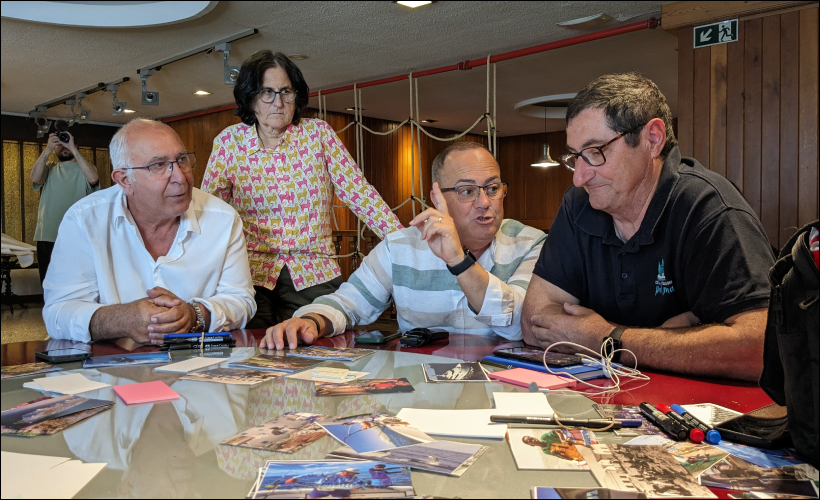
Participants during the SSF Forum in Torrevieja, Spain ©FAO-GFCM/Clémentine Laurent
Between 2023 and 2025, four thematic workshops were organized across the region with local and regional partner organizations, each addressing a key challenge for small-scale fisheries: non-indigenous species (Türkiye, 2023); strong organizations and access to funding (Spain, 2024); marine pollution (Tunisia, 2024) and selective fishing gear (Croatia, 2024). While these topics were identified by the fishers themselves as being particularly relevant, they also align with ongoing technical and scientific work of the General Fisheries Commission for the Mediterranean (GFCM) of the Food and Agriculture Organization of the United Nations (FAO), providing crucial stakeholder perspectives to inform the fisheries management process. Together, they created a unique learning journey, translating the RPOA-SSF into practice through dialogue, peer learning and co-development of solutions.
A participatory approach to capacity development
At the heart of the SSF Forum lies an approach to capacity development that values experience as much as expertise. Each session was designed to foster learning through exchange – small-scale fishers teaching one another, confronting shared challenges and identifying opportunities for collective action. This participatory model has proven to be both empowering and transformative, offering practical knowledge while building confidence and social capital.
As one participant put it, “We learn differently when we learn together.” This spirit of co-learning has not only enhanced technical understanding but also contributed to a stronger sense of identity among small-scale fishers across the region.
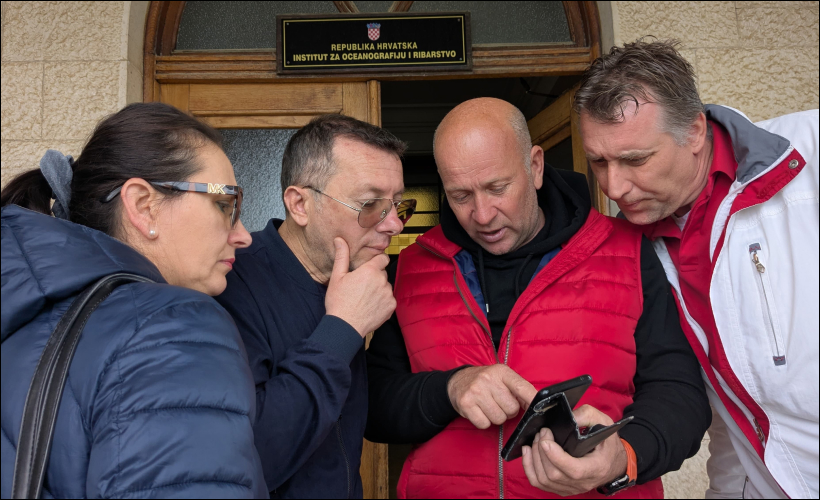
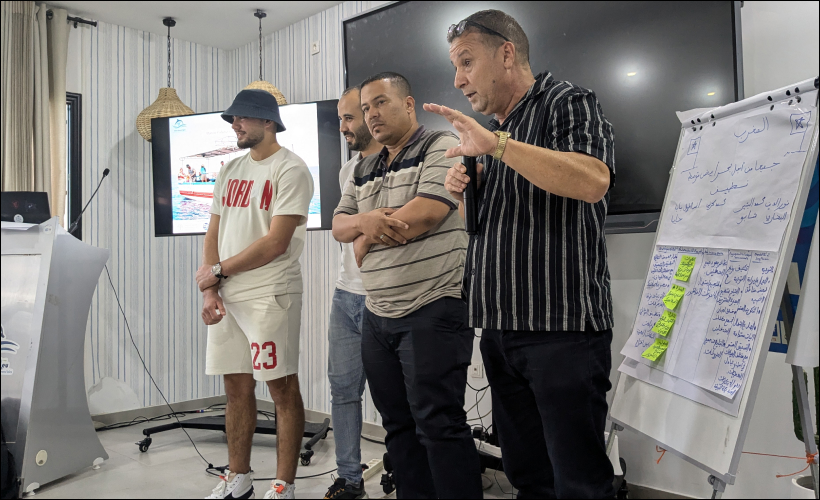
Participants during the SSF Forum in Split, Croatia and the SSF Forum in Monastir, Tunisia ©FAO-GFCM/Clémentine Laurent
What participants say
A survey, conducted together with the World Wide Fund for Nature (WWF) across all four sessions confirmed the strong learning impacts of the programme and the value of its participatory approach:
- Collaborative learning was the main driver of change: 70 percent of participants said learning together with peers was essential, and another 14 percent described it as indispensable. This underscores that the SSF Forum’s strength lies in people exchanging ideas and experiences directly.
- The SSF Forum helped build new connections: 84 percent of participants made new contacts, and almost half of them (48 percent) went on to collaborate or engage in joint activities afterward. This indicates that the SSF Forum fostered not only dialogue but also concrete working relationships.
- Participants reported changes in engagement: 82 percent reported feeling more engaged or willing to try new things. Half (50 percent) reported major changes in their work or role, and 26 percent began to see themselves as leaders or changemakers, ready to share what they learned within their communities.
Results of the survey can be found here: EN – FR
These findings point to a shift from individual learning to collective empowerment, with the SSF Forum platform acting as an active network for knowledge exchange and cooperation. At the same time, results offer valuable insight that will help shape future activities, ensuring the SSF Forum becomes an even stronger, more useful and more impactful tool for small-scale fishers across the region.
Cross-cutting conclusions
Across the four workshops, common lessons emerged. Participants emphasized the importance of maintaining a regional platform where small-scale fishers can meet among peers to exchange, learn and innovate. Mutual learning and peer dialogue were seen as vital to strengthening capacities and building trust between communities and institutions.
Ensuring inclusive participation – particularly of women and youth – was another recurring message. Women’s contributions across the value chain were recognized as fundamental to community resilience, while generational renewal was identified as a pressing concern for the future of the sector.
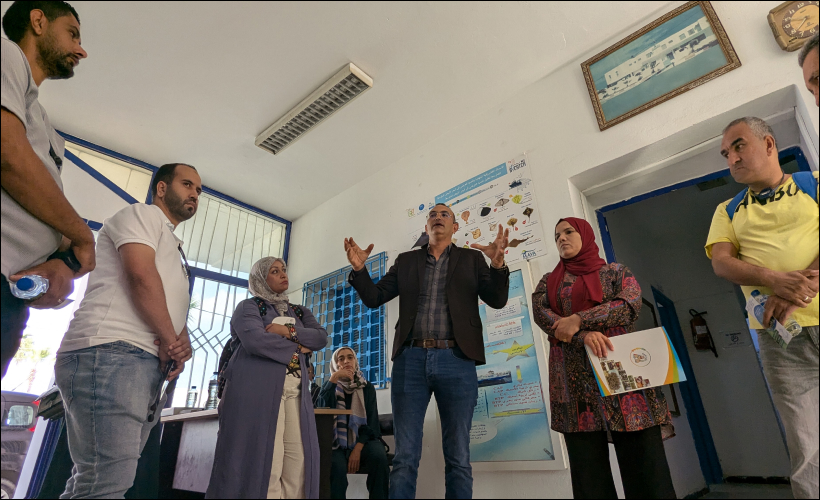
Field visit at the fisheries institute of Monastir, Tunisia ©FAO-GFCM/Clémentine Laurent
Participants also called for greater coherence and simplicity in management measures, underlining that local ecological knowledge should be better integrated into scientific and policy processes. Exploring alternative livelihoods, diversifying income sources and fostering local entrepreneurship were highlighted as pathways to resilience in the face of environmental and economic change.
Together, these insights underscore that capacity development in small-scale fisheries goes beyond technical training – it is about strengthening networks, fostering dialogue and ensuring that those most affected by decisions have the knowledge and confidence to contribute to help shape them.
Looking ahead
A dedicated session on youth engagement, to be held on 29–30 January 2026, will mark the start of the next chapter.
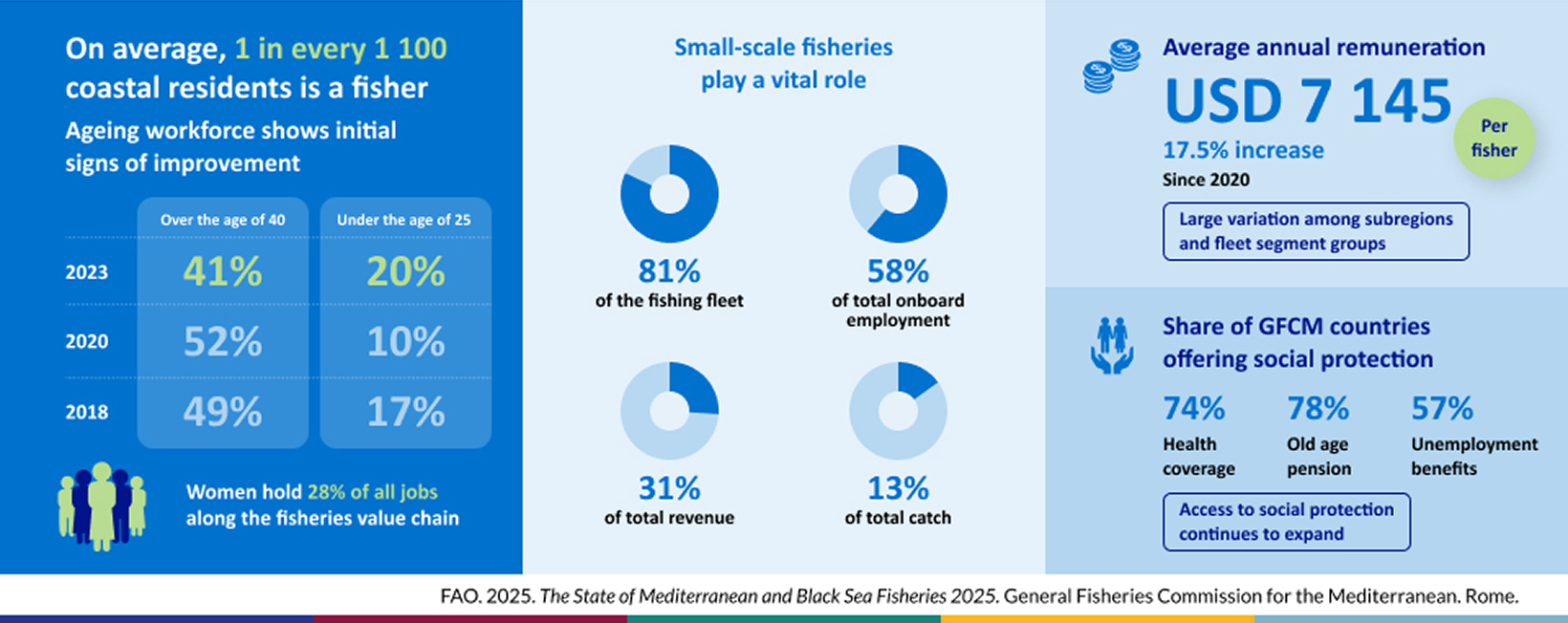
Why it matters? The State of Mediterranean and Black Sea Fisheries 2025 report highlights critical dynamics related to generational turnover in SSF.
- Small-scale vessels remain the fleet segment group with the oldest workforce (47 percent of fishers are over 40 while only 17 percent are under 25).
- Fishers working on industrial vessels earned significantly more, averaging USD 10 271 per year, nearly double the average income of small-scale fishers, who earned in average USD 4 347.
Additional thematic meetings will continue to link field experience with GFCM scientific and technical work.
By nurturing knowledge, collaboration and dialogue, the SSF Forum has shown how capacity development can drive change from within. As one participant reflected, “It is not only about learning new tools; it is also about realizing that we can be part of the solution.”
The SSF Forum workshops were made possible thanks to the financial support of the European Union and the Global Environment Facility.