
Field trip
Three inspiring destinations have been planned for the field trip, scheduled from 08:30 to 18:30. Depending on the number of participants, two groups will be formed, each following a distinct route:
- Group A: Visits to Site 1, Site 3, and Site 2.
- Group B: Visits to Site 2, Site 1, and Site 3.
Participants will be picked up directly from the International Youth Convention Hotel Nanjing (No. 8 Ye Cheng Road, Nanjing, Jiangsu, China) and returned to the hotel for dinner at the end of the tour.
Field Trip Itinerary:
Date: Saturday, 28 September 2024
Pick-up Time: 08:30
Group A Schedule:
- 08:30-09:30: Depart from hotel to Site 1 (60-minute drive)
- 09:30-11:30: Visit ISSAS (Hall of Institute History, Soil and Environment Analysis Center, and National Soil Archive of China)
- 11:30-12:30: Lunch at the ISSAS canteen
- 12:30-13:00: Drive to Site 3
- 13:00-15:00: Explore Suburban Farm in Tangshan and its sustainable agricultural practices
- 15:00-15:50: Drive to Site 2
- 15:50-17:50: Tour Zhong Hua City Gate Castle and ancient city wall
- 17:50-18:20: Return to hotel
- 18:30: Dinner
Group B Schedule:
- 08:30-09:10: Depart from hotel to Site 2 (40-minute drive)
- 09:10-11:10: Tour Zhong Hua City Gate Castle
- 11:10-11:50: Drive to Site 1
- 11:50-12:50: Lunch at the ISSAS canteen
- 12:50-14:50: Visit ISSAS (Hall of Institute History, Soil and Environment Analysis Center, and National Soil Archive of China)
- 14:50-15:20: Drive to Site 3
- 15:20-17:20: Explore Suburban Farm in Tangshan and its sustainable agricultural practices
- 17:20-18:20: Return to hotel
- 18:30: Dinner
Site 1:The Institute of Soil Science, Chinese Academy of Sciences (ISSAS)
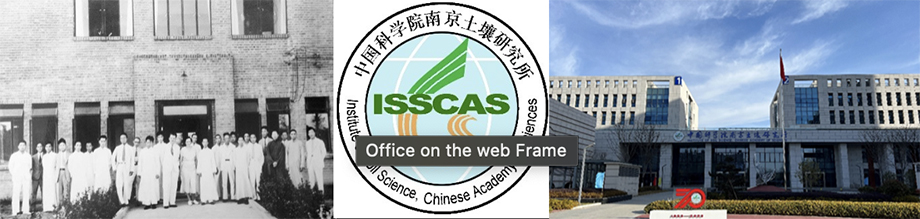
The Institute of Soil Science, Chinese Academy of Sciences (ISSAS), was founded in 1953, as a successor to the former Soil Division of the National Geological Survey of China, which was established in 1930.
Being the cradle of modern soil sciences in China, ISSAS aims to solve the vital problems on agricultural development, ecological conservation and environmental protection, and to promote the development of soil sciences. It has attracted and trained a large number of talented soil scientists, who have carried out a series of important research projects by fully utilizing China’s rich soil resources. The institute has gradually developed into a powerful and influential international research center with a complete suite of sub-disciplines of soil sciences, as well as a training base for senior scientists.
ISSCAS has entered into partnerships with a large group of international research institutes and universities in over 40 countries and regions such as Rothamsted Experimental Station, Scottish Crop Research Institute, the University of Melbourne and Griffith University. In 2018, ISSCAS won the bid to host World Congress of Soil Science 2026 in Nanjing.
Site 2 :Zhong Hua City Gate Castle

Zhonghua Gate, formerly called as Treasure Bowel Gate, nicknamed "South Gate", was one of the 13 gates in the capital city of early Ming Dynasty. It was former "South Gate" of the capital in the Southern Tang Dynasty, and Jinling city in the Song and Yuan Dynasty, and then it remained in the first year of Hongwu period. It was rebuilt in 1386, consisted of 3 barbicans gates and the main gate on the vertical axis from south to north, each in an arched structure. The drawbridge towers and gate towers were built on the main city gate. In the inner barbicans were built drawbridge towers. In the summer of 1928, it was renamed as “Zhonghua Gate”. It is the largest and the only intact inner barbican remaining in China now.
Site 3: High-Quality Agricultural Development: The Jiangning Tangshan Model-Modern Environmentally Sustainable Agricultural Practices
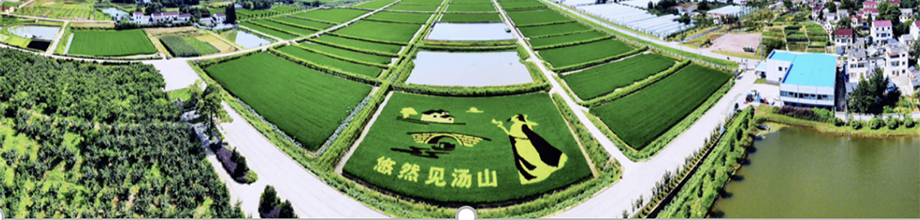
Since its founding in 2014, the Nanjing Taihe Rice Planting Professional Cooperative has been committed to advancing modern, environmentally sustainable agriculture, prioritizing ecological balance. Drawing on the expertise of leading research institutions such as the Nanjing Institute of Soil Science, Chinese Academy of Sciences, the cooperative has developed an integrated industry chain—transforming a single grain of rice into a complete ecological and cultural experience. This includes high-standard ecological field construction, improvements in arable land quality, and biodiversity enhancement.
Key practices include:
Green ecological rice cultivation, incorporating sustainable techniques such as deep application of green manure and organic fertilizers, integrated weed control, smart fertilization, and precision technologies (e.g., macronutrient advancements to seedling substrates, slow-release fertilizers).
Innovative water management and ecological control methods to reduce reliance on chemical fertilizers and pesticides.
Agro-biodiversity enhancements, such as rice field duck and fish farming.
Advanced post-harvest processing, utilizing low-temperature drying systems, waste heat recovery, and intelligent preservation to maintain grain quality.
Central to the cooperative's operations is the focus on "ecological nutrient loss control" (non-point source pollution management), while constructing a holistic “hills, forests, water, fields, and grass” life community. These efforts have contributed to improving the ecological, cultural, and landscape value of agriculture, aligning with China's vision for sustainable development and supporting the rise of cooperatives and family farms as key agricultural operators.
The cooperative has established the "Southern Hilly Region Exquisite Agriculture Park Model," showcasing the "three refinements and three qualities" in precision agriculture: precision, delicacy, and premium packaging; and quality, brand, and taste. It serves as a foundational element for the "Nanjing Tangshan Fuzhuang Characteristic Rural Complex," recognized as a demonstration point for rural revitalization in Jiangsu Province. The cooperative has become a center for student agricultural camps, professional farmer training, and a demonstration base for high-standard ecological farmland, crop monitoring, and green prevention practices nationwide.