New FAO project targets improved soil health and food security in Zimbabwe and beyond
FAO has launched a new project in Zimbabwe aimed at improving sustainable soil management. The project, “Capacity Development on Sustainable Soil Management in the Global South” seeks to accelerate progress towards the Sustainable Development Goals (SDGs), enhance national expertise in soil mapping, testing and data-driven management and promote technical collaboration among developing countries through South–South cooperation. The project also includes Cambodia, Mongolia and Uzbekistan.

Patrice Talla, FAO Subregional Coordinator for Southern Africa and Representative to Zimbabwe described the initiative as a turning point for the country. “By investing in sustainable soil management” he said, “we are not only improving natural resources management, but also empowering farmers, strengthening food systems and building resilience against climate shocks.”
Lifeng Li, Director of the FAO Land and Water Division explained that, “Through technical cooperation, knowledge exchange and institutional collaboration, we are building a long-term partnership that safeguards the precious soil resources for now and the future”.
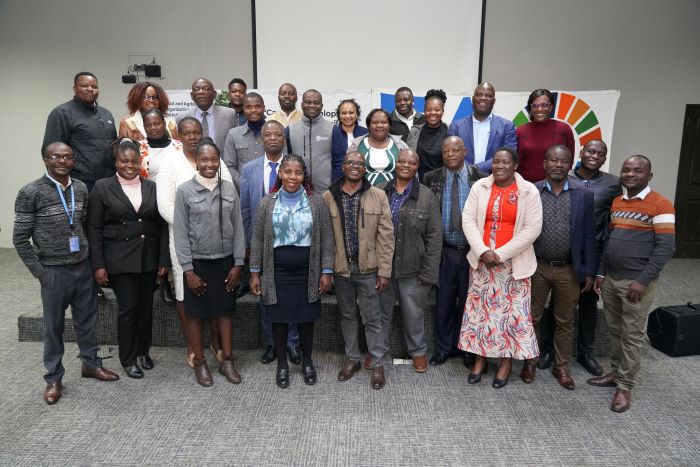
Following the launch event, an inception workshop will bring toether key project stakeholders to identify pilot sites for field trials, establish timelines and allocate the implementation budget. Zimbabwe is the first country to begin implementation, with technical partners and stakeholders working together to ensure its success.
With a total budget of USD 2 million, the project will run from 2025 to 2027. In each beneficiary country, the initiative aims to deliver several measurable outcomes: training 20 experts in soil mapping, 20 technicians in soil laboratories, equipping a reference soil laboratory, conducting 2 field trials, organizing 2 training sessions, hosting 10 farmer visiting days, and engaging 60 experts.
Farmer involvement is a pillar of the project, with 2000 farmers expected to be trained through the Global Soil Doctors Programme (GSDP) by the end of the project in three years. Gender inclusivity is also a key priority, ensuring that at least 40 percent of the beneficiaries are women.