Sand and Dust Storms
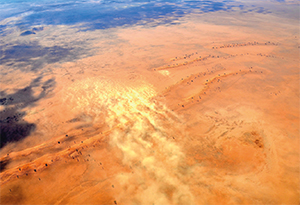
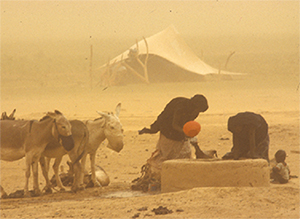
Sand and dust storms (SDS) have major impacts on the environment, climate, health, livelihoods, agriculture, food security and the socioeconomic well being of societies. Particularly common in arid and semi arid regions, SDS directly affect 151 countries. Sand and dust storms can seriously jeopardize economic development and threaten the achievement of 11 out of 17 of the Sustainable Development Goals (SDGs).
Economic losses from a single SDS event can cost hundreds of millions of US dollars. For example, in March 2021 a major dust storm in northeast Asia killed 200 000 livestock and destroyed 121 animal shelters in Mongolia, caused hundreds of flights to be cancelled at airports in China and prompted the issuance of dust health advisories in the Republic of Korea. These socioeconomic impacts fall disproportionately on those with a limited capacity to cope with the fallout, such as smallholder farmers, people living in poverty and those suffering from malnourishment. In recent decades, the frequency and intensity of dust storms have increased in some dryland regions, driven by unsustainable land use, land cover changes and climate related factors. Without adequate mitigation measures in place, the negative impacts of SDS are expected to worsen, particularly as many regions face increasing aridity and more frequent, severe droughts due to climate change.
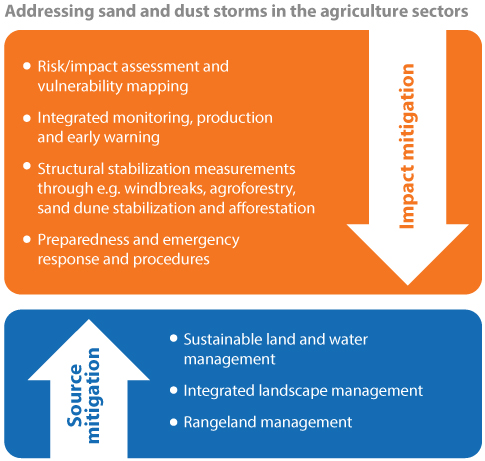
Sand and dust storms are closely linked to the Food and Agriculture of the United Nations (FAO)'s work on food security and nutrition, sustainable resources management, climate change, and resilience. The promotion of sustainable land and water use in the crop, livestock and forestry sectors offers key opportunities to both limit the sources and reduce the impacts of SDS. Integrated landscape management, land use planning, restoration of agricultural lands, and disaster risk reduction (DRR) are also essential. FAO brings strong technical expertise in these areas which are crucial to addressing SDS, including work on desertification, land degradation and drought (DLDD), climate change, and DRR. Combating SDS will assist countries to enhance their food security and strengthen their resilience to these risks, as well as improve the livelihoods and well-being of rural people. For these reasons, FAO acted as chair of the United Nations Coalition on Combating Sand and Dust Storms in the period 2020–2024.

Due to the transboundary scale of SDS, and in line with the UN Coalition’s strategy, from 2020 to 2022 FAO implemented an interregional technical cooperation programme (TCP) project, “Catalysing investments and actions to enhance resilience against sand and dust storms in agriculture” in six countries: Algeria, China, Iraq, the Islamic Republic of Iran, Kuwait and Mongolia. This programme aimed to strengthen evidence based understanding of SDS and the impacts on agriculture. Moreover, it sought to identify context specific, high impact strategies and interventions to enhance the resilience of agriculture dependent communities to SDS. FAO developed a systematic methodology to identify high impact, context specific farm level good practices that would limit SDS sources and impacts on the agriculture sector. FAO also established a database with over 150 sustainable land management (SLM) and other practices. A guidance document was additionally released to guide countries on mitigation, adaptation, policy, and risk management measures in agriculture, as well as two SDS contingency planning documents for catalysing investments and actions to enhance resilience against SDS in agriculture in the Islamic Republic of Iran and Mongolia.