
The United Nations Coalition on Combating Sand and Dust Storms
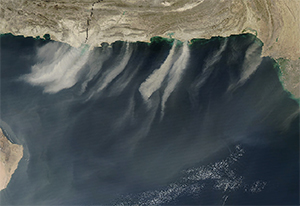
In many instances, sand and dust storms (SDS) originate in one region but can impact another across great distances, often across international boundaries. In several recent General Assembly resolutions entitled “Combating sand and dust storms” (A/RES/70/195, A/RES/71/219, A/RES/72/225, A/RES/73/237, A/RES/74/226, A/RES/75/222 and A/RES/76/211), the United Nations (UN) has expressed considerable concern about the growing threat of SDS, warning that SDS may undermine the achievement of the Sustainable Development Goals (SDGs) in developing and developed countries.
In response to these UN resolutions, the United Nations Convention to Combat Desertification (UNCCD) Conference of Parties (COP)14 (held in India during September 2019), established a new milestone, where UNCCD Parties officially launched the United Nations Coalition on Combating Sand and Dust Storms (UN Coalition on Combating SDS), committing the UN system to a proactive approach to combat SDS and to enhance cooperation and coordination on SDS at subregional, regional and global levels.
The mandate of the UN Coalition on Combating SDS, as defined by the participating entities, is as follows:
- Promote and coordinate a collaborative UN system response to SDS.
- Facilitate exchange of knowledge, data and best practices among Coalition members to promote effective and coherent actions on SDS across the UN system and beyond.
- Encourage and promote collaboration on initiatives and actions among members of the Coalition, including advocacy and funding initiatives.
- Facilitate dialogue and collaboration amongst affected countries and the UN system in collectively addressing SDS issues.
- Facilitate the capacity building of Member States, raise their awareness and enhance their preparedness and response to SDS in critical regions.
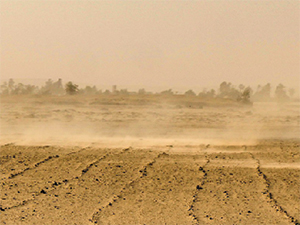
The transboundary nature of SDS requires unified and coherent action. The priority of the Coalition is to directly support SDS affected countries and foster regional and inter regional collaboration between countries and sectors while enhancing visibility and raising awareness of SDS. These activities will catalyse global and regional actions that will support countries in facing the challenge of SDS and reduce their impact on health, the environment, agriculture, and other economic activities.
The key is to facilitate the sharing of knowledge and information and to understand the sources and impacts of SDS within and across sectors, to implement innovations to counter SDS. These actions align with achieving food security and managing natural resources sustainably and will ultimately contribute to achieving the SDGs.
The key partners of the UN Coalition on Combating SDS, chaired by the Food and Agriculture Organization of the United Nations (FAO) from 2020 to 2024 and currently co chaired by the Economic and Social Commission for Western Asia (ESCWA) and the Economic and Social Commission for Asia and Pacific (ESCAP), are:
- Economic and Social Commission for Asia and Pacific
- Economic and Social Commission for Western Asia
- Food and Agriculture Organization of the United Nations
- International Civil Aviation Organization
- International Telecommunication Union
- International Union for Conservation of Nature
- United Nations Convention to Combat Desertification
- United Nations Development Programme
- United Nations Economic and Social Commission for Asia and the Pacific
- United Nations Economic and Social Commission for West Asia
- United Nations Economic Commission for Europe
- United Nations Educational, Scientific and Cultural Organization
- United Nations Environment Programme
- United Nations Institute for Training and Research
- UN-Habitat
- United Nations University
- World Bank
- World Health Organization
- World Meteorological Organization
- United Nations University Institute for Water, Environment and Health
United Nations Decade on Combating Sand and Dust Storms (2025–2035)
The General Assembly decided to proclaim 2025 to 2034 as the United Nations Decade on Combating Sand and Dust Storms in Resolution 78/314, further demonstrating the growing recognition of SDS as a pressing global issue. The resolution underscores the critical need to mitigate the impacts of SDS to ensure sustainable development and resilience building, and directly contribute to achieving 11 out of the 17 SDGs. Specifically, the Decade aims to enhance international and regional cooperation and to scale up efforts which prevent, halt and mitigate the negative effects of sand and dust storms, especially for affected countries. To meet these ambitions, the Decade seeks to further strengthen long term commitments and mobilize international action to combat SDS by fostering multistakeholder partnerships and promoting sustainable solutions to enhance resilience, protect human health, and ensure environmental sustainability in affected regions.