

News
OUT NOW: The progressive control pathway for African animal trypanosomosis – Operational guidelines.
24 December 2025
24 December 2025
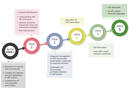
FAO has just published the operational guidelines of the progressive control pathway (PCP) for African animal trypanosomosis (AAT). The publication provides detailed guidance on how to mainstream the PCP approach into national and regional policies and strategies against AAT, aiming to reinforce and rationalize interventions against the disease. Five strategic...

The Tsetse and Trypanosomosis Control Unit (TTCU) of the Ministry of Fisheries and Livestock in Zambia has just published a new national atlas of the distribution of tsetse flies and animal trypanosomosis. All TTCU data collected from April 2009 to July 2025 were systematically assembled, georeferenced and harmonised. Both mobile...
New opinion paper on "Disease intelligence and modelling for progressive control of animal trypanosomosis in Africa"
03 September 2025
03 September 2025

The transformation of livestock production underway in Africa to support a growing population and the livelihood of farmers cannot be implemented without controlling major endemic diseases, such as vector-borne animal trypanosomosis (AT). Evidence-based decision-making is crucial for cost-effective trypanosomosis control, and through coordinated efforts, disease intelligence is being enhanced at...

Background: Haematophagous Diptera can transmit a wide range of diseases to both humans and animals. Some species of the Trypanosoma genus rely on these vectors for transmission, either cyclically or mechanically. Trypanosoma evansi, the causative agent of Surra, is the only African-origin trypanosome species detected in Spain to date, which is mechanically transmitted.
Methods:...
New FAO project targets animal trypanosomosis disease control and intelligence in African countries
16 December 2024
16 December 2024

FAO has launched a new project - Disease intelligence & modelling for progressive control of animal trypanosomosis in Africa (DIMCAT) to amplify and enrich ongoing efforts in strengthening African trypanosomosis disease intelligence and data management capabilities. African trypanosomosis (AT) is a deadly parasitic disease caused by trypanosomes, unicellular organisms, transmitted...