|
|
|
Natural Resources and Environment
|
July 2012 Integrated land, water and energy management video interviews |
 |
|
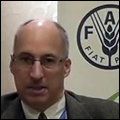
During the recent Committee on Agriculture held at FAO Headquarters in May 2012, FAO Water Officer Jean-Marc Faures and Energy Officer Olivier Dubois discussed the challenges facing these sectors today and explained how better integration of the work in these three sectors is key to meeting the food security needs of our planet’s growing population. |
Available in:  |
|
| | For related information, see the following theme pages: -Land Resources -Water Resources -Bioenergy |
June 2012 Towards the future we want |
 |
| End hunger and make the transition to sustainable agricultural and food systems |
Much work has been done since 1992 to move the world closer to a common and sustainable future, but 20 years down the road we have yet to deliver on this fundamental principle – too many people in this world are still not living a healthy and productive life while the world grows in ways that are not always in harmony with nature. FAO seeks to stimulate consensus on the changes needed at, global, regional and national levels to eradicate hunger, support the transition to sustainable food consumption and production systems and ensure greater fairness in food management. It calls for this consensus to be translated into a deep and sustainable commitment to act. And it appeals to all stakeholders represented at Rio+20 to adopt with urgency a new resolve to work together in a genuine spirit of cooperation and partnership to implement the steps needed and hold themselves accountable for achieving the first principle of Rio 1992. |
Available in: | |  |
|
| | For related information, see the following theme pages: -Land Resources -Water Resources -Climate Change -Bioenergy |
April 2012 Good Environmental Practices in Bioenergy Feedstock Production |
 |
| Environment and Natural Resources Working Paper 49 |
In order to ensure that modern bioenergy development is sustainable and that it safeguards food security, a number of good practices can be implemented throughout the bioenergy supply chain. Building on FAO's work on good practices in agriculture and forestry, the FAO's Bioenergy and Food Security Criteria and Indicators project has compiled a set of good environmental practices that can be implemented by bioenergy feedstock producers so as to minimize the risk of negative environmental impacts from their operations, and to ensure that modern bioenergy delivers on its climate change mitigation potential. These practices can improve both the efficiency and sustainability in the use of land, water and agricultural inputs for bioenergy production, with positive environmental and socio-economic effects, including a reduction in the potential competition with food production. These practices can also minimize the impacts of bioenergy feedstock production on biodiversity and ecosystems, which provide a range of goods and services that are key for food security. |
Available in:  |
|
| | For related information, see the following theme pages: -Bioenergy |
April 2012 Smallholders in Global Bioenergy Value Chains and Certification: Evidence from three case studies |
 |
| Environment and Natural Resources Working Paper 50 |
Over the last few years, there has been growing interest in bioenergy, due in part to its potential for rural development and climate change mitigation, and as an energy alternative given the high price of oil. At the same time, concerns regarding the potential negative impacts of bioenergy have also grown and have led to the development of a range of voluntary standards aimed at ensuring the sustainability of bioenergy production. While one of the goals of voluntary standards is to enhance the sustainability of bioenergy production including from a socio-economic perspective they might also present a disincentive for incorporating smallholders in value chains, due to greater cost and complexity. FAO's Bioenergy and Food Security Criteria and Indicators project conducted three case studies to examine the opportunities and challenges for smallholders presented by: 1) bioenergy as a new type of value chain, and by 2) bioenergy certification schemes. |
Available in:  |
|
| | For related information, see the following theme pages: -Bioenergy |
April 2012 A Compilation of Tools and Methodologies to Assess the Sustainability of Modern Bioenergy |
 |
| Environment and Natural Resources Working Paper 51 |
The FAO’s Bioenergy and Food Security Criteria and Indicators (BEFSCI) project has compiled a set of thirty relevant and methodologies that can be used assess, during both planning and monitoring,the main environmental and socioeconomic impacts of bioenergy. The results can development of a sustainable bioenergy sustainable operations. Modern bioenergy development, through its environmental and socio-economic impacts, may have positive or negative effects (both direct and indirect) on the four dimensions of food security: availability, access, utilization and stability. For instance, bioenergy may create new employment and incomegenerating opportunities, with positive effects on people’s access to food. At the same time, if good practices are not implemented,bioenergy production may lead to negative impacts, for example,on the productive capacity of land or on water availability and quality, with negative repercussions for food security. |
Available in:  |
|
| | For related information, see the following theme pages: -Bioenergy |
February 2012 Natural Resources and Environment newsletter |
 |
| January/February 2012 • Number 11 |
In this issue of the NR Newsletter, we welcome 2012 as the UN-declared International Year of Energy for All, an opportunity to concentrate global attention on the challenges facing both developed and developing countries when addressing access to and efficient use of sustainable energy sources. We also take a look at an interesting land tenure project that aims to bring advanced technology land registration systems to developing countries, through low-cost open-source software. And finally, we review lessons learned and major achievements of a successful transboundary water management project in the Nile Basin. |
Available in: |  |
|
| | For related information, see the following theme pages: -Land Tenure -Water Resources -Bioenergy |
January 2012 Policy Brief: The Case for Energy Smart Food Systems |
 |
|
An interdisciplinary approach is necessary to ensure that food, energy and climate are jointly addressed, trade-offs considered, and appropriate safeguards are put in place. These issues will not be addressed through a single initiative. Because of its importance, scope and complexity, this challenge must be met through participation of a broad constituency of interested parties. This demands a multi partner international effort to implement energy-smart solutions in a non fragmented and cost effective way. Within this context, FAO proposes setting up an “Energy Smart Food for People and Climate”Multi-Partner Programme to be launched in 2012. The aim of the Programme is to address the energy dimension in relation to food security and energy poverty and should be seen as an essential component to climate-smart agriculture. |
Available in:  |
|
| | For related information, see the following theme pages: -Bioenergy |
June 2011 Natural Resources and Environment Newsletter |
 |
| June 2011 • Number 07 |
In this issue, we discuss the Global Bioenergy Partnership and the important work it is undertaking – in collaboration with governments and international organizations - to establish sustainability indicators for bioenergy projects. We also report on the Food for the Cities Initiative, an integrative approach to coordinating FAO’s activities in urban and peri-urban areas and sharing best practices with other international and civil society organizations. Finally, we introduce the new water report: Climate change, water and food security.
|
Available in: | |  |
|
| | For related information, see the following theme pages: -Land Tenure -Water Resources -Bioenergy |
June 2011 Making Integrated Food-Energy Systems work for People and Climate |
 |
| An Overview |
Small-scale farmers are globally the largest farmer group and of key importance to local and national food security in developing countries. Therefore safely integrating, intensifying and thus increasing food and energy production for this large group of producers may have the best prospect to improve both local (rural) and national food and
energy security and reduce poverty and environmental impact at the same time. While biomass has been – and continues to be – the primary energy source for the rural poor in developing countries, it has also been of special interest in developed countries in recent years, mainly due to the production of liquid biofuels for transport. This has caused strong controversy, mainly regarding the potential risk that the production of biofuels may pose to food security of the rural poor in developing countries, but also regarding issues related to global climate change.
|
Available in:  |
|
| | For related information, see the following theme pages: -Climate Change -Bioenergy |
April 2011 Bioenergy Environmental Impact Analysis (BIAS): Analytical Framework |
 |
|
The Bioenergy Impact Assessment (BIAS) framework summarizes the major issues related to impact and process based environmental assessments related to bioenergy development and attempts to bring together and evaluate the best available, tested and untested methodologies. It is part of a larger effort of FAO to facilitate decisions at various levels that take their wider impact into consideration, above all their impact on food security and the environment. In an climate of rapid development, many investment and land use decisions have already been taken, often in a vaguely defined policy environment and without due consideration of environmental consequences. This framework is intended as a step towards practical decision making tools and to perhaps serve as a benchmark or reference for new methodologies, other evaluation approaches and for future standards development. |
Available in:  |
|
| | For related information, see the following theme pages: -Bioenergy |
February 2011 Making integrated food-energy systems work for people and climate |
 |
| An overview |
Environment and Natural Resources Management Working Paper 45. Reducing “energy poverty” is increasingly acknowledged as the “Missing development goal”. This is because access to electricity and modern energy sources is a basic requirement to achieve and sustain decent and sustainable living standards. Yet three billion people – about half of the world’s population - rely on unsustainable biomass-based energy sources to meet their basic energy needs for cooking and heating, and 1.6 billion people lack access to electricity. Small-scale farmers are globally the largest farmer group and of key importance to local and national food security in developing countries. Therefore safely integrating,intensifying and thus increasing food and energy production for this large group of producers may have the best prospect to improve both local (rural) and national food and energy security and reduce poverty and environmental impact at the same time.
|
Available in:  |
|
| | For related information, see the following theme pages: -Climate Change -Bioenergy |
February 2011 A decision support tool for sustainable bioenergy |
 |
|
Bioenergy has received a lot of attention over the past years, both from the side of governments looking for ways to mitigate climate change, ensure energy security, strengthen the agricultural sector and promote development, and investors seizing business opportunities that occurred largely due to government support in the form of targets and mandates. At the same time, a number of concerns have been voiced regarding potential impacts on food security and the environment related to the rapid expansion of bioenergy feedstock production, and in particular, competition between different land uses. This tool has been developed to assist decision makers in the process of developing a national bioenergy policy and strategy and/or assessing investment opportunities.
|
Available in:  |
|
| | For related information, see the following theme pages: -Bioenergy |
January 2011 FAO@Rio+20 web site |
 |
|
Preparations are underway for 2012’s event marking twenty years since the Rio de Janeiro-hosted United Nations Conference on Environment and Development, commonly known as the Earth Summit. The newly launched FAO@Rio+20 web site will be updated throughout 2011 as preparations are underway with FAO’s detailed programme of work, studies and various initiatives related to the event. |
Available in: | |  |
|
| | For related information, see the following theme pages: -Land Resources -Water Resources -Climate Change -Bioenergy -Genetic Resources & Biodiversity |
December 2010 Natural Resources and Environment Newsletter |
 |
| December 2010 - Number 02 |
Welcome to the second issue of the Natural Resources and Environment Newsletter. In this issue, we will be looking at work underway on the Voluntary Guidelines on responsible governance of tenure of land and other natural resources. We will also look at work done in Thailand and lessons learned by the German-financed Bioenergy and Food Security project. |
Available in: | |  |
|
| | For related information, see the following theme pages: -Land Tenure -Bioenergy |
October 2010 BEFS Thailand |
 |
| Key results and policy recommendations for future bioenergy development
|
The Government of Thailand, through its Alternative Energy Development Plan, has set a target to increase biofuel production to five billion litres by 2022. The Thai Government sees this expansion as a way to strengthen the country’s energy security, foster rural development and reduce greenhouse gas emissions. The FAO Bioenergy and Food Security (BEFS) project aims to strengthen the capacity of developing countries to balance the trade-offs associated with bioenergy development and mitigate the impact of bioenergy on food security. The analysis presented in this document includes the main findings and recommendations for policymakers on how to achieve Thailand’s envisaged biofuel targets in a sustainable way without threatening food security. |
Available in:  |
|
| | For related information, see the following theme pages: -Bioenergy |
October 2010 Bioenergy and Food Security.
The analysis of BEFS for Thailand
|
 |
| Environment and Natural Resources Management Working Paper 42 |
The Government of Thailand, through its Alternative Energy Development Plan, has set a target of increasing its biofuels production to five billion litres by 2022. The Thai Government sees this expansion as a way to strengthen the country’s energy security, foster rural development and reduce greenhouse gas emissions. The analysis presented in this document is the result of the implementation of the BEFS Analytical Framework in Thailand. The framework envisages analyzing the effects of the bioenergy sector on the agricultural market and the use of natural resources, it evaluates the economic competitiveness and the effects on greenhouse gas emissions, and finally, it highlights the socio-economic aspects of bioenergy development at the macro and micro level. |
Available in:  |
|
| | For related information, see the following theme pages: -Bioenergy |
September 2010 Algae-based Biofuels. Applications and Co-products |
 |
| Environment and Natural Resources Working Paper 44 |
Although the need for dense energy carriers for the aviation industry and other uses is
assured in the foreseeable future, there is currently lack of viable renewable alternatives
to biofuels for that component of the transport sector. Algal biofuels have many advantageous characteristics that would lower impacts on environmental degradation in comparison to biofuel feedstock and in some cases improve the well-being of developing and developed communities. Within the international debate surrounding algal biofuels, there are both endorsement and scepticism coming from scientists with different views on the ability of this source of biofuels to meet a significant portion of fuel demand.
|
Available in:  |
|
| | For related information, see the following theme pages: -Bioenergy |
July 2010 Bioenergy and food security: The BEFS analysis for Tanzania |
 |
|
Bioenergy developments are high on many countries’ agendas today in an effort to improve
energy access, energy security and in the context of concerted efforts towards lowering
global green house gas emissions. Over time, however, serious concerns on the food
security impacts, social feasibility and sustainability of bioenergy have arisen, especially
with first generation bioenergy. In this context FAO, with generous funding from the
German Federal Ministry of Food, Agriculture and Consumer Protection , set
up the Bioenergy and Food Security (BEFS) project to assess how bioenergy developments
could be implemented without hindering food security. Over its term, the BEFS project has been supporting Peru, Tanzania and Thailand in assessing the feasibility of the bioenergy sector, potential impacts on food security, growth and poverty. The analysis presented in this document is the implementation of the BEFS Analytical Framework in Tanzania.
|
Available in:  |
|
| | For related information, see the following theme pages: -Bioenergy |
April 2010 Key messages on “How to design, implement and replicate sustainable small-scale livelihood-oriented bioenergy initiatives |
 |
|
These key messages are drawn from the Technical Consultation on "How to design, implement and replicate sustainable small-scale livelihood-oriented bioenergy initiatives", which was held in FAO, Rome, 28-29 October 2009. They enforce the findings of recent studies on small scale bioenergy development schemes by UN agencies and their partners, demonstrating that sustainable small-scale livelihood-oriented bioenergy initiatives can provide improved access to sustainable and affordable energy services and enhance livelihoods for rural people and resilience to climate change, without negative impact on food production and the environment. |
Available in:  |
|
| | For related information, see the following theme pages: -Bioenergy |
March 2010 Jatropha: A smallholder bioenergy crop |
 |
| The potential for pro-poor development |
Declining reserves of fossil fuels plus recognition that growing carbon dioxide emissions are driving climate change have focused world attention on the need to reduce fossil fuel dependence. In turn, this has increased interest in promoting bioenergy, including biofuels, as a renewable energy source. Interest in Jatropha curcas as a source of oil for producing biodiesel has arisen as a consequence of its perceived ability to grow in semi-arid regions with low nutrient requirements and little care. The seed typically
contains 35 percent oil which has properties highly suited to making biodiesel. Unlike other major biofuel crops, jatropha is not a food crop since the oil is non-edible and is, in fact, poisonous.
|
Available in:  |
|
| | For related information, see the following theme pages: -Bioenergy |
February 2010 Algae-based biofuels |
 |
| A review of challenges and opportunities for developing countries |
Algae have recently received a lot of attention as a new biomass source for the production of renewable energy. Some of the main characteristics which set algae apart from other biomass sources are that algae (can) have a high biomass yield per unit of light and area, can have a high oil or starch content, do not require agricultural land, fresh water is not essential and nutrients can be supplied by wastewater and CO2 by combustion gas.
|
Available in:  |
|
| | For related information, see the following theme pages: -Bioenergy |
October 2009 The GBEP common mehodological framework for GHG lifecycle analysis of bioenergy |
 |
|
A key benefit of bioenergy for transport and for stationary heat and electricity generation is its potential to reduce greenhouse gas (GHG) emissions relative to replaced fossil fuels. This reduction can be difficult to calculate, given the diverse and complex production and use systems for bioenergy and for the fossil fuels they replace. In order to facilitate emissions comparisons between different bioenergy production systems relative to fossil fuels, the Task Force on GHG Methodologies of the Global Bioenergy Partnership has produced a draft methodological framework intended to be appropriate for use in the lifecycle analysis (LCA) of bioenergy production and use. The framework is intended to provide a template for LCA that
is transparent and that can be applied to a wide range of bioenergy systems.
|
Available in:  |
|
| | For related information, see the following theme pages: -Bioenergy |
September 2009 Assessment of energy and greenhouse gas inventories of Sweet Sorghum for first and second generation bioethanol
|
 |
| Environment and Natural Resources 30 |
The assessment of energy and greenhouse gas balances is part of a larger effort by UN-Energy to provide decision making tools and aids to Governments and others involved in the planning and implementation of bioenergy development. The report’s choice of tools is based on the international state of discussions at the time of writing and presents a building block to the Environmental Assessment Framework currently under development at FAO. Following a joint FAO and IFAD consultation in 2007 on Sweet Sorghum development for bioethanol production (FAO, 2007), this report is a revised study originally prepared for discussions in preparation of the High-level Conference on World Food Security: the Challenges of Climate Change and Bioenergy (Rome, 2008) as a case study to give more precise environmental parameters for this promising energy and food crop. |
Available in:  |
|
| | For related information, see the following theme pages: -Bioenergy |
September 2008 Bioenergy and Land Tenure
The implications of biofuels for land tenure and land policy
- Land Tenure Working Paper 1 |
 |
| by Lorenzo Cotula,
Nat Dyer
and Sonja Vermeulen
International Institute for Environment and Development ( IIED) |
This document analyzes the implications for land tenure and land policy of biofuels. It examines the current and likely future impacts of the increasing spread of biofuels on access to land in producer countries, particularly for poorer rural people. It aims to pave the way for future empirical research on the links between the spread of biofuels and access to land, through developing a conceptual framework for such research and through taking stock of data available in the literature.
The rapid and accelerating expansion of bioethanol and biodiesel production is driven by government targets for biofuel substitution in energy budgets for transport, driven in turn by concerns about high oil prices, prospects for rural development, export opportunities and means to mitigate climate change. Projections suggest that biofuel production is likely to continue expanding in the coming years.
Parallel to these developments, the policy debate about the merits and demerits of biofuels is growing and changing rapidly. Important concerns such as the ability of biofuels to mitigate climate change effectively, the role of biofuels in the recent food price hikes, and the social and environmental impacts of biofuels have been voiced in policy circles as well as in the media and in public ... |
Available in:  |
|
| | For related information, see the following theme pages: -Land Tenure -Bioenergy |
September 2008 High-Level Conference on World Food security: The Challenges of Climate Change and Bioenergy |
 |
| Report of the Conference |
This past 3-5 June 2008, Heads of State and Government, high-level Minsisters and representatives of non-governmental and civil society organizations converged upon FAO Headquarters in Rome to discuss new challenges to world food security, primarily the effects of climate change, bioenergy and soaring food prices. The Conference concluded with the adoption by acclamation of a declaration calling on the international community to increase assistance for developing countries. |
Available in: | |  |
|
| | For related information, see the following theme pages: -Climate Change -Bioenergy |
June 2008 High-level Conference on World Food Security: The Challenges of Climate Change and Bioenergy
|
 |
| 3-5 June 2008
FAO Headquarters, Rome, Italy
|
The High-level Conference on World Food Security: The Challenges of Climate Change and Bioenergy, held at FAO Headquarters 3-5 June 2008, winessed the participation of one hundred eighty-one member countries. Forty-three Heads of State and Government attended the event, alongside one hundred high-level Ministers and sixty non-governmental and civil society organizations.
The Conference concluded with the adoption by acclamation of a declaration calling on the international community to increase assistance for developing countries, in particular the least developed countries and those that are most negatively affected by high food prices.
“There is an urgent need to help developing countries and countries in transition expand agriculture and food production, and to increase investment in agriculture, agribusiness and rural development, from both public and private sources,” according to the declaration.
The conference web site contains all information related to the Conference, including archived webcasting, photo galleries of the events, technical background documents, and the speeches delivered by Heads of State and Government and Ministers. |
Available in: | |  |
|
| | For related information, see the following theme pages: -Climate Change -Bioenergy |
December 2007 High-Level Conferences on World food Security and Global Challenges - Conference Document
|
 |
| Thirty-fourth session
FAO Conference
Rome, Italy
17-24 November 2007 |
In advocating for and supporting international and national efforts to achieve the food security objectives endorsed by the World Food Summit and reflected in the Millennium Development Goals, FAO and its partners are being called upon to assist the international community in facing new global challenges that relate to the close inter-linkages among food security, climate change and bioenergy. Such challenges demand a more integrated and comprehensive response within broader strategies designed to address mitigation of and adaptation to the impacts of climate change and bioenergy, especially for the most vulnerable populations.
The recent thirty-fourth session of the Food and Agriculture Organization of the United Nations Conference called for a series of expert meetings on climate change and bioenergy, to be held between January and March 2008, which will be followed by a High-Level Conference on World Food Security and the Challenges of Climate Change and Bioenergy held in Rome, Italy from 3 to 5 June 2008. |
Available in: | |  |
|
| | For related information, see the following theme pages: -Climate Change -Bioenergy |
May 2007 Sustainable Bioenergy: A Framework for Decision Makers |
 |
| UN-Energy |
This paper on sustainable bioenergy was drafted collectively by UN-Energy members, which include all of the UN agencies, programmes, and organizations working in the area of energy, reflecting their insights and expertise. It is intended to contribute to international discussions on the strategies and policies needed to ensure economic, sustainable, and equitable development of bioenergy in the years ahead. It points to key social, economic, and ecological sustainability issues raised by the rapid development of bioenergy in both small- and large-scale applications. It encompasses the entire bioenergy food chain, from production to use, with the goal of providing a framework for decision-makers who are considering adopting new policies or launching new investments in the bioenergy sector. It is not designed to provide prescriptive measures, but rather to identify areas that require priority attention at the national and international levels. This publication encompasses all bioenergy systems but focuses in particular on modern bioenergy, which includes liquid biofuels, biogas, and solid biomass for heat and power generation. Traditional use of bioenergy, in the form of inefficient direct combustion, is prevalent in many poor rural regions but is not the primary focus of this document. Because of rapidly increasing attention to liquid biofuels, ... |
Available in:  |
|
| | For related information, see the following theme pages: -Bioenergy |
March 2007 FAO Bioenergy and food security project |
|
|
The FAO Bioenergy and Food Security project, launched in January 2007, will work to mainstream food security concerns into assessments of bioenergy potential. Analysis and field activities will be targeted to support sustainable rural development and food security initiatives. A core project team, a Task Force, and an inter-disciplinary group of FAO technical staff will provide expertise and guidance over the three-year life of the project in collaboration with a number of external partners. Country selection criteria are currently under development based on country typology, food security context, biomass potential and farming systems, agro-ecological zones. Work is also underway to to provide longer-term technical guidance, particularly in terms of land and resource use modelling, as well as incorporate inputs on commodity markets and trade from FAO experts. These will assist countries to assess their comparative advantage in the field of bioenergy. A study on bioenergy legislation is also underway, to clarify the differences between policy and legal frameworks in a number of countries. The project will also benefit from the FAO Technical Consultation on Bioenergy and Food Security, planned for mid-April 2007. |
|
| | For related information, see the following theme pages: -Bioenergy |
May 2006 Introducing the International Bioenergy Platform (IBEP) |
 |
|
The International Bioenergy Platform (IBEP) is being presented to the international community in the energy, agriculture and environment sectors as a mechanism for organizing and facilitating a multidisciplinary and global approach. IBEP is expected to provide analysis and information for policy and decision-making support; to build and strengthen institutional capacity at all levels; to enhance access to energy services from sustainable bioenergy systems; and to facilitate opportunities for effective international exchange and collaboration. Four out of five people without electricity in the world live in the rural areas of developing countries. In many African, Asian and Latin American countries, rural women have to carry around 20 kg of fuelwood for kilometres every day. In sub-Saharan Africa, more than 92 percent of the rural population is without electricity.The number of people living on less than US$1/day is about the same as the number of those lacking access to commercial energy: two thousand million people. Extending an electricity supply grid to remote households in a rural setting can mean costs of up to US$0.70 per kilowatt-hour, seven times the cost of providing electricity in an urban area. In this context, the availability of more bioenergy in its two main forms — wood ... |
Available in: | |  |
|
| | For related information, see the following theme pages: -Bioenergy |
October 2000 The Energy and Agriculture Nexus
|
 |
| Environment and Natural Resources Working Paper No. 4 |
Energy has a key role in economic and social development but there is a general lack of rural energy development policies that focus on agriculture. Agriculture has a dual role as an energy user and as an energy supplier in the form of bioenergy. This energy function of agriculture offers important rural development opportunities as well as one means of climate change mitigation by substituting bioenergy for fossil fuels. This report focuses on the challenges and opportunities of advancing modern bioenergy technology, in general, and on the technical, environmental and economic benefits of the energy function of agriculture, in particular.
|
Available in:  |
|
| | For related information, see the following theme pages: -Bioenergy |
|
|
| |
|
|
|
|
|