Natural Resources
     and Environment

News, Publications & Announcements - Land Resources

December 2008
Farmer field schools on land and water management in Africa. Proceedings of an international workshop in Jinja, Uganda -24–29 April 2006. FAO Rome, 2008

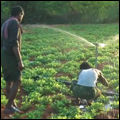
Throughout Africa, degrading land resources and poor water management are serious impediments to the development of agriculture. Inappropriate farming practices result in soil erosion, a loss of soil organic matter and declining fertility and capacity to retain water. Once-fertile soils become compacted and crusted, causing valuable rainwater to run off rather than seep into the ground and carrying with it precious topsoil and nutrients. The results are unhealthy crops due to water and nutrient deficits and the build-up of weeds and diseases, poor and unreliable yields, and chronic water shortages due to lack of recharge of ground water. How to escape from this vicious cycle? FAO and other development organizations have been promoting farmer field schools – an innovative approach to adult education first developed in Southeast Asia for pest management – to improve land and water management in Africa.

Available in:

For related information, see the following theme pages: -Land Resources  
October 2008
Visual Soil Assessment (VSA) Field Guides. Food and Agriculture Organization of the United Nations (FAO) Rome, 2008

The maintenance of good soil quality is vital for the environmental and economic sustainability of annual cropping. A decline in soil quality has a marked impact on plant growth and yield, grain quality, production costs and the increased risk of soil erosion. Therefore, it can have significant consequences on society and the environment. A decline in soil physical properties in particular takes considerable time and cost to correct. Safeguarding soil resources for future generations and minimizing the ecological footprint of annual cropping are important tasks for land managers. Visual Soil Assessment is based on the visual assessment of key soil ‘state’ and plant performance indicators of soil quality, presented on a scorecard. With the exception of soil texture, the soil indicators are dynamic indicators, i.e. capable of changing under different management regimes and land-use pressures. Being sensitive to change, they are useful early warning indicators of changes in soil condition and as such provide an effective monitoring tool.

Available in:

For related information, see the following theme pages: -Land Resources  
July 2008
New global soil database
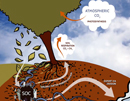
Soil database win-win options for climate change mitigation and food production

Available in: | | |

For related information, see the following theme pages: -Land Resources  
July 2008
Land degradation on the rise
One fourth of the world’s population affected, says new study

Available in: | | | | |

For related information, see the following theme pages: -Land Resources  
October 2007
6. Land Evaluation. Towards a revised framework.

Land evaluation is a vital link in the chain leading to sustainable management of land resources. There is a perceived need to update the FAO 1976 Framework for Land Evaluation to reflect current concerns related to climate change, biodiversity and desertification. The goods and services of the land that are related to its multiple functions or benefits as well as the sustainability of its use need to be addressed. New tools to conduct land evaluation have become available and the need for a participatory approach has been recognized.Many concepts and definitions of the original Framework remain valid; others evolved and new concepts arose over the past 25–30 years.

Available in:

For related information, see the following theme pages: -Land Resources  
1 2 3 4 5 6 7 8 9 10

Filter information resources by the following themes: