
François STEPMAN
| Organización | Forum for Agricultural Research in Africa |
|---|---|
| Organization type | International Organization |
| País | Ghana |
European co-manager of the Platform for African – European Partnership in Agricultural Research for Development
Co author of the Inventory on innovative farmer advisory services or systems
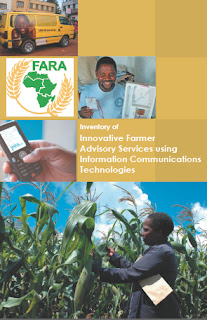
You can download this report on: http://www.fara-africa.org/media/uploads/File/NSF2/RAILS/Innovative_Farmer_Advisory_Systems.pdf
This member participated in the following Forums
Foro Forum: "ICT and producer organizations" November, 2012
Question 2 (opens 14 Nov.)
The key for development actors is to understand the traditional process of farmer innovation in order to succeed in bringing ICT in line to support this.
Video solutions are offering increased opportunities to record and disseminate innovative agricultural technologies from and to farmers:
- Growing interest in extension
- Attention to farmer innovation
- More organizations want to enhance their impact at regional level
- Many service providers have expressed their interest in using quality videos
- About 85% of the respondents found local languages very important for farmer training videos. To ensure that videos are sharable and of use to the global community of extension service providers and farmers, producing many poor quality local language videos is not cost-effective.
- Organizations are willing to translate and use videos made in other countries if they are relevant and of good quality, and if video scripts are available. Lower quality videos serve intermediaries only and are rarely used to actually train farmers.
- The five priority areas for new video productions are: crops and trees, water management, plant health, soil health and farmer organizations.
- Farmers would watch videos on their own with their family or neighbours if video disc distribution mechanisms were in place. And they are willing to pay for video discs and video shows.
- Only about 20% of all respondents have never used video to train farmers and have never searched the web for agricultural videos.
- Many of those didn’t know where to look for videos, hadn’t found videos on the right subject or hadn’t found videos in their local language.
- Ideally, videos should entice multiple organizations to use them in multiple settings, facilitated or not, depending on the local context . Well-made videos can serve farmer organizations, extension services, radio broadcasters, and can be modified for use on mobile phones or in any other way.
- In terms of efficiency and scope to disseminate, it makes much more sense to translate one quality video into ten languages, rather than to completely reproduce the same video (or minor variations) in each single language.
The East and Southern Africa (ESA) Division of IFAD (Rome) is supporting the East Africa Farmers’ Federation (EAFF, based in Nairobi) for Strengthening the capacity of East African farmer organizations through knowledge management and institutional development. (project of 3 years, USD 1 200 000)
Following activity: Promoting an innovation culture: systematization and sharing may add something to our debate about identifying What are the priority areas for producer organizations.
Context:
Knowledge management and institutional development are core functions and priorities of the EAFF regional secretariat.
Through this Project, EAFF will link the different national members and support them in their own organizational development to ensure that information and knowledge is generated and shared within and across the national unions, associations and at farmer level.
- National farmer organizations’ strategic plans focus mainly on lobbying and advocacy, capacity building, value chain development, and communication and information dissemination.
- This Project will build capacity of national FOs to generate information and translate it into knowledge to improve their lobbying and advocacy, and integration in value chains.
- The project will complement the EC-funded Support to Farmers Organizations in Africa Programme (SFOAP), by deepening SFOAP’s impact in ESA, in particular in the areas of institutional strengthening and KM and learning.
- Projects in Burundi, Kenya and Tanzania countries where there is a great overlap between the FOs and the IFAD/ESA project areas, will benefit directly. Projects in other countries will benefit through knowledge sharing.
Promoting an innovation culture: systematization and sharing.
The objective of this component is to promote a culture of innovation in the farmer organizations at all levels.
- The project will assist EAFF in setting up and managing a lean innovation sharing facility. The project will help EAFF to put in place the systems, processes and mechanisms for knowledge sharing, and coach the concerned staff on how to systematize information.
- Selected staff will be trained in how to select, analyse, document and share innovative practices, technologies and approaches. Each year, the most promising innovations will be packaged and shared through a variety of communication tools, tailored to the needs of specific audiences. It is envisaged, for example, that EAFF will organize an annual innovation competition among farmers and facilitators.
- Facilitators, who will work directly with FOs and farmers, will scout for innovations and pass them on to the innovation sharing facility, which will then validate innovations, systematize them in a way that can be used and applied to other contexts and disseminate them at all levels.
- Tools and approaches such as write-shops and systematization will be made available.
Remark:
As several other contributions mentioned: apart from identifying the best tools to comminicate among farmers, capacity building at the level of national farmer organisation on how to manage them is crucial.
I also confirm what Jimmie said about (mobile phone applications) : Frontline SMS has increased a lot the efficiency of f.i. radio broadcasting for farmers. They most of the time only find by coincidence a program which is interesting for their cultivation. But receiving an sms alert about a forthcoming program makes them tune in. Farmer organisations are therefore to work closely with community radios.
Google has launched a text message-based version of its email service targeted at users in Africa.
Gmail SMS can run on so-called "dumb phones" which only have very basic features and no access to the internet.
The service has so far been made available in Ghana, Nigeria and Kenya.
http://www.bbc.co.uk/news/technology-18898967


