
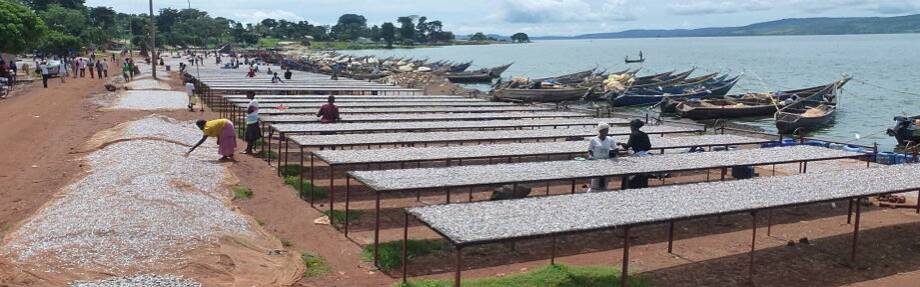







Skills and Knowledge for Artisanal Fish Drying
Skills and knowledge related to food safety, good handling and hygiene and the use of improved technology will assist in the reduction of food loss and waste (FLW) during drying. Important knowledge and skills topics for FLW control in traditional drying include the following:
- Causes of fish spoilage and quality deterioration and how to prevent these
- Food safety and dried fish
- Hygienic handling and preparation of fresh fish
- Good personal hygiene
- Use of improved fish technology
- Use of improved packaging
- Good storage practice and control of insect and animal pests
Insect (blowfly) infestation during drying is a problem leading to quality problems and physical wastage. Solutions include drying quickly, maintaining high standards of hygiene and ensuring the drying area is kept clean with no unnecessary vegetation and that the background population of insects is controlled to a minimum.
For development practitioners, understanding the science behind the drying process and the factors that control insect infestation, are important.
The use of improved appropriate technology, such as drying racks and their construction, should be accompanied by improved hygiene and handling practices, otherwise the full benefits of an improved appropriate technology will not be realized. This may require capacity building and training for processors.
National authorities, such as Health Inspectorates and Food Standard Agencies, require the skills and knowledge to be able to implement extension and enforcement of food law, regulations, standards and certification.
Key Publications
| Fish Handling, Quality and Processing: Training and Community Trainers Manual This document includes information related to food law implementation. |
| Trainer's Guide to Controlling Blowfly Infestation of Traditionally Processed Fish Guidance is provided on the biology and control of blowfly infestation, particularly on the systems based approach to controlling infestation by engaging the fish processor in identifying where infestation occurs and selecting control measures. |
| Detailed description of dried fish production and storage. |

More Resources
More Resources

27 February 2024

31 October 2023