
Selectivity project tests solutions to prevent the catch of juveniles in commercial fisheries in the Strait of Sicily

Fishing gear selectivity is a highly significant issue in fishery resource management and conservation. For the past two years, a pilot project has tested measures to reduce the capture of juvenile hake and deep-water rose shrimp in bottom trawl fisheries in the Strait of Sicily.
The Institute for Marine Biological Resources and Biotechnology of the National Research Council (IRBIM-CNR) of Mazara del Vallo and Ancona has recently concluded the operational phase of this project implemented in collaboration with the World Wildlife Fund (WWF) and the General Fisheries Commission for the Mediterranean (GFCM) of the Food and Agriculture Organization of the United Nations (FAO).
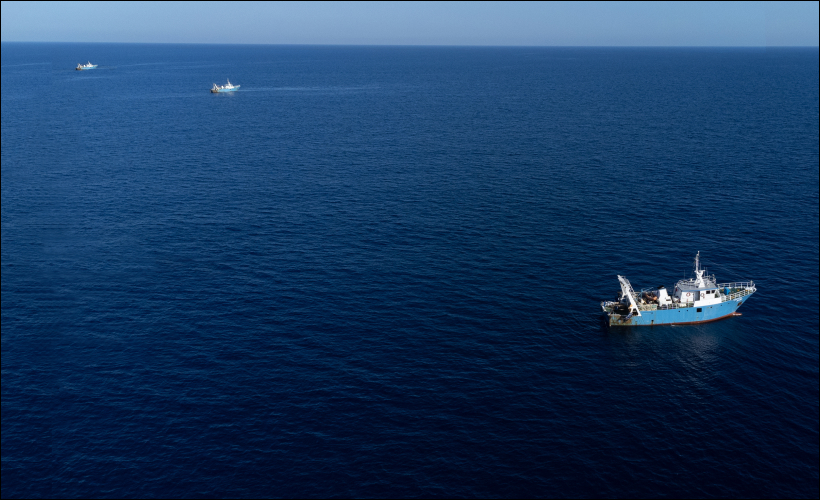
Three trawl vessels operating side by side, testing different selectivity measures ©FAO-GFCM/Claudia Amico
In line with of the provisions contained in Recommendation GFCM/42/2018/5, which focuses on the need to identify and develop measures to mitigate the negative impacts of bottom trawling on the juveniles of main commercial species, the initiative aims to identify and test innovative technical solutions to reduce bycatch and unwanted catches in multispecies bottom trawl fisheries in the Strait of Sicily, thereby contributing to the conservation of marine living resources and the promotion of sustainable fishing practices.
In this context, two pilot projects were carried out in geographical subarea 16 (southern Sicily) in spring 2023 and summer 2025. These testing activities at sea focused on two species of high commercial value, European hake (Merluccius merluccius) and deep-water rose shrimp (Parapenaeus longirostris), both managed under a GFCM multiannual management plan and currently considered to be at risk of overexploitation.
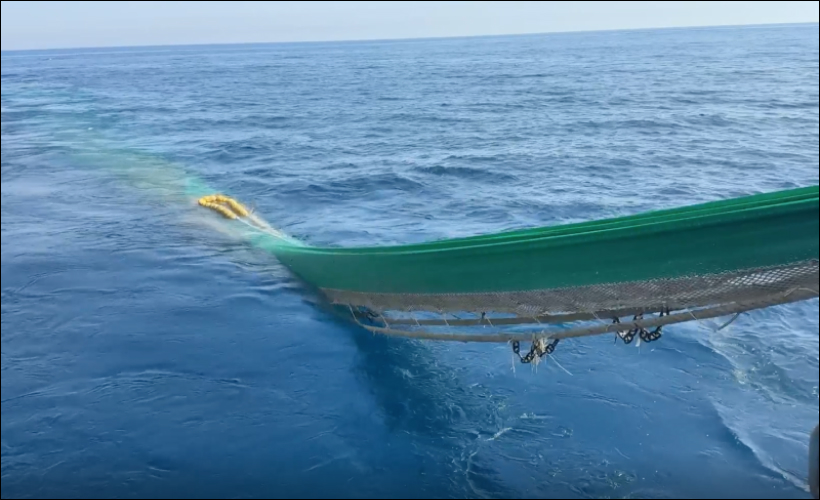
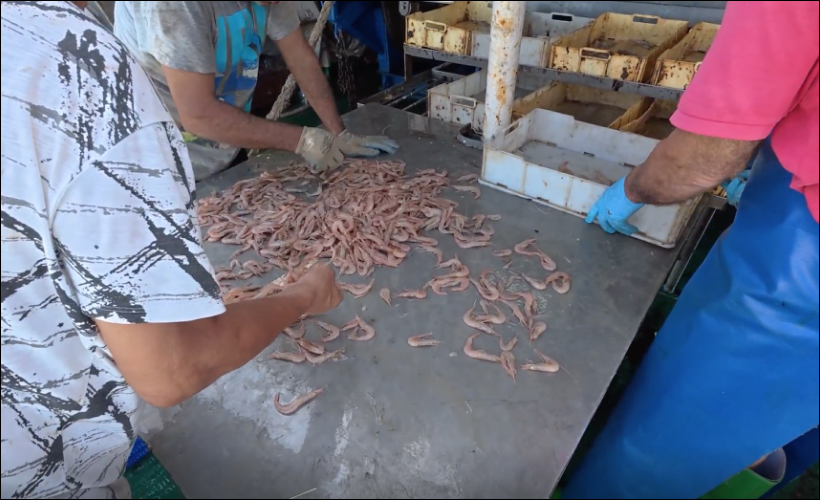
On the left, the end of the haul. On the right, a team sorting deep-water rose shrimp ©IRBIM-CNR/Andrea Petetta and Giorgio Vianson
The tests at sea were conducted using three different commercial vessels, each with identical technical features and operating in parallel at the same time and on the same fishing ground. Each vessel employed different net configurations: the first used a standard commercial net, to act as the control; the second used a net with a specific sorting grid for the juveniles of the two species; and the third was rigged with a “T90" fishing net sporting the square meshes of commercial nets rotated at 90° as opposed to the traditional diamond-shaped ones.
The three nets were employed simultaneously in order to compare catch abundance and composition between the commercial fishing nets and the selective devices. Aboard the three vessels, IRBIM-CNR researchers carried out sampling activities, along with quantitative and qualitative analyses of the catch, with the aim of evaluating the efficiency of the different nets in reducing the catch of juveniles.
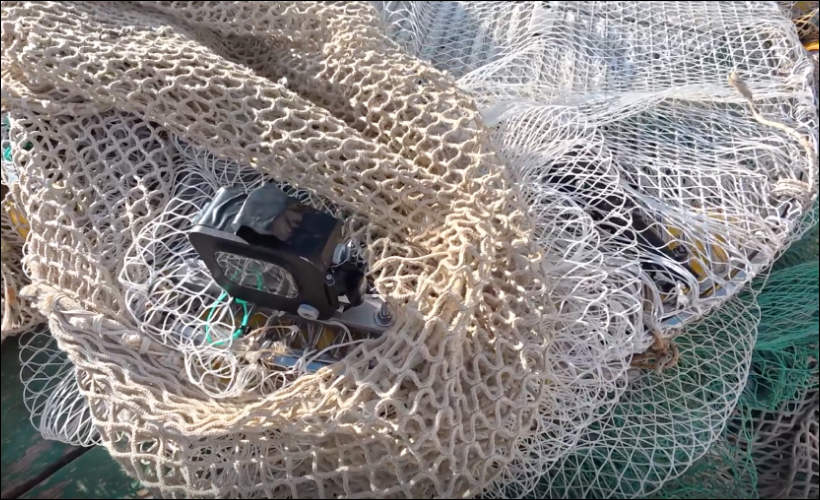
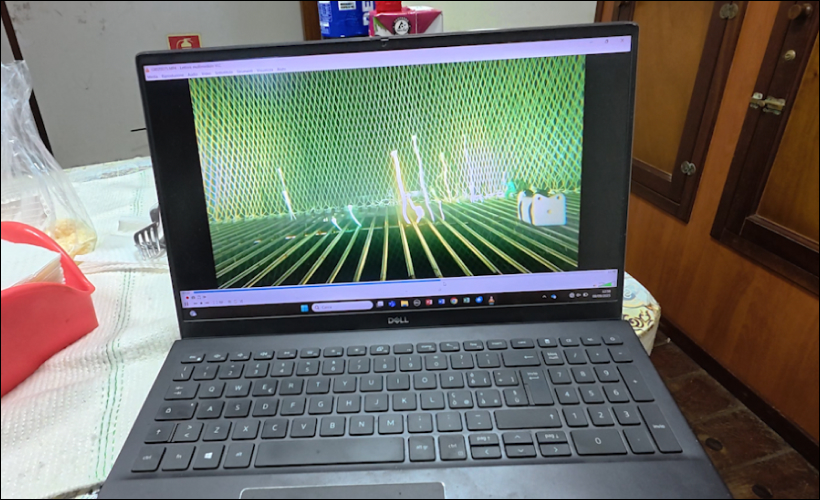
Fishing gear with installed camera for activity monitoring ©IRBIM-CNR/Andrea Petetta and Giorgio Vianson
Underwater footage of the sorting grids was also recorded to evaluate the vitality condition of European hake and other commercial species, as part of post-capture survival rate analyses.
The project, funded by the European Union, represents a continuation of regional cooperation initiatives promoted by the GFCM, aimed at promoting increasingly selective, sustainable and responsible fisheries. More information can be found at the following link.
Cover image: A trawl net being retrieved at the end of the haul in the Strait of Sicily ©IRBIM-CNR/Andrea Petetta and Giorgio Vianson
In 2025, selectivity trials were also conducted in Tunisia. The activity was funded by the Global Environment Facility through the FishEBM MED project.