
Two seas, one vision: celebrating women in science in the Mediterranean and Black Sea region

Women occupy critical roles throughout the fisheries and aquaculture value chains – from fish farming, repairing fishing vessels and gear, and post-harvest processing to research, inspection, and administrative work. Women's empowerment is essential to achieve a Blue Transformation and ensure that aquatic food systems are sustainable for all in the future.
On this International Day of Women and Girls in Science, the General Fisheries Commission for the Mediterranean (GFCM) of the Food and Agriculture Organization of the United Nations (FAO) shines a light on five women who are contributing to the five targets of the GFCM 2030 Strategy.
Their stories underscore that addressing gender inequalities and fostering women’s leadership can drive lasting change, towards ensuring that fisheries and aquaculture in the Mediterranean and Black Sea region truly thrive for current and future generations.
Target 1. Fisheries and ecosystems: healthy seas and productive fisheries
Myriam Lteif, Researcher, National Centre for Marine Sciences, National Council for Scientific Research (CNRS), Lebanon
For Myriam Lteif, pursuing fisheries science stemmed from a passion for the sea and a commitment to protect marine ecosystems. With a biology major and a PhD in Oceanology, she focuses on improving fish biological data collection and monitoring along the Lebanese coast, contributing to robust fish stock assessments that support sustainable fisheries management.
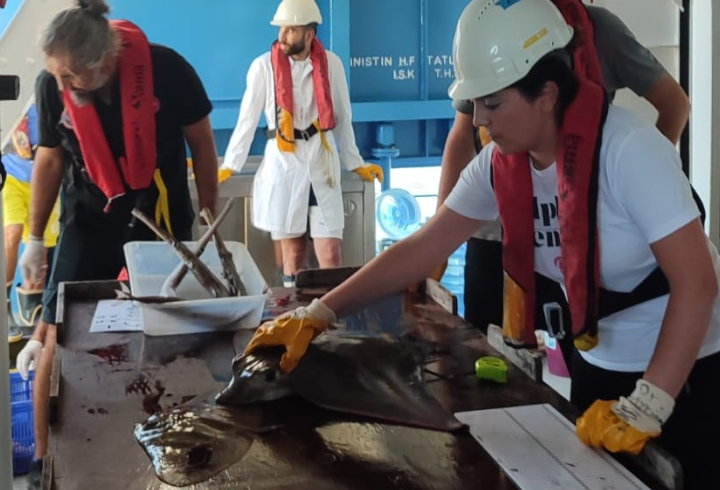
© Myriam Lteif
"As a mother of three, I want to make a tangible impact on environmental conservation, ensuring healthier ecosystems that support food security and a sustainable world for my children and future generations to inherit."
Myriam has participated in various GFCM activities, from working groups to surveys-at-sea. Through her work she is contributing to regional fisheries management and conservation strategies. By collaborating with experts across the Mediterranean, she has strengthened her expertise in fish stock assessment and ensured that scientific research informs policy decisions.
“Women play a vital role in fisheries science,” she explains. “We bring innovative perspectives crucial for inclusive decision-making, ensuring that the needs of diverse community members, especially vulnerable groups, are met.”
Target 2. Compliance and enforcement: a level playing field to eradicate illegal, unreported and unregulated (IUU) fishing
Widad Natify, Head of Vessel Monitoring Unit, National Fisheries Monitoring Centre, Ministry of Agriculture, Maritime Fisheries, Rural Development and Water and Forests, Morocco
Growing up in the coastal city of Agadir, Widad Natify grew up determined to safeguard the ocean and the livelihoods it sustains. As she pursued a PhD in fisheries governance, she became increasingly aware of the challenges facing fisheries, such as overexploitation and illegal fishing, and the urgent need for stronger compliance mechanisms.
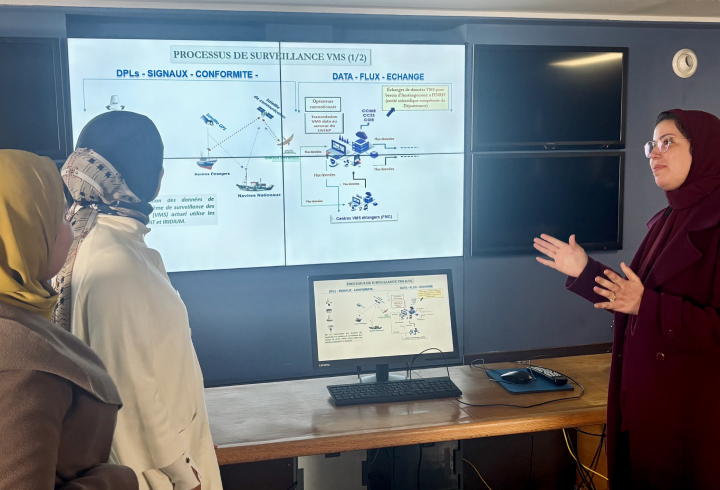
© Widad Natify
“Recognizing and amplifying the role of women in compliance is essential. Their leadership, expertise and commitment to equity contribute significantly to ensuring a level playing field for all stakeholders in the industry.”
Widad is actively engaged in strengthening national monitoring, control and enforcement mechanisms,and ensuring that they align with regional efforts to combat IUU fishing. She works with national authorities to promote the use of innovative technologies and reform domestic legal frameworks, fostering an effective and harmonized approach to enforcement across the region. With the support of the GFCM, Widad’s work strengthens regional compliance frameworks and benefits legitimate fishers.
Target 3. Aquaculture: a sustainable and resilient sector growing to its full potential
Christina Zantioti, President, Network of Women in Aquaculture (NOWA), Greece
Growing up in a country with a rich maritime heritage like Greece, Christina Zantioti developed a deep appreciation for the sea and its importance to the environment. Her passion for biological sciences has always been a driving force in her career, motivating her to pursue a path where she could advocate for and work towards sustainable practices in aquaculture.
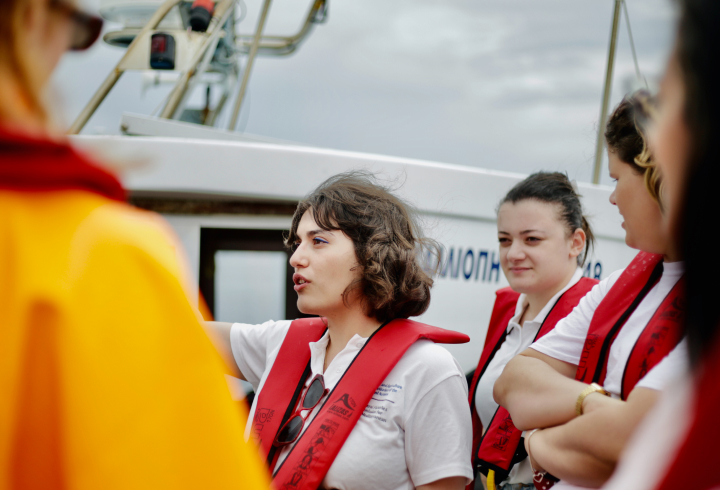
©FAO-GFCM/Intissare Aamri
“Women are often at the forefront of community-based initiatives, adopting early sustainable practices and ecofriendly technologies,” Christina explains. “By offering women more opportunities to step into leadership and decision-making positions, we can drive greater sustainability and impact within the industry.”
Christina describes as “life-changing” her participation in GFCM activities, particularly in the second edition of the programme on “Empowering Women Towards Sustainable Aquaculture Development”. Through this experience, she formed strong relationships with other participants, and from this synergy the NOWA Network of Women in Aquaculture was born. NOWA is a social entrepreneurship initiative committed to promoting gender equality and inclusivity across the global aquaculture industry. “Inclusivity is not only a matter of equity but also a vital driver of resilience and adaptability in food systems,” she says.
Target 4. Livelihoods: decent employment and engaged fishers towards profitable fisheries
Guranda Makharadze, Major Specialist, Fisheries, Aquaculture and Water Biodiversity Department, National Environmental Agency, Georgia
Guranda Makharadze was drawn to fisheries and aquaculture early in her career due to her interest in the intersection of environmental conservation and resource management. This motivation drives her to address the challenge of ensuring that fisheries operate sustainably while also protecting the rights and livelihoods of those who depend on them.
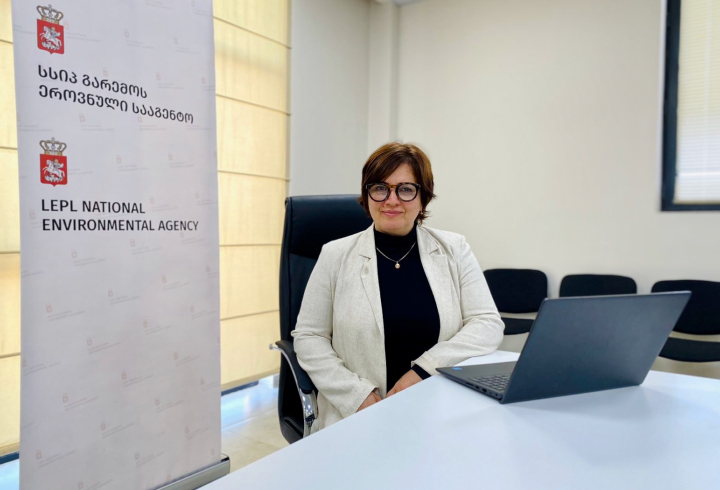
©Guranda Makharadze
“Women play a crucial role in advancing sustainability and equity in fisheries and aquaculture,” she explains. “By bringing diverse perspectives and inclusive decision-making, women help shape policies that balance economic growth with environmental responsibility.”
Through her participation in GFCM activities, Guranda contributes to strengthening fisheries governance, focusing on fisheries monitoring, regulatory compliance and capacity development to help fishers improve their revenues, from increasing the value of their catches to diversifying their activities. She has spearheaded the team that has recently completed the first-ever socioeconomic survey of Georgian fisheries, expected to help facilitate consideration of socioeconomic issues in fisheries management decision-making.
Target 5. Capacity development: technical cooperation, knowledge sharing and efficient partnerships in a subregional perspective
Gizem Akkuş, PhD Research Assistant, Middle East Technical University (METU) Institute of Marine Sciences, Türkiye
Gizem Akkuş’s interest in fisheries science emerged from a curiosity about understanding marine ecosystems and their critical role in sustaining livelihoods and economies. The multidisciplinary nature of the field captivated her, as it requires balancing ecological perspectives with social and economic angles to manage resources sustainably.
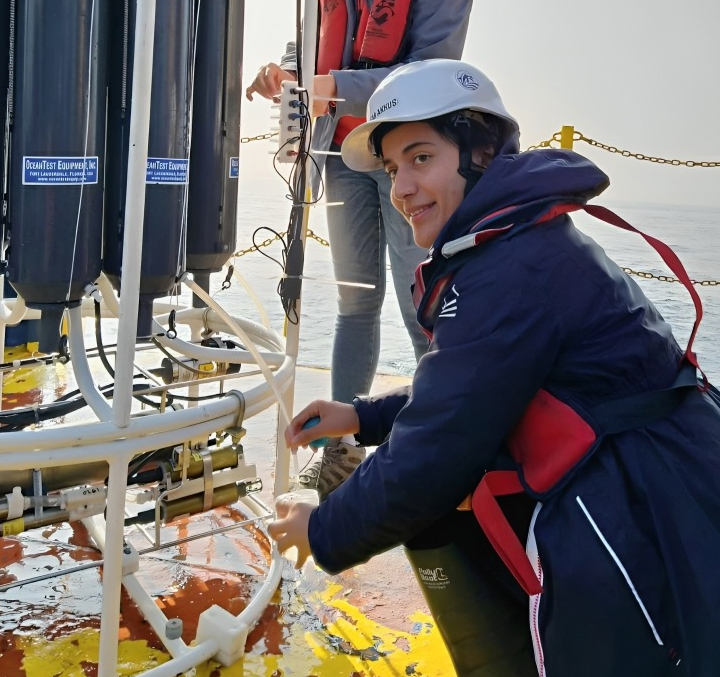
©Gizem Akkuş
She believes that women’s leadership is crucial in ensuring that sustainability efforts are both environmentally effective and fair to communities. “Diversity, equality, and justice are the fundamental building blocks of sustainability,” Gizem says. “Women bring expertise and innovative approaches, making the field more inclusive and resilient.”
Through her participation in GFCM activities, Gizem works closely with a variety of experts from the Mediterranean and the Black Sea. She actively contributes to capacity development by transferring knowledge and methodologies at the national and regional levels, through training programmes and workshops. Her support to the development of technical skills in fisheries science helps to ensure that decision-makers have access to the best available scientific data for sustainable fisheries management.
The GFCM is committed to ensure that the fisheries and aquaculture sector is fair and inclusive. It recognizes the longstanding role women have played along the value chains and is taking strategic actions to shed light on their contributions to the sector.
Learn more about the International Day of Women and Girls in Science
Tackling some of the greatest challenges of the Agenda for Sustainable Development – from improving health to combating climate change – will rely on harnessing all talents. This means getting more women working in these fields. Diversity in research expands the pool of talented researchers, bringing in fresh perspectives, talent and creativity. This International Day is a reminder that women and girls play a critical role in science and technology communities and that their participation should be strengthened.
Learn more
- Women in fisheries in the Mediterranean and Black Sea region: roles, challenges and opportunities
- Network of Women in Aquaculture established in line with the Resolution GFCM/45/2022/1 on empowering women in aquaculture.
- Regional Plan of Action for Small-Scale Fisheries in the Mediterranean and the Black Sea highlighting the Role of women as a priority