Myanmar

Source: FAO-Forestry. Disclaimer.
Version: 1999
Geography and population
Myanmar has a total area of 676 580 km². It is situated at
the juncture of the Indian subcontinent and southeast Asia. The country is divided into
seven states, mainly covering the hill regions, and seven divisions covering the plains.
Topographically, the country can be divided into five regions. They are
the northern and western mountains, the eastern plateau (Shan plateau), the central basin
and the coastal strip. The country is mountainous, rising to more than 5 800 m
above sea level in the far north, reaching an elevation of well over 2 000 m
over much of Shan state in the northeast, and in Rakhine and Chin states in the west.
The cultivable area is estimated at 18.27 million ha, while the
cultivated area amounts to 10.14 million ha, or 55 percent of the
cultiv-able area. The cultivated area can be divided into fallow area (14 percent),
net sown area (66 percent) and multiple cropping area (20 percent). The
cultivated areas are concentrated in the Ayeyarwady River basin, while potential for
further expansion lies mainly in upper Myanmar, namely in the Chin, Kachin and Shan
states.
In 1996, the total population was estimated by the UN at
45.922 million inhabitants (74 percent rural). With a population density of
68 inhabitants/km², Myanmar is well below the level of other countries in south and
southeast Asia. The population growth rate is estimated at 1.87 percent. About
72 percent of the total labour force is engaged in agriculture, and 70 percent
in the primary sector, including livestock, fisheries and forestry. The agriculture sector
contributes 50 percent of GDP, and generated 33 percent of total export earnings
in 1994.
Climate and water resources
Climate
Myanmar's climate is tropical monsoonal in type. Rainfall is
highly seasonal, being concentrated in the hot humid months of the southwest monsoon (May
to October). By contrast, the northwest monsoon (December to March) is relatively cool and
almost entirely dry.
The mean annual rainfall is estimated at 2 341 mm. The most
significant regional variations are those associated with the intensity of the southwest
monsoon rains. Annual rainfall ranges from as high as 4 000-6 000 mm along
the coastal reaches and in the mountains of Rakhine and Tanintharyi to as low as
500-1 000 mm in the central dry zone. Intermediate levels of rainfall
characterize the Ayeyarwady Delta areas (2 000-3 000 mm/year), the Shan
plateau (1 000-2 000 mm/year) and the transitional areas. As with the
rainfall, 90 percent of the discharge flows between May and October.
River basins and water resources
The north-south direction of Myanmar's mountain ranges is
reflected in the flow of its major rivers, of which two are international rivers. There
are six river basins:
- the Ayeyarwady and Chindwin river basin, which is almost entirely
located in Myanmar and drains 58 percent of the territory;
- the Sittoung River basin, which is also entirely located in Myanmar
to the east of the Ayeyarwady, drains 5.4 percent of the territory;
- the Thanlwin (Salween) River basin, which drains 18.4 percent of
the territory, mainly the Shan plateau in the east of the country. The river comes from
China and after entering the country forms the border with Thailand for about 110 km;
- the Mekong River basin, which drains 4.2 percent of the
territory in the far east and forms the border with Lao PDR. The Mekong River has
2 percent of its catchment area in Myanmar. Myanmar is not a member of the Mekong
River Commission;
- the Rakhine (Arakan) coastal basin in the west draining into the Bay
of Bengal;
- the Tanintharyi (Tenasserim) coastal basin in the south draining into
the Andaman Sea.

The inflow from other countries is estimated at 128.2 km³/year
from Chinese and Thai information and includes: 20 km³/year from India,
68.7 km³/year (Yuan Yiang) and 31.3 km³/year (Lancang) from China, and
8.2 km³/year from Thailand. The total surface water produced internally (total
runoff minus inflow from other countries) is estimated at 874.6 km³/year.
Groundwater resources have been estimated at 156 km3/year but a large part
of this water (estimated at 150 km³/year) constitutes the base flow of the rivers
and is also accounted for as surface runoff.
The Mekong River forms the border with Lao PDR over 170 km, from
which 36.815 km³/year can theoretically be considered as an additional external
resource. The total natural renewable water resources (including flow from incoming or
border rivers) are estimated at 1 045.6 km3/year.
Lakes and dams
There are few lakes in Myanmar. The largest is Lake Inle which covers
an area of 155 km². In 1994, there were 70 dams over 15 m high.
The theoretical hydropower potential has been estimated at more than
100 000 MW, of which 9 000 MW with detailed feasibility studies. In
1995, 288 MW had been developed, which represented at that time 34 percent of
the total installed power capacity of the country.
Water withdrawal
Water withdrawal was estimated at 4 km³/year in 1987, of which
90 percent for irrigation purposes (Figure 1).

About 46 percent of the population have access to adequate
protected water supplies. Extreme conditions persist in the coastal and delta regions
where overall coverage rates are 10-13 percent. There is no wastewater treatment in
Myanmar.
Irrigation and drainage development
Because of the rainfall and hydrological pattern of the country, the
need for irrigation is highest in the central dry zone, while the delta is more concerned
with drainage and flood protection problems.
It is thus logical that the first irrigation works should have been
undertaken near Bagan (Pagan) in the central region in the eleventh and twelfth centuries.
They typically comprised diversion systems based on tributaries of the middle Ayeyarwady,
and were designed essentially to provide security to the main season paddy crop. Storage
reservoirs were also constructed for the same purpose. The ancient systems were
subsequently modernized, extended and operated in the traditional manner, with a greater
emphasis on the upgrading and development of the existing flood protection and drainage
facilities in the Ayeyarwady Delta. This enabled the development of paddy cultivation and
made Myanmar a major rice-exporting country before World War II. Dam construction and
irrigation network implementation were significantly accelerated in the 1960s, 1970s and
after 1990 (Figure 2). The irrigation potential is estimated at
10.5 million ha, considering both water and soil resources.
The irrigated areas are estimated at 1 555 416 ha.
Irrigation expansion has been significant (up 50 percent) in the last five years.

Irrigated areas were traditionally supplied through weirs for river
diversion or dams and tanks, but wells and pumping in rivers have developed quite
substantially in recent years (Figure 3). Pump irrigation was promoted in the 1980s
by programmes implemented by the Agricultural Mechanization Department. Other types of
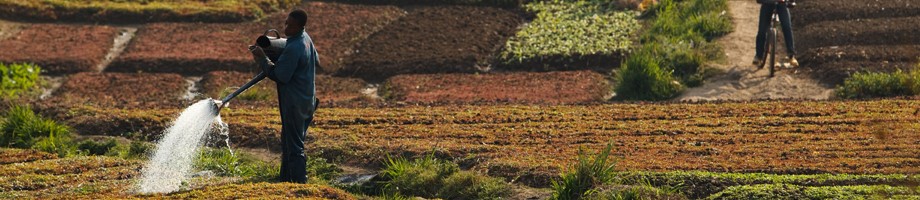
irrigation water supply include windmills, watermills, watering with buckets, ponds, etc.

All irrigation in Myanmar is surface irrigation. Sprinkler and
localized irrigation have been developed only on pilot farms, and altogether do not exceed
50 ha.
Two types of irrigation management coexist in Myanmar: public and
private schemes. Government schemes account for 53 percent of weir schemes and
81 percent of the dams and tanks (all dams of and above 6.1 m). Wells and pump
irrigation, although possibly originally implemented by the services of the Ministry of
Agriculture, are mainly private.
Although farmers are responsible for implementation, management and
O&M in the private schemes, both the Irrigation Department and the Water Resources
Utilization Department provide technical and financial assistance. The main irrigated
crops are paddy, oil crops and fibre crops (Figure 4).
There are important groundwater aquifers in Myanmar. However, their
exploitation has been limited to domestic water supply and to the intensive irrigation of
vegetables and other high value crops from hand-dug wells. In the central dry zone, where
most of the potential for economical run-of-the-river diversion schemes has been utilized,
dams, irrigation projects and groundwater irrigation projects were started in the 1980s.
Irrigation from groundwater was practised on 55 175 ha in 1995, mainly for
cotton, wheat, beans and pulses. Groundwater is mobilized mainly by diesel pumps
(Figure 5). Generally, one tube-well allows supplementary irrigation on 4 ha.
Since the development of tube-well irrigation in 1992, 3 000 tube-wells have been
drilled every year by the Department of Water Resources Utilization. Following this
example, the private sector drills around 9 000 tube-wells each year.


Inland valley bottoms equipped for irrigation are generally known as
maye land in the Myanmar classification of cultivated areas. In order to generate
increased paddy production, a combination of paddy and fish farming on plots of
1-2 ha protected by embankments has been introduced in maye land areas, where rice
yields were uncertain. Another type of water management is what is called kaing land in
the Myanmar classification (flood recession cropping). These lands are generally
cultivated with vegetables, mainly in the Ayeyarwady Delta.
In the Ayeyarwady Delta, drainage, salt intrusion and flood protection
are major concerns. Embankments have been developed to protect large areas from both
floods and salt intrusion. These embankments may have drainage facilities. There are a
total of 318 flood protection works, both government and private, protecting a total of
1.2 million ha of cultivable land (Figure 6). A small portion of this area
(less than 10 percent) is also irrigated by small lift pumps.

In 1995, 193 363 ha were reported as equipped with surface
drainage networks. Drainage works are also considered a form of flood protection.
Salinization due to irrigation is mainly found in the central dry zone,
near Meiktila in Mandalay Division, where groundwater is used for irrigation purposes.
After the decision of the Government to move towards a market-oriented
economy, and the consequent freedom given to farmers to cultivate crops of their choice,
agricultural cropping patterns have changed dramatically. Jute used to be the second most
widely cultivated crop (after rice), but it has now been replaced by cash crops such as
beans, pulses, sunflowers, chilies and vegetables.
Farmers have to pay a tax of 25 kyatts/ha/year for irrigated areas
(which is equivalent to US$4.1/ha/year at the official rate and US$0.2/ha/year at the open
market rate), and 12 kyatts/ha/year for flood protected areas. Once collected, this
revenue is channelled to the Revenue Department. The amount of the tax, decided in 1982,
does not take into consideration the nature of the crop, cropping intensity or irrigation
technique. It is not clear whether this tax applies to both public and private schemes.
Average irrigation development costs vary from 12 300 to
49 100 kyatts/ha (US$2 000-8 000 or 100-400/ha). Drainage and embankment
development cost around 7 400 kyatts/ha (US$1 200 or 60/ha).
The Irrigation Department is responsible for the O&M of the
government schemes, and the annual budget for both irrigated and flood protected areas is
200 million kyatts (US$33 million or 1.65 million).
Institutional environment
The Ministry of Agriculture is the main ministry involved in water
resources through its various departments:
- the Water Resources Utilization Department, which is responsible for
groundwater use (for both irrigation and rural water supply), irrigation by pumping in
rivers, and the development of sprinkler and micro-irrigation;
- the Irrigation Department, which is responsible for O&M of
irrigation works, construction of new projects, and investigation, design and
implementation of proposed projects, as long as surface water is used;
- the Settlement and Land Records Department, which is responsible for
collecting agricultural statistics and land administration;
- the Agricultural Planning Department, which is in charge of planning,
monitoring and evaluation of all agricultural projects, including irrigation and drainage
projects.
The Meteorology and Hydrology Department of the Ministry of
Communication, Posts and Telegraphs is in charge of collecting hydrological and
meteorological data, while the Irrigation Department has also its own hydrological
network. Hydropower generation is supervised by the Myanmar Electric Power Enterprise,
within the Ministry of Energy.
Since the promulgation of the Land Nationalization Act (1953), all land
officially belongs to the State. However, farm households benefit from a customary
usufruct right to the land. There is no water law in Myanmar.
Trends in water resources management
The Government has set a target of 100 percent for water supply
coverage in 2000, but a more realistic objective considering the funds allocated for this
programme would be near 70 percent.
Within the framework of its irrigation policy, the Ministry of
Agriculture has decided to undertake:
- the construction of new reservoirs and dams;
- the rehabilitation of existing reservoirs and networks of both
government and private sectors, in order to upgrade the storage capacity and allow for an
efficient delivery of irrigation water;
- the development of flood protection by embankment, and irrigation
expansion after flood recession;
- the development of pump irrigation;
- the development of an efficient use of groundwater for irrigation.
The official target for irrigation development is to irrigate
25 percent of cultivated areas before 2000, which is realistic regarding the ongoing
and planned projects. Concerning the flood protected areas, no target has been fixed by
the Government although some 400 000 ha in the delta are in need of reclamation.
All new projects related to dam construction are now multipurpose
projects and include flood control, town water supply, hydroelectricity and irrigation.
The priority for multipurpose projects with hydropower is an indicator of the expanding
demand for energy.
Main sources of information
Central Statistical Organization. 1994. Statistical
yearbook 1993. Yangon.
ESCAP. 1995. Assessment of water resources and water demand by user sectors in Myanmar, p. 40. United
Nations.
FAO. 1995. Agriculture development and environmental rehabilitation project in the dry zone. Project MYA/93/004. Rome.
Irrigation Department, Ministry of Agriculture. 1995. Information and data on water resources development and flood
control. Yangon.
Ministry of Agriculture. 1994. Report on Myanmar census of agriculture 1993. Yangon.
Ministry of Agriculture. 1995. Information on Myanmar agriculture. Yangon.
Tha Tun Oo. 1991. Environmental issues in land and water development in Myanmar (land). Paper presented at the regional expert
consultation on environmental issues in land and water development, Bangkok, 10-13 September 1991. FAO/RAPA publication 1992/8. Bangkok.
U. Aung Myo. 1994. Improved operation and maintenance of lift irrigation systems and management of groundwater resources in Myanmar.
Paper presented at the expert consultation of the Asian network on Water lifting devices for irrigation, Bangkok, 27 September - 1 October 1993. FAO/RAPA publication 1994/5.
Bangkok.
U. Ohn Myint. 1991. Environmental issues in land and water development in Myanmar (water). Paper presented at the regional
expert consultation on environmental issues in land and water development, Bangkok, 10-13 September 1991. FAO/RAPA publication 1992/8. Bangkok.
U. Zaw Win. 1993. Myanmar water resources. Irrigation Department, Ministry of Agriculture Yangon.
UNDP, World Bank, General Administration Department - Urban Water Supply Division. 1993. Water supply and sanitation sector
review in Myanmar. Final report prepared by Cowater International Inc., Thant Syn Co. Ltd. Project MYA/86/012. Ottawa.
World Bank. 1992. Energy sector investment and policy review studies. Report 10394 BA. Washington, D.C.
|