


Biodiversity is the foundation of sustainable agricultural production and food security.
Agrifood sectors – crop and livestock production, fisheries, aquaculture and forestry – manage significant parts of the land, freshwater and oceans. They depend on biodiversity and the ecosystem services it provides. But they also affect biodiversity in both positive and negative ways, impacting on livelihoods, food security and nutrition.
FAO’s projects, programmes and knowledge products help countries use, conserve and restore biodiversity in agrifood systems. This work is a key priority for FAO in its efforts to achieve its vision of
a sustainable and food secure world for all.
Publications

Publications
Agrifood systems in National Biodiversity Strategies and Action Plans – Policy brief
21/05/2026
This policy brief presents selected key findings from the forthcoming Global analysis of agrifood systems in NBSAPs. Drawing on the analysis of 78...

Publications
The Agri-NBSAPs Support Initiative: Supporting countries in their National Biodiversity Strategies and Action Plans for the agrifood sectors
29/10/2024
The Agri-NBSAPs Support Initiative, set to launch at the 2024 United Nations Biodiversity Conference (CBD COP16), is dedicated to advancing the integration...

Publications
Action Plan for the implementation of the FAO Strategy on Mainstreaming Biodiversity Across Agricultural Sectors 2024–2027
01/05/2024
The Action Plan reflects experiences gained from the implementation of the 2021–2023 Action Plan.


Featured videos
Video
The road to COP17: FAO’s Kaveh Zahedi meets Hambardzum Matevosyan, Minister of Environment, Armenia
02/06/2026
In a conversation on the sidelines of the Yerevan Dialogue in Arnenia, FAO Assistant Director-General, Kaveh Zahedi speaks to Hambardzum Matevosyan,...
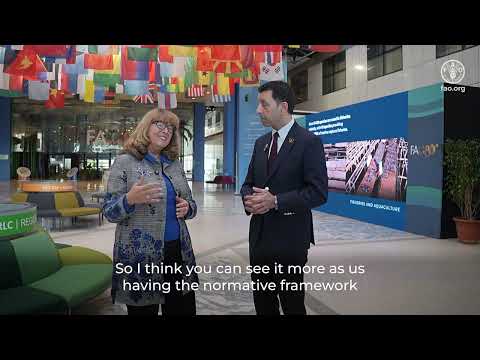
On the road to COP17: Kaveh Zahedi & Astrid Schomaker on agrifood systems and FAO–CBD collaboration
18/02/2026
In a conversation on the sidelines of the Convention on Biological Diversity’s SBI-6 meetings in Rome, Kaveh Zahedi and Astrid Schomaker explored how FAO and UN Biodiversity are working hand in hand to help countries meet their biodiversity commitments. These implementation meetings held at FAO Headquarters from 16–19 February are an important milestone on the road to COP17 in Armenia this October
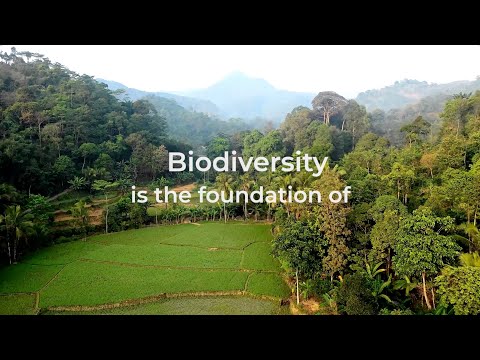
Agrifood systems solutions are biodiversity solutions
20/05/2025
Biodiversity is the foundation of our food, our nutrition, and our future. Biodiversity means ecosystem diversity, species diversity and genetic diversity. The world’s food production depends on biodiversity. Agrifood systems – on which more than 3.8 billion people depend for their livelihoods – must be transformed to ensure sustainability for future generations.
Key facts and figures

3 out of 4 crops, representing 35 percent of global food production, depend, at least in part, on animal pollination

Soils are a major reservoir of biodiversity. There are more living organisms in a teaspoon of healthy soil than there are people on Earth!

About 50 000 wild species globally are fished, gathered, logged or harvested for food, energy, medicine, materials or other purposes

Coral reefs provide vital habitat for 25 percent of the world’s known marine species
