


Webinars and online events
Inclusive rural transformation | |
AgriTech Observatory - Navigating Digital Agriculture in Europe and Central Asia 27/05/2026 The webinar marks a milestone, with over 1 000 digital agriculture initiatives catalogued in the FAO AgriTech Observatory. Participants were introduced to the platform’s key features, explored practical use cases through live demonstrations, and heard perspectives on the platform’s value for advancing digital agriculture. The session also presented plans for the Observatory’s next phase of development and opportunities for collaboration across Europe and Central Asia. | |
ERC35 – Special Event – International Year of the Woman Farmer 2026 21/05/2026 The special event celebrates the International Year of the Woman Farmer by showcasing promising practices and successful experiences of women farmers from across Europe and Central Asia, with a focus on opportunities offered by sustainable and circular bioeconomy initiatives. The event provides a platform for women farmers to share the realities they face while highlighting inspiring examples of how, when given equal opportunities, they can act as powerful drivers of rural transformation. | |
Launch webinar of the E-learning course on land consolidation and land banking 06/02/2026 This certified e-learning course explores the core concepts of land consolidation and land banking, drawing on regional good practices. It covers relevant policy, legal and institutional frameworks, implementation methodologies, guiding principles, safeguards, and real-world case studies. Successful participants receive a certificate and a digital badge. The launch webinar introduces the course, its content and potential applications, followed by a panel discussion with representatives from academia and practitioners from countries with ongoing land consolidation programmes, and an open session for audience questions and discussion. | |
Digital Villages in action in Europe and Central Asia 11/01/2024 FAO’s Digital Villages Initiative (DVI) is accelerating the digital transformation of agriculture and rural areas across eight countries in Europe and Central Asia: Albania, Azerbaijan, Bosnia and Herzegovina, Georgia, Kyrgyzstan, Tajikistan, Türkiye, and Uzbekistan. The virtual event launched DVI actions in these countries and introduced the initiative’s key concepts, principles, and methodology. It also highlighted successful past digital projects in each country alongside the expected outcomes of the current projects. | |
Digital Villages in action in Europe and Central Asia: Focus on Uzbekistan 10/01/2024 The Digital Villages in Action in Europe and Central Asia virtual event launched DVI actions in eight countries, bringing together policy actors, stakeholders, partners, and beneficiaries. FAO and its partners are accelerating the digital transformation of agriculture and rural areas through the Digital Villages Initiative (DVI). Katerina Antanevich, FAO Digital Agriculture Specialist and Sociologist, discussed Uzbekistan’s progress and plans for introducing DVI in the country. She also highlighted past achievements, interim results, and digital agriculture best practices that provide a solid foundation for implementing DVI in Uzbekistan. | |
COVID-19 response and digitalization in Europe and Central Asia 27/05/2021 The webinar presents a range of digital agriculture technologies , their interconnectivity and potential benefits, and implementation challenges during the COVID-19 pandemic. It explores regional agricultural trends during the pandemic and shares partners’ experiences in advancing rural digital transformation and building resilience in times of crisis. Digitalization is embedded in FAO’s programme of work in Europe and Central Asia and reflected across all three Regional Initiatives. The webinar shows how digitalization can be a game changer for these initiatives. | |
07/10/2020 The high-level panel brings together FAO’s current and prospective partners across Central Asia, the South Caucasus, Eastern Europe, and the Western Balkans to jointly deliver region-tailored programmatic solutions to the evolving socio-economic and environmental consequences of the global health crisis in the food and agriculture sector. The discussion builds on the global dialogue launched by FAO Director-General to present FAO’s Comprehensive Response and Recovery Programme to COVID-19 and draws on FAO’s Regional Response Plan, comprising six priorities for immediate and medium-term actions. | |
The impact of COVID-19 on seasonal and circular migration 30/09/2020 Border restrictions and lockdown measures following the onset of the COVID-19 pandemic affected seasonal and circular migration, as well as food security. Seasonal migration refers to people moving for employment during part of the year, following the agricultural seasonal calendar, while circular migration involves repeated temporary or long-term movement between countries or areas. As the pandemic slowed harvests in some parts of the world, many seasonal workers were left without livelihoods, and there were constraints on transporting food to markets. | |
4th North and Central Asian Multi-Stakeholder Forum on Implementation of the Sustainable Development 3/09/2020 The Subregional SDG Forum provides an opportunity to discuss the implementation of the Sustainable Development Goals (SDGs) in North and Central Asian countries, and possible actions and solutions for accelerating the 2030 Agenda for Sustainable Development while addressing the impacts of the COVID-19 pandemic and building back better. The Forum’s outcomes and recommendations will feed into regional and global processes, including the annual Asia-Pacific Forum for Sustainable Development (APFSD) and the High-Level Political Forum (HLPF). | |
Agricultural research in the post-COVID-19 era: Can more be produced with less? 22/07/2020 Agricultural research is central to unlocking the potential of agricultural innovation and achieving the Sustainable Development Goals. It is essential for increasing productivity, promoting sustainable agricultural growth, and alleviating poverty. The event explores the role of agricultural research and innovation in Europe and Central Asia and discusses information and experiences from governments and research institutes on adopting and promoting new technologies for increased food production with fewer resources. | |
Impact of COVID-19 and social protection: What measures work? 8/07/2020 Vulnerable groups have been hit hard by the COVID-19 pandemic and its economic consequences, affecting health, food security and nutrition, income and employment. As a result, countries in Europe and Central Asia have strengthened social protection programmes. The FAO webinar focuses on practical solutions to mitigate the impacts of COVID-19 and address its associated challenges through social protection measures. The discussion examines proven approaches and analyses the strengths, weaknesses and requirements of the adopted measures relevant to rural populations. | |
Keeping smallholders and family farms viable through the COVID-19 pandemic 24/06/2020 Food systems in Europe and Central Asia are under pressure by COVID-19. Food outlets and people’s mobility have been temporarily suspended, trade has been disrupted and unemployment is on the rise. The impacts are yet to be quantified, particularly for smallholder agriculture, which plays a pivotal role in the region. The webinar focuses on the needs and constraints of smallholders and family farms, highlighting the challenges posed by the COVID-19 pandemic. | |
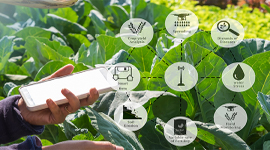 | ITU-FAO Webinar on Fostering Digital Agriculture in Europe and Central Asia 22/06/2020 This webinar presents the results of a joint FAO-ITU study on the status of digital agriculture in 18 countries across Europe and Central Asia. Some countries highlight national good practices and work carried out jointly with FAO and ITU. The event also aims to engage new public and private sector partners in digital agriculture activities across the region. |
10/06/2020 Across the globe, the COVID-19 pandemic has generated extreme vulnerability in the agricultural sector, confronting governments with the challenge of protecting human lives and livelihoods while ensuring sufficient food supplies and essential services for those most in need. | |
Food environments and markets | |
Antimicrobial resistance awareness and AMU in the livestock sector in Europe and Central Asia 31/07/2024 Part of a data-rich webinar series on antimicrobial resistance (AMR), this session covered scientific and technical topics related to AMR and how to contain it. Dora Kovacs (FAO) presented “Antimicrobial resistance awareness and antimicrobial use in the livestock sector in Europe and Central Asia”. | |
Bringing in behavioural perspective to food loss and waste value chain analysis 20/03/2024 The webinar presents a case of food loss and waste analysis complemented by a study of behavioural causes and an assessment of the climate impacts of different solution scenarios. Two key food value chains in Azerbaijan and Georgia were studied as part of the FAO Innovation Fund project “Food waste reduction by behaviour change along the food supply and consumption chain” and the MDF project “Analysis and practice of solutions to reduce food loss and waste impact on climate change”. In addition to identifying food loss and waste quantities, critical loss points, and the technical and socio-economic causes of food loss and waste, the project analysed the behaviours of food value chain actors, from producers to retailers, that contribute to food loss and waste. Behaviour mapping informed the design of solutions targeting specific behaviours. The Ex-Ante Carbon-balance Tool for Value Chains (ExACT-VC) was then applied to assess the costs, food loss and waste reduction potential, and climate impacts of different solutions. | |
Food loss and waste reduction at wholesale and retail stage 29/07/2021 Food loss and waste occur along the whole supply chain. The reasons vary widely and can be sector-specific. Every actor has a contribution to make, focusing on where it can have the greatest influence. However, large amounts of food waste are also generated at the wholesale and retail stage. Causes include seasonal fluctuations in the supply of fresh food, changes in consumer demand, inappropriate sizes or packaging, visual defects or damage to food or packaging, aesthetic considerations for fresh produce, and limited consumer understanding of date marking. By collaborating with food business operators from other stages, wholesale and retail actors can influence upstream and downstream handling of food and contribute to reducing food waste. Representatives from the wholesale and retail sector, as well as leading technology companies, shared practices and innovative solutions for reducing food waste. | |
Food safety in the context of sustainable food systems 07/06/2021 The evolving context of food production, trade, and consumption is challenging the way food safety risks are managed and the availability of safe and nutritious food for all. Urgent action at all stages of the food chain, using a systems approach, is necessary to protect people’s health, the environment, economies and cultures. Food safety is an integral part of sustainable food systems and requires action and collaboration across sectors, stakeholders and countries. To understand and reduce food safety risks, preventive measures, and appropriate response mechanisms need to be in place. This requires a better understanding of the connections between the health of people, animals, and plants to prevent food chain risks. On the occasion of the World Food Safety Day 2021, the FAO Regional Office for Europe and Central Asia and the WHO Regional Office for Europe discuss food safety issues at the human-animal-environment interface under the theme “Safe food now for a healthy tomorrow”. | |
Food loss and waste reduction during processing 26/05/2021 Processing and packaging can help preserve food, but losses can result from inadequate facilities or processing capacity, technical malfunctions, human error, poor process management, excessive trimming to meet aesthetic standards, and insufficient economic incentives to prevent losses. These can lead to discarded food material during processing and the rejection of the final product due to non-compliance with specifications and standards, resulting in financial losses. Food loss and waste prevention is therefore a key priority for food and drink manufacturers, and many companies integrate it into their quality management plans and sustainability strategies. The main areas of opportunity to prevent and reduce food waste in this sector are improving processing practices, finding innovative packaging solutions, and promoting circularity by using by-products and leftover product material for human food. | |
Policy and governance issues to transform food systems in Europe and Central Asia 25/05/2021 The United Nations Food Systems Summit (September 2021) provided an opportunity to rethink food systems and launch new actions to transform the way we produce, transform and consume food. Building on this, a regional dialogue in Europe and Central Asia discussed key policy and governance issues related to sustainable food systems, with a focus on strong governance and holistic approaches to build equitable food systems, improve livelihoods and nutritional status of the most vulnerable, and promote nature-positive production and climate-resilient food systems. The dialogue facilitated the exchange of information and experiences on opportunities, challenges, and policy actions for the sustainable transformation of food systems in Europe and Central Asia in support of the Sustainable Development Goals (SDGs). The dialogue was organized by the UN Issue-based Coalition (IBC) on Sustainable Food Systems for Europe and Central Asia. | |
Launch of the 2020 Regional Overview of Food Security and Nutrition in Europe and Central Asia 12/05/2021 Five years after the world committed to ending hunger, food insecurity and all forms of malnutrition, neither the world nor Europe and Central Asia is on track to ensure access to safe, nutritious and sufficient food for all and eradicate all forms of malnutrition by 2030. The 2020 Regional Overview of Food Security and Nutrition in Europe and Central Asia is the sixth regional report monitoring progress made towards SDG 2 (Zero Hunger) food security and nutrition targets in the region. The 2020 edition focuses on the affordability of sustainable healthy diets and their role in ending hunger and malnutrition, including a quantitative analysis of their cost and affordability at national and subnational levels. The report was jointly prepared by the six members of the Issue-based Coalition on Sustainable Food Systems for Europe and Central Asia. | |
Harvest and post-harvest practices to reduce food loss and waste 14/04/2021 Food losses occurring between harvest and retail sale, also known as post-harvest losses, are a key challenge undermining food security and income generation in Eastern Europe and Central Asia. Post-harvest losses have significant nutritional, environmental, and financial impacts for both farmers and consumers. Preventing losses at the early stages of the food supply chain can increase food availability without requiring additional resources or placing an additional burden on the environment. Harvest and post-harvest loss reduction is therefore essential to combat hunger, raise incomes and improve food security and livelihoods for vulnerable people. Given the strategic importance of this topic, farmers and producers should be aware of and apply appropriate harvest and post-harvest management practices to prevent deterioration in quality, food loss and waste, and higher prices for consumers. The webinar highlights concepts and problems of harvest and post-harvest food loss and waste and presents solutions and examples of effective interventions to reduce these losses. | |
Impacts of COVID-19 on fisheries and aquaculture in Europe and Central Asia 12/03/2021 Fish and fish products are the most highly traded food commodity internationally, and the impact of COVID-19 on fish supply chains and operations has been profound. Demand was also negatively affected by supply chain disruptions. Countries in Europe and Central Asia experienced varying degrees of impact, reflecting different national and local responses to the COVID-19 pandemic. However, the industry impact of the pandemic has not been adequately documented in these countries. The webinar provides an opportunity for governments, civil society, and the private sector to share experiences in responding to the COVID-19 crisis. | |
COVID-19 and Food Safety Control and Management 16/12/2020 While there is no evidence that COVID-19 can be transmitted through food, the public health measures implemented to limit person-to-person transmission have affected food supply chains, trade and consumer purchasing patterns. Food producers, food processors, consumers and food safety competent authorities have made the necessary adjustments, some of which are relevant to food safety control and management. Beyond food safety, the COVID-19 pandemic raised awareness of the potential hazards affecting people, animals and the environment, leading to a renewed focus on the One Health approach and collaboration across the public health, agriculture, veterinary, and environment sectors. The joint FAO-WHO webinar shares information and experiences on how food safety management, control, and attitudes have been affected by the COVID-19 pandemic. A multi-stakeholder panel of experts highlights opportunities and challenges from different perspectives, shares lessons learned, promotes cooperation in Europe and Central Asia, and presents the work of FAO and WHO in the region. | |
Food waste prevention and reduction in the times of crisis 11/11/2020 The COVID-19 pandemic exposed the fragility and weaknesses of our agrifood systems and the disruptions to food production and distribution, with a particular focus on the prevention of food loss and waste. Mitigating the severe impacts of the COVID-19 pandemic and its response measures requires collaborative and innovative approaches.
| |
Agrifood trade policies in Europe and Central Asia during the COVID-19 pandemic and beyond 21/10/2020 This joint WTO-FAO webinar provides a platform for sharing information and opinions on trade policies addressing the impacts of COVID-19 on agriculture in Europe and Central Asia. It reviews and analyzes the measures implemented in response to the pandemic, many of which were temporary, including domestic support measures such as subsidies and stockpiling. The webinar also discussed the significance of trade in Europe and Central Asia, and the potential impact of domestic support measures, particularly as the consequences of the COVID-19 pandemic raise questions about trade and self-sufficiency strategies. | |
Lifting lockdowns – what next for food systems? 28/05/2020 As countries ease lockdown measures, a new set of challenges emerged for food production, processing, and supply chain logistics. Some also presented opportunities for growth, provided that policymakers and value chain actors played their part. To mitigate the impacts of COVID-19 and seize new opportunities, countries needed practical solutions on issues including food supply, food and nutrition security, trade and markets. | |
| Natural resource management and climate resilience building | |
Launch of publication on bioeconomy case studies in Europe and Central Asia 11/06/2026 This video presents the recording of the FAO virtual launch of the publication “Case studies promoting bioeconomy through agricultural practices in Europe and Central Asia,” held on 28 May 2026. The event showcased practical, scalable circular bioeconomy solutions from across the region, demonstrating how agricultural practices can support sustainable agrifood systems, innovation, and resource efficiency. Case studies from Austria, Finland, Latvia, Serbia, Türkiye and Uzbekistan, covered organic farming, agroecological symbiosis, the circular use of agricultural by-products, data-driven legume production, traditional textile production from local cotton, and conservation agriculture. | |
Regional approaches to biogas development: exchange of lessons learned in Asia and Europe 27/02/2026 This webinar compares biogas and biomethane systems in Asia and Europe, examining regional approaches to the development and deployment of these renewable energy solutions. The session highlights key features shaping the performance and sustainability of biogas and biomethane value chains, including system scale, policy incentives for energy production, the viability of bio-CO₂ recovery, digestate management practices, and the balance between industrial and community-based models. | |
Third regional dialogue on biodiversity mainstreaming across agricultural sectors 14/01/2026 Ongoing crises are among the biggest short- and long-term risks the world is expected to face in the coming decade. Sustainable agrifood systems offer a vital pathway to address biodiversity loss while ensuring food security, nutrition and climate resilience. The regional dialogue builds on the outcomes of the 2021 First Regional Dialogue to foster a complex ecosystem approach, integrate biodiversity for food and agriculture into a broader context, and align policies. The dialogue aims to strengthen countries’ capacities to accelerate the integration of biodiversity into agrifood systems, enabling them to fulfill their commitments under the Kunming-Montreal Global Biodiversity Framework and to champion biodiversity mainstreaming at COP 17. | |
Seed systems during COVID-19: challenges and opportunities for Europe and Central Asia 18/11/2020 The main objective of the webinar is to exchange information and experiences on the impacts and risks of COVID-19 for seed systems and the measures to mitigate them. Food production depends on the availability, accessibility, and quality of seeds. Although the effects of the COVID-19 crisis on seed systems did not appear immediately, they could be long-lasting, making timely measures crucial to prevent further deterioration in food insecurity. |