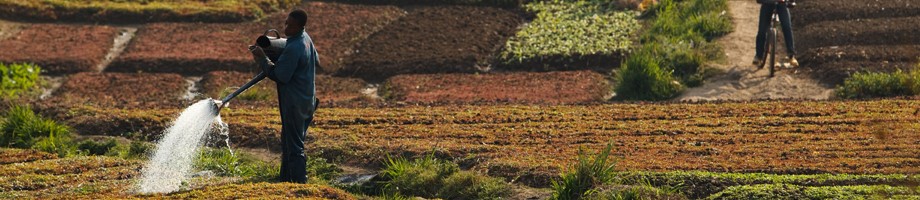
Jamaica

Source: FAO-Forestry. Disclaimer.
Version: 1997
Geography and population
Jamaica is located to the south of Cuba and forms part of the Greater
Antilles, at latitude 18o 15' N, longitude 77 o 30'W. The
largest island of the English-speaking Caribbean, it boasts a total land area of 10 990 km2.
In 1997 about 274 000 ha were under cultivation, 174 000 ha of arable land and 100 000 ha
of permanent crops. The country is divided into fourteen (14) administrative districts,
called Parishes.
There are a series of mountain ranges along the major WNW-ESE axis of
the island. In the eastern third, these mountains generally exceed elevations of 1 000 m
with Blue Mountain Peak, the highest point rising to a height of 2 256 m. Major alluvial
lowlands occur in the southern half of the Island, where they are often associated with
coastal swamps. The other main topographical feature is a narrow, discontinuous coastal
plain where 65% of the total population reside.
Jamaica's population was 2 515 000 inhabitants in 1997, of which
almost 46% was rural. The average density is estimated at 229 inhab./km², but is unevenly
distributed. Over one million people (about 43% of the total) live in Kingston, Saint
Andrews and Saint Catherine, the main urban centres, while Trelawny Parish has the lowest
density with 83 inhab./km2. In 1996, approximate 65% of the total population
lived within 5 km of the coast. The average annual population growth rate in the 1990-1997
period has been estimated at 0.85%. Agriculture contributes approximately 8% to the GDP
and accounts for 12% of export earnings from sugar, banana, coffee, cocoa, spices and
vegetables. In 1997, the sector employed some 22% of the labour force.
Traditionally Jamaica has had a very strong agricultural base, although
since 1950 there has been a gradual shift from a dependence on sugar cane and bananas to
the bauxite/alumina, manufacturing and tourism sectors. The latter three are currently the
main foreign exchange earners. The large farms are generally located on the plains while
small farmers occupy the hillsides.
Climate and water resources
Climate
The island's climate can be classified as tropical
maritime, hot and humid with a temperate interior. Mean daily temperatures range from a
seasonal low of 26 ° C in February to a high of 28 ° C in August.
Daily sunshine hours are fairly constant throughout
the year, averaging about 8.2 hours in the southern plains.
Long-term mean annual rainfall over the island is about 1 980 mm. Much
of the rainfall results from the northeasterly trade winds, which deposit most of their
moisture on the northern slopes of the axial mountain ranges and the southern half of the
island is in rain shadow. Annual rainfall on the northeastern slopes of the Blue Mountain
Range is generally 3 000 to 5 000 mm, whereas in the south coastal plains of St. Catherine
and Clarendon it is generally less than 1 500 mm. Annual rainfall exhibits a
characteristic pattern, with a primary maximum in October and another in May. The main dry
season lasts from December to April.
Jamaica regularly comes under the influence of tropical storms and
hurricanes during the period of July to November, characterized by flood-producing
rainfall of high intensity and magnitude.
Water resources
Fifty-six percent of the average annual rainfall are lost to
evapotranspiration. The internal renewable water resources (IRWR) are 9.4 km3/year,
with 5.5 and 3.9 km3/year for surface and groundwater respectively (see
following table).
Approximately 44% of these IRWR are considered exploitable or reliable,
defined as daily water flow exceeded during 90% of the time for surface water and quantity
of water which can be withdrawn over a long period without impairing the aquifer as a
water source or causing contamination by seawater intrusion for groundwater. Of the total
reliable yield of 4.09 km3/year, 80% are contributed from the limestone
aquifer, 4% from the alluvial aquifer and 16% from surface water runoff. About 20% from
the limestone aquifer are developed through wells, mainly in the Río Cobre and Rio Minho.
However, in other basins, the water is generally available as base flow and is exploitable
through run-of-river developments.
Major water basins of Jamaica
| Hydrologic Basin |
Area (km2) |
Rainfall (106m3) |
Evapotranspiration (106 m3) |
Surface water runoff (106 m3) |
Groundwater discharge (106 m3) |
| Blue Mountains,South |
678 |
1 694 |
912 |
662 |
147 |
| Kingston |
202 |
312 |
208 |
81 |
50 |
| Río Cobre |
1 283 |
2 009 |
1 450 |
177 |
472 |
| Río Minho |
1 700 |
2 420 |
1 641 |
225 |
593 |
| Black River |
1 460 |
2 530 |
1 530 |
346 |
654 |
| Cabarita River |
924 |
1 890 |
1 019 |
366 |
451 |
| Great River |
791 |
1 685 |
863 |
467 |
355 |
| Martha Brae, River |
756 |
1 154 |
673 |
279 |
201 |
| Dry Harbour Mountains |
1 362 |
2 450 |
1 302 |
457 |
691 |
| Blue Mountains,North |
1 597 |
5 068 |
2 346 |
2452 |
278 |
| TOTAL |
10 7531 |
|
11 906 |
5 512 |
3 892 |
1. Total area is slightly different from country area, as they come
from different sources of information.
Lakes and dams
There are two major raw water storage facilities, both located in
St. Andrew. The Mona Reservoir, with intakes at the Hope and Yallahs Rivers, has a storage
capacity of 3.67 million m3. Hermitage Reservoir with intakes at Ginger River
and Wag/Morsham River, has a storage capacity 1.78 million m3.
Water withdrawal
Annual water withdrawal in 1993 was estimated in 928 million m3
and the agricultural sector was the major user of water (75%). The other major water
users were domestic water supply 17%, industry 7% and tourism 1%. About 92% of the water
was withdrawn from groundwater sources and the remainder from surface water.

Figure 1: Water withdrawal by sectors. Total withdrawal: 928 106 m3
in 1993.
Only 11% of the surface water and 25% of groundwater of the exploitable water
resources are currently utilised. The National Water Commission (NWC) provides water to various
supply systems from wells, rivers and springs. A total of 500 water supply facilities are
operated by the NWC to supply 78% of total demand.
Access to water supply in 1998 was available to 75 % of the rural population
and to 95% of those residing in urban areas. Access to water supply via house connections
was available to approximately 65% of the population. The remaining 35% of the population
were supplied through a variety of means: standpipe, rainwater collection systems, water
trucks, wayside tanks, community catchment tanks.
The NWC operates sewerage facilities which serve about 15% of the
population. Centralized systems are located in Kingston and St. Andrew, southeast St.
Catherine and Montego Bay in St. James. The NWC is also responsible for a number of small
sewerage systems, utilizing package plants, which are associated with housing developments
in various locations throughout the country. Treatment is given to secondary level for 50%
of waters. For the remainder of the population, sewage disposal is accomplished via septic
tanks, soak-away pits, tile fields and pit latrines.
There is concern that over-exploitation, sewage effluents and
industrial wastes are affecting aquifers and surface waters at an alarming rate. As much
as 10% of the groundwater resource has been either abandoned or use is restricted due to
saline intrusion or pollution. Wastewater reuse is included in the National Irrigation
Development Plan (NIDP), as an expensive source of irrigation water which nonetheless
should be investigated as a pilot research project. Fifty percent of the unused water
resources in the Liguanea Basin serving the Kingston and St. Andrew area are contaminated
with nitrates.
Irrigation and drainage development
According to the NIDP, areas suitable for irrigation have been
classified into three land categories: (I) lands which may be irrigated with all common
techniques of irrigation; (II) lands suited only to sprinkler and micro-irrigation
techniques; and (III), lands with generally steep slopes (>10%) and thin soils, which
are productive with careful management of the limitations and responsive to manual
irrigation. This third category applies mainly to small hillside farmers. From this
analysis 90 811 ha were classified as Category I and II, while 97 095 ha or 9% of the
island were classified as Category III. These categories do not take water resources into
account.
Irrigation has always played a significant role in the island's
agriculture, and the need to continuously improve irrigation practices has long been
recognized. Over the years some of the improvements which have been made have included
channel lining and utilization of closed pipes in order to improve conveyance
efficiencies, the use of water measuring techniques to encourage improved management, and
the use of overnight storage facilities. Approximately 9% (about 25 000 ha) of the area
under cultivation are currently irrigated, and about 9 000 ha require rehabilitation.
Half of the total area irrigated comprises public schemes which are
managed by the National Irrigation Commission (NIC), while the other half is on individual
private systems and on commercial estates, where banana, papaya and sugar cane are the
major crops grown. Three-quarters of the area are under surface irrigation, 17% are
equipped with sprinklers and 8% with micro-irrigation systems (Figure 2).

Figure 2. Irrigation area (ha)
and techniques in the public and private sectors (1997). Total area under irrigation: 25
575 ha.
The NIC has responsibility for operating
and maintaining delivery systems for six public districts: Rio Cobre, St. Dorothy,
Mid-Clarendon, Hounslow, Braco and Yallahs. The networks consist of open canals and
pressurised pipelines. Water is abstracted from surface diversions, small storage
reservoirs and deep wells. In the private sector, in addition to sugar estates in St.
Catherine, which receive much of their irrigation water from NIC, there are several
commercial estates, which have implemented their own irrigation systems. Many farmers with
small holdings in most parishes, irrigate vegetables or fruit trees using their domestic
water supply or from local surface sources or springs or stored precipitation. NWC has
estimated that in areas like Essex Valley or St. Elisabeth, more than 60% of domestic
water is used for irrigation.

Figure 3: Irrigated area by crops (1997)
While a wide range of crops is
irrigated, 76% of all irrigated lands are under sugar cane production, followed by bananas
(8%), pasture (6%), and vegetables (4%). The remaining 6% comprise papaya, orchards,
coffee and other crops (see Figure 3).
Institutional environment
Potable water supplies are the responsibility of the National Water
Commission (NWC), the major supplier, the Urban Development Corporation and the Parish
Councils. The NWC's responsibilities include the provision of potable water supply
services and the collection, treatment and disposal of wastewater.
The NIC is responsible for the management, operation and maintenance of
all the public irrigation systems in Jamaica. Activities include the harnessing and
distribution of groundwater and surface water for allocation to farmers and also
non-agricultural users. The NIC's primary mission is to maximize effective use of
irrigation through improved conveyance and distribution, and to provide guidance and
training in on-farm water management techniques in an effort to increase productivity and
profitability in the agricultural sector and so achieve and maintain self-sustainability
of the irrigation industry.
The Water Resources Authority (WRA) was established by statute to
regulate the island's water resources. The WRA has responsibility for management,
protection and controlled allocation and use of Jamaica's water resources. This is
achieved through the development and administration of a long-term comprehensive
"Water Resources Development Master Plan for Jamaica", necessary to enable
rational decision making on current and future water use and allocation which provides
economic and environmentally sound development options. The WRA was established by the
Water Resources Act of 1995 enacted in April 1996. This Act repealed the Underground Water
Control Act and the Water Act. The WRA replaces Jamaica's previous hydrological agency,
the Underground Water Authority.
The responsibility for formulating and implementing the Government's
policy on environmental management is vested in the Natural Resources Conservation
Authority. Its responsibilities include: watershed protection and management,
environmental monitoring and enforcement, promoting industry compliance for the consistent
meeting of effluent and waste standards by companies, development of a system of national
parks and protected areas, coastal zones management, environmental education, increasing
public awareness of environmental issues and promoting the use of environmental impact
assessments.
Trends in water resources management
There are plans in place to continue expanding water supply to
communities, through rehabilitation of the existing system (the level of
unaccounted-for-water is currently at 63%) and expansion of capital infrastructure.
With respect to irrigated agriculture, the National Irrigation
Development Plan (1998) proposes a total of 51 irrigation projects for implementation over
a seventeen-year period. This plan is aimed at increasing agricultural production to
benefit individual farm families and the economy as a whole. Some of the possibilities for
developing additional water for irrigation include the export of surplus water from one
basin to another, construction, where feasible, of additional storage reservoirs and micro
dams; implementation of a groundwater recharge programme and a review of the irrigation
policy.
Some of the issues to be examined with respect to irrigation policy include:
- water pricing to ensure improved cost recovery;
- the establishment of water users' associations with a view to
thereby improving system maintenance and performance and flexibility in operation;
- incentive policies to improve irrigated agriculture productivity;
- review of a number of pertinent laws and regulations;
- placing of greater emphasis on economic benefits and financial returns
in the planning of government financed projects;
- improved management strategy to enable more economical and sustainable
use of water resources.
Main sources of information
Statistical Institute of Jamaica (www.statinja.com). 1997. Statistical Abstract 1996.
Underground Water Authority (Water Resources Agency of Jamaica). 1990. Water
Resources Development Master Plan. Final Report. Main Volume. Government of Jamaica.
Kingston.
Natural Resources Conservation Authority. 1998. State of the
Environment. The 1997 Report. Government of Jamaica. Kingston.
National Irrigation Commission Limited, Planning Institute of Jamaica
and Inter-American Development Bank. 1998. Preparation of a National Irrigation
Development Plan and Preparation of an Irrigation Investment Project. Executive summary.
Government of Jamaica. Kingston.
|