


Strengthening animal health systems for a resilient future: FAO ECTAD’s impact in Asia-Pacific
25/02/2025
FAO’s Emergency Centre for Transboundary Animal Diseases (ECTAD) plays a critical role in advancing animal health and global health security in Asia and the Pacific.

Safeguarding Bhutan’s Livelihoods: The Fight Against African Swine Fever
09/02/2025
First detected in Bhutan in May 2021, African swine fever outbreaks have affected pig farmers across multiple districts, especially in the south. With over 60 percent of Bhutan’s population relying on agriculture and pig farming on the rise, ASF poses a serious threat to food security and rural livelihoods.

African swine fever: protect wild pigs, protect all pigs!
30/08/2024
African swine fever (ASF) is a highly contagious viral disease affecting domestic and wild pigs, with a high mortality rate and severe economic and social impacts on pig farmers and rural communities. Recently, ASF has spread to new regions, including Asia, posing a significant concern for the global pig industry.
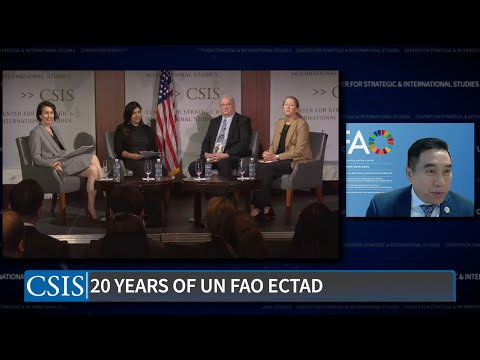
Preventing, Detecting, and Responding to Animal Disease Threats: 20 Years of UN FAO ECTAD
21/11/2024
During this year’s antimicrobial resistance (AMR) awareness week, the american Center for Strategic & International Studies (CSIS) Global Food and Water Security Program was pleased to host a public event to commemorate ECTAD’s 20th anniversary. Watch the event online.

Rabies: how can the transmission of the virus be prevented? What does the law say?
02/10/2024
In this second podcast on rabies, Dr Patrick Ngou welcomes Dr Tejiokem Cyrille, a medical epidemiologist, who discusses pre- and post- exposure prophylaxis to prevent the virus, and Dr Garga Gonne, Director of Veterinary Services at the Ministry of Livestock, Fisheries and Animal Industries (MINEPIA) then addresses the issue of legislation in Cameroon.

What is rabies? How is it transmitted? What are the symptoms and impacts on public and animal health?
27/09/2024
As part of World Rabies Day, celebrated on September 28, Dr Patrick Ngou, pediatrician, talks with Dr Sandrine Kenne, veterinarian, to raise awareness about the facets of this very deadly disease, whose consequences are not well known to the public.
FAO Emergency Centre for Transboundary Animal Diseases (ECTAD): Protecting animal and human health
25/09/2024
Since 2004, ECTAD has been supporting national governments to reduce the risk of animal health threats that can devastate livelihoods and threaten food safety. By building Member Nations’ capacities to prevent, detect and respond to these threats, FAO plays an essential role in protecting the health of people and animals.
![Managing large-scale highly pathogenic avian influenza (HPAI) outbreaks in wild birds [PART 2]](https://img.youtube.com/vi/ClJzwsq4E28/0.jpg)
Managing large-scale highly pathogenic avian influenza (HPAI) outbreaks in wild birds [PART 2]
15/02/2022
Wild birds are the natural reservoir for avian influenza viruses and constitute a driver for the long distance spread of highly pathogenic avian influenza (HPAI). Since July 2020, H5 HPAI viruses have been introduced through wild bird migrations into Eurasia, Africa, and more recently into the Americas.
![Managing large-scale highly pathogenic avian influenza (HPAI) outbreaks in wild birds [PART 1]](https://img.youtube.com/vi/damySnrQuYY/0.jpg)
Managing large-scale highly pathogenic avian influenza (HPAI) outbreaks in wild birds [PART 1]
15/02/2022
Wild birds are the natural reservoir for avian influenza viruses and constitute a driver for the long distance spread of highly pathogenic avian influenza (HPAI). Since July 2020, H5 HPAI viruses have been introduced through wild bird migrations into Eurasia, Africa, and more recently into the Americas.
FAO’s Surveillance Evaluation tool (SET) review and update to version 2.0
10/03/2022
This video is the recording of a webinar held by the Surveillance Team in FAO HQ on 28 February 2022 to present the steps and outcomes of a review of FAO’s Surveillance Evaluation tool (SET), and subsequent update to version 2.0. The meeting included opening remarks, three short presentations on how the review was conducted, the changes applied and next steps, and a Q&A session.
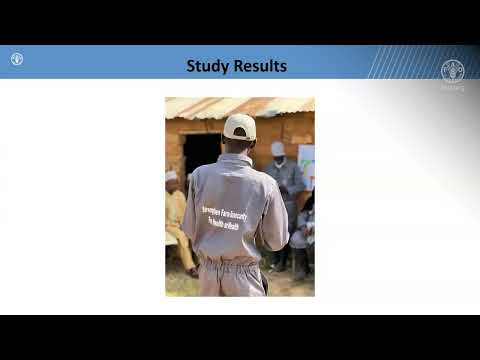
Enabling environments for improved One Health communication
20/12/2023
This webinar was held as part of the Progressive Management Pathway for Terrestrial Animal Biosecurity (PMP-TAB) Community of Practice monthly series. It showcases a recent study conducted by FAO concerning the regional One Health information exchange networks that exist in East and West Africa.

Informational Sessions on the new EMA-i version (EMA-i+)
15/01/2024
Developed to ease the real-time disease reporting and support veterinary services, the enhanced version of EMA-i (EMA-i+) integrates a multi-level community-based approach with more customization and user friendliness. The video is an introduction and Demo of this enhanced version of EMA-i+.
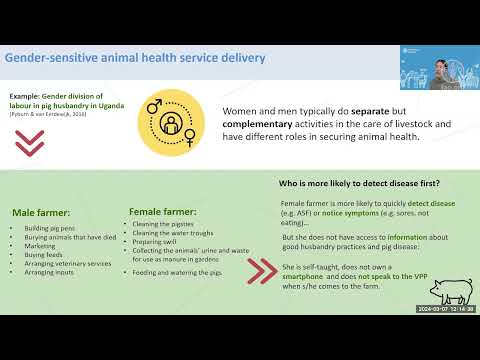
Developing gender-sensitive biosecurity plans for smallholder farmers
13/03/2024
This webinar, conducted as part of the Progressive Management Pathway for Terrestrial Animal Biosecurity Community of Practice, showcased the approach taken by FAO to improve veterinary paraprofessional (VPP) services and outreach to female smallholder farmers.

Reducing the need for antimicrobials by improving animal husbandry practices
09/11/2023
Antimicrobials play a critical role in treating diseases in both aquatic and terrestrial food-producing animals, as well as in crops. They contribute to productive and sustainable agrifood systems, supporting the countless livelihoods that depend on them worldwide. When overused or misused, however, antimicrobials can contribute to a rise in antimicrobial resistance (AMR).
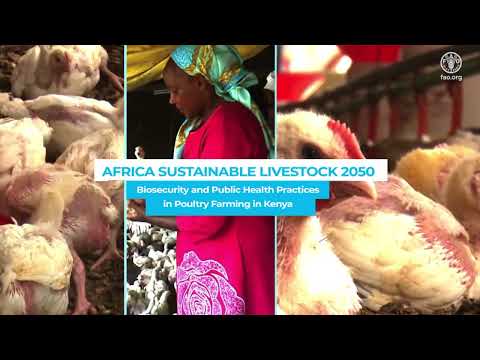
Africa Sustainable Livestock 2050: Biosafety and Public Health Practices in Poultry Farming in Kenya
21/08/2023
The number of commercial small- and medium-scale poultry farms is increasing in and around urban centers, driven by the objective to satisfy the growing population's demand for animal source food (ASF). These poultry farms too often have low biosecurity levels, which creates public health risks.

Impact of the ISAVET training: Disease detection and response skills to save lives and livelihoods
03/06/2024
The Frontline In-Service Applied Veterinary Epidemiology Training (ISAVET) programme was launched across 14 countries of West, Central and Eastern Africa in 2018. In an effort to address endemic, emerging infectious and transboundary animal diseases (EIDs and TADs) the ISAVET programme targets veterinarians and paraveterinary professionals at the local level.
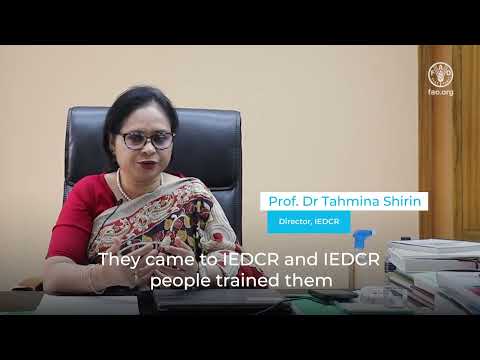
COVID Response in Bangladesh – A One Health Approach
11/05/2023
In response to COVID-19 in Bangladesh, the United Nations initiated an intervention, under the leadership of the Directorate General of Health Services, to improve community-level case detection and risk mitigation.

Producing rich organic fertilizer from deceased birds
27/08/2023
This video presents scientific and practical information to teach poultry breeders and small- and medium-scale poultry farmers how to convert daily dead chickens into compost that could be used to fertilize crops.
ASEAN Coordinating Centre for Animal Health and Zoonoses (ACCAHZ)
15/01/2024
In recent years, zoonotic and transboundary animal diseases (TADs) have posed significant risks to human and animal health, food safety and security, economic development and livelihoods. Countries in Southeast Asia have experienced the devastating impact of disease outbreaks first-hand, including highly pathogenic avian influenza and African swine fever.
MERS-CoV: Managing disease in animals to prevent health crisis in humans
09/03/2022
The FAO Egypt Country Office through the Emergency Centre for Transboundary Animal Diseases (ECTAD) has been supporting Egypt to generate knowledge and enhance understanding about the epidemiology of MERS-CoV through conducting various kinds of surveillance activities and studies including longitudinal study, cross-sectional study as well as abattoir-based study.