Rome Water Dialogue 2025
Water for resilient agriculture and food security: the past, present and future
Hybrid Event, 13/10/2025 - 17/10/2025

The impacts of climate change and the water crisis are major challenges to achieving zero hunger and global food security. Agriculture accounts for over 70 percent of global freshwater withdrawals. The way in which water is used and managed affects agricultural production and food security and influences broader water security – a key factor in the achievement of multiple Sustainable Development Goals.
The Rome Water Dialogue 2025 will bring together leaders, practitioners, innovators and communities to showcase and celebrate innovative water solutions for resilient agriculture and food security.
Join us in shaping the future of water and food security!
Background and objectives
While past editions of the Rome Water Dialogue focused on raising awareness of the connection between water and agriculture, this 2025 edition – “Water for resilient agriculture and food security: the past, present and future” – moves from awareness to action, advancing impactful solutions for water management in achieving food security.
The Rome Water Dialogue 2025 will showcase and celebrate impactful solutions for water resource management implemented by FAO Members over the past 80 years. These solutions range from local practices to global strategies and are organized across four themes:
- Water infrastructure and investment;
- Water science and innovation;
- Climate resilience; and
- Water-disaster risk reduction.
The objective of the Dialogue is to explore and discuss actionable recommendations that will guide FAO’s work on integrated water
resource management for resilient agriculture and food security and to encourage commitments from relevant stakeholders in both the
water and agriculture sectors towards supporting integrated water resource management.
Programme
💧 Rome Water Dialogue: Impactful water solutions
Tuesday, 14 October 2025, from 9.00 to 12.00 (CEST), Green Room, FAO headquarters, Rome, Italy, and online.
| Time (CEST) | Session |
|---|---|
| 9.00–9.20 | Opening remarks
|
Excellencies, Ladies and Gentlemen, I am pleased to welcome you to this year’s Rome Water Dialogue, and in particular to this important session titled “Water for resilient agriculture and food security: the past, present and future”. Water, land, and soil — these are the lifeblood of our food systems. Since its foundation in 1945, the sustainable management of these natural resources has been a foundational building-block to achieve the FAO’s mission. The importance of integrated and sustainable natural resources management to achieve food security is deeply embedded and reflected in both the FAO Basic Texts and the FAO Strategic Framework 2022-31. Over the past 80 years, FAO’s work on natural resources management has contributed to eliminating hunger and malnutrition, promoting food safety and food security, transforming food systems towards more sustainability and resilience and supporting smallholder farmers to secure their livelihoods. Today, as we reflect on FAO’s 80 years of achievements, we celebrate the many groundbreaking solutions our Members have pioneered—solutions that are helping us meet rising demands without compromising our planet’s health. FAO’s 80th Anniversary provides an opportunity to recognize such successes and solutions, learn from them, and drive innovative solutions for the future. We invited Members to share their most impactful innovations in land, soil, and water management—and the response was incredible. Over 80 impactful solutions poured in from all across the world, spanning four key areas: water, land, soil, and integrated approaches. The submissions showcase Members’ significant achievements on improving food security through natural resources management. Solutions included interventions, tools and policy instruments developed and implemented from different stakeholders; from research and academic institutions, extension and advisory services, civil society organizations, foundations, the private sector, development agencies, and others. In today’s Rome Water Dialogue session, we spotlight some of the most transformative impactful water solutions, selected from over 40 recognized solutions in total. For example, the Japan International Research Center for Agricultural Sciences has demonstrated how a clever rice farming method can dramatically save water without sacrificing yields. Another case from the National Water Authority of Peru elaborates on the cruciality of measuring SDG 6 Indicator 6.4.2 on water stress to reveal water stress patterns and support more targeted water management policies. And from Hungary, the University of Pécs introduces us to the concept of the ‘Spongecity’ – an integrated, nature-based approach to managing urban land, soil and water resources with a focus on mitigating flash flood risks and enhancing water retention. I could go on here, but I will let the respective entities themselves present their remarkable solutions and the stories behind them in more detail. Because this is the objective of today’s session: to provide a space for Members to share their context-specific experiences and best practices with others, and exchange sustainable solutions for managing our natural resources to achieve the Four Betters. Ladies and Gentlemen, International cooperation, like what we see here today, does more than deepen national commitments. It sparks awareness, unlocks synergies across sectors, and drives momentum to scale up successful actions worldwide. This year’s Rome Water Dialogue serves exactly this aim. This year’s call for “impactful solutions on land, soil and water resource management for resilient agriculture and food security“ is recognizing and promoting solutions to current water-related challenges. All of you, ladies and gentlemen, are champions of these impactful solutions. We need to share them among us, among countries, but also across sectors and governance levels. And we need to make them more integrated, to promote the synergies they bring, and reduce trade-offs as much as possible. With experts from diverse international organizations joining us today, we’re not only sharing knowledge but also strengthening the bridge between science and policy—paving the way toward a water-resilient, sustainable future. Collectively, we pave the way into a more water-resilient and sustainable future. I am looking forward to hearing from you, Member countries’ representatives, and from fellow international organizations, about how to scale out these impactful solutions, to serve better the people and the planet. I thank you, ladies and gentlemen, and wish you an exciting and fruitful session. Distinguished ladies and gentlemen, dear organizers of the forum, Water resources are a strategic natural asset — the foundation of socio-economic development, food and energy security, and the protection of ecosystems. Water is the basis of human life, national health, and both economic and social stability. Today, in the countries of Central Asia, including Kyrgyzstan, one of the most acute and strategically important challenges is the preservation and rational use of water resources. At the same time, sustainable and effective water management has become one of the most serious challenges of our time, as climate change poses an undeniable threat to sustainable development, the economy, the environment, and public health. Today, I would like to highlight several key challenges we are facing. Millions of people are suffering from water scarcity, and competition for water resources is intensifying day by day. In such a situation, water may become not only a source of life but also a potential source of tension. Therefore, the water issue is not merely an environmental problem. Climate change and population growth are rapidly reducing freshwater reserves, and it is projected that by 2050, 50% of the world’s population will suffer from water shortages. According to experts, if global warming continues at the current rate, by the middle of this century half of the world’s glaciers may disappear. The melting of glaciers will reduce river flow, intensify droughts, and pose a direct threat to food security. Therefore, the preservation of glaciers should be a priority not only at the national but also at the regional and global levels. In accordance with the national program “Zhashyl Muras” (“Green Heritage”), initiated by the President of the Kyrgyz Republic, Mr. Sadyr Nurgozhoevich Japarov, efforts are being made to protect mountain ecosystems and ensure climate resilience. Within this campaign, special attention is given to the preservation of mountains, glaciers, and rivers as part of the national heritage. These initiatives must be strengthened and supported at the regional level, since rivers originating in the mountains of Kyrgyzstan supply water not only to our country but also to neighboring states as Kazakhstan, China, Tajikistan, and Uzbekistan. In addition to glaciers and river systems, there is another important issue — the condition of our national treasure, Lake Issyk-Kul. Rising temperatures and declining precipitation have already begun to negatively affect the water level and ecosystem of the lake. Whereas previously 101 rivers flowed into Issyk-Kul, today only 56 continue to do so. This is an alarming sign and clear evidence of the serious consequences of climate change. ө Issyk-Kul is not only the pride of Kyrgyzstan but also a vital regional resource that regulates climate and maintains the water balance of the region. Preserving its purity and sustainability is our common responsibility. We must not forget the bitter lesson of the Aral Sea. Once one of the largest lakes in the world, it has now become a symbol of ecological disaster. The challenges of glacier melting, water shortages, and climate change are not the problems of a single country or region — they are global issues that can only be addressed through joint efforts. To save water in our region, we must shift to drip and sprinkler irrigation methods and reuse treated wastewater. Today, around 10 million people in the region still lack access to clean water. Between 1994 and 2020, water consumption doubled, the water infrastructure became 80% obsolete, and water losses reached 55%. According to research, to ensure sufficient clean water in the region by 2030, an additional 12 billion USD in investment will be required — about 2 billion USD annually. In Kyrgyzstan alone, access to clean drinking water remains unresolved in 960 rural communities, requiring approximately 1.2 billion USD in investment. The shortage of clean water will continue to worsen due to droughts, rising temperatures, glacier melt, and population growth. Ensuring adequate water supply will therefore require the implementation of water-saving technologies, the development of climate financing mechanisms, and the provision of technical and financial assistance to Central Asian countries. Today, the world’s leading economies invest trillions of dollars in oil and gas industries. It is time to direct comparable investments toward humanity’s most valuable resource — water! If we fail to invest in institutional and financial mechanisms today, we will have to spend three times more tomorrow to mitigate the consequences of water scarcity. Thus, water security is not only an environmental issue but also a matter of national, regional, and global stability — the foundation of food security and social development. Distinguished ladies and gentlemen, I am deeply convinced that together we can find solutions to overcome water scarcity. Decisive actions, modern technologies, investments, and solidarity are the keys to success. Joint efforts in addressing water challenges are the call of our time. I urge policymakers, public figures, scientists, and every citizen to treat water responsibly and use it wisely. The Kyrgyz Republic stands ready for constructive and fruitful cooperation, for expanding partnerships, and for implementing new initiatives. Every decision we make must be aimed at preserving water — the source of life for future generations! Thank you for your attention! | |
| 9.20–9.30 | INBO-FAO MoU Signing Ceremony |
| 9.30–10.10 | Technical presentations and panel discussion on “water infrastructure and investment” solutions - Presentations by FAO Members:
- Reflections by International Organizations;
- Q&A session |
| 10.10–10.50 | Technical presentations and panel discussion on “water science and innovation” solutions
- Reflections by International Organizations:
- Q&A session |
| 10.50–11.30 | Technical presentations and panel discussion on “climate resilience and water-disaster risk reduction” solutions
- Reflections by International Organizations:
- Q&A session |
| 11.55–12.00 | Closing remarks
|
Excellencies, Ladies and Gentlemen, I believe that what we have just experienced in today’s Rome Water Dialogue session was proof of five key facts: One: countries all over the world are facing severe water-related challenges. To achieve food security and water security for all, leaving no one behind, we must take into account the complex realities of these multiple water crises. Two: solutions to the manifold water-related challenges do exist, and countries have shown a resilience in facing these challenges which far exceeds expectations Three: and this one is particularly close to my heart as the Chief Scientist ad-interim, through strengthening science and innovation, FAO is actively supporting countries in fostering and advancing actionable solutions for real-time challenges. Four: water challenges are context specific, and so are their solutions. Therefore, FAO supports its Members in identifying, piloting, and scaling up technologies and innovations which are specifically adapted to their needs and contexts. And five: international cooperation and knowledge sharing with technical experts from a diverse set of international organizations enable us to build truly transformative partnerships. We cannot implement solutions on our own. We need partnerships, cooperation, and integrated management approaches. The solutions presented today have made this point about integrated management very clear. As water flows from ridge to reef, across landscapes and economic sectors, we need to eliminate silos, work across sectors and jurisdictional boundaries to manage water. As Chief Scientist ad-interim, I highly value such cross-sectorial dialogues as we have seen today. Now that this session has successfully kicked off this year’s Rome Water Dialogue, tomorrow we will hear more from FAO Members and international partners about solutions related to water infrastructure, investment and innovation as well as agricultural solutions to coping with climate change and its impacts. I would hereby like to invite you all to attend this High-Level session, taking place tomorrow, 15 October in the afternoon from 14.00-17.00 in the Plenary Hall. In closing, I would like to congratulate once more the representatives of national entities for their solutions presented, and to thank you all for your attendance and contributions. This session, at least for me, has been truly ‘impactful’. Thank you. | |
💧 Rome Water Dialogue: High-level Segment
Wednesday, 15 October 2025, from 14.00 to 17.00 (CEST), Plenary Hall, FAO headquarters, Rome, Italy, and online.
| Time (CEST) | Session |
|---|---|
| 14.00–14.35 | Opening Ceremony
- Moderator: Mr Abdulhakim Elwaer, Assistant Director-General, FAO |
Your Majesty the King of Lesotho, Excellencies, Ladies and Gentlemen, Welcome to the 4th edition of the Rome Water Dialogue. I launched this initiative in 2022 with the objective of uniting water and food communities in one shared dialogue. Water is key to FAO’s mandate as it is critical in addressing hunger and malnutrition, and ensuring food security. The food we eat depends on water, and agriculture alone uses more than 70% of global freshwater withdrawals. This places agrifood systems at the center of our collective responsibility to manage water wisely and equitably. By 2050, feeding nearly 10 billion people will demand at least 50% more food—and potentially 30% more freshwater, in a world already facing scarcity and impacted by the climate crisis. As FAO celebrates its 80th anniversary, we are reminded that water flows through every aspect of our work – from soils and crops to energy, trade and livelihoods. Our future food security depends on how we protect and use this valuable resource today. Ladies and Gentlemen, Since the 1950s, FAO has helped countries design and restore irrigation systems that brought water – and hope – back to farmlands and rural communities. Over time, FAO’s engagement has grown from field projects to a comprehensive approach linking data, science, technology and policy advice. For example, through the AQUASTAT initiative for the past 30 years FAO has provided the world’s most complete global database on water resources and use. The WaPOR portal makes satellite-based data freely available, helping farmers and planners improve irrigation efficiency in 35 countries, to protect soils and ecosystems. Through the Global Framework on Water Scarcity in Agriculture and the Regional Water Scarcity Initiatives, FAO continues to foster collaboration and the exchange of knowledge on best solutions among Members. As climate pressures intensify, we must prepare and plan for, and adapt to, more frequent droughts, floods and weather-related shocks. Producing more with less water will require efficient infrastructure, reliable data and integrated approaches. In 2023, the FAO Ministerial Conference endorsed Integrated Water Resource Management as a priority area for the 2024-2025 biennium, highlighting the critical link between water and food and their role in achieving sustainable development. FAO has since adopted a Conceptual Framework for Integrated Land and Water Resource Management to guide our work. Yet, despite progress, a big policy gap remains. Water and food are still often addressed in isolation. We must foster cross-sectoral policies and investments that ensure win-win solutions. As we look ahead to COP30 in Brazil, integrating water and agrifood systems into Nationally Determined Contributions and National Adaptation Plans presents a key opportunity to close the policy gap. FAO is shaping the UN System-wide Strategy for Water and Sanitation and preparing for the 2026 UN Water Conference – with the objective of keeping agriculture central on the global agenda. The Rome Water Dialogue aims to overcome fragmentation, align politics and ensure collective efforts for innovative solutions for the water-food nexus. I am especially pleased to see both Ministers of Agriculture and Ministers of Water here today. Your presence sends a clear signal of joint leadership and shared responsibility - of being Better Together! Ladies and Gentlemen, This year’s edition of the Rome Water Dialogue marks a significant shift – from connecting water and agriculture, to implementing integrated solutions. Let us continue to work more and better together! Thank you. Director General of the FAO, His Excellency Mr. Qu Dongyu The Deputy Prime Minister of Tajikistan, Your Excellency Ziyozoda Sulaimon Rizoi Ministers, Excellencies, Colleagues, It is an honour for me to meet you all. Thank you for having me. I am a grandmother of 4 grandsons, I like watching their movies. On my flight from Jakarta to Rom,I watched a new children movie. There are two beautiful messages that I got from that movie Family and safe together. Those two words fit very well to our gathering here. We are all one family in this planet If we act together, we will stay safe together. Why we have to act together as one family? Because we are facing a very daunting challenges on many things, From climate change and biodiversity loss, Food insecurity, Energy insecurity Water insecurity, and many others. Today our focus is on the nexus of food and water. And let me begin by mentioning a simple truth: There is no food security without water. There never has been and there never will be. Water and food are inherent needs to humanity, the two have continuously shaped the trajectory of humankind even long before the history recorded. And the history told us Water and agriculture are inseparable but their relationship must be sustainable. Technological progress without environmental stewardship can be a short-lived victory. One more reminder of fact: By 2050 the world would have almost 10 billion people Requiring an increase of 50% food production While at the same time the availability of water continuous decreasing. So what should we do? Do we need to continue discussing about it? Yes discussion to find solutions Yes discussion on how to act together; But not discussion for discussion and no implementation. Therefore, I appreciate very much that the Rome Water Dialogue this year focus from awareness to implementation. And even the next 2026 UN Water Conference in the UAE will also focus on implementation. The issue of implementation fits very well with my three working priorities. After advocacy we need Alignment, Acceleration. Excellencies, Friends, What we are watching right now is what I call “a water-food paradox”. It means that we must produce more food with less water and We must do it more equitably, more sustainably, and more resiliently. The next question is how we do it? The answer is we need a transformation. Transformation in how we cooperate, transformation in how we plan our future, and transformation in how we manage our water and food. Allow me to share three points I believe are important to guide our discussions today: First, focus on scaling up successes and accelerating actions. Time is running out as we are heading to 2030, targets on water and food in SDGs are still severely off-track. And these targets are not just objectives set in multilateral meetings, It represents the daily reality of people on the ground where 2.1 billion people still live without safely managed drinking water, over 735 million people still face hunger, and over 2.4 billion experience food insecurities. Therefore, with a strong sense of urgency, we must scale up success and accelerating actions in water and food, We know what works, drought-resilient crops, efficient irrigation, early warning systems, and strong community management. Let us scale these up through partnerships, South–South cooperation, and smarter finance. Second, forget business as usual and dare to innovate. Desperate time calls for desperate measures And today, with desperate needs of answers, is the time for us to discuss solutions to the betterment of our water and food. It is time to think beyond, Beyond the traditional practice in our respective agencies, Beyond the limited resources we are facing, Beyond the silos we used to be in. I challenge all of us to be critical and daring in seeing what works and what does not work in our collective efforts to find new and innovative solutions to transform the present reality of water and food. Break silos between water, food, energy, and climate sectors. Harness digital tools for water data and forecasting. Empower youth and women as innovators. Align investments so that every dollar delivers multiple benefits, for people, nature, and peace. And Last, carry the momentum forward and sustainably. Colleagues, the discussion we have today will only make impacts if we carry forward the results to our countries and to our own daily realities. It is critical to bring it forward to actions and to other discussions and deliberations. This MUST NOT stop here, and in fact, this must be elevated as a movement as we move forward. The outcomes of the 2023 UN Water Conference gave us a shared direction, but they must now be turned into results. The UN System-wide Strategy for Water and Sanitation and the SDG 6 Global Acceleration Framework are our vehicles to do so. Together, they help the UN system, and its partners, implement the Conference outcomes, align action across sectors, and accelerate progress through the five accelerators — data, capacity, innovation, finance, and governance. As the Secretary-General’s Special Envoy on Water, I will work with UN-Water and all partners to connect these processes, linking Rome, Belém, Nairobi and Abu Dhabi to ensure coherent global follow-up and stronger cooperation across all levels. Colleagues, The world we envision – where no one is hungry and no one is thirsty – will only be achieved if we transform the systems that sustain us And there can be no transformed future without transformed water and food systems. Water IS NOT just a resource. It is a responsibility and with that responsibility comes the power to transform the future. The road ahead is not easy. But it is necessary. And it is possible—if we walk it together. So Let us do it together. I thank you. | |
| 14.35–14.40 | Live performance: Sofia Zampicinini |
| 14.40–15.30 | High-Level Panel on water infrastructure, investment and innovation
- Moderator: Ms Pieternel Boogaard, Managing Director, Office of Technical Delivery, IFAD |
His Excellency The Director General Of Fao – Mr. Qu Dongyu, Excellencies, Ladies And Gentlemen, It Is With Great Honour That I Represent His Excellency, The President Of The Republic Of Angola, João Manuel Gonçalves Lourenço, At This Important World Food Forum, Which Places The “Dialogue On Water” At The Center Of Development Strategies, Climate Resilience, And Food Security. Angola Will Celebrate, On November 11, 2025, The 50th Anniversary Of National Independence, A Milestone For Reflection And Satisfaction Regarding The Path The Country Has Taken Towards Freedom, Peace, And Social, Economic, Political, And Cultural Progress. For Angola, Water Is More Than A Natural Resource: It Is A Vector Of Peace, Social Cohesion, And Sustainable Development. In Recent Years, Significant Investments Have Been Made In Water Infrastructures. Our Commitment Is Fully Aligned With The Sustainable Development Goals, Particularly Sdg 6 — Clean Water And Sanitation — And With Aspiration No. 1 Of The African Union's Agenda 2063 – For A Prosperous Africa, Based On Inclusive Growth And Sustainable Development. In Terms Of Climate Resilience, Angola Faces Increasingly Intense Challenges, Namely: Prolonged Droughts In The South, Sudden Floods In The North, And Marked Seasonal Variability. In Southern Angola, Particularly In The Provinces Of Cunene, Namibe, And Cuando, Prolonged And Recurring Droughts Have Severely Affected Populations And Ecosystems, Jeopardizing Food Security. In Response To This Reality, The Government Has Adopted A Comprehensive Set Of Structural And Emergency Measures, Focusing On Three Main Axes: The First Axis Is The Strengthening Of Strategic Water Infrastructure, With Particular Emphasis On:
The Second Axis Is The Improvement Of Water Management And Usage Efficiency, Which Involves The Ongoing Implementation Of Controlled And Monitored Drilling Programs For Underground Aquifers Sustainably, Ensuring Continuous Supply During Drought Periods, As Well As Promoting Good Practices For Rational Water Use, Adapted To The Semi-arid Conditions Of The Country's South, Directly Among Our Farming Communities. The Third Axis Is Dedicated To Adaptation Actions And Institutional Strengthening, Examples Of Which Include:
The Angolan Executive Has Been Investing In Science And Innovation To Gradually Introduce Innovative Solutions For A More Modern And Effective Management Of Supply Systems, With A Direct Impact On The Reliability And Sustainability Of Services Provided To The Population. Technologies Are Also Crucial For Optimizing Water Usage In Agriculture, A Sector That We Know To Be The Largest Consumer Of This Resource Globally. We Firmly Believe That Dialogue And International Cooperation Are Fundamental For All Of Us To Face Challenges That Are Global By Nature. Therefore, We Thank The Fao And The Partners Present Here For This Platform Of Sharing And Global Commitment. Angola Reaffirms Its Full Willingness To Actively Cooperate In Identifying And Implementing Innovative, Inclusive, And Resilient Solutions For Water Management, Serving Water Security, Climate Adaptation, And Sustainable Development. Thank You Very Much For Your Attention! Mr. Chairman, Excellencies, Distinguished Delegates, Pakistan thanks FAO for convening this critically important dialogue in the face of the global water crisis. For us, this is not an abstract policy discussion; it is an existential challenge. Pakistan is the fifth, most climate-vulnerable country in the world. Our water security—and by extension, our national food security—is under threat from the twin forces of extreme climate events and chronic resource stress. Today, Pakistan has crossed the critical threshold and is now officially a water-scarce nation. This crisis manifests in two ways: first, in devastating abundance, as seen during the 2022 floods, which impacted over 33 million people, destroyed four million acres of agricultural land, and left 10 million people without safe drinking water. Recent, 2025 floods, have been as catastrophic. Second, in crippling scarcity, where our total water storage capacity is limited to only about 30 days of supply, Our need is clear and urgent: we require massive, timely investments in climate-resilient water infrastructure. This must be a mix of traditional, high-storage solutions alongside Nature-based Solutions (NbS)—restoring floodplains, developing resilient irrigation techniques, and implementing watershed management. According to our NDCs, Pakistan requires an estimated $7-$14 billion annually for adaptation efforts alone by 2030. Yet, we are met with a global finance architecture that has turned the required investment into a paradox. Pakistan, though on the global frontline of climate and water crises, has struggled to secure a fraction of the necessary finance, due to a paralysing system of bureaucratic friction and slow off-take. In our view the current global climate fund mechanism is characterized by three critical failings that directly hamper our ability to invest and innovate in water resilience:
Global Climate Finance is Held Back by Bureaucracy, Not by Lack of Funds. GCF--Average approval time is 24 months or more from concept to board approval. Average time to first disbursement is 9–18 months after approval. GCF’s Independent Evaluation Unit (IEU) report states:“The Fund’s internal processes are complex, fragmented, and marked by bottlenecks”. Across the board, major climate funds are criticized for sluggish processing, excessive bureaucracy, and disbursement delays. The Call for Innovation To address the Water Crises and its impact on food systems. We need a comprehensive approach encompassing technological, policy, institutional, social, and financial innovation to enhance the efficiency of agrifood systems. We call upon our global partners to shift the paradigm from an architecture of complexity and debt to one of speed and trust: We need financial innovation component which focuses on leveraging blended finance, green bonds, insurance mechanisms, and incubation programmes to de-risk private investment and increase access to finance for smallholder farmers. Policy innovation is also a component which aim to co-create policies, promote an enabling environment for innovation, Distinguished delegates, Pakistan wishes to raise a matter of growing concern that has serious implications for transboundary water governance and regional peace. The Indus Waters Treaty (IWT), has long been considered a model of cooperation — even during times of conflict between Pakistan and India. However, recent unilateral actions by India to suspend treaty-level engagements, risk undermining this crucial framework. IWT has been one of the most resilient water-sharing agreements — a rare example of cooperation despite conflict. We must stress that any attempt to unilaterally alter transboundary water flows or weaponize water access is not only dangerous, but contrary to international norms and sustainable development goals. We therefore call upon all stakeholders, including international institutions, to reaffirm the importance of treaty integrity, river basin cooperation, and water justice — especially for the 250 million Pakistanis who depend on the Indus Basin for their survival and livelihoods. Let me be clear: No nation has the moral or legal right to hold another’s water security hostage We urge the international community to act as stewards of peace and justice — and to ensure that transboundary treaties remain sacrosanct. As Great Muslim Philosopher Maulana Rumi said: “You are not a drop in the ocean. You are the entire ocean in a drop.” Water is not just about rivers or canals — it is about people, dignity, and life itself. The Sustainable Development Goals — especially SDG 6 (clean water) and SDG 2 (zero hunger) — will remain beyond reach unless we confront this challenge head-on. Pakistan stands ready to work with all partners — regional and global — to safeguard our shared water future. We call for greater technical cooperation, investment in innovation, and above all, political courage to protect the most vulnerable. Excellencies, we face a stark choice: cooperate or collapse. Thank you. Уважаемые участники Форума! Дамы и господа! Прежде всего, позвольте от имени Республики Казахстан приветствовать всех собравшихся в этом зале гостей, а также выразить особую признательность Продовольственной и сельскохозяйственной организацией Объединенных Наций за высокую организацию и постоянную поддержку стран Центральной Азии в вопросах эффективного управления водными и земельными ресурсами. Центральная Азия в настоящее время сталкивается с серьезными климатическими вызовами. Изменение климата привело к существенным изменениям водного режима речных стоков региона, что выражается в засухах, снижении водности рек, а также в обильных осадках и паводках. Так, в современных условиях Казахстан уделяет важное внимание вопросам воды. По поручению Президента Республики Казахстан Касым-Жомарт Кемелевича Токаева в 2023 году было сформировано отдельное водохозяйственное ведомство – Министерство водных ресурсов и ирригации. Оно позволило сосредоточиться на системных проблемах и заложить фундамент реформы водного хозяйства. Начаты масштабные реформы, направленные на существенную трансформацию водохозяйственной отрасли страны. С учетом анализа текущей ситуации и международного опыта подписан новый Водный кодекс, утверждены соответствующие стратегические документы по развитию системы управления водными ресурсами на 2024-2030 годы, в котором определены основные подходы. Во-первых, модернизация и развитие водохозяйственной инфраструктуры. Предусмотрен ряд безотлагательных мер по строительству 42 новых и реконструкции 30 существующих водохранилищ, модернизации более 14 тысяч километров ирригационных каналов, что позволит увеличить площади орошаемых земель, а также улучшить водообеспечение отраслей экономики и снижения угроз возникновения чрезвычайных ситуаций. Во-вторых, повышение эффективности использования водных ресурсов. Мы ведем поэтапную работу по внедрению водосберегающих технологий фермерами. На сегодня государство субсидирует расходы сельхозников на внедрение оросительных систем до 80%. В-третьих, совершенствование информационно-аналитического обеспечения системы управления водными ресурсами. Ведутся работы по созданию цифровой платформы hydro.gov.kz, где будет сформирован единый водный кадастр с отображением в виде пространственных данных водных объектов, гидротехнических сооружений, водохозяйственных бассейнов и участков, гидропостов и других объектов. Важно подчеркнуть, что установлена задача по цифровизации более 3,5 тысяч километров каналов и автоматизации водоучета оросительных систем. В-четвертых, совершенствование нормативно-правовой базы. 9 апреля 2025 года Президент Республики Казахстан Касым-Жомарт Кемелевича Токаев подписал новый Водный кодекс. Фундаментальный документ реализуется по пяти основным принципам:
В-пятых, усиление международного сотрудничества. Казахстан – страна, которая наполовину зависит от стока трансграничных рек. И для нас сотрудничество по трансграничным водотокам важно в контексте обеспечения эффективного управления водными ресурсами и защиты водных экосистем. Мы являемся одной из первых стран в Центральной Азии, присоединившейся к Конвенции об охране и использовании трансграничных водотоков и международных озер (Хельсинская) в 2001 году, поскольку для нас было важно иметь инструмент, который помог бы определить и направить усилия по сотрудничеству в области совместного использования водных ресурсов. Благодаря тесному сотрудничеству с нашими соседями, мы смогли добиться значимых результатов в продвижении сотрудничества в сфере использования и охраны трансграничных водных ресурсов. В частности, подписаны межправительственные соглашения, регулирующие отношения по совместному использованию и охране водных ресурсов. Совместными усилиями осуществляется обмен гидрологической и гидрохимической информацией, согласование режимов использования водных ресурсов трансграничных водохозяйственных систем, координация действий при чрезвычайных ситуациях. В прошлом году Казахстан также присоединился к Конвенции о праве несудоходных видов использования международных водотоков (Нью-Йоркская). Конвенция представляет собой глобальный правовой механизм для содействия справедливому и устойчивому управлению трансграничными реками и озерами, и связанными с ними грунтовыми водами по всему миру. Казахстан рассматривает воду не только как природный ресурс, но и как инструмент для укрепления сотрудничества, устойчивого развития и региональной стабильности. Только благодаря доверительному и конструктивному взаимодействию мы сможем эффективно противостоять климатическим вызовам. В этом контексте, Казахстан высоко ценит сотрудничество с ФАО. В рамках этого сотрудничества ведётся разработка Программы партнёрства Казахстан–ФАО по управлению водными ресурсами и ирригацией, которая создаст долгосрочную платформу для внедрения инноваций, обмена опытом и повышения эффективности использования воды в сельском хозяйстве. Мы также активно участвуем в проекте ФАО–ГЭФ «Взаимосвязь водных и земельных ресурсов в Центральной Азии (CAWLN)». Казахстан полностью разделяет цели этого проекта и готов укреплять партнёрство как на национальном, так и на региональном уровне. Уверен, что Римский диалог по водным ресурсам в 2025 году станет важной площадкой для продвижения совместных инициатив и поиска решений в интересах устойчивого водопользования и продовольственной безопасности. Благодарю за внимание! Cumprimento a todos aqui presentes ao Diretor-Geral da FAO, aos organizadores deste importante evento, à nossa Embaixadora do Brasil junto à FAO, ao meu colega, Secretário-Executivo do Ministério da Agricultura e Pecuária, e aos demais delegados e representantes de organizações internacionais. É uma honra estar aqui, como Vice-Ministro do Ministério da Integração e do Desenvolvimento Regional do Brasil (MIDR), instituição que desempenha um papel estratégico na agenda hídrica e climática nacional, liderando políticas voltadas à segurança hídrica, à redução do risco de desastres, ao desenvolvimento territorial e à redução das desigualdades regionais. Este encontro tem um significado especial. Ao mesmo tempo em que projetamos soluções urgentes para os desafios do futuro, celebramos os 80 anos de atuação desta Organização, referência global no combate à fome, na promoção da segurança alimentar e na construção de uma governança sustentável dos recursos naturais. O desafio que temos diante de nós é imenso. Até 2050, a população mundial ultrapassará 9 bilhões de pessoas, e será necessário produzir cerca de 60% mais alimentos para atender a essa demanda crescente. Esse objetivo, porém, só será possível se cuidarmos da base que sustenta a vida, a produção e os ecossistemas: a água, recurso essencial que conecta setores muitas vezes tratados de forma isolada, como agricultura, energia, saúde, planejamento urbano e biodiversidade. É justamente essa capacidade de articular políticas, territórios e soluções que torna a água um elemento estratégico para garantir segurança alimentar, impulsionar economias e proteger vidas. No entanto, a mudança do clima está alterando profundamente o ciclo hidrológico. Secas mais prolongadas, chuvas intensas, enchentes urbanas, deslizamentos e eventos extremos cada vez mais frequentes e severos desafiam nossa capacidade de adaptação. Em muitas regiões, a escassez ou o excesso de água ameaça ecossistemas, compromete a produção de alimentos, afeta comunidades inteiras e coloca em risco modos de vida e a dignidade humana. Os impactos da mudança do clima atingem de forma desproporcional as populações mais vulneráveis, como aquelas que vivem nas regiões áridas, onde a escassez hídrica compromete diretamente a produção de alimentos, a qualidade de vida e o desenvolvimento local. Diante dessa realidade, o Brasil tem desenvolvido políticas públicas e soluções concretas que transformam realidades e fortalecem a resiliência dos territórios. Essa atuação se materializa em diversas iniciativas que combinam tecnologia, inovação, participação social e cooperação federativa. Um exemplo emblemático é o Programa Água Doce, que estabelece uma política pública permanente para o aproveitamento sustentável de águas subterrâneas por meio da dessalinização. Seu diferencial está na articulação com governos locais e comunidades para criar estruturas de gestão compartilhada, combinando tecnologia e governança social para garantir acesso contínuo e sustentável à água potável. Essa lógica de atuação integrada também se reflete no Projeto de Integração do Rio São Francisco (PISF) — uma das maiores obras de infraestrutura hídrica do mundo — que leva água a regiões historicamente vulneráveis do Nordeste brasileiro, beneficiando milhões de pessoas e possibilitando a expansão da produção agrícola e o desenvolvimento local. Na mesma direção, os Polos de Agricultura Irrigada fortalecem arranjos produtivos locais sustentáveis, impulsionam cadeias produtivas de alto valor agregado e aliam o uso eficiente da água a tecnologias de irrigação adaptadas ao clima, promovendo geração de emprego e renda e ampliando a segurança alimentar mesmo em contextos de escassez hídrica. Essas iniciativas se somam a programas como o Semeando Águas no Semiárido, que melhora a quantidade e a qualidade da água para consumo humano e produção, promovendo a recuperação de nascentes e a adoção de práticas sustentáveis de manejo dos recursos hídricos. Essas ações formam a base concreta sobre a qual estamos construindo, no âmbito da Agenda de Ação da COP30, um conjunto de Planos de Aceleração instrumentos estratégicos que colocam a água no centro da ação climática e do desenvolvimento sustentável e que oferecem soluções específicas para cada uma das dimensões do desafio que enfrentamos. O primeiro plano é dedicado ao Acesso à Água Potável para Comunidades em Situação de Vulnerabilidade. Ele busca garantir que milhões de pessoas, muitas delas vivendo em regiões áridas, semiáridas ou dispersas, tenham acesso equitativo, sustentável e resiliente à água. A proposta combina infraestrutura adaptada às mudanças climáticas e tecnologias apropriadas, além de estratégias para fortalecer a produção de alimentos em contextos de escassez. Programas como o Água Doce são exemplos concretos de como essa abordagem já está sendo aplicada com sucesso no Brasil e podem inspirar soluções em outras regiões do mundo. O segundo plano aborda a Governança da Água, que consideramos o eixo estruturante das políticas de recursos hídricos. O Brasil conta com sólidos marcos legais e institucionais, baseados na gestão descentralizada e participativa, no envolvimento de comitês de bacia e no princípio da integração entre usos e territórios. Esse plano busca transformar nossa experiência em uma plataforma de cooperação internacional, promovendo o intercâmbio de boas práticas, soluções baseadas na natureza (ou abordagens ecossistêmicas), a integração de dados e tecnologias e o fortalecimento de capacidades institucionais. Os Polos de Agricultura Irrigada e o programa Semeando Águas ilustram como a boa governança da água se traduz em desenvolvimento local, segurança alimentar e justiça social. O terceiro plano trata de um dos maiores desafios do nosso tempo: a Recuperação Resiliente no Pós-Desastre. A intensificação dos eventos extremos exige que a reconstrução não seja apenas uma resposta emergencial, mas uma oportunidade de reduzir riscos futuros, melhorar infraestruturas, fortalecer capacidades locais e criar bases para um desenvolvimento sustentável e adaptado ao clima. Este plano propõe mecanismos de cooperação entre governos, sociedade civil, setor privado e comunidades locais para que a reconstrução seja inclusiva, equitativa e transformadora. Esses três planos representam uma resposta estruturada e coordenada aos desafios centrais do nosso tempo: garantir segurança hídrica, reforçar instituições e mecanismos de governança e construir resiliência frente aos desastres climáticos. Ao integrar essas dimensões, eles contribuem diretamente para a segurança alimentar, para a estabilidade dos territórios e para o avanço de um modelo de desenvolvimento mais sustentável e inclusivo. A FAO nos ensina há 80 anos que a cooperação internacional é o caminho. O Brasil acredita nisso e reforça sua disposição de aprender com as experiências aqui reunidas e de compartilhar as nossas. Precisamos trabalhar juntos para transformar compromissos em ação unindo conhecimento, tecnologia e vontade política em torno de soluções concretas. Agradeço muito pela oportunidade de celebrarmos a água juntos aqui, em Roma. E deixo um convite especial: espero encontrá-los em Belém, na Amazônia, durante a COP30. Será um momento para levarmos adiante essa agenda, com o convite feito para avançarmos na agenda climática e irmos além, para levá-la para a vida das pessoas, com ações concretas e mensuráveis. Excellences, Mesdames et Messieurs, honorable assistance, Il m’échoit l’honneur de vous transmettre les chaleureuses salutations de Monsieur Ahmed ELBOUARI, Ministre de l’Agriculture et de la Pêche Maritime du Développement Rural et des Eaux et Forêts du Royaume du Maroc. En son nom, je voudrais rendre hommage à la FAO pour ce rendez-vous renouvelé fondé sur les vertus du dialogue et sur le désir de penser ensemble. C’est un honneur pour moi de prendre part à cette table ronde de haut niveau, consacrée à la question fondamentale qui nous interpelle avec force, de savoir comment bâtir des systèmes agricoles résilients et durables dans un contexte de stress hydrique croissant ? Le Maroc, traverse une période de sécheresse prolongée sans précédent à l’instar de nombreux pays méditerranéens et africains. La succession d’années exceptionnellement sèches, la baisse tendancielle des précipitations et la hausse des températures ont profondément transformé le régime hydrique du pays et augmenté les risques de pénurie d’eau et la pression sur les ressources en eau. Au cours des sept dernières années, le déficit pluviométrique moyen a dépassé les 50 %, entraînant une diminution significative des apports d’eau aux barrages et une réduction de la disponibilité de l’eau pour l’agriculture allant jusqu’à l’arrêt d’irrigation sur plusieurs années dans de nombreux bassins de production stratégiques pour la sécurité alimentaire et la création d’opportunités d’emplois. Face à cette réalité, le Maroc a développé des stratégies de l’eau et de l’agriculture, fondées sur l’investissement dans les infrastructures hydroagricoles, l’innovation, l’inclusivité et la gouvernance territoriale au plus près du terrain. La stratégie agricole Génération Green 2020-2030 et le programme national d’approvisionnement en eau potable et d’irrigation 2020-2027, impulsés par Sa Majesté le Roi Mohammed VI que Dieu l’assiste, ont permis à notre pays de faire face au défi redoutable de la sècheresse et de la pénurie d’eau. En effet, la dynamique d’investissement dans la promotion de l’économie d’eau, la productivité et la valorisation de l’eau d’une part et le renforcement de l’offre hydrique ont été salutaires. Premièrement, en matière d’infrastructures hydriques, le Royaume a mis en place un important programme de mobilisation et de sécurisation des ressources. Le réseau national compte aujourd’hui plus de 150 grands barrages et de nombreux ouvrages de transfert et d’interconnexion, dont le grand projet de transfert d’eau du Nord vers le Sud, destiné à réduire les disparités régionales et renforcer la résilience face à la sécheresse. Le Maroc investit également dans la diversification de ses sources d’eau, notamment à travers le dessalement de l’eau de mer pour l’agriculture et l’eau potable, et la réutilisation des eaux usées traitées dans plusieurs villes et agglomérations. Deuxièmement, sur le plan de l’investissement et du partenariat, le Maroc a fait du Partenariat Public-Privé (PPP) un levier stratégique pour accélérer le développement des infrastructures hydrauliques et améliorer l’efficacité du service de l’eau et mobiliser les financements alternatifs pour l’agriculture et la sécurité alimentaire. Le projet de Chtouka, au sud de la ville dAgadir, en est un exemple inspirant qui combine le dessalement de l’eau de mer, la distribution de l’eau aux exploitations agricoles qui pratiquent des cultures à haute valeur ajoutée, et la gestion durable de la nappe phréatique. La nouvelle station de Dessalement de Dakhla en cours de construction dans les provinces du sud du Maroc, première station de dessalement alimentée exclusivement par l’énergie éolienne pour irriguer 5.000 ha de terres agricoles arides, est une évolution à suivre car elle constitue une révolution de la vision de l’irrigation. Troisièmement, sur le plan de l’innovation, le Maroc met l’accent sur l’adoption des technologies pour renforcer l’efficacité de l’utilisation de l’eau : depuis le transport et la distribution grâce à des systèmes de distribution de l’eau intelligents, jusqu’aux techniques d’irrigation de pointe et aux procédés innovants de traitement et de dessalement. Cette dynamique s’appuie également sur la digitalisation et la gestion intégrée des données pour optimiser la planification, le suivi et la gouvernance de la ressource hydrique. Sous la Vision éclairée de Sa Majesté le Roi Mohammed VI, les stratégies Plan Maroc Vert et Génération Green ont permis de moderniser les systèmes d’irrigation : plus de 900 000 hectares sont aujourd’hui équipés en irrigation localisée, soit 56 % des superficies irriguées, contre moins de 10 % il y a moins de deux décennies. L’objectif à l’horizon 2030 est ambitieux : atteindre un million d’hectares en irrigation efficiente et doubler l’efficacité hydrique dans le secteur. Mesdames et Messieurs, honorable assistance, Conscient que l’eau, l’énergie et l’alimentation sont de plus en plus interconnectés et peuvent interagir positivement, le Maroc a fait le choix de valoriser son potentiel d’énergies renouvelables pour renforcer l’offre hydrique par dessalement de l’eau de mer. Ce modèle fondé sur le nexus Eau–Énergie–Alimentation, intégrant les énergies renouvelables et les ressources en eau non conventionnelles permettent de renforcer un mix hydrique au service de la sécurité hydrique et alimentaire et surtout avec une résilience renforcée et une empreinte bas carbone. Mesdames et Messieurs, honorable assistance, L’expérience du Maroc montre que la résilience et la durabilité des systèmes de production agricole repose sur trois clé de succès :
Toutes ces innovations appuyées par l’utilisation progressive d’énergies alternatives renouvelables ouvrent des perspectives et des opportunités pour l’eau et l’énergie au service de la sécurité alimentaire. Pour conclure, mon pays souhaite saisir cette occasion pour réitérer ses remerciements à la FAO et à son Directeur général, pour l’attention particulière qu’il accorde aux questions de la durabilité et la résilience des systèmes de production et il renouvelle son engagement à continuer à appuyer les efforts entrepris par la FAO tant à l’échelle nationale, régionale qu’à l’échelle internationale en vue de parvenir à la sécurité alimentaire pour tous dans un environnement de plus en plus marqué par le changement global. Je vous remercie. | |
| 15.30–16.20 | High-Level Panel on resilient agriculture to climate change (drought, flood and disaster risk management)
- Moderator: Mr Lifeng Li, Director, Land and Water Division, FAO |
Excellencies, distinguished delegates, colleagues, and friends, It is an honour to join you at the Rome Water Dialogue — a reminder that water is not only a resource, but the foundation of life, food, and resilience. For Malta, this dialogue carries special meaning. As one of Europe’s most water-scarce countries and an island nation, we share many of the challenges faced by SIDS. We live the reality that every drop counts. Drought, scarcity, and a changing climate are part of our daily experience. Our journey has taught us that resilience begins with cooperation. By learning from others, sharing lessons, and building solutions together, we can turn vulnerabilities into strengths. Over the past decades, Malta has adopted an integrated water management approach combining desalination, water reuse, and groundwater protection. Guided by the EU Water Framework Directive, our River Basin Management Plan provides a framework for sustainable resource management. Through our New Water Programme, Malta produces around 7 million cubic metres of reclaimed water each year—meeting about one-third of agricultural demand. Meanwhile, desalination plants provide 70% of municipal water, ensuring a safe and reliable supply for all. These achievements reflect Malta’s commitment to innovation within constraint — a quality shared by many small island and water-scarce nations. We also place great importance on collaboration and knowledge exchange. In partnership with the FAO, we have started utilising tools like CROPWAT to plan irrigation efficiently under changing climate conditions. Nationally, our Agri Hub promotes precision agriculture through satellite data, remote sensing, and digital monitoring — helping farmers make informed decisions, reduce water use, and enhance sustainability. This collaboration demonstrates how shared expertise can translate into practical, locally adapted solutions. Yet challenges remain. Across the Mediterranean, prolonged droughts, heat stress, and declining rainfall threaten soil health and crop productivity. Malta continues to balance groundwater protection with the need to sustain food production. We believe the way forward must be science-based and inclusive — driven by research, innovation, and shared learning. We must invest in drought-tolerant crops, water-efficient technologies, and sustainable farming systems that can thrive under new climatic realities. Looking ahead, Malta supports a cross-sectoral approach linking agriculture, water, environment, and infrastructure planning. Investments in climate-smart agriculture and water-saving technologies must go hand in hand with partnerships that make them effective. We stand ready to deepen collaboration with countries, organisations, and innovators to co-develop practical, transferable solutions that strengthen agricultural resilience. Excellencies, Malta reaffirms its commitment to Sustainable Development Goal 6 — Clean Water and Sanitation — and to global water cooperation. Every country, large or small, water-rich or water-scarce, brings valuable experience to this shared challenge. Our collective progress depends on mutual learning, shared innovation, and partnership. In that spirit, Malta stands ready to share its experience, to learn from yours, and to work together for a resilient, sustainable, and water-secure future for all. Thank you. Distinguido moderador, Excelencias, Colegas, Para Panamá, un país de cuencas y sede del Canal interoceánico, el agua no es solo un recurso: es parte esencial de nuestra identidad, de la vida de nuestras comunidades y del sistema que conecta al mundo entero. Su gestión sostenible es, por tanto, una cuestión estratégica para la estabilidad global y la seguridad alimentaria mundial. El principio de neutralidad, impreso en nuestro ADN nacional, nos hace plenamente conscientes de la enorme responsabilidad que tenemos las y los panameños en la conservación del agua. Ese principio guía tanto nuestra diplomacia como nuestra política interna, porque entendemos que el agua que fluye por nuestras cuencas sostiene no solo nuestra economía, sino también el comercio y la alimentación de millones de personas en el planeta. El Canal de Panamá, siempre en manos neutrales y de sus legítimos dueños, cumple un papel esencial en la conectividad global, garantizando el tránsito de bienes, alimentos y recursos energéticos. Su funcionamiento depende directamente de la disponibilidad de agua, lo que convierte la gestión hídrica sostenible en una prioridad nacional y global. Al proteger nuestras cuencas, protegemos el propósito del Canal como garante de la seguridad alimentaria mundial. En este contexto, Panamá ha decidido integrar la gestión del agua, la agricultura y el clima bajo una sola visión nacional: el Nature Pledge o Pacto con la Naturaleza, que une nuestros compromisos en materia de cambio climático, biodiversidad y manejo sostenible de la tierra. Este pacto nacional impulsa soluciones basadas en la naturaleza, promueve la adaptación de los sistemas productivos y fortalece la resiliencia hídrica y alimentaria. Nuestra agricultura avanza hacia un modelo más resiliente al cambio climático y bajo en carbono, con dos propósitos complementarios:
Panamá es, con orgullo, uno de los pocos países del mundo carbono negativo, lo que significa que nuestros ecosistemas absorben más carbono del que emitimos. Esta clasificación es gracias a la protección de nuestro bosques y manglares, que son nuestra primera línea de defensa frente al cambio climático y esenciales para el ciclo del agua.. En este esfuerzo, la alianza con la FAO ha sido clave. Panamá avanza en la gestión integrada de sus cuencas hidrográficas mediante proyectos emblemáticos como:
Todas estas acciones que he mencionado reflejan una visión integral que conecta las aguas de nuestras cuencas con las del Canal de Panamá, demostrando exitosamente que en Panamá la resiliencia hídrica es también resiliencia económica y climática. Panamá ofrece así una experiencia única en gestión integrada exitosa del agua vinculada a la logística global, que puede servir como modelo de innovación y cooperación entre regiones. Al mismo tiempo, reconocemos que los desafíos del cambio climático son compartidos, pero nuestras capacidades son diversas. Por eso, reafirmamos la importancia de fortalecer las alianzas internacionales y los mecanismos de financiamiento climático, en un espíritu de solidaridad y responsabilidad común pero diferenciada, conforme al espíritu del Acuerdo de París. La cooperación de los países y socios donantes es esencial para ampliar el impacto de las acciones que realizamos en el terreno, especialmente aquellas que buscan asegurar la sostenibilidad de los sistemas agroalimentarios y proteger los recursos hídricos que sustentan la vida. La Cooperación Sur-Sur, complementada por el apoyo de los socios tradicionales, puede ser una herramienta poderosa para compartir soluciones de resiliencia hídrica y agrícola en beneficio de todas las regiones del mundo. El agua nos une, nos conecta y nos define. Panamá está comprometido a protegerla, no solo para su propio desarrollo, sino para la seguridad alimentaria, climática y futuro común de la humanidad. Muchas gracias. سم الله الرحمن الرحيم معالي السادة الوزراء أصحاب السعادة السيدات والسادة السلام عليكم ورحمة الله وبركاته، يطيب لي، بأسم جمهورية العراق، أن أعرب عن بالغ التقدير لمنظمة الأغذية والزراعة للأمم المتحدة على تنظيم هذا المنتدى المهم، الذي يأتي في لحظة فارقة تواجه فيها البشرية جمعاء تحديات غير مسبوقة تتعلق بالأمن الغذائي، وشحة الموارد المائية، وتفاقم آثار تغير المناخ على النظم الزراعية والبيئية والاقتصادية في بلداننا. السيدات والسادة، لقد كان العراق منذ القدم مهد الزراعة ومصدر الإلهام للمعرفة الزراعية التي ازدهرت على ضفاف نهري دجلة والفرات. غير أن العقود الأخيرة شهدت تحولات مناخية حادة تمثلت في ارتفاع درجات الحرارة، وتكرار موجات الجفاف، وتراجع الموارد المائية العابرة للحدود، إضافة إلى الفيضانات المفاجئة والعواصف الترابية المتزايدة. هذه الظواهر ألحقت أضراراً كبيرة بالقطاع الزراعي، وهددت سبل العيش لملايين من المزارعين. وانطلاقاً من هذه التحديات، وضعت وزارة الزراعة العراقية بالتنسيق مع مؤسسات الدولة وشركائها الدوليين، استراتيجيات وطنية لتعزيز مرونة النظم الزراعية، من أبرزها:
السيدات والسادة، إن العراق يؤمن بأن مواجهة تحديات المناخ لا يمكن أن تتم إلا من خلال تضامن دولي فعال، وتكامل بين السياسات التنموية والبيئية، ودعم حقيقي من الشركاء الدوليين في مجالات التمويل الأخضر ونقل التكنولوجيا وبناء القدرات. كما يؤكد العراق التزامه الكامل بمبادئ اتفاق باريس للمناخ، وبتنفيذ أهداف التنمية المستدامة 2030، ولا سيما الهدفين الثاني والسادس والثالث عشر المتعلة بالقضاء على الجوع والحفاظ على المياه والعمل المناخي . وفي هذا الإطار، ندعو منظمة الأغذية والزراعة والأطراف الدولية كافة إلى دعم الجهود الوطنية للدول المتأثرة بشدة بتغير المناخ، وتبني آليات تمويل عادلة تراعي خصوصية الدول النامية، بما يضمن استدامة نظمها الزراعية والغذائية في مواجهة المخاطر والكوارث. السيدات والسادة، إننا في العراق ننظر إلى الزراعة ليس فقط كمصدر للغذاء، بل جزء من الاستقرار الاجتماعي، والتنمية الاقتصادية، وحماية البيئة، وفي إطار دعم الحكومة العراقية لقطاع الزراعة وتمكين الشباب وبإشراف مباشر من دولة رئيس مجلس الوزراء، تم تأسيس قسم حاضنات الأعمال الزراعية في وزارة الزراعة لاحتضان المشاريع الريادية وتشجيع الابتكار في المجال الزراعي كما أطلقت الحكومة مبادرة الخير لتأهيل وتمكين الشباب في سوق العمل الزراعي، حيث خصص لها مبلغ 133 مليون دولار ، بهدف دعم المشاريع الزراعية الناشئة. فاستدامة الزراعة تعني استدامة الحياة ذاتها. ختاماً، نجدد شكرنا لمنظمة الفاو على جهودها المتواصلة، ونعبر عن استعداد جمهورية العراق لتعزيز التعاون الإقليمي والدولي من أجل بناء مستقبل زراعي (مرن ومستدام) يضمن الأمن الغذائي للأجيال القادمة. وننتهز هذه المناسبة للدعوة الى عقد مؤتمر شراكة اقليمية في موضوع مكافحة التصحر والعواصف الغبارية في العراق بالاضافة إلى انشاء مركز للأمن الغذائي الاقليمي والسلام عليكم ورحمة الله وبركاته.. Excellencies, Distinguished Delegates, Ladies and Gentlemen, It is a great honor to address this High-Level Roundtable on Resilient Agriculture to Climate Change. Allow me to extend my sincere appreciation to the organizers and partners who have brought us together to deliberate on one of the most critical issues for our shared future; building resilient agricultural systems that can withstand droughts, floods, and climate-induced disasters. Ethiopia’s Context and Commitment Ethiopia’s development and livelihood systems are deeply rooted in its natural resources; particularly water, land, and energy. Yet, our agriculture, which supports nearly 70% of our population, remains highly climate-sensitive and dependent on rainfall. Over the years, Ethiopia has faced recurrent droughts and floods, severely affecting food security, water availability, and rural livelihoods. These challenges have reinforced the need for a systematic, integrated approach that links water, energy, agriculture, and WASH within a broader climate resilience framework. In this regard, Ethiopia has made significant progress. The government has prioritized Integrated Water Resources Management (IWRM) as a central pillar of national planning and as a foundation for resilient development. Through our River Basin Offices, we are promoting basin-level management, watershed rehabilitation, and improved coordination between water use sectors; agriculture, domestic supply, hydropower, and environment. Key National Initiatives and Achievements First, our One WASH National Program (OWNP) stands as one of the most successful multi-sectoral initiatives in Africa. It brings together the Ministries of Water, Health, Education, and Finance to expand access to safe water, sanitation, and hygiene while linking WASH infrastructure to productive and resilient agriculture. Phase III of the program is now underway, focusing on sustainability, service delivery systems, and climate resilience. Second, Ethiopia’s Climate Resilient Green Economy (CRGE) strategy integrates water, energy, and agriculture planning to ensure that our growth path remains low-carbon and climate-resilient. Within this framework, significant investments have been made in watershed management, irrigation expansion, and renewable energy development. Third, the government has launched the Green Legacy Initiative, which has so far mobilized citizens to plant over 47.5 billion trees nationwide. Beyond its environmental symbolism, this initiative contributes directly to water conservation, soil restoration, and improved agricultural productivity which are key enablers of resilience to drought and floods. Finally, Ethiopia continues to expand renewable energy generation, including hydropower, solar, and wind to ensure reliable energy for agricultural production, irrigation, and value addition. The Grand Ethiopian Renaissance Dam (GERD), along with other regional energy projects, demonstrates Ethiopia’s commitment to equitable and sustainable utilization of shared water resources for development and regional stability. Challenges and Gaps Despite these advances, some challenges persist: Limited integration across sectors: Although IWRM frameworks exist, coordination among water, agriculture, energy, and WASH actors remains a work in progress. Climate extremes: Droughts and floods continue to disrupt water supply systems and agricultural production, underscoring the need for adaptive infrastructure and early warning mechanisms. Financing constraints: Investments in climate-resilient water and energy systems require predictable and sustainable financing. Data and technology gaps: Effective management depends on reliable hydrological data, digital tools, and research to inform planning and decision-making. Priority Areas for Support and Collaboration To close these gaps, Ethiopia seeks partnerships and support in the following areas: Strengthening IWRM and basin-level governance; including data sharing, monitoring systems, and integrated planning for agriculture and energy. Scaling climate-resilient WASH services; through sustainable infrastructure, capacity building, and local innovation. Expanding renewable energy for agriculture; particularly solar-powered irrigation, efficient water pumping, and energy access for rural communities. Enhancing climate information and early warning systems; to improve disaster risk management and adaptive water allocation. Mobilizing climate finance; from global funds and development partners, to scale up water–energy–food–ecosystem nexus projects. Conclusion Excellencies, Ethiopia’s experience shows that resilience cannot be built in isolation; it must be achieved through integration, innovation, and inclusion. Our journey demonstrates that when water, energy, agriculture, and WASH are managed together, communities can thrive even in the face of climate shocks. We are committed to deepening this integrated approach, but we cannot do it alone. We call upon our international partners, governments, development agencies, and research institutions, to strengthen collaboration, share knowledge, and support financing mechanisms that translate resilience from concept into community reality. Together, we can turn challenges into opportunities; ensuring that our shared resources become instruments of prosperity, peace, and sustainability for generations to come. Thank you. Your excellencies, distinguished guests, ladies and gentlemen, and fellow advocates of sustainable development It is a great pleasure to gather here for the High-Level Session of the Rome Water Dialogue. Let me take this opportunity to address how we can transform our agrifood systems to deliver on the 2030 Agenda for Sustainable Development, based on Brazil´s experience regarding water and sustainable agriculture. To achieve the SDGs, we will need to accelerate our collective efforts. Irrigated agriculture directly contributes to SDG 2, by increasing the agricultural productivity. Some agricultural practices, such as fruit farming, where irrigation is essential, can create more than six jobs per hectare. They are long-lasting, quality jobs that benefit female labor, promoting women's economic empowerment. By intensifying production in the same area, which is the concept of the so-called sustainable intensification, irrigated agriculture can be beneficial to the environment, helping to eliminate deforestation and preserve biodiversity. With climate change's potential impacts, irrigation is one of the key adaptation technologies, helping to reduce climate uncertainty and bring stability to crop production. It also contributes to climate change mitigation, as irrigation enables the cultivation of more than one annual crop, adding organic matter residues and accumulating carbon in the soil. Brazil still faces various challenges regarding irrigation. The good news is that Brazil has advanced very quickly, especially due to ambitious policies such as the Agricultural Risk Zoning, also known as ZARC, and the Brazilian Agricultural Policy for Climate Adaptation and Low Carbon Emission, also known as ABC Plan. Regarding the ZARC program, agricultural credit and insurance programs for producers are conditional on zones of climatic risks, which links agricultural support to farming practices and activities adapted for the environmental sustainability of each geographical zone and impacts targets related to deforestation and Greenhouse Gas emissions. The ABC Plan includes technologies such as: drip irrigation; restoration of degraded pastures; crop-livestock-forestry system, and no-till systems, which contribute to the conservation of water in the soil, improve soil health and carbon sequestration, and improve agricultural productivity. Just to give you a example of how Brazil is applying such principles in large scale, let’s take cotton production as a compelling illustration: despite Brazil being the world's largest exporter and the third largest producer of cotton, the country has the highest productivity of "rainfed" (non-irrigated) cotton in the world. More than 90% of the area in Brazil depends solely on rainfall, thanks to science-based technologies and good practices. Brazil stands ready to cooperate, share knowledge, and build bridges for a more secure, fair, and sustainable agricultural future. Finally, on behalf of Brazil, I congratulate FAO on its 80th anniversary in 2025. Thank you. | |
| 16.20–16.50 | Panel discussion: Global reflections on bridging policy and science for climate-resilient agriculture and water management
- Moderator: Ms Berrahmouni Nora, Deputy Director, Land and Water Division, FAO |
| 16.50–16.55 | Q&A session |
| 16.55–17.00 | Closing remarks
|
His Majesty the King of Lesotho, Excellencies, honourable ministers, distinguished delegates and guests, Ladies and Gentlemen, I would like to thank you all for your participation to this High-Level Rome Water Dialogue, Excellencies and distinguished speakers for sharing your experiences, challenges and solutions in sustainable water management for resilient agriculture and food security. Your vision on sustainable management of our most precious water resources were truly encouraging. Your country-level actions and achievements are inspiring and thought-provoking. This year’s Rome Water Dialogue—Water for Resilient Agriculture and Food Security: the Past, Present, and Future—has truly lived up to its title. We have heard about the challenges that countries are facing when it comes to impacts of climate change on the water cycle and food production. Climate change is increasing variability in the water cycle. The functioning of the water cycle is key to healthy agrifood systems. But beyond the challenges, you’ve also shared forward-looking solutions to build resilient agrifood systems for generations to come. Importantly, all of you highlighted that strategic national plans, continued investment into information, science, technology, capacity and infrastructure, and timely actions at appropriate scale by all stakeholders are essential. This spirit of cross-sector collaboration was evident in the presence of both Agriculture and Water Ministers and many other constituencies. I personally take away the following key messages: One: the climate crises and human-made pressures on our natural resources, particularly on water, pose increasing challenges to all of us. The impact of these challenges varies significantly across contexts. Two: not only the impacts, but also the responses to these challenges differ from country to country. And that is good, because country know their policy environment and governance mechanisms best. Three: and this is a key one: despite these different impacts and responses, we heard today a strong, unified call for integrated approaches and collective action. We need a comprehensive and integrated approach to address food and water insecurity, together with the climate crisis and other global trends. And this is exactly what FAO has been and is continuing to do. The ‘FAO Conceptual Framework on Integrated natural resources management’ is just one of many examples of the successful mainstreaming of water into FAO’s normative work and strategic guidance documents. Addressing food and water insecurity alongside climate change requires comprehensive, joined-up strategies—something all of you echoed today. As our Director-General mentioned in his closing speech in last year’s Rome Water Dialogue: We need to share our collective progress in tackling water management in agrifood systems and rural development. This year’s Rome Water Dialogue has indeed delivered on this call. Your Excellencies, Ladies and Gentlemen, This year, we are celebrating 80 years of FAO. And we have seen today, as well as in the session yesterday, that FAO’s 80th anniversary provides the perfect opportunity to share reflections about the past, discuss challenges of the today, to scale up joint action for the future. With this, I would like to invite you to attend the remaining Rome Water Dialogue joint sessions happening throughout this week, organized in collaboration with the Science and Innovation Forum, the Youth Forum and the Indigenous Peoples’ Forum, and the Rome Water Dialogue interactive exhibit in the Atrium, to learn about the work that has been achieved over the past 80 years, and get inspired for stronger collective action for way before us. I also invite you all to stay here in the Plenary Hall to attend the FAO Global Technical Recognition Ceremony that will take place at 17:30. In closing, I would like to thank all of you again for your invaluable contributions and active participation, which has truly honoured us. We look forward to welcoming you again to Rome Water Dialogue 2026! I declare the High Level Rome Water dialogue is concluded. Thank you. | |
💧 Additional sessions and exhibit on water
Additional sessions of the Rome Water Dialogue and an exhibit on water will take place during the World Food Forum:
- Rome Water Dialogue at the Global Youth Action Forum: Youth Assembly session, 16 October 2025, 9.00–10.30 (CEST), Ethiopia room and online. Watch the recording here >>>
- Rome Water Dialogue at the Science and Innovation Forum: Innovations in Agriculture, Forestry, and Fisheries for Integrated Water Resources Management, 16 October 2025, 14.00–15.30 (CEST), Red room and online. Watch the recording here >>
- Rome Water Dialogue at the Global-Hub on Indigenous Peoples’ Food Systems: The Essential Role of Indigenous Peoples’ Water Governance for food security, 17 October 2025, 11.30–13.00 (CEST), Indigenous Peoples' Nomadic - Advocacy Tent
- Exhibit on water, from 13 to 17 October 2025, in the FAO Atrium.
More information on these sessions is available here >>>
Contact
Recordings
💧 Impactful water solutions (14 October 2025)

💧 High-level Segment (15 October 2025)

Related links
- Press release "WFF 2025: Rome Water Dialogue advocates for concrete solutions to the global water crisis"
- See also "World Food Forum and Rome Water Dialogue call for urgent action on land and water"
- High-Level Rome Water Dialogue on WASAG 2024
- Rome Water Dialogue 2023
- Rome Water Dialogue 2022
- Land and water website
- World Food Forum 2025
Photo galleries
- 📷 Impactful Water Solutions
- 📷 High-level segment
- 📷 Joint SIF and RWD session
- 📷 RWD at the Global-Hub on Indigenous Peoples’ Food Systems
- 📷 WFF Joint Presentation of Outcomes
- 📷 Exhibit on water
Videos
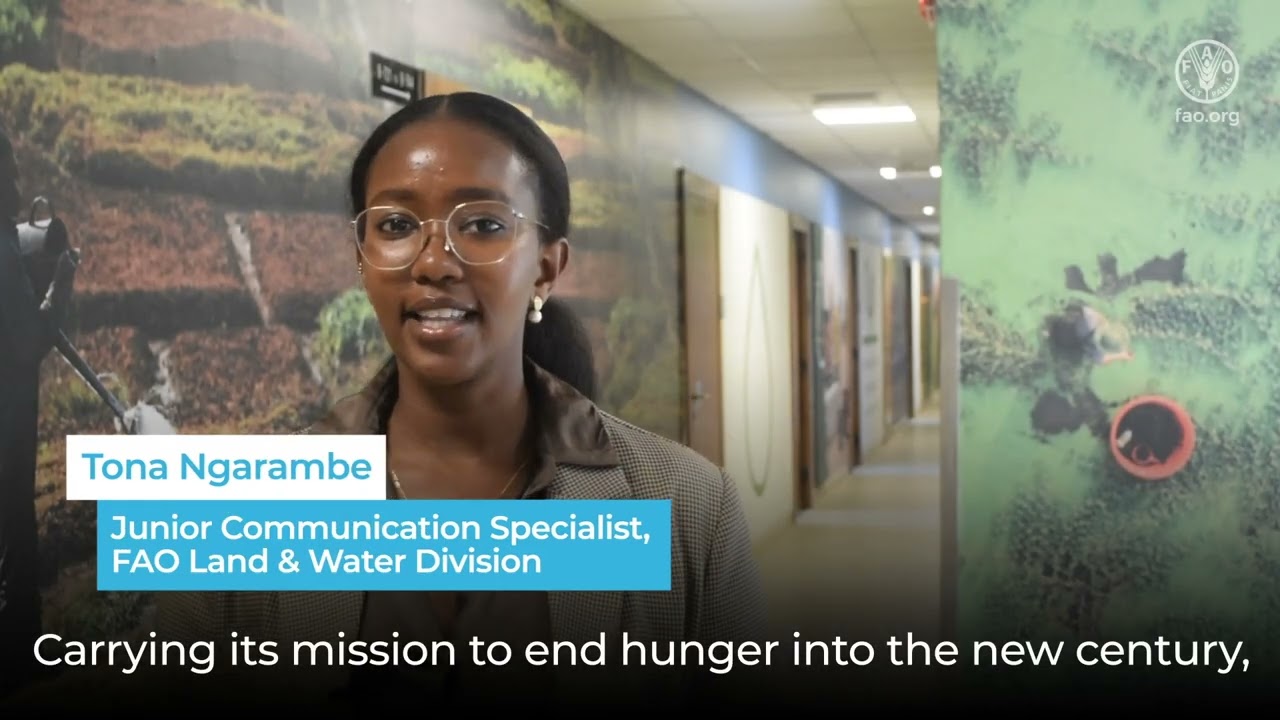
💧 FAO's Water Journey: 80 years of dedication to advancing water resources management for food security and nutrition
💧 Musical performance by Sofia Zampicinini