
Functioning
BlackSea4Fish fulfills its objectives in a variety of ways. These include:
- Recruiting external experts to address priority topics and carry out ad-hoc studies
- Supporting participation of Black Sea scientists in the SGSABS and the ACBS, along with other GFCM meetings and activities
- Coordinating and supporting the launch and implementation of strategic activities such as surveys-at-sea, vessel monitoring and control systems, socioeconomic surveys, and bycatch monitoring programmes
- Organizing new ad-hoc activities in response to existing decisions (e.g. management plans and research programmes/pilot projects) and to bridge knowledge gaps identified by the ACBS, in particular with the aim of improving the scientific advice that forms the basis for fisheries management in the Black Sea
- Promoting training opportunities and capacity-development actions in member countries
- Enhancing cooperation between Black Sea initiatives
- Managing initiatives for outreach and dissemination of programme results
The Scientific Advisory Committee for the Black Sea
The Scientific Advisory Committee for the Black Sea (ACBS) was established in 2025 as a result of the evolving work in the Black Sea. It replaced the Working Group for the Black Sea (WGBS), created in 2011 to develop the GFCM’s work in light of the specificities of the Black Sea. WGBS successfully delivered quality advice underpinning decisions for the region.
The objectives of the ACBS are to
a) provide advice for fisheries-related issues of relevance to the Black Sea region, including the status and trends of marine living resources, taking into account, where applicable, any advice related to the Black Sea that may be provided by other committees,
b) facilitate exchange of scientific data and information between contracting parties, cooperating non-contracting parties and relevant non-contracting parties and promote cooperation in the fight against illegal, unreported, and unregulated (IUU) fishing in the Black Sea region, and
c) undertake any other functions or responsibilities as may be conferred by the Commission.
| Black Sea | |
|---|---|
| Pelagic species | European anchovy (Engraulis encrasicolus) European sprat (Sprattus sprattus) Horse mackerel (Trachurus mediterraneus) |
| Demersal species | Turbot (Scophthalmus maximus) Whiting (Merlangius merlangus) Red mullet (Mullus barbatus) |
| Non-indigenous species | Rapa whelk (Rapana venosa) |
| Species of conservation concern | Piked dogfish (Squalus acanthias) |
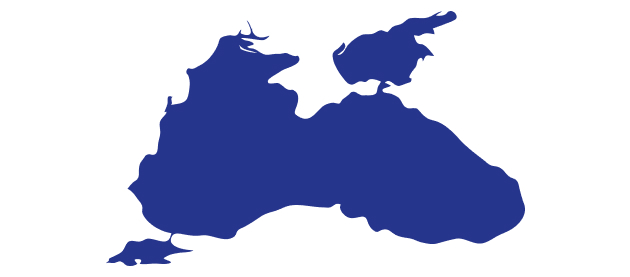
BlackSea4Fish Area
Stakeholders
BlackSea4Fish is a multi-partner initiative which works in every country that borders the Black Sea, bringing together fisheries stakeholders from across the region:
Scientists and other experts
Their work – usually within national fisheries institutes and authorities – is the foundation for the GFCM advisory process, establishing the knowledge base that underpins scientific advice and technical assistance. Empowering them to work better improves advisory outcomes.
Fishers and fish workers
Particularly in small-scale fisheries they have a vital role to play in data collection, traceability and scientific monitoring, and should be able to participate in decisions that affect them. The training and technical and financial support provided through BlackSea4Fish are all needed to build their capacity and diversify their activities to improve their livelihoods.
Administration representatives
BlackSea4Fish is a regional project that encompasses national objectives, working closely with representatives of each country to provide the specific means and tools needed to enhance their fisheries management capacity, plan national contributions, participate in GFCM processes, and deliver against GFCM requirements.
Partner organizations
Partnerships and collaborations with a range of organizations and fora are fundamental to BlackSea4Fish – they foster synergies and avoid duplication, maximizing the strategic and operational advantages each party brings to the table and scaling up overall impact. Partner organizations are key in implementing select actions on the ground, and in developing and sharing knowledge and best practices across the region.