



Speakers
The high-level segment and the thematic sessions will each open with a keynote address highlighting pivotal aspects of the sector in the region. Six panel discussions, organized within the thematic sessions, will provide an opportunity for in-depth discussion of critical issues.
Lahsen Ababouch
Lahsen Ababouch is a Senior Advisor and International Expert within FAO and other United Nations and non-United Nations organizations, as well as within industry and academia. Prior to this, he served as Service Chief of Fish Utilization and Trade at FAO and as Director of the FAO Fisheries and Aquaculture Division. Before joining FAO, he was a professor at the King Hassan II Institute of Agronomy and Veterinary Medicine, where he held teaching, research and advisory positions focusing on agro-industry outreach, trade agreements and agribusiness. Dr Ababouch has authored or co-authored over 145 papers, books and book chapters, and presented over 250 keynote presentations at international fora and conferences.
Yasmin Abdallah
Yasmin Abdallah is the Technical Office Director at the Suez Canal Aquaculture Company, as well as a researcher and active member of the Arab Aquaculture Experts Forum. With a PhD, a master’s degree in hatchery production, a diploma in aquaculture and a background in agricultural engineering, she has extensive expertise in sustainable aquaculture practices. Dr Abdallah is dedicated to advancing sustainable development and food security by promoting accessible, high-quality animal protein. Her work is closely aligned with global sustainability goals, focusing on innovative, eco-friendly approaches to enhance aquaculture production and address both local and international food demands.
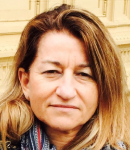
Delilah Al Khudhairy
Delilah Al Khudhairy is the Director for Maritime Policy and Blue Economy in the European Commission Directorate-General for Maritime Affairs and Fisheries. Prior to this, Dr Al Khudhairy was the Director for Strategy, Work Programme and Resources for several years, followed by a short spell as the Director for Competences at the European Commission’s in-house science and knowledge service: the Joint Research Centre. Before joining the European Commission, she was employed at British Gas PLC. Dr Al Khudhairy graduated with a first class honours BSc in engineering and a PhD in Materials Science Engineering from London University.
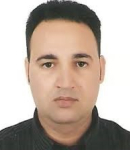
Mohamed Salah Azaza
Mohamed Salah Azaza is a Professor at the Tunisian National Institute of Marine Sciences and Technology, specializing in aquaculture feed nutrition and physiology. He has actively participated in several European Union-funded projects and has led and co-led the development of aquaculture strategies in multiple countries. His research focuses on optimizing feed solutions and improving species health and productivity in aquaculture systems worldwide. He holds a PhD and HDR in aquaculture from the University of Tunis El-Manar and has published over 30 peer-reviewed papers.
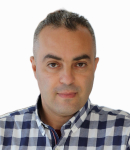
Samir Bachouche
Samir Bachouche is a Marine Scientist at the National Center for Research and Development of Fisheries and Aquaculture. He serves as the National Hub Expert for the WestMED Initiative and coordinates the AquaWest Technical Group, which focuses on sustainable aquaculture in the WestMED Region. Dr Bachouche has over 20 years of experience in fisheries research, and specializes in coastal and marine spatial planning, climate change, fisheries and aquaculture, and marine biodiversity. He has contributed to numerous scientific publications and actively participates in various national and regional projects aimed at promoting a sustainable blue economy.
Dilyara Bakhtieva
Dilyara Bakhtieva is an Economist in the Maritime Innovation, Marine Knowledge and Investment unit of the Directorate-General for Maritime Affairs and Fisheries of the European Commission, where she focuses on European Union policies for the promotion of blue economy investment and entrepreneurship. Dr Bakhtieva holds an MA and PhD in economics and a degree in mathematical methods in economics. Her experience includes economic analysis, impact assessment and evaluation in diverse policy areas.
Miguel Bernal
Miguel Bernal is the Executive Secretary of the General Fisheries Commission for the Mediterranean (GFCM) of the Food and Agriculture Organization of the United Nations (FAO). He is the responsible for implementing policies agreed upon by GFCM countries towards ensuring the sustainability of fisheries and the sustainable development of aquaculture in the Mediterranean and the Black Sea. He has previously led the technical work of the GFCM Secretariat on fisheries-related issues, promoting modernization of work in support of decision-making, including through the publication of the biennial report on The State of Mediterranean and Black Sea fisheries. Prior to joining the GFCM, he worked in a number of top-level universities and fisheries research institutes across the world, publishing numerous scientific contributions in the fields of fisheries, ecosystem modelling and climate change.
Ismini Bogdanou
Ismini Bogdanou is the Director of Communications and Public Relations at the Hellenic Aquaculture Producers Organization, where she focuses her efforts on promoting and supporting the Greek aquaculture sector in Greece and internationally. Prior to joining the Hellenic Aquaculture Producers Organization, she worked in publishing, advertising, education and hospitality in Austria, Canada and Greece. She holds master’s degrees in international relations and art history from the University of Vienna.
Alessio Bonaldo
Alessio Bonaldo is the Coordinator of the GFCM Technical Advisory Group on Innovation and Technology and a Professor at the University of Bologna. He is also the Project Coordinator and Principal Investigator for the University of Bologna within relevant European aquaculture projects under the Horizon programmes, as well as the holder of nationally funded competitive projects and research contracts commissioned by national or foreign aquafeed companies. Dr Bonaldo’s research focuses on sustainable aquaculture systems, new protein sources and the development of sustainable and circular feed formulations for farmed fish species.
Nadia Chérif
Nadia Chérif is the Coordinator of the GFCM Technical Advisory Group on Aquatic Animal Heath and Biosecurity and is responsible for the Aquatic Animal Health Viral Diagnostic Section at the National Institute of Marine Sciences and Technologies of Tunisia. She focuses primarily on the development of suitable preventive and control measures for fish pathogens, by actively working to initiate a national zoo-sanitary control network, implement a biosecurity program and monitor the main diseases within marine farming sites. Dr Chérif is also a consultant within the Aquatic Animal Health Expert Group of the African Union Interafrican Bureau for Animal Resources. She holds a PhD of microbiology, specializing in fish virology.
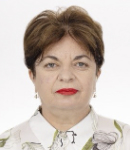
Nino Chobaniani
Nino Chobaniani is the Chair of the Georgian Fish Farmers’ Association. She is also a national expert for the European Union-funded project "Freshwater Aquaculture Value Chain Analysis in Georgia." Ms Chobaniani led a working group that developed the Georgian Maritime Code and was recently in charge of the European Union-funded project "Environmental Protection and Fight Against Climate Change in Georgia”. She holds a diploma in fish products technologies from the Technical Institute of the Fisheries Industry and Facilities.
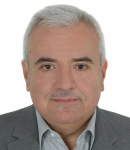
Massaad Ejbeh
Massaad Ejbeh is the founder and owner of Aquafarm, Lebanon's first and only shrimp farm. He established the company as a tilapia and catfish farm in 2001 and two years later, he shifted his focus to include shrimp. Since then, Mr Ejbeh has specialized in raising finfish and shrimp, producing high-quality fish feed and creating pet food from byproducts. Within his work, Mr Ejbeh emphasizes sustainability, innovation, self-sufficiency and circularity. In this regard, he has shifted the enterprise to use renewable energy sources, has established an in-house feed mill and grows 100 000 m² of wheat to support feed production. Through his efforts and dedication, Mr Ejbeh has positioned Aquafarm as a leader in Lebanon’s aquaculture sector, contributing to food security and economic growth.
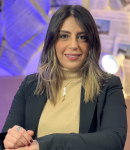
Katia El Kabbout
Katia El Kabbout is an Agricultural Engineer specializing in environment and natural resources management. She has over seven years of experience as a research assistant, contributing to various environmental and agricultural projects, including flood risk management in semi-arid areas and biodiversity assessments of Lebanon's flora and fauna. Currently, Ms El Kabbout collaborates with the Democratic Movement for Culture and Development, leading aquaculture initiatives in the Bekaa Valley, and works as a trainer and lecturer for sustainable aquaculture practices with a focus on empowering local communities while promoting food security through research and capacity development. She is the Secretary for the sixth branch of the order of Engineers in Lebanon. Ms El Kabbout holds an MSc in hydrology and aims to advocate for sustainable rural development strategies to address contemporary food security challenges.
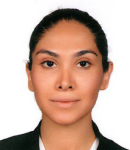
Yas Farjad
Yas Farjad is an aquaculture specialist currently working with the General Directorate of Maritime Affairs, Fisheries, and Aquaculture at the French Ministry of the Sea, where she is in charge of European and international affairs as well as economic development for aquaculture. Formerly a commercial consultant for sustainable seafood products, Ms Farjad has supported businesses in aligning with market trends and regulatory frameworks. As the founder of an aquaculture production company, she has hands-on experience in managing innovative and environmentally conscious farming systems.
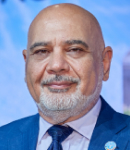
Nabil Gangi
Nabil Gangi is the FAO Deputy Regional Representative for Europe and Central Asia and Secretary of its Regional Conference. Before taking office in 2019, Mr Gangi held the same post in FAO’s Regional Office for the Near East and North Africa in Cairo. Prior to that, he headed the Organization’s Shared Services Centre in Budapest, providing support to FAO’s essential administrative operations, including human resources, financial services, and asset and travel management. During his 25-year career with FAO, Mr Gangi has assumed increasingly senior-level positions including at FAO headquarters in Rome. Before joining the United Nations, he gained wide experience in the humanitarian development field through senior management positions with multilateral and non-governmental organizations. He has a background in engineering (Ain Shams University in Cairo), project and financial management (American University of Cairo) and business administration (Henley Management College and Brunel University in the United Kingdom).
Emilia Gargallo González
Emilia Gargallo González is a Policy Officer for Aquaculture and Sustainable Food Systems at the Directorate-General for Maritime Affairs and Fisheries of the European Commission, where she focuses on sustainable food systems and on the international dimension of aquaculture. With over a decade spent at the European Commission, she has extensive experience on international matters and has participated in the implementation of structural reforms in areas including transport, environment and trade. She focused her studies on European law, which she pursued in Madrid, Paris and Belgium, and holds a master’s degree in international business development.
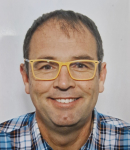
Enric Gisbert
Enric Gisbert is a Senior Researcher and Head of the Aquaculture Programme of the Institute of Agrifood Research and Technology, owned by the Government of Catalonia assigned to the Department of Agriculture, Livestock, Fisheries and Food, and is responsible for the Mediterranean Restorative Aquaculture Centre. He focuses on the interface between academia and industry, and aims his research towards fish larval nutrition, functional feeds for on-growing fish stages, and sustainable farming systems, such as aquaponics and inland integrated multitrophic aquaculture. Dr Gisbert holds a PhD in biological sciences and an MSc in aquaculture from the University of Barcelona. He has published over 270 scientific manuscripts, supervised PhD theses, lead national research projects and participated in European Union research projects.
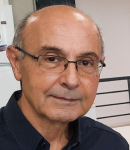
Ioannis Karakassis
Ioannis Karakassis is a Professor at the Biology Department of the University of Crete and Head of the Marine Ecology Lab. He is a member of international working groups and scientific initiatives on marine ecology and biodiversity. Dr Karakassis is particularly interested in the structure, processes of, and human impacts on coastal marine ecosystems and biodiversity. He is working on the environmental impacts of aquaculture as a model of multiple interactions between ecosystem components and anthropogenic activities in the marine environment. Over the past 30 years, he has coordinated or participated in various national, European Union-funded or other international research projects. He has authored and coauthored over 120 papers.
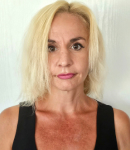
Magda Nenciu
Magda Nenciu is a Senior Scientific Researcher within the Marine Living Resources Department at the National Institute for Marine Research and Development in Romania. She is also an expert at the Aquaculture Demonstration Centre in Constanta and is involved in several national and international projects. Her work focuses on conducting marine aquaculture experiments in the laboratory on species acclimatization and adaptability; collecting, analysing, interpreting and reporting data from aquaculture activities; conducting ecotoxicity experiments using fish species and marine invertebrates; and preparing documentation to support the development of mariculture activities. She holds a PhD in Biology from the Applied Sciences Doctoral School of the “Ovidius“ University of Constanta and a Bachelor’s Degree in Biology from the University of Agronomic Sciences and Veterinary Medicine of Bucharest.
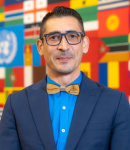
Galin Yankov Nikolov
Galin Yankov Nikolov is an Associate Professor at Trakia University within the Department of Biology and Aquaculture, and Head of the Educational Experimental Base in Aquaculture. He is also a member of the editorial boards of two national peer-reviewed journals, as well as a member of the Union of Scientists in Bulgaria. Prior to this, Dr Nikolov was the Executive Director of the Executive Agency of Fisheries and Aquaculture in Bulgaria. His scientific interests include the cultivation and reproduction of freshwater and marine water fish; the use of nutritional additives in feeds; the evaluation of ingredients for digestibility; the formulation of balanced, sustainable and cost-effective diets; and the selection, reproduction and nutrition of ornamental fish. He has authored or co-authored more than 60 scientific papers.
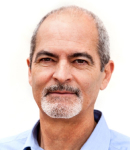
Javier Ojeda
Javier Ojeda is Secretary General of the Spanish Aquaculture Farmers’ Association. Through this role, he actively collaborates with national and international organizations, including the Aquaculture Advisory Council and the European Technology and Innovation Platform, and maintains relations with the European Commission, European Parliament, European Economic and Social Committee, FAO, the International Union for Conservation of Nature and other relevant organizations. Mr Ojeda is also Secretary General of the Federation of European Aquaculture Producers. He holds a degree in biology from the University of Madrid and an MSc in oceanography from the University of South Carolina
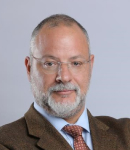
Philippos Papageorgiou
Philippos Papageorgiou is the Coordinator of the GFCM Technical Advisory Group on Governance and Responsible Investment in Aquaculture, as well as the Executive Fisheries Advisor at the Kingdom of Saudi Arabia National Livestock and Fisheries Development Programme. He has 30 years of experience in the aquaculture and aquatic food industry, working with national and international organizations and corporate enterprises. He is striving to redefine the role of aquaculture as not only a contributor to food security, but as an active driver for positive societal impacts. Mr Papageorgiou holds a BSc in marine biology and oceanography, and an MSc in aquaculture and fisheries from the University of Wales as well as an MBA from the University of Leicester.
Nikos Papandroulakis
Nikos Papandroulakis is Research Director at the Institute of Marine Biology Biotechnology and Aquaculture of the Hellenic Centre for Marine Research. He is also a member of the Sectorial Scientific Council of the General Secretariat for Research and Technology for Agricultural Production, Food, Agro-biotechnology and Aquaculture. Dr Papandroulakis holds a BSc in physics, an MSc in theoretical physics and a PhD in marine biology from the University of Crete.
Simona Paolacci
Simona Paolacci is an environmental scientist specializing in sustainable aquaculture and currently serving as the Principal Investigator of several European Union-funded projects aimed at improving the sustainability of aquaculture and integrating circularity principles in the sector. She has extensive experience with integrated multitrophic aquaculture and seaweed farming, and spent ten years working at University College Cork and two years at the Bantry Marine Research Station. Her current research focuses on the treatment of aquaculture effluents, design of sustainable aquafeeds and improvement of the aquaculture process using artificial intelligence tools. She also investigates the re-use of fish by-products and the environmental impacts of aquaculture.
Michail Pavlidis
Michail Pavlidis is a Professor of Biology and Physiology of Marine Organisms at the Department of Biology of the University of Crete, and Director of the European Union Reference Centre for the Welfare of Aquatic Animals. Dr Pavlidis is also a member of the Governing Council of the University of Crete and Head of the university’s Technology and Innovation Transfer Unit. Since 2022, he has held the position of Chairperson of the Board and CEO of the Property Development Management Company at the University of Crete, as well as Vice rector of Research and Development at the University of Crete. Since 2017, Dr Pavlidis has been a National Representative at the Standing Committee on Agricultural Research’s Fish Strategic Working Group.
Elisa Ravagnan
Elisa Ravagnan is the Coordinator of the H2020 All Atlantic Ocean Sustainable, Profitable and Resilient Aquaculture (ASTRAL) project and was the Co-Leader of the Nordic Centre of Excellence for Blue Bioeconomy. She has also led and participated in several national and international projects, focusing on holistically assessing aquaculture sustainability and the multiuse of marine areas. Dr Ravagnan has a master’s degree and a PhD in environmental sciences and over 20 years of experience in data analysis and environmental modelling, studying the effects of human activities on the marine environment, as well as assessing all dimensions of sustainability (environmental, social and economic) with inter- and cross-disciplinary approaches.
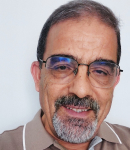
Mohamed Salah Romdhane
Mohamed Salah Romdhane is a Professor at the Tunisian National Institute of Agronomy at the University of Carthage and Head of the aquatic ecosystems and resources laboratory. Dr Romdhane is also a member of several scientific and technical committees, and is involved in numerous national and international projects. His research primarily involves aquaculture, the environment, fisheries and biodiversity. He holds an engineering degree in fisheries, a doctorate in marine biology and oceanography, and a PhD in aquaculture from the University of Ghent. Dr Romdhane has published more than 175 national and international papers, and four technical books, and has completed over 50 assignments in Tunisia and abroad in the fields of environment, aquaculture and biodiversity.
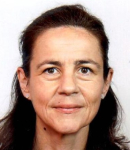
Tanja Šegvić Bubić
Tanja Šegvić Bubić is a Scientific Adviser in the Laboratory of Aquaculture at the Institute of Oceanography and Fisheries in Croatia. She focuses her research on the environmental impacts of aquaculture at the species, genomic and ecosystem levels, with an emphasis on biodiversity conservation and habitat preservation. She has authored over 50 peer-reviewed papers, and has recently worked towards testing alternative, sustainable fish feed ingredients for Mediterranean farmed fish species. Dr Bubić also serves on editorial boards and advisory committees, contributing to the advancement of aquaculture science and environmental sustainability.
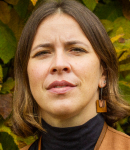
Anna Toffan
Anna Toffan is a veterinarian, currently managing the Fish Virology Laboratory hosted at the Italian National Reference Centre for Fish, Molluscs and Crustacean Pathology. She is also the head of the World Organisation for Animal Health Reference Laboratory for Viral Encephalopathy and Retinopathy located at the Experimental Zooprophylactic Institute of Veneto. She focuses largely on the diagnosis and control of viral diseases, on their pathogenesis and on the development of safe and efficacious vaccines. She is involved in numerous national and international research projects and has published more than 100 scientific papers including some book chapters. She participates as a trainer or keynote speaker to international working groups and training programmes.
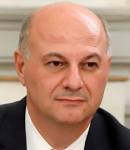
Konstantinos Tsiaras
Konstantinos Tsiaras is the Minister of Rural Development and Food in Greece. Prior to this, Dr Tsiaras served as the Parliamentary Representative for the Greek Parliamentary Group of New Democracy, Minister of Justice, New Democracy General Secretary, Chairman of the Standing Committee on Defense and Foreign Affairs of the Hellenic Parliament, Deputy Foreign Minister and New Democracy Member of Parliament. Trained as a microbiologist and biopathologist, he holds a PhD from the Athens University Medical School and completed post-graduate studies on in-vitro fertilization at Swedish university centers.
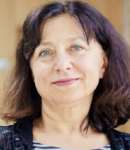
Charlina Vitcheva
Charlina Vitcheva was appointed Director General of the Directorate-General of Maritime Affairs and Fisheries in June 2020. Prior to this, she served as Deputy Director General of the Joint Research Centre from September 2016 to April 2020, acted as Director of Smart and Sustainable Growth in southern Europe at the Directorate-General of Regional and Urban Policy, and held a director’s position on Inclusive Growth, Territorial and Urban Development in northern Europe. Before joining the European Commission, she had been active in the Bulgarian public administration for 15 years, including at the Permanent Representation in Brussels, was involved in the negotiations of Bulgaria’s accession to the European Union and was notably in charge of agricultural and fisheries dossiers, heading negotiations from 2000 to 2004 in the areas of agriculture and rural development, food safety and fisheries.