
Accelerating sustainability in fisheries and aquaculture at the 2025 UN Ocean Conference

The General Fisheries Commission for the Mediterranean (GFCM) concluded a weeklong participation at the 2025 United Nations Ocean Conference (UNOC) in Nice, France.
This landmark event aimed to support further urgent action towards the conservation and sustainable use of the oceans, seas and marine resources and the achievement of Sustainable Development Goal (SDG) 14 “Life below water”.
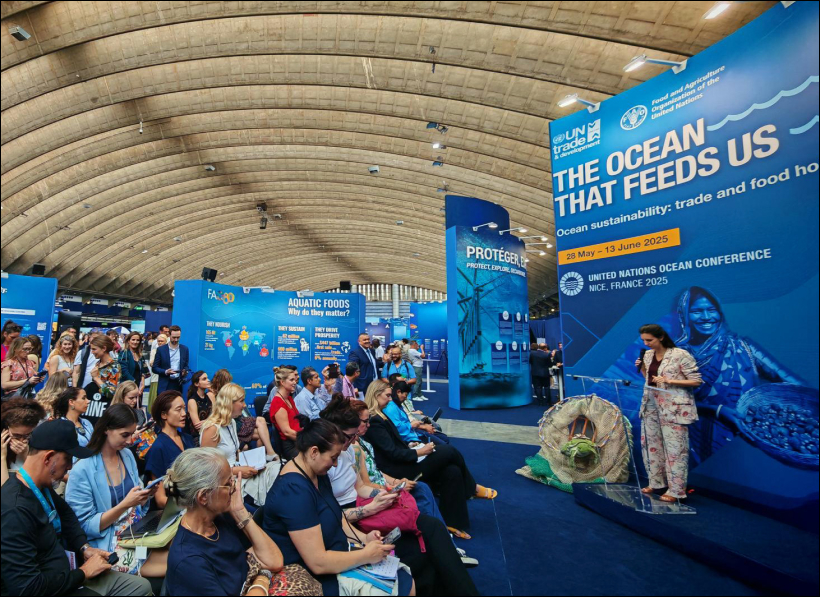
The GFCM organized two side events and took part in multiple panels and side event discussions. The conference presented a significant opportunity for key actors from the Mediterranean and Black Sea region – the GFCM area of application – to take stock of the state of fisheries and aquaculture and reaffirm their commitments to advance the sector along the path to sustainability.
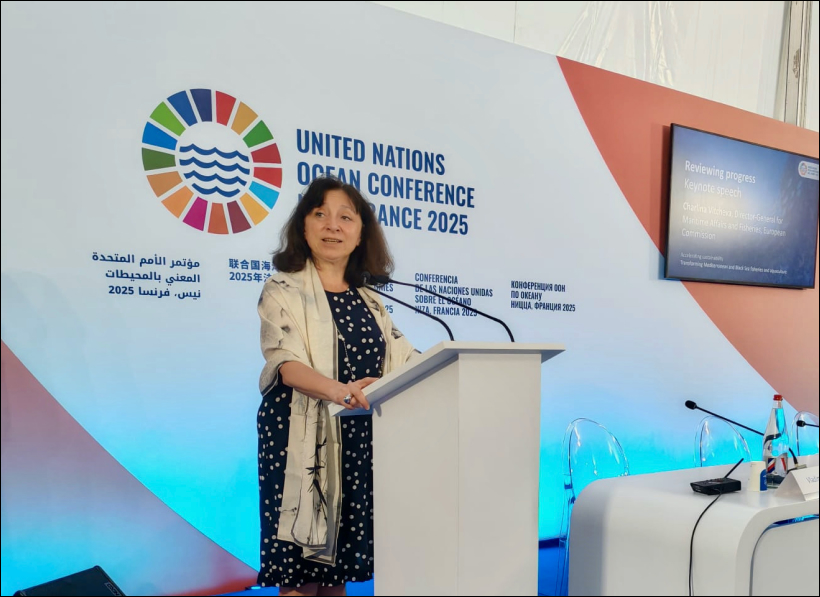
“It is up to us to create a resilient future for our local communities, to restore and protect stocks and marine ecosystems, and to create a sustainable and dignified working environment for generations to come – the future they all deserve. We have all the tools at our disposal, and I am confident that together, with the strong political will of our leaders, we will succeed,” said Charlina Vitcheva, Director-General for Maritime Affairs and Fisheries, European Commission.
Significant improvements despite a plethora of challenges
Fisheries and aquaculture are part of the cultural fabric of the Mediterranean and the Black Sea. They are important social and economic drivers, providing essential livelihoods for coastal communities and the basis for the so-called Mediterranean diet.
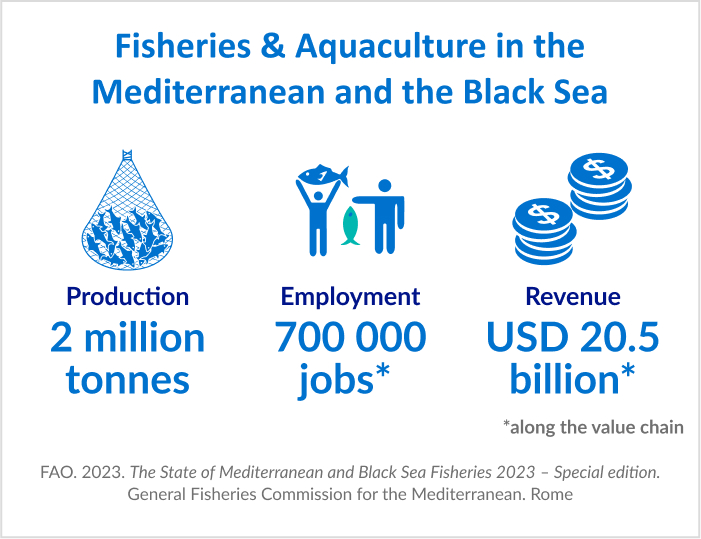
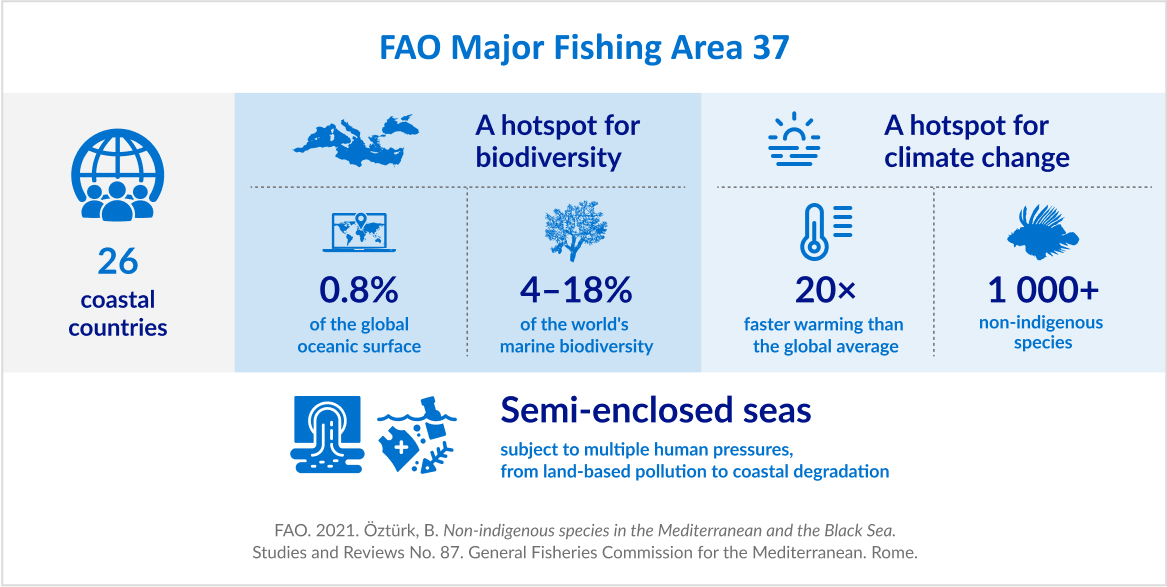
However, fisheries resources in our region are among the most overexploited in the world, due to a combination of low productivity and high seafood demand. The two seas are semi-enclosed and surrounded by dense populations exerting high pressure at all levels. Their productivity and ecological health are also affected by other factors, such as climate change – they are warming up 20 percent faster than the global average – and chemical and plastic pollution.
Over the past decade, GFCM Members decided to take decisive action and set forth ambitious objectives through the MedFish4Ever and Sofia Declarations. They committed to reverting the increasing trend in overfishing and to achieving significant advances towards sustainability, including by implementing effective management measures and addressing illegal, unreported and unregulated fishing through reinforced monitoring.
Effective management works
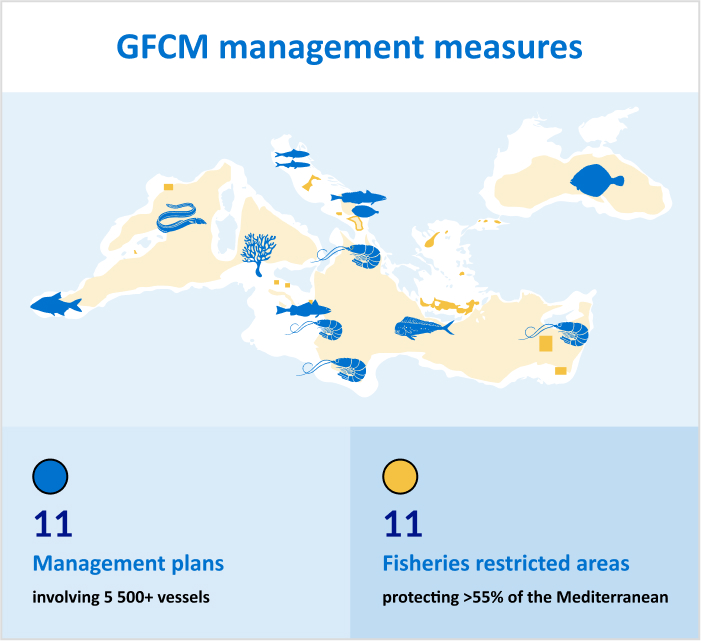
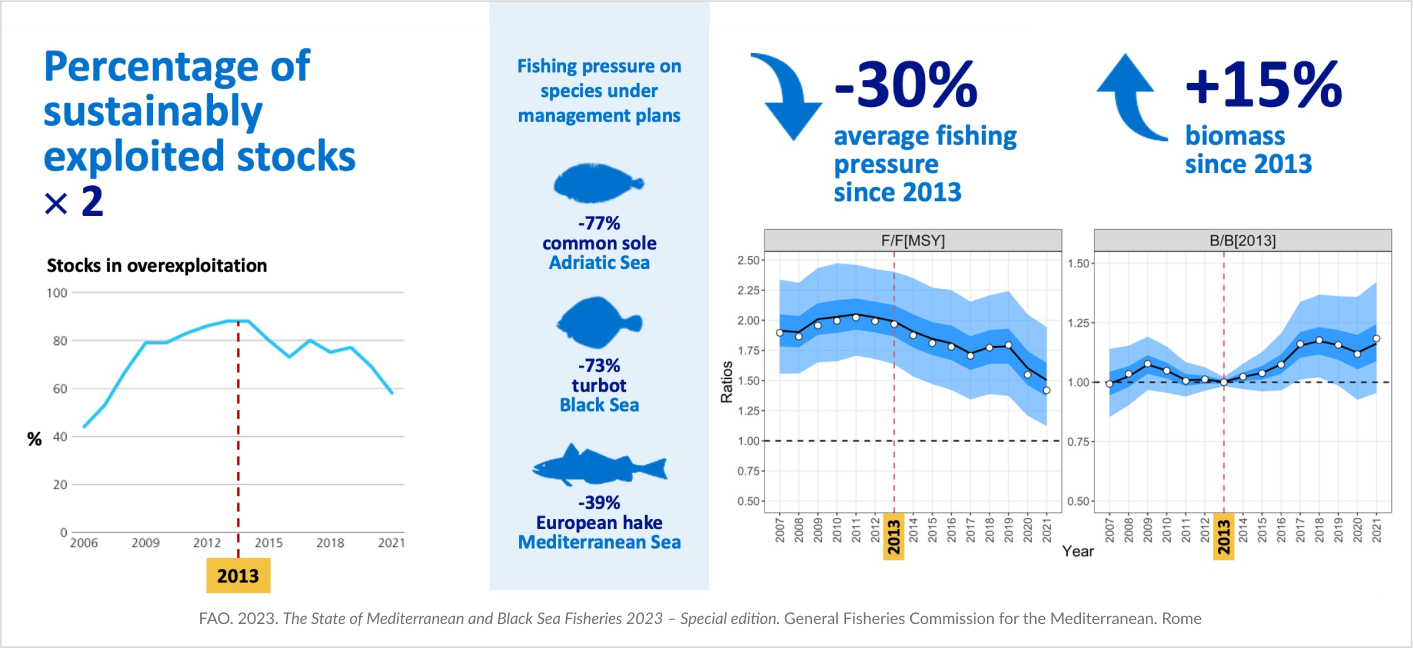
To date, the GFCM has put in place 11 management plans and established 11 fisheries restricted areas, which protect over 55 percent of the Mediterranean. Though these management measures started to be implemented late with respect to the development of the fleet, significant improvements have been recorded in the last decade: the average fishing pressure decreased by 31 percent, the percentage of sustainable stocks has doubled, and biomass has increased by more than 15 percent.
On the basis of the outcomes of the work of a large network of scientists that assess more than 100 stocks per year, it is expected that the next edition of The State of Mediterranean and Black Sea Fisheries and Aquaculture, which the GFCM will release at the end of 2025, will show further improvements in stock status and biomass levels across the region.
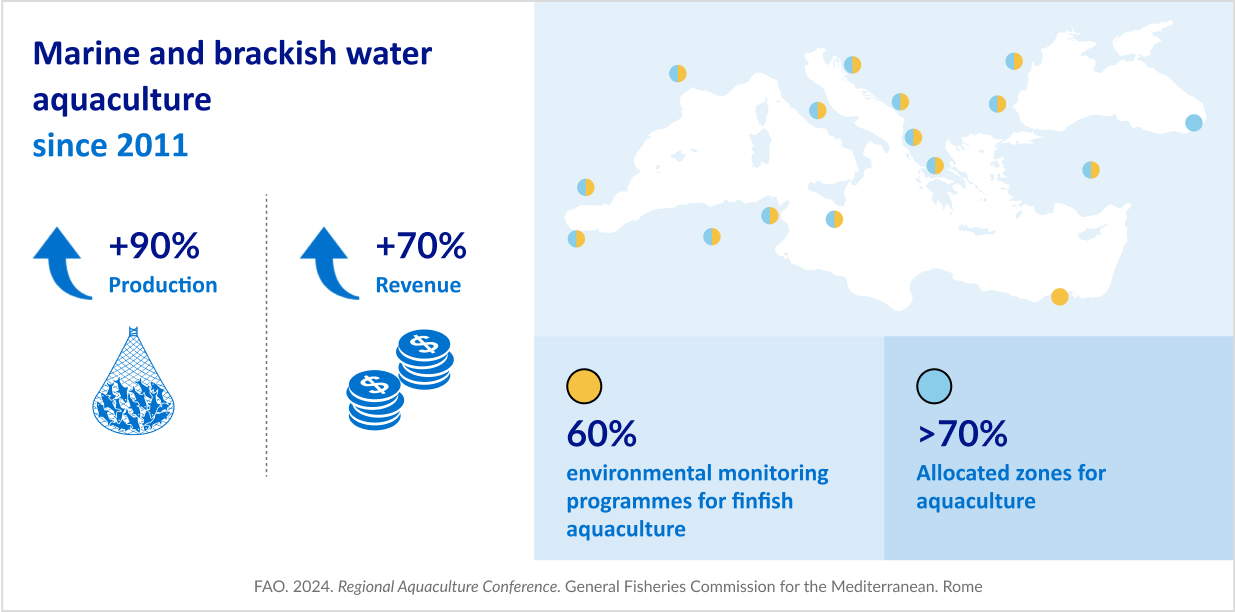
Meanwhile, aquaculture has evolved significantly. Production has doubled, and this growth has come hand in hand with smarter and more sustainable practices. A greater variety of species are now farmed using modern, ecofriendly technologies and improved feeds that reduce environmental impacts. More importantly, aquaculture is no longer developed in a random manner: it is now carefully integrated into coastal areas thanks to well-studied spatial planning. Environmental monitoring programmes and stronger legal frameworks have also been put in place to ensure that aquaculture grows in a way that protects ecosystems, respects local communities and contributes to food security.
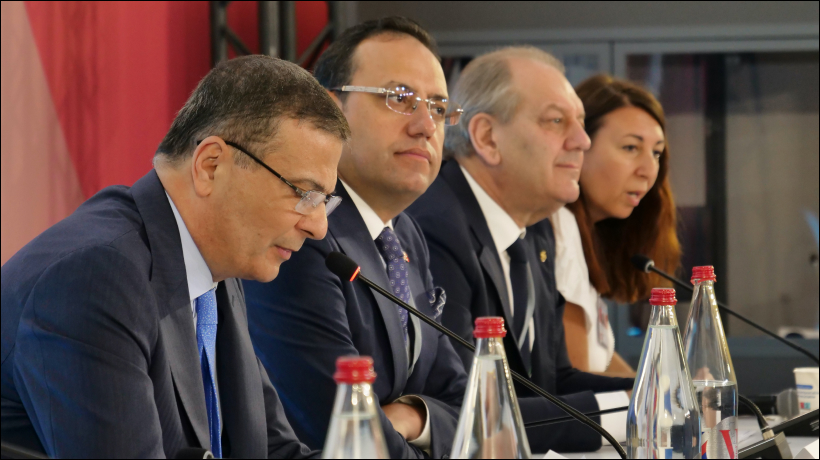
“The GFCM emphasizes inclusive development and the integration of social and economic dimensions into national strategies, with a particular focus on building resilient food systems in the face of climate change and economic pressures,” said H.E. Alaa Farouk, Minister for Agriculture and Land Reclamation, Egypt.
“In this transformation journey, the role of the GFCM is of utmost importance. Strengthening regional cooperation, promoting knowledge and experience sharing, supporting joint research projects, and implementing capacity development programmes are all critical to the success of our common goals,” said Ebubekir Gizligider Deputy Minister for Agriculture and Forestry, Türkiye.
What next?
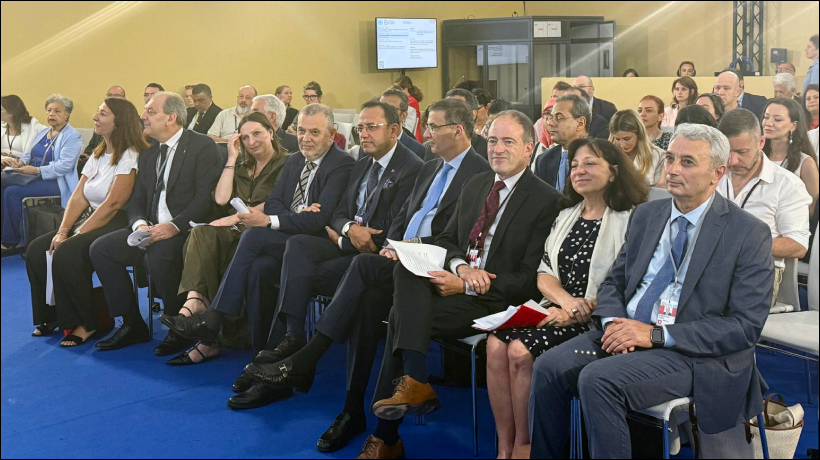
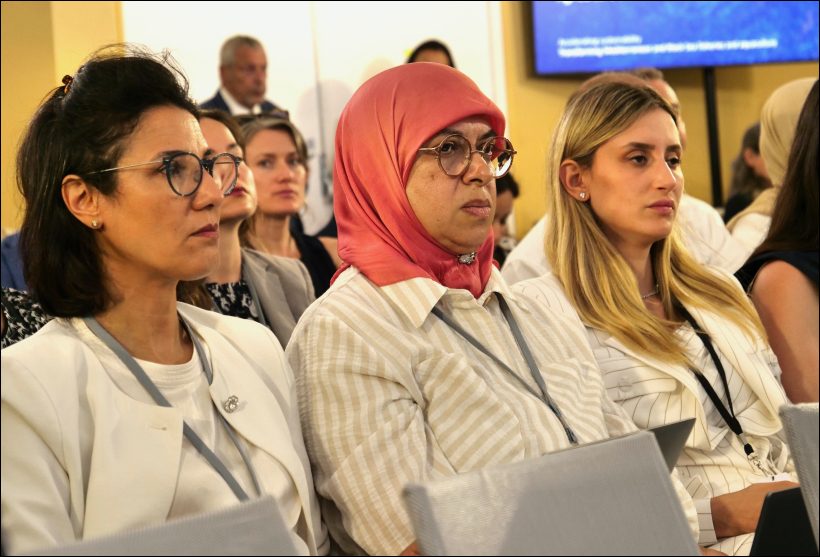
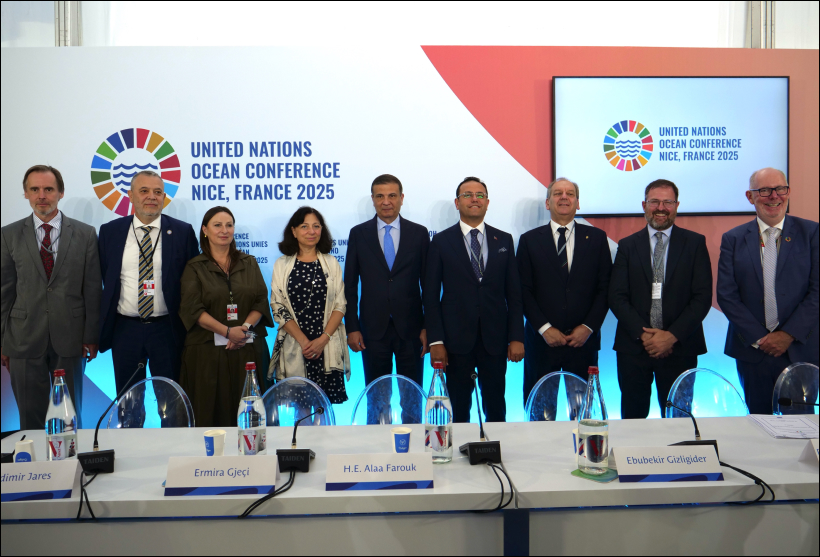
These actions and their results have been made possible through the collaboration and steadfast commitment of GFCM Members. The ministerial side event at UNOC, titled “Accelerating sustainability: Transforming Mediterranean and Black Sea fisheries and aquaculture,” showcased this model cooperation in the context of sustainable blue foods and kickstarted preparations for the renewal of relevant political declarations.
Renewed commitments are crucial, as growing populations require sustainable and productive aquatic food systems. In the region, per capita consumption demand by 2050 is estimated to increase by 14 percent assuming consumption remains stable across countries, and by 29 percent if consumption reaches world average levels.
The side event, co-organized by the GFCM with the European Union, France, Morocco and the World Maritime University, also provided the opportunity to officially announce the GFCM Voluntary Ocean Commitment. For the next five years, the GFCM has pledged a value of USD 50 million “Towards healthy seas, productive fisheries and aquaculture and sustainable livelihoods in the Mediterranean and Black Sea through a level playing field and cooperation within the GFCM”. This commitment underpins the efforts made by the GFCM Members and donors, in particular the European Union and the Global Environmental Facility, to effectively implement the GFCM 2030 Strategy.
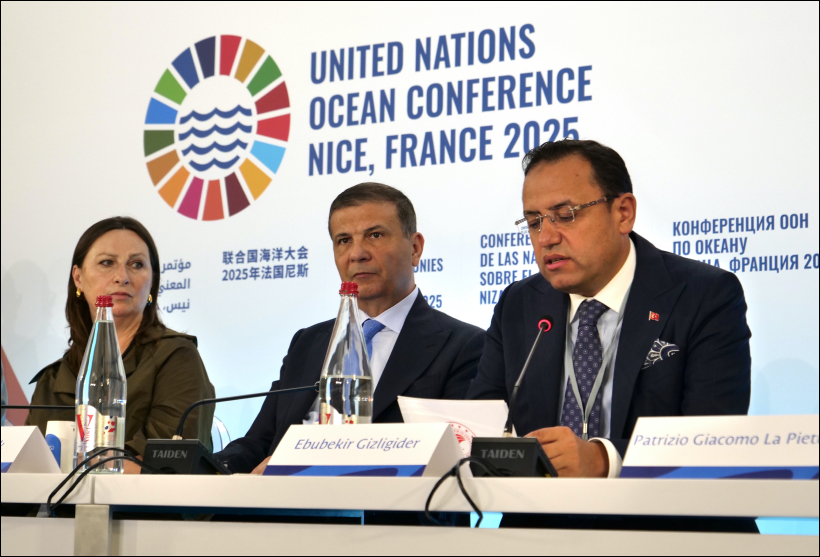
During the event, GFCM countries also announced key commitments.
- European Union: In addition to large initiatives addressing all European waters and beyond, such as the Ocean Pact, the European Union announced the launching of preparations for future Ministerial Declarations for the Mediterranean and the Black Sea, following MedFish4Ever and Sofia Declarations, with two dedicated conferences planned for 2026 and 2027. France and Italy also emphasized the urgency of strengthening efforts against IUU fishing and advancing sustainable aquaculture.
- Egypt: Pledged to sustainably expand aquaculture through integrated coastal zone management, climate-resilient systems, and value chain development supporting new job opportunities.
- Türkiye: Announced the creation of a Non-Indigenous Species Observatory in Antalya and the establishment of a National Fisheries Monitoring, Control and Surveillance Centre in Yalova.
- Albania: Committed to developing a National Plan of Action for Small-Scale Fisheries, building on GFCM’s capacity development and ongoing consultations with local SSF communities.
Relevant links
- Webcast: Accelerating sustainability - Transforming Mediterranean and Black Sea fisheries and aquaculture - Blue zone
- Webcast: Fisheries Sustainability? Within Reach! Success Stories in Ocean Resource Management - SDG media zone
- Webpage: GFCM at UNOC
- Infographics: Facts and figures on the region
Zoom-in on the GFCM technical side event
From science to solutions: Advancing bycatch mitigation in the Mediterranean
With interventions from the Agreement on the Conservation of Cetaceans in the Black Sea Mediterranean Sea and Contiguous Atlantic Area, Çukurova University, International Union for Conservation of Nature, the Moroccan Ministry of Agriculture, Maritime Fisheries, Rural Development and Water and Forests, the Tunisian Ministry of Agriculture, Water Resources and Fisheries, and WWF, the event showcased how scientific cooperation and regional collaboration enhance the understanding of bycatch in Mediterranean fisheries and support its mitigation. It highlighted how the MedBycatch project gathered critical data on bycatch and enabled the development of multitaxa, science-based mitigation measures, and how the momentum created on bycatch issues in the region paved the way for the adoption of relevant instruments and tool, such as the Regional plan of action to monitor and mitigate interactions between fisheries and vulnerable species in the Mediterranean and the Black Sea, illustrating what is happening in the field to pursue these efforts.
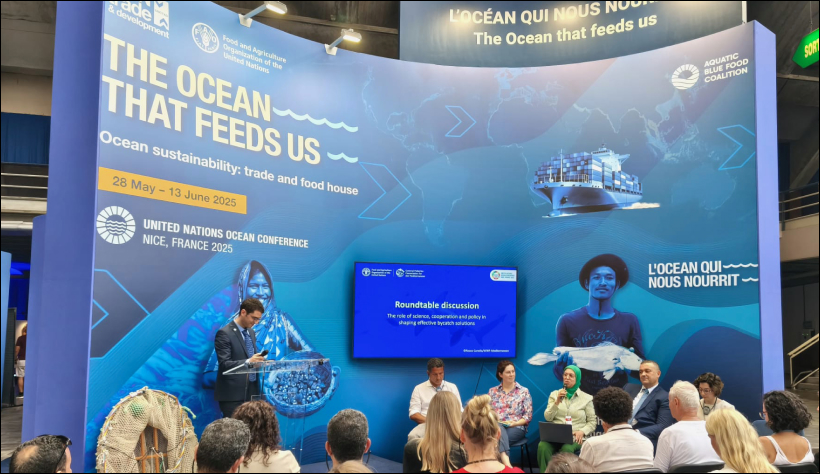
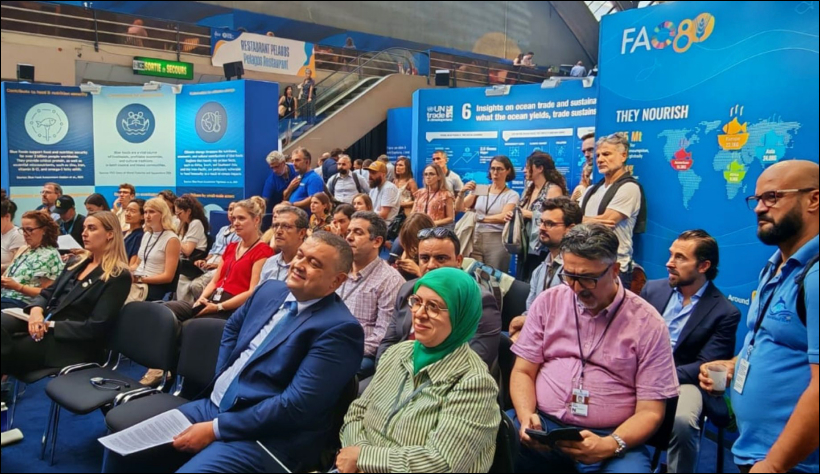
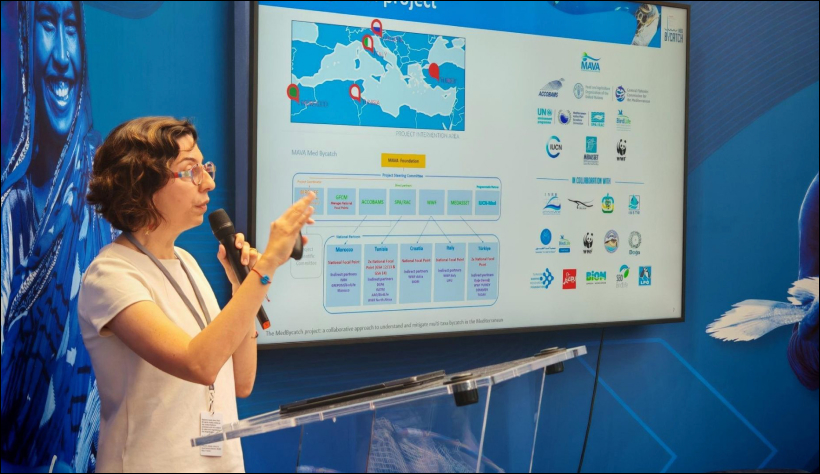
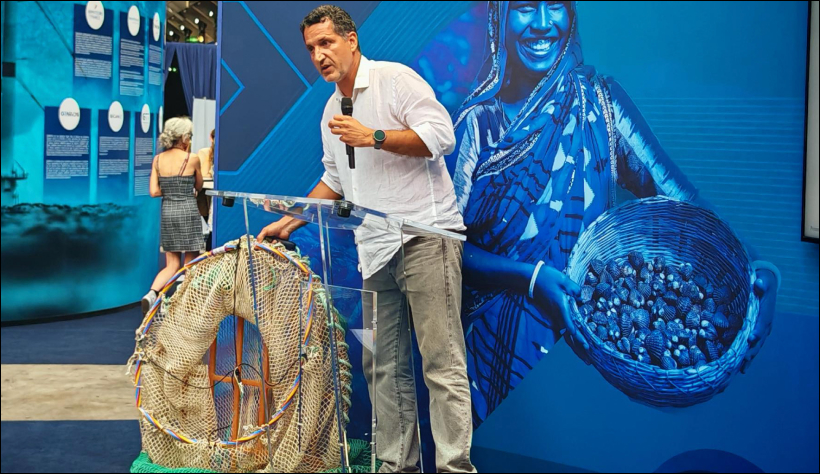
Photos ministerial side event: ©FAO-GFCM/Élodie Bernollin
Photos technical side event: ©FAO-GFCM/Anis Zarrouk and ©FAO-GFCM/Guillaume Carruel