
Libya reinforces its involvement within the GFCM to boost food security and coastal livelihoods

Fisheries and aquaculture play a vital role in Libya’s food security and coastal livelihoods. With the longest Mediterranean coastline in Africa, Libya is well placed to leverage its marine potential to support national development and economic resilience. Building on this strategic asset, Libya is strengthening cooperation within the General Fisheries Commission for the Mediterranean (GFCM) to ensure the sustainable management of its marine resources for present and future generations.
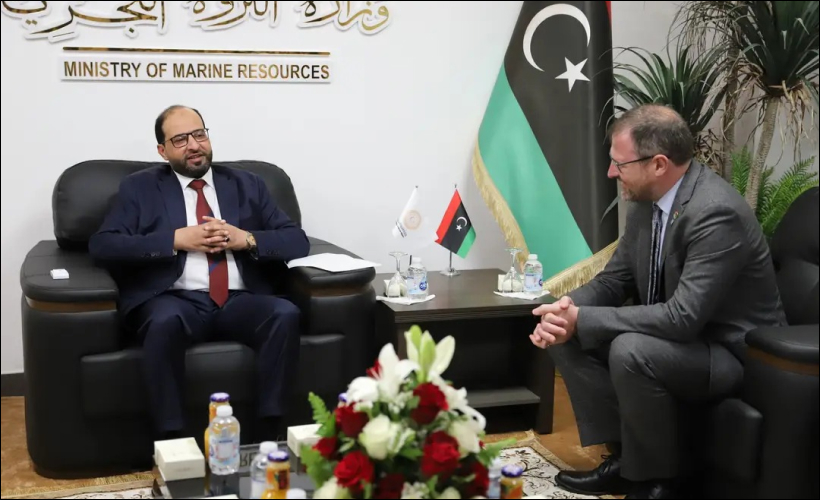
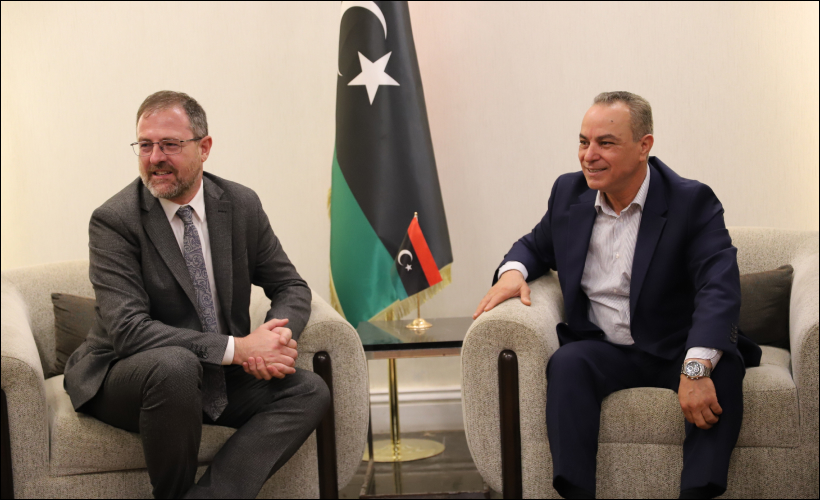
H.E. Adel Mohamed Soltan, Minister of Marine Resources, met this week with a delegation from the GFCM led by Miguel Bernal, Executive Secretary, to discuss ongoing and future collaboration in support of sustainable fisheries, aquaculture development and resilient coastal livelihoods.
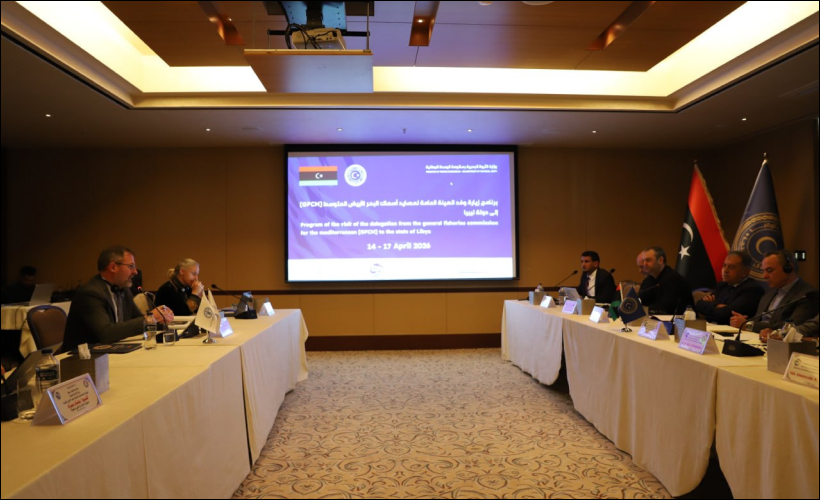
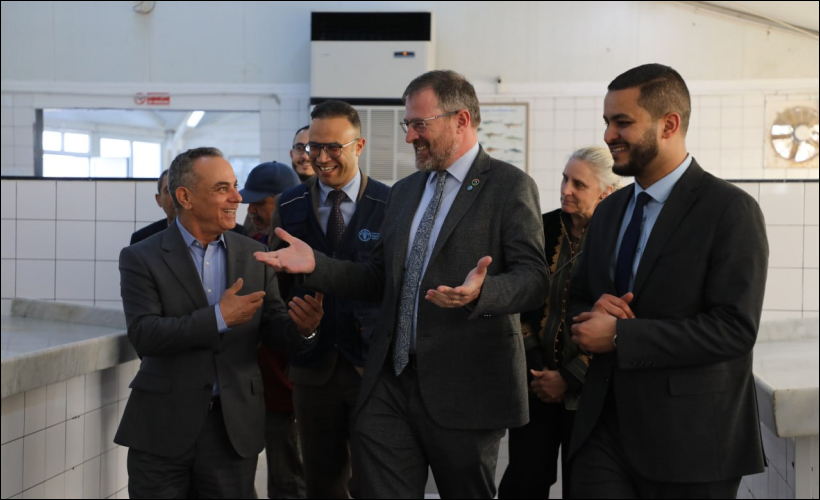
This first visit of the GFCM to Libya included meetings with representatives of the Ministry of Foreign Affairs and International Cooperation, the Marine Biology Research Centre, the General Authority for Marine Fishing, the National Aquaculture Project and the Authority for the Construction and Maintenance of Marine Fishing Ports and Harbours. The GFCM delegation also visited the fish markets of Bab Al-Bahr and Souq Al-Jumaa to observe marketing mechanisms and supply chains.
Investing in science for effective fisheries governance
Libya has a long‑standing tradition of fish consumption and relies on marine capture fisheries to supply its markets. With more than 3 500 vessels in operation, the country ranks seventh among the Mediterranean fishing fleets.
In recent years, Libya has strengthened cooperation with the GFCM to advance science‑based fisheries governance. Support has focused on establishing a national fisheries monitoring system covering catch, discard and fleet data, expanding scientific surveys and stock assessments, and enhancing national technical capacity.
With GFCM support, Libya conducted two scientific surveys at sea in the Ionian Sea in 2024 and 2025, contributing to improved assessments of key demersal resources – namely fish species that live and feed on or near the seabed. Additional surveys are planned for 2026 and 2027 to build a consistent scientific data series aligned with regional standards. In parallel, the GFCM is assisting Libya in establishing a comprehensive national fisheries monitoring system and has procured an otolith reading machine to strengthen national capacity for age determination of fish species.
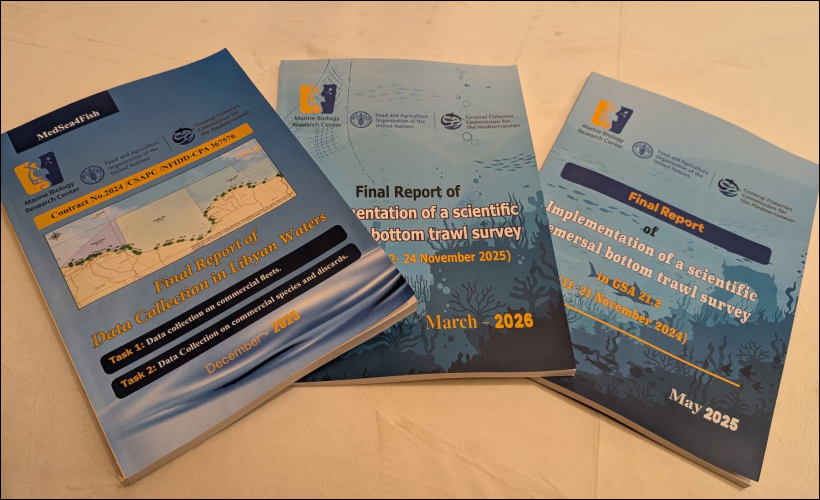
These activities, financed through the voluntary contribution of the European Union to the GFCM, are reinforcing Libya’s capacity to understand, monitor and sustainably manage its fisheries over time.
Revitalizing aquaculture through regional expertise and innovation
Through regional cooperation, the GFCM is also supporting Libya’s efforts to revitalize its aquaculture sector. Support includes technical assistance and training, as well as the provision of high‑quality seabass fry produced by the GFCM Aquaculture Demonstration Centre in Alexandria, Egypt.
By connecting Libyan producers with regional expertise, infrastructure and training opportunities, the GFCM is helping restart aquaculture activities in a sustainable and resilient manner. The initiative aims not only to relaunch production, but also to build a modern, sustainable aquaculture sector aligned with regional best practices.
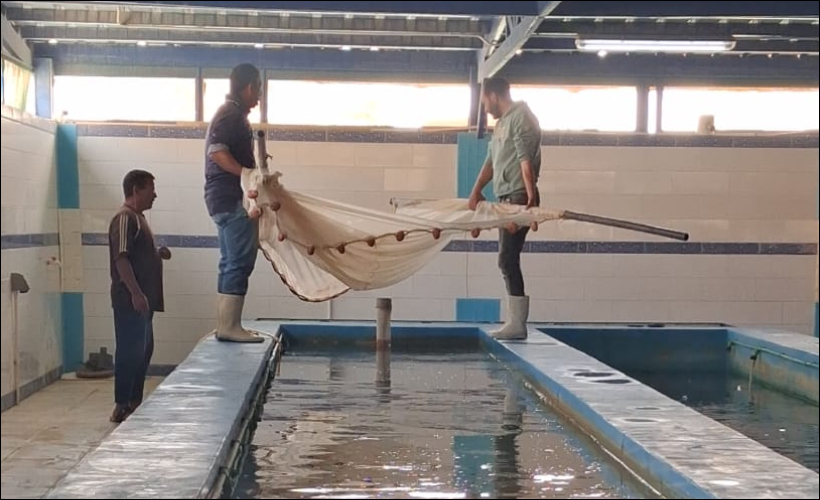
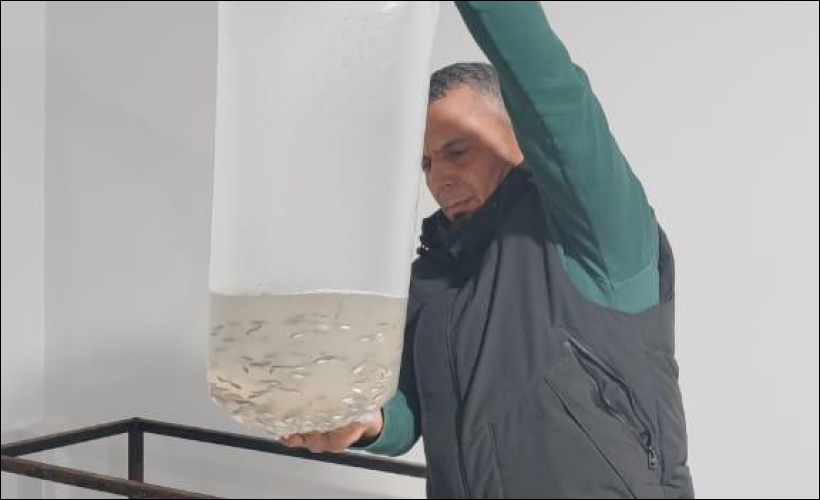
“Through this regional approach, Libya is not working alone”, said Miguel Bernal. “It is part of a wider Mediterranean and Black Sea network in which countries share technical expertise, production capacity and innovation.”
Strengthening compliance to protect marine resources and fishers
Through the FishEBM Med project, funded by the Global Environment Facility, the GFCM is further supporting Libya in its efforts to combat illegal, unreported and unregulated fishing. Activities include assessing legislative gaps, strengthening national frameworks, and training authorities on monitoring, control and surveillance using new technologies, in cooperation with counterparts from across the Mediterranean.
Strengthening Libya’s role in regional cooperation for sustainable fisheries
With the recent election of Dr Saber Al-Azabi, Deputy Minister of the Ministry of Marine Resources of Libya, as second vice‑chair of the GFCM Bureau, Libya is further reinforcing its role in regional fisheries governance.
This reflects a clear commitment to collective action, reinforcing cooperation as a cornerstone for sustainable fisheries and aquaculture, food security and resilient coastal livelihoods across the Mediterranean and the Black Sea.
All images were provided by the Libyan Ministry of Marine Resources.